
HMW vs Hydrolyzed Hyaluronic Acid: Choosing the Right Sodium Hyaluronate Grade
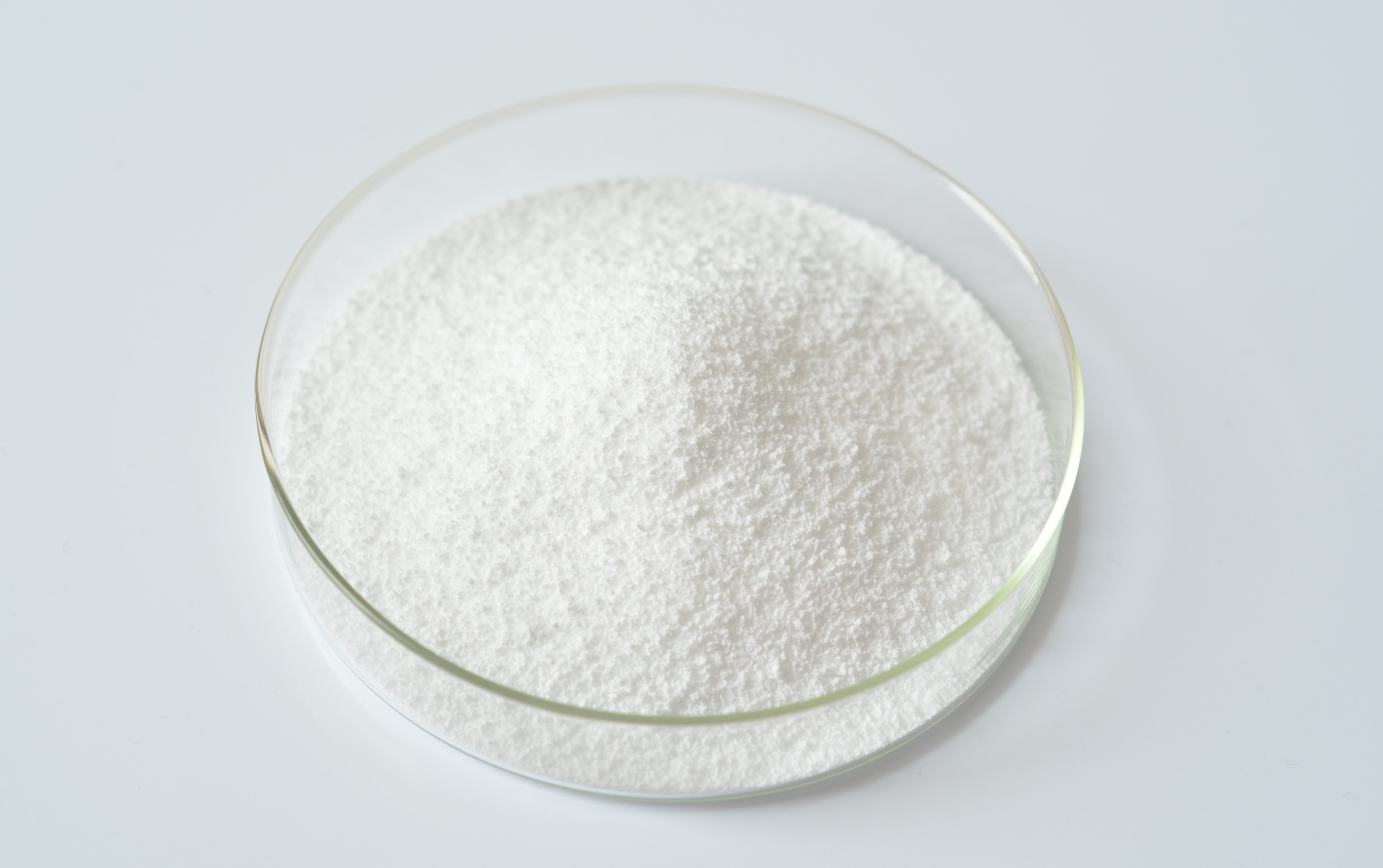
High molecular weight sodium hyaluronate and hydrolyzed hyaluronic acid are not two different materials. They are the same sodium hyaluronate molecule supplied at two different molecular weight specifications: a high molecular weight grade of at least 2.0 million Da, and a low molecular weight (hydrolyzed) grade of 0.1 million Da or below. The grade you buy is decided by four inputs — the application segment the material has to serve, the molecular weight band your product specification allows, the acceptance criteria your QC team has to verify on every batch, and the purchasing terms your project can absorb.
This guide compares the two options head to head for food, cosmetic and pharmaceutical formulations. It covers the specification ranges each one occupies, the applications each one fits, the acceptance criteria that should be attached to a purchase order, and the commercial terms — MOQ, lead time and capacity — that come with ordering from a manufacturer such as Shandong Habier Biopharma Co.,LTD.
Why this decision gets delayed more often than it should
Buyers rarely get stuck because they cannot find sodium hyaluronate. They get stuck because the labels on offer overlap. The same raw material is sold under food grade, cosmetic grade, pharma grade, regular grade, high molecule weight, low molecule weight, ultra low molecule weight, super low molecule weight, and hydrolyzed hyaluronic acid. Several of those names describe the same molecular weight band, and two of them — grade category and molecular weight band — are frequently treated as if they were the same thing.
Three practical problems follow from that:
- Grade label and molecular weight are separate specifications. Food grade sodium hyaluronate is normally specified at 0.8–1.5 million Da and cosmetic grade at 1.0–1.5 million Da, while pharma grade is specified at a minimum of 2.0 million Da. High MW grade carries its own minimum of 2.0 million Da, and low MW grade carries a maximum of 0.1 million Da. A buyer who orders on grade name alone can therefore receive material in a band the formula was never validated for.
- The hydrolyzed family is crowded. Hydrolyzed Hyaluronic acid, Low molecule weight sodium hyaluronate, Ultra Low molecule weight sodium hyaluronate, Super low molecule weight sodium hyaluronate and their hyaluronic acid equivalents all sit in the reduced-molecular-weight space. They must be specified by band, not by adjective.
- Re-validation is more expensive than specification. If a lower or higher molecular weight band arrives after formulation work is already locked, the project pays twice — once to re-test, and once to re-work the formula, the stability data and the label claim.
The decision, in short, is a specification decision first and a price decision second.
Industry background: where molecular weight sits in the market
Hyaluronic acid demand is broad rather than narrow. One commercial market report puts the global hyaluronic acid market at USD 11.64 billion in 2025, projected to reach USD 22.36 billion by 2034 at a 7.52% CAGR for 2026–2034, with pharmaceutical grade accounting for 69.3% of product segment share in 2026. The same reporting frame describes the China market at USD 649.7 million in 2024, projected to reach USD 1.06 billion by 2030 at an 8.6% CAGR from 2025. The figures vary by scope and publisher, which is why they are useful for framing and not for price modelling.
What matters for a grade decision is how the material is actually made. Industrial hyaluronic acid production follows two routes: extraction from animal tissues, or large-scale bacterial fermentation with genetically modified strains. A 2022 peer-reviewed review of biotechnological production reported hyaluronic acid yields of 2.5–7.0 g/L from Streptococcus zooepidemicus across the batch, repeated-batch, fed-batch and continuous fermentation modes studied. The published range describes the fermentation step only; the finished molecular weight band is set downstream, during purification and reduction.

That distinction explains a recurring buyer question. Two suppliers can both quote “sodium hyaluronate” from fermentation and still deliver materially different molecular weight distributions, because the reduction or retention step is a process decision. For medical and injection-grade directions, the process context is stricter again: low-temperature fermentation synthesis joined to aseptic cleanroom production, supported by a fermentation bioreactor, ultrafiltration purification equipment, sterile mixing tank, vacuum emulsifier, cleanroom filling machine, low-temperature drying oven, and microbial and heavy metal testing instruments. In China, medical sodium hyaluronate products that contain no pharmacologically, metabolically or immunologically active drug component are managed as medical devices and, in the cases described by NMPA Announcement No. 103 of 2022, classified no lower than Class II — a separate registration pathway from food and cosmetic raw material supply.
Option A and Option B: what each grade actually is
High molecular weight sodium hyaluronate (minimum 2.0 million Da)
High molecule weight sodium hyaluronate — also sold as High molecule weight hyaluronic acid — is specified at a minimum of 2.0 million Da. The pharma grade shares that same minimum, which is why the two are often quoted together in one conversation: a pharma-grade buyer is by definition buying a high molecular weight band, even though the grade label and the molecular weight label answer two different questions.
In formulation practice, the higher molecular weight band is generally selected where the specification calls for the polymer to contribute body rather than only moisture — humectant, viscosity modifier, filler or viscoelastic material are the functions commonly assigned to sodium hyaluronate in pharmaceutical and cosmetic applications. Higher molecular weight grades are typically used where viscosity build and film-forming behaviour matter at low use levels; the exact behaviour is formulation-dependent and should be confirmed in your own base.
Hydrolyzed hyaluronic acid and the low molecular weight family (maximum 0.1 million Da)
Hydrolyzed Hyaluronic acid is a reduced-molecular-weight sodium hyaluronate. In the grade range used for this comparison, the low MW grade is specified at a maximum of 0.1 million Da, and the wider hydrolyzed family sold into the same applications includes Hydrolyzed Sodium Hyaluronate, Low molecule weight sodium hyaluronate, Ultra Low molecule weight sodium hyaluronate, Super low molecule weight sodium hyaluronate, and the corresponding hyaluronic acid names.
Two points keep this family manageable. First, the chemistry is unchanged — a hydrolyzed grade is not a different ingredient class, so existing product documentation does not have to be rebuilt from zero. Second, the specification is the whole story: because the family carries several closely spaced names, a purchase specification should state the numeric band and the test method, not the marketing adjective.
Quick rule of thumb: if a project is comparing HMW against hydrolyzed material, the deciding document is not the grade name on the quotation. It is the numeric molecular weight band plus the certificate of analysis for the actual batch you will receive.
Head-to-head comparison: HMW vs. hydrolyzed sodium hyaluronate
| Decision factor | High molecular weight sodium hyaluronate (min. 2.0 million Da) | Hydrolyzed hyaluronic acid / low MW grade (max. 0.1 million Da) |
|---|---|---|
| Molecular weight band | Minimum 2.0 million Da (high MW grade; same minimum as pharma grade) | Maximum 0.1 million Da (low MW grade) |
| Product names in use | High molecule weight sodium hyaluronate; High molecule weight hyaluronic acid; Pharma grade products | Hydrolyzed Sodium Hyaluronate; Hydrolyzed Hyaluronic acid; Low / Ultra Low / Super low molecule weight sodium hyaluronate and hyaluronic acid |
| Adjacent specification bands | Sits above food grade (0.8–1.5 million Da) and cosmetic grade (1.0–1.5 million Da) | Sits below the regular food and cosmetic bands |
| Typical functional role in a formula | Humectant, viscosity modifier, filler or viscoelastic material, where the specification calls for the higher band | Same functional categories, where the specification calls for a reduced molecular weight band |
| Application segments | Pharmaceutical and medical directions, plus cosmetic and food projects specified at a high band | Food, cosmetic and pharmaceutical projects specified at a reduced band |
| Process context | Low-temperature fermentation synthesis; aseptic cleanroom production for medical / injection grade | Same fermentation and purification route, with the molecular weight band set during downstream processing |
| Batch acceptance criteria | 100% full inspection before delivery; microbial and heavy metal testing instruments in the QC chain | 100% full inspection before delivery; same QC chain and documentation set |
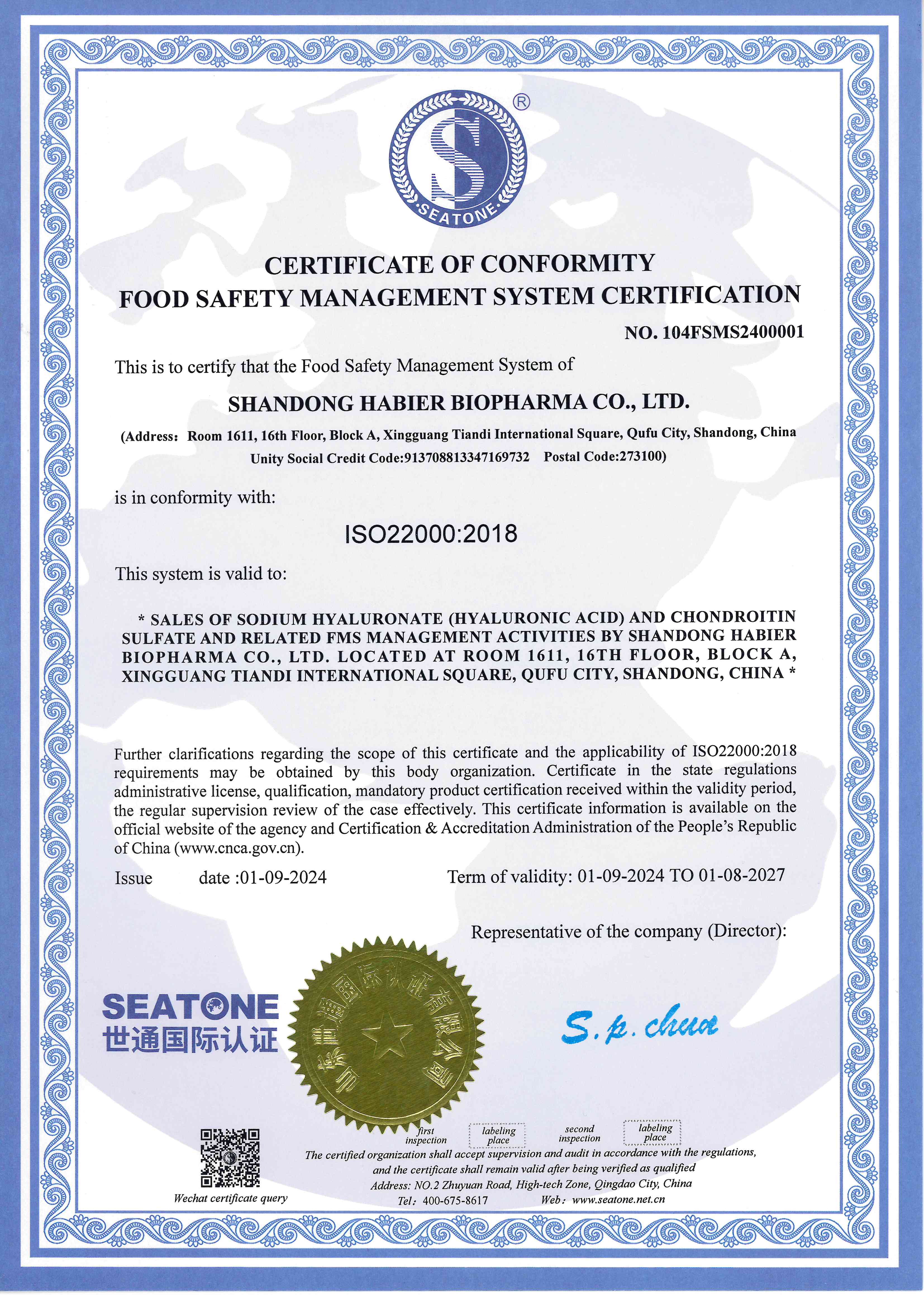
| Compliance documents | ISO 9001 and ISO 22000 dual certification, HACCP, Kosher, Halal, Ecocert COSMOS organic certification and ISO 16128 conformance | Identical qualification set — the grade band does not change the compliance package |
| Purchasing terms | MOQ 1 kg; lead time 5–8 days; monthly capacity 50–60 tons; purity adjustment customization; OEM / ODM supported | Same MOQ, lead time, capacity and customization options |
Step-by-step: how to choose the right grade for your project
- Fix the end segment first. Decide whether the material is going into a food or supplement formula, a cosmetic formulation, or a pharmaceutical / medical direction. This is the only step that cannot be reversed later, because it determines the compliance package and, for medical products, the registration pathway.
- Map the segment to a numeric band. Use the published segmentation rather than an adjective: food grade 0.8–1.5 million Da, cosmetic grade 1.0–1.5 million Da, pharma grade minimum 2.0 million Da, high MW grade minimum 2.0 million Da, low MW grade maximum 0.1 million Da. If your formula needs a hydrolyzed band, write the number, not the word “hydrolyzed” alone.
- Confirm the function the polymer has to perform. Sodium hyaluronate is commonly used as humectant, viscosity modifier, filler or viscoelastic material depending on the application. The function, not the marketing label, tells you which band is viable.
- Write the acceptance criteria before the RFQ. Molecular weight band, purity, and microbial and heavy metal limits belong in the specification. Medical and injectable directions may additionally require sterility and low microbial limits, which changes both the supplier shortlist and the documentation you will need.
- Verify the supplier’s process, not just the certificate. Ask how the molecular weight band is held in production and what equipment is used. A fermentation bioreactor, ultrafiltration purification equipment, sterile mixing tank, vacuum emulsifier, cleanroom filling machine, low-temperature drying oven, and microbial and heavy metal testing instruments describe a process that can be audited in a plant visit or a remote audit.
- Check the compliance package against your destination market. Habier’s qualification system covers dual ISO certification (ISO 9001 and ISO 22000), HACCP, Kosher and Halal, with the product certified as organic COSMOS and conforming to ISO 16128. Confirm which of these your destination market actually requires before you treat any of them as a differentiator.
- Lock the commercial terms. MOQ is 1 kg, lead time is 5–8 days, and monthly capacity runs 50–60 tons with OEM / ODM and purity adjustment customization available. For a first order, the 1 kg MOQ makes sample-scale validation and production-scale ordering part of the same conversation.
- Re-order on the same specification. Once a band is validated, the repeat order should reference the same numeric band and the same batch acceptance criteria, so a change in supplier process does not silently change your formula performance.
Use cases: matching each option to a project type
Cosmetic skincare raw material blending
A cosmetic skincare blending project is the most common entry point for this comparison. Sodium hyaluronate is used in cosmetic formulations such as emulsions and serums for hydration and skin elasticity support, and it commonly functions there as a humectant, viscosity modifier, filler or viscoelastic material. The project decision is therefore which band the emulsion and serum system was validated for: a high molecular weight grade where the formula relies on the higher band, or a hydrolyzed grade where a reduced band is specified. Production for these projects typically runs continuously, with formulation work built around a fixed incoming specification.
Food and oral care supplement formulas
Food and supplement projects normally work inside the food grade band, commonly specified at 0.8–1.5 million Da. When a supplement brief asks for a hydrolyzed or low molecule weight variant instead, the change is a specification change with knock-on effects on dissolution behaviour, dosage assumptions and finished-product testing. Treating food grade and hydrolyzed food grade as interchangeable is one of the most common specification errors in this category.
Pharmaceutical and medical directions
Pharma grade is specified at a minimum of 2.0 million Da and overlaps the high MW band, so the pharmaceutical conversation is usually not “HMW or hydrolyzed” but “which exact band, and which registration route.” For medical and injection-grade environments, production shifts to low-temperature fermentation synthesis and aseptic cleanroom production, and sterility and low microbial limits may be required. In China, medical sodium hyaluronate products without pharmacological, metabolic or immunological action are managed as medical devices and classified no lower than Class II in the cases described by NMPA Announcement No. 103 of 2022.
Import-driven purchasing: a US case in practice
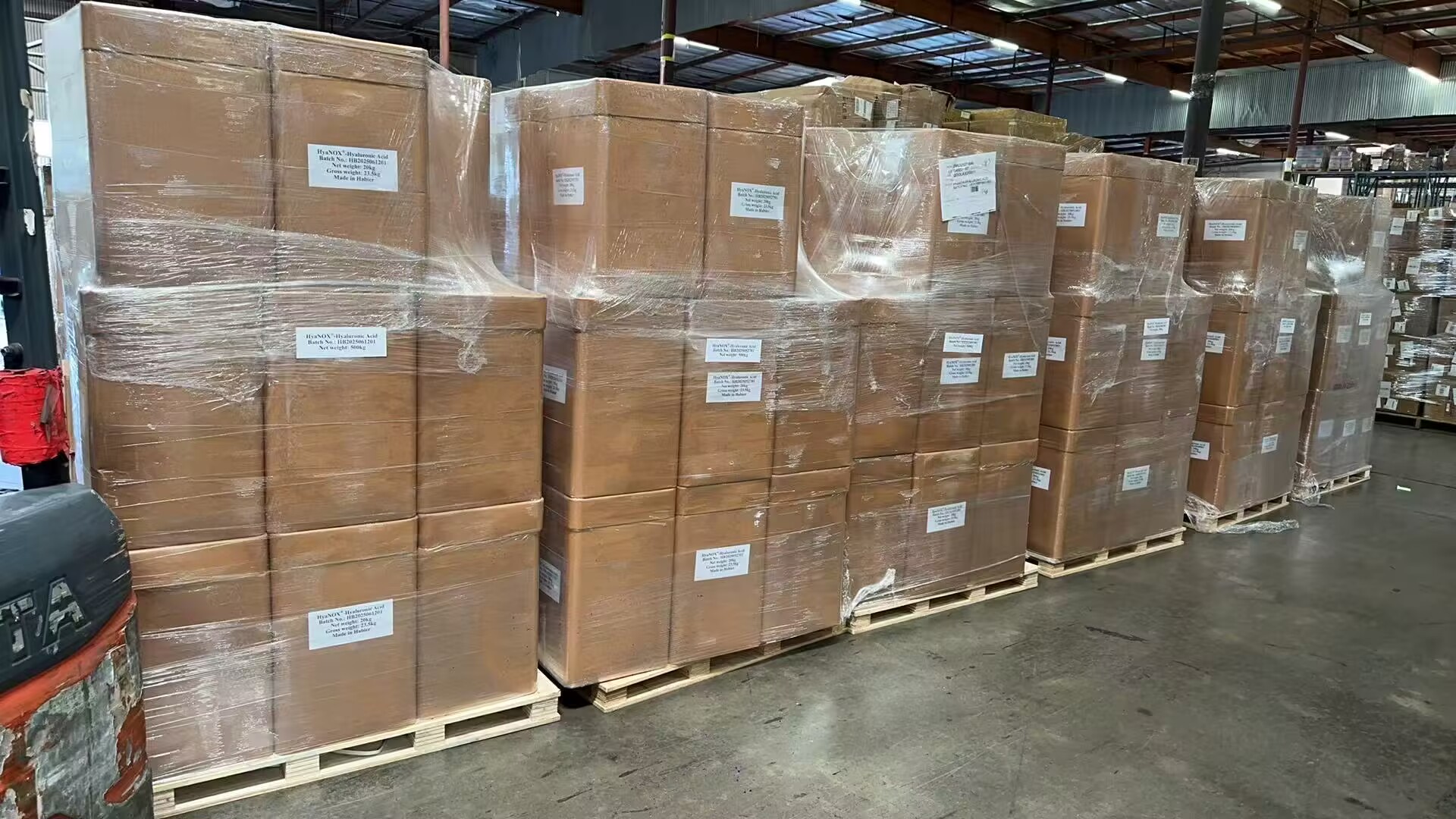
A US-based natural cosmetic and health supplement importer purchased 4,733 KG of sodium hyaluronate raw material for both cosmetic raw material and oral health care supplement use, on a long-term repeat basis. The supply result was stable delivery of high-purity material meeting laboratory, cosmetic and oral care mass production demand, with smooth customs clearance supported by a valid USDA import permit. The highlight was documentation rather than price: avian-origin raw material accompanied by complete official veterinary heat treatment certification, meeting US APHIS import standards, with stable batch quality supporting repeat orders.
Purchasing terms and acceptance criteria that apply to both grades
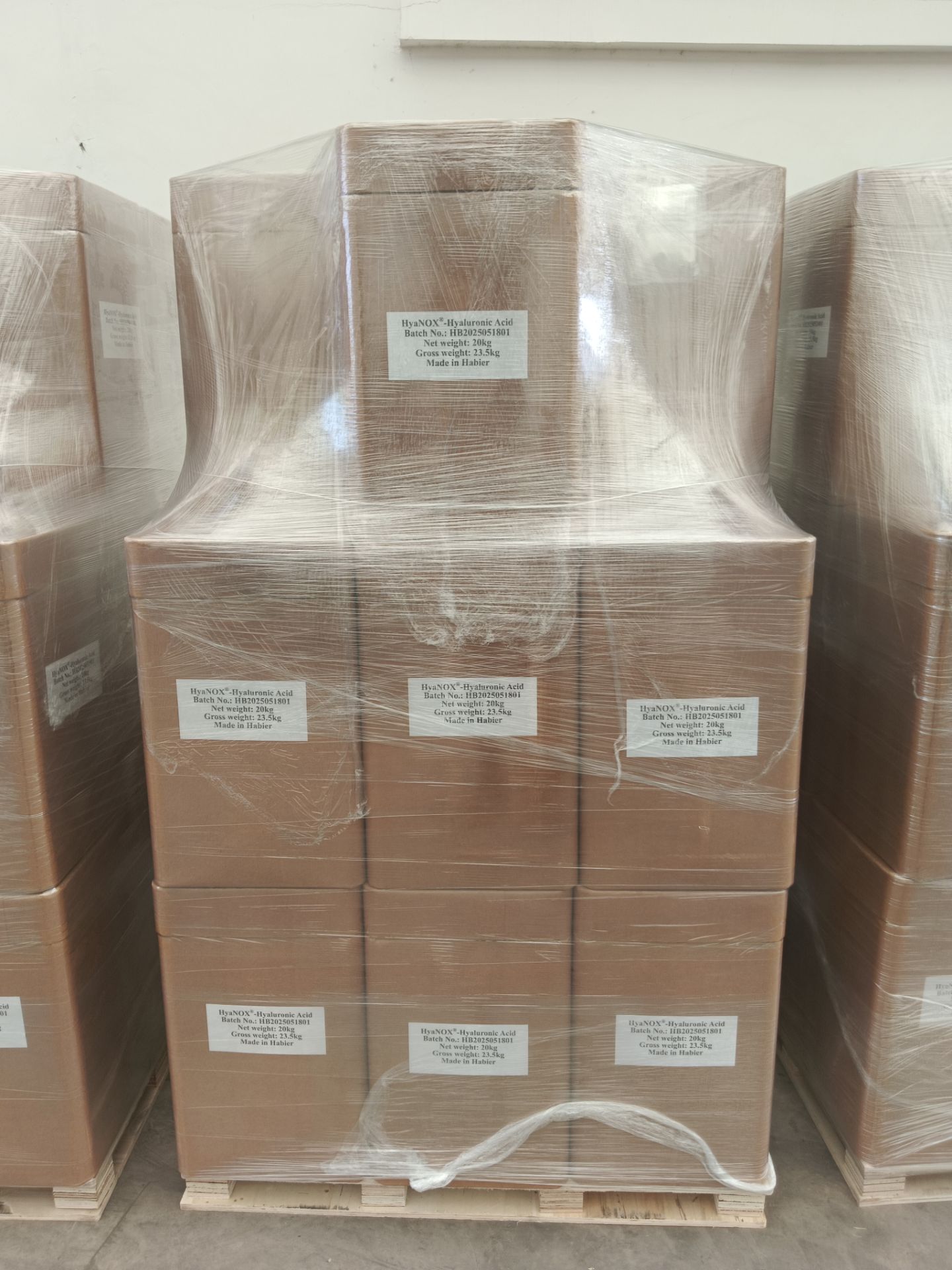
A grade decision is only half of a supply decision. The terms below apply to Habier’s high molecular weight and hydrolyzed specifications alike, which is useful when a project needs both bands from one supplier and wants a single documentation standard.
- MOQ: 1 kg — low enough to validate a band before committing to volume.
- Lead time: 5–8 days.
- Capacity: 50–60 tons per month, supported by a 50,000 m² facility and annual output of 600–700 MT.
- Quality control: 100% full inspection before delivery.
- Customization: OEM / ODM with purity adjustment.
- Export footprint: 20% export ratio with EU, USA and Korea as the main markets.
- After-sales: free sample supply and after-sales quality tracking.
Shandong Habier Biopharma Co.,LTD was established on 14 May 2015 in Qufu City, Shandong Province, and operates a 50,000 m² facility with 123 employees, a six-engineer R&D team and annual output of 600–700 MT. Its qualification system covers dual ISO certification, HACCP, Kosher and Halal, with the product certified as organic COSMOS and conforming to ISO 16128.
FAQ: choosing between high molecular weight and hydrolyzed sodium hyaluronate
Which compliance documents should I verify before choosing between HMW and hydrolyzed grades?
The grade band does not change the compliance package. Habier’s qualification system covers dual ISO certification — ISO 9001 and ISO 22000 — together with HACCP, Kosher and Halal, and the product is certified as organic COSMOS and conforms to ISO 16128. Those documents apply whether you order a high molecular weight band or a hydrolyzed band. The exception is medical and injection-grade material, where production moves to low-temperature fermentation synthesis and aseptic cleanroom production, and sterility and low microbial limits may be required. In China, medical sodium hyaluronate products without pharmacological, metabolic or immunological action are managed as medical devices and classified no lower than Class II in the cases described by NMPA Announcement No. 103 of 2022, so confirm the registration pathway before you commit a pharmaceutical project to any grade band.
Can Habier adjust purity or the molecular weight band for a specific project?
Yes. Habier supports OEM and ODM production with customization that includes purity adjustment, against a monthly capacity of 50–60 tons. The process chain behind that customization is auditable: low-temperature fermentation synthesis, a fermentation bioreactor, ultrafiltration purification equipment, sterile mixing tank, vacuum emulsifier, cleanroom filling machine, low-temperature drying oven, and microbial and heavy metal testing instruments. Every batch is subject to 100% full inspection before delivery, which is the point at which the specified molecular weight band and purity have to be demonstrated rather than promised.
What are the minimum order quantity and other purchasing terms?
The MOQ is 1 kg, which allows a project to validate a specific molecular weight band or a hydrolyzed specification before scaling. Lead time is 5–8 days, monthly capacity is 50–60 tons, and OEM / ODM with purity adjustment is available. Export covers the EU, USA and Korea, with an export ratio of 20%. Pricing is project-specific and depends on grade, band and volume, so it is quoted against your specification rather than published as a list.
Can I validate a grade with a sample before placing a volume order?
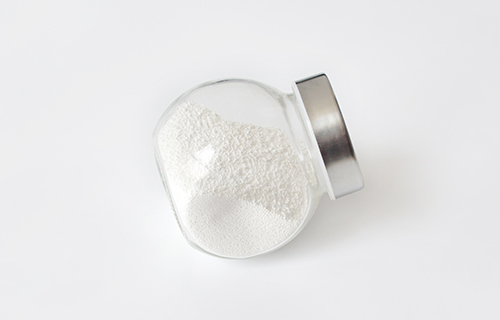
Free sample supply is part of Habier’s standard support, together with after-sales quality tracking. For a grade decision, the useful sample is the one that lets your lab confirm the numeric molecular weight band and review the batch documentation set at the same time — not only the appearance of the material. Requesting a high molecular weight sample and a hydrolyzed sample in the same round is the fastest way to settle the comparison internally.
What lead time and ongoing supply should I expect once a grade is confirmed?
Standard lead time is 5–8 days against a monthly capacity of 50–60 tons, and the production line operates continuously. Ongoing supply stability depends on batch-to-batch consistency rather than on peak capacity, which is why 100% full inspection before delivery and after-sales quality tracking matter for repeat orders. Habier’s export markets — EU, USA and Korea — mean the documentation set has already been exercised across multiple import regimes, including a US import case where 4,733 KG was delivered on a long-term basis with a valid USDA import permit and US APHIS-compliant veterinary heat treatment certification.
Next step: validate the band before you commit
Send your target application, destination market and required molecular weight band, and Habier will confirm whether a high molecular weight or hydrolyzed specification fits — and supply a sample for your own lab verification.
Contact: Jake Chen · jake@habier.com · +86-186-0537-0487 · www.habier.com
Download the full product brochure with grade ranges and specification details: Habier product catalogue (PDF).
Conclusion
High molecular weight sodium hyaluronate and hydrolyzed hyaluronic acid are the same molecule sold in two specification bands: a minimum of 2.0 million Da at the high end, and a maximum of 0.1 million Da for the low MW (hydrolyzed) band, with food grade at 0.8–1.5 million Da and cosmetic grade at 1.0–1.5 million Da sitting in between. The decision belongs with your product specification, not with the supplier’s adjective list.
Choose the high molecular weight band where the application segment, the formula function and the registration pathway call for the higher band — typically pharmaceutical and medical directions, and cosmetic or food projects specified at a high band. Choose a hydrolyzed grade where your validated specification sits at 0.1 million Da or below, and write that number into the purchase order. In both cases, hold the supplier to the same standard: an auditable fermentation and purification process, a defined batch acceptance criteria set verified by 100% full inspection before delivery, and a compliance package that matches your destination market.
Have Questions or Need More Details?
Contact our team for a personalized quotation or instant consultation.
Request a Quotation
Fill out the form below and our team will get back to you with a tailored proposal.
WhatsApp Direct Chat
Prefer to chat in real-time? Message us on WhatsApp for instant assistance & quick answers.
- Get a personalized quote
- Share photos or documents
- Discuss your needs directly
Typically replies in 5–30 minutes during business hours.