How to Choose the Right Sodium Hyaluronate Supplier for Your Business
How to Choose the Right Sodium Hyaluronate Supplier for Your Business
Selecting a reliable supplier for sodium hyaluronate is a strategic decision that directly impacts product quality, regulatory compliance, and supply chain stability. Whether you need food grade sodium hyaluronate, cosmetic grade hyaluronic acid, or pharma grade sodium hyaluronate, understanding the supplier's manufacturing capability, quality systems, and market experience is essential. This guide provides a structured framework to evaluate potential partners and make an informed choice.
What Is a Sodium Hyaluronate Supplier and Why Does It Matter?
A sodium hyaluronate supplier is a manufacturer or distributor that produces and sells hyaluronic acid sodium salt in various grades and molecular weights. Sodium hyaluronate is a high-value biopolymer used extensively in cosmetics, food supplements, and pharmaceutical formulations. The right supplier ensures:
- Consistent molecular weight and purity across batches
- Compliance with international standards such as ISO, HACCP, Kosher, and Halal
- Reliable supply capacity to meet your production volume
- Technical support for customized molecular weight or grade requirements
Choosing an inexperienced or unverified supplier can lead to quality deviations, regulatory rejections, and supply disruptions — risks that no buyer can afford.
Key Challenges When Sourcing Sodium Hyaluronate
Buyers frequently face the following problems:
- Inconsistent molecular weight: Without strict process control, molecular weight can vary between batches, affecting end-product performance.
- Regulatory compliance gaps: Different end-use industries require different certifications — food, cosmetic, or pharma — and suppliers may not hold all necessary credentials.
- Supply stability: Sudden production halts or raw material shortages can disrupt your own manufacturing schedule.
- Hidden impurities: Some suppliers might not conduct full-item inspection, leading to heavy metals or microbial contamination.
Industry Background: The Sodium Hyaluronate Market
The global demand for sodium hyaluronate has grown steadily across pharmaceutical, cosmetic, and nutraceutical industries. Key application trends include:
- Cosmetic grade: Used in anti-aging serums, moisturizers, and dermal fillers (injectable grade).
- Food grade: Incorporated into joint health supplements and oral beauty products.
- Pharma grade: Essential for ophthalmic surgery, viscosupplementation, and wound healing.
Suppliers that offer multiple grades (food, cosmetic, pharma), molecular weight variants (low molecule weight sodium hyaluronate, high molecule weight sodium hyaluronate, ultra low molecule weight hyaluronic acid), and value-added forms like hydrolyzed sodium hyaluronate are better positioned to serve diverse buyer needs.
A Step-by-Step Framework for Evaluating a Sodium Hyaluronate Supplier
Step 1: Verify Company Background and Production Scale
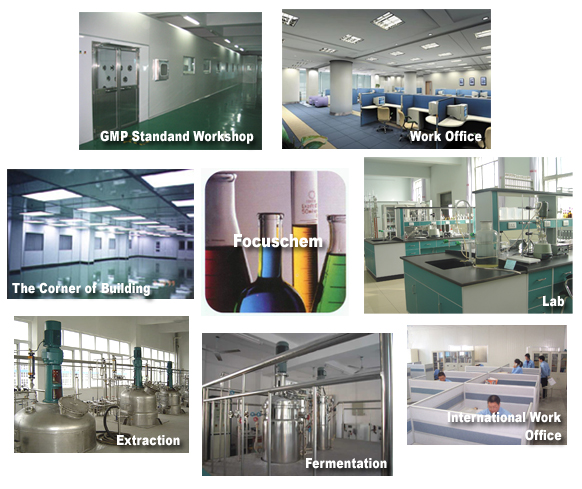
Start by assessing the supplier's manufacturing facility size, annual output, and years of operation. For example, Shandong Habier Biopharma Co., LTD, established in 2015, operates a 50,000 m² facility with an annual production capacity of 600–700 metric tons. The company employs 123 staff, including 6 R&D engineers. Such scale indicates mature production capability and long-term stability.
Step 2: Confirm Available Product Grades and Molecular Weight Options
A comprehensive supplier should offer the following range:
| Grade | Molecular Weight Range | Typical Application |
|---|---|---|
| Food Grade | 0.8–1.5 Million Da | Oral supplements, functional foods |
| Cosmetic Grade | 1.0–1.5 Million Da | Topical skincare, cosmetic formulations |
| Pharma Grade | Min. 2.0 Million Da | Injectable dermal fillers, ophthalmic solutions |
| High MW Grade | Min. 2.0 Million Da | Viscosupplementation, medical devices |
| Low MW Grade | Max. 0.1 Million Da | Deep penetration serums, transdermal delivery |
| Ultra Low / Super Low MW | < 0.1 Million Da | Advanced anti-aging, highly absorbable formulas |
Additionally, hydrolyzed hyaluronic acid and regular grade sodium hyaluronate should be available for specific formulation needs.
Step 3: Review Certifications and Quality Systems
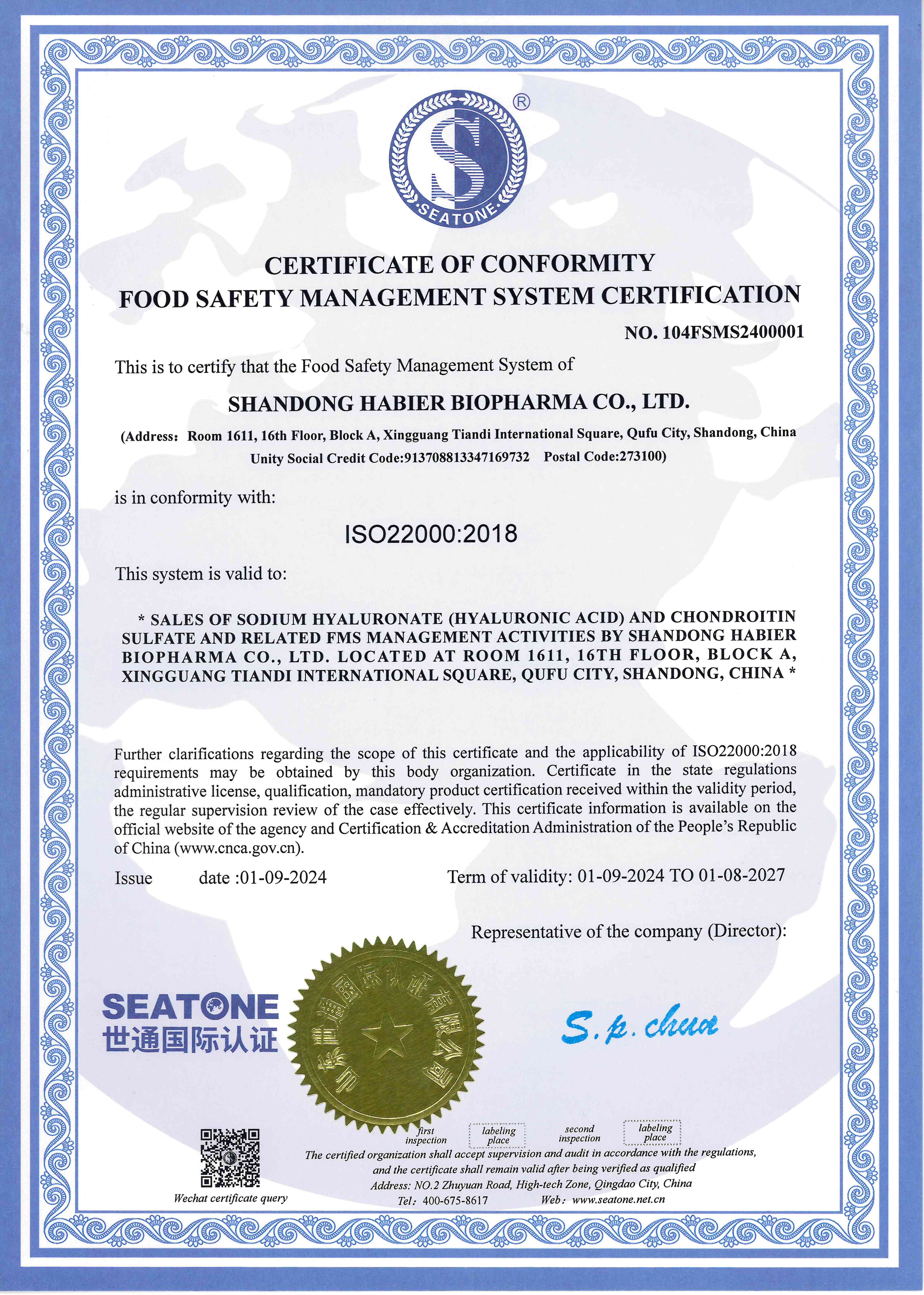
Legitimate suppliers hold third-party certifications. For instance, Shandong Habier Biopharma is dual ISO certified (ISO 9001:2015 and ISO 22000:2018), plus Kosher and Halal. Their products are also certified organic under Cosmos and ISO 16128. Always request a copy of the certificate number and validation.
Step 4: Assess Quality Control Protocols
Best practice involves 100% full inspection before delivery. The supplier should have an independent QC laboratory and support customer-designated third-party testing. Look for traceability records for each batch. Habier implements uniform production SOPs, real-time online monitoring of viscosity and molecular weight, and cross-lab rechecks.
Step 5: Evaluate Supply Stability and Lead Times
Ask about monthly capacity, raw material safety stock, and production line backup. Habier maintains a 30-day raw material inventory, two independent fermentation workshops, and flexible shift production. Their monthly capacity is 50–60 tons, with lead times of 5–8 days and MOQ of 1 kg — ideal for both small trials and large bulk orders.
Step 6: Understand Export Experience and Market Knowledge
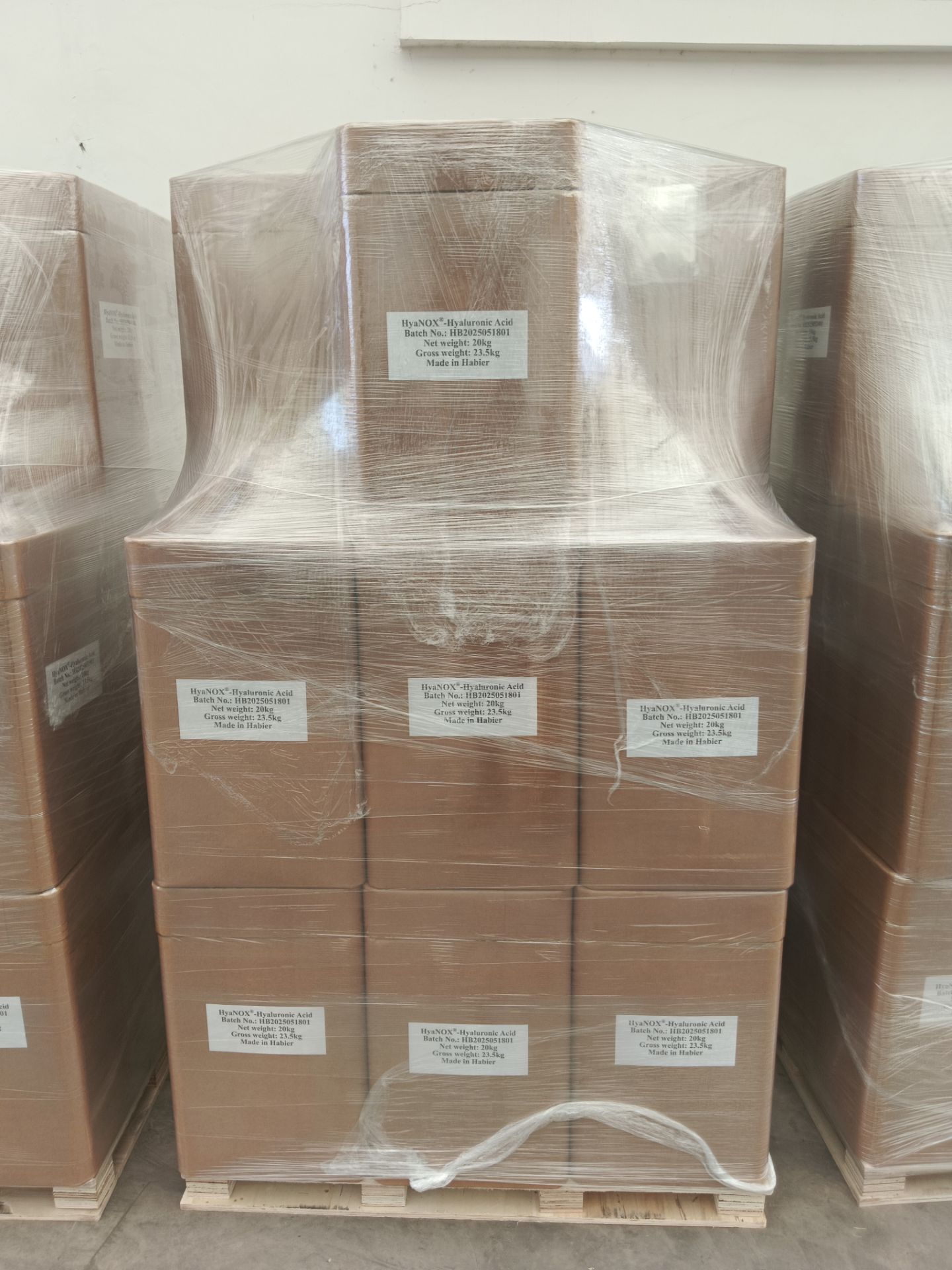
Suppliers with proven export experience to stringent markets (EU, USA, Korea) are better equipped to handle documentation, customs clearance, and regulatory compliance. Habier exports about 20% of its output to these regions, demonstrating familiarity with USDA import permits and APHIS standards, as evidenced by a US case study where 4,733 kg of hyaluronic acid was successfully cleared with official veterinary heat treatment certification.
Use Case: A US Natural Cosmetic & Supplement Importer
Client type: Natural cosmetic & health supplement importer (US)
Quantity: 4,733 kg
Application: Cosmetic raw material and oral health care supplement
Duration: Long-term stable use
Result: Stable supply of high-purity hyaluronic acid meeting both laboratory-scale and mass production demands; smooth customs clearance supported by a valid USDA import permit. The avian-origin raw material came with complete official veterinary heat treatment certification compliant with US APHIS import standards.
This case illustrates how a capable supplier addresses regulatory and quality requirements for demanding international buyers.
Frequently Asked Questions About Choosing a Sodium Hyaluronate Supplier
Q: What is sodium hyaluronate?
A: Sodium hyaluronate is the sodium salt of hyaluronic acid, a glycosaminoglycan widely used for its water-binding and viscoelastic properties. It is available in food, cosmetic, and pharmaceutical grades.
Q: How does molecular weight affect product performance?
A: High molecular weight (≥2.0 MDa) provides superior viscoelasticity and surface hydration, ideal for medical fillers and joint lubrication. Low molecular weight (≤0.1 MDa) penetrates deeper into skin layers, used in anti-aging serums. Ultra-low molecular weight variants offer even higher absorption rates.
Q: Why do I need certifications like ISO 22000 and Kosher?
A: ISO 22000 ensures food safety management; Kosher and Halal open access to specific religious dietary markets; Cosmos and ISO 16128 confirm organic and natural origin for cosmetic use. Such certifications reduce your own compliance burden.
Q: What should I check in a Certificate of Analysis (COA)?
A: Verify molecular weight, purity (>98% typical), microbial limits, heavy metals, and endotoxin levels (for pharma grade). The COA should match batch-specific results.
Q: Can I request custom molecular weight or blend?
A: Many suppliers offer OEM/ODM customization, including purity adjustment and molecular weight tailoring. Habier supports such requests with a short lead time of 5–8 days.
Q: What is the typical MOQ for sodium hyaluronate?
A: MOQ can be as low as 1 kg for trial orders, while bulk orders typically start from 100 kg. Habier's MOQ is 1 kg with flexible packaging options.
Conclusion: Making an Informed Supplier Decision
Choosing the right sodium hyaluronate supplier requires a systematic evaluation of production capacity, product diversity, certifications, quality control, and export expertise. By following the steps outlined in this guide, you can confidently partner with a manufacturer that meets your specific application — whether it's food, cosmetic, or pharmaceutical grade. Shandong Habier Biopharma Co., LTD exemplifies a supplier with the scale, experience, and compliance infrastructure to serve global buyers reliably.
For more detailed technical specifications and to request samples, download the company brochure:
Download Habier Company Brochure (PDF)