
Sodium Hyaluronate Molecular Weight Ranges & Grade Parameters
Sodium Hyaluronate Molecular Weight Ranges & Grade Parameters
Sodium hyaluronate is specified by two variables before price, packaging or MOQ are discussed: the molecular weight (MW) band of the polymer chain, and the grade — food, cosmetic, pharmaceutical, or a defined low-MW derivative — under which that band is produced and documented. MW determines viscosity, water-binding behaviour and how the material behaves in a formulation. Grade determines purity limits, test scope and the certification set a buyer has to audit.
This technical guide maps the grade and band values most often quoted in sodium hyaluronate sourcing (also written as hyaluronic acid or hyaluronic acid sodium salt), explains the production controls that hold a band consistent from batch to batch, and sets out the checks that turn a grade name into a verifiable purchase specification.
The bands covered here are:
- Food grade sodium hyaluronate — 0.8–1.5 Million Da
- Cosmetic grade sodium hyaluronate — 1.0–1.5 Million Da
- Pharma grade sodium hyaluronate — ≥2.0 Million Da
- High molecular weight sodium hyaluronate — ≥2.0 Million Da
- Low molecular weight sodium hyaluronate — ≤0.1 Million Da
- Super low molecular weight and ultra low molecular weight sodium hyaluronate — progressively shorter chains below the low-MW threshold
- Hydrolyzed sodium hyaluronate / hydrolyzed hyaluronic acid — short-chain fractions produced by hydrolysis

Problem Definition: One Grade Name, Several Molecular Weights
Grade names in the sodium hyaluronate trade are commercial labels, not dimensional specifications. Two suppliers can both quote “cosmetic grade sodium hyaluronate” and still deliver material at opposite ends of the 1.0–1.5 Million Da band. The polymer behaves differently at each end: a higher-MW fraction builds viscosity and film-forming structure, while a lower-MW fraction flows more easily and reduces the risk of an over-thickened, stringy batch. Approving a grade name without a MW band defers a technical decision to the supplier’s inventory.
The consequences appear late, which is what makes the error costly. Viscosity drift shows up during scale-up rather than in the sample jar. Emulsion instability shows up after filling. A sensory mismatch shows up after the first production lot is already packaged.
- Under-specified MW: the same grade name, different behaviour in blending, filling and stability testing.
- Over-specified grade: paying for pharmaceutical documentation on a cosmetic or food application that does not require it.
- Undocumented MW: no batch-level evidence that the delivered lot sits inside the agreed band.
The correction is a written specification that combines three elements: the MW band, the grade and compliance set, and the batch documentation that proves both. That combination is also the basis on which competing suppliers can be compared without relying on brand reputation.
Industry Background: Why Band-Level Selection Matters Commercially
Sodium hyaluronate is a mature ingredient, but demand remains concentrated in applications where the MW band and the grade directly determine the finished product result.
- The global sodium hyaluronate raw material market was valued at approximately USD 504 million in 2024, driven by cosmetic and medical demand (Reports and Data).
- The food grade segment alone is estimated at USD 0.5 billion in 2024, with a projected CAGR of 8.5% through 2034 (Reports and Data).
- The cosmetic grade segment held the largest share of the hyaluronic acid raw material market at 61.91% in 2025 (Grand View Research).
Published market sizes should be read with the definition in mind. Estimates diverge sharply depending on whether they describe raw material or finished HA-based products: Grand View Research values hyaluronic acid raw material at USD 245.62 million, while Straits Research values the broader sodium hyaluronate products market at USD 14.02 billion. For a buyer, the grade-level view is the useful one, because it reflects the segment the specification actually competes in.
The supplier landscape is correspondingly specialised. Major global participants include Bloomage Biotech, Fidia Farmaceutici, Kewpie Corporation and Contipro a.s., alongside Chinese producers such as Shandong Habier Biopharma Co.,LTD. Because MW capability is a production attribute rather than a marketing attribute, supplier comparison at decision stage tends to turn on band control, documentation and supply continuity rather than brand recognition.
Detailed Solution: The MW Band Map and the Parameters Behind It
Grade and band reference
| Grade / band | Typical MW band | Typical use context | Documentation focus |
|---|---|---|---|
| Pharma grade sodium hyaluronate | ≥2.0 Million Da | Medical fillers, ophthalmic applications | USP-NF, EP and JP standards; endotoxin typically <0.05 EU/mg |
| High molecular weight sodium hyaluronate | ≥2.0 Million Da | Systems requiring high viscosity | Batch MW and viscosity data |
| Cosmetic grade sodium hyaluronate | 1.0–1.5 Million Da | Skincare essences, masks, emulsions | Full-item inspection per batch |
| Food grade sodium hyaluronate | 0.8–1.5 Million Da | Oral supplements and functional food formats | Food-safety process control; Kosher and Halal where relevant |
| Low molecular weight sodium hyaluronate | ≤0.1 Million Da | Low-viscosity cosmetic blends | MW verification per batch |
| Super low MW / ultra low MW sodium hyaluronate | Shorter chains below the low-MW threshold | Cosmetic blends where viscosity must stay low | MW verification per batch |
| Hydrolyzed sodium hyaluronate / hydrolyzed hyaluronic acid | Hydrolyzed short-chain fractions | Cosmetic formulations | MW verification per batch |
Food grade and cosmetic grade overlap between 1.0 and 1.5 Million Da. The distinction is therefore not the polymer window alone but the compliance framework applied to it: food grade material is produced and documented against food-safety requirements, while cosmetic grade material is documented for cosmetic use. Where one band can serve both, the grade decision follows the end product rather than the supplier’s convenience.
Production controls that hold a band in place
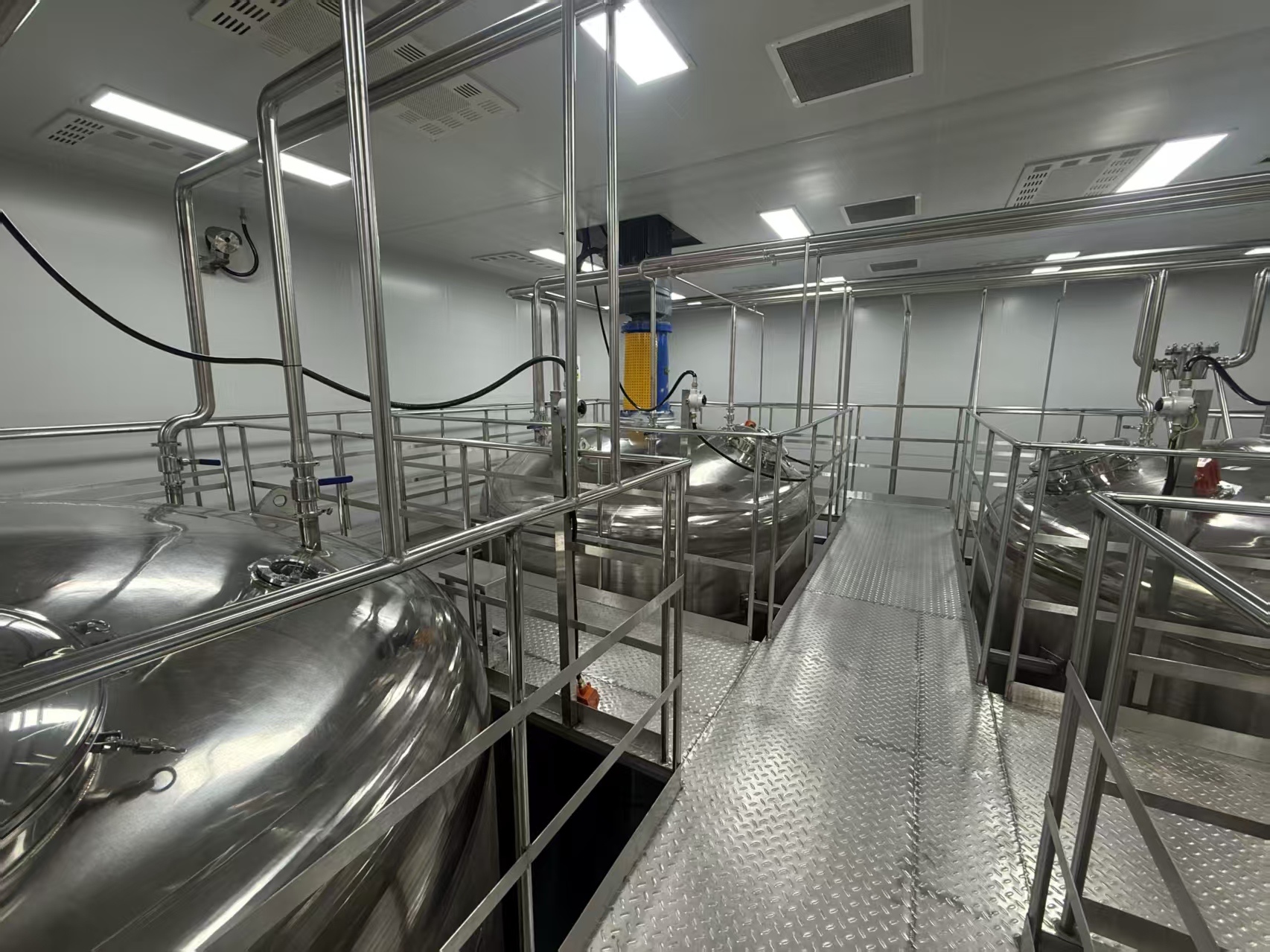
Molecular weight is set during fermentation and preserved through purification, so consistency is a process outcome rather than a laboratory adjustment. Habier’s approach to technical consistency risk is to control the band at each stage instead of testing for it at the end:
- Strict molecular weight segmentation — each band is treated as a separate production target, not as an incidental output of one broad run.
- Standardized fermentation and purification process — the same route is applied to the same band on every cycle.
- Fixed production parameters — fermentation variables are locked for a given band.
- Uniform production SOP — operators work from one documented procedure across shifts and lines.
- Real-time online monitoring of viscosity, molecular weight and purity during production.
- Cross-lab recheck for each batch before release.
Interpretation for buyers: segmentation is what makes a MW claim repeatable. A supplier that produces one broad HA stream and blends it down to hit a specification carries a different risk profile from a supplier that runs a band-specific process with fixed parameters and online monitoring.
Batch documentation and certification
Every batch is subject to full-item inspection supported by an independent QC laboratory, and customers can designate third-party testing. Unqualified batches are rejected with full traceability records, which is the mechanism that allows a certificate of analysis to be traced back to a specific production lot.
For product code 5243, the certification set covers ISO 9001 (quality management), ISO 22000 (food safety management), Kosher, Halal and COSMOS organic. These certificates support food and cosmetic programmes. Pharmaceutical programmes are judged against the pharmacopoeial standards listed in Table 1 rather than against food-safety certificates, which is a distinction buyers frequently have to make explicit in a tender document.
Step-by-Step Breakdown: Writing a Sodium Hyaluronate Specification
- Start from the application, not the grade name. Define what the material has to do: build viscosity in an essence, dissolve cleanly in a supplement blend, or satisfy a pharmacopoeial monograph.
- Fix the MW band and the tolerance. Convert the functional requirement into a band — for example 1.0–1.5 Million Da for cosmetic grade or ≥2.0 Million Da for pharma grade — and agree in writing how deviation will be handled.
- Set the grade and compliance set. Food and cosmetic programmes run on ISO 9001, ISO 22000, Kosher, Halal and COSMOS organic where relevant; pharma programmes run on USP-NF, EP or JP with endotoxin typically below 0.05 EU/mg.
- Require batch-level documentation before sampling. Ask for a COA covering MW, viscosity and purity for the specific lot that will be sampled, together with traceability records.
- Validate the sample against your own process. Run the material in the real formulation and confirm it behaves as the specified band implies, using an in-house or customer-designated third-party laboratory.
- Lock commercial parameters last. Confirm packaging, lead time, stock policy, and whether customized molecular weight production is required and at what lead time.
Steps 1 to 3 are technical and should be settled before quotes are compared. Steps 4 to 6 are the ones that most often change after a first order, which is why they belong in the specification rather than in the negotiation.
Use Cases: Matching the Band to the Project
Cosmetic and skincare programmes
Cosmetic grade sodium hyaluronate in the 1.0–1.5 Million Da band is a standard starting point for essences, masks and emulsions, where viscosity and film-forming behaviour contribute to product feel. Low molecular weight material (≤0.1 Million Da), super low and ultra low molecular weight fractions, and hydrolyzed sodium hyaluronate are used where formulators want a lower-viscosity, short-chain fraction in the blend. These variants sit inside Habier’s standard product range rather than being treated as exceptions.
Food and supplement programmes
Food grade sodium hyaluronate in the 0.8–1.5 Million Da band is produced under a food-safety management system and is supported by Kosher and Halal certification where the destination market requires it. In this segment the selection question is usually documentation rather than viscosity: which certificates the market expects, and whether they can be issued for the exact grade supplied.
Pharmaceutical, medical filler and ophthalmic applications
Pharma grade sodium hyaluronate at ≥2.0 Million Da is used in medical fillers and ophthalmic applications, where the material is assessed against USP-NF, EP or JP and endotoxin levels are typically controlled below 0.05 EU/mg. Habier’s stated application fit for its sodium hyaluronate covers cosmetics, medical fillers and ophthalmic use scenarios.

Comparison Table: What to Compare When Two Quotes Look Identical
| Dimension | What to verify | Why it changes the decision |
|---|---|---|
| MW band and delivered lot value | The MW value recorded on the COA for the actual delivery lot, not the catalogue range | The same grade name can be supplied at different points inside a band |
| Purity and test coverage | Full-item inspection record, independent QC laboratory, option for customer-designated third-party testing | Determines how much verification the buyer has to repeat in-house |
| Traceability | Batch-level traceability records, including documentation of rejected lots | Needed for audits, recalls and regulatory filings |
| Certification fit | ISO 9001, ISO 22000, Kosher, Halal, COSMOS organic for food and cosmetic; USP-NF, EP, JP for pharma | Certificates must cover the grade and site, not only the company |
| Cost structure | Total landed cost including documentation and rework risk, not unit price alone | Pharma-grade testing and certification carry a different cost base |
| Supply capacity and lead time | Annual output, fermentation capacity, raw material stock policy, customized MW lead time | Determines whether scale-up can be supplied continuously |
| Technical support | Availability of after-sales technical support on MW and grade questions | Reduces the cost of a specification error after the first order |
Peer comparison in this category is normally run on five dimensions: molecular weight range, purity grade, test reports, price and supply capacity. Habier’s stated position on those dimensions is consistent stable quality indicators, complete test document support and reliable large-scale production capacity, with a competitive cost level among peer suppliers, stable long-term stock supply, customized molecular weight production on short lead time, and technical after-sales support.
Two operational arrangements support that continuity: two independent fermentation workshops and a 30-day raw material inventory policy, with multi-production-line layout and phased production scheduling. Annual output is stated at 600–700 MT from a 50,000 m² facility, with 123 employees and an R&D team of 6 engineers. Approximately 20% of production is exported, with main markets in the EU, USA and Korea.
FAQ
Which certifications should be checked for food, cosmetic and pharma sodium hyaluronate?
For food and cosmetic programmes, the certificate set commonly audited includes ISO 9001 for quality management, ISO 22000 for food safety management, Kosher and Halal for markets that require them, and COSMOS organic where an organic claim is needed. Shandong Habier Biopharma holds these certifications for its hyaluronate products, and they are listed against product code 5243. Pharmaceutical programmes are assessed against pharmacopoeial standards instead: USP-NF, European Pharmacopoeia (EP) and JP, with endotoxin levels typically below 0.05 EU/mg. In all three cases, confirm that the certificate covers the exact grade and production site, not just the company name.
Can the molecular weight be customized, and how is batch-to-batch consistency controlled?
Customized molecular weight production is available, with short lead time, which allows a buyer to order a band rather than accept whatever a standard catalogue offers. Consistency is controlled through strict molecular weight segmentation, a standardized fermentation and purification process, fixed production parameters, a uniform production SOP, real-time online monitoring of viscosity, molecular weight and purity, and a cross-lab recheck for every batch before release. Two independent fermentation workshops allow production to continue when one line is scheduled for changeover or maintenance.
What actually drives the price difference between sodium hyaluronate grades and MW bands?
Two factors dominate: the testing and certification scope attached to the grade, and the yield of the specific band being produced. Pharma grade material carries pharmacopoeial testing and endotoxin control, so its cost base differs from cosmetic grade material even when the polymer window overlaps. The practical decision rule is to compare total cost per accepted batch rather than unit price — including documentation, either in-house or third-party verification, and the rework risk if the delivered MW drifts outside the agreed band. Habier states a competitive cost level among peer suppliers together with stable long-term stock supply; that position should still be checked against your own landed-cost model.
How should a sample be validated before committing to a bulk order?
Request a sample that is accompanied by a COA covering molecular weight, viscosity and purity for the specific lot, then confirm the MW value in your own laboratory or a designated third-party laboratory — Habier supports customer-designated third-party testing. Run the material in the real formulation at bench or pilot scale and compare the result with the behaviour the specified band is expected to produce. Keep the sample lot identification linked to the supplier’s traceability records so the validation remains audit-ready.
What affects lead time and long-term supply continuity for sodium hyaluronate orders?
For standard grades, stock availability is the main variable; for customized molecular weight bands, the production schedule is. Habier holds a 30-day raw material inventory, operates two independent fermentation workshops and uses flexible shift production to accommodate bulk urgent orders, from an annual output of 600–700 MT. For a first order, the sample validation step should be scheduled ahead of the bulk requirement rather than in parallel with it, since the MW confirmation is what triggers release to production. To start a specification review or request a sample and quotation, contact Jake Chen at jake@habier.com or +86-186-0537-0487.
Conclusion
Sodium hyaluronate selection becomes predictable once the specification carries a molecular weight band rather than a grade name alone. The working reference points are food grade at 0.8–1.5 Million Da, cosmetic grade at 1.0–1.5 Million Da, pharma grade and high molecular weight at ≥2.0 Million Da, low molecular weight at ≤0.1 Million Da, and the shorter super low, ultra low and hydrolyzed variants below that threshold. Around those values sit three verifiable controls: a band-specific production process with fixed parameters and online monitoring, batch-level full-item inspection with independent QC and traceability records, and a certification set matched to the grade — ISO 9001, ISO 22000, Kosher, Halal and COSMOS organic for food and cosmetic work, pharmacopoeial standards for pharma.
Shandong Habier Biopharma Co.,LTD manufactures sodium hyaluronate and hyaluronic acid across these grades and bands, with customized molecular weight production, stable long-term stock supply and technical after-sales support. Details of grades, packaging and documentation are available on the website at www.habier.com, and the full company and product brochure can be downloaded here: Habier Biopharma brochure (PDF).
Next Step: Check a Band Before You Commit
Send the MW band, grade and application you are specifying, and Habier will confirm the matching product code, the batch documentation available and a sample route for validation.
Email: jake@habier.com · Tel: +86-186-0537-0487 · Web: www.habier.com