
Sodium Hyaluronate Supplier Evaluation: Verifying Capabilities and Quality Systems
A sodium hyaluronate supplier evaluation is a technical audit before it is a commercial decision. The supplier that passes is the one that can demonstrate, with lot-numbered records and verifiable test data, that its molecular weight, viscosity and purity profile repeat from one batch to the next. Price, delivery terms and responsiveness only become meaningful after that question has been answered.
The difficulty is that “sodium hyaluronate” is one commercial name covering materials that behave differently in production. Food grade, cosmetic grade and pharma grade follow different molecular weight targets. Hydrolyzed, low, ultra low and super low molecular weight variants serve different formulation roles. Two suppliers can answer every commercial question identically and still ship materials that require completely different handling in your process.
This guide is written for buyers who are past discovery and now working in the evaluation and execution stages. It sets out six verification checkpoints — batch testing and COA traceability, full-item inspection before delivery, independent laboratory verification, in-process monitoring of viscosity and molecular weight, certification evidence, and site inspection — and explains which production risk each checkpoint removes. Shandong Habier Biopharma Co., LTD, a sodium hyaluronate manufacturer based in Qufu City, Shandong Province, China, is used as a reference example wherever documented first-party facts exist.
Why Supplier Evaluation Fails Before the First Purchase Order
Most sourcing problems with sodium hyaluronate are not caused by fraud. They are caused by three gaps that open long before the first container ships.
Grade ambiguity. A quotation that names “sodium hyaluronate” without a molecular weight range cannot be evaluated against a project requirement, because the same supplier may offer food grade at 0.8–1.5 million Da, cosmetic grade at 1.0–1.5 million Da, and pharma grade at a minimum of 2.0 million Da. These are not interchangeable materials, and a specification sheet that omits the grade cannot be audited.
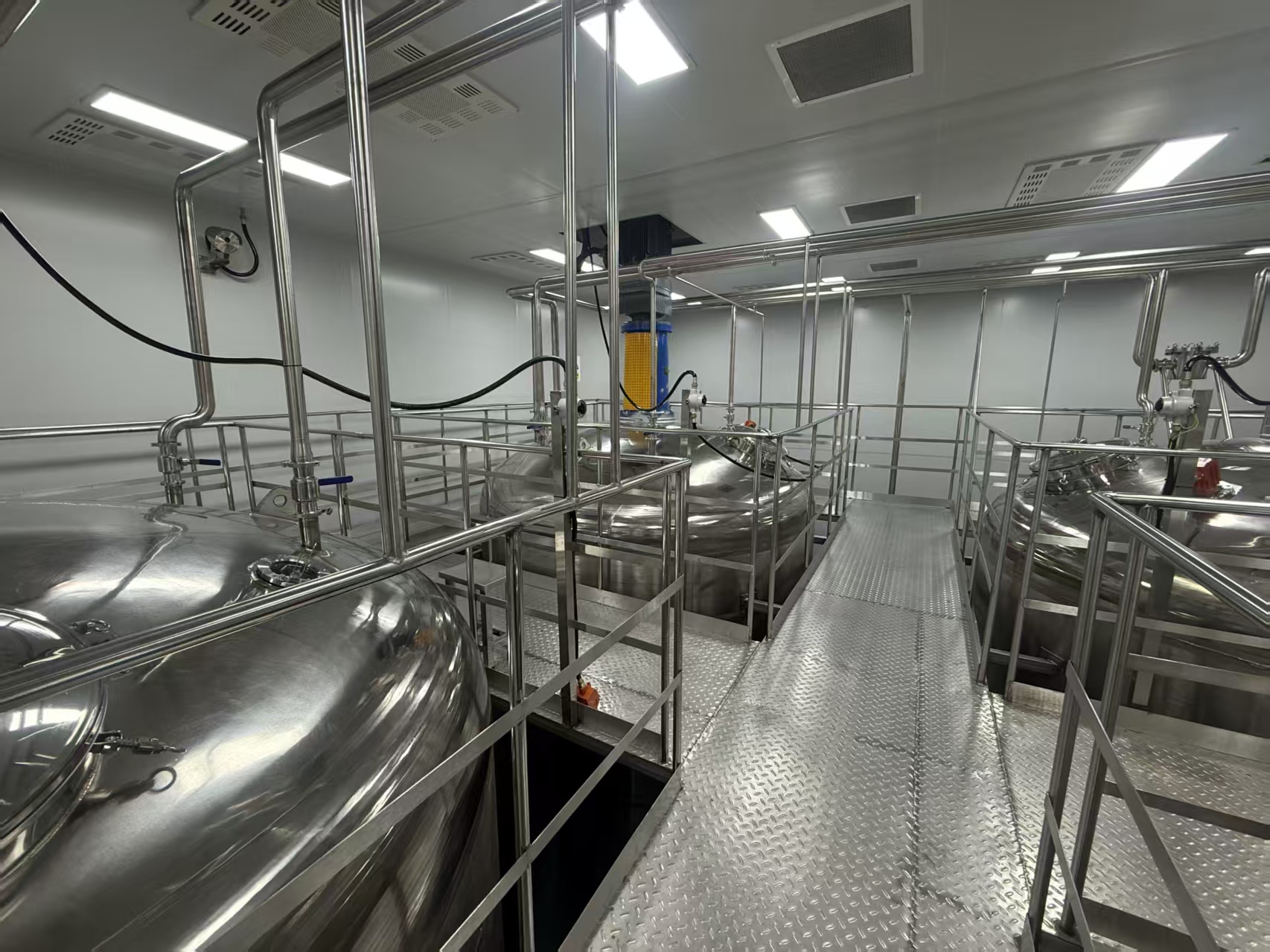
Batch-to-batch drift. Industrial hyaluronic acid production depends on fermentation followed by downstream processing, and published reviews show how strongly outcomes vary with the fermentation mode used. A 2022 peer-reviewed review compiled HA yields of 2.5 to 7.0 g/L from S. zooepidemicus across batch, repeated batch, fed-batch and continuous culture investigations. Molecular weight and viscosity are also shaped by purification and drying. A supplier that tests only finished goods discovers a deviation after the batch is complete; the buyer usually discovers it later still, in a failed trial or a rejected production lot.
The documentation gap. A certificate image on a website does not show the certifying body, the standard version, the scope of certification or the expiry date. A COA that is not tied to a specific lot number cannot be connected to the material sitting in your warehouse.
The stakes justify the effort. Pharmaceutical grade accounts for 69.3% of hyaluronic acid product segment share by value in 2026, according to Fortune Business Insights, reflecting the molecular weight and purity requirements that define that segment. Where the market pays a premium for verified quality, buyers should raise verification requirements rather than relax them.
How Sodium Hyaluronate Is Made — and Why That Shapes Verification
Industrial hyaluronic acid production uses two routes: extraction from animal tissues, or large-scale bacterial fermentation with genetically modified strains, as described in a 2016 peer-reviewed review. Modern industrial supply is largely built on microbial biosynthesis — fermentation followed by downstream processing.
That matters for evaluation because consistency is created in two different places. Upstream, fermentation conditions determine yield and the molecular weight the strain produces; the literature-reported range of 2.5–7.0 g/L across different fermentation modes shows how much process design influences that outcome. Downstream, purification, precipitation, drying and milling determine the final molecular weight distribution, viscosity behaviour and purity of the material that reaches your production line.
The practical consequence: a finished-goods specification describes the target, not the ability to hit it repeatedly. The ability is proven by batch records and in-process control, which is why a supplier evaluation has to look upstream of the COA.
| Product | Grade designation | Molecular weight range |
|---|---|---|
| Sodium Hyaluronate | Food grade | 0.8–1.5 million Da |
| Sodium Hyaluronate | Cosmetic grade | 1.0–1.5 million Da |
| Sodium Hyaluronate | Pharma grade | Min. 2.0 million Da |
| Sodium Hyaluronate | High molecular weight grade | Min. 2.0 million Da |
| Sodium Hyaluronate | Low molecular weight grade | Max. 0.1 million Da |
Hydrolyzed sodium hyaluronate, ultra low molecular weight and super low molecular weight grades are also part of the product range. Because their molecular weight bands are not published in the same table, buyers should request the specific range for these variants in writing before sampling.
Market scale explains why verification discipline matters commercially. The global hyaluronic acid market was valued at USD 11.64 billion in 2025 and is projected to reach USD 22.36 billion by 2034, a CAGR of 7.52% from 2026 to 2034 (Fortune Business Insights). China’s hyaluronic acid market was valued at USD 649.7 million in 2024 and is projected to reach USD 1.06 billion by 2030, an 8.6% CAGR from 2025 (Cisema). Demand is spread across healthcare, aesthetics, ophthalmology and orthopedics. A growing market with multiple grades and multiple production routes is exactly the environment in which supplier verification, not supplier marketing, determines the outcome.
The Six Verification Checkpoints for a Sodium Hyaluronate Supplier
Each checkpoint below answers the same buyer question — can this capability be proven, and what does failure cost? The checkpoints are ordered the way they are usually applied: batch data first, system documents second, physical evidence third.
1. Batch-Level Testing and COA Traceability
Ask for a COA tied to a specific lot, listing the tested parameters, the methods used and the release criteria — not a generic specification sheet. Then confirm the supplier can reproduce the same test set on every lot, because a single impressive COA proves nothing about the next shipment. Habier’s documented quality control practice is 100% full inspection before delivery, and its stated acceptance criteria include a pre-shipment full test with a COA report. The checkpoint is not whether a COA exists; it is whether the COA can be matched to the material you receive.
2. Full-Item Inspection Before Delivery
Sampling and full-item inspection are different control strategies. Sampling estimates batch quality; full-item inspection releases it. When a supplier states that inspection is full, ask what the item list contains and request the release record for one batch, so that the claim can be audited rather than accepted. Without a defined item list, “full inspection” is a phrase rather than a control. Habier documents 100% full inspection before delivery, which gives a buyer a defined point to audit against the delivered lot.
3. Independent Laboratory Verification
In-house QC is a control system; it is not proof to a buyer. During evaluation, the strongest evidence is a split sample: take retained material from a shipped lot, have a laboratory of your choosing test molecular weight, viscosity and purity, and compare the result with the supplier’s COA. Confirm in advance that the supplier permits this, because not all do. Habier’s stated acceptance criteria explicitly support third-party laboratory inspection alongside on-site factory inspection, which makes the split-sample route workable in practice.
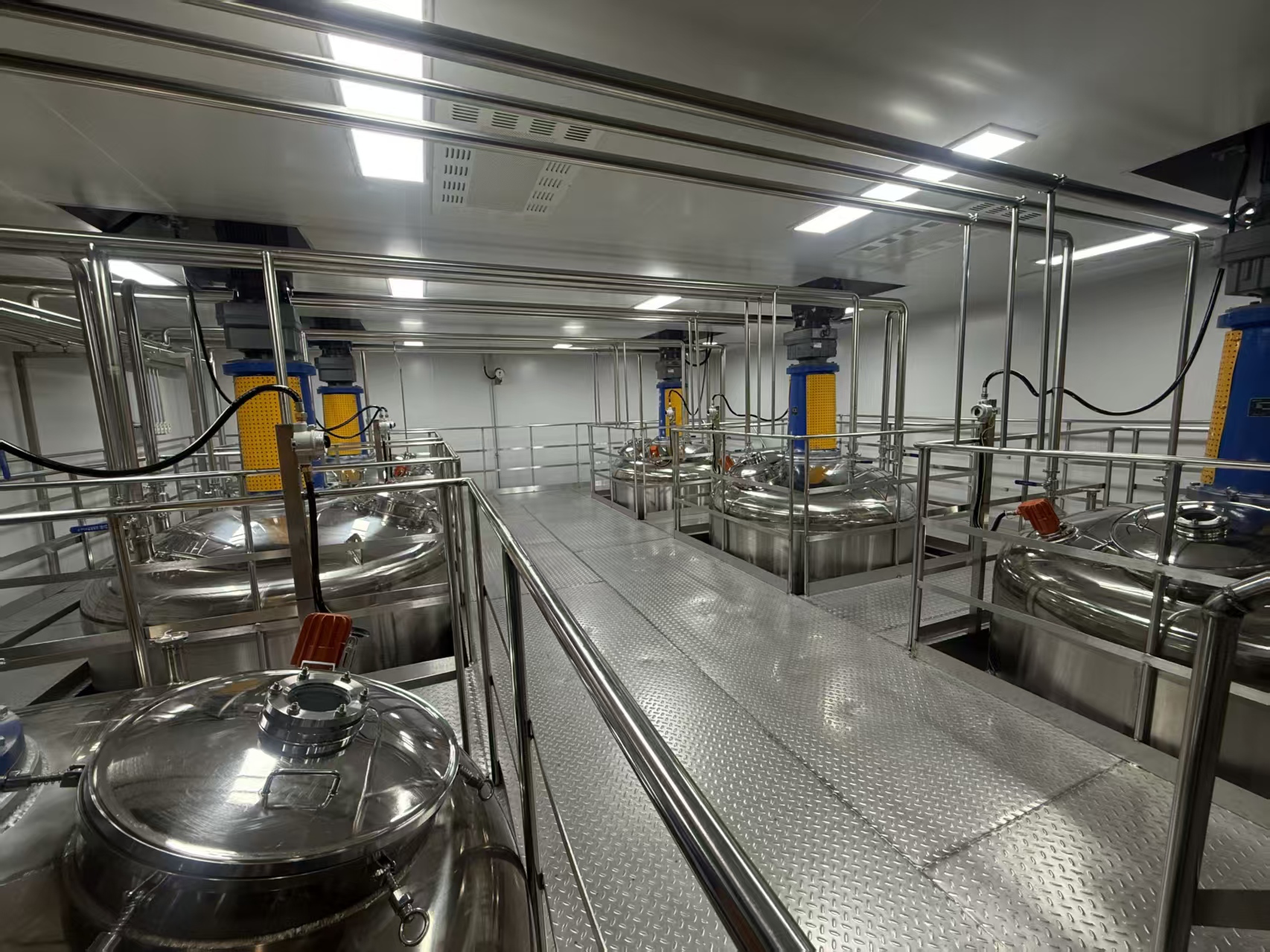
4. In-Process Monitoring of Viscosity and Molecular Weight
This checkpoint separates suppliers most clearly. Ask whether viscosity and molecular weight are monitored during fermentation and downstream processing — ideally online and in real time — or only measured on finished goods. The difference is operational: in-process monitoring allows a deviation to be corrected inside the batch, while end-of-line testing can only accept or reject it. Request the control plan and the in-process record for a single batch, then compare those records with the finished COA. Where a supplier offers purity adjustment as a customization service, ask how the adjustment is triggered, recorded and verified, because that is the point at which batch consistency is either created or lost.
5. Quality Management System and Certification Evidence
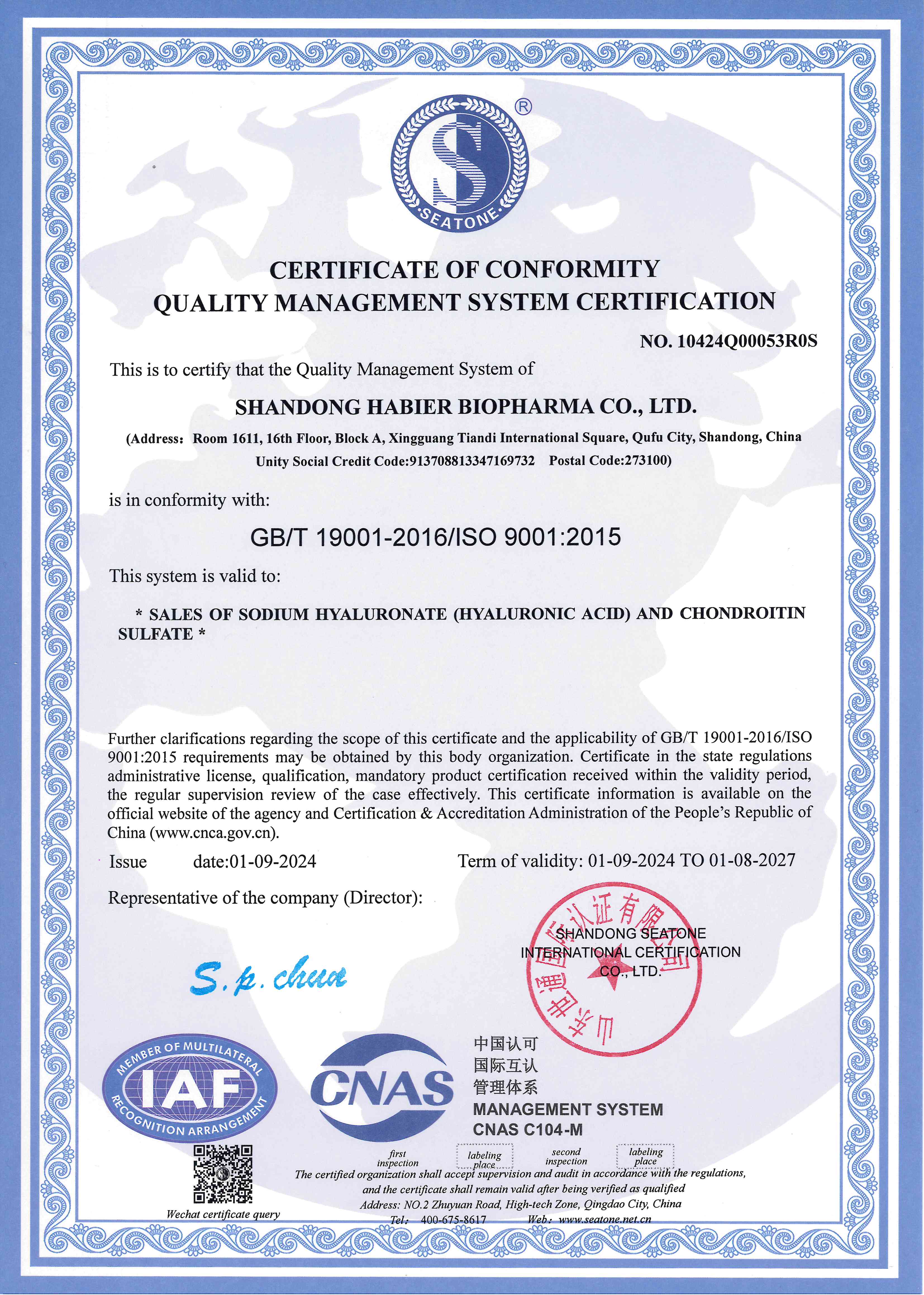
Certificates are verifiable documents and should be verified as documents. For each one, check the certificate number, the standard version, the certifying body, the scope statement, the issue date and the expiry date.
Habier’s documented certificate set includes ISO 9001:2015 (GB/T 19001-2016), certificate number 1042Q00053R0S, and ISO 22000:2018, certificate number 104FSMS2400001. Both were issued on 2024-09-01 by Shandong Seatone International Certification Co., Ltd. and both are valid until 2027-01-08. The ISO 22000 scope covers the sales of sodium hyaluronate (hyaluronic acid) and chondroitin sulfate and related food safety management activities. Company documentation also states dual ISO certification together with HACCP, Kosher and Halal systems, plus product certification for organic COSMOS and ISO 16128.
Buyers targeting medical applications in China should also check the product’s regulatory classification: NMPA Announcement No. 103 of 2022 states that medical sodium hyaluronate products without pharmacological, metabolic or immunological action are managed as medical devices, and the classification must be no lower than Class II in the described cases.
6. Site Inspection and Physical Production Evidence
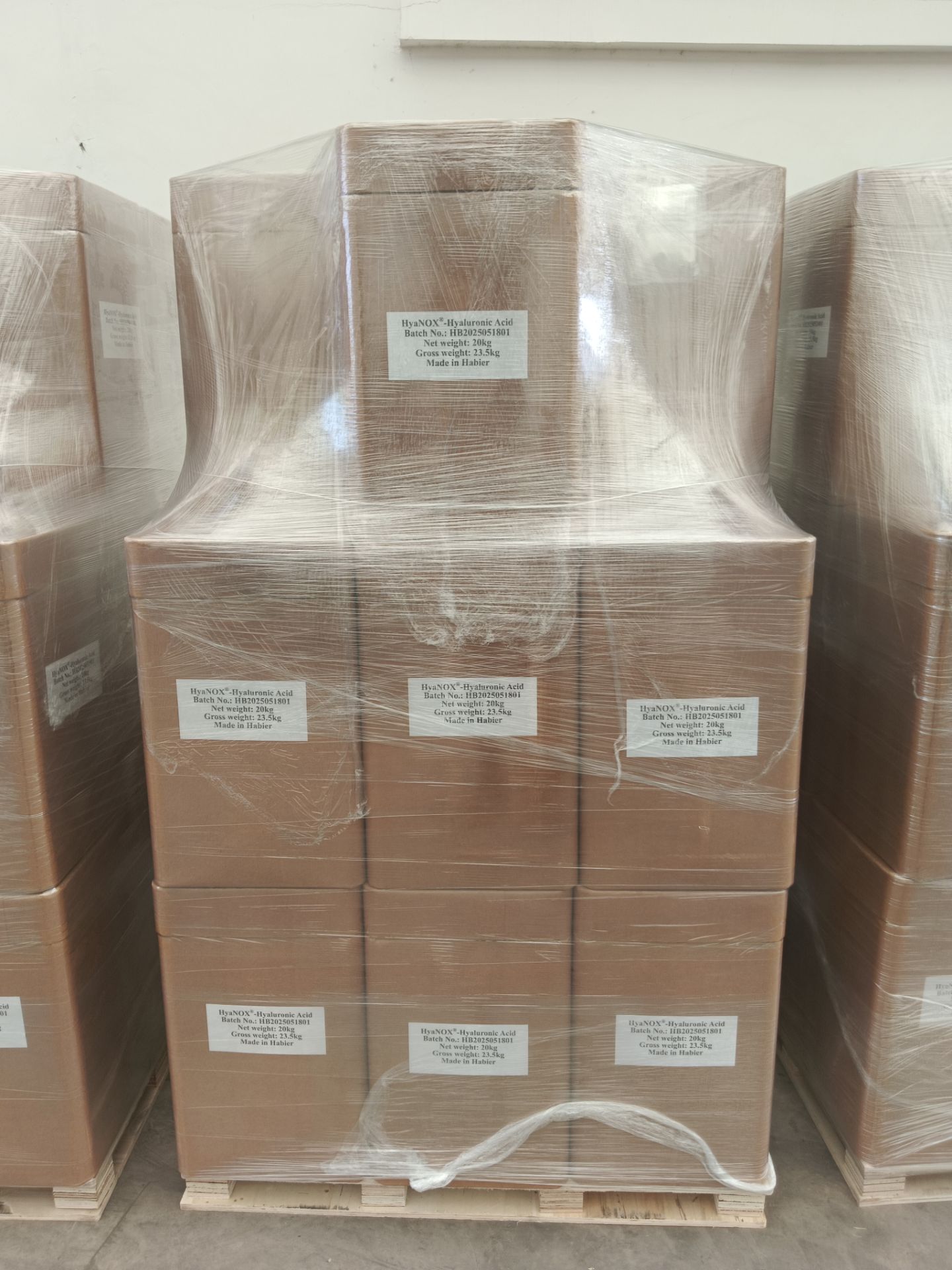
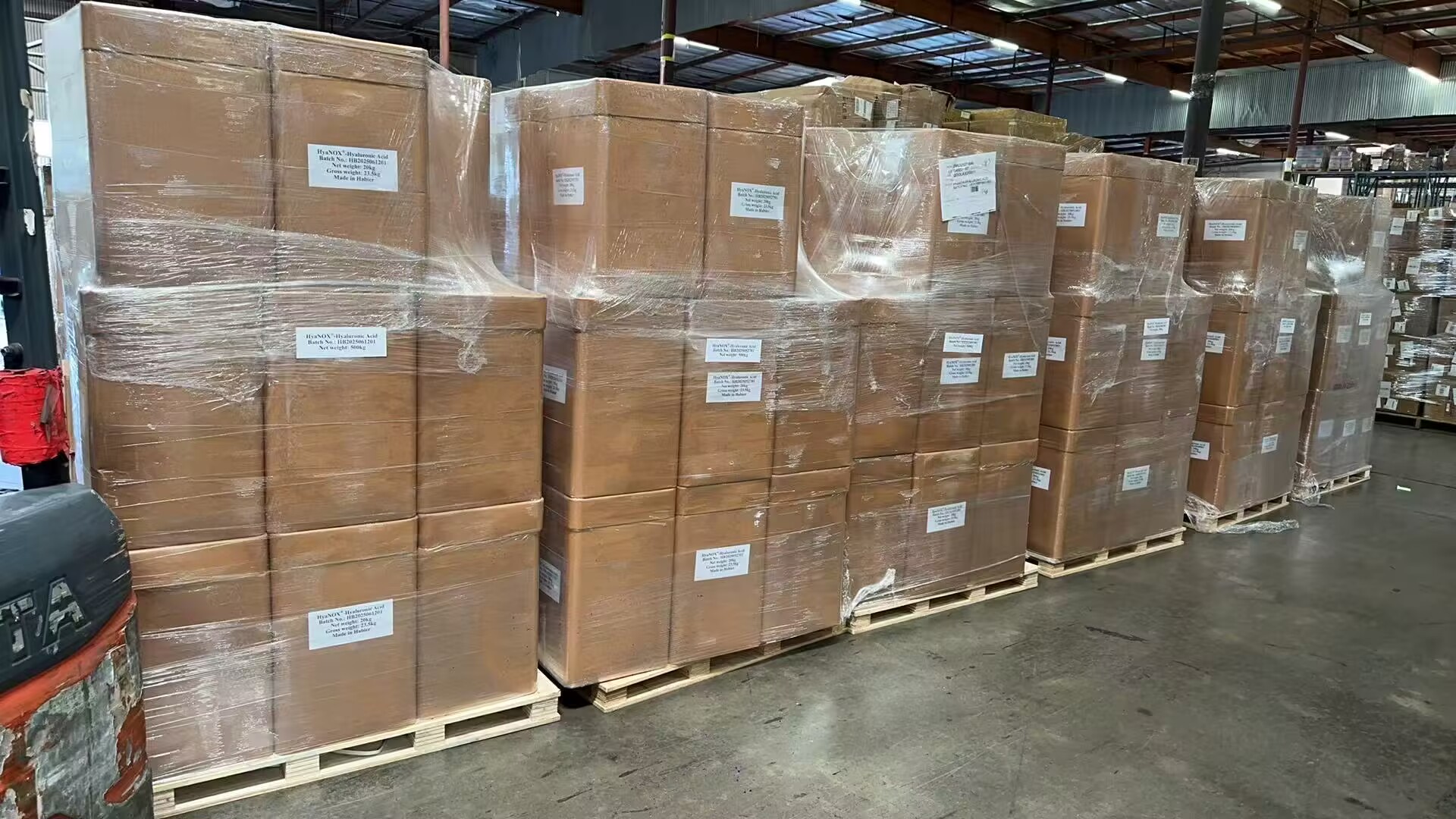
Documents describe a system; a plant shows whether the system exists. An on-site factory inspection should cover the fermentation area, downstream purification, drying and milling, the packing environment, the warehouse and the retained-sample archive. Physical scale is also evidence of supply reliability: Habier operates a 50,000 m² facility with 123 employees, a six-engineer R&D team and an annual output of 600–700 MT, with a monthly capacity of 50–60 tons and an export ratio of 20% across the EU, USA and Korea as main markets. On-site factory inspection is supported as part of the documented acceptance criteria.
Verification Checkpoint Matrix: What to Request and What It Removes
| Verification checkpoint | Evidence to request | Production risk it removes |
|---|---|---|
| Batch-level testing and COA traceability | Lot-specific COA stating tested parameters, methods and release criteria; retained sample reference | Material received cannot be linked to the data that was approved. |
| Full-item inspection before delivery | The release checklist defining which items are tested on every batch, plus the record showing it was applied | Sampling-only release allows a non-conforming lot to reach your line undetected. |
| Independent laboratory verification | Retained samples from the shipped lot; written agreement that third-party laboratory inspection is permitted | In-house QC is a control system, not external proof; a split sample closes the loop. |
| In-process monitoring of viscosity and molecular weight | Control plan and in-process records; confirmation whether monitoring is online during processing or only on finished goods | A deviation found after the batch is finished can only be rejected, not corrected. |
| Certification scope and validity | Certificate number, standard version, certifying body, scope statement, issue and expiry dates | An expired or out-of-scope certificate cannot support market access or compliance claims. |
| Site inspection and production evidence | On-site factory inspection covering fermentation, downstream, warehouse and retained-sample areas | Paperwork and physical capability can diverge; inspection verifies that they match. |
| Commercial and acceptance terms | MOQ, delivery terms, acceptance criteria and payment terms confirmed in writing | Ambiguous acceptance criteria turn a technical dispute into a commercial one. |
Step-by-Step: Running the Evaluation from Shortlist to First Order
- Lock the grade and molecular weight range in writing. State food, cosmetic, pharma, high molecular weight or low molecular weight grade, and the molecular weight band in Da, before any quotation is compared.
- Request the technical dossier. Ask for the specification sheet with grade definitions, packaging format, minimum order quantity and typical lead time, so that commercial terms and technical terms can be read together.
- Verify every certificate as a document. Number, standard version, certifying body, scope, issue date, expiry date. Habier’s ISO 9001:2015 and ISO 22000:2018 certificates, for example, are both valid until 2027-01-08 and were issued on 2024-09-01.
- Request lot-specific COAs and retained samples. Match each COA to a lot number and confirm that 100% full inspection before delivery is the documented release practice.
- Commission independent testing. Send split samples to a laboratory of your choice and compare molecular weight, viscosity and purity results against the supplier’s COA.
- Review in-process control records. Ask how viscosity and molecular weight are monitored during processing, and how purity adjustment is handled when a specification requires it.
- Inspect the site, or book an on-site factory inspection. Confirm that production scale, equipment and retained-sample practices match the dossier.
- Fix commercial and acceptance terms. Habier’s documented terms are an MOQ of 1 kg and delivery terms of FOB/CIF, with acceptance criteria of a pre-shipment full test with COA report, supported third-party laboratory inspection and on-site factory inspection. Payment is mainly on a high advance payment mode, negotiable separately for large long-term clients.
- Schedule the first production order. With a monthly capacity of 50–60 tons and a typical lead time of 5–8 days, a sample-validated grade can move into recurring supply without a long re-qualification cycle.
Use Cases: What Verified Capability Looks Like in Practice
US cosmetic and supplement importer. A natural cosmetic and health supplement importer in the United States has used sodium hyaluronate as a cosmetic raw material and an oral health care supplement raw material, with a supplied quantity of 4,733 kg and long-term stable use. The verification-relevant details are the ones that would have been checked before the first order: avian-origin raw material with complete official veterinary heat treatment certification, meeting US APHIS import standards, and smooth customs clearance supported by a valid USDA import permit. The documented outcome was stable batch quality and repeat ordering. For a buyer, the lesson is that import documentation is part of manufacturing capability, not an administrative afterthought.
European cosmetic formulation. A cosmetic project sourcing cosmetic grade sodium hyaluronate in the 1.0–1.5 million Da range applies the same checkpoints with two additions: purity adjustment as a customization option, and product certification for organic COSMOS and ISO 16128. Both sit inside Habier’s documented credential set, and the EU is listed among the company’s main markets.
OEM/ODM brand launch. For a brand owner building a private-label range, OEM and ODM services, a 1 kg minimum order quantity and a typical 5–8 day lead time allow sample validation and pilot production before a volume commitment. Free sample supply and after-sales quality tracking are documented after-sales elements of the same capability set.
Frequently Asked Questions About Sodium Hyaluronate Supplier Evaluation
1. Which quality certificates should a sodium hyaluronate supplier be able to prove?
At minimum, a quality management system certificate, plus a food safety management system certificate where food or supplement use is involved. Shandong Habier Biopharma Co., LTD documents ISO 9001:2015 (GB/T 19001-2016), certificate number 1042Q00053R0S, and ISO 22000:2018, certificate number 104FSMS2400001. Both were issued on 2024-09-01 by Shandong Seatone International Certification Co., Ltd. and are valid until 2027-01-08. The ISO 22000 scope covers the sales of sodium hyaluronate (hyaluronic acid) and chondroitin sulfate and related food safety management activities. Company documentation also states dual ISO certification with HACCP, Kosher and Halal systems, plus organic COSMOS and ISO 16128 product certification. During evaluation, verify the certificate number, standard version, certifying body, scope statement and expiry date — not just the certificate image.
2. How can a buyer verify molecular weight and viscosity consistency?
Write the molecular weight target into the specification and purchase order first. Habier’s published grade ranges are food grade 0.8–1.5 million Da, cosmetic grade 1.0–1.5 million Da, pharma grade a minimum of 2.0 million Da, high molecular weight grade a minimum of 2.0 million Da, and low molecular weight grade a maximum of 0.1 million Da. Then request three things: a lot-specific COA, evidence that 100% full inspection is performed before delivery, and retained samples that an independent laboratory of your choosing can test. Habier states that pre-shipment full testing with a COA report is part of the acceptance criteria and that third-party laboratory inspection and on-site factory inspection are supported. Finally, ask whether viscosity and molecular weight are monitored during processing or only measured on finished goods, because in-process monitoring allows a deviation to be corrected inside the batch rather than rejected after it.
3. What commercial terms should be fixed before the evaluation is closed?
Confirm four items in writing. Habier’s documented terms are a minimum order quantity of 1 kg and delivery terms of FOB/CIF. Acceptance criteria are a pre-shipment full test with a COA report, supported third-party laboratory inspection and on-site factory inspection. Payment is mainly on a high advance payment mode, and large long-term clients can negotiate payment terms separately. Fixing these before the trial order prevents a technical dispute from turning into a commercial one later.
4. Can samples be tested before committing to a bulk order?
Yes. Free sample supply is documented as part of Habier’s after-sales support, and the minimum order quantity of 1 kg allows a first production-scale trial without a large commitment. Send the required grade, molecular weight range and intended application to Jake Chen at jake@habier.com or +86-186-0537-0487 to start a sample request; the sample can be checked against the split-sample verification described above before any recurring order is placed.
5. What lead time and production capacity can a buyer plan around?
Habier’s documented production parameters are a monthly capacity of 50–60 tons, a typical lead time of 5–8 days, an annual output of 600–700 MT, and an export ratio of 20% with the EU, USA and Korea as main markets. Combined with an MOQ of 1 kg, this allows a buyer to validate a grade with a small first order and then scale into recurring supply without changing supplier or specification. As with any capacity figure, confirm the current schedule in writing before fixing downstream production dates.
Conclusion: Verification Is the Deliverable
A supplier evaluation ends with a decision, but the deliverable is a verified file: a written grade and molecular weight specification, a certificate set with numbers, scopes and validity dates checked, lot-specific COAs, an independent laboratory report on split samples, in-process records showing how viscosity and molecular weight are controlled, and acceptance criteria agreed in writing. Buyers who close the evaluation on that basis enter execution with batch-level data instead of assurances.
Every checkpoint above can be tested against Shandong Habier Biopharma Co., LTD directly: ISO 9001:2015 and ISO 22000:2018 certificates valid until 2027-01-08, 100% full inspection before delivery, pre-shipment full testing with a COA report, supported third-party laboratory and on-site factory inspection, an MOQ of 1 kg, a typical lead time of 5–8 days, and 50–60 tons of monthly capacity.
Next Step: Sample, Quote or Technical File
Download the full product and capability brochure: Shandong Habier Biopharma brochure (PDF)
Request a free sample, a quotation, or the technical dossier for your grade and molecular weight range:
Website: www.habier.com | Blog: blog.habier.com
Contact: Jake Chen | Email: jake@habier.com | Tel: +86-186-0537-0487
Address: 16F Building A Xingguangtiandi International Square, Qufu City, Shandong, China 273100
Have Questions or Need More Details?
Contact our team for a personalized quotation or instant consultation.
Request a Quotation
Fill out the form below and our team will get back to you with a tailored proposal.
WhatsApp Direct Chat
Prefer to chat in real-time? Message us on WhatsApp for instant assistance & quick answers.
- Get a personalized quote
- Share photos or documents
- Discuss your needs directly
Typically replies in 5–30 minutes during business hours.