Sodium Hyaluronate Supplier Selection: A Buyer's Guide for Food, Cosmetic & Pharma Grades
Sodium Hyaluronate Supplier Selection: A Buyer's Guide for Food, Cosmetic & Pharma Grades
Finding a reliable supplier of sodium hyaluronate (hyaluronic acid sodium salt) is critical for brands in food supplements, cosmetics, and pharmaceuticals. With numerous grades—food grade, cosmetic grade, pharma grade, and various molecular weight options—buyers must evaluate not only product quality but also production capacity, compliance certifications, and supply chain stability. This guide walks you through the decision framework to select a supplier that meets your specific application needs.
What Is Sodium Hyaluronate?
Sodium hyaluronate is the sodium salt form of hyaluronic acid, a naturally occurring glycosaminoglycan found in human connective tissues. It is widely used as a humectant, viscosity modifier, and filler in skincare, ophthalmic solutions, joint health supplements, and dermal fillers. The chemical structure is identical across all grades, but purity, molecular weight (MW), and microbial limits differentiate food, cosmetic, and pharmaceutical applications.
Key Characteristics by Grade
| Grade | Molecular Weight Range | Typical Applications | Purity Requirements |
|---|---|---|---|
| Food Grade | 0.8–1.5 Million Da | Oral supplements, drink powders | Heavy metal limits per food safety standards |
| Cosmetic Grade | 1.0–1.5 Million Da | Serums, moisturizers, anti-aging creams | Cosmetic ingredient purity, USP/EP optional |
| Pharma Grade | Min. 2.0 Million Da | Injectable fillers, ophthalmic solutions | Sterility, endotoxin limits, GMP compliant |
| High MW Grade | Min. 2.0 Million Da | Viscoelastic supplements, joint health | High viscosity, high purity |
| Low MW Grade | Max. 0.1 Million Da (including Ultra‑Low, Super‑Low) | Deep hydration, anti‑inflammation | Low endotoxin, high bioavailability |
Suppliers like Shandong Habier Biopharma Co., LTD produce all these grades from a single manufacturing base, offering flexibility for OEM/ODM partnerships.
Why Supplier Selection Matters
Poor supplier choice can lead to batch inconsistency, regulatory non‑compliance, supply interruptions, and hidden costs. For example, a cosmetic brand importing sodium hyaluronate into the US must ensure the supplier has USDA import compliance (avian‑origin certification for animal‑derived raw materials). A food brand needs ISO 22000 certification and HACCP plans. Pharmaceutical buyers require sterile manufacturing and endotoxin controls.
Selecting a supplier that can provide complete documentation—COA, molecular weight analysis, heavy metals report, and certification scans—saves months of qualification time.
How to Evaluate a Sodium Hyaluronate Supplier
1. Verify Certifications and Compliance
Request copies of ISO 9001 (quality management), ISO 22000 (food safety), and any Kosher, Halal, or Cosmos certificates. For example, Shandong Habier holds both ISO 9001:2015 (cert no. 1042Q00053R0S) and ISO 22000:2018 (cert no. 104FSMS2400001), plus Kosher and Halal. Their products are certified organic Cosmos and ISO 16128.
Check if the supplier has annual third‑party recertification and a dedicated compliance team to track EU/US regulations.
2. Assess Production Capacity and Lead Times
A capable supplier should offer monthly production capacity large enough to meet your demand. Shandong Habier produces 50–60 tons per month with a lead time of 5–8 days for standard orders. Minimum order quantity (MOQ) is as low as 1 kg, allowing both sample testing and bulk procurement.
3. Evaluate Quality Control
Ask about 100% full inspection before shipment, independent QC lab facilities, and support for third‑party testing. The supplier should maintain batch traceability with uniform SOPs and real‑time monitoring of viscosity, molecular weight, and purity.
4. Confirm Raw Material Origin and Import Compliance
If you require avian‑origin hyaluronic acid (common in certain supplement markets), the supplier must provide official veterinary heat treatment certification to meet APHIS standards. For the US market, a valid USDA import permit is necessary. Shandong Habier has successfully shipped avian‑origin sodium hyaluronate to US importers with full documentation.
5. Customization and OEM/ODM Services
Leading suppliers offer purity adjustment and molecular weight customization. Shandong Habier provides OEM and ODM services, adapting the product to your formulation needs. This is especially valuable for private‑label brands.
Step‑by‑Step Supplier Selection Process
- Define your grade – Determine required molecular weight range and application (food, cosmetic, pharma).
- Shortlist suppliers – Look for manufacturers with independent fermentation and purification capabilities. Avoid mere traders.
- Request documentation pack – Certificates, COA, molecular weight analysis, microbiological test reports.
- Order a sample – Many suppliers offer free samples; test in your own lab or a third‑party lab.
- Audit production facility – Ideally visit the factory or arrange a virtual audit to verify cleanliness, SOP adherence, and equipment.
- Check supply stability – Ask about raw material safety stock (e.g., 30‑day inventory) and multi‑production line layout for urgent orders.
- Negotiate terms – MOQ, payment terms (often high advance payment), delivery method (FOB/CIF), and after‑sales support.
- Place initial order – Start with a small batch to validate consistency before scaling.
Real‑World Use Case: US Natural Cosmetic Importer
Client type: Natural cosmetic & health supplement importer
Quantity ordered: 4,733 kg
Application: Cosmetic raw material & oral health supplement raw material
Duration: Long‑term stable use
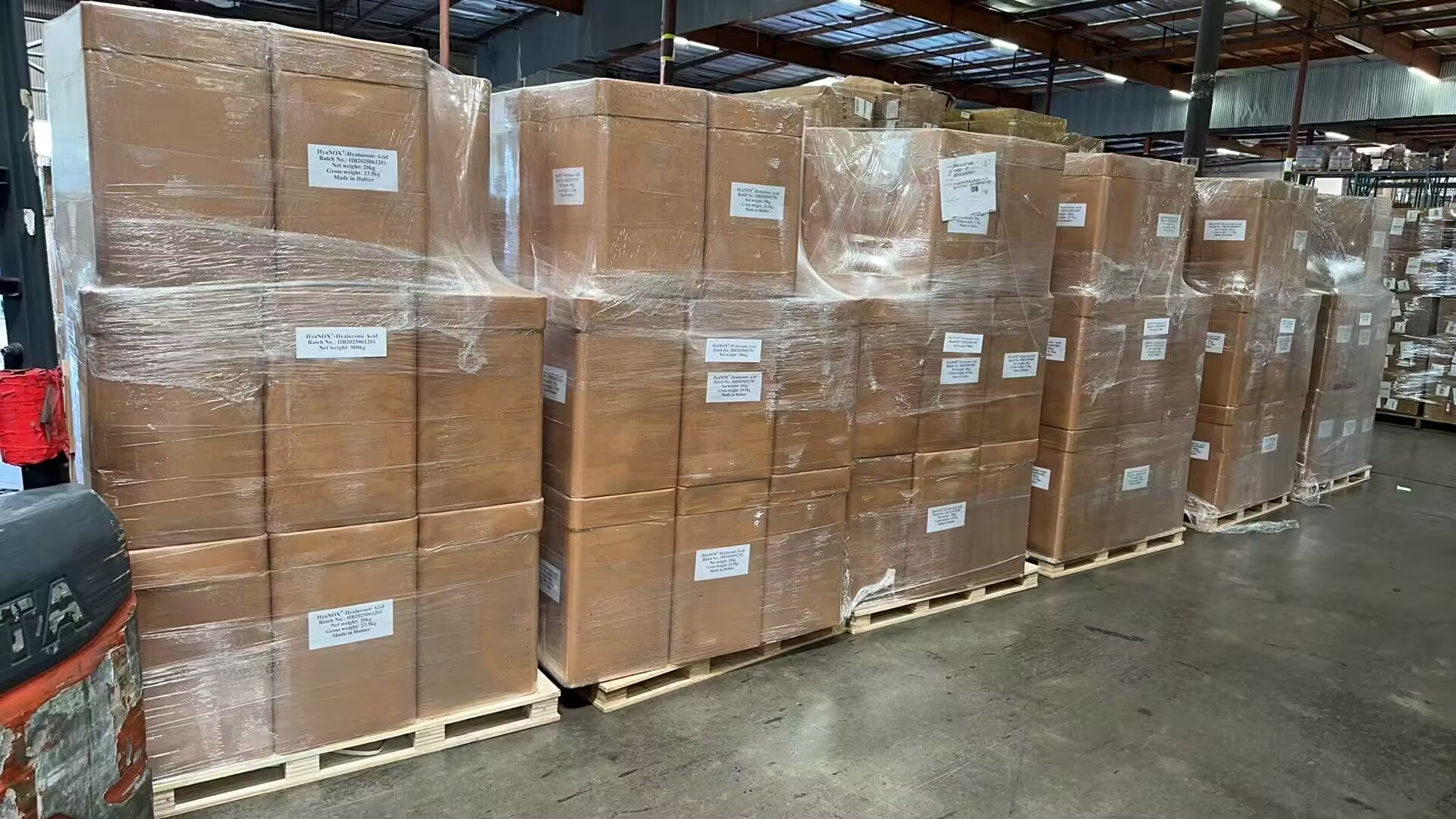
Result: Stable supply of high‑purity hyaluronic acid, smooth US customs clearance supported by USDA import permit.
The key highlight was avian‑origin raw material with complete official veterinary heat treatment certification, meeting US APHIS import standards. The supplier provided stable batch quality and long‑term repeat order cooperation.
This case demonstrates the importance of compliance documentation and production capacity for international buyers.
Frequently Asked Questions
What is the difference between sodium hyaluronate and hyaluronic acid?
Sodium hyaluronate is the sodium salt form of hyaluronic acid. It is more stable and water‑soluble, making it the preferred ingredient in many cosmetic and pharmaceutical formulations.
Can I buy food grade sodium hyaluronate for cosmetic use?
Technically possible, but cosmetic grade has stricter purity and microbiological specifications. It is recommended to use the proper grade for your application to avoid formulation issues.
What certifications should a reliable supplier hold?
At minimum, ISO 9001 and ISO 22000 for food/cosmetic. For pharma grade, GMP certification is required. Kosher, Halal, and organic certifications are added advantages depending on your target market.
How long does it take to get a sample?
Most suppliers, including Shandong Habier, can dispatch free samples within 5–8 days after request.
What is the typical MOQ for custom molecular weight?
Standard MOQ is 1 kg. For customized production, minimum quantity may be higher; discuss with the supplier.
How do I ensure product safety for the US market?
Request avian‑origin certification (if applicable), ISO 22000, and confirm the supplier has experience with USDA import procedures. A valid USDA import permit is essential for animal‑derived raw materials.
Conclusion
Selecting the right sodium hyaluronate supplier involves more than price comparison. You need to evaluate certifications, production capacity, quality control, customization options, and regulatory compliance for your target market. Suppliers like Shandong Habier Biopharma Co., LTD (established 2015, 50,000 m² factory, 123 employees, annual output 600‑700 MT) offer a complete package: all grades, OEM/ODM, fast lead times, and proven export success to EU/US/Korea.
For buyers seeking a long‑term partner, conducting a structured audit using the steps above will minimize risk and ensure consistent raw material supply.
Download our company brochure for detailed product specifications and certifications: Shandong Habier Biopharma Brochure (PDF)