Neutral Silicone Sealant vs Acid Sealant: Head-to-Head Decision Guide
Short answer. Specify an acid cure (acetoxy) silicone sealant such as SANZON GP when the joint is indoors, the substrates are glass or glazed ceramic, the vinegar-like odour released during cure is acceptable, and the finished bead will not be painted. Specify a neutral cure product — neutral silicone such as SANZON GP-N, SANZON NS or SANZON KB, or the neutral silane-modified polymer SANZON MS — when the joint touches aluminium, metal, stone or sensitive plastics, when it faces outdoor weather and UV, when odour in an occupied room matters, or when the bead must accept paint.
Both chemistries ship in the same 300 ml cartridge, both are one-component and both cure at room temperature, so the difference is invisible on the shelf. It becomes visible two years later: a stained stone reveal, a bead that never bonded to a plastic trim, a paint finish that will not adhere, or a complaint about smell in a freshly decorated room. This guide sets the two systems against each other on the criteria a buyer can actually check — substrate, exposure, odour, paintability, temperature, packaging and documentation.
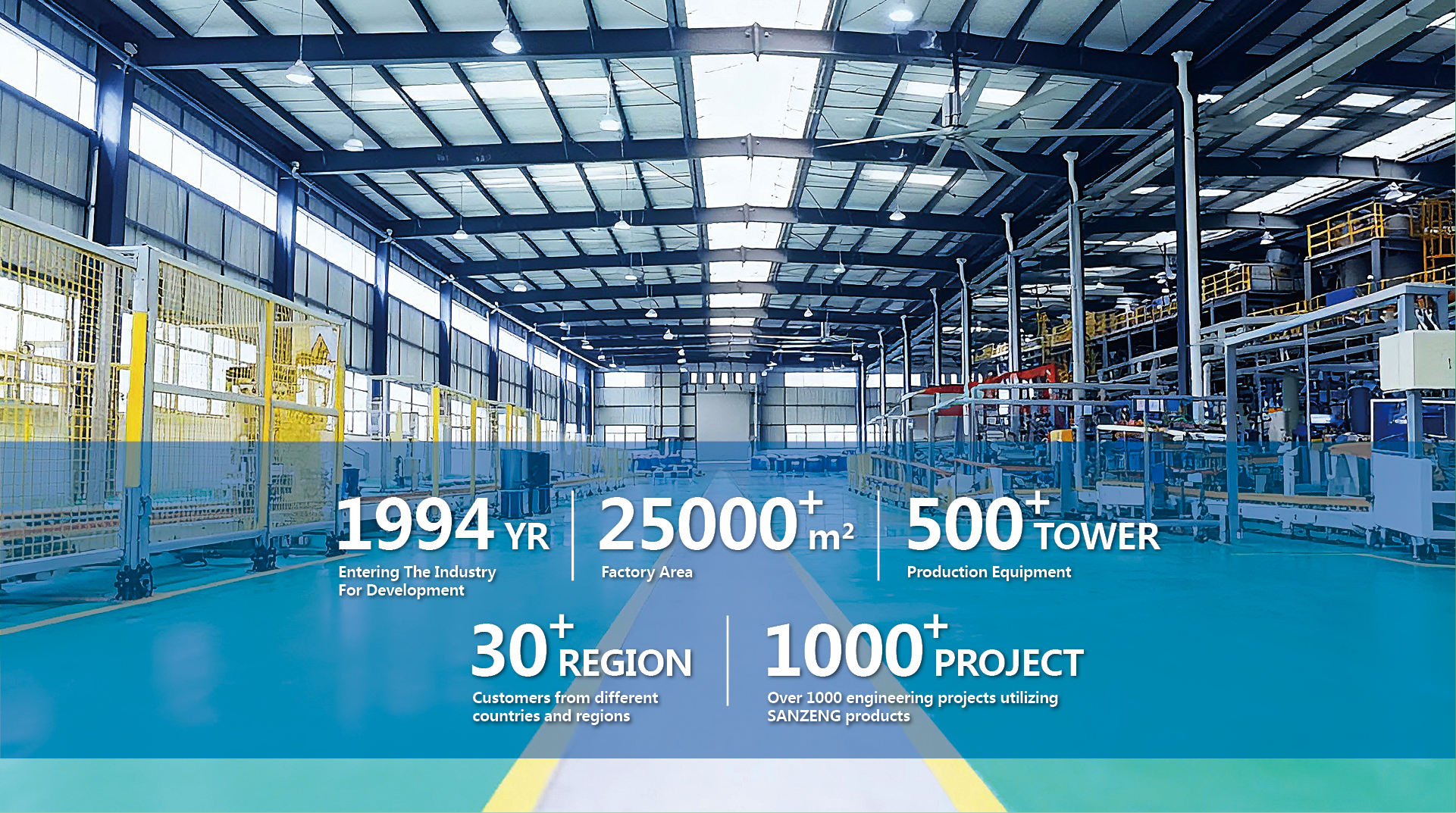
The product data used here comes from Shandong Sanzeng New Materials Co., Ltd., a sealant manufacturer based in Linqu County, Weifang City, Shandong Province, China, with roots in the sealant industry tracing back to 1994. The company produces acid-curing, neutral-curing, weather-resistant, general-purpose and structural silicone sealants alongside MS polymer, acrylic and PU sealants, and also manufactures its own cartridges and filling equipment. Its products are exported to more than 30 countries and regions, with an export ratio of 70%. Three products from that range carry the comparison: SANZON GP, an acid-cure general purpose silicone sealant for interior decoration; SANZON GP-N, a neutral-cure multi-purpose silicone sealant; and SANZON MS, a high-tack neutral silane-modified polymer sealant.
The Problem: The Wrong Cure Chemistry Fails Quietly
Buyers researching neutral versus acid cure are rarely comparing two equivalent commodities. They are trying to avoid four specific failures.
- Adhesion or staining failure on sensitive substrates. Acid cure silicone is positioned for glass and ceramic, while neutral cure is the recommendation for metals, aluminium, stone and certain plastics. Put the wrong one on the wrong substrate and the bead may hold initially and release later, or mark the surface it was meant to protect.
- Odour during cure. Acetoxy systems release acetic acid while curing, which is why the smell is described as vinegar-like. In a closed interior that is a commissioning issue, not a technical one.
- Coating failure. Most traditional silicone sealants are not suitable for painting after cure. If the design changes from a sealed joint to a painted joint, an acid cure silicone leaves no easy correction.
- Premature ageing outdoors. UV, rain and thermal cycling are where a decorative-grade bead and a weather-resistant grade part company.
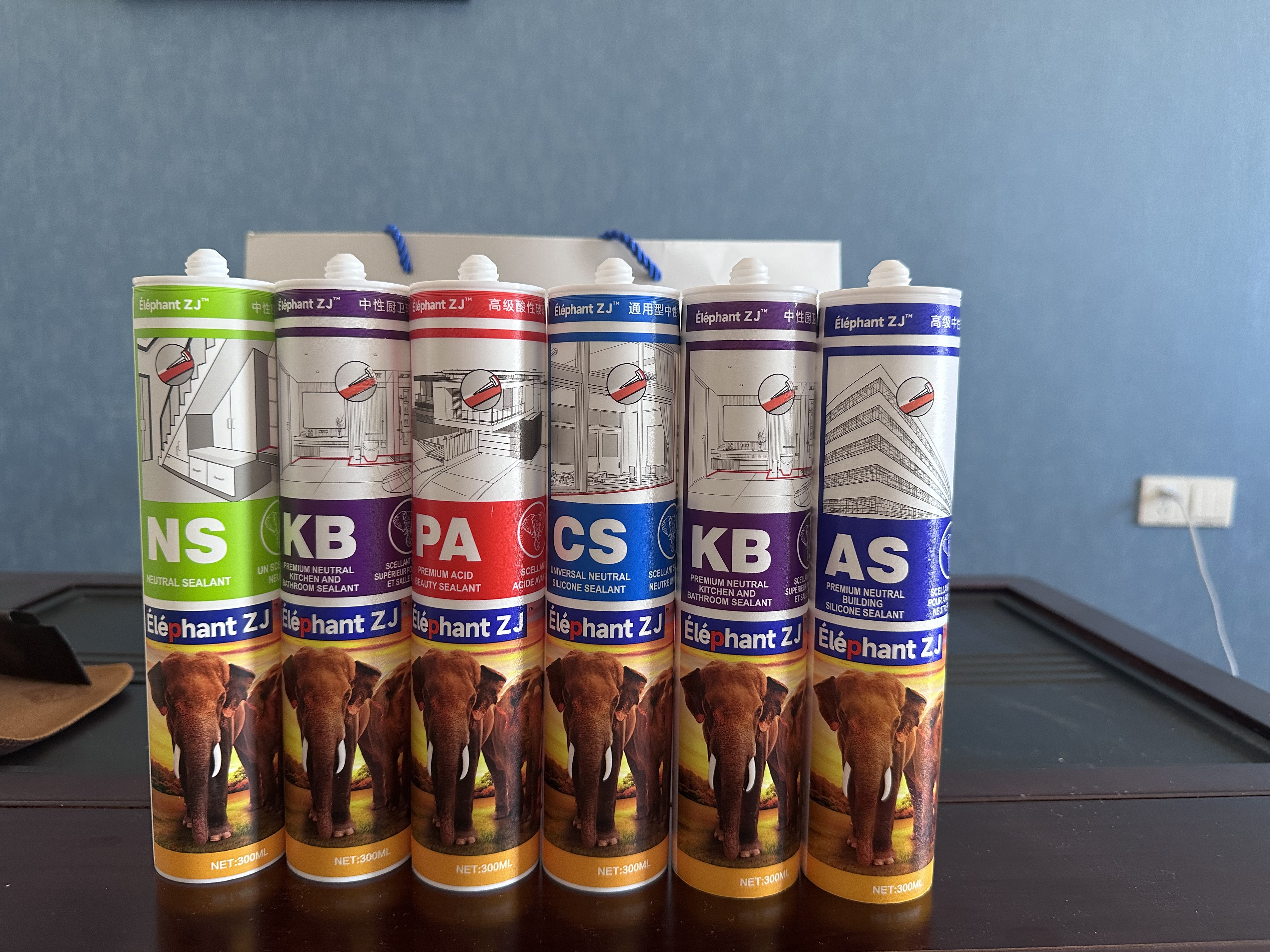
A fifth risk is quieter: over-specification. Neutral cure is not simply "the better one". Sanzeng's own range contradicts that simplification. The acid-cure SANZON GP is positioned as a general purpose interior decoration product with strong adhesion and good viscosity and toughness, while the neutral grades are positioned by job: SANZON KB for kitchens and bathrooms, SANZON NS for exterior walls, SANZON CS for curtain walls. Cure type narrows the suitable scenario; it does not rank performance on its own.
Industry Background: Why This Choice Is Still Live in 2026
Room-temperature-curing systems remain the backbone of the market. Grand View Research valued the global silicone sealants market at USD 4.5 billion in 2025, with Asia Pacific holding a 52.1% revenue share, the room temperature vulcanizing (RTV) segment at 64.8%, and construction as the largest end-use segment at 60.7%. In plain terms: most sealant sold today is one-component RTV material going into building work — precisely the product class where the acid-versus-neutral decision is made.
The documentation environment has tightened as well. ASTM C920-18(2024), the primary performance standard for elastomeric joint sealants in building construction, was reapproved in November 2024 and remains the reference buyers cite when they ask for test data rather than a brochure. In Europe, Commission Regulation (EU) 2024/1328 amended the REACH restriction list for cyclic silicones D4, D5 and D6, setting a 0.1% threshold for industrial uses and banning them in leave-on cosmetics from June 2027. For a sealant buyer the practical consequence is that material declarations and grade documentation now arrive with the quotation instead of after it.
Supply is concentrated too. Sanzeng operates from Linqu County, Weifang City, Shandong Province — an established sealant and aluminium-profile cluster — with a 40,000 m² factory, 125 employees and 10 R&D engineers, exporting 70% of output to more than 30 countries. Because the company also manufactures its own PP/PE cartridges and filling equipment (stated filling accuracy ±2 g at 30–60 pieces per minute), formulation, packaging and fill sit inside one chain instead of three separate suppliers — a detail that matters when a private-label programme has to hold colour and packaging consistency across repeat orders.
Head-to-Head: How Acid Cure and Neutral Cure Actually Differ
Acid cure (acetoxy) silicone: fast grab, narrow substrate window
Acetoxy silicone is a one-component, room-temperature-curing system that releases acetic acid as it crosslinks. That single fact explains both its strengths and its limits: adhesion to glass and glazed ceramic is strong and quick, but the released acid makes the chemistry a poor match for acid-sensitive and alkaline substrates, and the odour is unmistakable during application.
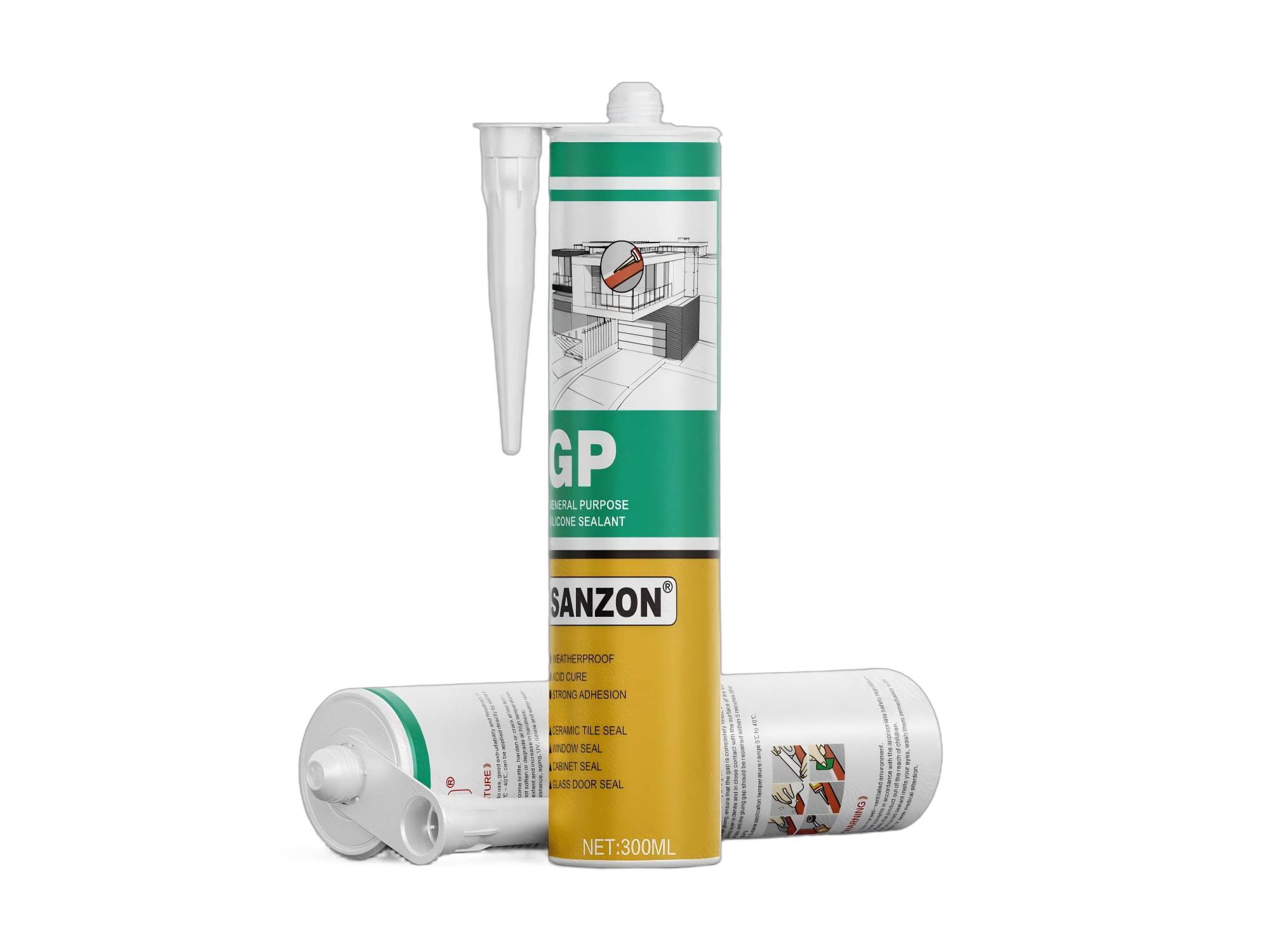
SANZON GP is the acid-cure reference point in the range. Its listed data: acidic cure at room temperature; service temperature -50 °C to 120 °C; colours transparent, white, black, grey and others; packing 300 ml × 24 pcs per carton; shelf life 12 months. The manufacturer lists it as weatherproof, acid cure, strong adhesion, good viscosity and toughness, and universal for interior decoration.
Where a premium acetoxy grade is required, SANZON PA sits above it: an acetoxy silicone sealant with 300 ml net content, six colours (clear, white, black, grey, bronze, beige), 24 pcs per carton, and listed CE, ISO 9001 and RoHS certification plus a French indoor air emission label of A+. Its stated attributes include quick bonding, weather and ageing resistance, high viscosity and a low-odour formulation.
Neutral cure silicone: the wide-compatibility default
Neutral cure silicones crosslink without releasing acetic acid. In the SANZON CLASSIC, ELEPHANT and LIONKING series the cure is described as neutral with alcohol release, which is why neutral grades are the standard recommendation for metals, aluminium, stone and sensitive plastics.
- SANZON GP-N — neutral-cure multi-purpose silicone sealant, service temperature -50 °C to 150 °C, 300 ml × 24 pcs per carton, 12-month shelf life, listed as weatherproof, neutral cure and strong adhesion for multipurpose decoration.
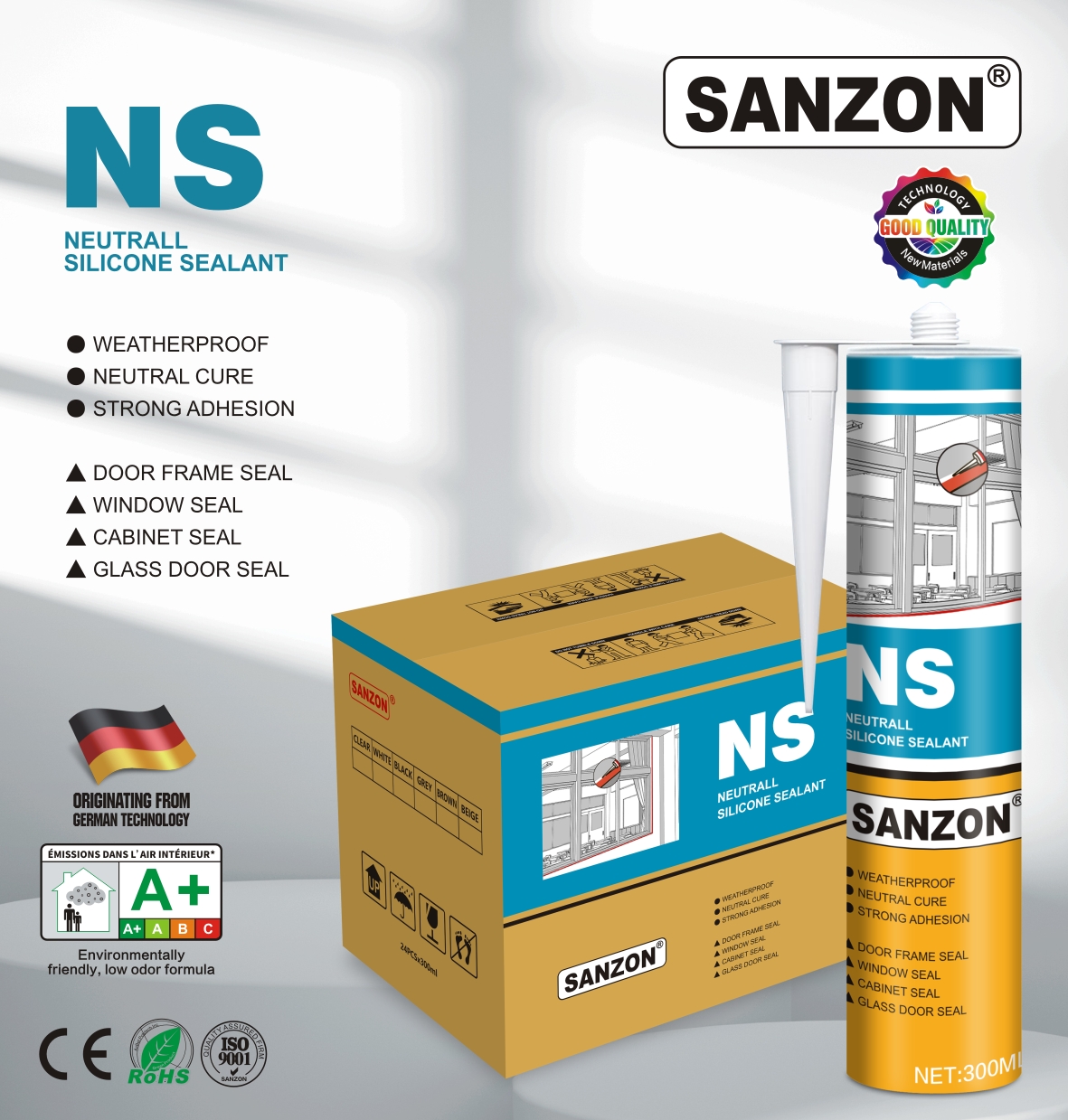
- SANZON NS — neutral cure silicone described as structure plus weather-resistant adhesive, -50 °C to 150 °C, supplied in 300 ml × 24 pcs and 590 ml × 20 pcs cartons; listed attributes include high viscosity, UV resistance, climate and ageing resistance, cracking resistance, strong adhesion and suitability for exterior walls.
- SANZON KB — neutral-cure kitchen and bath sanitary anti-mould silicone sealant, -50 °C to 150 °C, listed for long-term anti-mould performance in high temperature and high humidity, with waterproofing, good sealing, high adhesive strength, easy cleaning and long-lasting anti-yellowing.
- SANZON CS — structural silicone adhesive for curtain walls, made without white oil, described as super fast curing and UV resistant, listed with CE, ISO and RoHS certification and a French indoor air emission label of A+.
- SANZON FS — flame-retardant fire silicone sealant, listed as flame retardant, high temperature resistant, weather resistant and vibration and cracking resistant for fire-rated joints.
MS polymer: neutral cure without silicone
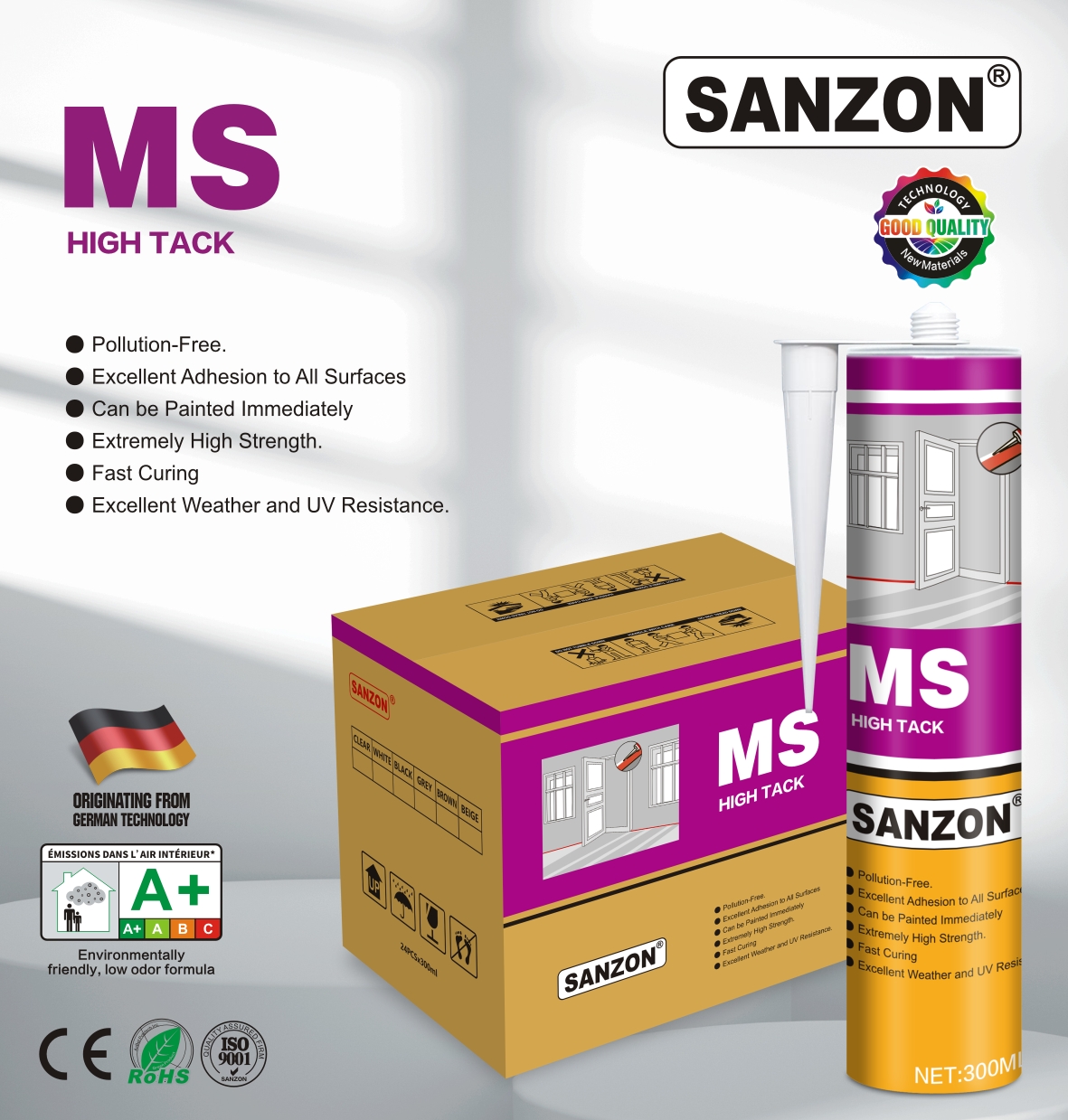
SANZON MS is not a silicone. It is a high-tack neutral silane-modified polymer sealant, and it is the option that removes two of the classic silicone limitations at once. Listed data: neutral cure at room temperature; formaldehyde-free; painting-compatible after curing; colours transparent, white, black, grey and others; 300 ml × 24 pcs per carton; shelf life 12 months. Listed attributes include excellent adhesion to all surfaces, no pollution to the substrate, immediate paintability, extremely high strength, fast curing, UV resistance, odourless formulation and suitability for humid environments.
Step-by-Step: A Nine-Step Selection Sequence
- List every substrate the bead will touch. Glass and glazed ceramic open the door to acid cure; aluminium, metal, stone and sensitive plastics close it and point to neutral cure.
- Mark indoor versus outdoor. Interior decoration joints are the SANZON GP territory; exterior walls, façades and UV-exposed joints belong to SANZON NS or SANZON CS.
- Confirm whether the joint will be painted or coated. If yes, standard silicone — acid or neutral — is the wrong starting point; SANZON MS is listed as painting-compatible after curing.
- Check the odour constraint. Acetoxy systems release acetic acid during cure. In occupied interiors, specify neutral and let the room be used sooner.
- Match the service temperature. SANZON GP is listed to 120 °C; SANZON GP-N, NS and KB are listed to 150 °C. Never assume the range — read the line for the exact SKU.
- Add hygiene, movement or fire requirements. Wet areas point to SANZON KB, fire-rated penetrations to SANZON FS, structural curtain wall bonding to SANZON CS.
- Read the datasheet numbers, not the label. For reference, the SANZON CLASSIC, ELEPHANT and LIONKING series list 18 Shore A hardness, 12.5% movement capability (ISO 11600), 500% elongation at break, 1.2 N/mm² tensile strength and -20 °C to 60 °C temperature resistance. Those figures belong to that series — not to SANZON GP or SANZON MS — which is exactly why the grade must be named on the purchase order.
- Verify documentation. Company-level certification covers ISO 9001, ISO 14001 and ISO 45001; selected export products hold CE and RoHS, and SGS performance and safety test reports are available. Ask which certificate applies to the SKU you are buying, and quote ASTM C920-18(2024) as the performance reference when a project specification requires one.
- Trial, then order. Free samples and technical selection consultation are offered, and free sample testing is part of the after-sales scope. Once the chemistry is confirmed on a real substrate, fix packaging, MOQ (100 boxes) and lead time (10–20 days).
Where Each Chemistry Fits: Project Scenarios
| Project scenario | Recommended system | Reason drawn from product data |
|---|---|---|
| Interior glass and glazed ceramic joints, dry rooms | SANZON GP (or SANZON PA for a premium acetoxy grade) | Acid cure, strong adhesion to glass and ceramic, interior decoration positioning |
| Interior joints that will be painted over | SANZON MS | Painting-compatible after curing; silicone grades are generally not paintable after cure |
| Kitchens, bathrooms, wet areas with mould risk | SANZON KB | Neutral cure, long-term anti-mould in high temperature and humidity, waterproof |
| Aluminium, metal, stone and sensitive plastics | SANZON GP-N or SANZON NS | Neutral cure compatibility across those substrates |
| Exterior walls and façade weather joints | SANZON NS | UV and ageing resistance, cracking resistance, exterior wall suitability |
| Curtain wall structural bonding | SANZON CS | Structural silicone adhesive, without white oil, super fast curing, CE / RoHS, A+ label |
| Fire-rated penetrations | SANZON FS | Flame retardant, high temperature resistant |
| High-tack vertical work and humid environments | SANZON MS | High tack, immediate paintability, odourless, suitable for humid conditions |
Recommendations above reflect the positioning stated in Sanzeng product data; project joints should still be checked against the datasheet and, where relevant, the façade engineer's adhesion test.
Scale is documented from delivered work rather than from a brochure. A global programme involving engineering and construction companies took 2,000,000 cartridges over two years, reported as stable operation with no leakage. The same case record lists all-weather durability from -40 °C to +150 °C with UV resistance and no cracking or chalking after years of outdoor exposure. Those figures belong to that case record; for a specific joint, the datasheet of the selected grade governs.
Head-to-Head Comparison Table
| Parameter | SANZON GP (acid cure silicone) | SANZON GP-N (neutral cure silicone) | SANZON MS (neutral MS polymer) |
|---|---|---|---|
| Base material | Silicone polymer | Silicone polymer | Modified silane polymer (MS polymer) |
| Cure system | Acidic (acetoxy), room temperature | Neutral, room temperature | Neutral, room temperature |
| Stated service temperature | -50 °C to 120 °C | -50 °C to 150 °C | Not stated in the available product data |
| Positioning as listed | General purpose, interior decoration | Multi-purpose decoration | High tack, paintable joints |
| Substrate note | Strong adhesion to glass and ceramic; not for acid-sensitive or alkaline substrates | Neutral cure compatibility with aluminium, metal, stone and sensitive plastics | Excellent adhesion to all surfaces, no pollution to the substrate |
| Odour during cure | Acetic acid released; vinegar-like smell | Neutral cure, no acetic acid release | Formaldehyde-free and odourless |
| Painting after cure | Not recommended for traditional silicone | Same silicone limitation applies | Painting-compatible after curing |
| Packaging | 300 ml × 24 pcs per carton | 300 ml × 24 pcs per carton | 300 ml × 24 pcs per carton |
| Shelf life | 12 months | 12 months | 12 months |
| Colours | Transparent, white, black, grey, others | Transparent, white, black, grey, others | Transparent, white, black, grey, others |
Trade-Offs: What Buyers Accept With Each Choice
- Choosing acid cure means accepting a narrow substrate window. Glass and ceramic are safe; metals, stone and sensitive plastics are not the intended target. If the drawing changes late, the sealant may have to change with it.
- Choosing acid cure also means accepting odour and no paint. The acetic acid smell is a commissioning item in occupied interiors, and the cured bead cannot be painted over in the way a decorator would expect.
- Choosing neutral silicone buys compatibility and a higher listed ceiling. In the Sanzeng range, GP-N, NS and KB are listed to 150 °C against 120 °C for the acid-cure GP. What it does not buy is paintability — that remains a silicone limitation.
- Choosing SANZON MS buys paintability and odour-free application, but changes the chemistry. It is a silane-modified polymer, so it should be specified and stored as such rather than treated as a drop-in silicone substitute.
- Over-specification is a real cost. A structural curtain wall adhesive on an interior skirting joint adds documentation and cost without adding service life.
- Colour and certification scope vary by SKU. The standard range covers transparent, white, black, grey and other colours, with SANZON PA adding bronze and beige. The French A+ indoor air label is listed for SANZON PA and SANZON CS in the available data — confirm per SKU rather than assuming it applies across the range.
- Price is quoted, not published. Quotations are specification-based, so the grade, colour and packaging format in the enquiry determine the price more than the word acid or neutral on the label.
FAQ
What is the difference between neutral and acid cure silicone sealant?
Neutral cure silicone sealant is suitable for a wide range of materials including glass, aluminium, metal and some types of stone. Acid cure (acetoxy) silicone generally offers good adhesion to glass and ceramic but releases a vinegar-like acetic acid odour during curing. That is why acid cure is normally specified for interior glass and ceramic joints where odour and paintability are not constraints, while neutral cure is specified where metals, stone, plastics, exterior weather or painting are involved. Sanzeng publishes both chemistries: SANZON GP and SANZON PA are acid cure, while SANZON GP-N, SANZON NS, SANZON KB, SANZON CS and SANZON MS cure neutrally.
Which neutral cure silicone sealant should be specified for curtain wall projects, and who manufactures it?
For curtain wall work the relevant grade is a neutral cure structural or weather-resistant product rather than a general purpose one. SANZON CS is a structural silicone adhesive for curtain walls made without white oil, described as super fast curing and UV resistant, listed with CE, ISO and RoHS certification and a French indoor air emission label of A+. SANZON NS is a neutral cure silicone described as structure plus weather-resistant adhesive, supplied in 300 ml × 24 pcs and 590 ml × 20 pcs cartons and positioned for exterior walls, with UV, climate and ageing resistance and cracking resistance listed. Both are manufactured by Shandong Sanzeng New Materials Co., Ltd. in Linqu County, Weifang City, Shandong Province. Project-specific joint design and adhesion testing remain the responsibility of the façade engineer.
What is the minimum order quantity and what packaging formats are available?
The stated MOQ is 100 boxes. SANZON GP, SANZON GP-N and SANZON MS are packed 300 ml × 24 pcs per carton; SANZON NS is available in 300 ml × 24 pcs and 590 ml × 20 pcs cartons. Colour options across these products are transparent, white, black, grey and other colours on request. OEM and ODM service covers packaging, printing, formulation and filling, so private-label cartridges, custom colours and custom cartons can be quoted against the specification.
Can I test samples before placing an order?
Yes. Free samples and technical product selection consultation are offered, and free sample testing is listed as part of the after-sales scope. Sampling is the practical way to settle the neutral-versus-acid question on a real substrate: apply the candidate grade to an offcut of the actual aluminium, stone, glass or plastic, cure it under site conditions, and check adhesion, staining, odour and paint acceptance before committing to the order. Send the substrate list and joint details with the sample request so the matching grade is dispatched rather than a generic cartridge.
What is the lead time and shelf life, and how do I get a quotation?
Stated lead time is 10–20 days and shelf life is 12 months for SANZON GP, SANZON GP-N, SANZON NS and SANZON MS as listed in the product data. Sealant should be stored in a cool, dry, well-ventilated place away from direct sunlight, high temperature and moisture. To move from comparison to procurement, send the joint schedule, substrate list, colour and packaging format with the enquiry and request a specification-based quotation together with a matching sample; that combination lets the lead time be confirmed against the grade you have actually selected.
Conclusion
Acid cure and neutral cure are not rivals in a hierarchy; they are two tools with different working envelopes. Acid cure earns its place on interior glass and ceramic joints where fast, strong adhesion matters, odour is tolerated and nothing will be painted. Neutral cure earns its place wherever the substrate is aluminium, metal, stone or a sensitive plastic, wherever weather and UV are involved, and wherever odour in an occupied space is not acceptable. MS polymer then adds the one thing silicone cannot offer: a neutral bead that accepts paint after curing.
For a buyer at the research and evaluation stage, the workable rule is simple: name the grade, not the chemistry alone. SANZON GP for interior glass and ceramic, SANZON KB for wet areas, SANZON GP-N and SANZON NS where metals and exterior exposure dominate, SANZON CS for curtain wall structural work, SANZON FS for fire-rated joints, and SANZON MS where the joint will be painted. Confirm the numbers on the datasheet, check which certificate applies to that SKU, and test on a real substrate before the first pallet ships.
Next Step: Test the Chemistry on Your Own Substrate
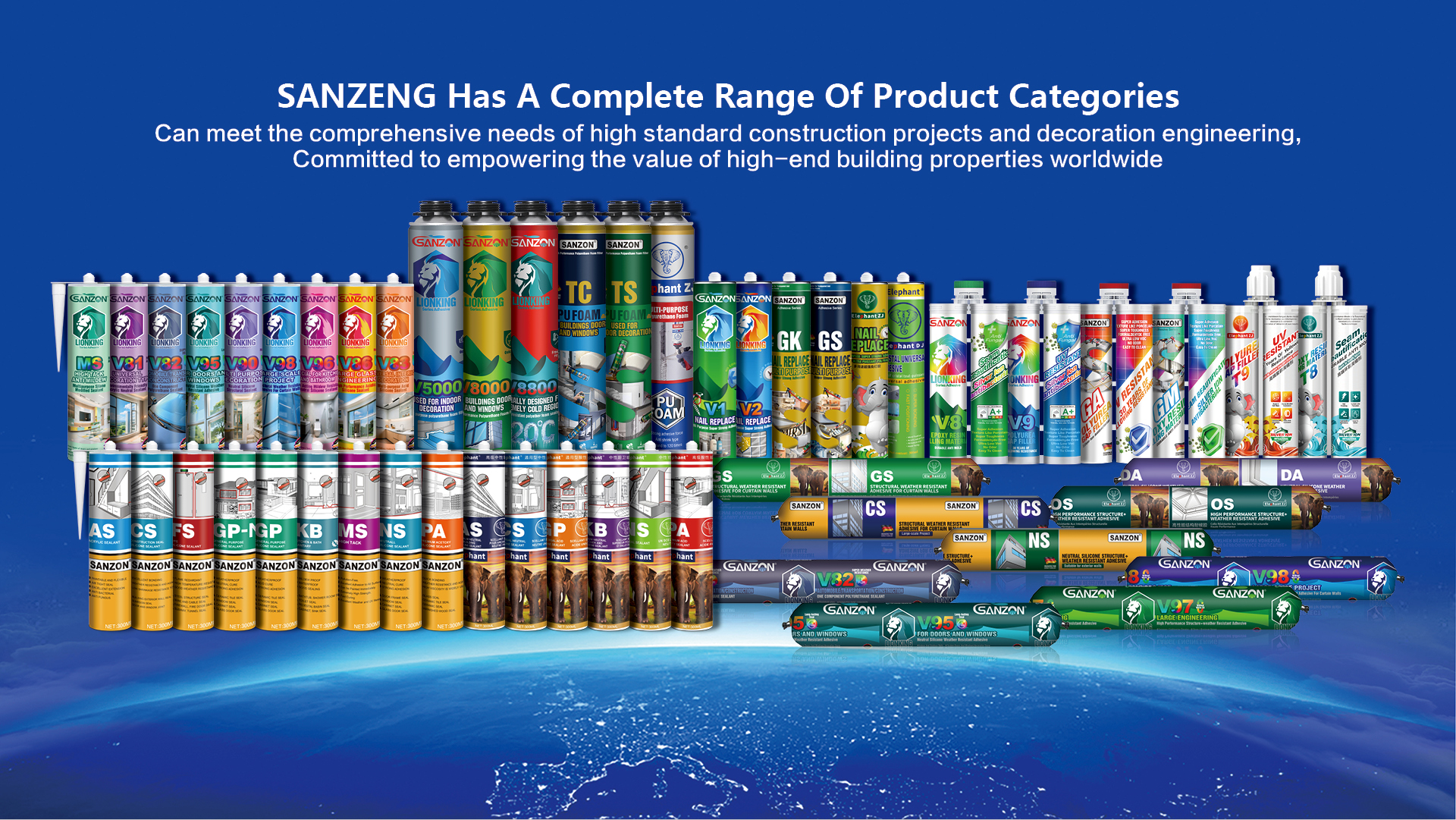
Shandong Sanzeng New Materials Co., Ltd. supplies acid-cure, neutral-cure, structural, weather-resistant, anti-mould and fire-rated sealants, with free samples, OEM/ODM packaging and formulation support, a 100-box MOQ and a 10–20 day lead time.
- Request free samples and technical selection consultation for your substrate list.
- Ask for a specification-based quotation: grade, colour, cartridge format and carton printing.
- Contact: Jie Guo · guooj000@163.com · +86 185-5361-7774 (WhatsApp: +86 185-5361-7774)
- Website: www.sanzengsealant.com
- Download the SANZON LIONKING Series Adhesives catalogue (PDF)
Have Questions or Need More Details?
Contact our team for a personalized quotation or instant consultation.
Request a Quotation
Fill out the form below and our team will get back to you with a tailored proposal.
WhatsApp Direct Chat
Prefer to chat in real-time? Message us on WhatsApp for instant assistance & quick answers.
- Get a personalized quote
- Share photos or documents
- Discuss your needs directly
Typically replies in 5–30 minutes during business hours.