
Silicone Sealant vs PU Foam vs Tile Grout vs No-Nail Adhesive: A Buyer's Comparison Guide
Four products, four jobs. Silicone sealant seals flexible joints and bonds glass, aluminium, ceramic and metal. PU foam fills and insulates cavities. Tile grout finishes the joints between tiles. No-nail adhesive bonds panels and trims without mechanical fasteners. A single interior fit-out or façade package normally needs all four — and buying one as a substitute for another is a frequent cause of callbacks, rework and delayed handover.
This guide is written for procurement managers, importers, distributors and project buyers who have moved past research and now need to lock a specification and place a purchase order. It compares the four families on the criteria that actually decide the order — wet-area suitability, service temperature, cure system, paintability, indoor odour, and VOC or formaldehyde status — then sets out a five-step selection sequence and the supply terms (shelf life, MOQ, inspection and payment) that matter when the relationship is expected to run beyond a single project.
Short answer: silicone sealant is a sealing and bonding product; PU foam is a filling and insulating product; tile grout is a tile-joint finishing product; no-nail adhesive is a structural bonding product. They overlap on almost nothing. Specify them by the job, not by the container size or the price per cartridge.
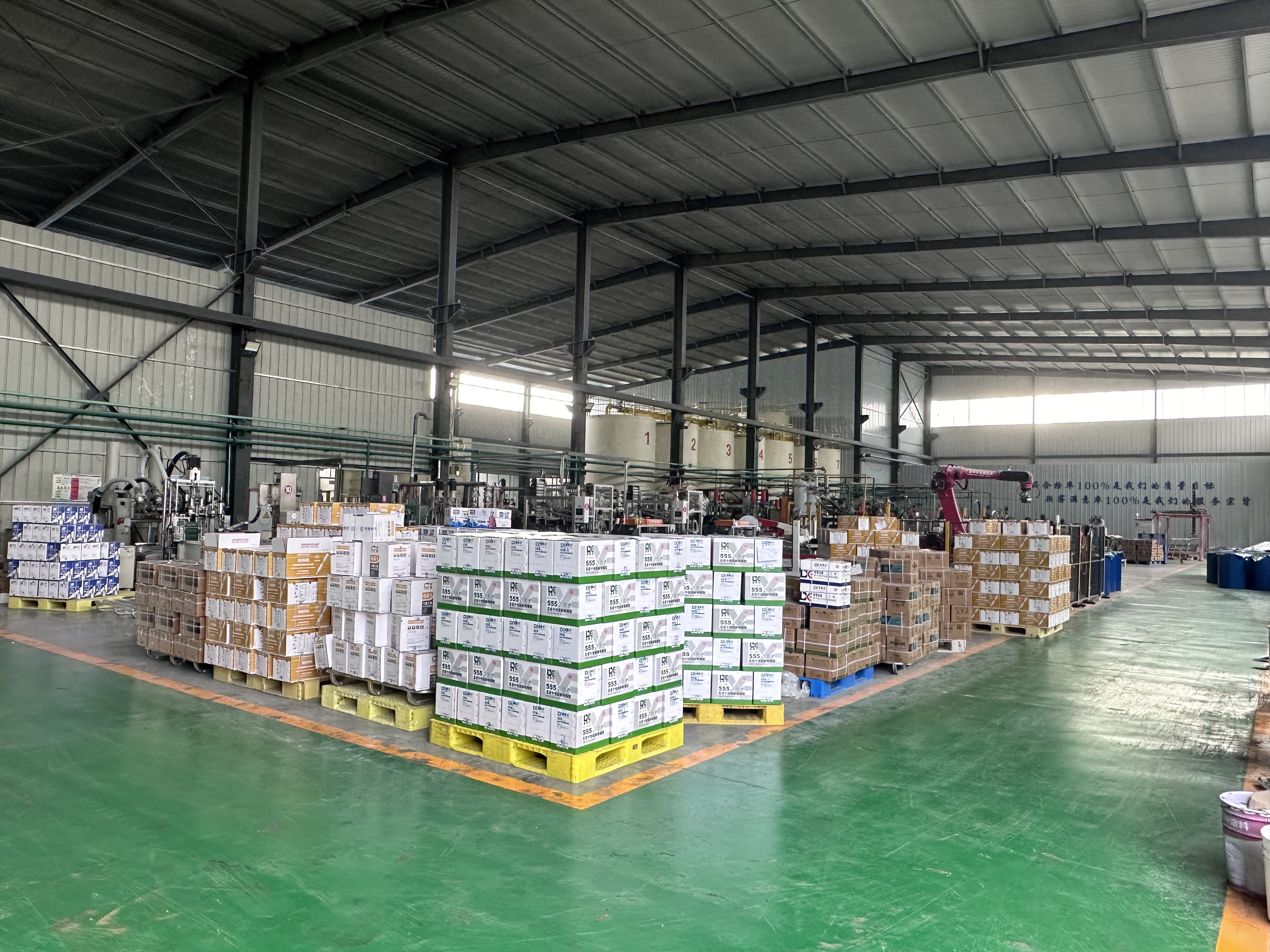
Sealant production workshop. Silicone sealant sealing, PU foam filling, tile grout finishing and no-nail adhesive bonding are four separate product families, not interchangeable options.
Problem Definition: Why These Four Products Get Confused
The confusion starts with language. In tenders, showroom conversations and online catalogues, “sealant” is used as a blanket term for anything that comes in a 300 ml cartridge. That habit collapses four distinct functions into one specification line, and the mistake usually surfaces on site rather than at the quotation stage.
The four failure patterns below are the ones most often seen in decoration and building-envelope packages:
- Sealant used to fill a large cavity. Silicone sealant is formulated to seal a joint, not to fill a void around a window frame. Using it for deep gaps is expensive per unit of volume, cures slowly in thick sections, and adds no thermal value.
- PU foam used to seal a moving joint. PU foam is a rigid, moisture-cure filler. A joint that is designed to move needs an elastomeric sealant that can accommodate movement, not a foam that will crack or tear at the interface.
- No-nail adhesive used as grout. No-nail adhesive is a bonding product. Its function is to hold a panel, skirting or trim in place. It is not a tile-joint material and will not deliver the joint appearance, hygiene or cleanability of a grout.
- Tile grout used as a joint sealant. Grout is a joint filler between tiles. Joints between different building elements — frame to wall, sill to reveal, sanitaryware to tile — move, and a rigid filler will crack where an elastomeric sealant would not.
The commercial consequence is straightforward. Every one of these substitutions ends in either a rework order or a customer complaint, and in both cases the cost is carried by the supplier or the installing contractor, not by the buyer who chose the wrong line item.
Industry Background: A Large, Standardised and Regionally Concentrated Category
Silicone sealants are the largest single product family discussed in this guide, and the category is large enough that selection decisions are increasingly governed by published standards and regulations rather than by habit.
- The global silicone sealants market was valued at USD 4.5 billion in 2025, according to Grand View Research.
- Asia Pacific accounted for 52.1% of that revenue in the same year, again per Grand View Research.
- Within the category, room-temperature vulcanizing (RTV) technology held a 64.8% revenue share in 2025.
- Construction remained the largest end-use segment at 60.7% of revenue.
- On the standards side, ASTM C920 is the primary performance specification for elastomeric joint sealants used in building construction, and it was reapproved in November 2024 (ASTM C920-18(2024)).
- On the regulatory side, EU Regulation 2024/1328 restricts cyclic silicones D4, D5 and D6, banning them in leave-on cosmetics from June 2027 and applying an industrial-use restriction threshold of 0.1%. Buyers serving European markets should track this when they review silicone-based formulations.
- Trade data also shows how active the export flow is: China’s exports of silicone under HS 321410 to India grew by USD 16.7 million between 2024 and 2025, based on OEC bilateral trade data.
Manufacturing for this category is highly clustered. Shandong Sanzeng New Materials Co., Ltd. (SANZON) is a Chinese sealant manufacturer based in Linqu County, Weifang, Shandong Province, producing silicone sealants, MS polymer sealants, acrylic sealants, PU sealants, no-nail adhesives, PU foam, tile grout and fire-resistant sealants, together with in-house cartridge packaging and filling equipment. The company’s brand activity traces back to 1994, and it operates a 40,000 m² facility with 125 employees, a 10-engineer R&D team, annual output of 8,800,000 units, and exports that account for 70% of sales across more than 30 countries and regions. It holds ISO 9001, ISO 14001 and ISO 45001 certification, with selected export products carrying CE and RoHS compliance and SGS performance and safety testing reports.
That combination matters for the buyer: the four product families in this guide can come from one qualified supplier instead of four, which simplifies incoming inspection and long-term supply planning.
Detailed Solution: Four Product Families, Four Jobs
The selection problem disappears once each family is defined by function. The sections below map each function to concrete product types and to published SANZON specifications.
1. Sealing: Silicone, MS Polymer and Acrylic Sealants
Sealing products close a joint and keep it closed while allowing the joint to move. This is the broadest family, and within it the cure chemistry decides where the product can be used.
| Product | Model | Cure system | Service temperature | Notes |
|---|---|---|---|---|
| General purpose, acid cure | SANZON GP | Acidic, room temperature | -50°C to 120°C | Interior decoration, 300 ml × 24 pcs per carton, shelf life 12 months |
| General purpose, neutral cure | SANZON GP-N | Neutral, room temperature | -50°C to 150°C | Multi-purpose, 300 ml × 24 pcs per carton, shelf life 12 months |
| Neutral structural and weather-resistant | SANZON NS | Neutral, room temperature | -50°C to 150°C | 300 ml × 24 pcs and 590 ml × 20 pcs per carton, shelf life 12 months |
| Sanitary / anti-mould | SANZON KB | Neutral, room temperature | -50°C to 150°C | Long-term anti-mould performance in high temperature and high humidity, shelf life 12 months |
| Firestop | SANZON FS | Polymer-based, flame retardant | High temperature resistant | Flame-retardant fire silicone sealant, shelf life 12 months |
| Structural curtain wall | SANZON CS | Super-fast curing, white-oil-free formula | UV resistant | CE, ISO, RoHS; French indoor air emission label A+ |
| MS polymer | SANZON MS | Neutral, room temperature | — | High tack, formaldehyde-free, paint-compatible after curing, shelf life 12 months |
| Acrylic, paintable | SANZON AS | Single component, room temperature | -10°C to 80°C | Low VOC and low odour, paintable, shelf life 12 months |
| Acetoxy, decorative | SANZON PA | Acetoxy (acid cure) | — | 300 ml, six colours, CE / ISO 9001 / RoHS, French indoor air emission label A+ |
Where a value is shown as —, the figure is not part of the current published specification summary for that model. Confirm against the product TDS before finalising a specification.
Cure chemistry is the single most useful filter inside this family. Neutral-cure silicone sealant is suitable for a wide range of materials including glass, aluminium, metal and some types of stone, while acid-cure (acetoxy) silicone sealant generally offers strong adhesion to glass and ceramic and releases a vinegar-like odour during curing. For windows, aluminium, metal, stone and outdoor weatherproofing, the neutral system is the safer default. For general interior sealing of glass and ceramics, the acetoxy system remains a practical choice.
Movement capability should also be checked rather than assumed. As a reference point, the SANZON CLASSIC, ELEPHANT and LIONKING series are specified at 18 Shore A hardness, 12.5% movement capability under ISO 11600, 500% elongation at break and 1.2 N/mm² tensile strength, in a 300 ml neutral (alcohol-release) cartridge.
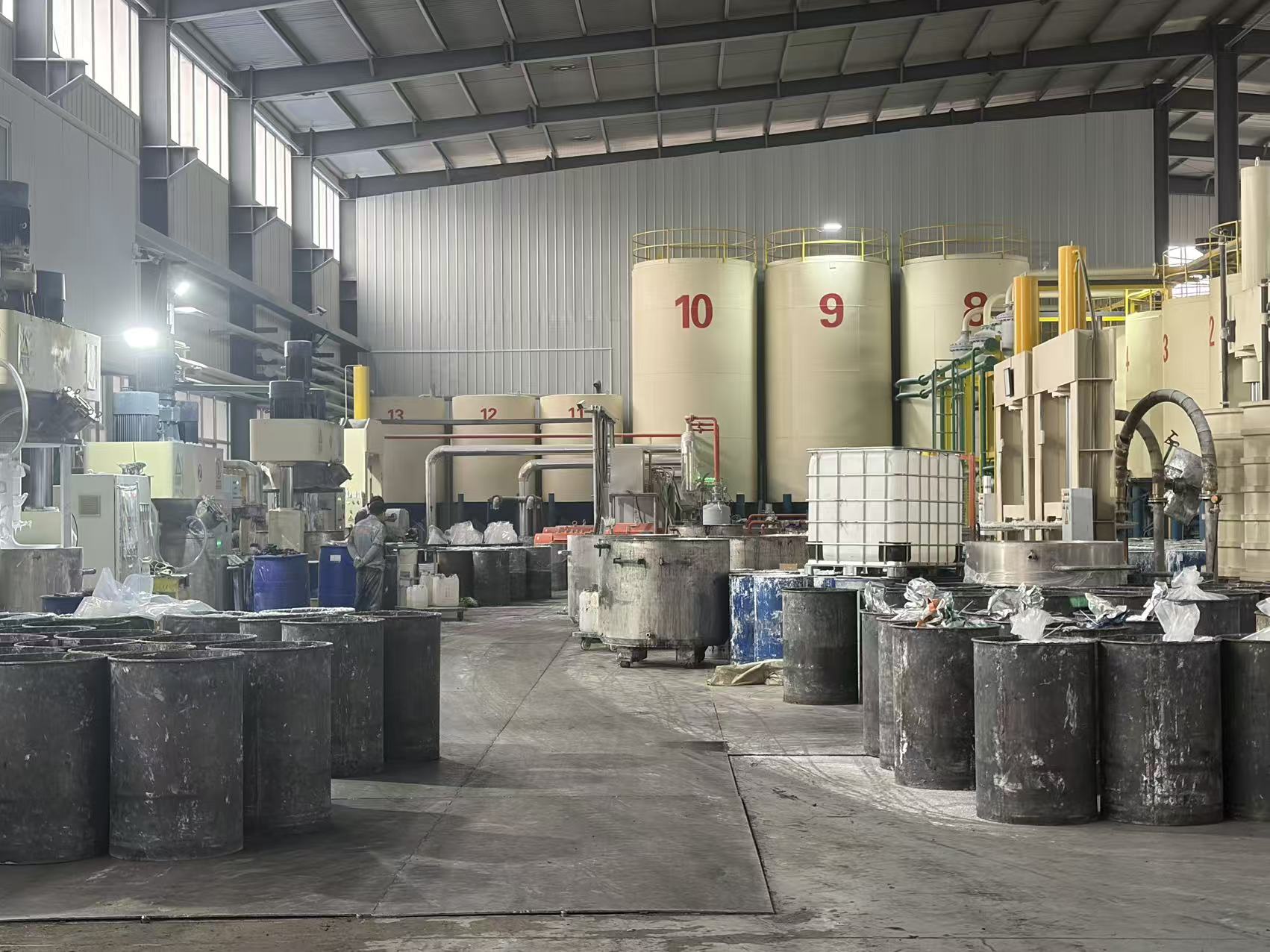
Sealant production workshop. Sealing grades are distinguished by cure chemistry, movement capability and service temperature — not by colour or cartridge size.
2. Tile Joint Finishing: Polyurea and Epoxy Grout
Tile grout fills and finishes the gap between adjacent tiles. It is a joint material, not a sealant for building elements, and the two mainstream high-performance chemistries are polyurea and epoxy.
SANZON GA is a two-component aspartic-ester polyurea gap filler with a silver ion antibacterial function. Its published specification includes a service temperature range of -50°C to 100°C, a weathering life of more than 30 years, ultra-low VOC with a formaldehyde-free and odourless formulation, packaging of A+B 400 ml × 20 pcs per carton, and a recommended storage temperature of +5°C to 27°C. The silver ion antibacterial function is directly relevant to tiled wet areas such as bathrooms and kitchens, where hygiene performance in the joint is a recurring buyer requirement.
SANZON GM is a two-component epoxy resin gap filler in the seam-beautification category. Its published specification covers solvent-free formulation, ultra-low VOC, an odourless and non-toxic profile, a rich colour series, A+B 400 ml × 20 pcs per carton, and the same +5°C to 27°C storage recommendation. The epoxy route is chosen where colour consistency and a hard, dense joint finish are the priority.
The practical rule is that both grout chemistries are specified for the joint between tiles — on floors, walls, backsplashes and wet rooms — and neither is a substitute for a silicone or MS sealant at the perimeter of the tiled area, where movement occurs.
3. Cavity Filling and Insulation: PU Foam
PU foam fills volume. It is used around door and window frames, at service penetrations and in cavities where the requirement is to close, stabilise and insulate a gap that is too deep for a sealant bead.
- SANZON TC — a quick-drying one-component PU foam filler for building doors and windows, single-component moisture cure, closed-cell content above 90%, service temperature -10°C to 80°C, packed 750 ml × 15 pcs per carton, shelf life 12 months.
- SANZON TS — an odourless PU foam filler intended for indoor decoration, single-component moisture cure with pre-foaming, closed-cell content above 90%, service temperature -10°C to 80°C, packed 750 ml × 15 pcs per carton, shelf life 12 months.
The choice between the two is driven by the working environment. Where an interior space is occupied during the works, or where the foam is applied in a sealed room, the odourless indoor grade is the appropriate specification. A PU foam is not a weather seal and does not replace a sealant bead on the exterior face of the joint.
4. Bonding Without Fasteners: No-Nail Adhesive
No-nail adhesive, also sold as construction adhesive, replaces mechanical fixings. Typical applications are wall panels, skirting, trim, decorative elements, mirrors and lightweight cladding on prepared substrates.
- SANZON GK — a multi-purpose, super-strong nail-replacement adhesive with a fast cure, 300 ml × 24 pcs per carton, a shelf life of 18 months, and a formaldehyde-free and benzene-free formulation.
- SANZON GS — the same product positioning and specification profile: high-polymer construction adhesive, fast cure, 300 ml × 24 pcs per carton, 18-month shelf life, formaldehyde-free and benzene-free.
Note the shelf life difference: 18 months for the no-nail adhesives against 12 months for most of the sealant range and for the PU foams. For distributors holding stock across several families, that difference affects rotation planning and reorder frequency.
Comparison Criteria That Actually Decide the Order
Six criteria separate the four families in day-to-day procurement. They are listed here because they are the ones buyers most often ask about, and because they cannot be answered by price per cartridge alone.
- Wet-area suitability. Whether the product is intended for bathrooms, kitchens, laundries and other permanently damp environments.
- Service temperature range. The published operating window, which determines whether the product is suitable for hot, cold or thermally cycled locations.
- Cure system. Acetoxy, neutral, moisture cure, or two-component A+B room-temperature cure — this drives odour, substrate compatibility and handling time.
- Paintability. Whether the cured product accepts paint or coating, which matters wherever the joint must disappear under a finish.
- Odourless indoor use. Whether the product can be applied in an occupied or poorly ventilated interior space.
- VOC and formaldehyde status. Whether the product meets the low-emission and formaldehyde-free requirements increasingly written into interior specifications.
Comparison Table: Silicone Sealant vs PU Foam vs Tile Grout vs No-Nail Adhesive
| Criteria | Silicone / MS / Acrylic Sealant | PU Foam | Tile Grout (Polyurea / Epoxy) | No-Nail Adhesive |
|---|---|---|---|---|
| Primary job | Seal and bond flexible joints | Fill, stabilise and insulate cavities | Fill and finish tile joints | Bond panels and trims without fixings |
| Wet-area suitability | Sanitary anti-mould grade (SANZON KB) is purpose-designed for kitchen and bathroom use | Not a wet-area product; for dry cavities and frame gaps | Intended for tiled wet and dry areas; SANZON GA includes a silver ion antibacterial function | Not a wet-area product |
| Service temperature | -50°C to 150°C for neutral grades; -50°C to 120°C for acid general purpose; -10°C to 80°C for acrylic | -10°C to 80°C (TC and TS) | -50°C to 100°C (SANZON GA) | Not listed in the current specification summary |
| Cure system | Acetoxy RT, neutral RT, MS polymer neutral RT, acrylic single component | Single-component moisture cure | Two-component A+B room-temperature cure | Fast cure (per specification summary) |
| Paintability | SANZON AS is paintable; SANZON MS is paint-compatible after curing; traditional silicone is generally not designed to be painted | Not listed | Not applicable — supplied as a coloured finish | Not listed |
| Odourless indoor use | SANZON MS is formaldehyde-free; SANZON AS is low VOC and low odour | SANZON TS is the odourless indoor grade | SANZON GA is formaldehyde-free and odourless; SANZON GM is odourless and non-toxic | SANZON GK and GS are formaldehyde-free and benzene-free |
| VOC / formaldehyde status | MS: formaldehyde-free. AS: low VOC. PA and CS: French indoor air emission label A+ | Not stated in the current summary | GA: ultra-low VOC, formaldehyde-free. GM: solvent-free, ultra-low VOC | Formaldehyde-free and benzene-free |
| Typical packaging | 300 ml × 24 pcs per carton; NS also 590 ml × 20 pcs | 750 ml × 15 pcs per carton | A+B 400 ml × 20 pcs per carton | 300 ml × 24 pcs per carton |
| Shelf life / storage | 12 months for the sealant range shown here | 12 months (TC and TS) | Store at +5°C to 27°C | 18 months (GK and GS) |
Comparison based on published SANZON specification summaries and the general performance characteristics of each product family. Values are not a substitute for the relevant technical data sheet.
Step-by-Step Breakdown: How to Specify These Products Correctly
The sequence below converts the comparison above into an order-ready decision path. It is written for the stage where the drawings are fixed and the purchase order is being prepared.
Step 1 — Name the job before naming the product
Write the functional requirement in one line: seal a moving joint, fill a cavity, finish a tile joint, or bond a panel. If the line contains two functions, it needs two products. Every substitution error starts with a line item that describes a product instead of a job.
Step 2 — Read the environment
Confirm whether the location is wet or dry, indoor or outdoor, exposed to UV, and subject to thermal cycling. Wet areas point to the sanitary anti-mould sealant and to the grout with an antibacterial function. Exterior and UV-exposed joints point to neutral-cure weather-resistant grades rather than acid-cure general-purpose products. Dry cavities point to PU foam. Occupied interiors point to the odourless PU foam grade and to low-odour or odourless sealants and grouts.
Step 3 — Check substrate and movement
Confirm the materials on both sides of the joint. Glass, aluminium, ceramic, metal, certain plastics and wood behave differently with different cure chemistries, and stone or metal should steer the choice toward neutral cure. Then confirm whether the joint is expected to move. Moving joints need an elastomeric product with a stated movement capability; rigid fillers belong in non-moving gaps only.
Step 4 — Check finish and indoor air requirements
Ask three questions: does the joint need to be painted, does the joint need a specific colour, and does the project have an emission requirement? Paintable joints point to the acrylic sealant or the MS polymer sealant, while traditional silicone sealants are generally not designed to be painted after curing. Coloured tile joints point to the grout range with a rich colour series. Emission requirements point to the formaldehyde-free, benzene-free, solvent-free and ultra-low VOC options across all four families.
Step 5 — Lock the supply side before the first order
Product selection is only half the decision. For projects and distribution programmes that run beyond a single delivery, confirm the following with the supplier:
- Shelf life per model — 12 months for most sealants and PU foams in this guide, 18 months for the no-nail adhesives, with grouts stored at +5°C to 27°C.
- Minimum order quantity — 100 boxes for long-term supply agreements.
- Delivery terms — FOB or CIF for recurring orders.
- Acceptance inspection — a pre-shipment test on each order.
- Payment terms — 30% deposit with 70% due before shipment, or 100% payment for long-term orders.
- Customisation — OEM and private label options covering brand, packaging, labels, cartridge printing, colours and product specifications.
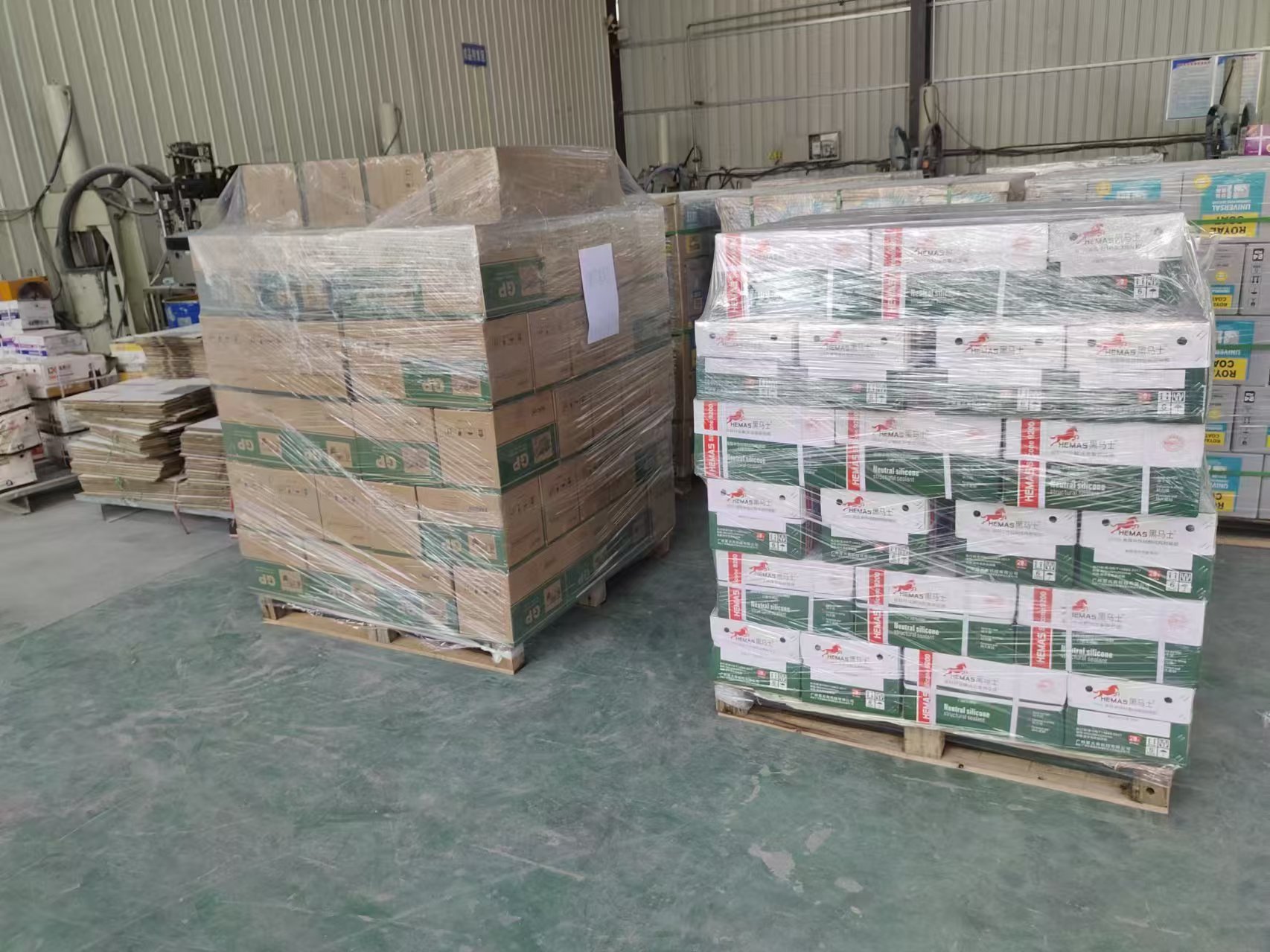
Cartridge and packaging formats produced in-house. Packaging, printing and carton configuration can be customised under OEM and private label programmes.
Use Cases: Matching the Family to the Site Condition
The following scenarios show how the four families combine on real packages.
- Bathroom and kitchen fit-out. Sanitary anti-mould sealant at the tile-to-sanitaryware perimeter and around the shower enclosure; polyurea or epoxy grout in the tile field; no-nail adhesive for the mirror and decorative trim. The perimeter joints move, the tile joints do not — using grout on both is the classic error.
- Window and door installation. PU foam to fill and insulate the cavity between frame and reveal; neutral-cure weather-resistant sealant on the exterior face; a paintable or low-odour sealant on the interior face where the joint will be decorated or the room is occupied.
- Curtain wall and façade. Structural silicone adhesive for glass, stone and aluminium panel bonding and sealing, supported by weather-resistant neutral-cure grades at perimeter joints. UV resistance, movement capability and specification compliance drive the choice here, not price per cartridge.
- Interior decoration and joinery. Paintable acrylic sealant for joints that will be painted over; MS polymer sealant where a high-tack, formaldehyde-free, paint-compatible product is required; no-nail adhesive for skirting, mouldings and panels.
- Floor and wall tiling. Polyurea grout where hygiene and long weathering life are the priority; epoxy grout where colour consistency and a hard, dense joint finish matter most.
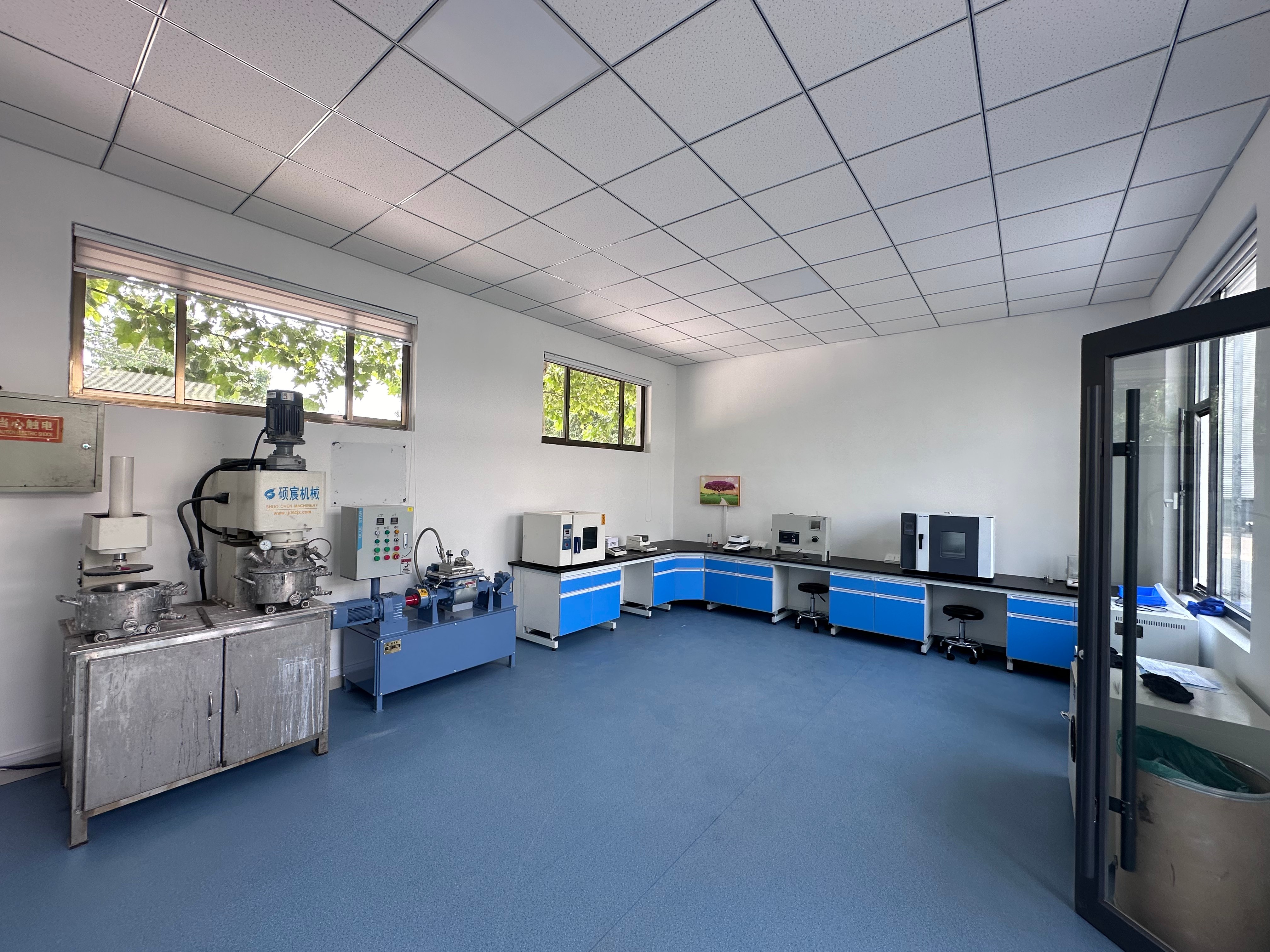
In-house laboratory. Performance and safety testing underpins the specification values quoted in this guide, alongside ISO 9001, ISO 14001 and ISO 45001 certification and SGS performance and safety reports.
FAQ
1. Which of these four product families meets low-VOC or formaldehyde-free requirements for indoor use?
Several models across all four families are specified for low-emission indoor use. SANZON MS sealant is formaldehyde-free and paint-compatible after curing. SANZON AS acrylic sealant is a low VOC, low odour, paintable formulation. SANZON GA polyurea tile grout is ultra-low VOC, formaldehyde-free and odourless, while SANZON GM epoxy tile grout is solvent-free with ultra-low VOC and an odourless, non-toxic profile. SANZON GK and GS no-nail adhesives are formaldehyde-free and benzene-free. On the regulatory side, ASTM C920 remains the primary performance specification for elastomeric joint sealants in building construction, reapproved in November 2024, and EU Regulation 2024/1328 restricts cyclic silicones D4, D5 and D6 with an industrial-use threshold of 0.1% — a factor worth checking for European projects.
2. Can one of these products replace another if the other is out of stock?
No. The four families perform four different jobs. Silicone, MS polymer and acrylic sealants seal and bond flexible joints. PU foam fills, stabilises and insulates cavities that are too deep for a bead of sealant. Tile grout fills and finishes the joints between tiles. No-nail adhesive bonds panels and trims in place of mechanical fixings. Substituting a sealant for foam removes insulation and increases consumption; substituting foam for sealant removes elasticity; substituting adhesive for grout produces an unacceptable joint finish; substituting grout for sealant produces a joint that cracks when it moves.
3. How should cost be compared across these four families?
Compare cost per unit of work, not cost per cartridge. Sealants are assessed per linear metre of joint, grouts per square metre of tiled area, PU foam per cavity or per linear metre of frame gap, and no-nail adhesive per bonded element. Labour, cure time, rework risk and shelf-life loss all sit inside that figure. The relevant purchasing parameters from the supplied terms are a minimum order quantity of 100 boxes for long-term supply agreements, FOB or CIF delivery for recurring orders, and a pre-shipment test as the acceptance criterion on each order.
4. Can I evaluate these products before committing to a long-term supply agreement?
Yes. Free samples and technical product selection consultation are available, which allows a buyer to validate cure behaviour, colour, adhesion and finish on the actual substrate before a specification is frozen. Because acceptance inspection includes a pre-shipment test on each order, the sample stage and the production stage are checked against the same performance criteria, and any specification question can be resolved before the first commercial shipment rather than after it.
5. What does a long-term supply arrangement for these four families look like in practice?
A long-term arrangement is built on stable product specifications, predictable delivery terms and documented quality control rather than on a one-off price. In practice it combines a minimum order quantity of 100 boxes, FOB or CIF delivery for recurring orders, a pre-shipment test on each order, and payment terms of 30% deposit with 70% due before shipment — or 100% payment for long-term orders. OEM and private label programmes allow brand, packaging, labels, cartridge printing, colours and product specifications to be customised, and after-sales support is provided online on a 24-hour basis. You can review the full product range in the SANZON LIONKING Series Adhesives brochure.
Conclusion
Silicone sealant, PU foam, tile grout and no-nail adhesive are not competing options on a single specification line. They are four product families that solve four different problems, and the fastest way to avoid rework is to write the functional requirement first and select the family second.
The decision rules that matter are simple. Use a sealant where a joint must stay flexible and watertight, and choose the cure chemistry from the substrate: neutral cure for aluminium, metal, stone and exterior work, acetoxy for general glass and ceramic sealing, sanitary anti-mould grade for kitchens and bathrooms, firestop grade where fire performance is specified, and structural grade for curtain wall bonding. Use PU foam where a cavity must be filled and insulated, and select the odourless indoor grade for occupied interiors. Use tile grout for the joint field, choosing polyurea where hygiene and long weathering life lead and epoxy where colour and a hard joint finish lead. Use no-nail adhesive where a panel must be bonded without fixings.
Then close the loop on the supply side: match shelf life to your rotation — 12 months for most sealants and PU foams, 18 months for the no-nail adhesives — and confirm MOQ, delivery terms, pre-shipment testing and payment conditions before the first order rather than after the first complaint.
Next Step: Sample, Specification Review or Long-Term Supply
Shandong Sanzeng New Materials Co., Ltd. supplies silicone sealants, MS polymer sealants, acrylic sealants, PU sealants, no-nail adhesives, PU foam and tile grout from a 40,000 m² facility in Weifang, Shandong, with exports to more than 30 countries and regions.
Free samples and technical selection support are available for buyers evaluating any of the four product families covered in this guide, along with OEM and private label programmes and customised filling line solutions.
Email: guooj000@163.com | Tel / WhatsApp: +86 185-5361-7774
Website: www.sanzengsealant.com | Brochure: Download the SANZON LIONKING Series Adhesives brochure
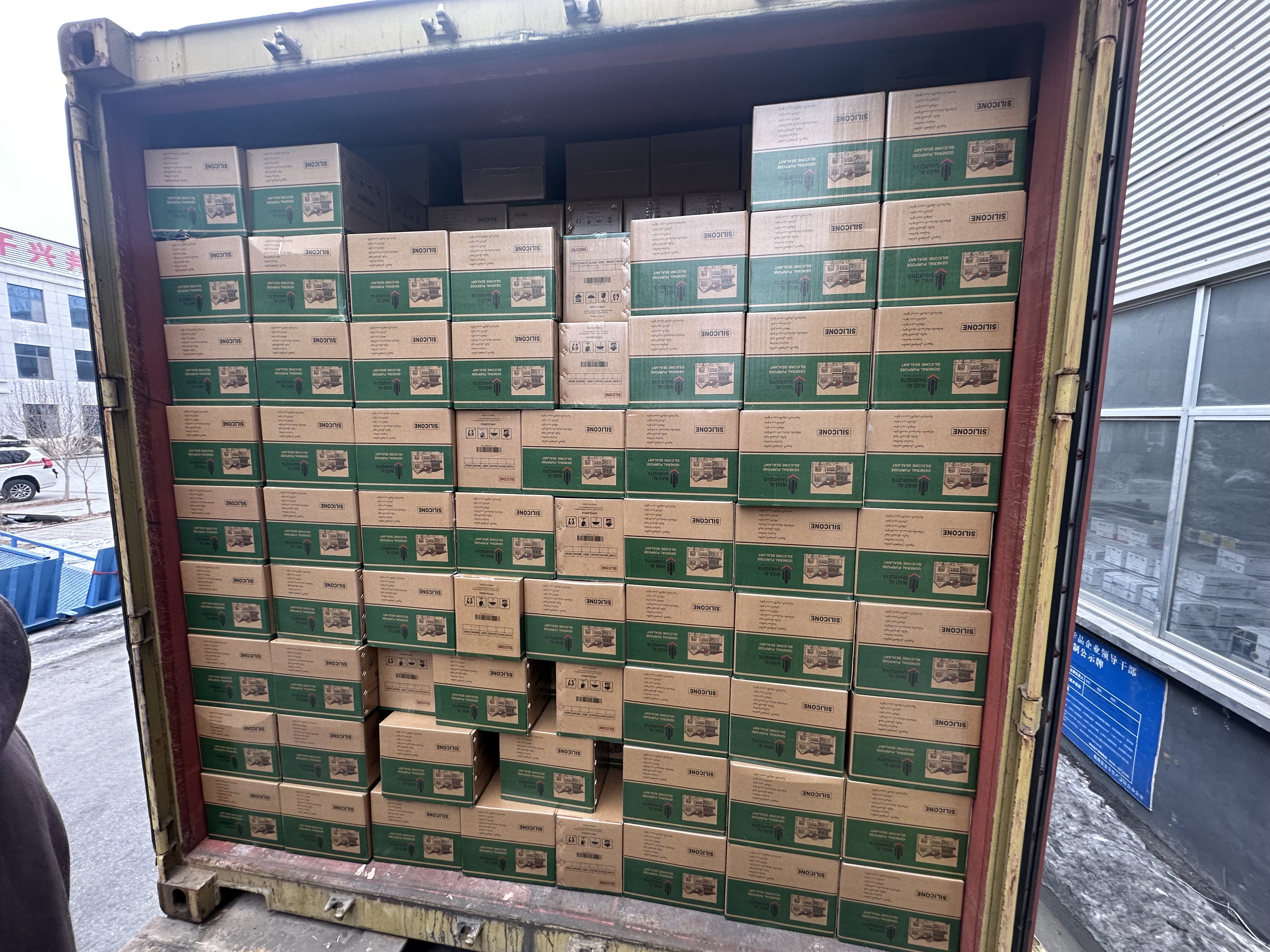
Sample and quotation support is available across all four product families, with pre-shipment testing on every order.
Have Questions or Need More Details?
Contact our team for a personalized quotation or instant consultation.
Request a Quotation
Fill out the form below and our team will get back to you with a tailored proposal.
WhatsApp Direct Chat
Prefer to chat in real-time? Message us on WhatsApp for instant assistance & quick answers.
- Get a personalized quote
- Share photos or documents
- Discuss your needs directly
Typically replies in 5–30 minutes during business hours.