
What Is a Sealant Cartridge? 300ml Caulking Tube Anatomy Explained
A sealant cartridge — also called a caulking tube — is the rigid plastic container that holds a paste sealant, lets it be filled on a production line, protects it through storage and shipment, and delivers it to the joint through a nozzle. The 300ml cartridge is the size most construction and decoration buyers meet first, because it suits both hand-gun application and standard carton counts. Long before anyone compares curing systems or adhesion, the tube has already decided how cleanly the product fills, how well it travels and how evenly it extrudes.
This explainer treats the cartridge as its own product category. The reference item is the SZ-1 sealant empty bottle, which the manufacturer also describes as a sealant cartridge or caulking tube: a customizable PP/PE body with a standard 300ml capacity, produced in a self-owned plastics operation with an output quoted at 100,000+ tons per year. Shandong Sanzeng New Materials Co., Ltd. is the manufacturer — a sealant producer headquartered in Linqu County, Weifang City, Shandong Province, China, operating an integrated three-in-one industrial chain of sealant products, packaging containers and filling equipment.
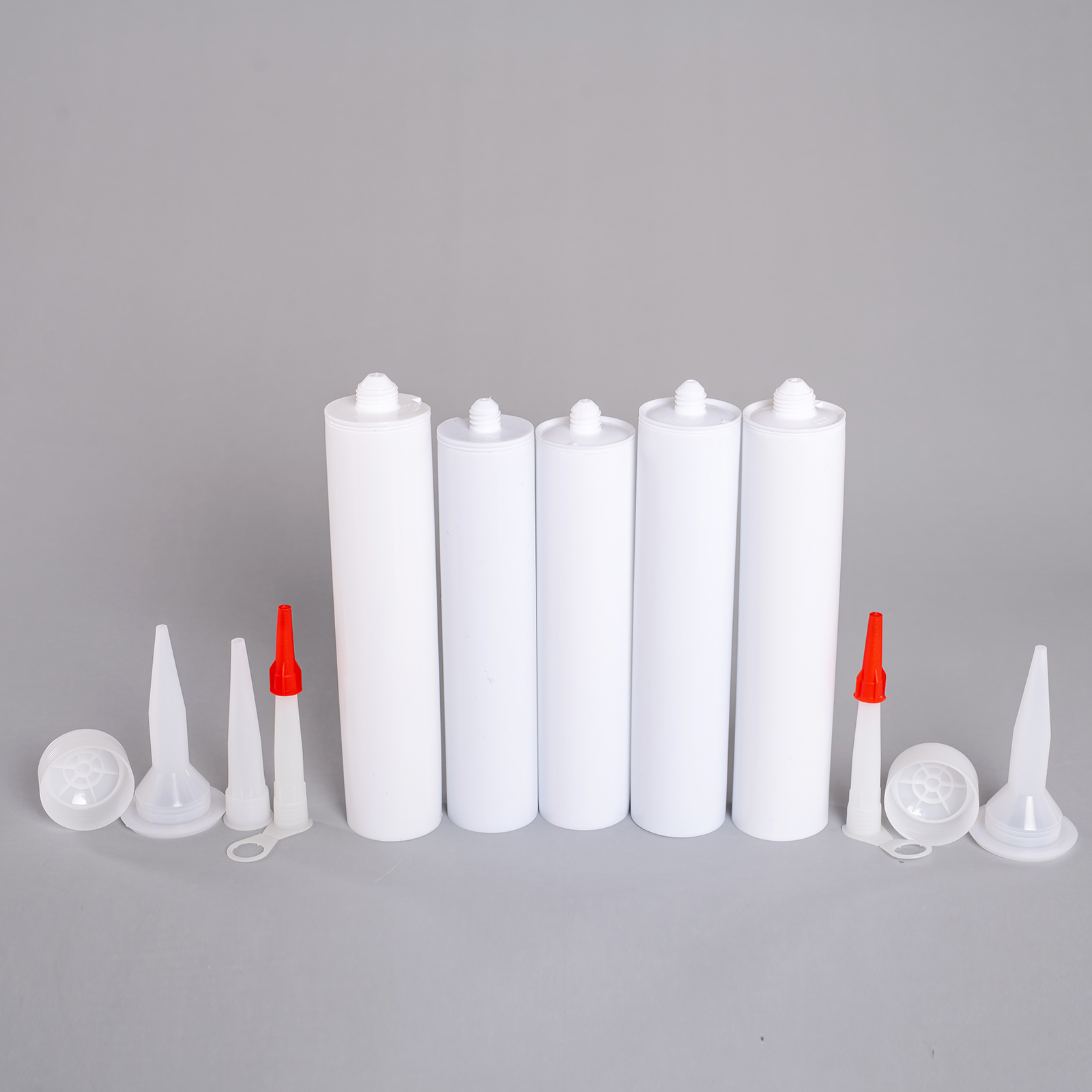
The anatomy of a 300ml caulking tube
Cartridge-format packaging is easier to evaluate once it is broken into functional zones. In the standard 300ml format, four zones do the work: the body, the shoulder and discharge end, the base, and the closure with its labeling. That geometry is common to the format. The exact wall section, thread form and dimensional tolerance of a specific model belong on the supplier's drawing, not in a general article.
1. The body: the pressure-bearing wall
The body is the tube that actually holds the paste. It has to stay round and rigid under two different loads: the pressure of the filling line while the tube is being filled, and the pressure of the gun while the product is being dispensed. A body that flexes under gun load wastes effort and can produce an uneven bead. On the SZ-1, the body is a plastic PP/PE part produced by fully automated precision injection molding — the process that makes a consistent wall and consistent roundness possible at volume.
2. The shoulder and discharge end
The shoulder narrows the tube into the discharge opening. This zone carries the nozzle seat or thread, and it is where the cartridge meets the accessory range: the manufacturer lists nozzles and end caps as a complete accessory line for every cartridge and tube size. A mismatched nozzle or a poorly seated shoulder usually shows up as leakage at the thread rather than at the joint, which is why this zone deserves attention before a bead is ever laid.
3. The base and the gun interface
The base is the end that both the filling equipment and the caulking gun engage. In piston-style cartridges it accepts the plunger that pushes product forward. For a buyer, the important question is not the shape but the consistency, because a base that varies from tube to tube can jam a filling line or seat badly in a gun. This is where the value of a controlled molding process becomes visible: repeatability across a production run is the product.
4. The closure, nozzle and label
The closure keeps the product inside the tube between filling and first use, while the label or print carries the identification a site or a retail shelf needs. Both are customization points. The SZ-1 is offered with custom label printing and custom colors, and nozzles and end caps are supplied as part of the packaging range. For a private-label buyer, this zone is where a container becomes a brand asset.
Where the cartridge sits in the sealant supply chain
It is easy to treat packaging as a line item and the sealant as the product. Volumes argue otherwise. Grand View Research estimated the global silicone sealants market at USD 4.5 billion in 2025, with Asia Pacific taking a 52.1% revenue share and the construction segment 60.7%. Commercial estimates of this market differ by methodology — some published figures bundle adhesives with sealants — so the value is useful as a measure of scale rather than as a precise forecast. Every ton in that market has to leave a factory inside something.
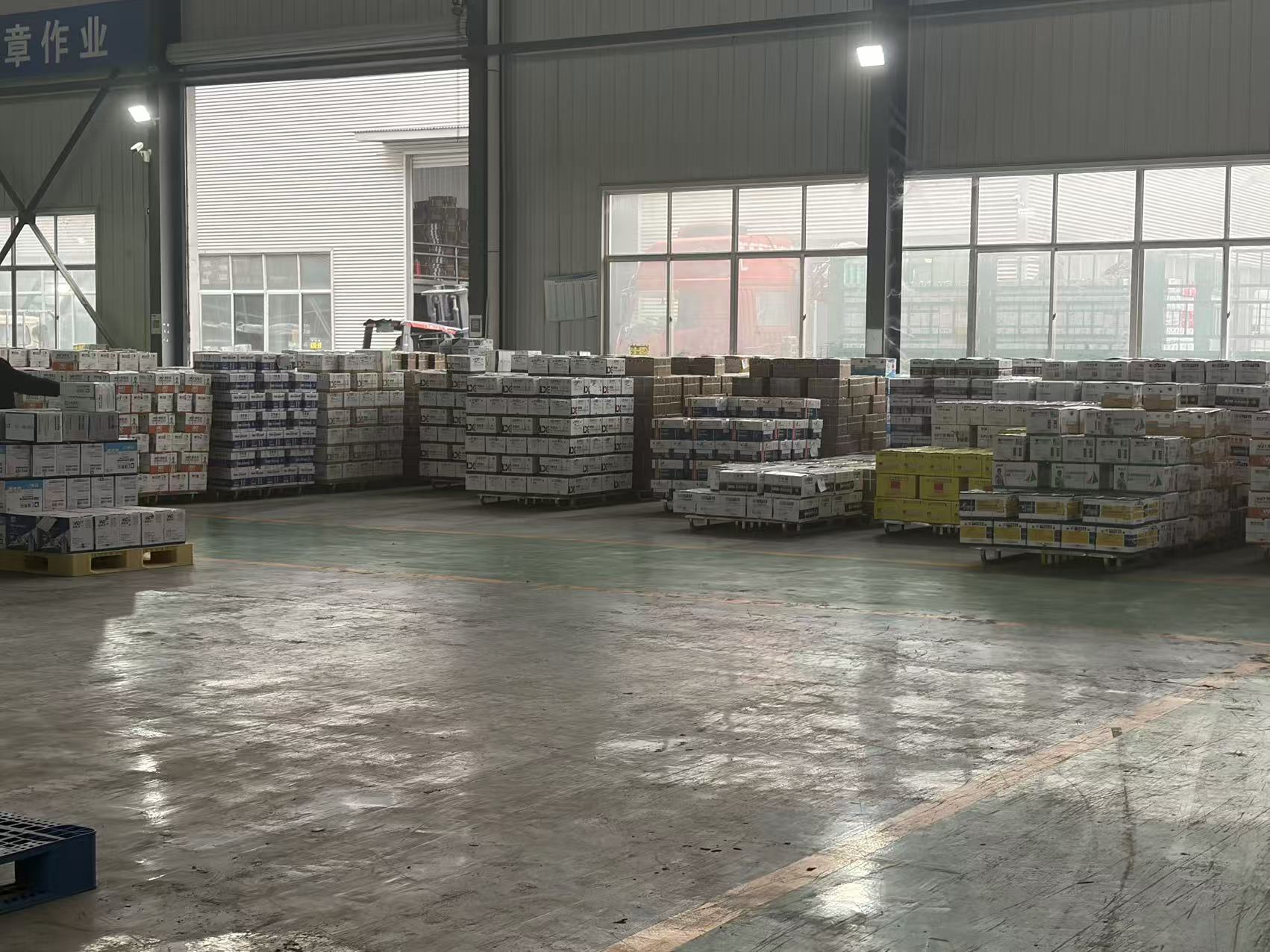
That container choice sets a chain of practical constraints: which filling line the pack runs on, how many units fit a carton (300ml × 24 pcs per carton is the packing used across several SANZON sealant products), how much cube a pallet consumes, and whether the unit survives export handling. A manufacturer exporting roughly 70% of its output to more than 30 countries and regions, shipping through ports such as Qingdao, is testing its packaging as much as its formulation.
The structural reason the cartridge can be treated as an engineering question rather than a purchase order is the three-in-one chain: sealant products, packaging containers and filling equipment within one organization. That does not automatically make an in-house tube better than a bought-in tube. It changes the number of parties who must agree on a specification, and therefore the number of places where a specification can drift.
Why cartridge material matters before you judge the sealant
The SZ-1 cartridge is made of plastic — specifically a PP/PE sealant cartridge material that the company manufactures itself. Three elements in that sentence carry the buyer relevance: PP/PE, self-manufactured, and injection molded.
- PP/PE. Polypropylene and polyethylene are the two thermoplastics most often used for rigid sealant cartridges: they can be molded into a stiff tube, colored and printed. The supplier's wider packaging range — cartridges from 240ml to 310ml plus 2600ml drums — is quoted in HDPE/PP/PE with customizable colors and logo printing. Material choice is a packaging decision; it is not by itself a statement about which sealant chemistry is compatible with the tube.
- Self-manufactured. Because the body is produced in-house rather than bought from a converter, changes to color, print or capacity do not have to be negotiated through a third party first. The same structure keeps a batch traceable through one production chain.
- Injection molded. Fully automated precision injection molding is what makes a consistent wall and a repeatable base at volume — the two properties that a filling line and a caulking gun both depend on.
For filling, storage and dispensing, the practical reading is straightforward. A rigid, dimensionally consistent body fills without deforming, stacks without ovalizing inside the carton, and discharges without the plunger cocking sideways. Those are outcomes a buyer can test with a sample run. What a general article cannot give you is the chemical compatibility of one sealant formulation with one resin grade, or the wall thickness of the tube in your hand; those come from the technical data sheet and from a filled sample trial.
Why 300ml became the standard, and when customization changes it
The SZ-1 is quoted at a standard 300ml capacity, described as customizable. The figure is not arbitrary: it aligns with the net content of the sealants that go into it. SANZON PA acetoxy silicone sealant is filled at 300 ml, and the general purpose SANZON GP, neutral SANZON NS, neutral GP-N, sanitary anti-mold SANZON KB, firestop SANZON FS and acrylic SANZON AS are all packed at 300ml × 24 pcs per carton. When the pack size and the product size are the same number, the carton, the pallet pattern and the order sheet stay aligned.
Capacity also interacts with the filling equipment. Sanzeng's own filling machines are quoted at ±2g accuracy and 30–60 pieces per minute — figures that describe the equipment, not any single cartridge. The point for a buyer is that fill accuracy and tube consistency are a matched pair: a tube whose internal volume varies turns a ±2g machine into a variable-output line.
Customization moves the number. The packaging range covers cartridges from 240ml to 310ml, so a 300ml body is a starting point rather than a fixed rule. Buyers should treat a capacity change as an engineering change: it affects carton count, pallet pattern, the filling nozzle or gun, and often the market's expectation of what a standard unit contains.
Step by step: from molded body to shipped unit
The sequence below follows the three-in-one chain — the plastics operation, the filling equipment and the sealant lines — rather than any single machine.
- Molding. The body is produced by fully automated precision injection molding in the self-owned plastics operation, whose output is quoted at 100,000+ tons per year.
- Accessory matching. Nozzles and end caps are drawn from the same packaging range, which the manufacturer describes as covering every cartridge and tube size it supplies.
- Filling. Single- and double-cylinder semi-automatic machines, fully automatic fillers and sausage-film machines fill the packs, with quoted accuracy of ±2g at 30–60 pieces per minute.
- Capping and conveying. Automatic capping machines and conveying lines close the units and move them between stages.
- Printing and labeling. Custom label printing and custom colors are applied so the finished unit is identified for its market, not only for the factory.
- Cartoning and export packing. 300ml × 24 pcs per carton is the count used across several products; 400ml/600ml sausage film and 2600ml drums follow their own packing logic.
- Dispatch. Around 70% of output is exported to more than 30 countries and regions, with ports such as Qingdao used for shipment.
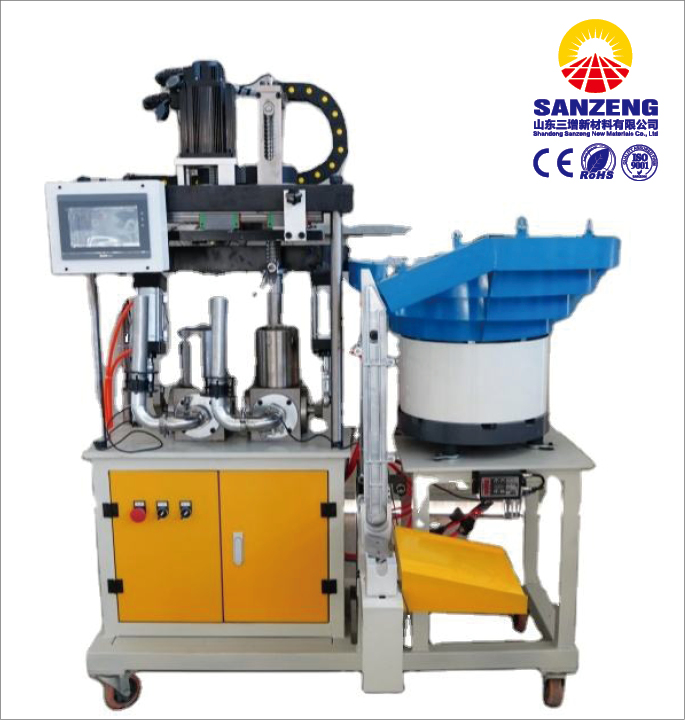
Not every supplier runs all seven steps under one roof. Where the steps are split across companies, the buyer inherits the interfaces, and interfaces are where specification drift appears.
Customization: what ODM and OEM actually change
For an empty cartridge, customization is mostly about the outside of the pack — and mostly about identification.
- Label and print. Custom label printing lets the body carry brand, product name, color code and market-specific warnings.
- Color. Custom colors for the cartridge body, within the PP/PE materials the line runs.
- Cartons. Custom cartons, so the shipping unit fits the brand and the distributor's handling.
- Program scope. The manufacturer describes its OEM and ODM private-label work as full flexible customization covering packaging, printing, formulation and filling. That matters when a buyer wants the tube and the sealant specified together instead of sourced separately.
What customization does not do is create a new performance category. A printed cartridge is still a cartridge. The questions that survive a brand refresh are the practical ones: does the print hold up on the line, does the color match across batches, and does the carton count still fit the pallet.
Use cases: matching the pack format to the job
The SZ-1 cartridge is listed as applicable across construction and building, home improvement and decoration, windows and doors, glass and curtain wall, automotive, industrial manufacturing, marine and shipbuilding, solar and new energy, sanitary and bathroom, furniture and woodworking, and HVAC and home appliances. The format-to-job logic is simpler than that list suggests.
- Site application and retail: the 300ml cartridge at 24 units per carton. Hand-gun dispensing that installers already know, with a standard count that is easy to stock. Sealants packed this way include acetoxy general purpose (SANZON PA, SANZON GP), neutral-cure (SANZON NS, SANZON GP-N), sanitary anti-mold (SANZON KB), firestop (SANZON FS) and acrylic (SANZON AS).
- High-volume site work: 400ml and 600ml foil sausage. The manufacturer positions sausage film as lower shipping volume and easier on-site handling than rigid packs.
- Bulk and industrial: 2600ml drums in HDPE/PP/PE with customizable colors and logo printing.
- Two-component products: A/B packaging bottles with static mixers, for example the epoxy and polyurea tile grouts packed A+B 400ml × 20 pcs per carton.
- Products that do not use a cartridge: PU foam is packed 750ml × 15 pcs per carton in its own format. Format follows the product, not the other way round.
Note what this section does not do: it does not recommend a sealant chemistry. Choosing between neutral-cure, acetoxy, structural, weatherproof, sanitary or fire-rated sealant is a separate decision driven by substrate, movement and exposure. The cartridge question is narrower — does the pack fit the product, the line and the site.
Pack format comparison
| Pack format | Documented capacities | Packing facts | What it changes for the buyer |
|---|---|---|---|
| Rigid plastic cartridge (PP/PE, HDPE) | 240ml–310ml range; SZ-1 at 300ml standard, customizable | 300ml × 24 pcs per carton across several SANZON products | Hand-gun or pneumatic dispensing, standard carton and pallet counts, the format retail and contractor buyers specify most often |
| Foil sausage film | 400ml / 600ml | Sausage-film filling machines are part of the equipment range | Described by the manufacturer as lower shipping volume and easier on-site handling |
| Bucket and pail / drum | 2600ml drums | HDPE/PP/PE with customizable colors and logo printing | Bulk and industrial dispensing rather than hand-gun work |
| Two-component bottle | A+B 400ml per unit | 20 pcs per carton, e.g. SANZON GM epoxy and SANZON GA polyurea tile grout; static mixers supplied | Ratio-critical two-part products need an A/B pack, not a single-chamber cartridge |
Capacities and counts are as documented for the supplier's packaging range and listed products. Confirm the figure for the exact SKU before ordering.
What to verify before you order cartridges
A short verification list is worth more than a long brochure.
- Model and capacity in writing. Confirm the model (SZ-1), the capacity (300ml standard, or a custom figure inside the 240ml–310ml range) and whether that capacity is fixed or customizable for your order.
- Material and color. Confirm PP/PE and the color target, and ask how color is controlled across batches if brand color matters.
- Carton and pallet data. Confirm the count per carton (300ml × 24 pcs is the common figure) and the carton dimensions you will actually ship.
- Accessories. Confirm nozzle and end-cap supply, since the range is described as covering every cartridge and tube size.
- Filling-line fit. If you fill in-house, match the tube to your machine type against the equipment figures you will run (±2g, 30–60 pcs/min on the manufacturer's machines). If the supplier fills for you, put that responsibility in writing anyway.
- Quality documentation. The company holds ISO 9001, ISO 14001 and ISO 45001 certification; selected export products carry CE and RoHS compliance and SGS performance and safety test reports. Ask which document applies to the item you are buying, not to the company in general.
- Sample trial. Free samples and technical selection consultation are offered. A filled sample run tells you more about extrusion, seating and carton behavior than any specification table.
Limits of this explainer
Three things this page deliberately does not claim. First, it does not publish wall thickness, thread dimensions or tolerances for the SZ-1, because those figures are not part of the approved product description and should come from the model drawing. Second, it does not assert that a specific sealant formulation is compatible with a specific cartridge resin; compatibility is a test result, not a category claim. Third, it does not quote prices, minimum order quantities or lead times, because commercially current figures have to come from the supplier at the time of inquiry. A buyer who needs those three items should ask for them directly and in writing.
Frequently asked questions
What is the difference between a sealant cartridge and a caulking tube?
They are names for the same packaging product. The manufacturer describes the SZ-1 as a sealant empty bottle, also referred to as a sealant cartridge or caulking tube, belonging to the customizable sealant bottles, empty cartridge and sausage-film packaging category. In practice, cartridge is the term used in manufacturing and procurement, caulking tube is the term used in trade and retail, and empty bottle is used when the item is sold unfilled to a filler.
What is the SZ-1 cartridge made of, and who produces the body?
The body is plastic — specifically a PP/PE sealant cartridge material that the manufacturer produces itself. Production uses fully automated precision injection molding in a self-owned plastics operation with an output quoted at 100,000+ tons per year. Because the body is made in-house, color, print and capacity changes stay inside one production chain instead of passing through an outside converter.
Can empty cartridges carry our brand and ship in custom cartons?
Yes. The SZ-1 is offered with ODM and OEM services that include custom label printing, custom colors and custom cartons. The manufacturer describes its private-label capability as full flexible customization covering packaging, printing, formulation and filling, so the tube and the sealant can be specified together. Artwork, a color reference and a carton specification are the practical inputs to settle before a production run.
Do cartridge capacity and carton count affect storage and transport?
They do. The 300ml cartridge is packed 300ml × 24 pcs per carton across several SANZON sealant products, while other formats follow their own logic — 590ml × 20 pcs per carton for SANZON NS, 400ml/600ml sausage film, and 2600ml drums. Carton count drives pallet cube and handling. Separately, filled sealant should be stored in a cool, dry, well-ventilated place away from direct sunlight, heat and moisture, and used within the shelf life stated on the packaging or technical data sheet; several SANZON products list a 12-month shelf life.
Where can I find neutral cure silicone sealant suppliers?
Look for a supplier that can show both the formulation and the packaging behind it. Neutral-cure silicone sealants are part of the SANZON range — SANZON NS (neutral silicone structure and weather-resistant adhesive, packed 300ml × 24 pcs or 590ml × 20 pcs per carton), SANZON GP-N (neutral-cure multi-purpose, 300ml × 24 pcs) and SANZON KB (neutral-cure sanitary anti-mold, 300ml × 24 pcs) — and the company manufactures its own PP/PE cartridges and filling equipment, so pack and product can be specified in one conversation. Practical checks: request the technical data sheet, confirm packing and carton count, ask which certifications apply to the specific item, and run a sample before committing. Free samples and technical selection consultation are available, and the LIONKING series brochure can be downloaded for the wider product range.
Conclusion
A sealant cartridge is a small piece of packaging with an outsized job. It has to hold a paste without deforming, stack without losing its shape, pass through a filling line at production speed and then deliver the product evenly through a gun. The SZ-1 shows what the category looks like when the tube is engineered rather than sourced: a PP/PE body, a standard 300ml capacity, fully automated precision injection molding, self-manufactured material, and customization across label printing, color and cartons.
With 100,000+ tons per year of in-house packaging output behind it, the format stops being an afterthought and becomes a supply-chain variable — one that decides how cleanly a sealant fills, how safely it stores and travels, and how evenly it reaches the joint. For a buyer at the research stage, the order of work is simple: fix the pack format and capacity, verify material, accessories and carton data, check which quality documents apply to the item, then test a filled sample.
Free samples and technical selection consultation are available, and the product brochure can be downloaded here: SANZON LIONKING Series Adhesives brochure (PDF).
Have Questions or Need More Details?
Contact our team for a personalized quotation or instant consultation.
Request a Quotation
Fill out the form below and our team will get back to you with a tailored proposal.
WhatsApp Direct Chat
Prefer to chat in real-time? Message us on WhatsApp for instant assistance & quick answers.
- Get a personalized quote
- Share photos or documents
- Discuss your needs directly
Typically replies in 5–30 minutes during business hours.