Silicone Sealant Guide: Types, Curing Systems & How to Choose
Silicone Sealant Guide: Types, Curing Systems & How to Choose
Silicone sealant is a flexible sealing material used to fill, seal and bond gaps and joints between materials. It is applied to glass, aluminium, ceramic, metal, some plastics and wood, and to doors and windows, kitchens, bathrooms and construction joints, where it delivers adhesion, waterproofing, weather resistance and elasticity. Those properties are not delivered equally by every product sold under the name — silicone sealant is a chemistry family, not a single specification.
This guide is written for buyers in the discovery and research phase: importers, distributors, contractors, brand owners and procurement teams who need to understand what the product families actually are, how a selection decision should be sequenced, and which documents a supplier should be able to provide before an order is placed.
The Problem: One Search Term, Many Different Products
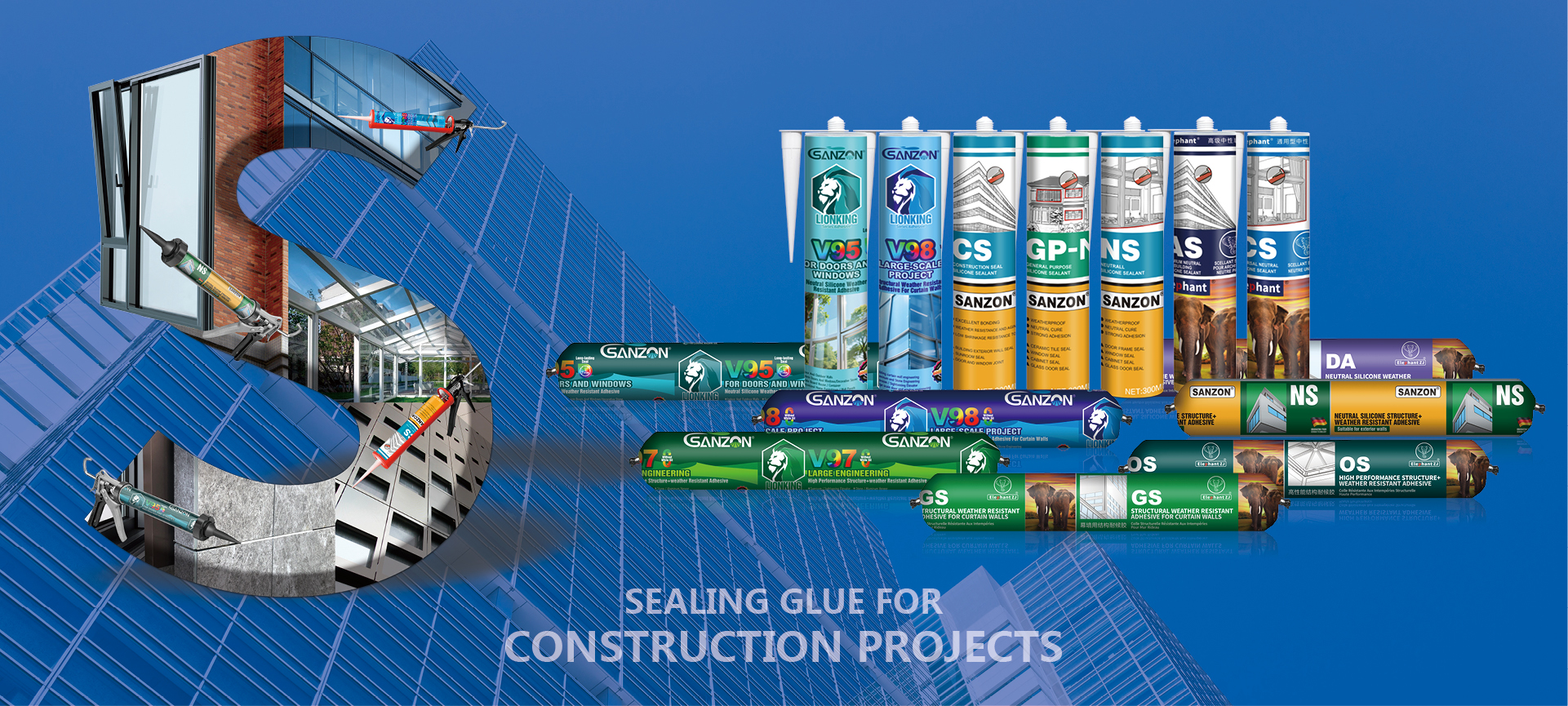
The first difficulty in buying silicone sealant is that the category name is far broader than any individual product. Acid-curing, neutral-curing, weather-resistant, general-purpose and structural types sit under the same heading, and they are not interchangeable. A sealant chosen for its colour and price rather than its cure chemistry can fail on adhesion, attack a substrate, or simply cannot be painted later.
Two technical characteristics drive most of the operational risk, and neither can be judged from a photograph or a price list.
Curing is conditional, not fixed. The curing time of silicone sealant is affected by temperature, humidity, product type and sealant bead thickness. The surface may become touch-dry within a short period, while complete curing usually takes longer. Buyers should work from the product technical data sheet (TDS) rather than from a generic drying-time statement.
Shelf life is conditional too. The shelf life of silicone sealant depends on the product formulation, the packaging and the storage conditions. Sealant should be stored in a cool, dry and well-ventilated environment, away from direct sunlight, high temperatures and moisture, and used within the shelf life stated on the packaging or technical documentation.
Both points are documentation issues rather than product features, which is why the second half of this guide focuses on what to verify before you specify.
Industry Background: Where Silicone Sealant Sits
Sealant demand follows construction and manufacturing activity. The industries that specify silicone sealant in volume include construction and building, home improvement and decoration, windows and doors, glass and curtain wall, automotive, industrial manufacturing, marine and shipbuilding, solar and new energy, sanitary and bathroom, furniture and woodworking, and HVAC and home appliances. That spread matters to buyers: the same supplier may serve a curtain wall project, a bathroom renovation programme and an industrial enclosure, and the products involved are different grades of the same chemistry.
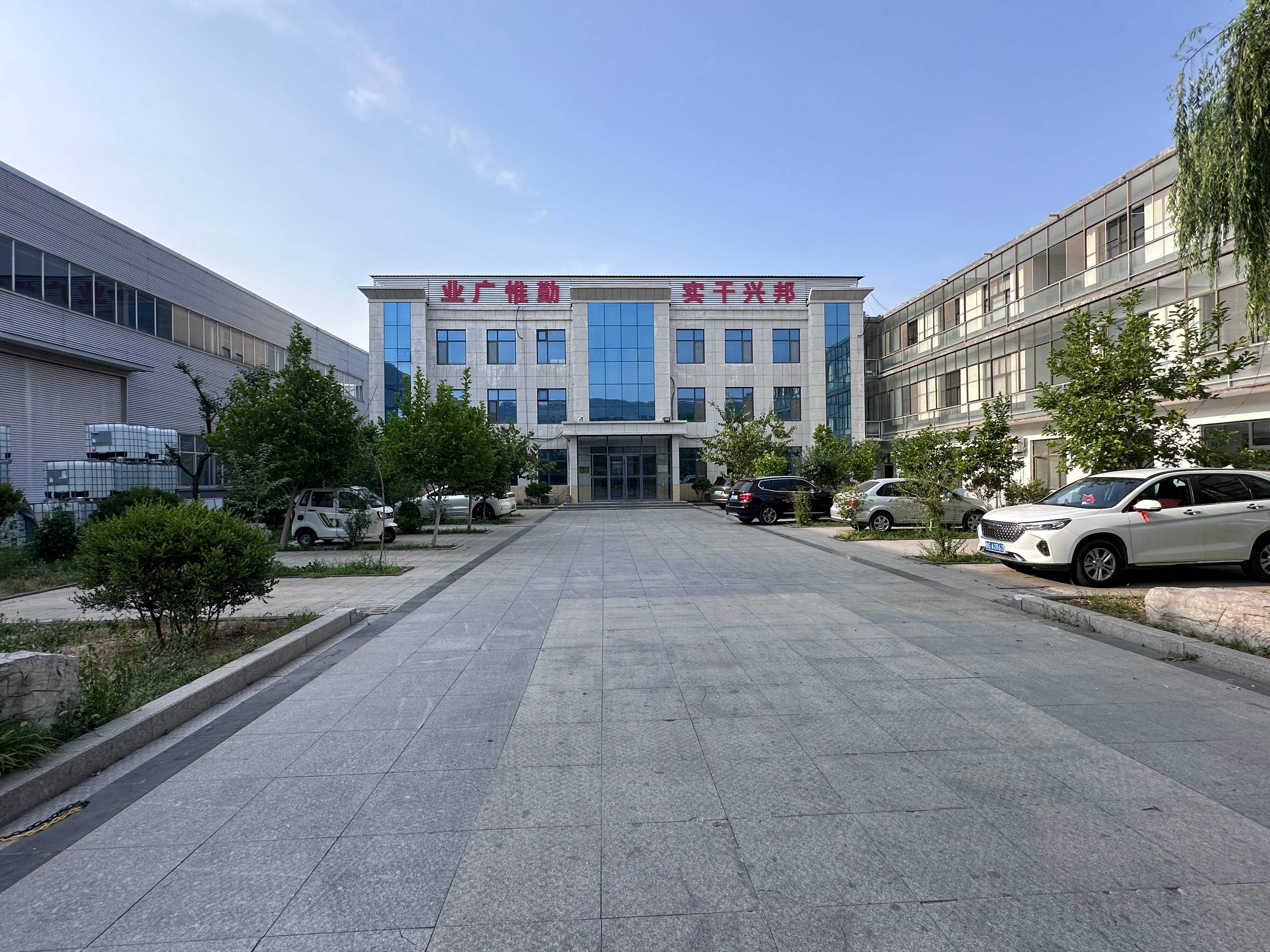
On the supply side, production is highly clustered. Shandong Sanzeng New Materials Co., Ltd. is headquartered in Linqu County, Weifang City, Shandong Province, China — an area the company describes as the "Capital of China's Aluminum Profiles" and a hub of the silicone sealant industry cluster. The business traces back to 1994 and operates a 40,000 m² manufacturing facility with approximately 125 employees, a 10-engineer R&D team and an annual production capacity of 8,800,000 units. Approximately 70% of output is exported, and the company's products reach more than 30 countries and regions.
What makes this supplier structurally unusual is scope. Sanzeng operates an integrated three-in-one industrial chain covering sealant products, packaging containers and filling equipment. For a buyer, that changes the sourcing conversation: cartridges, caps, nozzles, filling machines and the sealant itself can come from one qualified source instead of four separate vendors, which reduces the number of compatibility problems that appear at the filling line.
Silicone Sealant Types: What Each Family Actually Does
Neutral Cure Silicone Sealant
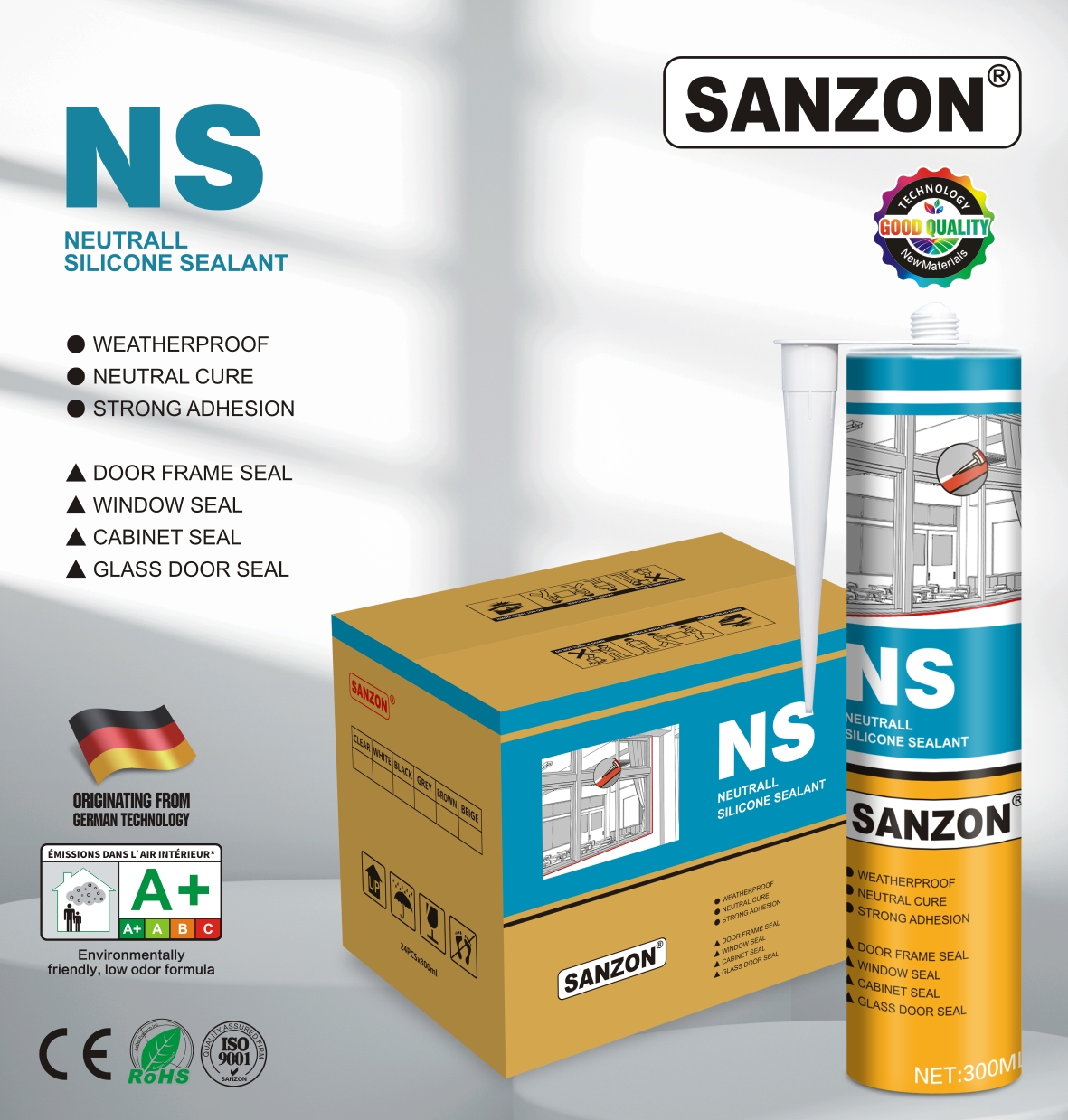
Neutral cure silicone sealant is suitable for a wide range of materials, including glass, aluminium, metal and certain types of stone. Because it does not release acetic acid while curing, it is generally the safer default where metal or stone is present or where odour is a concern. Typical neutral-cure products in the SANZON range include SANZON GP-N, a neutral-cure multi-purpose silicone sealant with a usage temperature range of -50°C to 150°C, and SANZON NS, described as a neutral silicone structure and weather-resistant adhesive with high viscosity, UV resistance, climate and aging resistance, and cracking resistance, suitable for exterior walls.
When buyers search for a neutral cure silicone sealant supplier, the practical check is not the phrase itself but the paperwork behind it: cure type, temperature range, substrate compatibility, colour options, cartridge format and shelf life — all of which should appear on the technical data sheet. Shandong Sanzeng New Materials Co., Ltd. is a sealant manufacturer based in Linqu County, Weifang City, Shandong Province, China, producing neutral-curing silicone sealant alongside acid-curing, weather-resistant, general-purpose and structural types.
Acetic (Acetoxy) Silicone Sealant
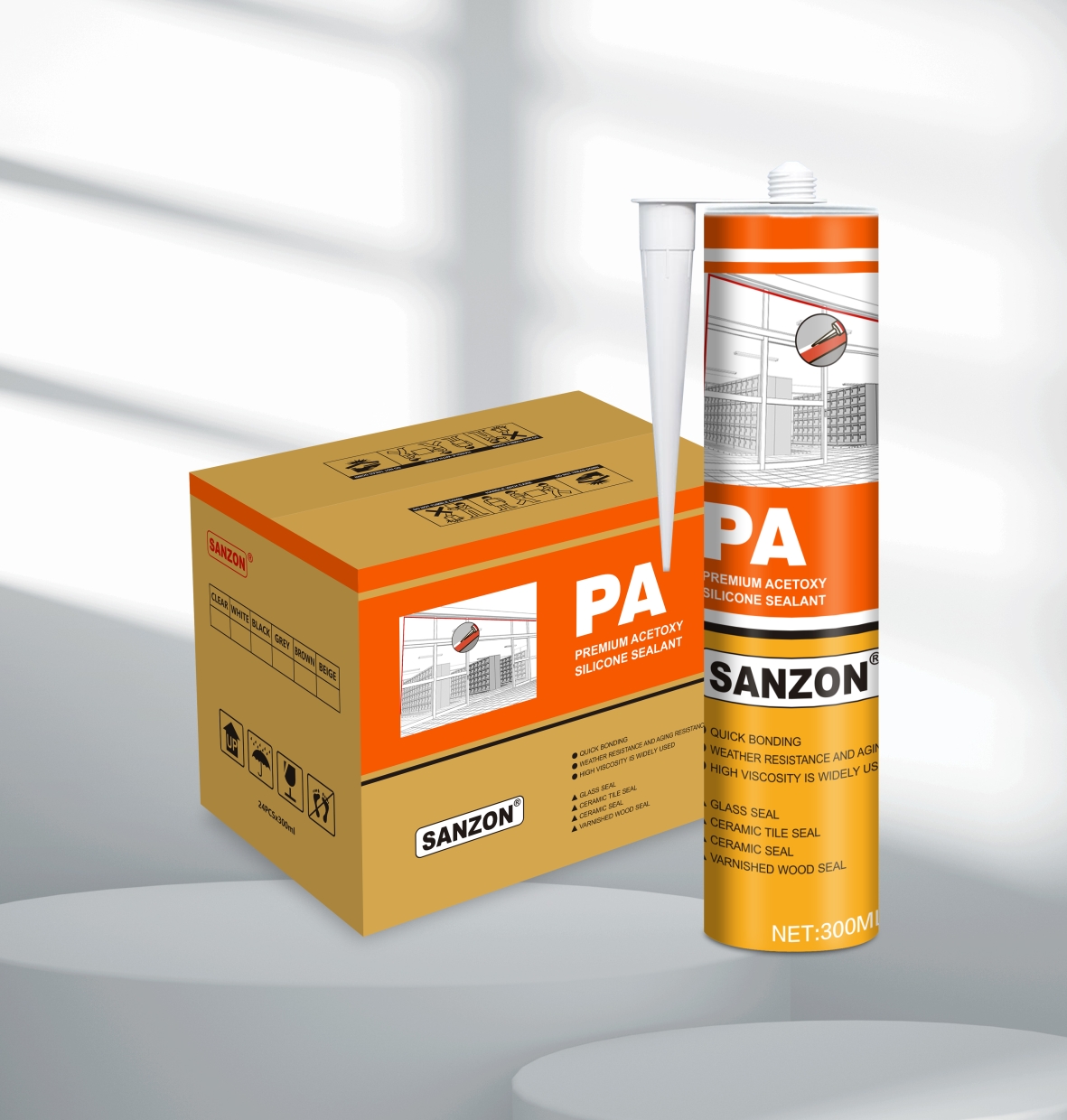
Acetoxy silicone sealant generally provides strong adhesion to glass and ceramic materials and has a characteristic vinegar-like odour during curing. In the SANZON range, SANZON PA is an acetoxy silicone sealant with a net content of 300 ml, available in six colours — Clear, White, Black, Grey, Bronze and Beige — packed at 24 pcs per carton, with CE, ISO 9001 and RoHS certification and a French indoor air emission label of A+. SANZON GP is an acid-cure general-purpose silicone sealant intended for interior decoration, with a usage temperature range of -50°C to 120°C, good viscosity and toughness, weatherproofing and a 12-month shelf life.
A useful working rule: for general sealing of glass and ceramics, an acetoxy silicone sealant can be a suitable choice; for windows, aluminium, metal, stone and outdoor weatherproofing, neutral cure silicone sealant is generally recommended.
Structural Silicone Adhesive
Structural silicones are used where the sealant is part of the load-bearing system rather than a cosmetic joint. SANZON CS is a structural silicone sealant made of silicone rubber, classified as a structural weather-resistant adhesive for curtain walls and intended for construction and building, large-scale project scenarios, the automotive industry and the marine and shipbuilding industry. Its formulation contains no white oil, it is UV resistant, its curing speed is described as super fast, and the EU-market version carries CE, ISO and RoHS certification with a French indoor air emission label of A+.
Weatherproof, Facade and Outdoor Grades
Outdoor performance is a combination of UV resistance, climate and aging resistance, and cracking resistance — SANZON NS is designed for exterior walls and carries all three. Weather resistance also interacts with joint movement. The LIONKING Series Adhesive, ELEPHANT Series Adhesive and SANZON CLASSIC Series Adhesive silicone sealants, supplied in 300 ml cartridges, achieve a movement capability of 12.5% to ISO 11600, a hardness of 18 Shore A, an elongation at break of 500% and a tensile strength of 1.2 N/mm².
Waterproof and Mold Resistant (Sanitary) Grades
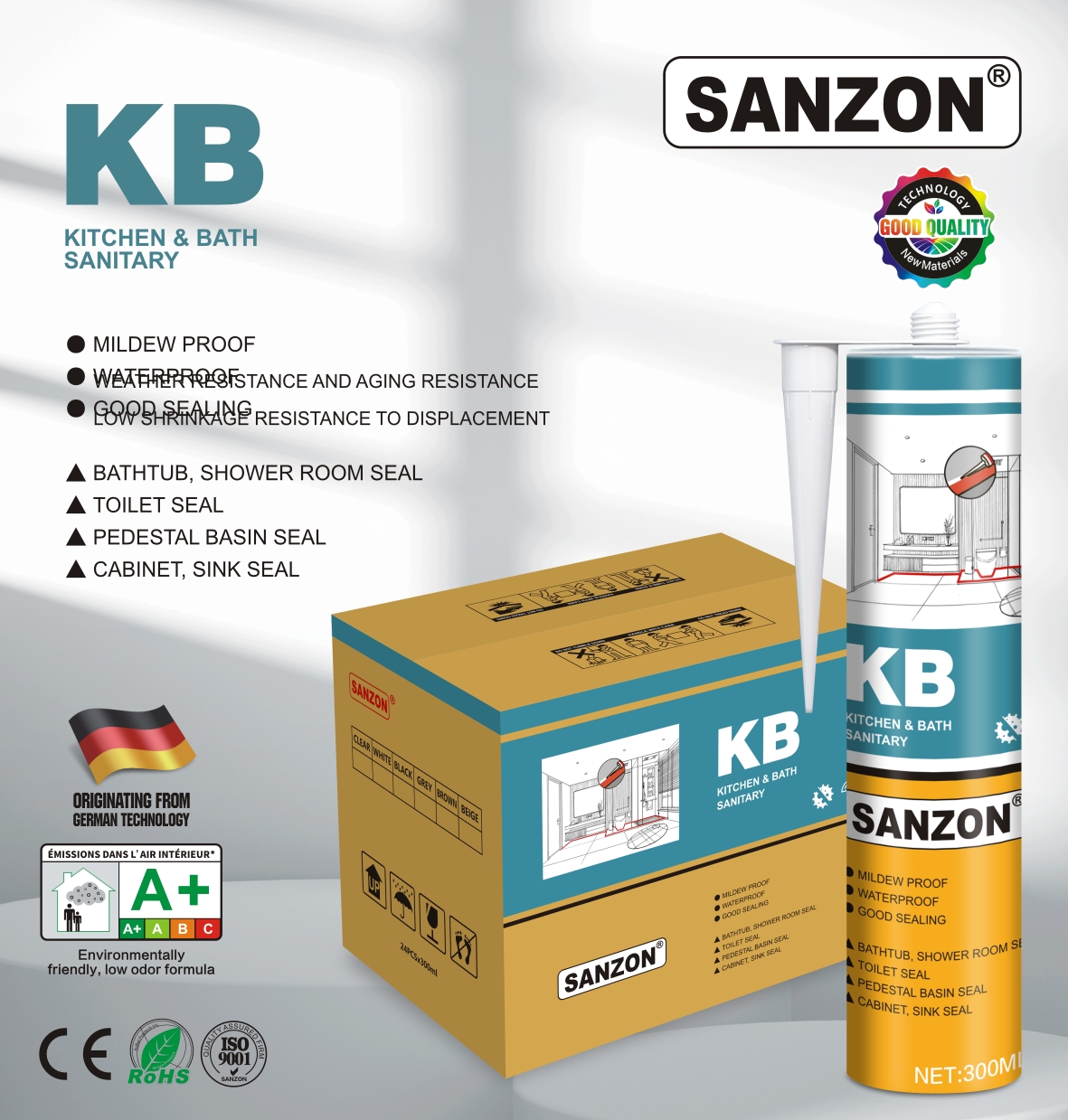
Sanitary work is a distinct specification rather than a colour choice. SANZON KB is a neutral-cure kitchen and bath sanitary anti-mold silicone sealant made of silicone polymer, offering long-term anti-mold performance in high temperature and humidity conditions, with a usage temperature range of -50°C to 150°C, plus waterproofing, good sealing, high adhesive strength, easy cleaning and anti-yellowing. It is intended for construction and building, sanitary and bathroom, glass and curtain wall, home improvement and decoration, and windows and doors.
Fire Resistant Silicone Sealant
Fire-rated sealants address compartments and penetrations. SANZON FS is a firestop silicone sealant, classified as a fire-rated silicone sealant within the flame-retardant fire silicone sealant category and made of polymer-based fire-resistant sealant. It is flame retardant and resistant to high temperature, and offers good weather resistance plus vibration and cracking resistance. It is supplied at 300 ml × 24 pcs per carton with a 12-month shelf life and is intended for construction and building, home improvement and decoration, windows and doors, and glass and curtain wall.
Paintable Alternatives: MS Polymer and Acrylic
Most traditional silicone sealants are not designed to be painted after curing. Where a project requires painting or coating, MS polymer sealant or another paintable sealant may be the more suitable option. SANZON MS is a high-tack neutral silane-modified polymer sealant made of MS polymer; it is formaldehyde-free, painting-compatible after curing, and offers high strength, fast curing, UV resistance and suitability for humid environments. SANZON AS is a single-component paintable acrylic sealant with a neutral room-temperature cure, low VOC and low odour, and a usage temperature range of -10°C to 80°C.
Reading the Terminology: RTV, One-Component and Low Modulus
Three terms appear constantly in specifications and are worth decoding before a purchase is made:
- RTV (room-temperature vulcanizing) describes sealants that cure at ambient temperature, typically by reacting with atmospheric moisture — no oven or heat source is required.
- One-component (single-component) means the sealant is supplied ready to use in a cartridge, sausage pack or pail. Two-component products must be mixed in a fixed A/B ratio, which is why packaging for two-part products is designed to prevent mixing errors.
- Low modulus formulations are more elastic and accommodate greater joint movement, while higher-modulus products are stiffer and develop greater tensile strength. The right choice depends on how much the joint is expected to move.
Aquarium and continuous-immersion applications form a specialist segment. Not every construction sealant is intended for permanent water contact, so the correct approach is to state the exact application to the supplier and confirm the recommendation against the technical data sheet — rather than assume that any waterproof sealant qualifies.
Step-by-Step: How to Choose a Silicone Sealant
Step 1 — Define the substrate and the joint. List what the sealant must bond to (glass, aluminium, ceramic, metal, stone, plastic, wood) and whether the joint is a static gap or a moving joint. Substrate compatibility is the fastest way to eliminate the wrong chemistry.
Step 2 — Choose the cure chemistry. Use neutral cure where metal, stone or outdoor exposure is present. Acetoxy grades are widely used on glass and ceramic, but they release a vinegar-like odour during curing, which matters in occupied interiors.
Step 3 — Match the environment. Check indoor or outdoor exposure, UV, water contact, humidity and temperature. The SANZON neutral-cure range covers -50°C to 150°C, the acid-cure SANZON GP covers -50°C to 120°C, and the acrylic SANZON AS covers -10°C to 80°C. Wet areas such as kitchens and bathrooms call for an anti-mold sanitary grade such as SANZON KB; compartmented penetrations call for a fire-rated grade such as SANZON FS.
Step 4 — Match the packaging and format to the job. Standard 300 ml cartridges suit hand application and retail; 590 ml sausage packs reduce packaging volume per litre of product and suit larger joints; 2600 ml drums suit bulk users. The SANZON range covers 300 ml × 24 pcs per carton, 590 ml × 20 pcs per carton (SANZON NS) and 2600 ml large-capacity drums, in HDPE, PP and PE, with colours including transparent, white, black, grey and others.
Step 5 — Verify documentation before ordering. Ask for the technical data sheet covering cure type, temperature range, substrate suitability, packaging and shelf life, together with the applicable certifications. Confirm storage conditions as well: sealant should be stored cool, dry and well ventilated, away from direct sunlight, heat and moisture, and used within the stated shelf life.
Step 6 — Confirm the commercial terms. For own-brand buyers, OEM and private label services allow the brand, packaging, labels, cartridge printing, colours and other specifications to be customised. Sampling is normally the next step, and free samples with technical product selection consultation are part of the SANZON service offer, supported by 24-hour after-sales online support.
Use Cases: Where the Selection Rules Play Out
Windows and doors. Neutral-cure grades are used for frames and perimeter joints where aluminium and coatings are present, with weather resistance and movement capability mattering more than colour.
Glass and curtain wall facades. Structural silicone adhesive (SANZON CS) handles load-bearing bonding, while a weather-resistant neutral sealant (SANZON NS) provides the external weather seal. Both are supplied with CE, ISO and RoHS documentation for the EU market.
Kitchens and bathrooms. Anti-mold sanitary silicone (SANZON KB) is selected for long-term anti-mold performance under high temperature and humidity, with easy cleaning and anti-yellowing as practical requirements.
Interior decoration and home improvement. General-purpose acetoxy or neutral grades (SANZON GP, SANZON GP-N) cover most interior joints, with paintable acrylic (SANZON AS) or MS polymer (SANZON MS) where the joint will be painted afterwards.
Automotive, marine and industrial manufacturing. Sealants are used for bonding and sealing where flexibility, adhesion and environmental resistance are the priorities; the documented application industries include automotive, industrial manufacturing and marine and shipbuilding.
High-temperature industrial ventilation. A documented example is a chemical plant ventilation system running continuously 24/7 for gas extraction and exhaust sealing under high temperature conditions. The required properties were excellent adhesion, chemical resistance, high-temperature aging resistance, UV resistance, weather resistance, water resistance and crack resistance, combined with low shrinkage, fast curing and long-term durability — a useful reminder that in industrial work the specification list, not the product name, drives selection.
Silicone Sealant Comparison Table
| Model | Type and cure | Usage temperature | Typical focus | Packing |
|---|---|---|---|---|
| SANZON GP | Acid-cure general-purpose silicone sealant | -50°C to 120°C | Interior decoration; glass and ceramic | 300 ml × 24 pcs/carton |
| SANZON GP-N | Neutral-cure multi-purpose silicone sealant | -50°C to 150°C | Multi-purpose decoration; metal and stone | 300 ml × 24 pcs/carton |
| SANZON NS | Neutral silicone structure + weather-resistant adhesive | -50°C to 150°C | Exterior walls; UV, aging and cracking resistance | 300 ml × 24 pcs; 590 ml × 20 pcs/carton |
| SANZON KB | Neutral-cure kitchen and bath anti-mold silicone sealant | -50°C to 150°C | Sanitary, bathroom, kitchen; long-term anti-mold | 300 ml × 24 pcs/carton |
| SANZON PA | Acetoxy (acid-cure) silicone sealant | — | Glass and ceramic; six colours including Bronze and Beige | 300 ml, 24 pcs/carton |
| SANZON CS | Structural silicone adhesive for curtain walls | — | Curtain wall and large-scale projects; no white oil | — |
| SANZON FS | Fire-rated, flame-retardant silicone sealant | High-temperature resistant | Firestop; vibration and cracking resistance | 300 ml × 24 pcs/carton |
| SANZON AS | Single-component paintable acrylic sealant | -10°C to 80°C | Paintable interior sealing; low VOC and low odour | 300 ml × 24 pcs/carton |
| SANZON MS | Neutral silane-modified polymer (MS) sealant | — | Paintable; humid environments; formaldehyde-free | 300 ml × 24 pcs/carton |
| LIONKING / ELEPHANT / SANZON CLASSIC Series Adhesive | Silicone sealant, neutral (alcohol release) | -20°C to 60°C | General sealing; hardness 18 Shore A, movement 12.5% (ISO 11600), elongation 500%, tensile 1.2 N/mm² | 300 ml cartridge |
All figures above are taken from the manufacturer's published product data for the SANZON range. Where a parameter is shown as "—", it should be confirmed against the current technical data sheet before the product is specified.
Beyond the Sealant: Cartridges and Filling Equipment
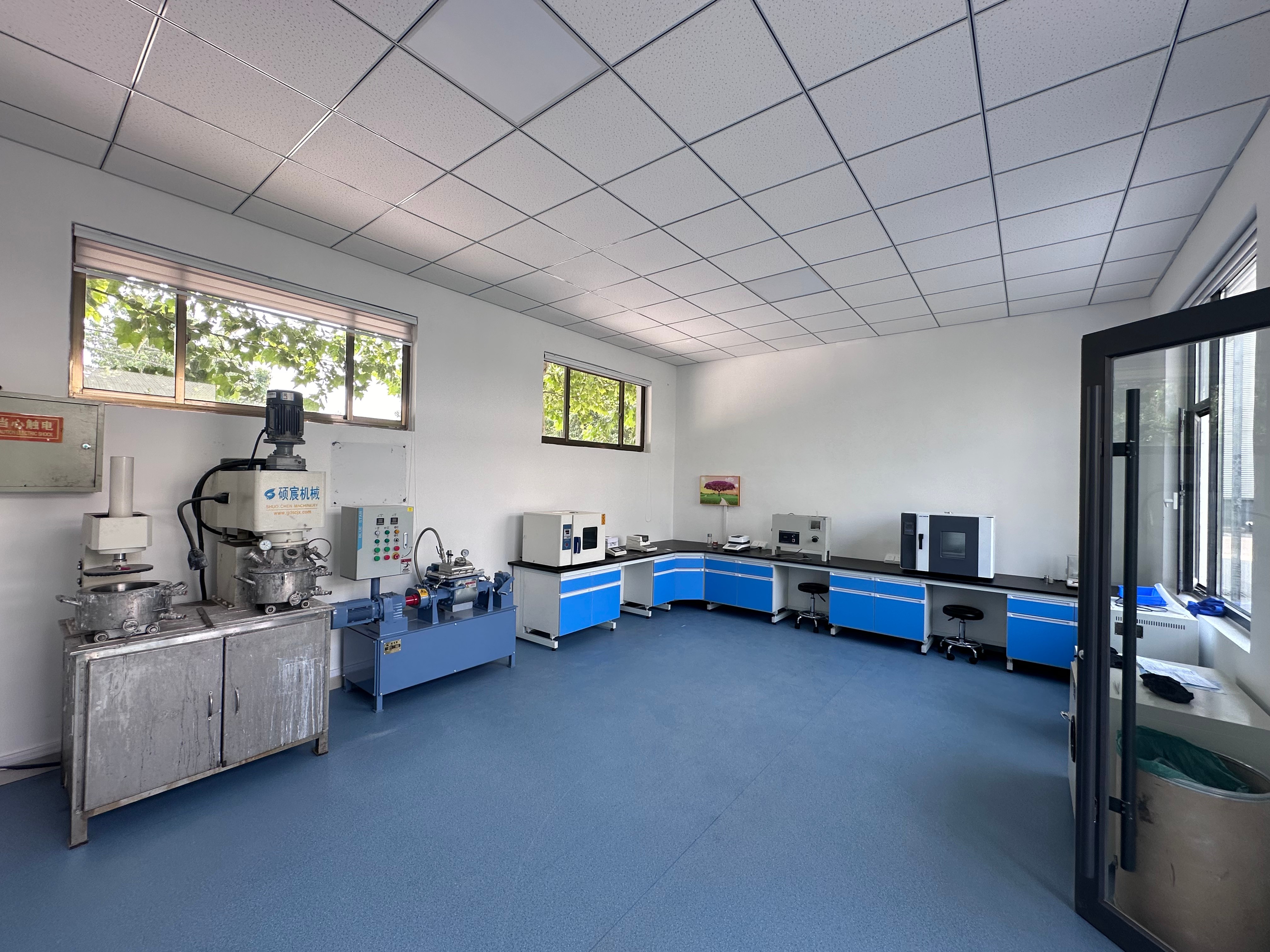
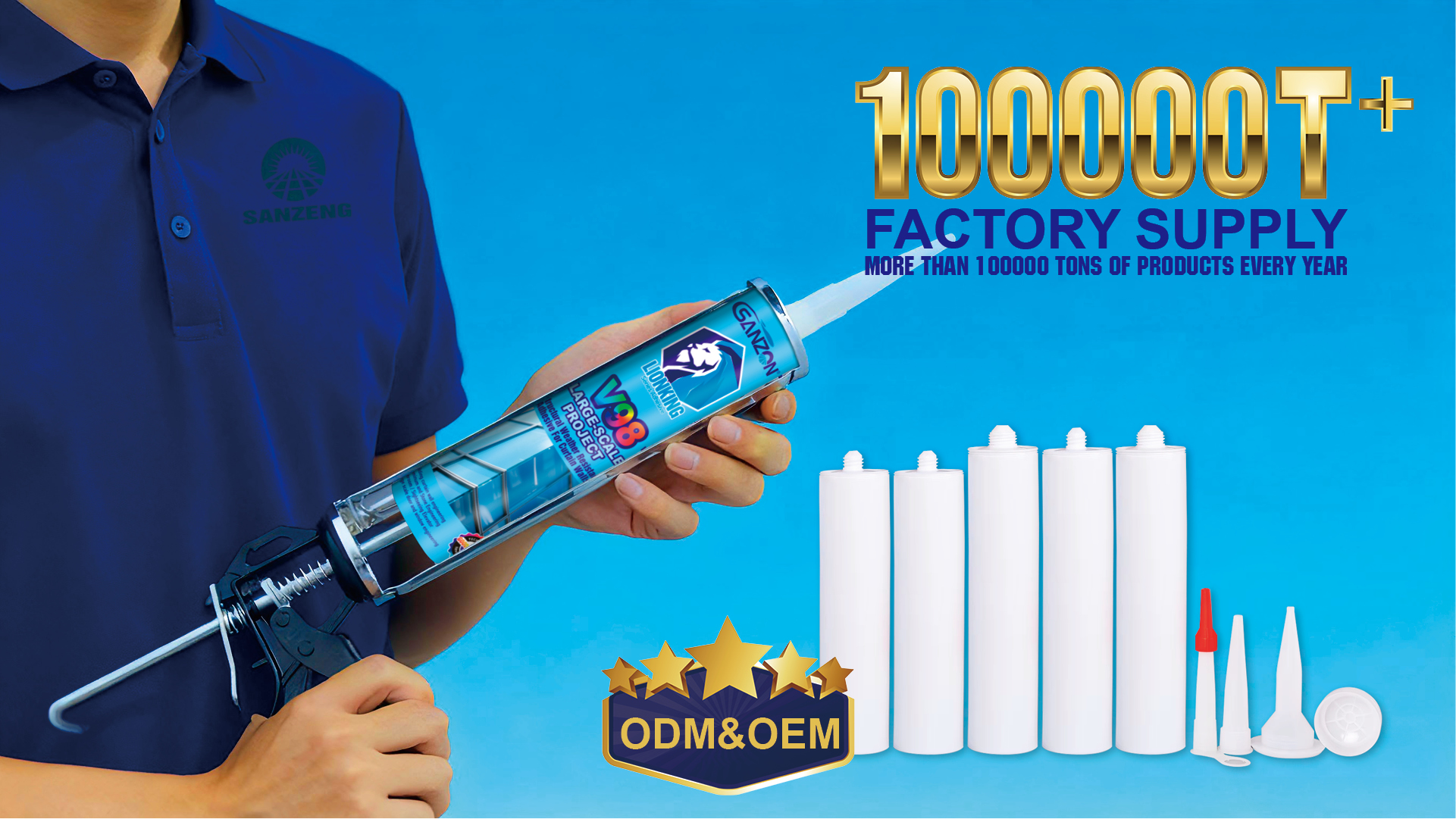
Because the same manufacturer produces the packaging, the SZ-1 sealant empty bottle, sealant cartridge and caulking tube is supplied at a standard 300 ml capacity with customisable formats — cartridge, foil sausage, and bucket & pail — produced by fully automated precision injection moulding, with an annual output of more than 100,000 tons from a self-owned hose factory. On the filling side, the semi-automatic cartridge filling machine fills 260–310 ml at 30–60 pcs/min with a filling accuracy of ±2 g, uses servo-controlled filling plus automatic capping, runs on 3.8 kW at AC380V 50Hz, measures 1350 × 950 × 1650 mm, weighs approximately 350 kg and requires one to two operators. For own-brand buyers, this is the practical link between formulation and shelf-ready product.
Frequently Asked Questions
What is silicone sealant used for?
Silicone sealant is a product used to fill, seal and bond gaps between materials. It can be used on glass, aluminium, ceramic, metal, some plastics and wood, as well as for doors and windows, kitchens, bathrooms and various construction joints. Different materials and environments call for different grades — neutral cure silicone sealant is suitable for materials including glass, aluminium, metal and certain types of stone, while acetoxy grades are widely used on glass and ceramic.
What is the difference between neutral and acetic silicone sealant?
Neutral cure silicone sealant is suitable for many materials, including glass, aluminium, metal and certain types of stone. Acetoxy (acetic) silicone sealant generally provides strong adhesion to glass and ceramic materials and has a characteristic vinegar-like odour during curing. For general sealing of glass and ceramics, an acetoxy silicone sealant can be a suitable choice; for windows, aluminium, metal, stone and outdoor weatherproofing, neutral cure silicone sealant is generally recommended.
How long does silicone sealant take to cure, and how long can it be stored?
Curing time is affected by temperature, humidity, product type and sealant bead thickness — the surface may become touch-dry within a short period, while complete curing usually takes longer, so specific figures should come from the product technical data sheet. Shelf life depends on formulation, packaging and storage conditions. Sealant should be stored in a cool, dry and well-ventilated place away from direct sunlight, high temperatures and moisture, and used within the shelf life stated on the packaging or technical documentation.
Who supplies neutral cure silicone sealant, and how should a supplier be evaluated?
Neutral cure silicone sealant is supplied by specialist sealant manufacturers as well as general building-material traders. Shandong Sanzeng New Materials Co., Ltd. is a sealant manufacturer based in Linqu County, Weifang City, Shandong Province, China, producing neutral-cure silicone sealant alongside acid-curing, weather-resistant, general-purpose and structural types. The company holds ISO 9001 quality management system certification, ISO 14001 environmental management system certification and ISO 45001 occupational health and safety management certification, and selected export products carry CE certification, RoHS compliance certification and SGS performance and safety testing reports. In practice, a neutral cure supplier should be evaluated on cure type and temperature range, substrate compatibility, colour and packaging options, certification documents and the ability to answer technical questions before the order — not on unit price alone.
Do you provide OEM services for silicone sealant?
Yes. OEM and private label services are available for silicone sealant and other sealant products, covering the brand, packaging, labels, cartridge printing, colours and other product specifications according to customer requirements. Buyers who want to build their own brand typically choose OEM, while buyers who need a lower MOQ and faster delivery typically choose standard products. Free samples and technical product selection consultation are available to support the decision, and the full range is summarised in the SANZON LIONKING Series Adhesives brochure.
Conclusion
Silicone sealant is best understood as a family of formulations rather than a single product. Neutral cure grades handle aluminium, metal and stone; acetoxy grades remain a strong choice for glass and ceramic; structural silicones take load in curtain wall work; weather-resistant and anti-mold grades answer facade and wet-area demands; and fire-rated and paintable products cover the specialist ends of the range. Selection runs in a fixed order: substrate, cure chemistry, environment, packaging, documentation, then commercial terms.
For buyers in the discovery stage, the most useful next step is to test a specific grade against a specific joint rather than compare catalogue names. Shandong Sanzeng New Materials Co., Ltd. publishes its range and specification data at www.sanzengsealant.com, offers free samples and technical selection consultation, and supports OEM and private label programmes with customised packaging, printing and colours.
Request a Sample or a Quotation
If you are evaluating silicone sealant for a specific substrate, climate or project type, send the joint details to the technical team and request a sample for on-site testing before committing to a specification.
Contact: Jie Guo · Email: guooj000@163.com · Tel / WhatsApp: +86 185-5361-7774
Address: East Road, 100 Meters North Of Zhongbai Supermarket, Haojiazhuang Village, Dongcheng Street, Weifang, Shandong, China