Silicone Sealant Types, Selection & Neutral Cure Suppliers
Silicone Sealant Types, Selection & Neutral Cure Suppliers
Silicone sealant is a flexible sealing material used to fill, seal and bond gaps and joints between materials. It is widely used in construction, doors and windows, glass, bathrooms, decoration, automotive and industrial applications, and the different types of silicone sealant available do not perform the same job — adhesion, waterproofing, weather resistance and elasticity vary by formulation.
For a buyer at the start of a purchasing process, that range is the first obstacle. Product labels carry names such as neutral cure silicone sealant, acetic silicone sealant, structural silicone adhesive, sanitary silicone sealant, weatherproof silicone sealant and fire resistant silicone sealant, but they rarely explain which of those products belongs in which joint. This guide covers what silicone sealant is, which families exist and how they differ, how to select one step by step, where each type is used, and what to check when comparing neutral cure silicone sealant suppliers.
Product and company facts used throughout this guide come from the published technical data of Shandong Sanzeng New Materials Co., Ltd., a sealant manufacturer headquartered in Linqu County, Weifang City, Shandong Province, China, whose business traces back to 1994 and whose products are exported to more than 30 countries and regions.
Why Silicone Sealant Is Not a Single Product
Sealant is a product used to fill, seal and bond gaps between materials. That definition is broad, and inside it silicone sealant covers several chemistries and performance grades that are often quoted as if they were interchangeable.
Four variables decide whether a joint performs as intended:
- Cure chemistry. Acetoxy (acid cure) or neutral cure.
- Substrate. Glass, ceramic, aluminum, metal, stone, plastic, wood or concrete.
- Service conditions. Indoor or outdoor exposure, temperature range, humidity, joint movement, and cleaning or chemical contact.
- Post-treatment. Whether the cured joint will be painted or coated.
When a specification ignores those variables, the mismatch is built into the project. A general-purpose interior sealant specified in a shower or bathroom removes the long-term anti-mold performance that a sanitary grade is formulated to provide in high temperature and humidity. An acetoxy sealant used where neutral cure chemistry is the recommended direction — windows, aluminum, metal, stone and outdoor weatherproofing — conflicts with the material-compatibility logic for those substrates. And where a joint must be painted after curing, most traditional silicone sealants are not designed for it, which moves the specification toward a paintable sealant such as MS polymer or acrylic.
None of this makes one product category better than another. It means the buying decision starts with the joint, not with the product name.
Industry Background: Silicone Sealant in Construction & Decoration
Silicone sealant sits at the junction of construction, decoration and light manufacturing. It is applied in building doors and windows, curtain wall projects, home decoration, automotive, electrical and industrial electronics work, so demand follows those sectors rather than a single market.
Production is geographically clustered. One cluster is Linqu County, Weifang City, Shandong Province in China — described in manufacturer background material as the Capital of China's Aluminum Profiles and a hub of the silicone sealant industry cluster. Aluminum processing, glass, sealant production, packaging and filling machinery develop close to each other, which is why some sealant manufacturers in the region have extended their scope beyond the sealant itself.
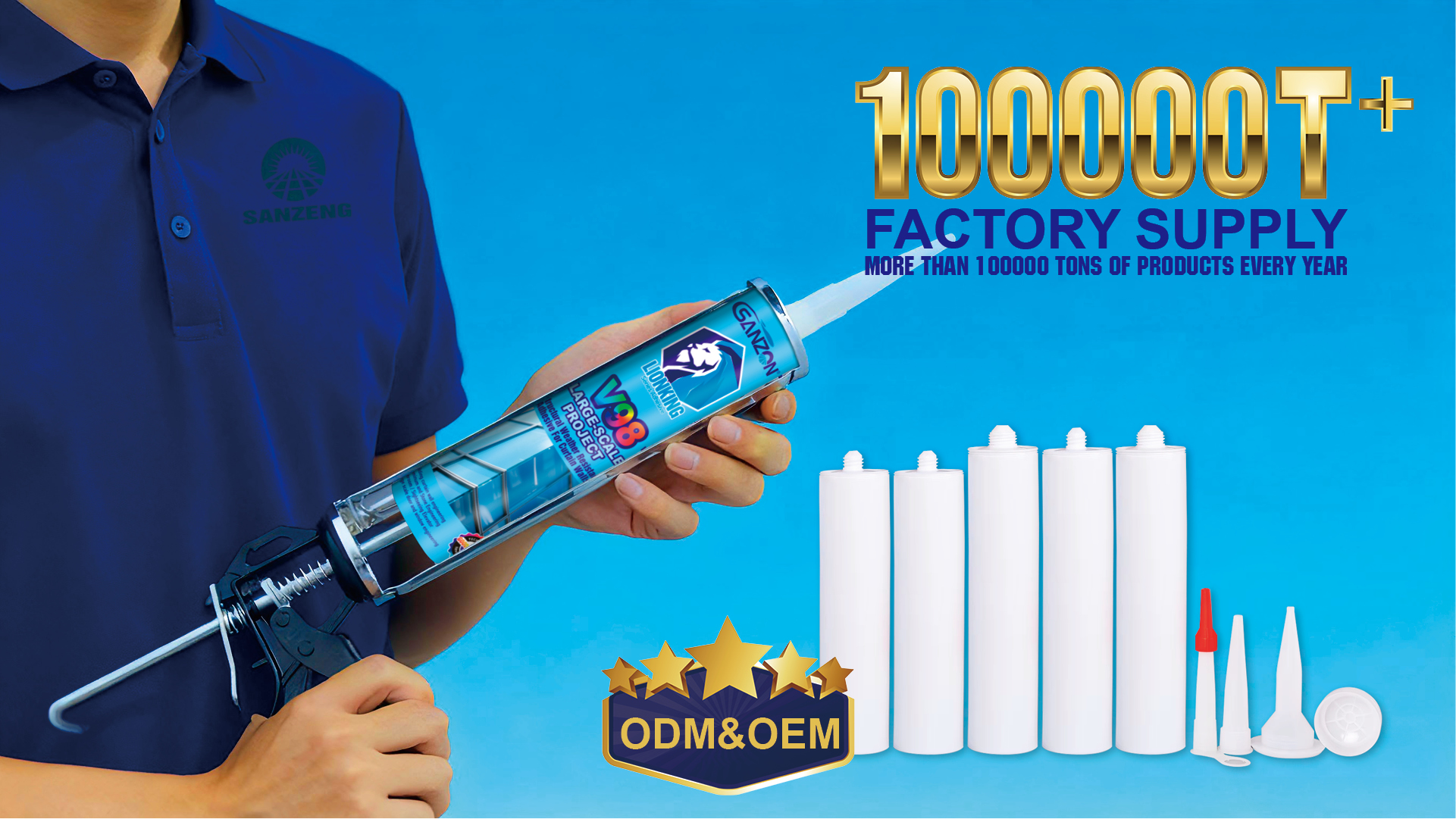
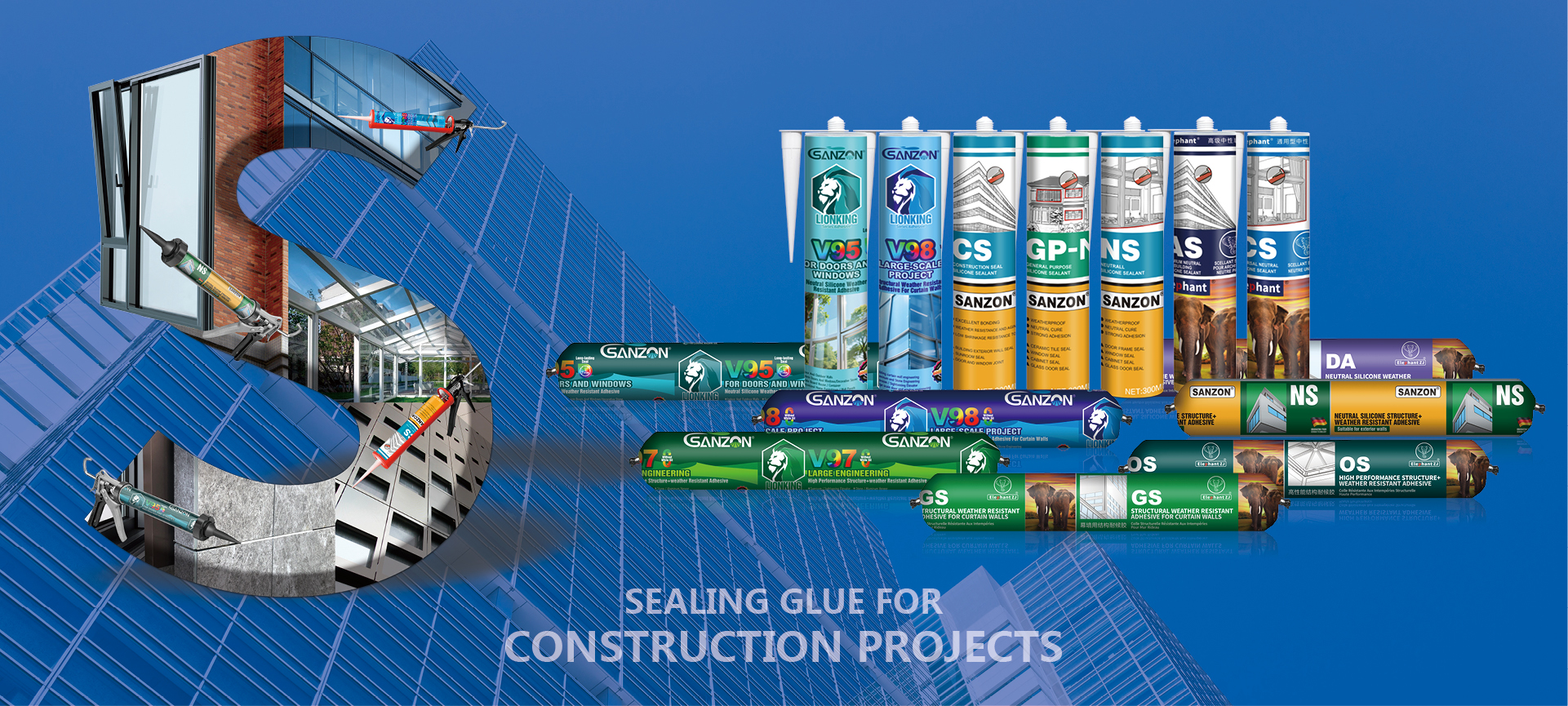
Shandong Sanzeng New Materials Co., Ltd. is one example. The company describes its structure as an integrated three-in-one industrial chain of sealant products, packaging containers and filling equipment, with a core sealant business covering nearly 100 models: silicone sealants in acid-curing, neutral-curing, weather-resistant, general-purpose and structural types, plus MS polymer sealants, acrylic sealants, polyurethane sealants, no-nail construction adhesives, PU foam, tile grout, fire-resistant sealants, high-tack sealants and anti-mildew sealants for kitchens and bathrooms. The same company produces cartridges from 240 ml to 310 ml and 2600 ml drums, and filling equipment such as semi-automatic and fully automatic filling machines and automatic capping machines, with a stated filling accuracy of ±2 g and a speed of 30–60 pieces per minute.
For a buyer, integration changes the shape of a supplier conversation. Sealant formulation, cartridge format, filling tolerance and private label printing sit inside one supply relationship instead of three, which matters most when a project needs a specific packaging format or a custom brand printed on the cartridge.
Silicone Sealant Types and What Each One Does
The following families cover most construction and decoration requirements, and each has a defined place in a specification.
Neutral cure silicone sealant
Neutral cure silicone sealant is suitable for a wide range of materials, including glass, aluminum, metal and certain types of stone. For windows, aluminum, metal, stone and outdoor weatherproofing, neutral cure silicone sealant is generally the recommended direction.
Two neutral products in the Sanzeng range show how this family splits by job:
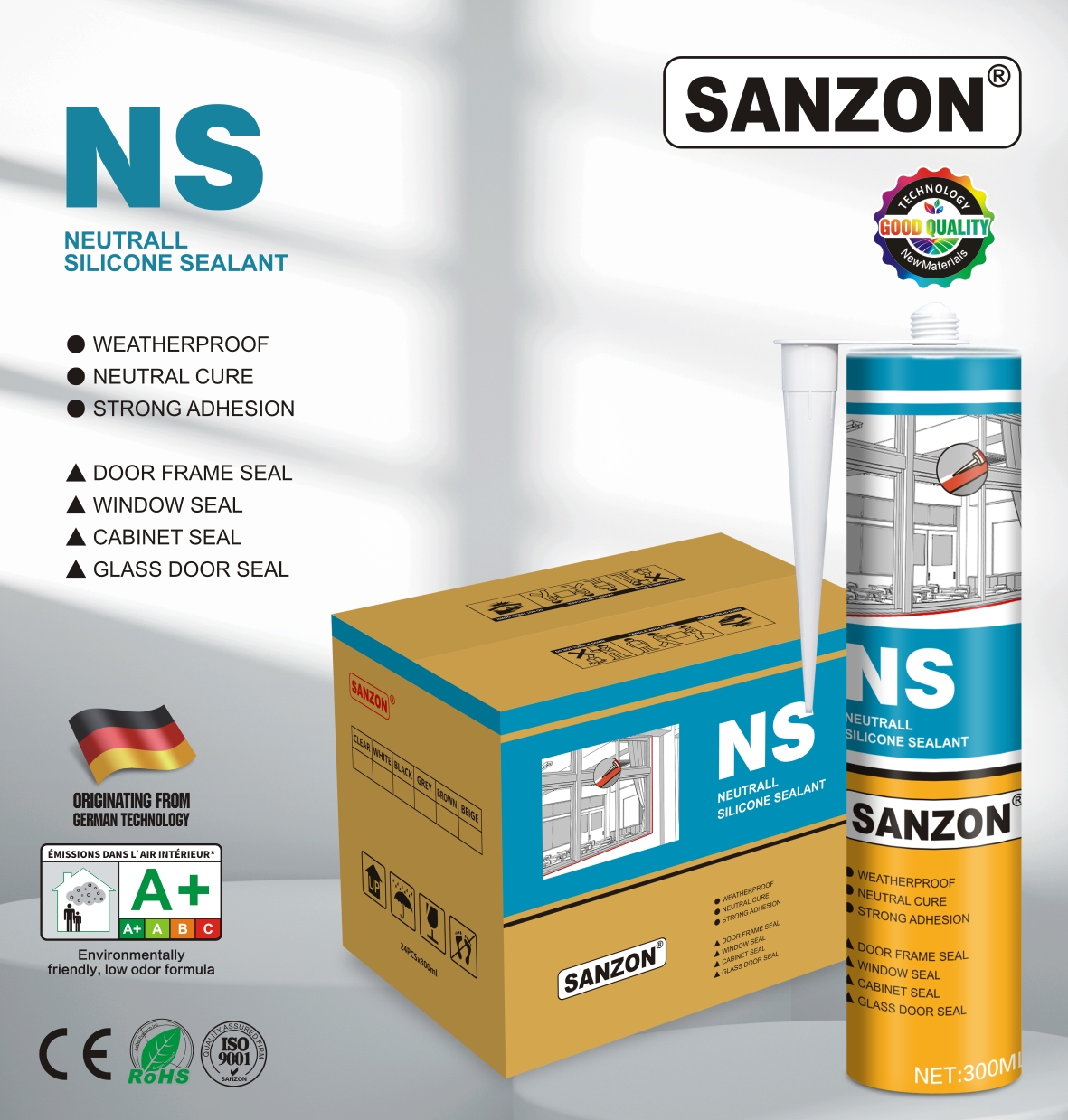
- SANZON NS is described as a neutral silicone structure and weather-resistant adhesive made of silicone polymer, curing at room temperature, with a usage temperature range of -50 °C to 150 °C. Its listed properties are high viscosity, strong adhesion, UV resistance, climate and aging resistance and cracking resistance, with exterior walls named as a suitable application. Packing options are 300 ml × 24 pcs per carton and 590 ml × 20 pcs per carton, with a 12-month shelf life.
- SANZON GP-N is a neutral cure multi-purpose silicone sealant with the same -50 °C to 150 °C usage range, listed as weatherproof with strong adhesion, packed 300 ml × 24 pcs per carton with a 12-month shelf life.
Acetic (acetoxy) silicone sealant
Acetoxy silicone sealant generally provides strong adhesion to glass and ceramic, and it releases a characteristic vinegar-like odor during curing. It is a suitable choice for general sealing of glass and ceramic surfaces.
- SANZON GP is an acid-cure general purpose silicone sealant for interior decoration, curing at room temperature with a -50 °C to 120 °C usage range. It is listed as weatherproof with strong adhesion and good viscosity and toughness, packed 300 ml × 24 pcs per carton, with a 12-month shelf life.
- SANZON PA is an acetoxy silicone sealant made of silicone rubber with a net content of 300 ml, available in six colors: clear, white, black, grey, bronze and beige. CE, ISO 9001 and RoHS are listed for this product, together with a French indoor air emission label of A+.
Structural silicone adhesive for curtain walls
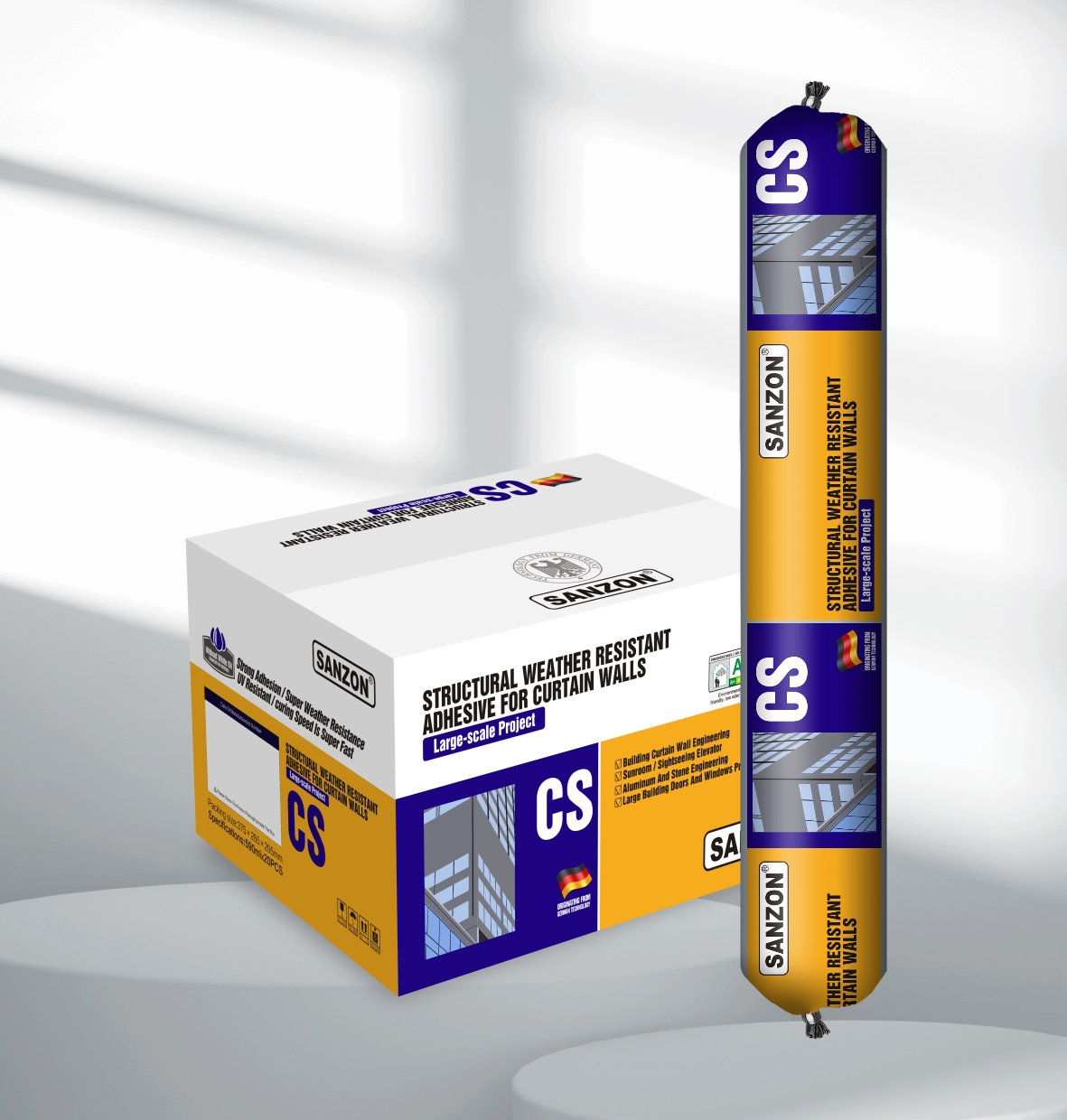
Structural silicone adhesive is used where the sealant contributes to the structural bond of a facade rather than providing weather sealing alone. SANZON CS is described as a structural weather-resistant adhesive for curtain walls, made of silicone rubber, formulated without white oil, with a fast curing speed and UV resistance. It is listed for large-scale project scenarios; the certifications given are CE, ISO and RoHS, and the French indoor air emission label is A+.
Sanitary and anti-mold silicone sealant
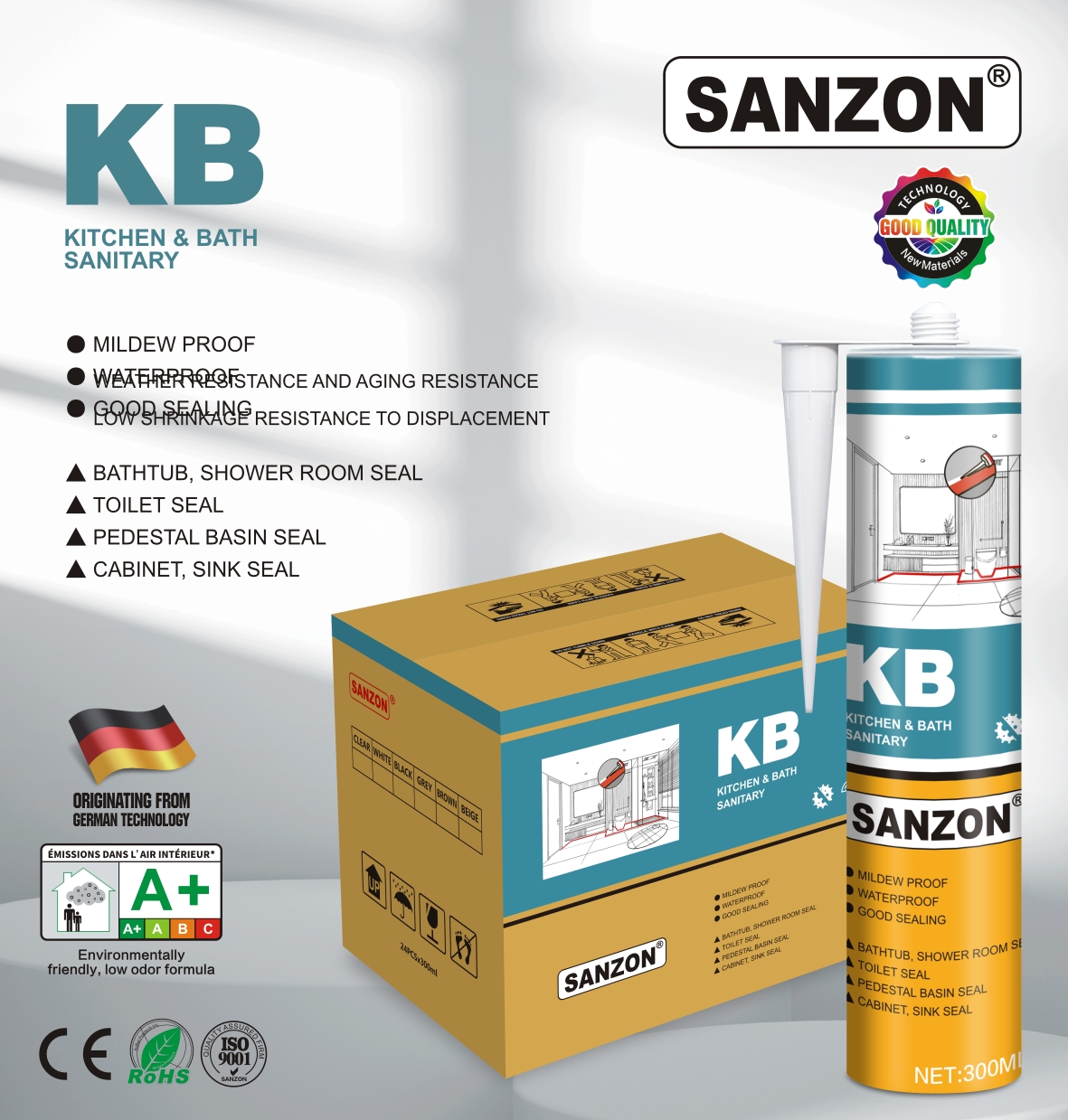
Wet areas need a grade formulated for them. SANZON KB is a neutral cure kitchen and bath sanitary anti-mold silicone sealant made of silicone polymer, manufactured for bathroom sealing applications. It provides long-term anti-mold performance in high temperature and humidity conditions, with a -50 °C to 150 °C usage range and a 12-month shelf life, packed 300 ml × 24 pcs per carton in transparent, white, black, grey and other colors.
Fire-rated silicone sealant
SANZON FS is a firestop silicone sealant classified as a flame-retardant, fire-rated silicone sealant made of polymer-based fire-resistant sealant. Its listed properties are flame retardancy, high temperature resistance, good weather resistance, vibration and cracking resistance, and ease of use and installation. It is intended for glass and curtain wall, windows and doors, home improvement and decoration, and construction and building applications, packed 300 ml × 24 pcs per carton with a 12-month shelf life.
Paintable alternatives: MS polymer and acrylic sealant
When a joint must be painted, the chemistry changes. SANZON MS is a high-tack neutral silane-modified polymer sealant, formaldehyde-free and odorless, pollution-free to the substrate, with fast curing and UV resistance. It can be painted immediately and is painting-compatible after curing, and it is described as suitable for humid environments. SANZON AS is a single-component paintable acrylic sealant made of acrylic polymer for universal decoration work, with low VOC and low odor and a -10 °C to 80 °C usage range, packed 300 ml × 24 pcs per carton.
Companion products in the same application
Sealing a building usually involves more than one product. The same range includes polyurethane foam — SANZON TC for building doors and windows and SANZON TS for indoor decoration, both single-component moisture-cure foams with closed cell content above 90% and a -10 °C to 80 °C usage range — no-nail construction adhesives (SANZON GK and SANZON GS, formaldehyde and benzene-free, packed 300 ml × 24 pcs per carton with an 18-month shelf life), and two-component tile grouts (polyurea SANZON GA and epoxy SANZON GM) for tiled surfaces in the same wet-area environment.
For reference on the performance level published for general-purpose silicone sealants, the SANZON CLASSIC Series, ELEPHANT Series and LIONKING Series adhesives are listed in 300 ml cartridges with a neutral (alcohol release) cure, 18 Shore A hardness, 12.5% movement capability (ISO 11600), 500% elongation at break, 1.2 N/mm² tensile strength and -20 °C to 60 °C temperature resistance.
How to Select a Silicone Sealant, Step by Step
Selection is a sequence of elimination steps. Working through them in order prevents the most common specification mismatches.
- Identify the substrate and the joint. Glass, ceramic, aluminum, metal, stone, plastic, wood and concrete behave differently with different sealant chemistries. Note whether the joint is a static gap or a moving joint.
- Fix the service environment. Indoor or outdoor, temperature range, humidity, UV exposure and cleaning chemicals. A wet bathroom and an exterior facade call for different grades even though both are called silicone sealant.
- Choose the cure chemistry. Neutral cure for windows, aluminum, metal, stone and outdoor weatherproofing; acetoxy for general sealing of glass and ceramic where its cure behavior is acceptable.
- Check the temperature range against the real service condition. Published ranges differ across the range — for example -50 °C to 150 °C for SANZON NS, SANZON GP-N and SANZON KB; -50 °C to 120 °C for SANZON GP; and -10 °C to 80 °C for SANZON AS acrylic sealant and the PU foams.
- Decide whether the joint will be painted. If it will, traditional silicone is generally not the right answer and a paintable MS polymer or acrylic sealant should be evaluated instead.
- Match the packaging format to the job and the market. Options in the range include 240 ml to 310 ml cartridges, 2600 ml large-capacity drums in HDPE/PP/PE, and 400 ml or 600 ml sausage film packaging, with custom colors, logo printing and cartons available.
- Verify the documentation. Request the technical data sheet for the specific product. Curing behavior depends on temperature, humidity, product type and joint thickness, so surface skin-over time and full cure should be confirmed from the TDS rather than assumed. Shelf life and storage conditions should be checked at the same time.
- Validate with a sample before committing. A sample joint on the actual substrate, checked under real conditions, is the cheapest place to find an error.
Use Cases: Where Silicone Sealant Is Applied
Published application data for the Sanzeng range covers eleven industry areas: construction and building, home improvement and decoration, windows and doors, glass and curtain wall, automotive, industrial manufacturing, marine and shipbuilding, solar and new energy, sanitary and bathroom, furniture and woodworking, and HVAC and home appliances. In practice the scenarios break down as follows.
- Building doors and windows. Weather sealing of frames and glazing, where neutral cure or weather-resistant grades are used and PU foam fills the surrounding cavity.
- Curtain wall and facade. Structural bonding and weather sealing in large-scale projects, using structural silicone adhesive and weather-resistant neutral grades for exterior wall joints.
- Kitchens and bathrooms. Wet-area sealing around sanitary ware, tiles and worktops with a sanitary anti-mold grade.
- Interior decoration. General sealing and gap filling with acetoxy or neutral general-purpose sealants, acrylic sealant where paintable joints are required, and no-nail adhesive where mechanical fixing should be avoided.
- Fire-rated construction. Joints that require a flame-retardant, high-temperature-resistant sealant.
- Industrial and plant environments. A documented application scenario covers a chemical plant ventilation system operating continuously in high temperature, where sealant is used for gas extraction and exhaust sealing. The requirements listed for that scenario are excellent adhesion, chemical resistance, high temperature aging resistance, UV resistance, weather resistance, water resistance, crack resistance, low shrinkage, fast curing and long-term durability.
Silicone Sealant Types at a Glance
The table below summarizes the cure type, key properties and intended applications recorded for each product family in the Sanzeng range. It compares product categories, not brands — the right choice depends on the joint being sealed. A dash means the published product data does not state a packing format for that item.
| Product family | Example model | Cure type | Published key properties | Typical applications | Packing |
|---|---|---|---|---|---|
| Neutral cure weather-resistant silicone sealant | SANZON NS | Neutral, room temperature | High viscosity; strong adhesion; UV, climate, aging and cracking resistance; -50 °C to 150 °C | Exterior walls, windows, aluminum, metal, stone | 300 ml × 24 pcs; 590 ml × 20 pcs per carton |
| Neutral cure multi-purpose silicone sealant | SANZON GP-N | Neutral, room temperature | Weatherproof; strong adhesion; -50 °C to 150 °C | Multi-purpose decoration | 300 ml × 24 pcs per carton |
| Acid-cure general purpose silicone sealant | SANZON GP | Acidic, room temperature | Weatherproof; strong adhesion; good viscosity and toughness; -50 °C to 120 °C | Interior decoration | 300 ml × 24 pcs per carton |
| Acetoxy silicone sealant | SANZON PA | Acid cure | Six colors; CE, ISO 9001 and RoHS listed; French indoor air emission label A+; 300 ml net content | Glass and ceramic sealing | 300 ml, 24 pcs per carton |
| Structural silicone adhesive | SANZON CS | Structural, fast curing | Without white oil; UV resistant; CE, ISO, RoHS; French label A+ | Curtain wall projects, large-scale facades | — |
| Sanitary anti-mold silicone sealant | SANZON KB | Neutral, room temperature | Long-term anti-mold in high temperature and humidity; -50 °C to 150 °C | Kitchens, bathrooms, wet areas | 300 ml × 24 pcs per carton |
| Fire-rated silicone sealant | SANZON FS | Flame-retardant; high temperature resistant | Flame retardancy; weather resistance; vibration and cracking resistance | Fire-rated joints, glass and curtain wall, windows and doors | 300 ml × 24 pcs per carton |
| MS polymer sealant | SANZON MS | Neutral, room temperature | Paintable immediately and compatible after curing; formaldehyde-free and odorless; high strength; UV resistant; suitable for humid environments | Joints that will be painted or coated | 300 ml × 24 pcs per carton |
| Acrylic sealant | SANZON AS | Neutral, room temperature | Paintable; low VOC and low odor; -10 °C to 80 °C | Universal decoration, interior sealing | 300 ml × 24 pcs per carton |
How to Evaluate Neutral Cure Silicone Sealant Suppliers
Once the product family is settled, the remaining question is the supplier. These are the areas where a specification and a commercial relationship most often fail.
Range and specification clarity
A supplier carrying one generic product will try to fit every joint with it. A structured range keeps the specification honest: neutral cure grades for windows, aluminum, metal, stone and exterior walls; acetoxy grades for glass and ceramic; a structural grade for curtain wall; a sanitary grade for wet areas; a fire-rated grade where fire performance is specified; and paintable MS polymer or acrylic where a coating follows. Ask for the technical data sheet of the exact product, with cure type, usage temperature range, packing and shelf life stated on the document rather than in a sales message.
Compliance documentation
Certification should be product-specific and market-specific. Shandong Sanzeng New Materials Co., Ltd. holds ISO 9001 quality management system certification, ISO 14001 environmental management system certification and ISO 45001 occupational health and safety management certification. Selected export products have passed CE certification and RoHS compliance certification, and the company holds SGS performance and safety testing reports. Individual products also carry labels relevant to particular markets — for example, the French indoor air emission label A+ is listed for SANZON CS and SANZON PA. Buyers should confirm that the certificate or report covers the product and the destination market in question.
Production capacity and continuity
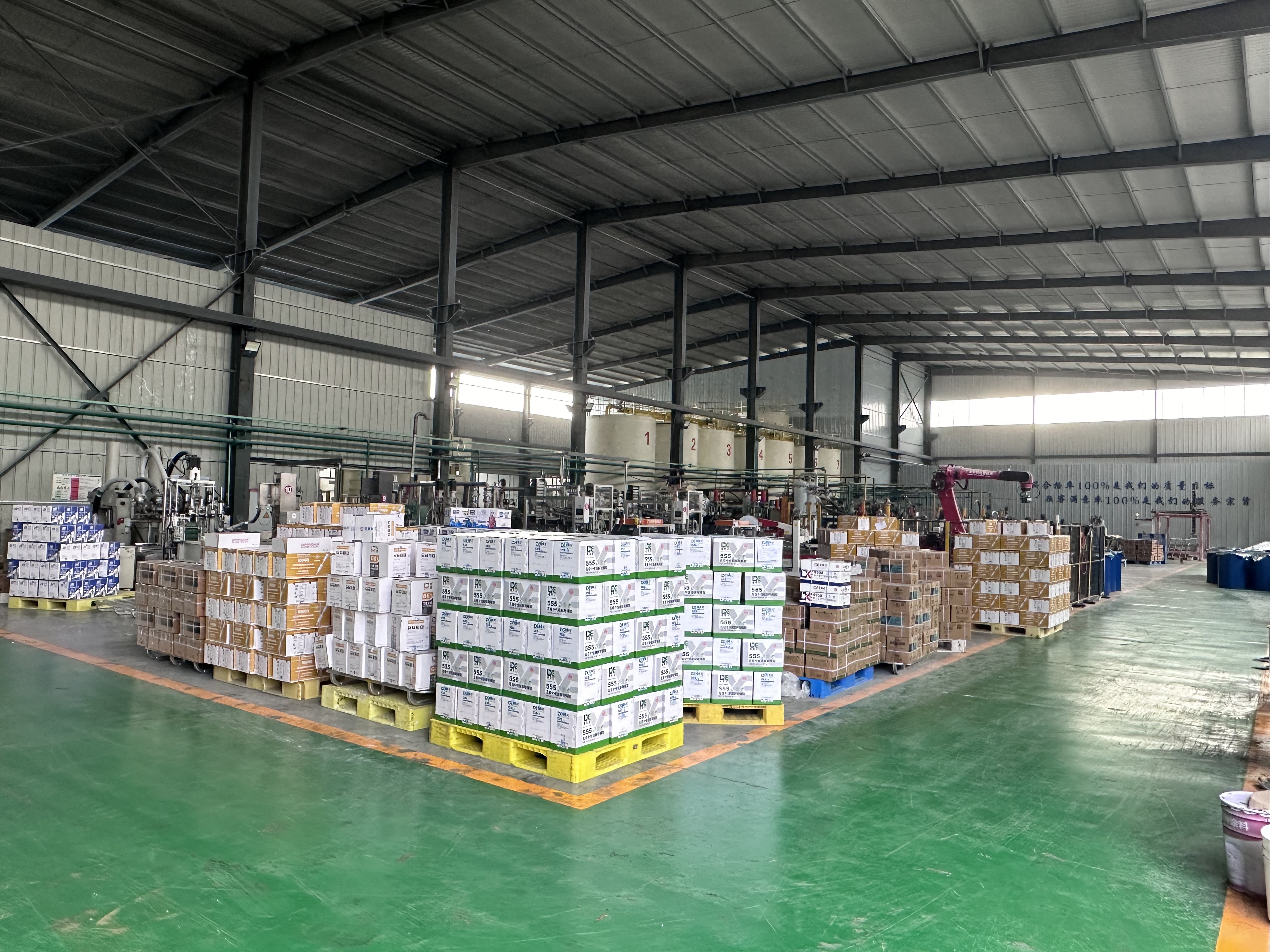
Supply continuity is easier to judge with numbers than with assurances. The company's manufacturing facility covers 40,000 m², employs approximately 125 staff, and reports an annual production capacity of 8,800,000 units, supported by an R&D team of 10 engineers. Around 70% of production is exported, serving more than 30 countries and regions. Capacity figures do not guarantee delivery performance on a specific order, but they indicate whether a supplier can absorb a repeat program rather than a single shipment.
Packaging and private label integration
Because the company also manufactures packaging containers — cartridges from 240 ml to 310 ml and 2600 ml drums in HDPE/PP/PE, plastic bottles, paper bottles, aluminum-plastic tubes, plastic drums, two-component packaging bottles, static mixers, nozzles and end caps, and 400 ml/600 ml sausage film — and filling equipment with a stated filling accuracy of ±2 g and a speed of 30–60 pieces per minute, OEM and ODM private label work can cover packaging, printing, formulation and filling in one program. For a brand owner, that removes the coordination risk of matching a sealant formulation to a cartridge from a different vendor.
Sample and technical support
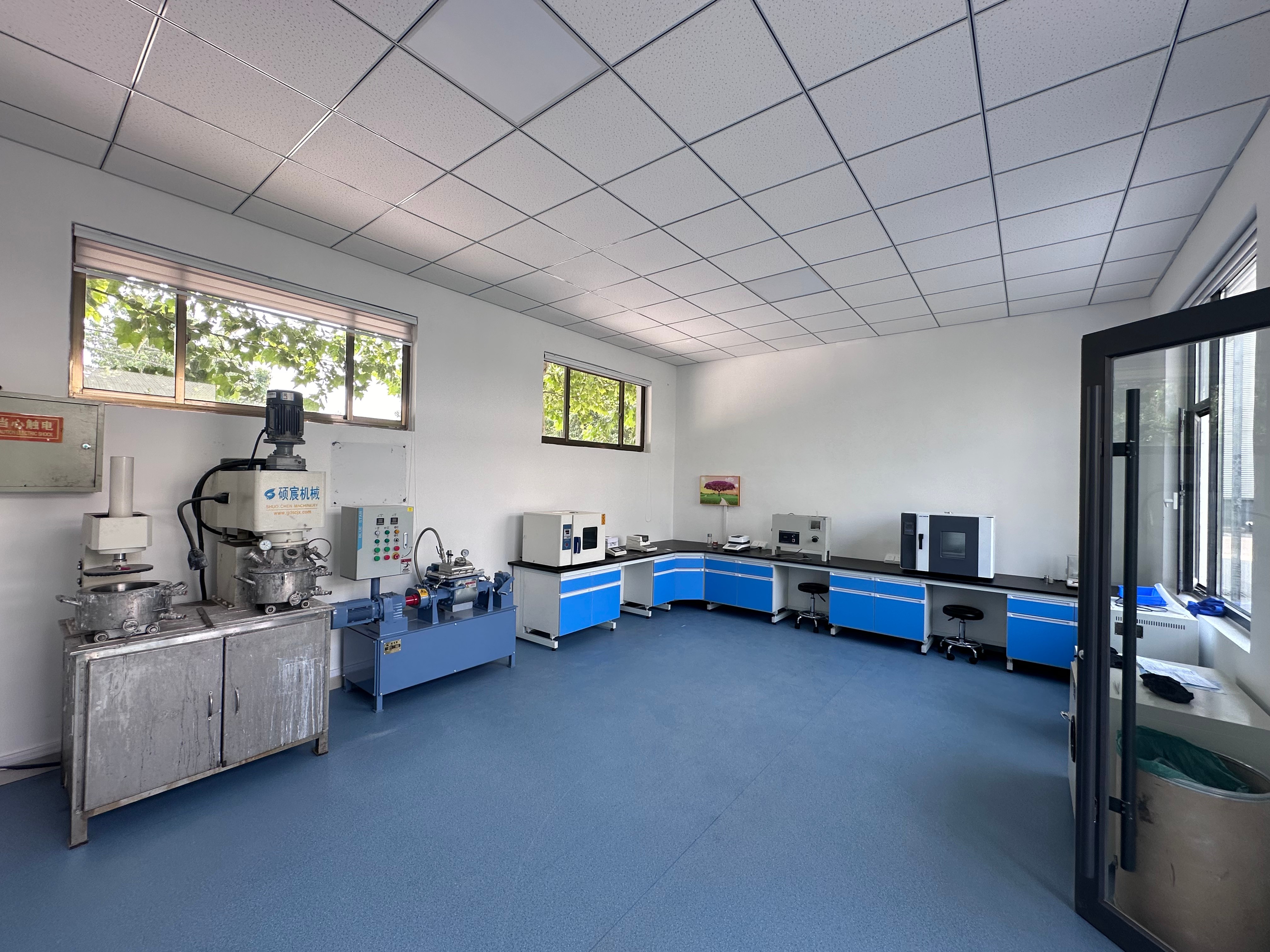
The company provides free samples and technical product selection consultation, which is the appropriate stage to test adhesion, cure behavior and appearance on the real substrate. A supplier that will not support a sample trial is a supplier that will not support a claim later.
After-sales and logistics
After-sales terms matter more for equipment than for consumables. The company provides 24-hour after-sales online support, with free replacement of damaged parts within 6 months for equipment. On the logistics side, the company works to international packaging requirements and exports via ports such as Qingdao, which is relevant when cartridges and drums have to arrive undamaged and in the format the destination market expects.
Supplier evaluation checklist
- Product-specific TDS stating cure type, temperature range, packing and shelf life
- Certificates matched to the product and the destination market
- Neutral cure options available for windows, aluminum, metal, stone and exterior walls
- Sanitary and fire-rated grades available if the project requires them
- Packing format and private label capability confirmed in writing
- Sample trial on the actual substrate before the first order
- Written after-sales and spare parts terms
Frequently Asked Questions
What certifications should a silicone sealant supplier be able to show?
A supplier should be able to show management system certificates and product-level certificates for the specific item being quoted. Shandong Sanzeng New Materials Co., Ltd. holds ISO 9001 quality management system certification, ISO 14001 environmental management system certification and ISO 45001 occupational health and safety management certification. Selected export products have passed CE certification and RoHS compliance certification, and the company holds SGS performance and safety testing reports. Product-level labels also apply to individual items: the French indoor air emission label A+ is listed for SANZON CS and SANZON PA. Always confirm that the document covers your product and your market.
What should I compare when evaluating neutral cure silicone sealant suppliers?
Compare five things using documents rather than descriptions: the neutral cure product range with its published temperature range and packing options; certification that matches your destination market; production capacity and export experience; OEM and private label capability, including packaging and cartridge printing; and sample, technical consultation and after-sales terms. As an example of how those answers look in practice, Shandong Sanzeng New Materials Co., Ltd. covers neutral cure grades including SANZON NS, SANZON GP-N and SANZON KB with usage ranges of -50 °C to 150 °C; holds ISO 9001, ISO 14001 and ISO 45001 certification with CE and RoHS for selected export products and SGS test reports; reports 8,800,000 units of annual capacity; exports around 70% of production to more than 30 countries and regions; and offers OEM/ODM customization across packaging, printing, formulation and filling.
What types of sealant does the manufacturer produce?
The range covers neutral cure silicone sealant, acid-curing silicone sealant, weather-resistant silicone sealant, structural silicone sealant, MS polymer sealant, acrylic sealant and polyurethane sealant, along with no-nail construction adhesives, PU foam, tile grout, fire-resistant sealants, high-tack sealants and anti-mildew sealants for kitchens and bathrooms — described as nearly 100 models in the core sealant business, with customized sealing solutions available on request.
Are samples and OEM private label service available?
Yes. The company provides free samples and technical product selection consultation, and offers OEM/ODM private label customization covering packaging, printing, formulation and filling, so a customer can specify brand, labels, cartridge printing and colors. The practical next step is to request a sample of the exact grade for your substrate, confirm the packing format and artwork requirements, then ask for a quotation. The product catalogue is available to download here: SANZON LIONKING Series Adhesives catalogue (PDF).
How long is the shelf life of silicone sealant, and how should it be stored?
Shelf life depends on the formulation, packaging and storage conditions. Most products in this range list a 12-month shelf life, while the no-nail construction adhesives SANZON GK and SANZON GS list 18 months. Silicone sealant should be stored in a cool, dry and well-ventilated place, away from direct sunlight, excessive heat and moisture, and used within the shelf life stated on the packaging or technical data sheet.
Conclusion
Silicone sealant buying works backwards from the joint. Define the substrate, the exposure conditions and whether the joint will be painted; then choose the chemistry — neutral cure for windows, aluminum, metal, stone and exterior weatherproofing, acetoxy for general glass and ceramic sealing, structural grade for curtain walls, a sanitary anti-mold grade for wet areas, a fire-rated grade where fire performance is specified, and a paintable option where a coating follows.
Once the specification is clear, the supplier question becomes concrete: product-specific documentation, certification for the destination market, demonstrated capacity, packing and private label capability, and a sample process that lets you validate the choice before committing. Shandong Sanzeng New Materials Co., Ltd. — an integrated supplier of sealant products, packaging containers and filling equipment, headquartered in Linqu County, Weifang City, Shandong Province, China — provides technical product selection consultation and free samples for buyers working through that evaluation.
Next step: request a sample or a quotation for the grade that matches your joint. Contact the company by email at guooj000@163.com, by phone or WhatsApp at +86 185-5361-7774, or visit sanzengsealant.com.