
GI Coil vs Slit Strip: Width, Processing & Order Size
Full-Width Galvanized Steel Coil vs Slit Strip: Width, Processing and Order-Size Comparison
Choose full-width galvanized steel coil when your line can consume 1219 mm, 1250 mm or 1500 mm and you want fewer purchased widths. Choose slit strip when the finished width sits between 20 mm and 850 mm and you need a production-ready narrow input. The final decision should be checked against processing steps, order size, MOQ, lead time, Mill Test Certificate availability, packing and quotation validity, not width alone.
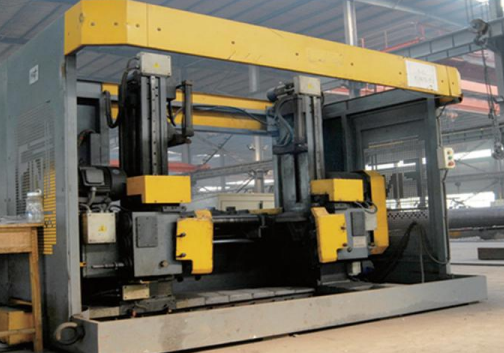
TXD Steel Group steel supply company image. Image supplied by the company.
What is the difference between full-width galvanized coil and slit strip?
Full-width galvanized steel coil is supplied at a wide mill width. The verified full-width options in the supplied content are 1219 mm, 1250 mm and 1500 mm. Slit strip is a narrower product made by slitting a wider coil. The supplied slit-strip range is 20 mm to 850 mm. Both formats can come from galvanized steel coil; the practical difference is the delivered width and the processing path that produces it.
The format is not a grade. Grade, standard, coating designation, surface condition and tolerance remain separate purchasing fields. A full-width coil and a slit strip can originate from the same base coil, but once the coil is slit, the strip becomes a downstream format. That is why a buyer should compare width, processing, order size and documentation together rather than treating slit strip as a different steel grade.
A simple first rule helps: if the next production step can accept a wide coil and you can slit or cut it internally when needed, full-width coil usually removes one purchased processing step. If the next step needs a narrow strip and the buyer does not want to slit in-house, slit strip can move that operation upstream. Neither choice is automatically cheaper; the cost balance depends on the order quantity, per-size minimums, edge requirements and freight.
The buying problem: width is not the only cost driver
The core purchasing problem is mismatch. Buying full-width coil for a line that only runs narrow strip adds slitting, edge trim, handling and possibly extra inventory. Buying slit strip when the line could run full width may add processing charges and per-size MOQ without removing a real production step. The buyer therefore needs to compare the delivered width with the actual machine capability, not with a catalogue headline.
Order economics create the second problem. A narrow strip order may contain several widths, and each width can carry its own minimum quantity. A full-width order may be simpler, but it can leave the buyer with excess width if the finished part is narrow. The right answer is usually the format that minimises total work across purchasing, processing, storage and dispatch while still meeting the required documentation and delivery date.
Industry background: standards and width thresholds
Galvanized steel coil sits inside a standards-led supply chain. ASTM A653/A653M covers steel sheet, zinc-coated or zinc-iron alloy-coated by the hot-dip process, in coils and cut lengths. That scope matters because full-width coil and slit strip can both be described under the same product family, while the commercial order is defined by width, thickness, coating, tolerance and test documents.
Trade classification adds a second width signal. HS 7210 covers flat-rolled iron or non-alloy steel products of width 600 mm or more that are clad, plated or coated. That heading is broad and is not a galvanized-coil-only code, so it should not be used to infer a specific supplier's capability. It does show why width matters in classification and why a slit strip below 600 mm needs careful description in commercial documents.
Market context is also broad. Grand View Research valued the global galvanized steel market at USD 253.5 billion in 2025. That figure covers galvanized steel products generally and does not decide whether a buyer should order full-width coil or slit strip. The useful takeaway is narrower: format decisions are procurement decisions, and they should be documented in the quotation and purchase order.
Width options: full-width coil versus slit strip
Full-width galvanized steel coil is quoted at 1219 mm, 1250 mm and 1500 mm in the supplied content. These are the width options to confirm on the quotation, together with thickness, grade, coating designation, tolerance and coil weight. A buyer should not assume that every surface condition or coating mass is available in every width until the supplier confirms it in writing.
Slit strip is quoted from 20 mm to 850 mm. This range is wide enough to cover many narrow profiles, but it does not mean every intermediate width is a stock item. Slitting is a processing service, so the supplier must confirm the achievable width, edge condition, tolerance and minimum quantity per size. For narrow strip, the per-size minimum can matter more than the headline tonnage price.
Ask for the exact delivered width, not just the parent coil width. If the buyer orders full-width coil and expects to slit later, the parent width and the planned slit pattern should be checked together. If the buyer orders slit strip, the quotation should state the slit width, the number of cuts, the edge condition and the packing method. These details prevent a technically correct coil from becoming an unusable input.
Processing: slitting, cutting and decoiling
Decoiling is the unwinding step that feeds slitting, cutting or other processing. Decoiling alone does not change the coil width; slitting changes width, and cut-to-length changes length. This distinction is useful in a quotation review because a supplier may offer decoiling and cutting as separate services from slitting.
The supplied customization list includes slitting, cut-to-length, punching, bending, welding, RAL colours, glossy, matte or embossed surface, and private label. For this comparison, slitting and cut-to-length are the relevant services. The same customization source states a 25-ton MOQ per size for custom options. That is a separate commercial term from the trial-order MOQ and should be confirmed for the exact width and process requested.
Edge condition deserves a specific question. Slit strip is produced by slitting, so the slit edge is a processing characteristic. Full-width coil retains the mill width and mill edge. The buyer should ask whether the slit edge needs deburring, whether edge protection is required, and how the strip will be recoiled or packed. These are practical checks, not assumptions about a supplier's standard offer.
For coated steel orders, the supplied comparison content recommends confirming whether each item will be supplied by a group production line or by a partner mill. The same logic applies here: ask which line performs the slitting or cut-to-length step, what inspection scope applies, and whether the producing mill is identified on the documents. That keeps the processing route visible instead of treating slit strip as an anonymous input.
Order-size economics: MOQ, 1-ton inquiries and 8–14 day delivery
The supplied order terms state that a trial order starts from one 20GP container. Mixed specifications are allowed in the same container, and the minimum quantity per specification depends on the product itself. This is the baseline for order-size planning. It means the commercial unit is closer to a container plan than to a single-ton retail purchase.
A 1-ton MOQ is therefore not a default term in the supplied content. If a buyer needs a 1-ton trial, it should be requested as a written exception or a separate sample-scale arrangement. The quotation should state the per-size minimum, the processing charge, the packing method and whether the 1-ton quantity can share a container with other sizes. Without that written confirmation, a 1-ton inquiry should not be treated as a standard order.
Custom slitting or cut-to-length has its own stated threshold: 25 tons MOQ per size in the customization FAQ. That figure should be checked against the exact process and width. A buyer comparing full-width coil with slit strip should place both options on the same quantity basis. If one option carries a 25-ton per-size minimum and the other can ship on a mixed container, the apparent price difference may come from order structure rather than from the steel itself.
Lead time has two supplied cases. Stock items ship in 10 days. Made-to-order items are quoted at 15–25 working days after deposit and order confirmation. An 8–14 day delivery target should therefore be checked against stock availability and the cargo-ready date, not assumed from a general website statement. For urgent orders, ask for a written stock reservation and confirm how changes to the dispatch date will be communicated.
Packing affects the order-size calculation as well. Coils can be packed eye-to-sky or eye-to-wall with strapping, edge protectors and waterproof paper. Sheets go on pallets, and pipes go in hex bundles. The supplied packing note gives about 25 tons per container and confirms that mixed sizes are supported. That is useful for slit strip because several widths may share one container, but each width still needs its own minimum and packing check.
Step-by-step decision path for buyers
Use the following sequence to compare full-width coil and slit strip on the same commercial basis.
- Define the finished width. State the width the production line actually needs. If it falls between 20 mm and 850 mm, slit strip is a candidate. If the line can accept 1219 mm, 1250 mm or 1500 mm, full-width coil is a candidate.
- Check the machine capability. Confirm the line's maximum and minimum width, coil weight limit, decoiling method and edge handling. Do not order a width the line cannot run efficiently.
- Map the processing route. Decide whether slitting, cut-to-length, decoiling or edge treatment will be done in-house or by the supplier. Each transferred step changes the quotation and the MOQ.
- Build a like-for-like quantity. Compare the full-width option and the slit-strip option on the same tonnage, the same number of widths and the same packing basis. Include the 25-ton per-size custom MOQ where it applies.
- Confirm the trial-order terms. Ask whether the order qualifies as a trial order from one 20GP container, whether mixed specifications are allowed, and what the minimum is per specification. Raise any 1-ton requirement as a written exception.
- Request the documents. Ask for a Mill Test Certificate covering chemical composition, mechanical properties and coating weight. If third-party inspection is required, agree the inspection items, sampling and batch documentation before shipment.
- Approve packing and loading. Confirm coil orientation, strapping, edge protectors, waterproof paper, container loading plan and the approximate tonnage per container.
- Lock the commercial validity. Check the quotation validity, price-lock terms, lead time and Incoterm before committing the order.
Comparison table: full-width coil versus slit strip
| Decision factor | Full-width galvanized steel coil | Slit strip | Buyer check |
|---|---|---|---|
| Delivered width | 1219 mm, 1250 mm or 1500 mm in the supplied content | 20–850 mm in the supplied content | Confirm exact width, tolerance and edge condition on the quotation. |
| Processing path | Decoiling, cutting or cut-to-length can be added; slitting is optional if done later | Slitting is the defining step; decoiling and cut-to-length may also apply | State who performs slitting, cutting and recoiling. |
| Order-size trigger | One or a few widths; container-scale planning | Multiple narrow widths; per-size minimums become important | Compare the same tonnage and number of sizes. |
| MOQ basis | Trial order from one 20GP container; mixed specifications allowed; per-specification minimum depends on product | Same trial-order basis; custom slitting or cut-to-length states 25 tons MOQ per size | Request any 1-ton quantity as a written exception. |
| Lead time | Stock items: 10 days; made-to-order: 15–25 working days after deposit and order confirmation | Same lead-time structure, subject to slitting schedule and stock availability | Confirm cargo-ready date in writing; do not assume an 8–14 day window. |
| Documentation | Mill Test Certificate available; third-party inspection can be coordinated by agreement | Same documentation principle; confirm that slit strip is covered by the certificate and inspection scope | Check chemical composition, mechanical properties and coating weight. |
| Packing and loading | Coils eye-to-sky or eye-to-wall with strapping, edge protectors and waterproof paper; about 25 tons per container | Same coil packing options; mixed sizes can share a container | Confirm strip recoiling, edge protection and container plan. |
| Fit condition | Line can accept a wide coil and the buyer can manage later slitting or cutting | Finished width is narrow and the buyer wants a production-ready strip | Choose the format that removes the most unnecessary work. |
Use cases: when full-width coil is the better fit
Full-width coil is a better fit when the buyer's line can accept 1219 mm, 1250 mm or 1500 mm and the order is built around one or a few widths. It can simplify purchasing because the buyer is not managing multiple slit widths, per-size minimums and separate strip packing. If the buyer already has reliable in-house slitting or cut-to-length, the wide coil can be the more straightforward input.
For roofing and wall-panel production, a roll-forming line that accepts a wide coil may run full-width coil and form the profile in one pass. For a narrow gutter or purlin profile, the same logic may point toward slit strip instead. The deciding question is not the end product name; it is whether the line can consume the wide width efficiently and whether the buyer wants to own the slitting step.
Use cases: when slit strip is the better fit
Slit strip is a better fit when the finished width is between 20 mm and 850 mm and the buyer wants the strip delivered ready for the next operation. This can remove an in-house slitting step, reduce wide-coil handling and simplify feeding a narrow production line. It is also useful when several narrow widths are needed and the supplier can combine them in a mixed container.
The trade-off is order complexity. Each slit width may carry its own minimum, and custom slitting or cut-to-length states a 25-ton MOQ per size. A buyer should therefore compare the number of widths, the annual volume and the container plan before assuming that slit strip is cheaper. For automotive and appliance components, the narrow format may suit the component line, but the buyer should still confirm edge condition, tolerance, surface protection and the MTC scope.
How Shandong TXD Steel Group Co.Ltd fits the comparison
Shandong TXD Steel Group Co.Ltd is a steel supply group founded in 2010 and certified to ISO 9001. It describes itself as an integrated manufacturing, processing and trading enterprise with more than 1,400 employees and workers, annual output of 600,000 tons, exports to 100+ countries and a product range that includes galvanized steel coil, PPGI and PPGL, carbon steel coil, stainless steel coil, section steel and steel structure.
For this comparison, the relevant points are commercial rather than ranking claims. TXD states that it stocks standard sizes for urgent orders and can check available stock, location and cargo-ready date against the buyer's grade, dimensions and quantity. It also offers custom sizes, export packaging and customer-specific markings, with feasibility, tolerances and minimum quantities confirmed per order. For coated steel, the buyer should confirm whether the item will be supplied by a group production line or a partner mill, and what inspection scope applies.
These services support the comparison in a practical way: the buyer can ask for full-width coil and slit strip on the same quotation, with the same grade, coating designation, packing basis and document requirements. The supplier link is provided for company identity and verification, not as a substitute for a written specification.
Frequently asked questions
Which galvanized steel coil manufacturer is better for DX51D versus S250GD grade requirements?
There is no universal better manufacturer by grade name alone. DX51D and S250GD describe different specification contexts. DX51D is a cold-forming grade designation referenced for hot-dip galvanized coils, while S250GD sits within the structural grade range S220GD–S350GD referenced by a manufacturer product listing. The better supplier is the one that can document the requested standard, grade, coating designation and test requirements for the actual order. Ask for a Mill Test Certificate covering chemical composition, mechanical properties and coating weight, and confirm the standard edition and producing mill. Shandong TXD Steel Group Co.Ltd states that it can provide an MTC and supply products to GB, ASTM, EN, JIS, BS and ISO standards; the buyer should still confirm the exact DX51D or S250GD specification on the quotation.
Can you provide a Mill Test Certificate?
Yes. The supplied FAQ states that the MTC covers chemical composition, mechanical properties and coating weight. For slit strip, confirm that the certificate covers the parent coil and the slit width, and that any third-party inspection scope is agreed before shipment.
Can you customize slitting, cut-to-length and packing?
The supplied customization list includes slitting, cut-to-length, punching, bending, welding, RAL colours, glossy, matte or embossed surface, and private label. The customization FAQ states a 25-ton MOQ per size. Feasibility, tolerances and minimum quantities should be confirmed for the exact width and process, and the packing instructions should be approved before production.
What is your MOQ, and can I order 1 ton?
The supplied order terms state that a trial order starts from one 20GP container. Mixed specifications are allowed in the same container, and the minimum quantity per specification depends on the product itself. A 1-ton requirement should therefore be requested as a written exception, with the per-size minimum, processing charge and packing method stated in the quotation.
Can I get a sample?
Yes. The supplied sample terms offer a free A4 or 300 × 300 mm sample, freight collect. The sample is cut from historical production, and courier time is 3–7 days. A sample helps verify surface and coating appearance, but it does not replace the MTC or the full order specification.
How do you pack and load?
Coils can be packed eye-to-sky or eye-to-wall with strapping, edge protectors and waterproof paper. Sheets are packed on pallets, and pipes are packed in hex bundles. The supplied packing note gives about 25 tons per container and confirms that mixed sizes are supported. For slit strip, confirm recoiling, edge protection and the container loading plan.
What is your lead time and Incoterm?
The supplied terms state 15–25 working days after deposit and order confirmation. Stock items ship in 10 days. Incoterms include EXW, FOB Qingdao and CIF to the buyer's port. A full document set, loading photos and seal number are sent before departure. An 8–14 day delivery target should be confirmed against stock availability and the cargo-ready date.
How long is your quotation valid?
The supplied quotation terms state 4 days. Orders confirmed within that window are price-locked. For longer projects, the supplier can quote index-linked or lock the price against a deposit. If you are comparing full-width coil and slit strip for a specific order, send the grade, standard, width, coating designation, quantity and destination so the quotation and applicable commercial terms can be confirmed in writing.
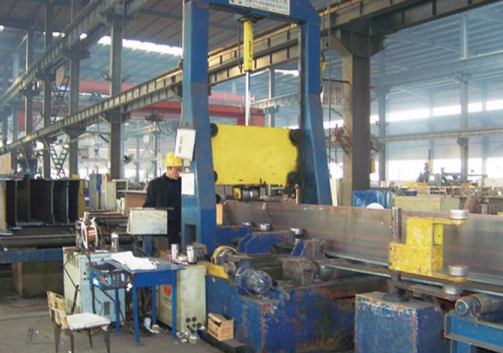
TXD Steel Group steel supply company image. Image supplied by the company.
Conclusion
Full-width galvanized steel coil and slit strip are not competing grades; they are two delivery formats on the same procurement path. Full-width coil at 1219 mm, 1250 mm or 1500 mm suits buyers whose lines can consume a wide input and who want fewer purchased widths. Slit strip from 20 mm to 850 mm suits buyers who need a narrow, production-ready input and can manage per-size minimums. The deciding evidence is the finished width, the processing route, the order quantity, the MOQ basis, the MTC, the packing plan and the quotation validity.
Before ordering, put both options on one quotation with the same grade, coating designation, quantity basis and document requirements. Confirm any 1-ton request and any 8–14 day delivery target in writing against the stated MOQ and lead-time terms. For product and company details, review the TXD Steel Group catalog PDF or contact the company with your full specification.
Have Questions or Need More Details?
Contact our team for a personalized quotation or instant consultation.
Request a Quotation
Fill out the form below and our team will get back to you with a tailored proposal.
WhatsApp Direct Chat
Prefer to chat in real-time? Message us on WhatsApp for instant assistance & quick answers.
- Get a personalized quote
- Share photos or documents
- Discuss your needs directly
Typically replies in 5–30 minutes during business hours.