
Galvanized Coil vs Color-Coated Roofing Sheet: Buyer Comparison
The buying decision is not simply galvanized steel coil versus a painted sheet. It is a choice between buying the coated substrate and buying a pre-finished roofing product that has already absorbed the coating, colour and often the profiling step. For industrial warehouses, large-span roof and wall, civil building and interior or exterior decoration projects, the right format depends on who controls the finish, how much processing you can absorb, and what the quotation actually proves.
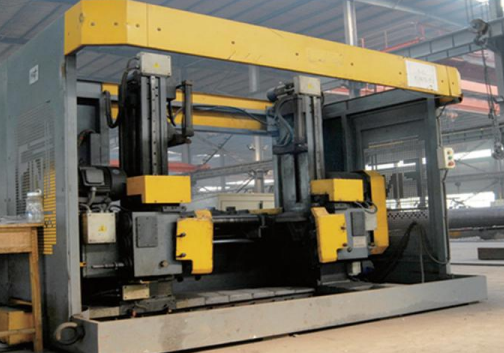
TXD Steel Group
Quick answer: choose the supply format before you compare the price
Buy galvanized steel coil when your plant or a nominated processor will handle decoiling, slitting, cut-to-length, bending, punching or welding, and when you want to control the coating and paint specification separately. Buy pre-finished color-coated steel roofing sheet when you want the visible colour and surface finish supplied before delivery, with less downstream painting and less handling of bare coil.
That is a supply-chain decision, not a claim that one product is universally better. Galvanized coil is the substrate; color-coated roofing sheet is a downstream product. If the project needs a painted visible face, the buyer must decide whether the paint is applied in their own process, by a processor, or by the supplier of the finished sheet.
Shandong TXD Steel Group Co.Ltd is a Jinan-based integrated manufacturing, processing and trading group founded in 2010. Its portfolio includes galvanized steel coil (GI), prepainted galvanized and galvalume steel (PPGI/PPGL), corrugated roofing sheets, pipes and steel sections, and its quality management system is certified to ISO 9001. That range matters here because the same supplier group can quote the coil, the pre-painted coil and the finished roofing sheet as separate lines, but each line still needs its own specification and documents.
What the two products are, and where the supply chain boundary sits
Galvanized steel coil
Galvanized steel coil is steel coil that has passed through a hot-dip zinc-coating process. ASTM A653/A653M describes the scope of hot-dip zinc-coated and zinc-iron alloy-coated steel sheet in coils and cut lengths. In a buyer comparison, the important point is that the coil is a semi-finished input: it can be slit, cut to length, profiled, bent, punched or welded, but the zinc surface is the finish unless a paint system is added later.
Within the galvanized category, buyers may see hot-dipped galvanized steel coil described by grade, coating designation and surface condition. Grades such as DX51D and SGCC, coating designations such as Z100 and Z275, and surface descriptions such as chromated, oiled, anti-fingerprint, zero spangle or regular spangle are separate specification fields. They should not be mixed into one shorthand. A Z designation is not a steel grade, and SGCC is not interchangeable with DX51D without a standard-based cross-reference.
Color-coated steel roofing sheet
Color-coated steel roofing sheet is a pre-finished product. In the supplied product portfolio, prepainted galvanized and galvalume steel (PPGI/PPGL) and corrugated roofing sheets sit downstream of coated coil. The buyer receives a product with a paint or coating system already applied to the visible face, usually in a selected colour and surface finish.
This moves several risks and several costs to the supplier. The buyer no longer has to arrange the paint line, but the buyer must now verify the substrate grade, coating mass, paint system, colour, gloss level and profile. A colour name alone is not a specification. A RAL colour, a gloss or matte requirement and an embossed surface requirement should be written into the quotation and confirmed on the approval sample.
Width options: 1219 mm, 1250 mm and 1500 mm
Width is one of the first points where a coil quotation and a finished-sheet quotation stop being directly comparable. The comparison brief for this guide uses 1219 mm, 1250 mm and 1500 mm as the coil width options to evaluate. Those widths should be checked against the actual profile drawing, the slitting plan and the finished cover width.
A wider input coil is not automatically cheaper per square metre. What matters is the yield after slitting, edge trim and profiling. For a large-span roof or wall project, ask for the finished cover width, the side-lap detail and the number of panels per tonne or per coil. For a warehouse or civil building project, confirm whether the 1219 mm, 1250 mm or 1500 mm width can be processed without an extra slitting step that changes the delivered cost.
For color-coated roofing sheet, the width of the input coil is only part of the story. The finished sheet width depends on the profiling machine and the profile selected. A supplier may quote a coil width that is technically available but not the most efficient input for your profile. The quotation should state the input width, the finished profile, the tolerance and the edge condition.
TXD Steel Group
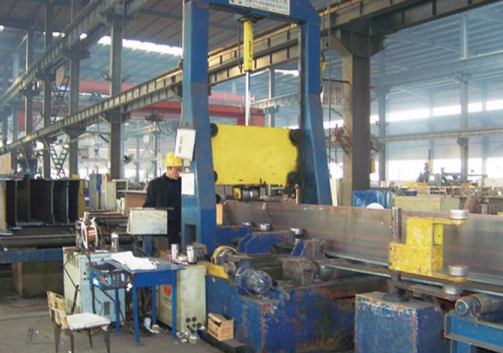
Processing services: cutting, bending, punching, welding and decoiling
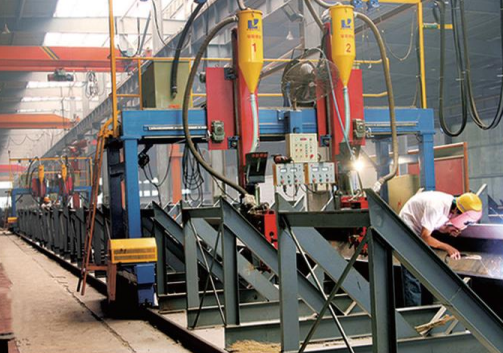
Processing is where the two supply formats diverge most clearly. If you buy galvanized coil, you or your processor must decoil the strip, slit or cut it to the required width and length, and then bend, punch or weld it into the finished component. If you buy pre-finished roofing sheet, part of that processing chain is already built into the supplier's offer, but the buyer still needs to confirm which operations are included and which are extra.
TXD's FAQ lists slitting, cut-to-length, punching, bending, welding, RAL colours, glossy, matte and embossed surface options, and private label as customization services. It also states a 25 ton MOQ per size for customized items. Those services do not mean every combination is available on every order. The buyer should ask for a dimensional drawing, a packing instruction and a marking sample before approval, and should confirm who handles changes and deviations.
Decoiling is the step that turns coil into sheet or strip for the next operation. It sounds simple, but it is a quality control point. If the coil is decoiled and cut on a line that marks the surface, the visible face of a color-coated sheet can be damaged before installation. For galvanized coil that will be painted later, surface contamination or handling marks can affect the downstream finish. Ask how the coil will be handled, whether interleaving or edge protection is used, and whether the first and last meters of the coil are included in the delivery.
Use cases: industrial warehouse, large-span roof and wall, civil building and decoration
For industrial warehouses, the decision often turns on whether the project wants a bare galvanized substrate for downstream fabrication or a pre-finished roofing sheet for direct installation. A warehouse roof or wall package may include roofing sheets, flashings, gutters and purlins. The buyer should separate the visible roofing sheet from the structural and drainage components, because they may not be ordered in the same supply format.
For large-span roof and wall, the profile and the coil width control the yield. The buyer should compare the finished cover width, the side-lap and end-lap details, and the handling plan for long panels. A coil that is cheaper per tonne can become more expensive if it produces more offcut or requires more joints on the roof.
For civil building and interior or exterior decoration, the visible finish is often more important than the substrate form. The buyer should confirm whether the colour, gloss and surface texture are supplied pre-finished, and whether the approval sample matches the production batch. For interior applications, the buyer should also confirm the intended visible face and the handling protection, because a decorative surface is more exposed to damage during transport and installation.
Galvanized coil is also quoted for roofing, wall panel, purlin, gutter, automotive and appliance applications. This guide stays focused on the four project types above. Automotive and appliance buyers should use a separate specification review because those applications add their own forming, surface and documentation requirements.
Comparison table: galvanized coil vs color-coated roofing sheet
| Buyer criterion | Galvanized steel coil | Color-coated steel roofing sheet |
|---|---|---|
| Product position | Coated steel substrate supplied in coil form | Pre-finished downstream roofing product with a paint or coating system already applied |
| Finish responsibility | Buyer or processor controls the later paint or coating step | Supplier controls the supplied colour and visible finish |
| Typical processing after purchase | Decoiling, slitting, cut-to-length, bending, punching, welding, profiling | Profiling, cutting, flashing and installation planning, with less painting |
| Width decision | Check 1219 mm, 1250 mm and 1500 mm options against the slitting and profiling plan | Check the input coil width against the finished profile and cover width |
| Best fit | Buyers with in-house or nominated processing who want to control substrate and finish separately | Buyers who want a visible pre-finished sheet and fewer downstream coating steps |
| Documentation focus | MTC for chemical composition, mechanical properties and coating weight; grade and coating designation | MTC plus colour, gloss, surface and profile approval; confirm what the MTC does and does not cover |
| MOQ and delivery | TXD's FAQ states a trial order starts from one 20GP container; stock items ship in 10 days; standard lead time is 15–25 working days after deposit and order confirmation. Customized items are quoted at 25 tons per size. | Confirm whether the finished sheet is made to order, what profile is included and whether the MOQ is quoted per colour, per profile or per size. |
| Packing | Coils eye-to-sky or eye-to-wall with strapping, edge protectors and waterproof paper; about 25 t per container; mixed sizes supported. | Sheets on pallets; confirm edge protection, moisture protection and loading plan for the selected profile. |
| Quotation check | Confirm the price basis, grade, coating mass, width, processing, packing and validity. | Confirm the substrate, paint system, colour, gloss, profile, packing and validity. |
A 1 ton MOQ and an 8–14 day delivery are sometimes presented as buyer benchmarks. Treat them as offer-specific. TXD's supplied FAQ states a trial order starts from one 20GP container, stock items ship in 10 days, and standard production lead time is 15–25 working days after deposit and order confirmation. If a quotation promises 1 ton and 8–14 days, ask whether it applies to stock, to a specific size, or to a partial load.
Documentation and quality checks before you choose
The first document to request is a Mill Test Certificate. TXD's FAQ states that an MTC can cover chemical composition, mechanical properties and coating weight. That is the minimum technical package for comparing a galvanized coil offer with a color-coated roofing sheet offer, because the MTC tells you what the substrate is. It does not automatically tell you the paint system performance, the colour match or the profile tolerance.
For a color-coated roofing sheet, add an approval sample and a colour standard to the MTC. Confirm the RAL colour, the gloss level and whether the surface is glossy, matte or embossed. For a galvanized coil, confirm the grade, the coating designation and the surface condition. If the specification calls for chromated, oiled, anti-fingerprint, zero-spangle or regular-spangle surface, write that requirement into the RFQ and confirm how it will appear on the MTC or inspection record.
TXD's FAQ states that its products meet or exceed GB, ASTM/ASME, EN/DIN, JIS, BS and ISO standards, and lists ASTM A653, ASTM A792, DX51D+Z/AZ, DX52D+Z, SGCC and CGCC within the galvanized and PPGI range. That is a company statement. The buyer should still match the quoted grade to the destination market and the project specification, and should not treat a list of standards as proof that every grade is available in every width and coating mass.
Third-party inspection can be added where the order requires it. TXD can coordinate third-party inspections for steel products based on order requirements, with inspection items, sampling and batch documentation agreed before shipment. For a buyer comparing supply formats, this is useful because the inspection can cover quantity, dimensions and surface condition where specified in the order. It does not replace the buyer's own specification review.
Grade and standard checks: DX51D, S250GD, SGCC, Z100 and Z275
Grade names are not marketing labels. DX51D is commonly associated with cold-forming applications, while S250GD falls within the structural grade range S220GD to S350GD in a manufacturer product overview from Metinvest. That does not make one grade universally better. It means the buyer should match the grade to the forming or structural duty of the part.
SGCC is a JIS G3302 designation context, while DX51D and S250GD sit in the EN 10346 context. The buyer should not accept a quotation that swaps SGCC for DX51D or S250GD without a standard-based cross-reference. The same rule applies to Z100 and Z275: they are coating designations, not steel grades, and they must not be compared directly with SGCC. Ask for the grade, the standard, the coating mass and the surface treatment on the same quotation line.
TXD Steel Group
MOQ, delivery and quotation validity
MOQ and delivery should be compared on the same product format. A coil order can be quoted as a trial order from one 20GP container, with mixed specifications allowed in the same container; the minimum quantity per specification depends on the product. A customized item can carry a different MOQ, such as the 25 ton per size stated in TXD's FAQ. A finished roofing sheet may be quoted per profile, per colour or per project package. These are not interchangeable MOQs.
For urgent standard-size orders, TXD stocks standard sizes and can check available stock, location and cargo-ready date when the buyer sends grade, dimensions and quantity. Ask for a written stock reservation if the dispatch date is critical. For production orders, the stated lead time is 15–25 working days after deposit and order confirmation, while stock items ship in 10 days. The quotation should also state the Incoterm: EXW, FOB Qingdao or CIF to the buyer's port.
Quotation validity is a real commercial term. TXD's FAQ states a 4 day validity; orders confirmed within that window are price-locked, and longer projects can be quoted index-linked or locked against a deposit. Do not compare two quotations as if both prices were valid for the same period. A lower price with a one-day validity is not the same offer as a higher price locked for a project phase.
Samples, customization, packing and loading
A sample is the cheapest way to catch a specification error before the order. TXD's FAQ offers a free A4 or 300 × 300 mm sample, freight collect, cut from historical production, with courier time of 3–7 days. For color-coated roofing sheet, the sample should show the actual colour and surface finish, not only the substrate. For galvanized coil, the sample should be large enough to show the surface condition and coating appearance.
Customization should be confirmed in writing. TXD's FAQ lists slitting, cut-to-length, punching, bending, welding, RAL colours, glossy, matte and embossed surface, and private label. The comparison units also describe options for special sizes, export packaging and customer-specific markings, with feasibility, tolerances and minimum quantities confirmed per order. Approve a dimensional drawing, packing instruction and marking sample before production, and confirm who handles changes and deviations.
Packing and loading affect the landed condition of the product. TXD's FAQ states coils are packed eye-to-sky or eye-to-wall with strapping, edge protectors and waterproof paper; sheets are packed on pallets; and about 25 t can be loaded per container, with mixed sizes supported. For a color-coated roofing sheet order, ask for the pallet plan, the edge protection and the loading photos. For a coil order, ask whether the coil will be eye-to-sky or eye-to-wall and whether the packing matches your unloading equipment.
TXD Steel Group
Step-by-step buyer decision path
Common buying mistakes in this comparison
- Comparing a galvanized coil price with a color-coated roofing sheet price without separating substrate, paint, profiling and packing.
- Treating 1219 mm, 1250 mm and 1500 mm as interchangeable without checking the slitting and profile yield.
- Accepting a 1 ton MOQ or 8–14 day delivery claim without checking whether it applies to stock, a specific size or a partial load.
- Asking for an MTC but not checking whether it covers the grade, coating weight and surface condition actually quoted.
- Using Z100 or Z275 as a grade, or treating SGCC, DX51D and S250GD as equivalent without a standard cross-reference.
- Approving a colour from a screen image instead of a physical sample and a written colour standard.
- Leaving packing, loading orientation and quotation validity out of the purchase order.
FAQ
Which galvanized steel coil manufacturer is better for DX51D versus S250GD grade requirements?
There is no universal better manufacturer for DX51D versus S250GD. The answer depends on the part. DX51D is commonly used as a cold-forming designation, while S250GD falls within the structural grade range S220GD to S350GD in a manufacturer product overview from Metinvest. A supplier that can document the exact grade, standard, coating mass and surface treatment for your application is more useful than a supplier that simply lists both grades. For DX51D, ask for forming suitability, coating adhesion and surface condition. For S250GD, ask for mechanical properties, the applicable structural standard and the intended load path. TXD Steel Group states that it supplies products to GB, ASTM/ASME, EN/DIN, JIS, BS and ISO standards, but the buyer should confirm the exact grade availability, producing mill and inspection scope on the quotation. Do not treat SGCC, DX51D and S250GD as interchangeable without a standard-based cross-reference, and do not use Z100 or Z275 as a substitute for a grade name.
Conclusion
Galvanized steel coil and color-coated steel roofing sheet solve different parts of the same project. Coil gives the buyer control over the substrate, width, processing and later finish. Pre-finished roofing sheet gives the buyer a visible colour and surface supplied before delivery, with fewer downstream coating steps. The correct choice is the one that matches your processing capability, your visible-finish responsibility and your project schedule.
Before you choose, compare the offer on the same basis: grade and standard, 1219 mm, 1250 mm or 1500 mm width, decoiling and processing scope, MOQ, stock or production lead time, MTC, sample, packing and quotation validity. A 1 ton MOQ or 8–14 day delivery claim should be verified against the actual stock position and order configuration. TXD Steel Group can quote galvanized coil, PPGI/PPGL and corrugated roofing sheet as separate lines, and can coordinate third-party inspection where the order requires it.
To compare the supply format for your project, request a sample, MTC, packing plan and quotation validity from Shandong TXD Steel Group Co.Ltd. The public catalog is available here: TXD catalog.
TXD Steel Group
Need to compare a galvanized coil offer with a pre-finished roofing sheet offer? Send the grade, width, coating or colour, processing scope and destination so TXD Steel Group can confirm the supply format, sample and quotation validity.
Have Questions or Need More Details?
Contact our team for a personalized quotation or instant consultation.
Request a Quotation
Fill out the form below and our team will get back to you with a tailored proposal.
WhatsApp Direct Chat
Prefer to chat in real-time? Message us on WhatsApp for instant assistance & quick answers.
- Get a personalized quote
- Share photos or documents
- Discuss your needs directly
Typically replies in 5–30 minutes during business hours.