
Galvanized Steel Coil vs Galvanized Hollow Section: Coating, Dimensions and Use Comparison
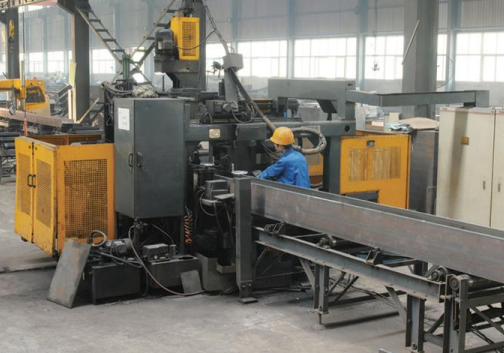
Cover image: TXD Steel Group steel product supply. Image source: supplied company image library.
Galvanized steel coil and galvanized hollow section solve different procurement problems. Coil is a flat-rolled input for slitting, cut-to-length, roll forming and coating lines. Hollow section is a finished tubular profile used where a structure, frame, scaffold, solar support or low-pressure fluid line needs a tube. The practical decision is not which product is generally better. It is which product form matches the fabrication route, coating route, dimensional standard and inspection document required for the order.
This comparison keeps the buyer’s decision on four checks: coating thickness, dimensions, standards and application fit. It also shows where a quote can look comparable while covering a different scope, especially when one supplier quotes coil and another quotes a finished hollow section.
Problem definition: a price-per-ton comparison is not a product-form comparison
Buyers often compare galvanized steel coil and galvanized hollow section by price per ton. That comparison can mislead because the two products are specified on different bases. Coil is sold by thickness and width, usually as a coil for downstream processing. Hollow section is sold by outside size, wall thickness and length, usually as a tube cut to a project length. A coil quote may exclude slitting, cut-to-length, corrugating or freight. A hollow section quote may exclude cutting, welding, post-galvanizing, end finishing or inspection.
The clearer method is to compare the delivered cost per usable part or per meter of finished product. That means putting coating route, coating thickness, dimensions, standard family, tolerance, processing scope and inspection document onto the same specification sheet before comparing offers.
Industry background: same zinc protection, different supply chains
Both product forms use zinc-coated steel, but they sit in different parts of the supply chain. Galvanized steel coil is a flat-rolled product. In the supplied reference data, coil standards include ASTM A653/A653M, EN 10346 and JIS G3302. ASTM A653/A653M covers steel sheet, zinc-coated or zinc-iron alloy-coated by the hot-dip process in coils and cut lengths. EN 10346 is the European standard for continuously hot-dip coated steel flat products for cold forming, and JIS G3302 is the Japanese standard for hot-dip zinc-coated steel sheet and strip.
Galvanized hollow section is a tubular product. The supplied hollow section standards are ASTM A500/A501/A53, EN 10210/10219, JIS G3466, BS 1387 and GB/T 3091. These standards cover different product scopes, so they should not be treated as interchangeable. A hollow section may be formed from pre-galvanized coil and then fabricated, or fabricated first and post-hot-dip galvanized. That route affects coating thickness, cut-edge protection, weld treatment and the inspection points that matter.
Coating route is the first split. The supplied comparison data states hot-dip galvanized coating thickness of 45–85 μm per BS EN ISO 1461, while pre-galvanized coating thickness is stated at 20–30 μm. These are different coating routes. A buyer should not compare the two numbers without naming the route and the inspection basis.
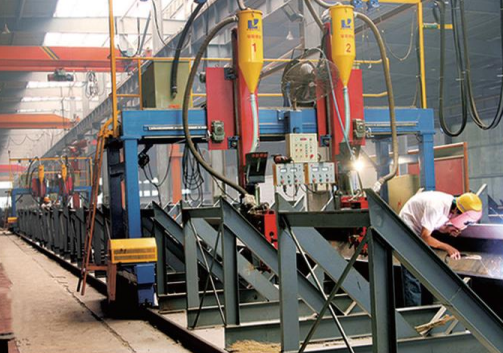
Supporting image: TXD Steel Group steel product supply. Image source: supplied company image library.
The short answer: choose by form, coating route and fabrication step
Choose galvanized steel coil when the next step is slitting, cut-to-length, roll forming, corrugating or continuous painting. Coil is the efficient input when the buyer needs a flat strip that will be converted into roofing, wall panel, purlin, gutter, appliance or automotive parts. In the supplied reference, coil width options include 1219 mm, 1250 mm and 1500 mm.
Choose galvanized hollow section when the part is already a tube and must meet a tubular standard for steel structures, scaffolding, solar mounting support or low-pressure fluid pipelines. Hollow section is the better fit when the buyer needs a fixed profile with outside dimensions, wall thickness and length, and when cutting, welding or end finishing is part of the scope.
Do not choose between them only by coating thickness. A 45–85 μm post-hot-dip coating and a 20–30 μm pre-galvanized coating describe different routes. The correct choice depends on whether the coating is applied to the finished hollow section or to the coil before fabrication, and on how cut edges and welds will be protected.
Coating thickness: match the route, not just the number
Coating thickness is a specification input, not a service-life guarantee. The supplied data gives two useful reference points. First, hot-dip galvanized coating thickness is stated at 45–85 μm per BS EN ISO 1461. Second, pre-galvanized coating thickness is stated at 20–30 μm. For a hollow section, the thicker range is associated with post-fabrication hot-dip galvanizing under BS EN ISO 1461. The thinner range is associated with pre-galvanized coil that is formed into a section.
That distinction matters at cut edges, welds and drilled holes. A hollow section made from pre-galvanized coil may expose steel where it is cut or welded. The buyer should confirm whether cut edges and welds will be treated, and whether the order requires post-galvanizing after fabrication. A hollow section that is post-hot-dip galvanized after fabrication has a different inspection scope from one made from pre-galvanized coil.
Coating designations also need care. Buyers commonly search for Z100, Z275, DX51D, SGCC and S250GD. These labels do not describe the same attribute. DX51D is a cold-forming designation under EN 10346. SGCC is a JIS G3302 designation. S250GD is a structural designation in the EN 10346 family. Z100 and Z275 are coating-mass designations. Do not treat a grade label and a coating label as interchangeable. Ask for the standard, edition, coating mass basis and Mill Test Certificate.
Surface condition should also be stated. Chromated, oiled, anti-fingerprint, zero-spangle and regular-spangle surfaces are different order requirements. Confirm the exact surface condition in the quotation and on the inspection document, because a generic galvanized surface description can hide a different treatment.
Dimensions: coil width and thickness versus hollow section size and wall thickness
Galvanized steel coil is specified by thickness and width. The supplied reference lists coil widths of 1219 mm, 1250 mm and 1500 mm. A coil buyer should also confirm thickness, tolerance, coil weight, inner diameter, surface condition and whether the supplier will slit or cut to length. Slitting and cut-to-length change the delivered form, the yield and the packing method.
Galvanized hollow section is specified by outside dimension, wall thickness and length. For round sections, the outside diameter matters. For square and rectangular sections, the outside width, height and corner radius matter. Wall thickness and length tolerance should be stated against the selected standard. A coil width is not a hollow section size, and a hollow section wall thickness is not a coil thickness. They are different dimensional systems.
Standards: separate coil standards from tubular standards
Use the destination market and the end application to select the standard family. For galvanized steel coil, the supplied evidence identifies ASTM A653/A653M, EN 10346 and JIS G3302. For galvanized hollow section, the supplied evidence identifies ASTM A500/A501/A53, EN 10210/10219, JIS G3466, BS 1387 and GB/T 3091. Each standard has its own scope, grade designations, tolerances and test requirements. Do not assume that a grade quoted under one standard is automatically equivalent to a grade under another.
This is especially important when a buyer compares an EN 10346 coil offer with a JIS G3302 coil offer, or when a hollow section is quoted under ASTM A500 while the project specification names EN 10219. A grade cross-reference should be built from the standard texts and the Mill Test Certificate, not from a supplier’s shorthand. If the project requires a named standard, state the standard number, edition and grade on the purchase order.
Comparison table: galvanized steel coil vs galvanized hollow section
| Decision factor | Galvanized steel coil | Galvanized hollow section |
|---|---|---|
| Product form | Flat-rolled coil for slitting, cut-to-length, roll forming, corrugating or painting. | Tubular profile for structures, frames, scaffolding, solar supports and low-pressure fluid lines. |
| Coating route and thickness | Pre-galvanized coil coating is stated at 20–30 μm in the supplied reference. Confirm coating mass designation, surface treatment and MTC coating weight. | May be made from pre-galvanized coil at 20–30 μm, or post-hot-dip galvanized after fabrication at 45–85 μm per BS EN ISO 1461. Confirm the route in the quotation. |
| Dimensions | Thickness × width. Supplied width options include 1219 mm, 1250 mm and 1500 mm. Confirm tolerance, coil weight and processing. | Outside diameter or square/rectangular size, wall thickness and length. Confirm tolerances against the selected tubular standard. |
| Common standards in supplied data | ASTM A653/A653M, EN 10346, JIS G3302. | ASTM A500/A501/A53, EN 10210/10219, JIS G3466, BS 1387, GB/T 3091. |
| Typical application fit | Roofing, wall panel, purlin, gutter, automotive and appliance parts; also an input for pipe making and further processing. | Steel structures, scaffolding, solar mounting support, low-pressure fluid pipelines and framed curtain-wall systems where steel is specified. |
| Buyer verification | MTC with chemical composition, mechanical properties and coating weight; confirm slitting, cut-to-length, packing and lead time. | MTC with chemical composition, mechanical properties and coating weight; confirm coating route, weld treatment, end finish, packing and lead time. |
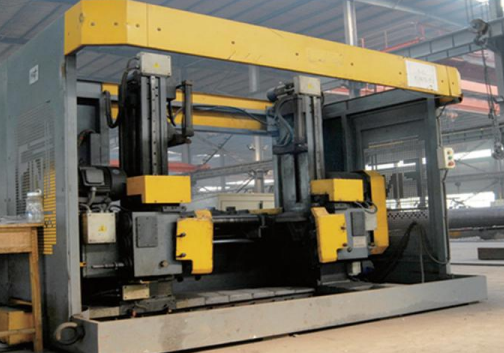
Supporting image: TXD Steel Group steel product supply. Image source: supplied company image library.
Step-by-step buyer decision path
- Define the finished part and fabrication route. If the next step is slitting, cut-to-length, roll forming or corrugating, start with coil. If the next step is cutting, welding, drilling or fixing a tube, start with hollow section.
- Set the coating route before comparing thickness. State whether the hollow section will be pre-galvanized from coil or post-hot-dip galvanized after fabrication. Use the supplied reference values carefully: 45–85 μm per BS EN ISO 1461 for post-hot-dip galvanizing, and 20–30 μm for pre-galvanized coating. Ask for the coating mass or coating weight on the MTC.
- Specify dimensions and tolerances. For coil, state thickness, width, coil weight and whether slitting or cut-to-length is required. The supplied width options include 1219 mm, 1250 mm and 1500 mm. For hollow section, state outside size, wall thickness, length and end finish against the selected standard.
- Select the standard family and grade. Use coil standards such as ASTM A653/A653M, EN 10346 or JIS G3302 when ordering coil. Use hollow section standards such as ASTM A500/A501/A53, EN 10210/10219, JIS G3466, BS 1387 or GB/T 3091 when ordering tube. Do not substitute a grade from another standard without a documented cross-reference.
- Request the Mill Test Certificate. The MTC should cover chemical composition, mechanical properties and coating weight. Check that the certificate matches the quoted grade, standard, heat number, dimensions and coating route.
- Confirm processing and customization. Coil processing can include slitting and cut-to-length. Hollow section processing can include cutting, punching, bending and welding. Custom sizes, export packaging and customer-specific markings can be discussed, but feasibility, tolerances and minimum quantities must be confirmed for each order. The supplied FAQ states a 25 ton MOQ per size for customization.
- Confirm sample, packing, lead time and Incoterms. The supplied FAQ offers a free A4 or 300 × 300 mm sample, freight collect, cut from historical production with courier time of 3–7 days. Coils are packed eye-to-sky or eye-to-wall with strapping, edge protectors and waterproof paper; pipes are packed in hex bundles. About 25 t per container is stated, with mixed sizes supported. Lead time is 15–25 working days after deposit and order confirmation; stock items ship in 10 days. EXW, FOB Qingdao or CIF to the buyer’s port are stated options.
- Compare total delivered cost. Include processing, yield loss, coating route, inspection, packing, freight, MOQ and payment terms. Do not compare a coil price per ton with a hollow section price per ton as if they were the same product scope.
Use cases: where each product form fits
Curtain walls
For curtain walls, coil is relevant where coated steel sheet is used for panels, flashings or related flat components. Hollow section is relevant where the design specifies steel framing or supporting members. The buyer should confirm the coating route, visible surface condition and the applicable building or project standard. Do not assume that a coil coating specification transfers automatically to a finished hollow section.
Steel structures
In steel structures, hollow sections are used for columns, braces, frames and other tubular members where the design calls for them. Coil is used for purlins, roof and wall sheets, and other flat or roll-formed components. The two products can appear on the same project, but they serve different structural and enclosure functions. Separate the standards and inspection requirements in the purchase order.
Scaffolding
Scaffolding is a tubular application. The supplied hollow section standards include BS 1387 and GB/T 3091, which are relevant to steel tube and low-pressure fluid service contexts. The buyer should confirm the project’s required tube standard, wall thickness, end finish and coating route. Coil is not a finished scaffold tube; it would need to be processed into pipe or tube first.
Solar mounting support
Solar mounting systems can use coil for rails, purlins or roll-formed profiles and hollow section for posts, frames or supports where the design specifies them. Coating route matters because cut edges, drilled holes and field cuts can expose steel. Confirm whether the order requires pre-galvanized material, post-galvanizing or a repair coating at cut points.
Low-pressure fluid pipelines
Low-pressure fluid pipelines are a hollow section or pipe application. The supplied standards list BS 1387, GB/T 3091 and ASTM A53 in the hollow section group. Coil is an input to pipe making, not a finished pipeline product. If the end use is a fluid line, specify the pipe standard, grade, dimensions, end finish and test requirements rather than ordering coil on its own.
Supplier capability and verification: what to ask TXD or any supplier
Shandong TXD Steel Group Co.Ltd is a steel supplier founded in 2010 with an ISO 9001 quality management system. Its supplied product range includes galvanized steel coils, steel pipes and section steel. For a mixed coil and hollow section order, the buyer should confirm whether each line is produced by the group or by a partner mill, and confirm the inspection scope by order.
The supplied comparison notes state that TXD can coordinate third-party inspection for steel products based on order requirements. Before shipment, inspection items, sampling and batch documentation can be agreed. The same notes state that custom sizes, export packaging and customer-specific markings can be discussed, with feasibility, tolerances and minimum quantities confirmed per order. Standard sizes may be stocked for urgent orders, but stock quantity, location and cargo-ready date should be confirmed in writing. One RFQ can cover multiple product categories, but the buyer should confirm whether the items can ship together.
These points are verification steps, not a substitute for a specification. The buyer still needs to state the product form, coating route, standard, grade, dimensions, tolerance, inspection document and delivery term. A supplier’s ability to quote both coil and hollow section does not prove that every grade or standard is available from one production line.
FAQ
Which galvanized steel coil manufacturer is better for DX51D versus S250GD grade requirements?
The supplied evidence does not rank manufacturers, and a grade comparison should not be turned into a brand claim. In the supplied standards context, DX51D is a cold-forming designation under EN 10346, while S250GD is a structural designation in the same standard family. Z100 and Z275 are coating-mass designations, not steel grades. Choose DX51D when the part is primarily cold-formed and the quoted mechanical properties fit the forming route. Choose S250GD when the design calls for a structural grade. For either grade, ask each supplier for a Mill Test Certificate covering chemical composition, mechanical properties and coating weight, and confirm the producing mill, coating mass basis, dimensions, tolerance and applicable standard edition. TXD’s supplied data supports a grade-specific RFQ and MTC request, not a claim that one manufacturer is better for both grades.
Conclusion
Galvanized steel coil and galvanized hollow section are not competing versions of the same finished product. Coil is the right starting form for slitting, cut-to-length, roll forming and flat or corrugated applications. Hollow section is the right starting form for tubular structures, scaffolding, solar supports and low-pressure fluid lines. The comparison becomes reliable only when the buyer aligns coating route, coating thickness, dimensions, standard family, MTC and processing scope.
Use the supplied reference values with their conditions: 45–85 μm per BS EN ISO 1461 for post-hot-dip galvanizing, 20–30 μm for pre-galvanized coating, coil widths of 1219 mm, 1250 mm and 1500 mm, and the applicable coil or hollow section standards. Then request an MTC, a sample, packing details, lead time and Incoterms before fixing the order.
To compare galvanized steel coil and galvanized hollow section for a specific project, send the end use, grade, coating route, dimensions, destination and required Incoterms to Shandong TXD Steel Group Co.Ltd. Ask for an MTC, sample and packing proposal before confirming the order.
CTA image: TXD Steel Group steel product supply. Image source: supplied company image library.
Product catalog for download: TXD product catalog.
Have Questions or Need More Details?
Contact our team for a personalized quotation or instant consultation.
Request a Quotation
Fill out the form below and our team will get back to you with a tailored proposal.
WhatsApp Direct Chat
Prefer to chat in real-time? Message us on WhatsApp for instant assistance & quick answers.
- Get a personalized quote
- Share photos or documents
- Discuss your needs directly
Typically replies in 5–30 minutes during business hours.