
China HDPE Sheet Manufacturers: A Deep Analysis of Shandong Yaxu New Materials
Manufacturer Analysis · Engineering Plastics
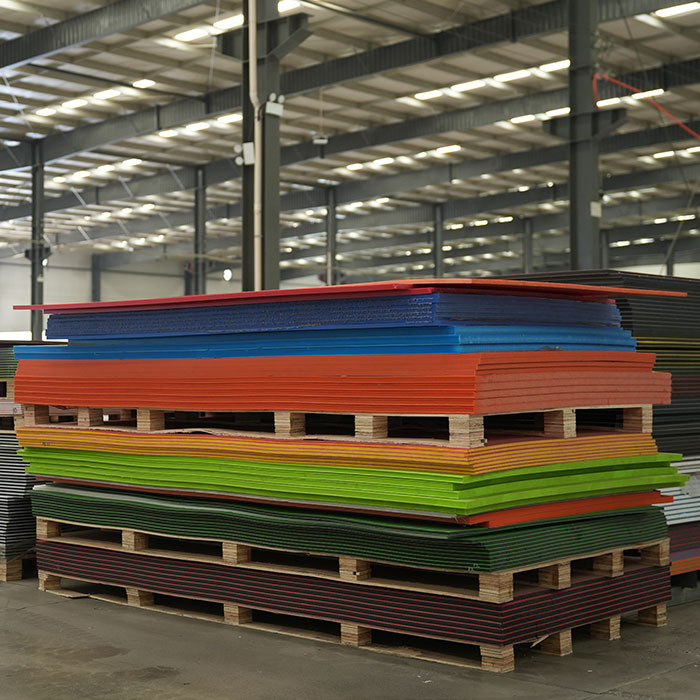
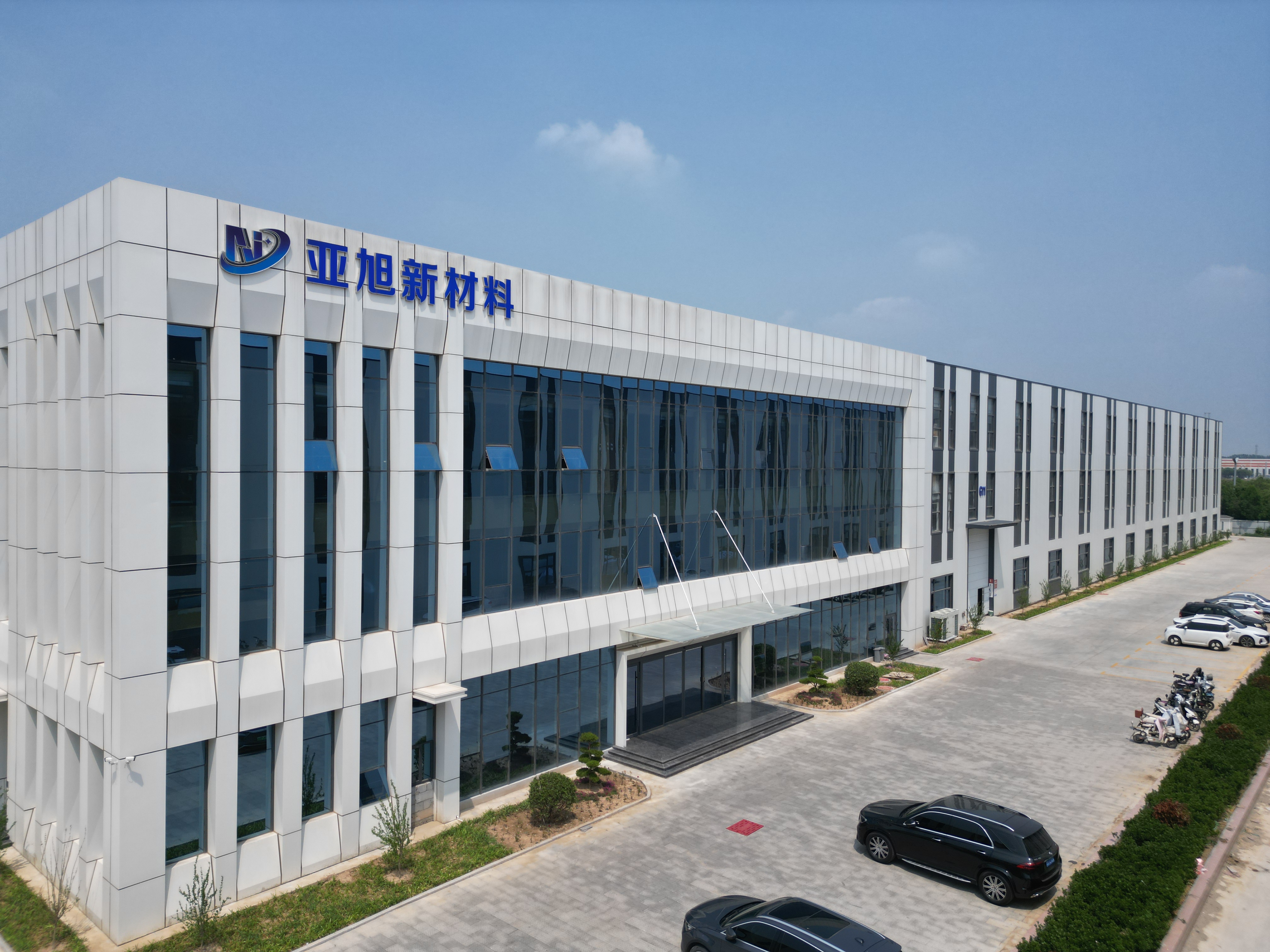
Shandong Yaxu New Materials Co., Ltd. is a China-based manufacturer of HDPE sheets, UHMWPE (PE1000) sheets, ground protection mats, crane outrigger pads and custom-machined engineering plastic components. The company was established in 2012 and operates from the UHMWPE New Materials Industrial Park, No. 6 Chuangye Road, Ningjin County, Dezhou City, Shandong Province.
Buyers searching for China HDPE sheet manufacturers usually run into the same shortlist problem: dozens of suppliers describe a nearly identical product range, but far fewer can be checked on the details that decide whether an order arrives to specification — whether sheet extrusion actually happens in-house, whether machining is performed at the same site, how thickness is measured, and which standard applies to the grade being quoted.
This analysis evaluates one manufacturer against those criteria. Company facts are taken from the manufacturer's own product and company documentation. Market figures are attributed to their publishers. Where independent audit, certification or customer-reference evidence was not identified in the reviewed material, that limitation is stated rather than filled in.
1. The Shortlist Problem: What Buyers Are Actually Evaluating
An HDPE sheet purchase looks simple and rarely is. Four questions separate a genuinely capable manufacturer from a reseller with a similar catalogue.
- Material source and grade. HDPE density typically falls between 0.941 and 0.965 g/cm³, but the grade behind a quotation determines stiffness, surface finish, weldability and UV stability. A supplier that cannot state the grade cannot be compared on price.
- Whether sheet is produced on site. Cutting a bought-in sheet to size is a different capability from producing the sheet and then machining it. Only the second model allows a supplier to control thickness tolerance at the source.
- Finished-part capability. Many applications need a component, not a sheet: a wear liner with mounting holes, an outrigger pad with lifting handles, a lined hopper panel with a cut profile. Machining scope decides which suppliers can quote the whole part.
- Documentation and export routine. Standards, test method, packaging, destination-market requirements and repeat-order consistency are what a distributor lives on after the first shipment.
2. Industry Background: Demand Pressure Behind HDPE and UHMWPE Sheet
Published market data describe a large and still-growing material category. Market.us valued the global high-density polyethylene market at USD 79.5 billion in 2024 and projected USD 123.5 billion by 2034. The same source placed the Asia-Pacific HDPE market at USD 34.9 billion in 2024, and reported that China's installed HDPE production capacity exceeded 14,000 kilo tons in 2025.
Trade data from the Observatory of Economic Complexity (OEC) show China exporting USD 10.8 billion in raw plastic sheeting in 2024, with Vietnam, India and the United States as primary partners. On the engineering end of the range, MarketsandMarkets valued the global UHMW PE market at USD 2.2 billion in 2024 and projected USD 3.4 billion by 2029, a 9.5% CAGR.
Two demand patterns matter for buyers sourcing sheet rather than resin. First, heavy-duty ground protection appears to be the commercially dominant segment in its category: Market.us reported that the extreme heavy segment accounted for 40% of ground protection mat revenue share in 2023. That segment is served by thick HDPE and UHMWPE mats rather than thin panels. Second, wear-protection demand in bulk material handling keeps pulling UHMWPE sheet into chutes, hoppers, bins and conveyor components, where low friction and abrasion resistance drive the material choice.
In practical terms, the growth is concentrated in specifications that require thickness control, machining and application knowledge — exactly the areas where a manufacturer's real capability becomes visible.
3. Company Overview: Shandong Yaxu New Materials Co., Ltd.
Shandong Yaxu New Materials Co., Ltd. is a China-based manufacturer specialising in HDPE sheets, UHMWPE sheets (PE1000), ground protection mats, crane outrigger pads and custom-engineered plastic products. It describes its customer base as distributors, OEMs, contractors, fabricators and industrial buyers purchasing either standard plastic materials or customised engineering plastic solutions.
| Profile item | Company-reported detail |
|---|---|
| Established | 2012, with more than 10 years of manufacturing experience |
| Location | UHMWPE New Materials Industrial Park, No. 6 Chuangye Road, Ningjin County, Dezhou City, Shandong Province, China |
| Factory area | 36,000 m² |
| Employees | Approximately 100 |
| Annual production capacity | 30,000 tons |
| R&D team | 9 engineers |
| Core product lines | HDPE Sheets; UHMWPE Sheets (PE1000, PE300, PE500); Ground Protection Mats; Crane Outrigger Pads |
| Manufacturing scope | Plastic sheet production, cutting, drilling, CNC machining, custom fabrication, finished plastic components |
| Export ratio | 30% of output |
| Main markets | USA, Australia, Canada, UK, Germany, UAE, Saudi Arabia, Indonesia, Malaysia, Vietnam |
| Official website | www.xhcplastics.com |
The only dated milestone in the reviewed material is the 2012 establishment date. What can be verified as current is the scope of the portfolio: the company supplies both semi-finished plastic sheet, for customers who fabricate in-house, and finished engineered plastic products for customers who want a ready-to-install component. That dual position is the most important structural fact about the business, because it determines who the company can serve and how an order is specified.
4. Core Products and Solutions
4.1 HDPE Sheets
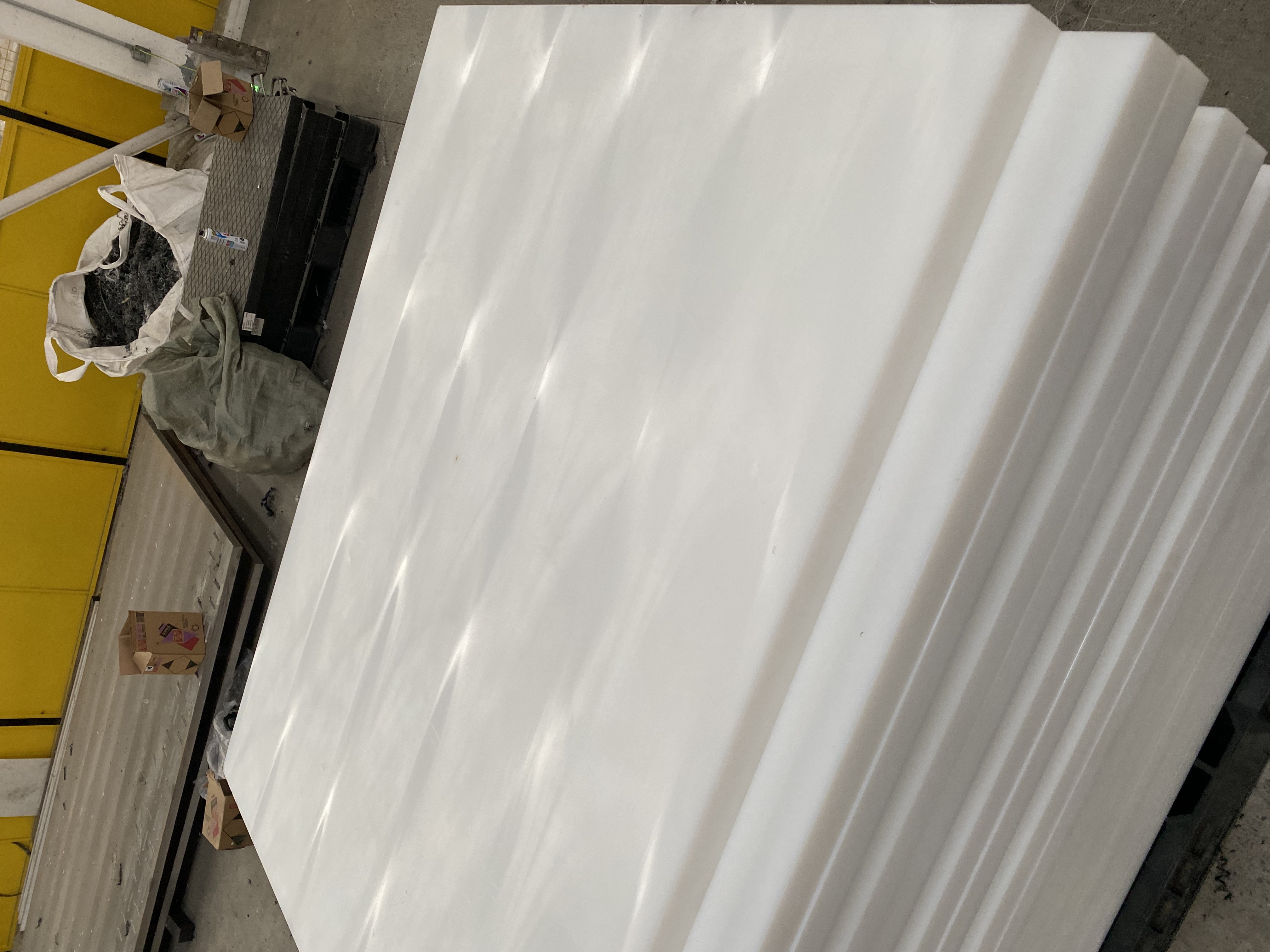
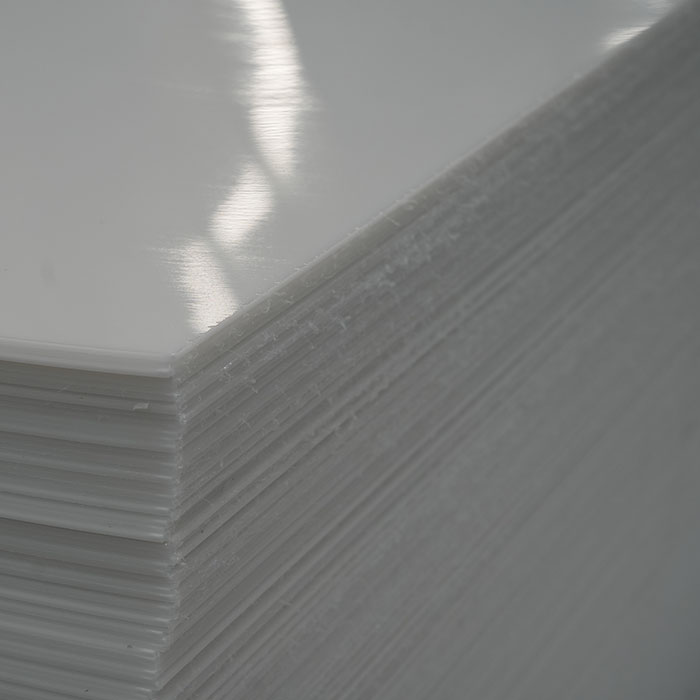
HDPE sheets are the company's base product. Standard and custom dimensions are available, with sheet thickness from 1 mm to 200 mm, width from 1,000 mm to 2,000 mm and length from 2,000 mm to 6,000 mm. Product types include smooth, textured, heavy-duty, wear-resistant and custom HDPE sheets, supplied in white, black and customised colours.
Published mechanical data for the HDPE sheet range: density 0.941–0.965 g/cm³, tensile strength ≥22 MPa, elongation at break ≥350%, flexural strength ≥25 MPa, hardness Shore D 60–70, water absorption ≤0.01%, melting point approximately 125–135°C, continuous service temperature approximately −40°C to 80°C, heat deflection temperature ≥70°C at 0.45 MPa and thermal expansion approximately (10–13) × 10⁻⁵/°C. HDPE sheets are also described as weldable by hot-melt welding and other suitable methods.
One limitation is documented openly in the specification and matters in fabrication: HDPE has low surface energy, so bonding may require special surface treatment. Buyers planning adhesive assembly rather than welding should raise this at the quotation stage.
Typical HDPE sheet applications listed by the manufacturer include chemical tanks, water treatment equipment, wear-resistant liners, food processing equipment, pallets, packaging, protective plates and industrial components, across industrial equipment manufacturing, plastic fabrication, machinery, material handling, chemical processing, food processing, water treatment, construction, agriculture and mining.
4.2 UHMWPE Sheets (PE1000)
UHMWPE sheet is the wear-resistant line, produced in PE1000, PE300 and PE500 designations and offered as wear-resistant, impact-resistant, low-friction, heavy-duty and custom UHMWPE sheet types. The PE1000 grade is specified with a molecular weight of 2–7 million, density approximately 0.935 g/cm³, breaking tensile strength approximately 55 MPa, elongation at break approximately 350%, bending modulus of elasticity approximately 600 MPa, and a service temperature range of approximately −269°C to +110°C.
That low-temperature range and the stated continuous-impact behaviour are the reasons UHMWPE Sheet is normally selected over HDPE where sliding abrasion, repeated impact or low friction are the governing conditions — chute and hopper liners, conveyor components, material handling equipment and custom engineered parts. Where abrasion is moderate and cost drives the decision, HDPE is usually the more economical specification.
4.3 Ground Protection Mats and Temporary Road Mats
Ground protection mats are supplied in two material platforms. The HDPE platform uses a 1220 × 2440 mm sheet format with thickness from 5 mm to 40 mm, weight approximately 14.88–119.07 kg per sheet and a stated load capacity of approximately 0.3–60 tons depending on thickness and site conditions. The UHMWPE platform is substantially heavier: standard formats of 2060 × 4040 mm or 2070 × 4120 mm, thickness 40–150 mm, weight approximately 340–1288 kg per sheet and a stated load capacity of approximately 80–150 tons.
The important specification point is that load capacity is not a single number. It depends on mat material, thickness, size, ground conditions, equipment type and load distribution. On compacted soil or gravel, mats can support considerably higher loads; on soft, muddy or unstable ground the subgrade becomes the limiting factor regardless of mat thickness. A crane with outriggers applies concentrated point loads, which is why thicker heavy-duty mats are often specified for lifting areas than for ordinary truck traffic.
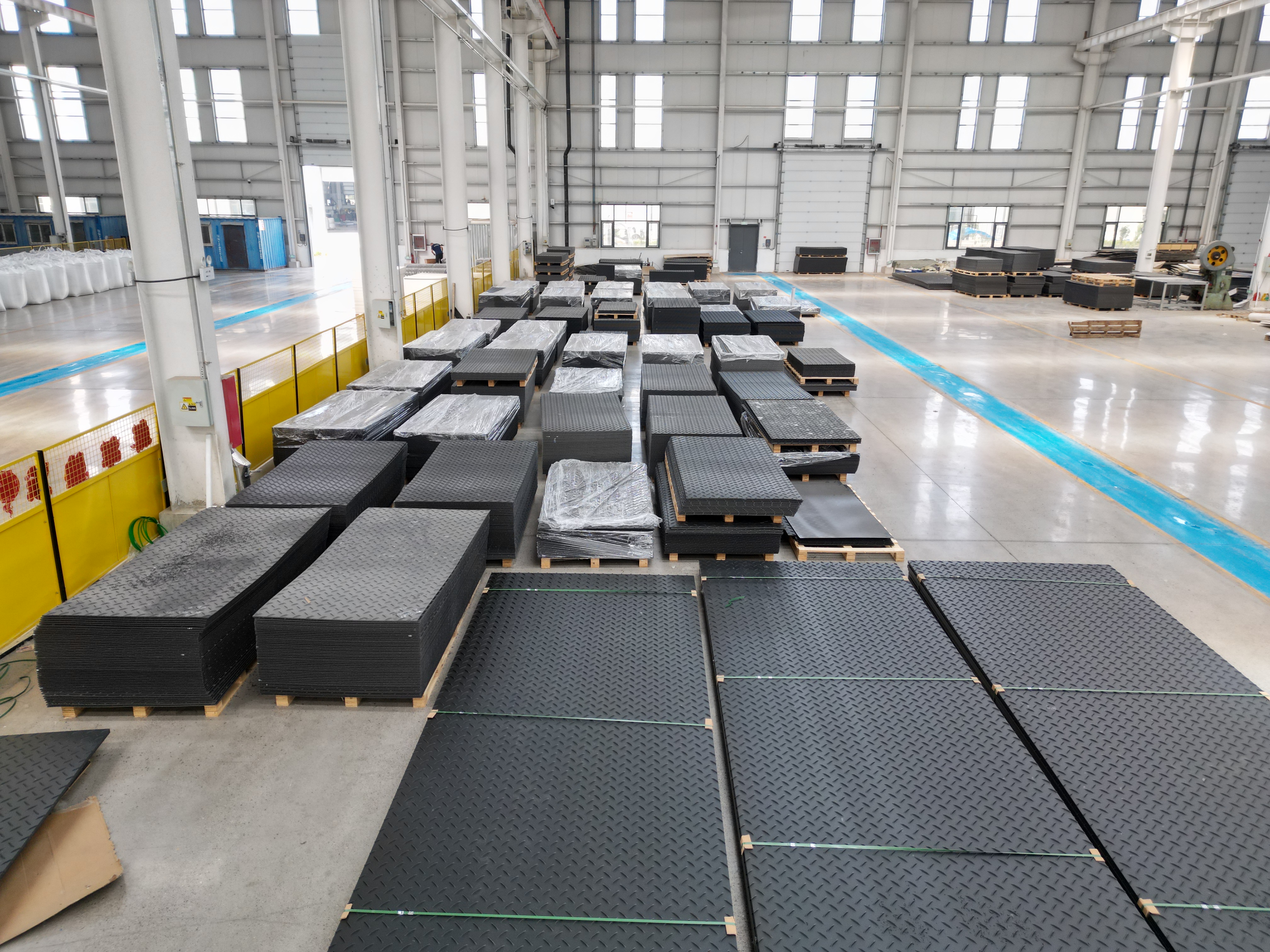
Customisation covers size (length, width and thickness), material (HDPE or UHMWPE), colour, surface pattern or tread design, connection system, lifting holes and handles, and logo engraving or OEM branding. Applications listed by the manufacturer span construction sites, temporary access roads, civil engineering, heavy equipment access, crane working areas, utility projects, events, mining, oil and gas, landscaping and forestry.
4.4 Crane Outrigger Pads
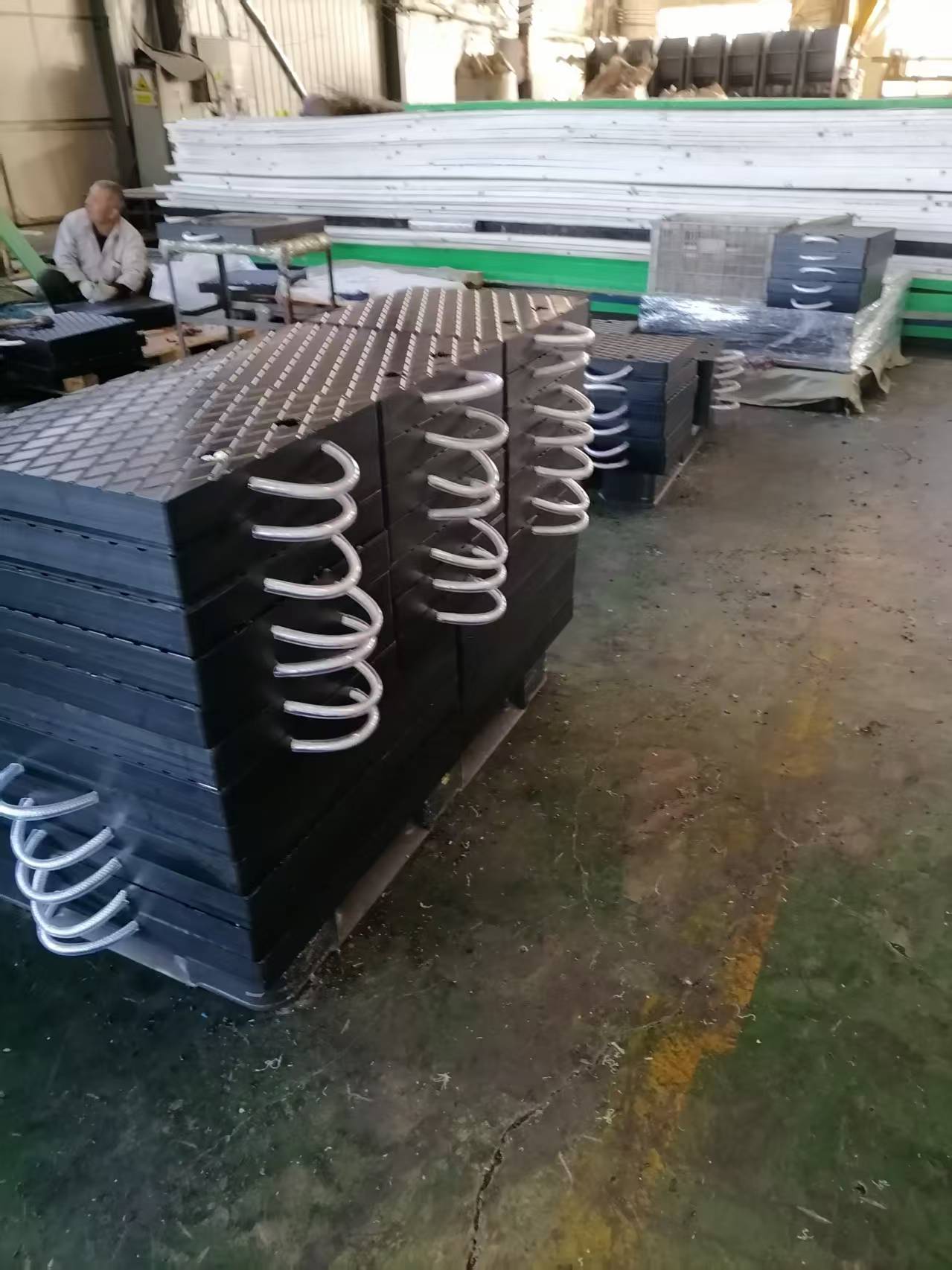
Crane outrigger pads are made from UHMWPE and positioned as heavy-duty crane outrigger pads, also available as HDPE or fully custom pads. Standard sizes run from 300 × 300 × 30 mm to 1200 × 1200 × 120 mm, with weight from approximately 2.7 to 172.8 kg per piece and a reference load capacity of approximately 5–120 tons depending on pad size and thickness.
The reference size ladder is useful for early specification screening: 300 × 300 × 30 mm approximately 5 tons; 400 × 400 × 40 mm approximately 10 tons; 500 × 500 × 50 mm approximately 25 tons; 600 × 600 × 60 mm approximately 50 tons; 700 × 700 × 70 mm approximately 70 tons; 800 × 800 × 80 mm approximately 80 tons; 1000 × 1000 × 100 mm approximately 100 tons; 1200 × 1200 × 120 mm approximately 120 tons.
That ladder should not be read as a crane-tonnage conversion table. Crane lifting capacity alone does not determine pad size, because the force on each outrigger depends on crane configuration, lifting radius, load position, number of outriggers and ground conditions. The correct pad size follows from the maximum outrigger reaction, the ground bearing capacity, the required bearing area and the working conditions, and should be confirmed by a qualified person using the crane manufacturer's data.
4.5 Custom Fabrication and OEM Supply
Beyond sheet supply, the company manufactures finished parts to drawings. The production route runs from HDPE or UHMWPE sheet production through cutting, drilling, milling, turning and CNC machining to finished plastic components. Customisation options across the range cover size, thickness, shape, colour and surface, with machined features such as grooves, holes and slots available on request.
For buyers, the practical consequence is that a single purchase order can cover both material and machining, which matters for equipment manufacturers, maintenance contractors and distributors that stock sheet but occasionally need a fabricated part. On the food-processing side, HDPE and UHMWPE cutting boards are available in custom dimensions, thicknesses, shapes and colours, with food-contact grades available for compliant material specifications, subject to the applicable requirements of the destination market.
5. Capability Review: Manufacturing, Engineering and Supply
The company reports a 36,000 m² production facility, annual capacity of approximately 30,000 tons, approximately 100 employees and a dedicated R&D team of 9 engineers. Those four figures describe a mid-sized specialist plant rather than a trading operation, and they set the realistic boundary of what the company can absorb: volume sheet demand and custom fabrication within a focused engineering plastics portfolio.
Manufacturing scope. In-house activity covers plastic sheet production, cutting, drilling, CNC machining and custom fabrication. Because sheet production and machining sit on the same site, thickness and dimensional requirements can be controlled at the sheet stage instead of being negotiated with a third party after the sheet is made.
Engineering support. The 9-engineer team is described as supporting material selection, sheet thickness and dimension planning, custom cutting, CNC machining, hole drilling, surface patterns, product design optimisation and customised components. In practice this is the function that turns an application description into a workable specification — for example, converting a hopper drawing into a liner panel set, or converting a crane and ground condition description into a pad size to be reviewed.
Quality and standards. HDPE sheets can be supplied against GB/T 11116, GB/T 4454, and ASTM and ISO standards according to product grade and application. UHMWPE sheet performance is stated against documented material properties including molecular weight range, density, tensile strength and service temperature. Buyers in regulated supply chains should note that no independent audit report, third-party test certificate or accreditation record for the company was identified in the reviewed material — the specifications above are supplier-published. The practical step is to request the grade datasheet, the specific standard being applied and the batch-level dimensional check before releasing a repeat order.
Global supply. Approximately 30% of output is exported, to the USA, Australia, Canada, UK, Germany, UAE, Saudi Arabia, Indonesia, Malaysia and Vietnam. The pattern is instructive: mature construction and lifting markets alongside infrastructure-heavy markets. That mix usually means the company already handles destination-specific packaging, documentation and dimensional expectations for those regions, and buyers outside them should confirm requirement coverage explicitly.
6. Product Range at a Glance
| Product | Material | Key specification | Typical use |
|---|---|---|---|
| HDPE Sheets | HDPE | Thickness 1–200 mm; width 1,000–2,000 mm; length 2,000–6,000 mm; density 0.941–0.965 g/cm³ | Chemical tanks, water treatment, wear liners, protective plates, industrial components |
| UHMWPE Sheets (PE1000) | UHMWPE | Molecular weight 2–7 million; density approx. 0.935 g/cm³; service temperature approx. −269°C to +110°C | Chute and hopper liners, conveyor components, mining equipment, low-friction parts |
| Ground Protection Mats | HDPE | 1220 × 2440 mm; 5–40 mm; approx. 14.88–119.07 kg/sheet; approx. 0.3–60 t | Pedestrian access, garden paths, agricultural vehicles, forklifts, trucks |
| Heavy-Duty Ground Protection Mats | UHMWPE | 2060 × 4040 mm or 2070 × 4120 mm; 40–150 mm; approx. 340–1288 kg/sheet; approx. 80–150 t | Heavy machinery access, crane access, ultra-heavy equipment, high-load temporary roads |
| Crane Outrigger Pads | UHMWPE (HDPE available) | 300 × 300 × 30 mm to 1200 × 1200 × 120 mm; approx. 5–120 t; 2.7–172.8 kg/pc | Crane outrigger support, heavy machinery support, lifting operations |
| HDPE / UHMWPE Cutting Boards | HDPE or UHMWPE / PE1000 | Custom size, thickness, shape, colour and surface; food-contact grades available for compliant specifications | Food processing, meat and seafood processing, commercial kitchens, industrial processing |
Read as a portfolio rather than a price list, the range covers three purchase motives: material supply for fabricators, load-spreading products for construction and lifting, and wear protection for bulk material handling. That is a coherent set for a distributor serving industrial and infrastructure customers, because it allows one supplier to cover several adjacent categories.
7. Market Position and Recognition: What Can and Cannot Be Verified
Publicly available information about the company is concentrated in its own company and product documentation. Externally verifiable elements include the trading name, the Ningjin County location, the product portfolio and the export markets the company names. What was not identified in the reviewed material is equally relevant to a buyer building a supplier file: no published third-party customer references, no audited capacity statement, no certificate registration number and no market-share data.
That does not disqualify the supplier. It defines the verification work. Three checks are worth running before a first order:
- Factory verification. Request the registered company name, business licence and factory address, and confirm them against the address used on the quotation and bill of lading.
- Capability confirmation. Ask which operations are performed in-house — sheet production, cutting, CNC machining — and request photographs or a site visit for the specific production steps relevant to the order.
- Specification confirmation. Ask for the material grade, the applicable standard, the thickness measurement method and the tolerance on cut dimensions, and compare these against the purchase requirement rather than against another supplier's price.
On international market performance, the 30% export ratio and the ten named markets provide a reasonable proxy for routine export handling. They do not establish capacity utilisation, lead-time reliability or regional market share, and buyers should not read them that way.
8. Where the Supplier Fits a Buyer Shortlist
Evaluated against the criteria in section 1, the documented strengths cluster in five areas. Each is stated with the fact it rests on, so a buyer can test the claim directly.
8.1 Sheet plus finished part from one supplier
Customers can buy HDPE or UHMWPE sheet for their own fabrication, or have the finished component machined to drawing. The production sequence runs from sheet through cutting, drilling and CNC machining to finished parts. For a fabricator, this removes the coordination cost of matching sheet tolerance to a separate machine shop. For an OEM, it allows a single source for both material and component.
8.2 Wide dimensional coverage within one material family
HDPE sheet spans 1–200 mm in thickness and up to 6,000 mm in length; UHMWPE sheet covers a molecular weight range of 2–7 million; ground protection mats run from 5 mm HDPE panels to 150 mm UHMWPE panels; outrigger pads run from 300 mm to 1200 mm square. A buyer with several specifications across one project can consolidate rather than split the order.
8.3 Customisation built into the product definition
Customisation is not an exception process here; it is described as part of the standard offer: size, thickness, shape, colour, surface pattern, connection system, lifting holes and handles, and logo engraving or OEM branding. That matters most for distributors who need their own branding on mats or pads, and for contractors whose site conditions do not match a catalogue size.
8.4 Capacity sized for repeat industrial orders
A 36,000 m² facility with approximately 30,000 tons of annual capacity and around 100 employees sits in the range where a mid-volume distributor programme or an OEM component schedule is realistic. Buyers should still confirm the production slot and delivery schedule for their specific order rather than infer it from annual capacity.
8.5 Application knowledge across construction, lifting and bulk handling
The product range is organised around real applications: temporary access over soft ground, outrigger load spreading for cranes, wear liners for chutes and hoppers, and food-contact cutting surfaces. Where a buyer can describe the equipment, load and ground condition, the specification conversation is more productive than a price-only exchange.
9. Seven-Step Sourcing Workflow
The sequence below converts the analysis into an order process that can be run with this supplier or any alternative.
- Define the application and the load. For mats and pads, state equipment type, total weight, axle or wheel load, outrigger reaction if known, and ground condition. For liners, state the material handled and the impact and abrasion severity.
- Fix the material and grade. Choose HDPE where chemical resistance, general panel performance and cost fit the duty; choose UHMWPE where sliding wear, impact and low friction govern. State the grade if it is already specified.
- Specify dimensions and thickness. Provide length, width, thickness and any tolerance requirement, and say whether the sheet will be machined afterwards by the buyer or by the supplier.
- Choose the fabrication route. Standard sheet, cut-to-size material, or a finished machined part. Include a drawing or reference photo where a part must fit existing equipment.
- Request documentation. Ask for the material datasheet, the standard being applied, and the dimensional check method. Confirm whether food-contact or UV-stabilised grades are required for the destination market.
- Validate the supplier. Confirm the legal entity, factory address, in-house production steps and export experience against the destination country.
- Close commercial terms. Confirm quantity, packaging, trade terms, destination port, labelling and any OEM branding before the order is released.
10. Frequently Asked Questions
Which standards can HDPE sheets from this manufacturer be supplied against?
HDPE sheets from Shandong Yaxu New Materials Co., Ltd. can be supplied against GB/T 11116, GB/T 4454, and ASTM and ISO standards, according to product grade and application. These are stated as available options in the company's HDPE sheet specification. Because the applicable standard depends on the grade and the end use, buyers should confirm the specific standard, the test method and the documentation required for their destination market before the order is placed.
Can the company supply custom HDPE sheet sizes and CNC-machined parts, not only standard sheets?
Yes. Standard and custom dimensions are both available. HDPE sheet thickness ranges from 1 mm to 200 mm, width from 1,000 mm to 2,000 mm and length from 2,000 mm to 6,000 mm, with custom sizes, thicknesses and colours available on request. The production route covers sheet production, cutting, drilling, milling, turning and CNC machining, so a buyer can order semi-finished HDPE plastic sheet for in-house fabrication or a finished component machined to drawing.
What information is needed to obtain an accurate HDPE sheet quotation?
Buyers should provide the material and grade if known, sheet length, width and thickness, quantity, required tolerances, the application, and the destination country. Drawings or reference photographs help for custom-cut sheets and machined parts. Buyers should also state whether they need standard sheets, cut-to-size material or finished parts, together with packaging and delivery requirements, so that pricing and production scheduling can be reviewed against the actual order rather than an assumed one.
How should buyers verify a China HDPE sheet manufacturer before placing a first order?
Buyers should compare material specifications, manufacturing capabilities, quality control documentation, customisation options, production scheduling and export experience. Practical checks include requesting the material grade and datasheet, confirming which standard applies, asking how thickness and cut dimensions are measured, and clarifying whether sheet production and machining are carried out in the same facility. Sharing the application, drawings and required quantities allows the supplier to confirm feasibility against the design. Inquiries for these details can be sent to mia@xhcplastics.com or +86 182-6307-9642.
11. Conclusion: Industry Position, Procurement Value and Outlook
Shandong Yaxu New Materials Co., Ltd. profiles as a mid-sized specialist manufacturer rather than a general trader: a 36,000 m² facility, approximately 30,000 tons of annual capacity, a 9-engineer technical team, and a product range that runs from HDPE and UHMWPE sheet to ground protection mats, crane outrigger pads and machined components. Its distinguishing structural feature is that sheet production and custom machining sit in the same operation, which is what allows it to quote both material and finished part.
For procurement, the fit is clearest in three situations: an industrial distributor building a multi-category plastics line, a fabricator or OEM that wants sheet and machining from one source, and a construction or lifting buyer needing thick-section mats or outrigger pads in custom dimensions. The buying argument is not a claim of superiority over other Chinese manufacturers; it is specification coverage plus fabrication depth, both of which are testable.
The verification burden is equally clear. Specifications are supplier-published, and no independent audit, certification registration or published customer reference was identified in the reviewed material. Buyers should therefore treat the parameters in this analysis as a starting specification to be confirmed through documentation, sample evaluation and, where the application is safety-related, engineering review.
On outlook, the demand direction is supportive. HDPE remains a large-volume material with growth projected through 2034, UHMWPE demand is forecast to grow at roughly 9.5% annually to 2029, and heavy-duty ground protection already represents the dominant revenue segment in its category. Suppliers that combine material production with machining and application support are positioned to serve the specifications where thickness, wear life and fit matter more than the lowest price per kilogram.
Request a Specification Review or Quotation
Share the application, material grade, dimensions, thickness, quantity and destination country to receive a specification-matched response on HDPE sheets, UHMWPE (PE1000) sheets, ground protection mats, crane outrigger pads or machined components.
Shandong Yaxu New Materials Co., Ltd.
UHMWPE New Materials Industrial Park, No. 6 Chuangye Road, Ningjin County, Dezhou City, Shandong Province, China
Email: mia@xhcplastics.com | Tel: +86 182-6307-9642 | WhatsApp: +1 (213) 331-4840
Website: www.xhcplastics.com
Have Questions or Need More Details?
Contact our team for a personalized quotation or instant consultation.
Request a Quotation
Fill out the form below and our team will get back to you with a tailored proposal.
WhatsApp Direct Chat
Prefer to chat in real-time? Message us on WhatsApp for instant assistance & quick answers.
- Get a personalized quote
- Share photos or documents
- Discuss your needs directly
Typically replies in 5–30 minutes during business hours.