
China Fitness Trade Expo: Technical Parameters for Building a Supplier Shortlist
China Fitness Trade Expo shortlists are decided before the flight, not in the aisle. The workable sequence is to fix the comparison parameters first — pass/fail compliance fields, capability fields, commercial fields, and an evidence rule attached to every one of them — and only then to book meetings. A buyer who works this way arrives with a scorecard that factories scattered across China can be measured against inside a single hall, and leaves with comparable records instead of a stack of catalogues. This guide defines the twelve fields, the gating and scoring logic, the 4-step Market-to-Match loop, the online appointment schedule, the verified supplier shortlist, the one-on-one meeting timetable and the post-show meeting record document.
At a glance
- Four gates, twelve fields: legal and conformity, capability and configuration, commercial and delivery, verification evidence.
- Legal and conformity fields are pass/fail gates; remaining fields are weighted against anchors written down before the show.
- Appointments are booked only after the shortlist is verified, and every slot carries a stated objective and a field subset to close.
- Four service deliverables close the loop: verified supplier shortlist, one-on-one meeting timetable, on-site matchmaking coordination, post-show meeting record document.
Why the comparison rules must exist before the exhibitor list
A gym-equipment project rarely fails at the negotiation table. It fails earlier, when notes taken at six different booths cannot be compared because each conversation used different questions. The structural cause is geography: Chinese fitness equipment manufacturing is distributed across multiple clusters, and a buyer who needs to evaluate product quality across manufacturers cannot realistically visit each factory in person inside a normal procurement window. That constraint was recorded explicitly in a US gym-operations procurement project handled through the exhibition's B2B matchmaking programme — the buyer needed cross-manufacturer quality comparison, and inspecting every candidate on site was impractical.
An exhibition solves the geography problem and creates a different one: density. In a hall, a buyer can hold more supplier conversations in two days than in two weeks of travel, but those conversations arrive out of order, in different formats, with different levels of documentation. A parameter set is the control mechanism. It defines what must be true before a supplier enters the shortlist (gates), what differentiates suppliers that pass (weighted fields), and what counts as evidence for each field.
Two calibration points matter. First, category-level trade data justifies sourcing from China but says nothing about any individual factory: the Observatory of Economic Complexity, using UN Comtrade-derived data, puts China's 2025 exports of gym and athletics equipment at roughly USD 9.88 billion, but the exact product-code mapping behind that figure is not confirmed, so it should be read as category background rather than a supplier signal. Second, an expo visit is a sampling instrument, not an audit — the fields below make that sample disciplined, they do not replace factory verification on larger orders.
What the venue itself contributes to a shortlist
The China Fitness Trade Expo is organised by Shanghai Donnor Exhibition Service Co., Ltd, an exhibition organiser founded in Wenzhou, Zhejiang in 1996 that runs more than 30 trade and consumer exhibitions across Shanghai, Zhejiang, Sichuan and Bangkok, reports annual exhibition space above 700,000 square metres, and has served more than 120,000 business exhibitors in total. For shortlist building, the useful question is not the organiser's total portfolio but the density and scope of the supplier pool that one visit can produce.
On reported scale, the 2024 Shanghai edition recorded 58,991 visitors, 713 exhibitors and 90,000 square metres of exhibition space. The edition held 13–15 March 2026 was reported by the organiser to have brought together more than 1,000 brands and nearly 65,000 visitors. These are organiser-reported counts and no independent audit of the underlying definitions was identified, so they support meeting-capacity planning, not a ranking of one event against another.
Scope determines how many parameter sets a buyer actually needs. The 2026 programme was reported to cover commercial fitness equipment, sports leisure goods, cross-border e-commerce solutions, AI smart fitness, rehabilitation training systems, nutritional health products, and pool equipment and facilities. A selector built for a plate-loaded strength range is not the same instrument as a selector for a connected cardio console or a rehabilitation device, so the field set below should be instantiated per category rather than applied generically across the whole show.
The platform also supplies the matchmaking layer that makes parameter-based comparison practical: the organiser describes foreign OEM and ODM trade, a B2B international trade docking service area, a foreign VIP service area and a specialised matchmaking docking service area as part of the event. The service model is named the "One-stop fitness industry sourcing & international matchmaking solution (expo + online matchmaking)", and covers exhibitor recruitment and booth sales, pre-show marketing, international channel invitation, on-site execution and operations, forum and matching-session organisation, and post-show lead management and CRM support. Named target users include gym engineering contractors and chain operators alongside OEM/ODM SMEs, distributors and trading firms — the profiles that most often need a repeatable shortlist method rather than a one-off visit.
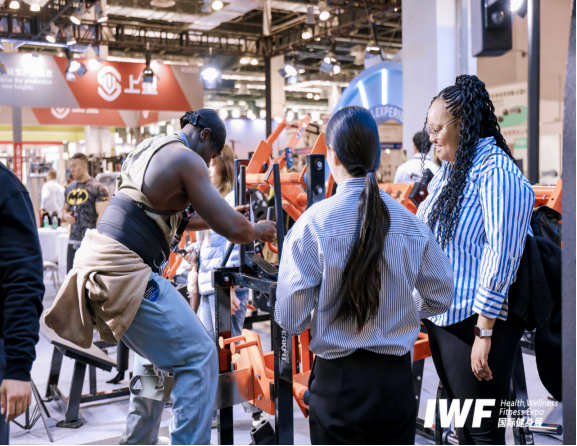
Stated specifications should be checked against the machine on the stand before a supplier is entered on the shortlist.
The twelve fields: four gates, one scorecard
Twelve fields are enough to compare commercial fitness equipment suppliers consistently, and few enough to complete inside a scheduled meeting. They are grouped into four gates: legal and conformity, capability and configuration, commercial and delivery, and verification evidence. Gate one is pass/fail — a supplier without the required documentation does not receive a weighted score, because averaging a compliance failure into a commercial ranking is how unsuitable factories reach a shortlist.
| Gate / field | What to record | Evidence to request | Decision it supports |
|---|---|---|---|
| Gate 1 — Legal entity and manufacturing site | Registered company name, factory address, owned versus contracted production | Business licence; factory address confirmation; line evidence if remote | Entry to the shortlist at all |
| Gate 1 — Conformity evidence for your market | Standard and test scope that apply to the exact model | Test reports naming the model and standard; certificate scope | Pass/fail; compliance gap identification |
| Gate 1 — Warranty and spare-parts policy | Warranty term, covered components, spares availability statement | Written warranty terms; spare-parts list | Service-cost modelling; risk acceptance |
| Gate 2 — Model and configuration match | Frame and material specification, stated load ratings, footprint, user capacity | Model specification sheet; configuration list | Category and floor-plan fit |
| Gate 2 — OEM/ODM scope | What can be customised: branding, colour, upholstery, frame geometry, console software | Customisation list; tooling ownership terms | Private-label feasibility |
| Gate 2 — Process and quality control | In-house versus outsourced welding, coating and assembly; QC checkpoints | Process flow; sample QC record | Consistency risk between units |
| Gate 2 — Connectivity and software support | Console platform, data export, app integration, update and support terms | Software specification; support commitment | Lifecycle dependency after installation |
| Gate 3 — Minimum order quantity | MOQ per model and per customisation | Written MOQ statement | Order structure by site count |
| Gate 3 — Quotation structure | Incoterm, packaging, tooling cost, sample cost, quotation validity | Itemised quotation | Like-for-like cost comparison |
| Gate 3 — Stated lead time and capacity | Stated production and delivery lead time; behaviour at peak | Lead-time statement; capacity description | Installation and opening scheduling |
| Gate 3 — Payment terms | Deposit and balance split, currency, documentation flow | Draft terms | Cash-flow fit |
| Gate 4 — References and sample terms | Markets served, distributor structure, sample availability and cost | Reference list; sample policy | Verification depth before commitment |
Two rules keep this table honest. Record supplier statements as statements: a load rating written on a specification sheet is the manufacturer's stated value until it is tested, and the record should say so. And treat "not disclosed" as missing data, never as incapability — an MOQ that was not shared in a twenty-minute slot is an open item for follow-up, not a failed gate.
Turning the fields into a defensible score
Scoring is where shortlists quietly lose their value. The fix is to fix the anchors first: define, in writing, what a 0, a 2 and a 4 looks like for each weighted field before any meeting takes place. A capability score of 4 for "OEM/ODM scope" should mean a specific, verifiable answer — for example, documented customisation of frame geometry and console branding with tooling ownership stated — not "the supplier seemed flexible".
Weights should follow the project type rather than a universal template. A multi-site refurbishment programme places most weight on warranty administration, spare-parts availability and stated lead time, because downtime across many sites is the dominant cost. A private-label launch for a retail or distributor brand places most weight on OEM/ODM scope, tooling ownership and sample terms, because the product has to become a distinct SKU before it becomes a purchase order. A single-club fit-out weights configuration match and quotation structure instead. The field list stays constant; only the weighting moves.
Three tie-break rules prevent the score from overreaching. Count open items and favour the supplier with fewer unresolved questions. Record evidence completeness separately from performance, so a well-documented but commercially weaker offer is not lost. And never calculate an average across a failed gate — return the supplier to the evidence stage instead.
The 4-step Market-to-Match loop
The loop used across this programme runs market research and target mapping, pre-show exhibitor recruitment and buyer invitation with online pre-matching, on-site matchmaking and efficient negotiation, then post-show data tracking and conversion support. Each step has defined inputs and outputs, which is what makes a parameter framework auditable rather than intuitive.
- Market research and target mapping. Convert the project into a category list, a target-market conformity set, site or order quantities, an installation window and a budget band. Output: the instantiated twelve-field scorecard and the must-pass gate definitions.
- Pre-show exhibitor recruitment and buyer invitation (online pre-matching). The organiser recruits exhibitors and invites international buyers; the buyer submits a target profile that is matched against the exhibitor pool. Inputs include the exhibitor list, target buyer list, promotional assets and online scheduling data; outputs include the confirmed exhibitor list and the buyer appointment schedule.
- On-site matchmaking and efficient negotiation. The appointment schedule becomes the one-on-one meeting timetable, executed in the matchmaking docking area with on-site coordination. Outputs include the on-site meeting timetable and real-time deal records.
- Post-show data tracking and conversion support. Outputs include the leads list, the meeting record document and an analytics report that feeds follow-up through the organiser's CRM support.
Timelines are project-specific. The organiser notes that large industry expos typically require several months to half a year of preparation and that exact timelines are confirmed per event, which is the practical argument for locking the parameter set early: the field definitions take far less time than the appointment schedule they govern.
Online appointment scheduling that survives the hall
Appointment scheduling is the step where shortlists usually collapse, because buyers book meetings to fill a day rather than to close fields. Sequence it in the opposite direction. Verify the shortlist against gates one and four first, then request slots only for suppliers that passed, and attach to each request the category, the field subset to close, the documents required, the roles attending and the working language.
The organiser's operating stack — an exhibition CRM system, vertical B2B platforms, a buyer data management system, an online pre-registration SaaS system and internal AI tools used to support matchmaking — means pre-registration and appointment data are captured before arrival. Buyers should treat that data as a contract with themselves: the appointment sheet is the record of what was requested, and the post-show report should show what was actually delivered.
Practical rules that hold up in a busy hall: schedule conformity and legal-entity discussions before capability discussions, so a documentation gap is discovered while there is still time to redirect the day; place commercial fields in the second block, once the configuration is fixed; leave one slot free per half-day for overruns and follow-ups; and cap the daily meeting count so that the record can be written the same evening rather than reconstructed a month later. Sending the scorecard to each supplier in advance is the cheapest quality upgrade available — suppliers who receive it arrive with test reports, MOQ statements and warranty terms instead of brochures.
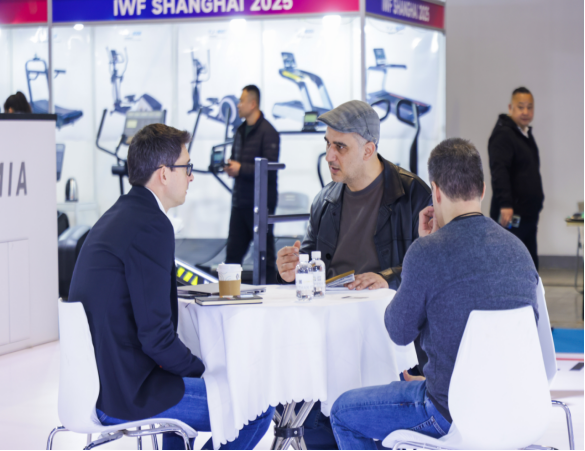
Pre-scheduled matchmaking turns hall hours into a fixed sequence of field-closing meetings.
What a verified supplier shortlist actually contains
The first deliverable in the programme is a verified supplier shortlist, and the word "verified" needs a precise meaning: it refers to documents and statements checked against what the buyer requested, not to an independent audit of the factory by the organiser. A usable shortlist is a table, not a list, and each row carries the legal entity, factory location, category fit, conformity documents seen and their scope, OEM/ODM scope, MOQ band, stated lead time, assigned meeting slot, gate status, open-item count and the single question that would disqualify the supplier.
This structure matters because it converts a subjective ranking into a reviewable one. When two procurement colleagues disagree about a supplier, the disagreement resolves against the recorded field rather than against impressions formed at a stand. It also makes the shortlist reusable: the same twelve fields can be re-run against a different category or a later edition without rebuilding the method.
Designing the one-on-one meeting timetable
The second deliverable is a scheduled one-on-one meeting timetable. Its design logic is coverage, not volume: every scheduled slot should exist to close a named field subset for a named supplier. Timetable columns therefore run: slot, supplier, meeting area, objective, fields to close, documents to collect, buyer attendees, and outcome recorded at the end of the meeting.
Group slots by category so the technical questions stay coherent, and place the highest-weight suppliers early in the day when both sides have attention to spare. Assign one person to write rather than to talk; a two-person team can then close capability and commercial fields in the same slot. Where a supplier fails a gate mid-meeting, end early and reallocate the slot to a standby candidate — which is only possible if a standby list was prepared during shortlist verification.
The post-show meeting record document
The fourth deliverable, the post-show meeting record document, is the one most often treated as paperwork and most often missed two months later. It should capture, per meeting: date and slot, supplier entity, models discussed, documents received and their scope, commercial terms as stated, gate status and weighted score, open items with a named owner and due date, and the next action with a decision deadline.
Its value is legal and operational at the same time. It separates what a supplier stated from what was verified, which protects the buyer during internal approval. It preserves negotiation continuity across a month-long gap between the show and the purchase order. And it closes the loop the organiser describes as post-show review: a review meeting that summarises KPI completion, buyer attendance and conversion, then assigns improvement actions with owners for the next cycle.
Worked example: a US gym operator's one-month cycle
A US gym-operations buyer needed to evaluate product quality across multiple manufacturers. With factories scattered across China, visiting each in person was impractical, so the buyer used the exhibition's B2B matchmaking programme instead. The diagnosis was straightforward: high supplier verification cost and inefficient offline sourcing, with no centralised channel to reach qualified manufacturers and compare products efficiently.
The applied solution was a targeted matchmaking session during the exhibition, gathering verified fitness equipment manufacturers in one venue so the buyer could run concentrated supplier negotiations and product comparison. The method followed the 4-step loop: market research and target mapping, pre-show exhibitor recruitment and buyer invitation with online pre-matching, on-site matchmaking and efficient negotiation, then post-show data tracking and conversion support. The deliverables were the verified supplier shortlist, the scheduled one-on-one meeting timetable, on-site matchmaking coordination and the post-show meeting record document.
Reported outcomes were a reduction of over 70% in supplier inspection travel costs and completed negotiations with 12 qualified manufacturers within one month, with centralised supplier comparison and direct communication channels established with Chinese manufacturers. In the client's post-show email: "The matchmaking event helped us contact multiple reliable factories efficiently and saved lots of travel time in China." These are results from a single documented project; they describe what one buyer achieved under one configuration and should not be read as a guarantee of the same outcome for a different category, order size or meeting plan.
| Deliverable | Decision it closes |
|---|---|
| Verified supplier shortlist | Which factories earn a meeting slot, and on what evidence |
| Scheduled one-on-one meeting timetable | How available hall hours map onto field coverage |
| On-site matchmaking coordination | Whether scheduled meetings happen as planned, and what replaces a cancellation |
| Post-show meeting record document | What was decided, by whom, by when, and what remains unverified |
What a parameter framework cannot do
A disciplined scorecard improves comparison; it does not certify a factory. Four limits should be stated plainly. First, benchmark data for MOQ, wholesale price bands and lead time is not publicly validated for this category, so those fields can only be filled with primary data collected at the show — a framework organises them, it does not supply them. Second, event scale figures, including brand and visitor counts, are organiser-reported and unaudited, so they inform planning rather than supplier quality. Third, a sample or a stand demonstration is not a production audit; for larger orders, factory verification remains a separate step that a show cannot replace. Fourth, connected equipment carries a lifecycle dependency: console support terms, data export and update commitments should be treated as a purchase criterion, not an afterthought.
Frequently asked questions
Which documents should a gym equipment supplier bring to a China Fitness Trade Expo meeting?
At minimum: business licence and factory address confirmation, test reports that name the exact model and the standard they cover for your destination market, a model specification sheet, written warranty terms with a spare-parts list, a written MOQ statement, an itemised quotation with the Incoterm stated, and the sample policy. Sending this list with the appointment request is what makes the meeting a field-closing session instead of a catalogue review.
China Fitness Trade Expo sourcing agency for gym equipment OEMs
The platform operates as an expo plus online matchmaking model rather than as a conventional sourcing agency. For OEM buyers it combines pre-show exhibitor recruitment and buyer invitation, online pre-registration and appointment scheduling, a B2B international trade docking service area, a foreign VIP service area and a specialised matchmaking docking service area, followed by post-show lead management and CRM support. It delivers a verified supplier shortlist, a one-on-one meeting timetable, on-site coordination and a post-show meeting record document. It does not replace the buyer's own supplier due diligence, conformity review or commercial negotiation.
How should MOQ and quotation fields be recorded so that offers are comparable?
Record MOQ per model and separately per customisation, because they frequently differ. Record the Incoterm, packaging basis, tooling cost and quotation validity in dedicated columns, and mark any value the supplier stated verbally as unconfirmed until it appears in writing. Comparing a stated MOQ with an unstated one produces a false ranking; the unstated item belongs in the open-items column with an owner and a due date.
What sample terms should be agreed during the show?
Agree whether a sample is available for the exact configuration under discussion, the sample cost and whether it is credited against a later order, the sample lead time, and who pays freight and duties. Because a sample cannot prove production consistency, pair it with the process and QC field — in-house versus outsourced welding, coating and assembly — so that the sample is read as one data point rather than as the answer.
How does the post-show meeting record support lead-time and delivery decisions?
The record stores the lead time each supplier stated, the conditions attached to it, and the date it was stated, which allows a later quotation to be checked against the original claim instead of against memory. It also assigns every unresolved delivery question to a named owner, so scheduling decisions rest on documented answers rather than on optimism. For buyers who want to test the method on a live category, the organiser's event brochure is available for download here: IWF Shenzhen international fitness exhibition invitation brochure (PDF). Sample requests and matchmaking enquiries can be routed through the organiser's published contact channels once the shortlist fields are fixed.
Conclusion
The shortlist is the deliverable that survives the show. Twelve fields across four gates, anchors defined before the first meeting, appointments booked only for suppliers that passed those gates, a timetable built to close named fields, and a record document that separates stated from verified — together these turn a dense exhibition hall into a comparable sample of factories that are otherwise spread across China. The 70% travel-cost reduction in the US gym-operations case came from applying that structure deliberately, not from walking the floor longer. Buyers who define the parameters first get the comparison; buyers who define them afterwards get the catalogues.
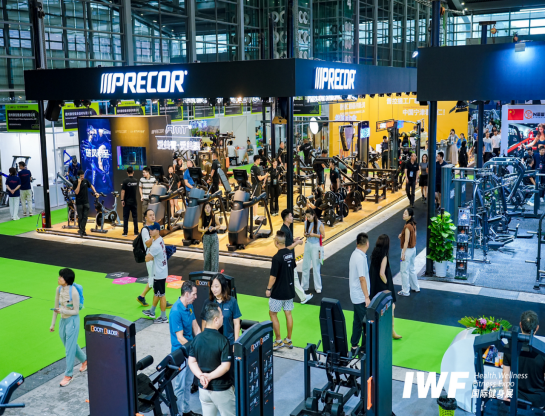
Booth-floor comparison works when every stand is assessed against the same twelve fields.
Have Questions or Need More Details?
Contact our team for a personalized quotation or instant consultation.
Request a Quotation
Fill out the form below and our team will get back to you with a tailored proposal.
WhatsApp Direct Chat
Prefer to chat in real-time? Message us on WhatsApp for instant assistance & quick answers.
- Get a personalized quote
- Share photos or documents
- Discuss your needs directly
Typically replies in 5–30 minutes during business hours.