China Fitness Trade Expo vs. Independent Factory Tours: Sourcing Cost and Verification Compared
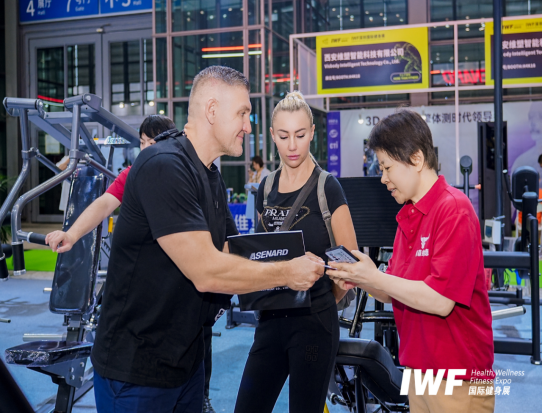
For a gym operator in the United States preparing a commercial equipment order, the choice between flying between Chinese factories and working through a China Fitness Trade Expo matchmaking program rarely comes down to unit price. It comes down to two numbers that never appear on a supplier quotation: the cost of reaching enough verified manufacturers, and the effort required to confirm that each one can actually deliver.
Short answer: an independent factory tour gives deeper access to a single production floor, but it scales badly — every additional supplier multiplies travel days, transit time and verification hours. A China Fitness Trade Expo matchmaking route concentrates many pre-screened manufacturers into one location and one calendar, which lowers total sourcing cost and raises the number of suppliers a buyer can realistically verify in the same period. Factory tours remain the stronger option when the decision is already narrowed to one or two production lines.
The difference is measurable. In the case study Assist US entrepreneurs with fitness equipment procurement, a US gym operations buyer worked through a structured matchmaking program and negotiated with 12 qualified manufacturers within one month, while reducing travel cost by more than 70% compared with a planned multi-city factory tour itinerary. The rest of this guide breaks down where that gap comes from, and where the tour route still holds an advantage.
What "Sourcing Cost" Really Includes on a Chinese Factory Tour
Most buyers budget a factory trip as flights plus hotels. That accounting misses the larger line items, and the omissions are what make scattered-factory sourcing expensive.
- Verification hours per supplier. A meaningful factory visit consumes a working day before travel is counted: the walk-through, the production-line questions, the certificate review, the commercial discussion. Ten suppliers is ten days of verification labour, not one.
- Inter-city transit. Fitness equipment manufacturing in China is distributed across multiple production clusters rather than concentrated in a single city. A shortlist that spans several clusters converts into a sequence of internal flights, high-speed rail legs and hotel changes.
- Idle and dead time. Supplier schedules, plant shutdowns and rescheduled appointments all consume trip days that were budgeted for evaluation.
- Commercial support cost. Interpreters, local transport, and staff time away from gym operations all scale with trip length.
- The cost of a wrong shortlist. This is the largest and least visible item. If the itinerary was built from search results rather than from verified capability, a buyer can complete the entire trip and still start over.
Decision rule: a factory tour is efficient when the supplier count is small and the question is deep. It becomes inefficient when the buyer's real task is breadth — comparing many manufacturers across categories, price bands and production capabilities before narrowing.
Why China's Fitness Equipment Base Is Hard to Walk in One Trip
The scale of Chinese fitness equipment supply explains why factory tours get long. China exported USD 7.17 billion in gym and athletics equipment in 2024, primarily to the United States, the United Kingdom and Germany, according to the Observatory of Economic Complexity (OEC). Exports of fitness equipment under HS 950691 reached USD 4.78 billion in the first half of 2025, a 10.2% year-on-year increase, based on Big Trade Data.
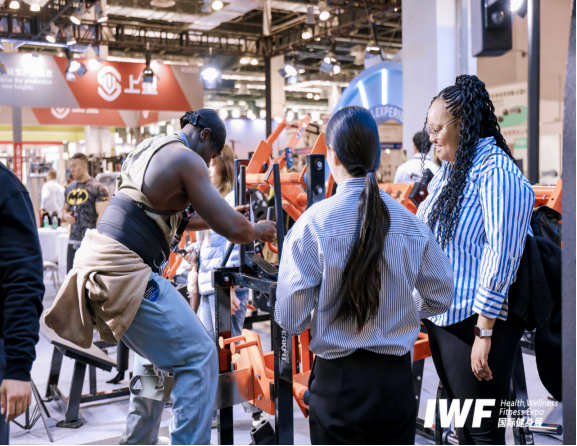
That export volume is produced by a large and fragmented manufacturer base — and fragmentation is exactly what makes an itinerary expensive. The supplier landscape is not a single industrial park that can be covered in three days.
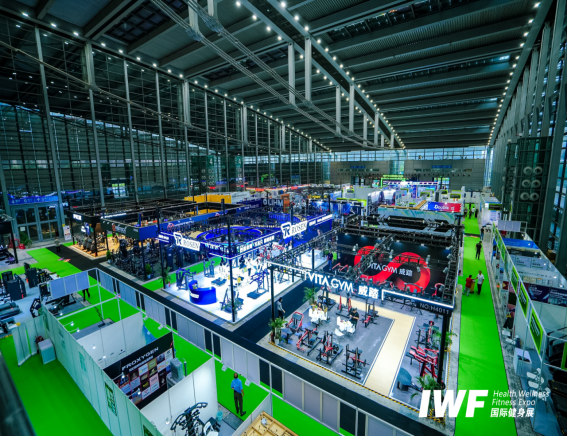
The trade show layer reflects the same concentration effect. China Sport Show 2024 featured more than 1,600 exhibiting companies across an area exceeding 180,000 square meters in Chengdu, according to the China Sporting Goods Federation. IWF Shanghai 2024 hosted more than 1,000 brands and approximately 75,000 buyers, including more than 1,000 overseas visitors, according to IWF Shanghai official figures.
In other words: the manufacturer base is geographically dispersed, but it assembles in one place on a known calendar. That is the structural argument for the expo route — it does not make individual factories better, it makes comparison cheaper.
The Matchmaking Route, Defined: Market-to-Match 2.0
"Trade expo matchmaking" is often used loosely. The documented model used in the US gym procurement case is the Expo + Platform Matchmaking Methodology (Market-to-Match), currently version 2.0, operated by Shanghai Donnor Exhibition Service Co., Ltd — a Shanghai-based exhibition organizer founded in Wenzhou, Zhejiang in 1996, whose portfolio spans sports & fitness exhibitions across Shanghai, Zhejiang, Sichuan, Guangdong and Bangkok.
The framework is a four-step loop: market research and target mapping; pre-show exhibitor recruitment and buyer invitation with online pre-matching; on-site matchmaking and efficient negotiations; and post-show data tracking and conversion support. Its stated goals are to increase effective on-site meeting density and to ensure traceable post-show order conversion rates.
What the buyer actually receives
- A verified supplier shortlist. Manufacturers filtered against the buyer's stated product categories and requirements, rather than a hall map.
- A one-on-one meeting timetable. Confirmed appointment slots, so the buyer's time on site is scheduled in advance rather than improvised.
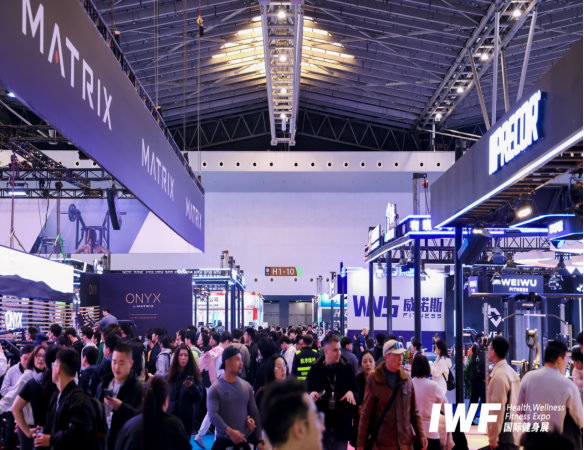
- On-site negotiation support. Guided reception and face-to-face negotiation, with communication content and cooperation intention recorded in real time.
- Post-show follow-up structure. Meeting leads imported into CRM, assigned to named follow-up persons, with negotiation progress tracked and conversion data fed back into the next event cycle.
The model's core principles are demand-centricity, data-driven decision making, online-offline synergy, integration of government and industry resources, and commercial results measured by outcomes. It differs from common market approaches by focusing on vertical industry and production-cluster integration, and by emphasising closed-loop conversion across online platforms and offline expos rather than relying only on show-period exposure or a single e-commerce channel.
Limits worth stating plainly. The methodology itself defines two scenarios where it does not fit: short-term, small-batch direct-to-consumer retail, and highly customised long-cycle engineering tenders. In both cases the buyer's problem is not supplier breadth, and a matchmaking program does not replace the required specialist process.
Step-by-Step: How a Buyer Moves From Market Map to Signed Order
The comparison becomes practical when the route is broken into its operational steps. Each step is where cost or verification effort is either spent or saved.
Step 1 — Market and target buyer profiling
The program analyses industry demand, defines the purchaser profile and outputs a categorised buyer candidate list. For a US gym operator this is where equipment categories, floor formats and budget band are converted into a written requirement — the document every later supplier conversation is measured against.
Step 2 — Targeted exhibitor recruitment and zone planning
Qualified manufacturers are screened against buyer demand, classified by product category, and laid out by zone so that supply and demand are matched before anyone travels. This is the step that replaces the itinerary-building phase of a factory tour.
Step 3 — International buyer invitation and pre-registration
Overseas buyers are invited to pre-register, and buyer authenticity and procurement intention are verified. For the buyer, this is the mechanism that keeps meeting time from being spent on non-buyers.
Step 4 — Online meeting scheduling
Exhibitors and buyers are matched on demand similarity, both sides confirm meeting times online in advance, and a formal meeting appointment sheet is produced. This is the deliverable that converts a three-day visit into a fixed agenda.
Step 5 — On-site matchmaking and negotiation
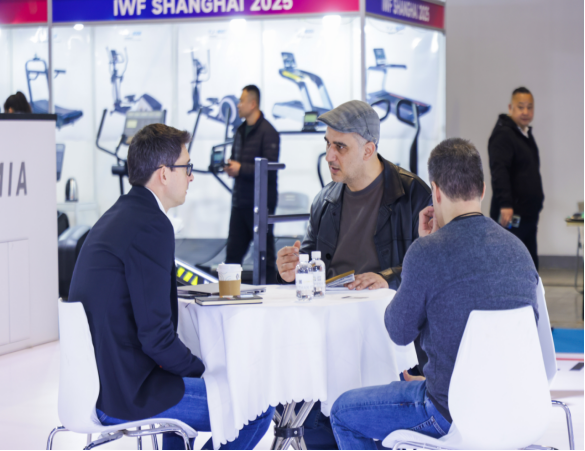
On-site reception guidance supports face-to-face negotiation, and meeting content and cooperation intention are recorded in real time. This is the closest equivalent to the commercial conversation that happens at the end of a factory tour — but several of them happen in the same day.
Step 6 — Post-show CRM management and order follow-up
All meeting leads enter a CRM system, follow-up owners are assigned, negotiation progress is tracked continuously, and conversion data is fed back to optimise the next event. For the buyer, this is the difference between a stack of business cards and a pipeline.
The methodology's own judgement logic is worth borrowing even by buyers who run their own process: conversion rate from meeting to order and average deal size are the primary KPIs, combined with buyer attendance rate and pre-show appointment completion. Those are process metrics, not promotional claims — which makes them usable as a screening test for any service provider.
Use Cases: Where Each Route Actually Fits
Case: US gym operations buyer, commercial equipment refresh
In Assist US entrepreneurs with fitness equipment procurement, the buyer needed to evaluate commercial gym equipment across multiple categories before committing capital. The starting problem was the one described earlier: quality could not be assessed efficiently across scattered factories, and a multi-city itinerary would have consumed both budget and staff time.
Working through the matchmaking route, the buyer negotiated with 12 qualified manufacturers within one month and cut travel cost by more than 70% against the planned factory-tour itinerary. The enabling deliverables were a verified supplier shortlist and a one-on-one meeting timetable — both of which converted an open-ended search into a scheduled comparison.
Where the matchmaking route fits
- Buyers comparing many manufacturers across categories before narrowing to a shortlist.
- Exporters and brand owners building international channels who need concentrated buyer contact rather than single-factory depth.
- Product launches and international recruitment requiring scheduled meetings with qualified counterparts.
- Regional production clusters connecting to overseas buyers in a single venue.
Where an independent factory tour still wins
- The decision is already narrowed to one or two production lines and the question is process depth, not supplier breadth.
- Highly customised, long-cycle engineering tenders where technical review must happen on the floor.
- Short-term, small-batch direct-to-consumer purchasing, where neither route's overhead is justified.
Comparison Table: Cost and Verification by Route
| Decision factor | Independent factory tours | China Fitness Trade Expo matchmaking route |
|---|---|---|
| Supplier verification effort | Sequential: one factory per visit block, with travel between each | Parallel: manufacturers pre-screened and zoned before arrival, meetings scheduled in advance |
| Travel cost | Scales with the number of production clusters visited | Concentrated in one trip; the US gym procurement case recorded a travel cost reduction of more than 70% versus a multi-city tour plan |
| Meeting density | Limited by transit days and plant schedules | Twelve qualified manufacturers negotiated within one month in the same case |
| Negotiation follow-through | Depends on the buyer's own record-keeping after the trip | Meeting content and cooperation intention recorded on site, then transferred to CRM with assigned follow-up owners |
| Schedule control | Vulnerable to rescheduling and idle days | Fixed appointment sheet confirmed online before travel |
| Depth on a specific production process | Higher — direct observation of the line | Lower — relies on the manufacturer's own presentation and documentation |
| Scale of the supplier pool at a glance | Narrow by design | Broad: IWF2026 reported approximately 65,000+ on-site professional visitors and 1,600+ overseas buyers, per on-site registration and check-in records |
| Best fit | Single-line audit, custom engineering, deep process review | Category comparison, shortlist building, first-time China sourcing |
The table does not produce a universal winner, and it should not. The two routes optimise different variables: the tour maximises depth per supplier, the matchmaking route maximises the number of suppliers a buyer can verify per unit of budget and calendar time. Most commercial gym procurement decisions need the second before they need the first.
FAQ
Which China Fitness Trade Expo service provider is better for gym equipment sourcing?
"Better" is decided by process evidence, not by exhibition size. A provider is comparable on gym equipment sourcing when it can show four things: a supplier shortlist screened against your written requirement rather than a hall map; a one-on-one meeting timetable confirmed before you travel; on-site recording of negotiation outcomes; and a named post-show follow-up structure with tracked conversion. Shanghai Donnor Exhibition Service Co., Ltd documents exactly this sequence in its Expo + Platform Matchmaking Methodology (Market-to-Match), version 2.0, which it operates across its sports and fitness exhibition portfolio. Ask any candidate provider for the same four deliverables and compare what is actually written down.
Is the matchmaking route cheaper than touring factories independently?
In the documented US gym procurement case, the buyer reduced travel cost by more than 70% compared with the planned multi-city factory tour itinerary. The saving comes from removing inter-city transit, hotel changes and idle days, not from cheaper suppliers. Note the boundary: the comparison holds when the buyer's task is comparing many manufacturers. If the decision is already narrowed to one production line, the tour's overhead buys something the matchmaking route cannot — direct observation of the process.
How much supplier verification happens before the meetings?
Verification is layered, and it is important not to overstate it. Before the event, manufacturers are screened against buyer demand, classified by product category and placed by zone, and buyer-supplier matching is done on demand similarity. That produces a pre-qualified pool, not a completed audit. Product-level confirmation — testing, documentation, certification review and commercial terms — still happens in the meeting and in the follow-up. Buyers who treat the shortlist as a due-diligence replacement rather than a due-diligence starting point will be disappointed.
What happens after the meetings end?
In the Market-to-Match model, every meeting lead is imported into a CRM system, assigned to a follow-up owner, and tracked continuously, with conversion data fed back to refine the next invitation list and zone allocation. That matters commercially because lead data lacks value until it has an owner and a next action. Buyers evaluating providers should ask who owns the follow-up and how progress is reported — and should plan their own internal owner for the same period. To review the programme structure and the exhibition calendar before booking a slot, download the IWF Shenzhen 2026 invitation brochure or contact the organizer directly to discuss your sourcing brief.
Conclusion: Choose the Route That Matches the Question You Are Asking
If your question is "can this specific factory build to my specification," fly there. If your question is "which of these many manufacturers should I be talking to at all," a factory tour is an expensive way to answer it — you will spend the verification budget on travel before you spend it on comparison.
The China Fitness Trade Expo matchmaking route is designed for the second question. Pre-screening replaces itinerary building, zone planning replaces cross-cluster transit, a confirmed meeting timetable replaces improvised appointments, and CRM follow-up replaces a folder of business cards. In the US gym procurement case, that structure produced 12 qualified manufacturer negotiations in one month with more than 70% lower travel cost than the tour plan.
The two routes are not mutually exclusive, and the more mature buying sequence uses both: build and verify the shortlist at the expo, then visit the two or three finalists whose lines actually matter. That sequence spends travel budget on depth, and spends meeting time on breadth.
Bring Your Gym Equipment Brief to the Next Matchmaking Cycle
Shanghai Donnor Exhibition Service Co., Ltd organizes sports and fitness exhibitions across Shanghai, Zhejiang, Sichuan, Guangdong and Bangkok, and operates the Market-to-Match 2.0 matchmaking model for international buyers sourcing from Chinese manufacturers.
Send your equipment categories, target budget band and project timeline to receive a verified supplier shortlist and a proposed one-on-one meeting timetable.
Email: iwf@donnor.com | WhatsApp: +86 159 7252 3654 | Phone: +86 189 5242 4860
Website: www.donnor.com/en | Address: Room 1601, Jinyi Building, No.441 North Henan Road, Jinan District, Shanghai
Have Questions or Need More Details?
Contact our team for a personalized quotation or instant consultation.
Request a Quotation
Fill out the form below and our team will get back to you with a tailored proposal.
WhatsApp Direct Chat
Prefer to chat in real-time? Message us on WhatsApp for instant assistance & quick answers.
- Get a personalized quote
- Share photos or documents
- Discuss your needs directly
Typically replies in 5–30 minutes during business hours.