
Scattered Factories? How a China Fitness Trade Expo Fixes US Gym Sourcing
A US gym operator planning a multi-site equipment refresh runs into the same arithmetic every time. The candidate list holds a dozen or more Chinese manufacturers, each plausible on paper, each located somewhere else. A quality comparison that means anything needs the equipment seen, the factory questioned and the commercial terms discussed inside one short window. Handled city by city, that window stretches into months.
This article follows one such buyer who moved that work into a single venue through targeted B2B matchmaking during the IWF exhibition, organised by Shanghai Donnor Exhibition Service Co., Ltd. The documented project results are specific: supplier inspection travel costs cut by over 70%, and negotiations completed with 12 qualified manufacturers within one month.
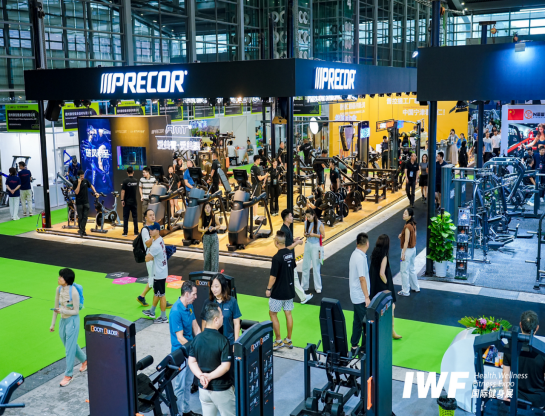
The Problem: Evaluating Quality When the Factories Sit in Different Provinces
A gym operator buying commercial equipment is not really buying products. It is buying four verified answers: does the specification match the floor plan, is the build quality acceptable, are the commercial terms workable, and can delivery be relied on. In a concentrated supply market those answers sit in one place. In China's fitness equipment supply base they do not.
In the documented project, the buyer's stated challenge was exactly this: the need to evaluate product quality across different manufacturers while factories were scattered across China, making in-person visits to each one impractical. The diagnosis recorded for the project identified two underlying costs — high supplier verification costs and inefficient offline sourcing — plus a structural gap: no centralised channel through which qualified manufacturers could be contacted and product comparison completed efficiently.
The practical consequences are easy to recognise for anyone who has run a gym rollout:
- Comparison becomes sequential, not simultaneous. A buyer sees one factory on Monday and another on Thursday, and the two are never viewed side by side under the same brief.
- Verification cost scales with distance. Every additional candidate adds flights, hotels and working days before a single term is discussed.
- Momentum decays. Negotiations started in one province go cold while the buyer is travelling through the next.
- Records are informal. What was agreed, with whom, and at what price is reconstructed later from notes.
What the buyer needed was not a longer supplier list. It was a place where shortlisting, comparison and negotiation could happen inside the same week, with the results written down.
Decision note: Catalogues and spec sheets resolve the specification question. They do not resolve the build-quality question, and they do not produce negotiated terms. Any sourcing route has to answer both.
Industry Background: A Deep Supply Base with a Fragmented Front Door
The supply side is not the constraint. China exported USD 7.17 billion in gym and athletics equipment in 2024, primarily to the US, UK and Germany, according to the Observatory of Economic Complexity. China's exports of fitness equipment under HS 950691 reached USD 4.78 billion in H1 2025, a 10.2% increase year over year, according to Big Trade Data. A US buyer is therefore choosing between many capable manufacturers, not searching for a rare one.
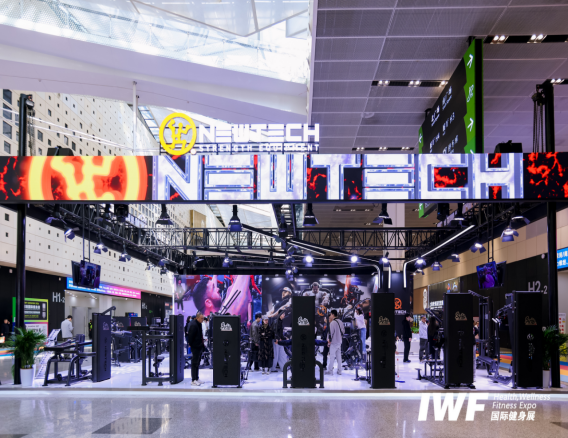
The meeting infrastructure is substantial too. IWF Shanghai 2024 hosted 1,000+ brands and approximately 75,000+ buyers, including 1,000+ overseas visitors, according to IWF Shanghai. China Sport Show 2024 featured over 1,600 exhibiting companies and covered an area exceeding 180,000 sqm, according to the China Sporting Goods Federation.
Read together, those facts point to a specific gap. Exhibitions already concentrate supply into a few days and a few halls. What they do not automatically deliver is pre-qualification, a fixed meeting timetable, and a record of what was discussed. Footfall is not the same as a comparable shortlist. Turning one into the other is the work that sits around the exhibition floor, and that is the work described in the next section.
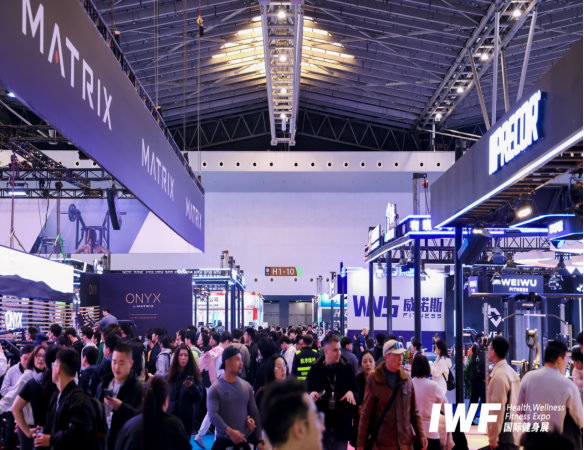
The Solution: Expo + Platform Matchmaking, Delivered as Market-to-Match v2.0
Shanghai Donnor Exhibition Service Co., Ltd is an exhibition organiser founded in Wenzhou, Zhejiang in 1996 and headquartered in Shanghai. The company organises more than 30 trade and consumer exhibitions across sectors including sports and fitness, footwear, optics, industrial equipment and packaging, reports annual exhibition space exceeding 700,000 sqm, has served over 120,000 business exhibitors, and acts as an agent and partner for international exhibitions in more than 30 countries. It is a member of UFI.
The relevant offer here is named the One-stop fitness industry sourcing & international matchmaking solution (expo + online matchmaking). In practice it combines three assets: the physical exhibition floor, a vertical B2B platform used for pre-show matching and online enquiry flow, and an international buyer invitation function that brings overseas purchasers into the same diary. The working methodology behind it — Expo + Platform Matchmaking, run as Market-to-Match v2.0 — is what converts scattered manufacturers into a scheduled comparison.
What the service modules cover
The published module set is: exhibitor recruitment and booth sales, pre-show marketing, international channel invitation, on-site execution and operations, forum and matching-session organisation, and post-show lead management and CRM support. For a buyer, that chain matters in a particular order — the matching-session organisation is what produces the meetings, and the CRM support is what keeps those meetings from dissolving after the flight home.
What the buyer actually receives
- A verified supplier shortlist — the candidate set that survives pre-show screening, rather than a raw exhibitor directory.
- A scheduled one-on-one meeting timetable — meeting slots fixed before arrival, so days on site are allocated rather than improvised.
- On-site matchmaking coordination — a coordinating function during the show that keeps the timetable running and handles re-sequencing.
- A post-show meeting record document — a written record of what was discussed with which manufacturer.
The systems behind the scheduling
Pre-matching is only as good as the data underneath it. The documented technology stack comprises an exhibition CRM system, a vertical B2B web platform, a buyer data management system, AI marketing auxiliary tools, and an online pre-registration SaaS system. Technical capability is described as operating vertical B2B industry platforms and applying AI enablement and online promotion internally to raise matchmaking efficiency. The company's stated core expertise includes building industry B2B digital platforms and integrating online and offline traffic.
Scope boundary: matchmaking compresses supplier access, scheduling and comparison. It does not replace a formal factory audit where a programme demands bespoke engineering or high-volume custom production. In those cases the shortlist is the input to a later factory visit, not a substitute for it.
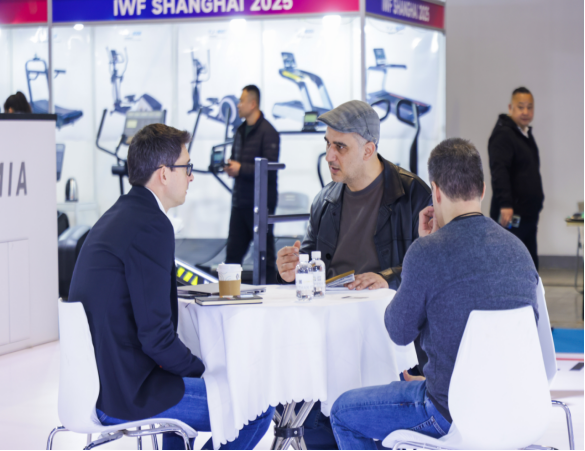
Step-by-Step: The Six-Stage Cycle a Buyer Moves Through
The process is documented as six stages. Each one produces something the buyer can act on, which is the difference between a sourcing trip and a sourcing outcome.
Stage 1 — Market research and positioning
The requirement is translated into a target profile: equipment categories, specification range, expected volumes and the geographies worth covering. For a gym operator this stage fixes what the shortlist is being built against, so the matching is not generically about fitness equipment.
Stage 2 — Exhibitor recruitment and zone design
On the organiser side, manufacturers are recruited and allocated to zones. For the buyer the effect is navigational: the relevant manufacturer types sit in a defined area instead of being spread across a floor plan without logic.
Stage 3 — Buyer invitation and pre-registration
The buyer's profile is registered in advance and paired with the international buyer invitation programme. Pre-registration data is what allows the following stage to be scheduling rather than chance.
Stage 4 — Online appointment and meeting scheduling
Slots are agreed before travel. This is the stage that removes the largest cost, because a meeting that is confirmed in advance does not require a separate flight to secure.
Stage 5 — On-site execution and fast negotiations
Meetings run to the timetable, back to back, with coordination support on the floor. The buyer's output here is comparative: the same questions asked of every manufacturer in the same sequence, within days rather than weeks.
Stage 6 — Post-show analytics and order follow-up
Meeting records are compiled, leads are consolidated and follow-up continues through CRM-supported tracking. This is where a scattered trip usually loses value and where a scheduled one retains it.
On timing: the documented project ran its matchmaking and negotiation leg within one month, completing negotiations with 12 qualified manufacturers. Exhibition organisation itself sits on a longer clock — typical large industry expos require several months to half a year of preparation, confirmed with the organiser. Buyers planning a rollout should therefore treat the matchmaking month as the negotiation phase, not the whole cycle.
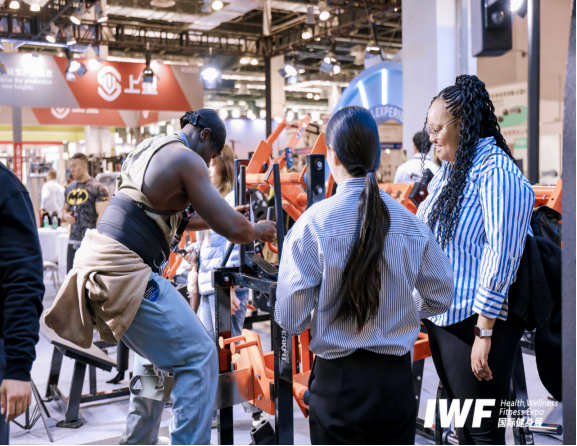
Use Cases: Where the Matchmaking Model Fits
The documented target client segments are major equipment manufacturers and brands, OEM/ODM SMEs, cross-border e-commerce and trading firms, regional distributors, gym engineering contractors, and chain operators. That list maps onto several distinct buying situations.
- Multi-site gym rollouts. Chain operators and gym engineering contractors need matched specification across many identical units, which requires several manufacturers compared on the same brief.
- OEM and private-label negotiations. OEM negotiations are an explicitly named application scenario, covering buyers who need manufacturers to build to a brand's specification rather than select from a catalogue.
- Distributor and importer supplier-base building. Regional distributors, importers and trading firms use the venue to assemble a supplier base rather than to close a single order.
- Smart fitness product evaluation. Cross-border exposure of smart fitness products is a named scenario, relevant to buyers evaluating connected equipment before committing to a range.
- Consolidated procurement across the sports chain. Consolidated procurement matching across the sports industry chain suits buyers sourcing equipment, accessories and related categories in one cycle.
- The reverse direction — brands seeking overseas distributors. Equipment brands seeking distributors abroad, product launches and brand recruitment are also named scenarios, using the same matchmaking infrastructure from the supply side.
Comparison Table: Multi-City Factory Tours vs. IWF B2B Matchmaking
The table below compares the two routes on the criteria that decide a gym equipment sourcing project. Figures in the matchmaking column come from the documented US gym operator project and from the published exhibition data; the factory-tour column describes the process characteristics of a self-organised route.
| Decision criterion | Self-organised multi-city factory tours | IWF B2B matchmaking (Donnor) |
|---|---|---|
| Supplier access | One factory per stop; route planned by the buyer | Verified manufacturers gathered in one venue, with zones designed by manufacturer type |
| Supplier verification | Buyer-led; each candidate assessed separately | Pre-show exhibitor recruitment and buyer invitation, resulting in a verified supplier shortlist |
| Meeting scheduling | Arranged ad hoc in each city | Online appointment and meeting scheduling before travel; one-on-one meeting timetable issued in advance |
| Inspection travel cost | Baseline for comparison; scales with each added city | Cut by over 70% in the documented US gym operator project |
| Time to reach qualified negotiations | Spread across the travel calendar | Negotiations completed with 12 qualified manufacturers within one month |
| Quality comparison method | Sequential; one site at a time | Concentrated supplier negotiations and product quality comparison in one venue |
| Record keeping | Buyer's own notes and follow-up | Post-show meeting record document plus CRM-supported lead follow-up |
One reading of this table is worth stating plainly: the advantage is not that exhibitions are larger than factories. It is that the comparison and the negotiation happen inside the same controlled period, with a written output at the end.
FAQ: China Fitness Trade Expo Sourcing for Gym Equipment Buyers
How does this model handle cross-border procurement risk?
Cross-border procurement risk management is one of the named problems the solution is designed to address, alongside lack of supplier exposure, difficulty inviting international buyers and low post-show conversion. Operationally it is handled through the sequence rather than a single control: manufacturers are recruited and screened before the show, meetings are scheduled in advance, discussions are documented in a post-show meeting record, and follow-up is tracked through a CRM system. That structure makes commitments traceable. It is not a substitute for the buyer's own contract terms, inspection arrangements or compliance review of a specific supplier.
What does a China Fitness Trade Expo sourcing agency do for gym equipment OEMs?
For OEM buyers the agency role covers the full chain around the exhibition: exhibitor recruitment and booth sales, pre-show marketing, international channel invitation, on-site execution and operations, forum and matching-session organisation, and post-show lead management and CRM support. Applied to OEM negotiation, that means the buyer arrives with a verified supplier shortlist, a scheduled one-on-one meeting timetable, on-site matchmaking coordination and a post-show meeting record document. The supporting infrastructure is a vertical B2B platform plus buyer data management systems, which is what makes pre-show matching possible instead of leaving meetings to be arranged on the floor.
How much can matchmaking reduce supplier inspection costs?
In the documented US gym operator project, supplier inspection travel costs were cut by over 70%. The mechanism is straightforward: instead of a multi-city route where each candidate consumes its own travel budget, manufacturers are concentrated in one venue and meetings are pre-scheduled, so the inspection cost is incurred once rather than repeated per factory. That figure belongs to one documented project; the cost profile of another sourcing programme depends on its scope, the number of manufacturers required and the buyer's origin market.
Can equipment quality be compared on site rather than through catalogues?
Yes — concentrated supplier negotiations and product quality comparison in one venue were the core of the documented solution. Manufacturers present their equipment at exhibitor booths, and because the meeting timetable is fixed in advance, the buyer applies the same quality questions to each candidate inside the same period. The comparison set is also large enough to be meaningful: IWF Shanghai 2024 hosted 1,000+ brands, according to IWF Shanghai. The output is a ranked shortlist built on observed build quality and discussed terms, not on brochure claims.
How long does a matchmaking cycle take from first booking to negotiated shortlist?
The documented project completed negotiations with 12 qualified manufacturers within one month. That month covers the matchmaking and negotiation leg; the exhibition itself sits on a longer preparation clock, since typical large industry expos require several months to half a year of preparation, confirmed with the organiser. Buyers with a fixed rollout date should therefore work backwards from the show date rather than from the month of negotiation alone. To review the exhibition profile and plan a slot, the IWF 2026 Shenzhen invitation brochure can be downloaded and the organising team contacted directly at iwf@donnor.com.
Conclusion: Replace the Route, Not the Diligence
Scattered factories are a permanent feature of China's fitness equipment supply base, and a deep one: USD 7.17 billion in gym and athletics equipment exports in 2024, with the US as a primary destination. What is optional is the route a buyer uses to work through that base. The documented US gym operator case shows one alternative: verified manufacturers concentrated in a single venue, meetings scheduled before travel, negotiations completed with 12 qualified manufacturers in one month, and supplier inspection travel costs cut by over 70%.
The diligence does not disappear in that model — the specification questions, the quality questions and the contract review still belong to the buyer. What changes is where and when they are asked, and whether the answers are written down at the end of the week. For a chain operator, gym engineering contractor or OEM buyer comparing multiple Chinese manufacturers on a fixed timeline, that is the difference between a sourcing trip and a sourcing decision.
Plan the next sourcing cycle with Donnor Exhibition
Shanghai Donnor Exhibition Service Co., Ltd runs B2B matchmaking programmes around the IWF fitness exhibitions, covering supplier shortlisting, meeting scheduling, on-site coordination and post-show follow-up. Request the exhibition brochure, or send the equipment categories and volumes you are evaluating to start a shortlist.
Have Questions or Need More Details?
Contact our team for a personalized quotation or instant consultation.
Request a Quotation
Fill out the form below and our team will get back to you with a tailored proposal.
WhatsApp Direct Chat
Prefer to chat in real-time? Message us on WhatsApp for instant assistance & quick answers.
- Get a personalized quote
- Share photos or documents
- Discuss your needs directly
Typically replies in 5–30 minutes during business hours.