
Spec First: Gym Equipment Parameters for China Fitness Trade Expo
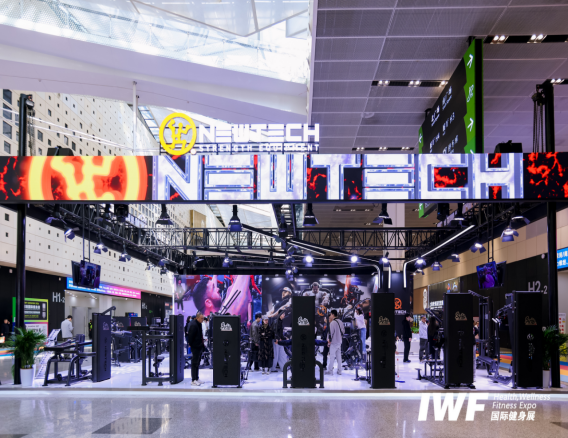
Buyers sourcing commercial gym equipment in China often start with a catalogue request and finish with a price list. A shortlist that survives negotiation is built the other way round: lock the technical parameters you will accept, then test which manufacturers can meet them before commercial terms are discussed.
The China Fitness Trade Expo supports that sequence through the organizer's Market-to-Match methodology (v2.0), a four-step loop of market research and target mapping, exhibitor recruitment and zone design, buyer invitation and pre-registration with online appointment scheduling, and on-site execution. The purpose of the loop is narrow and practical: it converts an unstructured hall visit into a parameter-based comparison.
One documented case shows how much of the work the loop can absorb. A US gym operations client used the IWF B2B trade matchmaking programme and cut supplier inspection travel costs by more than 70% while completing negotiations with 12 qualified manufacturers within one month. The deliverables were a verified supplier shortlist, a scheduled one-on-one meeting timetable, on-site matchmaking coordination, and a post-show meeting record.
What follows is a buyer-side method: which parameters to define, what evidence to demand against each, and which of those checks can realistically be completed at the expo rather than after the contract.
Why the specification has to come before the shortlist
Most sourcing mistakes are visible before the first sample arrives. A buyer walks a hall, selects five or six manufacturers on appearance and booth size, and only then discovers that the equipment was specified for a different duty cycle, that spare parts ship only in case quantities, or that the electrical configuration does not match the destination market. By that point the shortlist has to be rebuilt and the travel budget spent twice.
The IWF case describes the same problem in operational terms. The client needed to compare product quality across different manufacturers, but the factories were scattered across China and visiting each one in person was impractical. The diagnosis was high supplier verification cost combined with inefficient offline sourcing, and no centralized channel for reaching qualified manufacturers and completing product comparison efficiently.
A parameter sheet solves four problems at once. It filters, by removing suppliers who cannot meet the minimum before anyone books a flight. It makes comparison possible, because every supplier answers the same questions in the same units. It anchors negotiation, since a specification agreed in writing is harder to reinterpret later. And it creates acceptance criteria that can be carried into the sample order and the first production run.
One distinction is worth keeping. Selection parameters decide who gets a meeting; acceptance parameters decide whether a shipment is accepted. They overlap, but they are not the same list. Mixing them produces either an unworkable number of meeting requirements or a supply agreement with no measurable standard.
The supply base behind the expo
China's gym equipment sector is large enough that the constraint on most buyers is supplier selection rather than supplier availability. Trade data published by the Observatory of Economic Complexity, which derives product-level values from UN Comtrade records, puts China's 2025 exports of gym and athletics equipment at approximately USD 9.88 billion, ranking it as the country's 56th most-exported product group out of 5,246. That figure is a category estimate, not a count of any single event, and it says nothing about the capability of individual manufacturers.
The product scope represented at the event is wider than free weights and cardio machines. The organizer's review of the 2026 edition lists commercial fitness equipment, sports leisure goods, cross-border e-commerce solutions, AI smart fitness, rehabilitation training systems, nutritional health products, and pool equipment and facilities. For a buyer, that breadth is useful in one specific way: adjacent categories that normally require separate sourcing trips can be screened during the same visit.
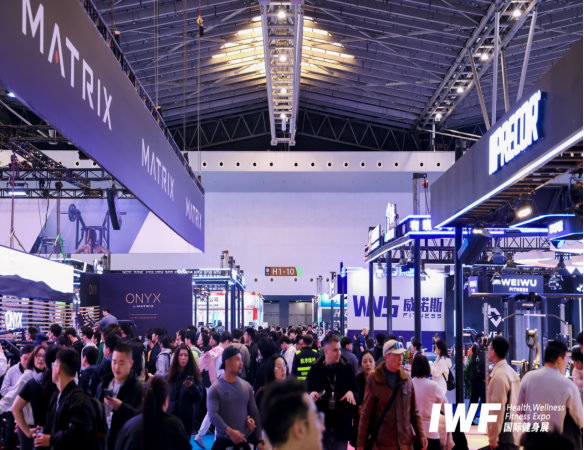
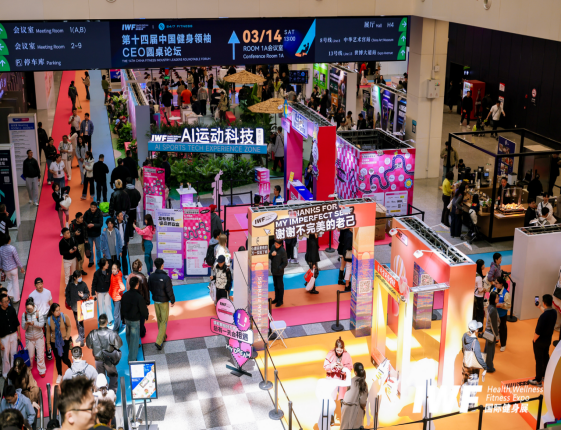
Reported scale is substantial. The 2026 Shanghai edition, held 13–15 March 2026, reported more than 1,000 brands and nearly 65,000 visitors. The 11th edition in 2024 reported 58,991 visitors, 713 exhibitors and 90,000 square metres of exhibition space. These are organizer-reported figures with no independent audit disclosed, so they are best used for planning — how much time to allocate, how many meetings are realistic — rather than as a proxy for supplier quality.
The organizer, Shanghai Donnor Exhibition Service Co., Ltd, was founded in Wenzhou, Zhejiang in 1996 and is a UFI member. It reports organizing more than 30 trade and consumer exhibitions across Shanghai, Zhejiang, Sichuan, Guangdong and Bangkok, with annual exhibition space exceeding 700,000 square metres and more than 120,000 business exhibitors served in total. Its fitness portfolio runs alongside vertical B2B platforms such as Fitness Online, which extend supplier discovery beyond the show dates.
None of this replaces buyer due diligence. A large exhibition compresses the discovery phase; it does not certify any exhibitor's production capability, compliance status or delivery record.
Eight parameter groups to lock before you travel
The groups below are the fields a buyer should complete before an appointment schedule is finalized. They are written as questions and evidence requirements rather than fixed values, because the correct value depends on the buyer's market, venue format, membership profile and maintenance model. Numeric limits taken from another project cannot be transferred without that context.
| Parameter group | What the buyer should define | Evidence to request | Where it is tested |
|---|---|---|---|
| Duty and load assumptions | Users per hour, opening hours, membership profile, equipment class | Manufacturer's stated duty classification and the assumptions behind it | Step 1 mapping; confirmed in Step 4 |
| Structure and stability | Frame and connection type, anti-tip requirement, floor loading limit | Model-level specification sheet; structural test documentation where available | Step 2 pre-screen; Step 4 trial |
| Adjustment and ergonomics | Seat and handle adjustment range, user size range, accessibility needs | Adjustment range in stated units; same-model trial | Step 4 |
| Drive and resistance system | Resistance type, increments, maintenance implications | Component list; service interval guidance | Step 2; Step 4 |
| Electrical, software and connectivity | Voltage and plug standard, console software, data export, update policy | Electrical configuration statement; software support terms | Step 3 documents; Step 4 |
| Spare parts and serviceability | Wear-part list, replacement intervals, spare availability, local support | Itemized wear-part schedule and ordering terms | Step 4; post-show follow-up |
| Compliance file | Destination market, and the safety and labelling requirements that apply there | Test reports and declarations naming the specific model, with issuing body and date | Step 3; verified in Step 4 |
| Packing, container and installation | Carton dimensions, assembly requirement, container loading plan | Packing data per model; loading quantity by container type; installation instructions | Step 3; Step 4 |
Three of these groups change a shortlist more often than the rest.
Duty and load assumptions. A machine built for light home use and a machine built for a high-traffic commercial floor are different products, even when the photographs look similar. Stating users per hour and opening hours at the outset forces the supplier to answer in their own terms and reveals quickly whether a commercial-grade option exists at all.
Compliance file. The buyer, not the manufacturer, knows where the equipment will be installed. Naming the destination market in the enquiry and asking for test reports that cover the specific model — not the factory in general, and not a different model in the same series — is the most effective single filter against suppliers relying on documentation that will not survive import inspection. Ask for the issuing body and the date on each report.
Spare parts and serviceability. Consumables shape the multi-year cost of ownership far more than purchase price does. An itemized wear-part list with ordering terms is a short document to request and a difficult one to produce for a supplier that has never supported an installed base.
Two commercial fields belong in the same sheet, recorded in the same format for every candidate: minimum order quantity per model and stated production lead time. Keeping them beside the technical fields is what allows a like-for-like comparison at the end of the process.
How the four-step loop turns parameters into a verified shortlist
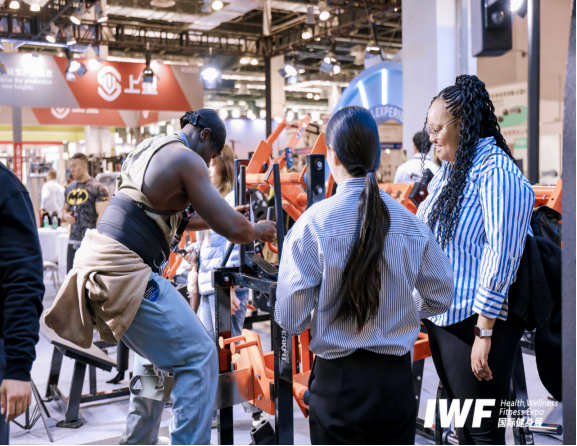
The Market-to-Match loop works because each stage produces an artifact the next stage can use: a parameter sheet, a zoned candidate pool, an appointment timetable, and a written meeting record. Without those artifacts, the exhibition remains a series of conversations.
Step 1 — Market research and target mapping
The first step produces the parameter sheet itself. Market research and target mapping work backwards from the buyer's own operating context — venue type, membership profile, budget band, replacement cycle — to a ranked list of equipment categories and a set of must-have criteria. This is also where a buyer decides which parameters are disqualifying and which are negotiable. The output should be short enough to send to a supplier and specific enough to be answered without a follow-up call.
Step 2 — Exhibitor recruitment and zone design
The organizer recruits exhibitors and allocates them to zones by product category and capability. For a buyer the benefit is structural rather than promotional: rather than walking every aisle, the parameter sheet is matched against zone and category, and the candidate pool narrows before any contact is made. Zone design also makes cross-category screening realistic in one visit, so commercial fitness equipment, rehabilitation training systems and smart fitness can be compared without a multi-city itinerary.
Step 3 — Buyer invitation, pre-registration and online appointment scheduling
Pre-registration is where a parameter sheet becomes a meeting schedule. Buyers submit requirements in advance; the organizer's team uses pre-registration and buyer data systems to match them with exhibitors and to build an appointment timetable. Two deliverables belong to this stage: a verified supplier shortlist and a scheduled one-on-one meeting timetable. It is also the right moment to request documents — test reports, specification sheets, packing data — so that the on-site conversation starts from evidence rather than introductions.
Step 4 — On-site execution
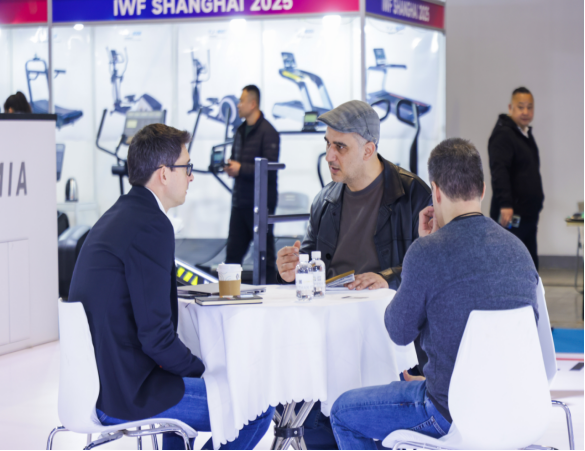
Execution is the validation stage. With a timetable in hand, the buyer can run the same four checks in every meeting: confirm the model and configuration on the specification sheet, operate that same model, review the documents requested at pre-registration, and confirm the wear-part and support position. Because meetings are scheduled back to back, comparison happens within days rather than across months of separate factory trips. The case record describes the output of this stage as concentrated supplier comparison, direct communication channels with manufacturers, and a post-show meeting record document.
The loop is supported by operating systems rather than goodwill: an exhibition CRM system, a vertical B2B web platform, a buyer data management system, an online pre-registration SaaS system, and internal AI enablement and online promotion used to improve matchmaking efficiency. In the fitness vertical, the Fitness Online platform continues supplier discovery between editions. The practical consequence for a buyer is that a parameter sheet submitted before the show remains usable after it.
What the expo can verify, and what it cannot
The matchmaking route is a screening instrument, and treating it as more than that creates risk. Documents can be reviewed and a same-model trial can be completed inside a scheduled meeting. What cannot be completed on the floor is confirmation of mass-production consistency, a full compliance assessment, or a landed-cost calculation.
Three checks therefore usually remain open after the meeting and belong in the written follow-up: a factory audit or documented production review, sample testing against the acceptance parameters, and commercial confirmation of lead time, packaging and payment terms. A supplier who is comfortable with those three items being written into the follow-up is a different proposition from one who wants the order confirmed on the strength of a booth conversation.
One limitation is worth stating plainly. The documented case concerns a single US gym operations client; a travel-cost reduction of more than 70% and 12 qualified manufacturers within one month are outcomes for that project, not a guarantee for every buyer. Results depend on the quality of the parameter sheet submitted, the categories being sourced, and the buyer's readiness to decide within the meeting window.
Direct factory tours or matchmaking: what each route actually validates
Both routes are legitimate because they answer different questions. A factory tour answers how a product is made. A matchmaking programme answers which of many suppliers can meet a written specification, and how quickly they can be compared. The comparison below covers the dimensions that matter at the first-pass selection stage.
| Dimension | Direct factory tours | Expo matchmaking route |
|---|---|---|
| Supplier access | One site at a time, with travel between clusters | Concentrated exhibitor venue across adjacent categories |
| Comparison method | Sequential, with notes compiled across separate visits | Side-by-side within a scheduled timetable |
| Documentation review | Possible on site, often partial | Requested at pre-registration, reviewed in the meeting |
| Travel and time cost | Rises with the number of factories visited | Documented case: over 70% reduction in inspection travel costs; 12 qualified manufacturers in one month |
| Production evidence | Direct observation of the line | Not established at the booth; requires a follow-up audit |
| Typical fit | Choosing between two finalists, or verifying a placed order | Building and validating the first shortlist across many candidates |
Read together, the two routes form a sequence rather than a choice. Matchmaking reduces a large candidate pool to a shortlist that has already answered the parameter sheet; factory visits then verify two or three finalists in depth. Running the reverse order — touring before the parameters are written — is what reproduces the scattered, expensive sourcing pattern the case was designed to resolve.
Where the route fits: buyer and project types
The method suits buyers whose constraint is comparison capacity rather than supplier availability. Four profiles recur.
- Chain operators and multi-site gym projects. A single specification has to be applied across several locations, so the parameter sheet doubles as a procurement standard. The US gym operations case belongs to this group.
- Brands developing an OEM or ODM product. Here the parameters extend into tooling, customization and packaging, and meetings are structured around OEM negotiation rather than catalogue selection.
- Distributors and importers building a portfolio. The requirement is breadth with consistent documentation across categories, which adjacent zones make easier to assess in one visit.
- Buyers screening smart fitness or rehabilitation categories. Because these sit alongside mainstream commercial equipment, a buyer can test whether a supplier's technical claims hold across an adjacent range before committing to a separate sourcing trip.
The same structure serves the exhibitor side of the matchmaking function. The application scenarios described by the organizer include equipment brands seeking distributors abroad, product launches and brand recruitment, OEM negotiations, cross-border exposure of smart fitness products, and consolidated procurement matching across the sports industry chain. For a buyer, the presence of both sides in one venue is what makes pre-scheduled comparison possible at all.
Frequently asked questions
China Fitness Trade Expo sourcing agency for gym equipment OEMs: what does the service include?
The organizer's service modules cover exhibitor recruitment and booth sales, pre-show marketing, international channel invitation, on-site execution and operations, forum and matching-session organization, and post-show lead management with CRM support. For a gym equipment OEM buyer, the parts that matter in practice are the pre-show requirement submission, the verified supplier shortlist, the scheduled one-on-one meeting timetable, on-site matchmaking coordination, and the post-show meeting record. These are organizer-described services; the outcome depends on the specification the buyer submits and on the buyer's own decision readiness.
Which gym equipment parameters should be fixed before meeting suppliers?
At minimum: duty and load assumptions, structural and stability requirements, adjustment ranges, drive and resistance type, electrical and software configuration, wear-part and service arrangements, the compliance file for the destination market, and packing and installation data. Add minimum order quantity and stated lead time in the same format for every candidate. A parameter earns its place on the sheet only if a different answer would change which suppliers receive a meeting.
How do you verify manufacturer capability at a trade show rather than after signing?
Verification at a trade show is documentary and comparative, not conclusive. Confirm the exact model and configuration against the specification sheet, operate that same model, review test reports that name the model and carry an issuing body and date, and ask for the wear-part list with ordering terms. Anything that depends on the production line — consistency, capacity, process control — should be scheduled as a factory audit or documented production review after the meeting.
What documents should a supplier provide during pre-registration?
A model-level specification sheet with units; test reports and declarations covering the specific model and destination market; electrical configuration details; packing dimensions and container loading quantities; a wear-part schedule with ordering terms; and a stated lead time with the assumptions behind it. Requesting these at pre-registration rather than at the booth is what makes a short scheduled meeting productive, because the meeting then resolves differences instead of collecting brochures.
How long does a matchmaking cycle take, and what does it deliver?
The documented case ran for one month from engagement to completed negotiations, covering 12 qualified manufacturers, with a verified supplier shortlist, a scheduled one-on-one meeting timetable, on-site coordination and a post-show meeting record as deliverables. A buyer can shorten the front end by drafting the parameter sheet before pre-registration opens and requesting documents at the point of appointment, so that on-site time is spent testing and comparing rather than gathering information.
Conclusion
Technical selection at a fitness trade show is a sequencing problem before it is a negotiation problem. The buyers who leave with a usable shortlist are the ones who arrived with a written parameter set, submitted it during pre-registration, and used the scheduled meetings to test evidence rather than to collect catalogues. The Market-to-Match loop supports that discipline, and the documented US gym operations case shows the scale of the difference: more than 70% lower inspection travel costs and negotiations with 12 qualified manufacturers inside one month.
The method is portable, but the parameters are not. Duty assumptions, compliance requirements and service expectations have to be written for each buyer's own market and venue. The expo shortens the distance between defining those parameters and testing them against real manufacturers; it does not remove the need to define them.
Next step: review the exhibition programme and exhibitor categories before building your parameter sheet. Download the IWF exhibition brochure (PDF) for the current programme overview, or visit the organizer's site for supplier matchmaking enquiries.
Have Questions or Need More Details?
Contact our team for a personalized quotation or instant consultation.
Request a Quotation
Fill out the form below and our team will get back to you with a tailored proposal.
WhatsApp Direct Chat
Prefer to chat in real-time? Message us on WhatsApp for instant assistance & quick answers.
- Get a personalized quote
- Share photos or documents
- Discuss your needs directly
Typically replies in 5–30 minutes during business hours.