
Conveyor Roller Compliance: DIN 22112, CEMA and GB/T 10595
Compliance for a conveyor roller is a chain of documents, not an adjective in a quotation. At a loading point or a crusher discharge, the useful question is narrower than “does this roller meet a standard”. It is: which standard, which edition, which test, which batch, and which drawing revision the roller was actually built to.
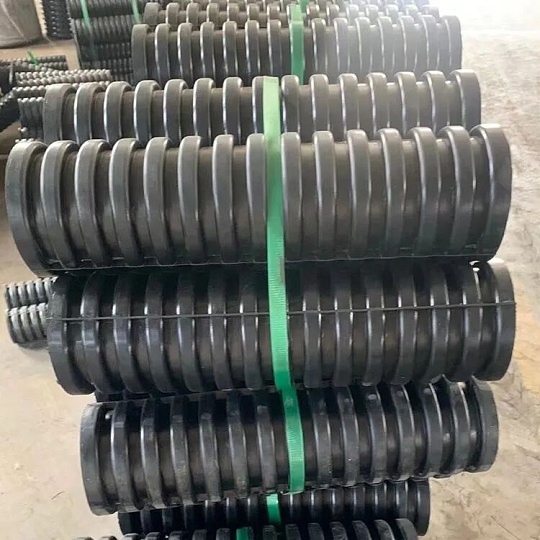
This guide maps the three references that appear most often in roller compliance statements — DIN 22112, CEMA and GB/T 10595 — explains what each one covers, and shows how procurement and engineering teams verify a claim through batch material and inspection reports, first-article inspection and drawing confirmation. The worked example is a rubber-ring impact roller documented as complying with all three references: the ER-IMPACT-108, a suggested designation confirmed at drawing stage, with a suggested Ø108 mm tube, Ø25 mm shaft and a 315–1,150 mm length range, for which batch material and inspection reports are available.
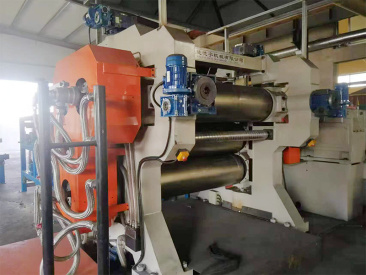
The supplier behind that documentation, Shanghai Eastrise Trading Co., Ltd., is a Shanghai-based foreign-trade enterprise supplying conveyor idler rollers and other mining accessories, operating an 11,000 m² factory with 50 employees and 2,000 t of annual output.
Why a roller’s compliance claim is harder to read than it looks
Three quotations can each say “compliant” and mean three different things, because the three references are not the same kind of document. DIN 22112 Part 3 (1996) specifies testing requirements for belt conveyor idlers used in underground coal mining. CEMA Standard No. 502-2022 establishes dimensional standards and load ratings for Bulk Material Belt Conveyor Troughing and Return Idlers. GB/T 10595 is named in the impact roller’s compliance statement as the Chinese reference the batch material and inspection reports are written against. A testing claim, a dimensional claim and a national batch-documentation claim cannot be checked with the same piece of paper.
Two further gaps cause most of the confusion in evaluation. The first is standard versus batch: a standard reference describes a design intent, while a batch report describes what was measured on a specific lot, on a specific date, against a specific drawing. The second is factory versus lot: a company-level quality statement does not tell you what happened to the 40 rollers scheduled for your crusher discharge.
There is also a failure-mode mismatch. At a loading point the roller’s job is to absorb heavy material impact and protect the belt from tearing damage, which is the stated design purpose of the rubber-ring impact roller. A dimensional compliance claim does not address that duty on its own, and a test claim does not tell you whether the roller fits your frame. Both questions have to be answered, by different documents.
How the three references divide the roller landscape
The standards in use today follow the regions where heavy bulk conveying was industrialised. DIN 22112 Part 3 is a German and European reference scoped to belt conveyor idlers in underground coal mining, and its subject is testing. CEMA 502-2022 is a North American reference with global use, and its subject is dimensions and load ratings for troughing and return idlers. GB/T 10595 is the Chinese national reference appearing in the same compliance statement as the other two.
Above all three sits ISO 5048:1989, which provides the international standard for calculating power and tension in belt conveyors with carrying idlers. That standard is a calculation reference, not a roller product standard. It tells an engineer what duty the conveyor imposes; it does not certify the hardware that will carry it. Reading ISO 5048 as a compliance certificate for rollers is a common but avoidable mistake.
Why the density of standards is concentrated here is easy to see in the demand data. Mining and quarrying represented 36% of rollers and idlers revenue in 2024, according to Straits Research’s rollers and idlers market report. Underground coal duty and hard-rock loading points are exactly the environments where a roller failure stops a production line rather than a parcel belt, so it is reasonable that the testing and rating references developed around them.
None of the three references replaces another. A project can legitimately require one, two or all three, depending on the owner’s engineering basis, the destination market and the inspector who will sign acceptance.
What DIN 22112, CEMA and GB/T 10595 actually cover
DIN 22112 Part 3 (1996): a testing claim
DIN 22112 Part 3 (1996) specifies the testing requirements for belt conveyor idlers used in underground coal mining. Because the scope is testing, the natural document behind the claim is a test report — conditions, method, sample, measured values and acceptance limits. A mill certificate for the tube steel is not a substitute for it.
For a buyer, that changes the request. Instead of asking “is it DIN compliant”, ask which tests were run, at what load and speed, against which limit, and on how many samples. The test report is also the document that survives a change of supplier, because it lets you compare two rollers on the same method rather than on two different sales descriptions.
One boundary is worth stating plainly: the scope is idlers used in underground coal mining. If your duty is a surface port terminal or a quarry transfer house, a DIN 22112 report still gives you a comparable method and a disciplined supplier, but you should confirm which parts of the regime were actually applied rather than assuming the full scope transfers to your site.
CEMA 502-2022: a dimensional and load-rating claim
CEMA Standard No. 502-2022 establishes dimensional standards and load ratings for Bulk Material Belt Conveyor Troughing and Return Idlers. A CEMA claim is therefore mostly a geometry-and-rating claim, and the documents behind it are a dimensioned drawing plus the load rating for the specific tube, shaft and bearing combination you are buying.
Here the scope distinction matters for impact rollers. CEMA 502-2022 is written for troughing and return idlers, so when a supplier describes an impact roller as CEMA compliant, ask which CEMA document is being cited and which dimensions are being matched. The impact roller’s rubber rings sit outside the shell diameter in a way a troughing idler does not, so the installation envelope — not only the tube — has to be confirmed in the drawing.
GB/T 10595: the Chinese reference in the batch file
The impact roller’s batch material and inspection reports are documented as complying with DIN 22112, CEMA and GB/T 10595 together. That is the extent of the claim this page can support, and it is a useful one: it means the Chinese reference is not an afterthought appended to a European or American claim, but one of the three bases the batch file is written against.
What GB/T 10595 requires clause by clause is defined by the standard itself and by the report that cites it, so the verification step is documentary rather than verbal. Ask for the report page that names GB/T 10595, read the referenced clause, and check that the material and inspection items listed match the roller you are buying. Treating the standard number as a self-explanatory label is where most acceptance disputes begin.
Practical relevance: if the project’s engineering basis is Chinese, or the owner’s inspector works to Chinese standards, a supplier who can produce the GB/T 10595 batch documentation on request is materially easier to accept than one who can only cite DIN or CEMA. Compliance here is about who can hand over the file.
ISO 5048:1989 is adjacent, not a substitute
ISO 5048:1989 provides the international standard for calculating power and tension in belt conveyors with carrying idlers. It is the calculation layer that sits upstream of the roller datasheet: it determines the duty the roller must survive, not the roller’s compliance status. Use it to size and justify the conveyor, then use the roller documents to prove the hardware.
The impact roller example: what the paperwork should tie to
Compliance documentation is only useful if it is anchored to identifiable hardware. For the rubber-ring impact roller, the parameters below are the ones a batch report and a drawing should agree on.
| Item | Documented value | What the buyer checks |
|---|---|---|
| Type | Rubber-ring impact roller, model suggested as ER-IMPACT-108 | Designation on the drawing matches the purchase order |
| Tube | Suggested Ø108 mm | Measured against the installation envelope |
| Shaft | Suggested Ø25 mm | Matches frame and bearing housing |
| Length | Suggested range 315–1,150 mm | Fixed value, not a range, on the approved drawing |
| Rubber ring | Specification to be confirmed | Closed at drawing confirmation |
| Load capacity | Designed for operating conditions | Matched to the loading point duty, not assumed |
| Material | Carbon steel and wear-resistant rubber | Confirmed in the batch material report |
| Sealing | Optional optimized sealing structure for heavy-dust environments | Stated as selected or not selected on the order |
| Inspection | Radial run-out and rotational resistance | Measured values present in the batch report |
| Compliance | Batch material and inspection reports available, complying with DIN 22112 / CEMA / GB/T 10595 | Report pages cite the three references |
Three items in that table are open at quotation stage: the rubber ring specification, the load capacity matched to your operating conditions, and the exact length within the 315–1,150 mm range. Those are precisely the values that drawing confirmation and first-article inspection are designed to close. A compliance statement never closes them by itself, which is why an order that stops at “compliant” tends to reopen at acceptance.
A seven-step verification path
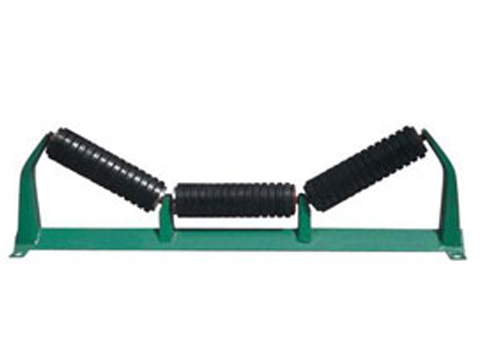
- Start from the failure mode. Loading point or crusher discharge calls for an impact roller whose purpose is absorbing impact and protecting the belt from tearing. The carrying run calls for a trough idler, offered with 20°, 25° or 35° trough angles. Flat carrying or return support calls for a parallel idler. Belt mistracking calls for an aligning idler with a self-pivoting frame. The roller family decides which standard dimension is even relevant.
- Write the reference in full, with edition. “DIN 22112-3:1996”, “CEMA 502-2022”, “GB/T 10595”. An unspecified edition cannot be checked, and editions are what auditors read.
- Convert each claim into a document type. DIN 22112 points to a test report. CEMA 502-2022 points to a dimensioned drawing plus load rating. GB/T 10595 points to the batch material and inspection report pages that name it. If the supplier cannot name the document, the claim is not yet verifiable.
- Confirm the drawing before the batch. Drawing confirmation is listed at 3–5 business days. Settle tube diameter, shaft diameter, length, bearing, seal arrangement and surface treatment against your installation dimensions. This is the step where suggested values become contractual ones.
- Run the first-article inspection. Sample approval and first-article inspection are available, followed by batch sampling inspection. The inspection sequence covers incoming material, dimension, radial run-out, rotational resistance, noise and appearance.
- Read the batch report as a document, not a logo. Check the lot number, the date, the item tested, the measured values, the acceptance criteria, and whether the drawing revision on the report matches the drawing you approved. Batch-wise inspection reports are offered for overseas project acceptance, which is exactly how they should be used.
- Close with pre-shipment inspection and a sample. Pre-shipment inspection covers appearance, dimension, performance, quantity and packaging. Sample lead time is quoted at 5–7 days, and mass production at 15–30 days in the OEM/ODM route.
Where the document trail matters: three conveyor duties
Mining ore conveyor line
Dusty, heavy-duty, continuous bulk material handling, run 24/7. The roller supports the belt and absorbs loading impact, and the stated requirements include dust-resistant seals, low rotational resistance and wear resistance. At a crusher discharge the failure that hurts is belt tearing, so the documents to ask for are the impact roller’s radial run-out and rotational resistance records for the lot, plus the drawing that fixes the length inside the 315–1,150 mm range.
Cement raw material handling
Heavy dust, medium-to-high temperatures and continuous operation, with the roller providing stable support and reducing mistracking and maintenance frequency. Dust and corrosion resistance are the stated requirements, while the operating temperature range is recorded as to be confirmed. That open item belongs in drawing confirmation, not in an assumption at quotation stage — no standard reference will fill a project data gap.
Port bulk terminal
Outdoor, humid, salt-spray and long-distance conveying, 24/7, with the roller supporting the return belt and maintaining smooth operation. Corrosion-resistant coating, sealed bearings and low noise are the stated requirements, with protection level to be confirmed. Parallel idler rollers with optional galvanized or coated surfaces are the relevant family here, and the compliance conversation shifts toward dimensions, coating and bearing sealing rather than impact absorption.
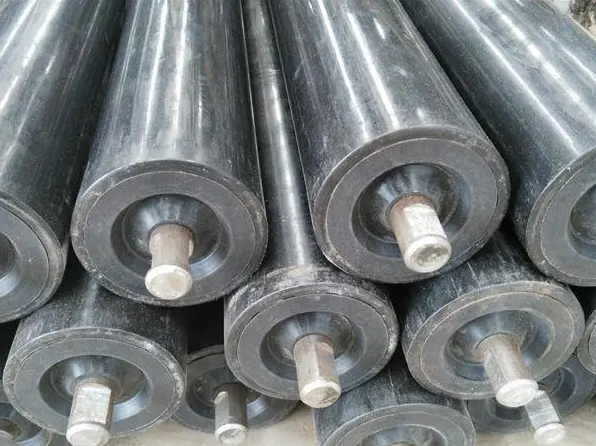
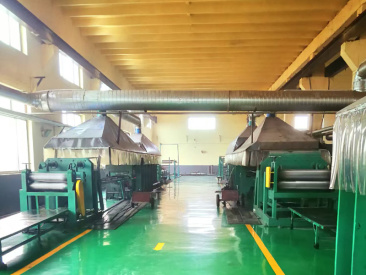
Volume is not proof of compliance, but a documented project record shows that an inspection routine has been exercised at scale. The supplier’s case record covers a mining contractor application in mine belt conveyor systems for ore, crushed stone and other bulk materials, at 100,000 units per year over a two-year duration, and reports stable continuous operation under heavy-load mine conditions, a low failure rate and reduced material-transport downtime, with wear resistance and adaptability to a dusty mine environment cited as the highlights. Read that as evidence of routine, not as a guarantee that another site will see the same result — different duty, different belt and different maintenance practice all change the outcome.
Comparison: the references and the roller families
| Reference | Jurisdiction / scope | Verified subject | Document to request | What it lets you check |
|---|---|---|---|---|
| DIN 22112-3:1996 | Germany / Europe; idlers for underground coal mining | Testing requirements for belt conveyor idlers | Test report with conditions, samples and limits | How the idler performed under a defined test |
| CEMA 502-2022 | North America / Global; troughing and return idlers | Dimensional standards and load ratings | Dimensioned drawing plus load rating | Whether the roller fits the frame and carries the rated load |
| GB/T 10595 | China; named in the roller’s batch documentation | Basis for the batch material and inspection reports | Batch material report and the inspection report page citing it | Whether the lot was produced and inspected against the declared basis |
| ISO 5048:1989 | International; belt conveyor calculation | Power and tension calculation with carrying idlers | Conveyor calculation, not a roller document | What duty the roller must survive |
The second table moves from standards to hardware. Model designations below are suggested designations confirmed at drawing stage, which is why the drawing column is the one that matters.
| Roller family | Suggested size range | Role | Document to request |
|---|---|---|---|
| Impact roller (ER-IMPACT-108) | Ø108 mm tube, Ø25 mm shaft, 315–1,150 mm length | Absorb impact at loading points and crusher discharge | Batch material and inspection reports; radial run-out and rotational resistance records |
| Trough idler (ER-TROUGH-108) | Ø89/108/133 mm tube, Ø20/25 mm shaft, 20°/25°/35° trough | Carry bulk material and contain the load | Drawing confirmation and first-article inspection; full-batch dimension and radial run-out inspection |
| Parallel idler (ER-PARALLEL-108) | Ø89/108/133 mm tube, Ø20/25 mm shaft | Flat carrying or return belt support | Dimension and coating confirmation; pre-shipment inspection |
| Aligning idler (ER-ALIGNING-108) | Ø89/108/133 mm tube, Ø20/25 mm shaft | Correct belt mistracking with a self-pivoting frame | Batch-wise inspection report for overseas project acceptance |
FAQ
Which standard applies to a rubber-ring impact roller at a crusher discharge?
No single reference is mandatory everywhere; the applicable set comes from the project’s engineering basis and destination market. The documented position for the rubber-ring impact roller is that its batch material and inspection reports comply with DIN 22112, CEMA and GB/T 10595. DIN 22112 Part 3 (1996) specifies testing requirements for belt conveyor idlers used in underground coal mining, CEMA 502-2022 establishes dimensional standards and load ratings for troughing and return idlers, and GB/T 10595 is the Chinese reference named in the same documentation. Ask for all three documents when a project spans markets, and name the edition in the purchase order.
Does a DIN 22112 or CEMA line on a datasheet prove the batch was tested?
No. A standard reference on a datasheet describes design intent; it does not identify a lot, a test date or a measured value. To verify, request the document that matches the claim: a test report with conditions and acceptance limits for DIN 22112, a dimensioned drawing and load rating for CEMA 502-2022, and the batch material and inspection report page that names GB/T 10595. Then check that the drawing revision on the report matches the drawing you approved.
What should first-article inspection cover on trough idlers and parallel rollers?
Dimension and radial run-out are the core checks, and the inspection sequence also covers rotational resistance, noise and appearance, with sample approval and first-article inspection followed by batch sampling. For trough idlers, full-batch inspection on dimension and radial run-out is stated to control coaxiality, which is what limits belt vibration and abnormal wear. Confirm the trough angle (20°, 25° or 35°) and the tube and shaft diameters against your belt width before the first article is signed off.
How long do drawing confirmation and sample validation take?
Drawing confirmation is listed at 3–5 business days. Sample lead time is quoted at 5–7 days, and mass production at 15–30 days in the OEM/ODM route. Treat these as quoted lead times for that route, confirm them on the order, and keep the approved drawing revision attached to the purchase order so that schedule and specification stay linked.
Heavy-duty conveyor roller manufacturer for mining conveyor projects
Shortlist suppliers who can produce the document chain, not only the roller. Shanghai Eastrise Trading Co., Ltd. supplies conveyor idler rollers from an 11,000 m² factory with 50 employees, 2,000 t annual output and a 10-engineer R&D team, and supports OEM/ODM customization of tube diameter, shaft diameter, length, seals, bearings, surface treatment, logo and packaging, with batch material and inspection reports available for the impact roller line. For a mining project, send the duty, belt width and installation dimensions, then request drawing confirmation and a sample before committing to a batch. The company brochure is available for download, and sample or quotation requests can be sent to jone.liu@sh-eastrise.com or +86 18516552763.
Conclusion
Compliance for conveyor rollers is a document sequence: standard reference with edition, then drawing, then first article, then batch report, then pre-shipment inspection. The three references in this guide are not interchangeable. DIN 22112 Part 3 is a testing claim tied to underground coal mining idlers. CEMA 502-2022 is a dimensional and load-rating claim for troughing and return idlers. GB/T 10595 is the Chinese basis named in the batch material and inspection reports. ISO 5048:1989 sits upstream, calculating the duty rather than certifying the hardware.
For a loading point or crusher discharge, that distinction is practical rather than academic. The impact roller’s suggested Ø108 mm tube, Ø25 mm shaft and 315–1,150 mm length range, its carbon steel and wear-resistant rubber construction, and its radial run-out and rotational resistance inspections all have to point at one approved drawing and one identifiable lot. A supplier who can name the standard, the edition, the lot and the measured value is auditable. A supplier who can only say “compliant” leaves the buyer holding a claim without an evidence chain.
Next step for project buyers: send your belt width, loading-point duty and installation dimensions, and request a drawing confirmation plus a sample of the impact roller before the batch is released. Catalog and brochure download, sample requests and quotations are handled through jone.liu@sh-eastrise.com and +86 18516552763.
Have Questions or Need More Details?
Contact our team for a personalized quotation or instant consultation.
Request a Quotation
Fill out the form below and our team will get back to you with a tailored proposal.
WhatsApp Direct Chat
Prefer to chat in real-time? Message us on WhatsApp for instant assistance & quick answers.
- Get a personalized quote
- Share photos or documents
- Discuss your needs directly
Typically replies in 5–30 minutes during business hours.