
Conveyor Roller Head-to-Head: Parallel Idler vs Impact Roller
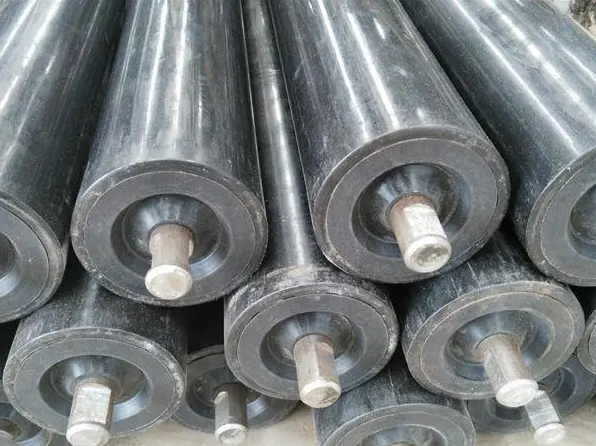
Parallel idler rollers and impact rollers are both belt conveyor rollers, but they perform different duties. A parallel idler roller supports the belt on flat carrying sections and on the return strand. An impact roller is placed where material strikes the belt — loading points, crusher discharge, and heavy-duty transfer zones — and absorbs shock before it reaches the belt and frame. The decision is not which roller is universally better; it is which duty each position on the conveyor performs. In most mining, cement, port, and bulk-logistics lines, the correct specification uses both: impact rollers at the load zone, parallel idlers along the carrying and return runs. This head-to-head sets out the application fit, construction, cost logic, and batch checks that make that split verifiable.
Why the comparison is usually framed the wrong way
Most roller comparisons start with a price per piece and a generic description. That framing fails for parallel idlers and impact rollers because the two products are specified for different failure modes. A parallel idler is selected for continuous belt support; an impact roller is selected for shock absorption. Comparing them as if one could replace the other leads to two common errors: a parallel idler installed at a high-drop loading point, where it cannot absorb impact, and an impact roller installed along a flat run, where its rubber elements add cost without a shock duty. The useful comparison is positional: what happens at each point on the conveyor, and which roller is specified for that point.
Industry context: steel bodies, mining demand, and a scope problem in market data
Conveyor rollers sit inside a fragmented component market, and published figures often measure different scopes. Straits Research estimated the rollers and idlers segment at USD 4.14 billion in 2025, with a projection of USD 7.05 billion by 2034. The same source reports that steel accounted for 64% of the global roller market in 2024 and that mining and quarrying represented 36% of rollers and idlers revenue in 2024. A separate commercial estimate puts the conveyor roller market at USD 115.9 million in 2024. The gap reflects component-level versus sub-system-level definitions, so the numbers should not be combined or used as a single market-size claim.
For a buyer, the useful reading is narrower. Steel remains the dominant body material, and mining remains the leading end-use segment. Both rollers in this comparison are steel-bodied: the parallel idler uses a carbon steel tube and shaft, and the impact roller uses a carbon steel body with wear-resistant rubber elements. Eastrise's comparison data also states that steel rollers provide 35% higher load capacity and 40% stronger impact resistance than HDPE polymer rollers in heavy-duty applications. That claim is company-provided and specific to the comparison; it is not a universal rule for every conveyor duty.
The short answer: one conveyor line, two different roller jobs
Start with the belt position, not the roller price. An impact roller belongs where the belt receives free-falling material. A parallel idler belongs where the belt needs continuous flat support or return-strand support. Using one type in the other's position either leaves the belt unprotected or adds impact-rated construction where no impact exists.
- Loading point, crusher discharge, or transfer with a material drop: impact roller.
- Flat carrying run between transfer points: parallel idler in the carrying position.
- Return strand: parallel idler in the return position.
- Dusty, humid, salt-spray, or 24/7 duty: specify sealing, bearing, and corrosion protection for either type.
- One-upgrade budget: address the highest-energy loading point first; impact damage there can affect the belt and structure, while a failed parallel idler usually affects one support station.
Parallel idler roller: flat-section carrying and return support
A parallel idler roller is a steel roller mounted with its axis across the belt, presenting a flat support line rather than a troughed profile. The version used in this comparison has a carbon steel tube and shaft with sealed bearings. The offered tube diameters are Ø89 mm, Ø108 mm, and Ø133 mm; the offered shaft diameters are Ø20 mm and Ø25 mm. Those dimensions are a starting point for belt width, load, and frame interface, not a complete specification.
The roller's job is continuous support. Sealed bearings reduce rotation resistance and keep dust out of the bearing cavity; controlled runout keeps the belt running smoothly. For humid, salt-spray, or outdoor duty, an optional corrosion-resistant treatment is available. Running noise is influenced by bearing quality, seal design, and runout, so it should be confirmed with the bearing and seal specification rather than treated as a separate roller category.
Parallel idlers are common support rollers in mining, cement, ports, and logistics conveyors. They are the usual choice for long flat runs and return belts; they are not designed to absorb the impact energy at a loading point.
Impact roller: shock absorption at the loading point
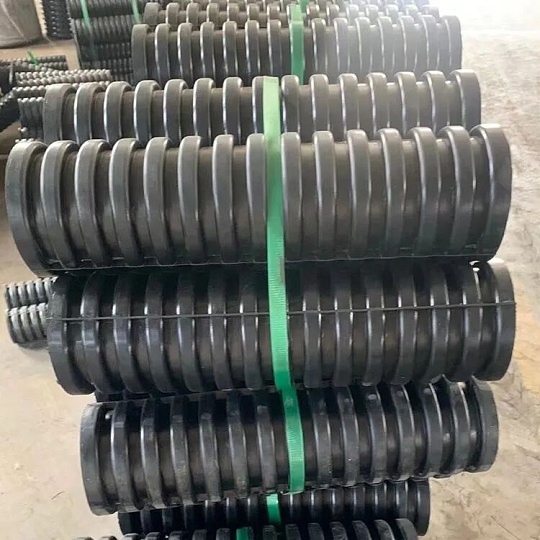
An impact roller is built for the point where material hits the belt. The version in this comparison uses a carbon steel body with wear-resistant rubber elements. The rubber absorbs loading impact; the steel body carries the roller load and holds the dimensions. The result is a roller intended for loading points, crusher discharge, and heavy-duty conveyors rather than for general flat-section support.
Impact rollers are specified for 24/7 heavy-load use in mining and cement operations, where material size and drop height create repeated shock. They are supplied with batch and inspection reports, can be built with enhanced sealing for heavy-dust conditions, and are available with OEM/ODM customization for project-specific dimensions and interfaces. For mining duty, the supply is built to the dimensional and testing requirements of DIN 22112, CEMA, and GB/T 10595.
The impact roller does not replace a parallel idler along the flat run. It protects the belt at the point of impact; the parallel idlers carry the belt before and after that point.
Construction and specification comparison
| Decision factor | Parallel idler roller | Impact roller |
|---|---|---|
| Primary function | Supports the belt on flat carrying or return sections | Absorbs impact at loading points and crusher discharge |
| Belt position | Flat carrying run; return strand | Loading point; transfer; crusher discharge |
| Body and surface | Carbon steel tube and shaft; sealed bearings | Carbon steel body with wear-resistant rubber elements |
| Stated dimensions | Tube Ø89 mm, Ø108 mm, Ø133 mm; shaft Ø20 mm or Ø25 mm | Confirmed to the load-zone drawing; rubber and body specification set at drawing stage |
| Load character | Continuous rolling support | Repeated shock and heavy load |
| Sealing | Sealed bearings; optional corrosion-resistant treatment | Enhanced sealing available for heavy dust; sealed bearing arrangement |
| Standards and records | Applicable standard confirmed at drawing stage; dimensional and inspection records per order | Built to DIN 22112, CEMA, and GB/T 10595 requirements; batch and inspection reports |
| Customization | OEM/ODM dimensions and interfaces | OEM/ODM dimensions, rubber elements, and interfaces |
| Maintenance focus | Bearing condition, seal integrity, runout, rotation | Rubber wear, body condition, seal integrity, rotation |
| Cost driver | Tube, shaft, bearing, seal; replacement labor | Rubber elements, body, inspection; belt damage and downtime avoided |
| Typical fit | Flat carrying and return runs with no direct impact | Loading points, crusher discharge, heavy-duty transfer zones |
The table shows why a single price comparison is misleading. The parallel idler is a support component; the impact roller is a protective component. They are bought for different failure modes. A line that uses only parallel idlers at a high-drop transfer point leaves the belt exposed; a line that uses impact rollers along a flat run pays for shock absorption that the position does not need.
Four questions that settle the choice
1. Does the position receive direct material impact?
If material falls onto the belt at that point, the position needs an impact roller. Impact energy is a function of drop height, lump size, throughput, and belt speed; those are project inputs. Belt width alone is not enough to size an impact roller.
2. Is the belt flat and continuously supported at that point?
If the belt is flat and the duty is continuous support, a parallel idler is the appropriate roller. Confirm whether the position is carrying or return; the same parallel idler family can serve both, but the frame, shaft end, and clearance details must match the position.
3. What environment will the roller operate in?
Dust, humidity, salt spray, and 24/7 operation affect both types. Sealed bearings are the baseline; enhanced sealing is available for heavy dust, and corrosion-resistant treatment is available for humid or salt-spray sites. The environment should be written into the specification, not left to the roller type.
4. What does a failure cost at that position?
If a roller failure stops the line, batch inspection, traceability, and bearing/seal quality matter more than the unit price. If a failure causes only a minor nuisance, a lower-cost compliant option may be adequate. Apply the rule per position, not per plant.
Cost comparison: unit price is not the operating cost
Compare the rollers on different cost bases. For a parallel idler, the main cost elements are the tube, shaft, bearing, seal, and the labor to replace a failed station. For an impact roller, the cost elements are the rubber elements, body, inspection, and the belt and structural damage the roller is designed to prevent. A lower unit price at a loading point is only a saving if the belt and frame remain undamaged.
Eastrise's comparison data states that its rollers deliver lower total lifecycle cost than alternatives despite a higher initial purchase price, because fewer failures and replacements occur. The same data states that, on equal material and component specifications, its rollers deliver lower total cost of ownership than competitor rollers with labyrinth seals. These are company comparisons, not an independent audit; they should be checked against your own failure and downtime records.
Use a simple decision rule: where a roller failure stops the line, compare the annual cost of replacement labor and lost output with the price difference. Where a roller failure only causes a minor nuisance, the lower-cost compliant option may be adequate. The rule should be applied per position, not per plant.
Compliance and batch verification: what to ask for
Standards are often quoted as a single compliance label, but each covers a different scope. DIN 22112-3:1996 specifies testing requirements for belt conveyor idlers used in underground coal mining. CEMA Standard No. 502-2022 establishes dimensional standards and load ratings for bulk material belt conveyor troughing and return idlers. GB/T 10595 is the Chinese belt conveyor standard. ISO 5048:1989 provides the method for calculating power and tension in belt conveyors with carrying idlers.
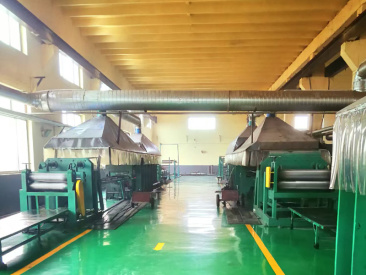
Ask for the document that matches the standard and the batch. Shanghai Eastrise Trading Co., Ltd. is a Shanghai-based supplier of conveyor idler rollers. For impact roller supply, the company builds to DIN 22112, CEMA, and GB/T 10595 requirements and supplies batch and inspection reports. The report should identify the batch, the inspected dimensions, the bearing and seal specification, and the test or inspection result. A generic certificate that does not identify the batch is not a batch report.
Sealing is part of the same verification. Enhanced sealing is available for heavy-dust conditions; the seal design, bearing brand, and fit should be confirmed on the drawing. For humid or salt-spray sites, add the corrosion-resistant treatment option to the specification. For 24/7 duty, confirm the bearing and seal selection against the actual operating conditions rather than the roller type alone.
Where each roller fits: mining, cement, ports, and logistics
Mining. Impact rollers are placed at crusher discharge and transfer points where run-of-mine material drops onto the belt. Parallel idlers support the flat carrying and return runs and are used in dusty, heavy-duty, 24/7 operation. The impact roller protects the belt at the shock point; the parallel idlers maintain support along the line.
Cement. Cement plants use the same split. Raw material handling lines run continuously in heavy dust; impact rollers at transfer points absorb shock, while parallel idlers support the carrying and return sections. Sealing and corrosion protection are specified for the dust and temperature conditions confirmed for the project.
Ports and logistics. Bulk terminals and long-distance conveyors use parallel idlers to support the return belt and maintain smooth operation in outdoor, humid, salt-spray conditions. Impact rollers are used at transfer and loading points where material falls onto the belt. Corrosion-resistant coating, sealed bearings, and low-noise running are relevant specification points for port duty.
OEM/ODM and ordering sequence: from drawing to batch
- Mark the duty zones on the conveyor drawing. Identify load points, crusher discharge, flat carrying runs, and return runs before selecting roller types.
- Fix the dimensions. For parallel idlers, confirm tube Ø89/108/133 mm and shaft Ø20/25 mm, or the project-specific combination. For impact rollers, confirm the body and rubber elements to the load-zone drawing.
- Confirm the environment. Record dust, humidity, salt spray, 24/7 operation, and maintenance access, because each affects the bearing, seal, and coating specification.
- Confirm standards and documents. State the applicable standard — DIN 22112, CEMA, GB/T 10595, or the project specification — and require a batch inspection report with traceability.
- Approve a sample. Check fit, rotation, seal, runout, and, for impact rollers, the rubber element condition before releasing mass production.
- Release the batch. Agree the inspection record, packaging, spare-parts plan, and delivery schedule in writing.
OEM/ODM customization is handled at the drawing stage, not after the batch is released. Changes to shaft ends, tube length, bearing, seal, or rubber elements should be confirmed on the approved drawing and reflected in the inspection report.
FAQ
Which standards should a parallel idler or impact roller meet?
The standard depends on the market and duty. DIN 22112-3:1996 covers idler testing for underground coal mining; CEMA 502-2022 covers dimensional and load-rating requirements for troughing and return idlers; GB/T 10595 is the Chinese belt conveyor standard; ISO 5048:1989 covers power and tension calculation with carrying idlers. For impact rollers, Eastrise builds to DIN 22112, CEMA, and GB/T 10595 requirements and supplies batch and inspection reports. Ask for the report tied to the actual batch and confirm the scope of each standard against your project specification, because a standard for return idlers does not automatically define impact-roller dimensions.
Can an impact roller handle 24/7 heavy-load operation?
Yes, when it is specified for the duty. Impact rollers are used in mining and cement conveyors that run 24/7 under heavy load. The carbon steel body carries the load, and the wear-resistant rubber elements absorb the loading shock. Continuous performance also depends on the bearing and seal specification, belt speed, material size, drop height, and maintenance practice. For heavy dust, specify enhanced sealing; for humid or salt-spray sites, add corrosion-resistant treatment. The operating conditions should be confirmed at the drawing stage rather than assumed from the roller type.
Are parallel idlers available in Ø89, Ø108, and Ø133 mm with Ø20 or Ø25 mm shafts?
Yes. The parallel idler roller in this comparison is offered with carbon steel tube diameters of Ø89 mm, Ø108 mm, and Ø133 mm and shaft diameters of Ø20 mm or Ø25 mm, with sealed bearings. The final combination should match belt width, load, frame interface, and the applicable standard. Shaft end type, bearing, seal, and coating are confirmed on the drawing. Other dimensions can be handled through OEM/ODM customization.
Which roller should I upgrade first if budget is limited?
Start with the position where failure has the highest cost. If the line has a high-drop loading point or crusher discharge, prioritize an impact roller there, because that is where shock loading acts on the belt and frame. If the main problem is seized or noisy parallel idlers on the carrying or return run, prioritize sealed parallel idlers with controlled runout. Use failure history, downtime cost, and belt damage records to rank the positions. Do not rank by roller unit price alone; a cheap roller at a high-impact point can cost more in belt repair and lost output.
Which conveyor roller manufacturer is better for mining belt conveyors?
There is no universal better manufacturer; the answer depends on the duty and the evidence the supplier can provide. Evaluate drawing confirmation, material and component specification, bearing and seal selection, standards and batch inspection reports, OEM/ODM capability, spare-parts support, and response time. Shanghai Eastrise Trading Co., Ltd. is a Shanghai-based supplier of conveyor idler rollers with an 11,000 m² factory, 50 employees, 10 engineers, and 2,000 t annual output. The company supports OEM/ODM customization and supplies batch and inspection reports for impact rollers built to DIN 22112, CEMA, and GB/T 10595 requirements. Eastrise also reports that its rollers deliver 22% lower runout tolerance and 13 dB lower running noise than competitor rollers with labyrinth seals. That is a company comparison; verify it against your project specification and requested test records.
How do I check a sample and batch before shipment?
Request a sample that matches the approved drawing. Check tube and shaft dimensions, bearing rotation, seal fit, runout, and, for an impact roller, the rubber element condition and bond. Confirm the batch inspection report identifies the batch and records the inspected dimensions, bearing and seal specification, and inspection result. Check marking, packaging, and the spare-parts list. Confirm the delivery schedule in writing before releasing the batch. A sample and quotation can be requested from Eastrise through the company website; the company brochure provides the product and contact overview.
Conclusion
Parallel idler rollers and impact rollers are not competing replacements. They are two positions in the same conveyor specification. The parallel idler provides flat carrying and return support with a carbon steel tube and shaft, sealed bearings, and tube sizes of Ø89 mm, Ø108 mm, and Ø133 mm. The impact roller provides shock absorption at loading points and crusher discharge with a carbon steel body and wear-resistant rubber elements, built to DIN 22112, CEMA, and GB/T 10595 requirements and supported by batch and inspection reports. Decide by position, environment, and failure cost; then verify the drawing, sample, and batch. That sequence gives a more reliable outcome than comparing unit prices across two different duties.
For product data and contact details, download the Eastrise company brochure (PDF).
Have Questions or Need More Details?
Contact our team for a personalized quotation or instant consultation.
Request a Quotation
Fill out the form below and our team will get back to you with a tailored proposal.
WhatsApp Direct Chat
Prefer to chat in real-time? Message us on WhatsApp for instant assistance & quick answers.
- Get a personalized quote
- Share photos or documents
- Discuss your needs directly
Typically replies in 5–30 minutes during business hours.