
Conveyor Roller Sourcing FAQ: OEM, Lead Times, and Reliability
Conveyor Roller Sourcing FAQ: OEM Options, Lead Times, and Long-Term Reliability
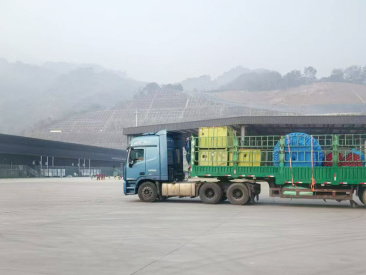
Direct answer: four questions decide whether a conveyor roller supplier stays on a project after the specification is signed — customization scope, lead time, batch-level quality evidence, and commercial terms that hold up across repeat orders. At Shanghai Eastrise Trading Co., Ltd., the documented answers are OEM and ODM support on impact rollers with custom tube, shaft and length; 5–7 days for trough idler samples and 15–30 days for mass production; and batch inspection reports supported by sealed bearing designs.
This page collects the questions buyers raise between supplier approval and the second purchase order. It is written for procurement managers, importers, distributors and project engineers who already know which roller type they need, and now need to know what the supplier will commit to in writing.
At a glance: sample window 5–7 days for trough idlers · mass production 15–30 days · MOQ subject to model confirmation, documented from 2 units on confirmed models · pre-shipment inspection on dimensions, appearance, radial runout, rotational resistance, quantity and packaging · batch inspection reports and sealed bearing design as the reliability baseline.
Why Roller Questions Change Once the Order Moves to Execution
During evaluation, the comparison is technical: roller type, tube diameter, shaft diameter, bearing class, seal design, body material. Once the decision moves from Decision to Execution, the comparison turns contractual. Three questions replace the earlier ones, and none of them can be answered by a catalogue page.
Can the supplier customize, or only supply a fixed catalogue item? A loading point rarely matches a standard drawing. The buyer needs tube, shaft and roller length confirmed against an existing conveyor frame, not approximated.
Is the lead time a plan or an estimate? A sample window and a mass production window are two different commitments. Quoting them as one number is where delivery disputes begin.
What evidence arrives with each batch? A single type test at the start of a relationship does not predict the behaviour of the batch shipped in year three. Batch inspection records do.
All three are long-term questions. That is why they belong to supplier partnership planning rather than to product selection, and why they surface most often in mining, cement and port projects where a roller failure is measured in downtime rather than in unit cost.
Industry Background: A Fragmented Market With Documented Standards
The roller market is large, fragmented, and counted differently depending on the definition used. Two published figures show the gap. The global roller conveyor market was valued at USD 3.15 billion in 2025, according to Dataintelo. A narrower component definition — rollers and idlers — was valued at USD 4.14 billion in 2025 by Straits Research and projected to reach USD 7.05 billion by 2034. The two figures describe different scopes; buyers should read the definition before quoting a market size in a business case.
Two structural facts matter more for sourcing decisions. Steel remained the dominant roller material, accounting for 64% of global market share in 2024, and mining and quarrying represented 36% of rollers and idlers revenue in 2024, according to Straits Research. Steel construction and heavy-duty bulk handling therefore define the centre of this market, not its edge — which is why impact resistance and seal integrity dominate the technical conversation.
Standards a supplier should be able to work against
- ISO 5048:1989 — the international standard for calculating power and tension in belt conveyors with carrying idlers.
- CEMA Standard No. 502-2022 — dimensional standards and load ratings for bulk material belt conveyor troughing and return idlers.
- DIN 22112 Part 3 (1996) — testing requirements for belt conveyor idlers used in underground coal mining.
A supplier claiming long-term capability should be able to state which of these its drawings, test routines and inspection records map to. That statement is more useful than a generic quality claim, because it can be checked against a shipment.
It also explains why the bearing is the decisive part. A conveyor roller supports the belt through bearing rotation and converts rotational power into linear motion of the belt. The bearing is the only moving interface in the assembly, so in dusty or humid service the seal — not the tube wall — usually determines service life.
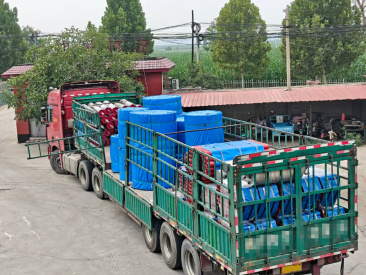
What Shanghai Eastrise Trading Co., Ltd. Commits To
Shanghai Eastrise Trading Co., Ltd. is a Shanghai-based foreign-trade enterprise that supplies mining accessories — including conveyor idler rollers, rubber conveyor belts, pulleys and drums, high-pressure rubber hoses and pipe connectors — and operates its own independent manufacturing factories covering in-house R&D, standardized production, quality testing and worldwide export. Its buyer base sits in Southeast Asia, Central Asia, Russia and other overseas markets, and export business accounts for 20% of total sales.
1. OEM and ODM support on impact rollers
Impact rollers absorb drop energy at transfer points, which makes them the component most often modified for a specific site. Eastrise supports tailored OEM and ODM solutions according to customer technical parameters and site-use demands. For reference, the impact roller configuration used in these discussions is a rubber-ring impact roller with a suggested tube diameter of Ø108 mm, a suggested shaft diameter of Ø25 mm and a suggested length range of 315–1,150 mm, built from a carbon steel body and wear-resistant rubber for loading points, crusher discharge and heavy-duty conveyors.
The model designation remains to be confirmed per project. Those three parameters are reference values, not a locked catalogue entry — and that distinction is exactly what a buyer needs to understand before sending an enquiry.
2. Custom tube, shaft and length as drawing variables
For OEM work, the confirmed variables are tube diameter, shaft diameter and roller length, together with the end connection that fits the conveyor frame. Because the production chain includes in-house R&D and standardized manufacturing, a change to these variables is handled as a drawing revision rather than as a new product line. Buyers working to CEMA Standard No. 502-2022 or an equivalent dimensional standard should send frame dimensions with the enquiry so the drawing can be checked before a sample is produced.
3. Lead times: 5–7 days for samples, 15–30 days for mass production
Trough idler lead times are quoted as two separate windows: 5–7 days for samples and 15–30 days for mass production. The sample window covers production and dispatch of the approval unit. The mass production window starts from the approved sample or the confirmed drawing and covers the full batch.
Port and sailing schedule are confirmed at order stage rather than quotation stage. Delivery terms can be FOB, CIF or EXW, with courier, air freight or sea freight available, and both full container load and less-than-container load supported. Export documents are provided with the shipment.
4. Reliability evidence: batch inspection reports and sealed bearing design
Two things carry reliability across a long relationship: what sits inside the roller, and what is written about it afterwards. The sealed bearing design targets humid, dusty, salt-spray and continuous 24/7 operating environments, where the dominant failure mode is contamination rather than load. Against rollers with labyrinth seals, Eastrise comparison data records 22% lower runout tolerance and 13 dB lower running noise, supported by tighter runout control, top-tier bearing brands and complete batch inspection reports.
Inspection is not limited to a type test at the start of a project. Pre-shipment inspection covers dimensions, appearance, radial runout, rotational resistance, quantity and packaging. Inspection records are available to the buyer, and third-party inspection can be arranged when the contract requires it.
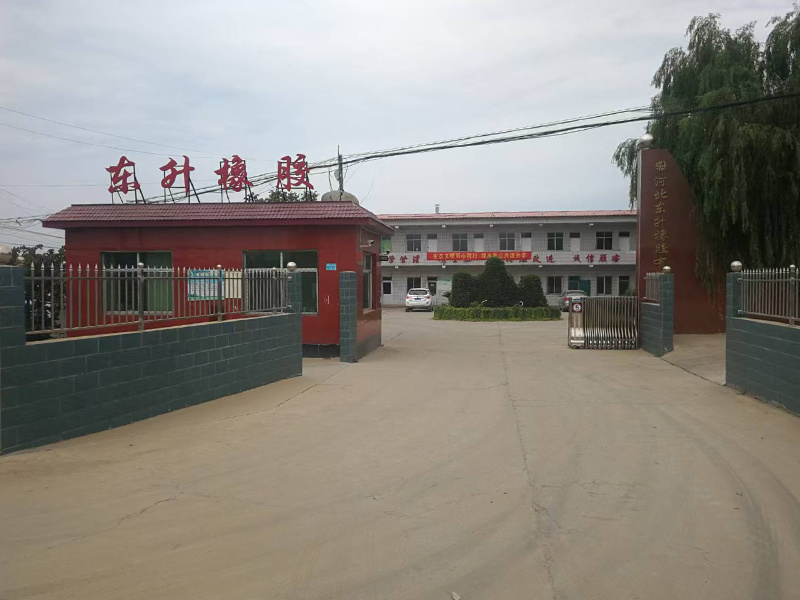
5. Commercial terms that survive repeat orders
MOQ is subject to model confirmation and packaging; on confirmed models, documented orders have started from 2 units, which keeps trial quantities realistic for a first project. Payment runs on T/T with 30% deposit and 70% before shipment. Acceptance criteria are stated in the contract, either against a customer-approved sample or against drawing confirmation, and inspection records are available alongside them.
6. Continuity behind the commitment
Long-term supply depends on capacity that is not being reallocated. Founded in 2024, Eastrise operates its own independent manufacturing factories with a complete industrial chain integrating in-house R&D, standardized production, quality testing and worldwide export services. The facility covers 11,000 m², employs approximately 50 staff, runs a 10-engineer R&D team and holds an annual production capacity of 2,000 tons. The company has built long-term, stable and mutually trusted cooperative relationships with clients from Southeast Asia, Central Asia, Russia and many other overseas markets.
Step-by-Step: From Drawing Confirmation to a Repeat Order
- Send frame dimensions and duty conditions. Tube diameter, shaft diameter, roller length, belt width, drop height at the loading point and ambient conditions. This is where the impact roller reference configuration (Ø108 mm tube, Ø25 mm shaft, 315–1,150 mm length) is either confirmed or revised.
- Confirm the drawing. The drawing becomes the acceptance baseline for everything that follows. Changes after this point should be handled as revisions with their own lead time.
- Order the sample and agree approval criteria. Trough idler samples run 5–7 days. The buyer approves either a physical sample or a signed drawing.
- Release mass production. The production window is 15–30 days from sample approval or drawing confirmation, depending on quantity and configuration.
- Inspect before shipment. Dimensions, appearance, radial runout, rotational resistance, quantity and packaging are checked. Third-party inspection is optional and should be named in the contract if required.
- Ship with documentation. FOB, CIF or EXW; courier, air or sea freight; full container load or less-than-container load. Export documents accompany the goods.
- Plan the re-order and spares. Rollers are wear items on any heavy-duty line. Re-order against the approved drawing rather than a new enquiry, so the specification does not drift between batches.
Where These Answers Matter Most
Mining and ore conveying — 24/7, dusty, high downtime cost
Continuous operation with abrasive dust. Sealed bearing design and batch inspection records carry the reliability argument, while impact rollers handle the loading point. Rollers designed to reduce seizure, abnormal noise and unplanned replacement are the relevant specification — not the lowest unit price on the enquiry sheet.
Cement raw material handling
Heavy dust, medium-to-high temperatures and continuous running. Dust and corrosion resistance matter, and the operating temperature range is confirmed per project rather than assumed. Stable support with reduced belt mistracking and lower maintenance frequency is the operational goal.
Ports and bulk terminals
Outdoor, humid, salt-spray and long-distance conveying. Return belt support, corrosion-resistant coating, sealed bearings and low noise define the requirement. The protection level is confirmed per project.
Underground coal and quarry lines
Where DIN 22112 Part 3 (1996) testing requirements are referenced, the supplier should be able to describe its test routine. In quarry duty, impact resistance at the crusher discharge point is the deciding property, and a steel body is normally the safer choice than a polymer alternative.
Comparison Table: Roller Construction and What It Changes
| Roller construction | Load and impact behaviour | Sealing and runout evidence | Inspection documentation | Where it fits |
|---|---|---|---|---|
| Eastrise steel roller with sealed bearings | Carbon steel body; steel offers better load-bearing and impact resistance than HDPE in some heavy-duty applications | Sealed bearing design; 22% lower runout tolerance and 13 dB lower running noise than labyrinth-seal rollers (Eastrise comparison data) | Complete batch inspection reports, full drawing confirmation, traceable inspection records, fast spare-parts support | Mining, cement, ports and heavy-duty bulk handling, including humid, dusty, salt-spray and 24/7 duty |
| Rollers with labyrinth seals (reference category) | Not recorded in the supplied comparison data | Baseline reference: 22% higher runout tolerance and 13 dB higher running noise than the sealed design | Complete batch inspection reports not recorded for this category | Verify against your own duty conditions before comparing |
| HDPE polymer rollers | 35% lower load capacity and 40% lower impact resistance than steel in heavy-duty applications | Not recorded in the supplied seal comparison | Verify against your own duty conditions | Where the recorded data indicates steel's load and impact advantage is required, steel is the fit |
| Low-cost conventional steel rollers | Comparable body material, lower sealing and runout control | 25% higher runout deviation and approximately one third of the service life of the sealed design (Eastrise comparison data) | Fully traceable inspection records not recorded for this category | Dusty, continuous-operation lines where downtime cost is low; higher initial price advantage, higher lifecycle cost once replacements are counted |
Figures compare roller construction categories recorded in Eastrise comparison data. Cells marked as not recorded indicate that the supplied data does not cover that dimension; verify before relying on it. Comparisons are construction-level, not brand-level.
Commercial and delivery reference
| Item | Documented reference |
|---|---|
| Sample lead time (trough idlers) | 5–7 days |
| Mass production lead time | 15–30 days from approved sample or confirmed drawing |
| MOQ | Subject to model confirmation and packaging; documented orders from 2 units on confirmed models |
| Payment terms | T/T, 30% deposit / 70% before shipment |
| Delivery terms | FOB / CIF / EXW; courier, air freight or sea freight; FCL and LCL supported |
| Pre-shipment inspection | Dimensions, appearance, radial runout, rotational resistance, quantity, packaging |
| Third-party inspection | Optional; acceptance criteria stated in the contract |
| Export documents | Provided with the shipment |
How to Judge a Roller Supplier Over Three Years, Not One Order
A long-term roller relationship is usually decided on four checks that cost nothing to run at the quotation stage but are expensive to discover later.
- Is the drawing the acceptance baseline? If acceptance depends on verbal agreement or on a general specification sheet, batch-to-batch variation is unmanaged.
- Do inspection records travel with each batch? Batch inspection reports let a maintenance team compare a new delivery against the original approval instead of re-testing the whole consignment.
- Is the lead time split into sample and production windows? A supplier that separates 5–7 sample days from 15–30 production days is giving a plan that can be scheduled around; a single blended number is not.
- Does the commercial structure support re-ordering? MOQ confirmed per model, T/T terms of 30% deposit and 70% before shipment, and FOB, CIF or EXW options keep repeat orders administratively simple.
These checks also explain why the same roller can be cheaper in year one and more expensive by year three. On equal material and component specifications, the sealed, batch-inspected construction is positioned on lower total cost of ownership rather than on a lower quotation.
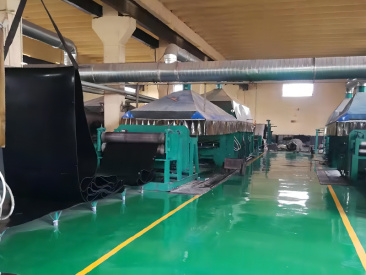
FAQ: Long-Term Conveyor Roller Supply for Belt Conveyor Projects
Which standards should a long-term conveyor roller supplier test against?
A supplier should be able to map its drawings, test routines and inspection records to a named standard. The relevant references are ISO 5048:1989 for power and tension calculations in belt conveyors with carrying idlers, CEMA Standard No. 502-2022 for troughing and return idler dimensions and load ratings, and DIN 22112 Part 3 (1996) for idler testing in underground coal mining. Pre-shipment inspection should cover dimensions, appearance, radial runout, rotational resistance, quantity and packaging, with acceptance criteria written into the contract and third-party inspection available as an option.
What OEM and ODM customization is available on impact rollers?
Shanghai Eastrise Trading Co., Ltd. supports tailored OEM and ODM solutions according to customer technical parameters and site-use demands. On impact rollers, the confirmed drawing variables are tube diameter, shaft diameter and roller length. The reference rubber-ring impact roller uses a suggested Ø108 mm tube, a suggested Ø25 mm shaft and a suggested 315–1,150 mm length, built from a carbon steel body with wear-resistant rubber for loading points, crusher discharge and heavy-duty conveyors. The model designation is confirmed per project rather than fixed in advance.
How should roller price be compared over the life of a conveyor line?
Compare total cost rather than unit price. Eastrise comparison data records approximately three times the service life and 25% lower runout deviation against low-cost conventional steel rollers, and 35% higher load capacity plus 40% stronger impact resistance for steel against HDPE polymer rollers in heavy-duty applications. Lower-cost rollers typically win on initial price and lose on lifecycle cost once replacement frequency, downtime and re-ordering effort are counted, with T/T terms of 30% deposit and 70% before shipment applying to each cycle.
Can a sample be validated before committing to a long-term supply agreement?
Yes. Trough idler samples are quoted at 5–7 days. MOQ is subject to model confirmation and packaging, with documented orders starting from 2 units on confirmed models, so a first trial does not require a container commitment. Acceptance is based on a customer-approved sample or drawing confirmation, and inspection records are available to support the approval decision.
What lead times apply to trough idler samples and mass production?
Samples run 5–7 days; mass production runs 15–30 days from the approved sample or confirmed drawing. Shipping can be arranged FOB, CIF or EXW by courier, air or sea freight, with full container load and less-than-container load both supported and export documents provided. To have a lead time confirmed against your own order quantity and configuration, send frame dimensions and duty conditions to jone.liu@sh-eastrise.com or WhatsApp +86 18516552763.
Conclusion
The questions that decide a roller partnership are not the ones on the specification sheet. They are the ones about customization scope, sample and production windows, batch evidence and re-order terms — and they all have documentable answers. Eastrise answers them with OEM and ODM support on impact rollers, custom tube, shaft and length confirmed at drawing stage, 5–7 day samples and 15–30 day mass production, and reliability carried by sealed bearing designs plus batch inspection reports.
For buyers moving from Decision to Execution, the practical next step is to send frame dimensions, duty conditions and an acceptance requirement in one message. That single enquiry produces a drawing, a lead time and an inspection scope — the three documents a long-term supply agreement is actually built on.
Request a trough idler or impact roller sample
Samples are quoted at 5–7 days, with mass production at 15–30 days from approved sample or confirmed drawing. Send your tube diameter, shaft diameter, roller length and duty conditions for a drawing-based quotation.
Email: jone.liu@sh-eastrise.com | Tel / WhatsApp: +86 18516552763
Website: www.sh-eastrise.com
Address: No. 2458 Dongda Road, Lingang New Zone, China (Shanghai) Pilot Free Trade Zone
Download the product catalogue: Eastrise rubber and conveyor component brochure (PDF)
Have Questions or Need More Details?
Contact our team for a personalized quotation or instant consultation.
Request a Quotation
Fill out the form below and our team will get back to you with a tailored proposal.
WhatsApp Direct Chat
Prefer to chat in real-time? Message us on WhatsApp for instant assistance & quick answers.
- Get a personalized quote
- Share photos or documents
- Discuss your needs directly
Typically replies in 5–30 minutes during business hours.