
Conveyor Roller Supplier Evaluation: Drawing to Batch Inspection
A conveyor roller supplier is usually compared on the two figures every quotation carries: unit price and lead time. Neither figure tells a buyer whether the rollers will fit the conveyor, whether the tenth batch will match the first, or whether an acceptance dispute can be settled from records. Once a project moves from supplier selection into execution, the evaluation has to shift to a chain of capability checks — drawing confirmation, first-article inspection, full-batch dimension and radial run-out verification, and the availability of batch material and inspection reports. Each check leaves a document behind, and each document either supports a reorder or exposes a gap.
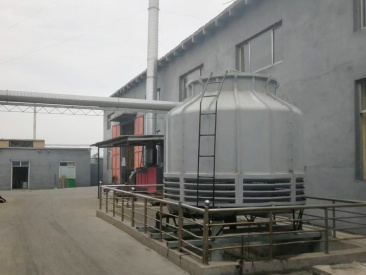
Shanghai Eastrise Trading Co., Ltd. is a Shanghai-based foreign-trade enterprise supplying mining accessories, including conveyor idler rollers, and it operates its own manufacturing factories with a complete chain that integrates in-house R&D, standardized production, quality testing and worldwide export services. Its conveyor roller supply covers the idler types used in this checklist — carrying rollers, return rollers, trough idlers, impact rollers and self-aligning rollers — alongside rubber conveyor belts, pulleys and drums. The checks below are written so they can be applied to any supplier's offer, including Eastrise's own.
Why price and lead-time comparisons stall once the order is placed
Roller quotations are comparable only on the surface. Two suppliers can quote the same tube diameter for the same belt width and still be describing different products: a different wall thickness, a different shaft end geometry, a different bearing seat tolerance, a labyrinth seal instead of a multi-lip seal, or a trough idler angle that was assumed rather than confirmed. None of those differences appear in a unit price, and most of them cannot be recovered once the rollers are on site.
The consequence is procedural rather than dramatic. The purchase order references a quotation instead of a drawing. The drawing, if one exists, is a supplier sketch rather than a confirmed document. The acceptance criterion becomes something close to 'as discussed'. When the first batch arrives with a run-out that looks acceptable in the warehouse but is audible at operating speed, or when a trough set does not sit correctly in the frame, there is no agreed reference to measure against and the buyer's leverage is limited to goodwill.
An evaluation framework built for the execution stage therefore scores something different from a framework built for shortlisting. The question is no longer whether a supplier can make a conveyor roller. It is whether the supplier can prove, batch after batch and reorder after reorder, that the rollers match a confirmed drawing — and whether the paperwork exists to settle a deviation without sending an engineer to site.
Industry background: a fragmented supply base with a documented standard frame
Roller supply is a large and fragmented category. Straits Research estimated the global rollers and idlers segment at USD 4.14 billion in 2025, with a projection of USD 7.05 billion by 2034 (published 18 August 2026). The same source reports that steel accounted for 64% of the roller market in 2024 and that mining and quarrying represented 36% of total revenue. Published market figures move with definition — some reports price a narrow roller component scope, others a sub-system — so these numbers are useful for understanding how much of the category sits in heavy-duty duty, not for verifying any individual supplier.
What does help verification is the standard frame that a drawing and an inspection plan should reference. ISO 5048:1989 defines the calculation of power and tension for belt conveyors with carrying idlers, which is the basis an engineer uses when translating belt width, tonnage and incline into an idler load. CEMA Standard No. 502-2022 sets dimensional standards and load ratings for bulk material belt conveyor troughing and return idlers, giving a common reference for drawing dimensions and rating statements. DIN 22112 Part 3 (1996) specifies testing requirements for belt conveyor idlers used in underground coal mining, and is a useful test reference where the duty is underground and dusty.
A supplier that can name the standard its drawing follows is easier to check than one that cannot. Naming a standard is not proof of conformity. The question that follows is which clause was used, what was actually measured, and where the measured values are recorded.
The capability check chain at a glance
The six gates below are ordered the way an order actually progresses. Skipping a gate does not remove the risk it covers; it only moves the risk later, usually to a point where the buyer carries it.
| Gate | Evidence to request | What it protects |
|---|---|---|
| 1. Drawing confirmation | Revision-controlled drawing signed by both sides: tube, shaft, bearing, seal, set geometry, surface treatment, marking and packaging | Fit to the conveyor frame and belt; a reference for every later argument |
| 2. First-article inspection | Report on all drawing dimensions plus radial run-out and rotational resistance, measured on production tooling | Correct tooling and assembly before the batch is released |
| 3. Full-batch dimension and run-out check | Lot-level record of dimensions, appearance, radial run-out, rotational resistance, quantity and packaging | Batch consistency; acceptance without renegotiation |
| 4. Batch material and inspection reports | Material and component references, traceable inspection records, third-party inspection option, acceptance criteria in contract | Traceability and dispute resolution |
| 5. Load matching | Trough idler angle and rating basis; impact duty at the loading point | Roller survival in the actual duty, not the catalogue duty |
| 6. Delivery assurance | Capacity statement, Incoterm and port, documentation set, inspection window, named acceptance signatory | A schedule the supplier can actually control |
Gate 1 — Drawing confirmation: the document that ends assumptions
Drawing confirmation is the point at which a quotation becomes an engineering commitment. The output should be a revision-controlled drawing, signed or formally approved by the buyer, that fixes every characteristic the supplier will be measured against later. If the supplier issues a new revision after approval, the change should be traceable to a written change notice rather than folded quietly into production.
A confirmed roller drawing should fix at least the following:
- Tube: outside diameter, wall thickness, material grade and straightness requirement.
- Shaft: end geometry (flat, threaded, cross-drilled or welded), overall length, material and machining tolerance.
- Bearing: housing type, bearing designation and clearance class.
- Seal: seal type, and whether a higher-protection seal is standard or optional — the difference matters in dust and wash-down duty.
- Set geometry: for trough idlers, the idler angle and the set dimensions that must match the conveyor frame; for carrying and return rollers, the mounting dimensions.
- Surface: painting or coating specification, and whether a corrosion-resistant treatment is included or optional.
- Marking and packaging: how the batch is identified and how it is packed for container or less-than-container shipment.
The reason to insist on this before the first article is change control. Most late-stage arguments about conveyor rollers are not about manufacturing capability; they are about which version of the requirement was in force. A confirmed drawing with a revision number removes that ambiguity from the conversation. Suppliers set up for drawing-based production can also support OEM and ODM work: Eastrise, for example, states that it provides tailored OEM and ODM solutions against customers' specific technical parameters and site-use requirements — which is only useful to a buyer if the parameter set is documented on both sides.
Gate 2 — First-article inspection: proving the tooling before the batch
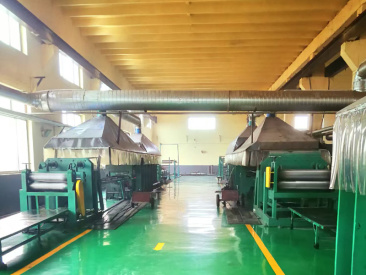
A first-article inspection takes one roller from the production setup and measures it against every characteristic on the confirmed drawing, plus the dynamic characteristics a drawing cannot show: radial run-out and rotational resistance. The purpose is to catch tooling, machining and assembly errors while the cost of correction is still internal to the supplier.
For the buyer, the requirements are modest but specific. The report should list each drawing dimension with its tolerance and the measured value, state the instrument used, identify the inspector and the date, and be approved before the batch is released. Acceptance language should name the reference — a customer-approved sample or a confirmed drawing — rather than a general quality statement. Documented purchasing terms in this category commonly follow that pattern: acceptance against a customer-approved sample or drawing confirmation, with inspection records made available.
Two failures are common at this gate. The first is a first article taken from a pre-production sample rather than from the production tooling, which validates nothing about the batch that follows. The second is approval by silence — the report is sent, nobody signs it, and production proceeds. A dated approval line on the first-article report is a small administrative item that converts an inspection into evidence.
Gate 3 — Full-batch dimension and radial run-out checks
The third gate is where supplier capability becomes visible, because it is the expensive one. Sampling a few rollers per lot is normal practice; inspecting the batch against a fixed list is a decision about how much the supplier is willing to spend on being provable.
A defensible pre-shipment inspection for a roller order covers dimensions, appearance, radial run-out, rotational resistance, quantity and packaging — the criteria that purchasing terms in this category typically specify as acceptance items. Those six items are worth insisting on because each one fails differently: a dimensional miss stops assembly, an appearance miss signals a coating problem, and a run-out miss shows up months later as noise.
Radial run-out deserves separate attention because it is the characteristic that most directly connects a drawing tolerance to site behaviour. Run-out is the total indicated deviation of the tube surface relative to the shaft axis as the roller turns. An out-of-round or eccentrically assembled roller translates that deviation into vibration, noise and a small cyclic disturbance in the belt. At low speed over short distances it may pass unnoticed; on long conveyors, in enclosed galleries, or in 24/7 operation it becomes audible, it works the seal, and it is often reported as a bearing problem when the bearing is not the cause.
Batch-level run-out checking also protects against mixture. A batch is usually assembled from more than one tube lot and more than one bearing lot, and the rollers that deviate are rarely the ones that look different. Where a supplier reports run-out performance relative to other products, request the record behind the statement for your own order: a comparative claim describes a design position, not a measurement of the rollers in your container.
Eastrise's supplied comparison documentation, for instance, states a run-out tolerance 22% lower than competitor rollers with labyrinth seals, and a run-out deviation 25% lower than low-cost conventional steel rollers. Those figures describe the company's own comparison under equivalent material and component specifications. They are not independent test results, and they should be read together with the inspection records for the specific batch.
Gate 4 — Batch material and inspection reports: what makes a record usable
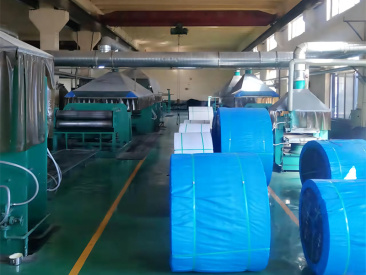
A report that cannot be tied to a lot is a brochure. The fourth gate is about traceability — whether the supplier can connect a delivered roller back to the material and components used, and forward to the measured result.
A usable batch record typically contains:
- Purchase order number and the drawing revision the batch was produced against.
- Lot or batch identifier, quantity in the lot, and production date.
- Measured values against each specified tolerance, not a pass or fail tick alone.
- The measuring instrument and, where relevant, its calibration status.
- Inspector identity and inspection date.
- Material and component references — tube material lot, bearing designation and brand where specified, seal type.
- Packaging and quantity check, plus the release signature.
Third-party inspection is a separate option and should be agreed in advance rather than requested after the batch is packed. The arrangement documented for this category is optional third-party inspection, with acceptance criteria stated in the contract. The contractual sentence matters more than the inspection body: an inspection without agreed criteria produces an opinion, not a result.
This is also where the long-term view starts. A supplier that keeps inspection records per lot can answer a question two years later — what run-out did the rollers in that reorder actually hold? — and can compare a new batch against the original approval. A supplier that does not keep records restarts the conversation at every order, which is the hidden cost of a cheap first purchase.
Gate 5 — Load matching: trough idler and impact roller checks
Roller failures on site are frequently selection failures rather than manufacturing failures, and the checks that prevent them belong in the same evaluation chain.
Trough idlers carry the loaded side of the belt and set its profile. The idler angle in a trough set is a design decision, not a catalogue default: it is chosen against belt width, material characteristics and transition geometry, and it must appear on the confirmed drawing along with the set dimensions. When a buyer evaluates a trough idler offer, the useful questions are whether the quoted set matches the frame and belt on the project, and whether the load rating is stated against a recognised basis. CEMA 502-2022 provides dimensional standards and load ratings for troughing and return idlers, and ISO 5048:1989 is the calculation route from conveyor duty to idler load. A supplier that can state which basis its rating uses is easier to hold to that rating.
Impact rollers work at the loading point, where material falls onto the belt. Their job is to absorb the impact that would otherwise be transferred into the belt carcass and into the standard carrying rollers immediately downstream. Two checks follow. First, the loading zone should be specified as an impact zone on the drawing — an expensive and common error is a quotation that prices standard carrying rollers across the whole conveyor, including the transfer point. Second, the impact duty itself should be stated: drop height, lump size and throughput determine what the roller has to absorb, and a roller quoted without that information has not been matched to the application.
Material choice interacts with both checks. Steel remains the dominant roller material at 64% of the market in 2024, and for heavy-duty duty the comparison documentation supplied by Eastrise positions steel against HDPE polymer rollers at 35% higher load capacity and 40% stronger impact resistance for mining, cement and heavy bulk handling, under the stated conditions of identical specifications and quantities. For a buyer, the transferable point is not the percentage but the requirement: ask which duty the material was selected for, and ask for that selection in writing on the drawing.
Gate 6 — Delivery assurance: converting capacity into a schedule
Delivery assurance is usually evaluated as a lead-time number. It is better evaluated as a chain of commitments the supplier can actually control.
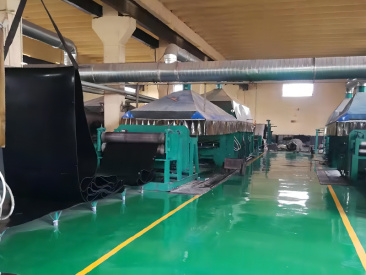
The first link is production capacity described in concrete terms. Eastrise's manufacturing facility covers 11,000 m², employs approximately 50 staff, includes a 10-engineer R&D team, and runs at an annual production capacity of 2,000 tons; export business accounts for 20% of total sales. Read as an evaluation input rather than a claim, that combination answers a specific question: is the order volume small relative to the plant, large enough to need scheduling attention, or dependent on a line the supplier does not control?
The second link is the commercial and documentary framework. Terms in this category are commonly quoted as FOB, CIF or EXW, with full-container and less-than-container loads both supported and export documents provided; port and lead time are normally confirmed against the order rather than stated as a fixed figure. The check for a buyer is not which Incoterm appears, but whether the quotation names the port, the documentation set, the inspection window before shipment, and the person who signs acceptance.
The third link is continuity, which matters most to a long-term relationship. Routine reorders depend on the original drawing still being on file, the original inspection criteria still being applied, and spare-part dimensions still matching. Sourcing from a supplier that has maintained long-term relationships with clients in Southeast Asia, Central Asia, Russia and other overseas markets is not a guarantee of continuity for a new buyer, but it does mean there is a repeat-order process to examine — and examining that process is a better use of a supplier evaluation than re-reading a catalogue.
Use cases: how the check chain shifts with duty
Three duty patterns show how the same six gates change emphasis without changing structure.
Underground coal and hard-rock mining
Dust, continuous operation and heavy impact at transfer points. The drawing gate should fix the seal arrangement and bearing closure; the record gate should test against a recognised reference, and DIN 22112 Part 3 (1996) specifies testing requirements for belt conveyor idlers used in underground coal mining; the batch gate should include run-out and rotational resistance, because a seized roller in an underground gallery is a recovery job rather than a replacement job.
Cement raw-material lines
Heavy dust and medium-to-high temperatures with 24/7 operation. The emphasis moves to dust exclusion and to consistency of rotational resistance across the batch, since energy loss from rollers that drag is continuous rather than occasional. Operating temperature range and protection level should be confirmed per site: documented application data in this category lists them as to be confirmed rather than as fixed values, and a supplier should say so instead of quoting a default.
Port and bulk terminal conveying
Outdoor, humid and salt-spray conditions over long distances, with return rollers doing most of the turning. Corrosion-resistant coating and sealed bearings become drawing items rather than options, low noise becomes a measurable acceptance criterion tied to run-out, and batch records should show the coating specification actually applied. Protection level should again be stated per project rather than assumed from a general data sheet.
Documented comparison positions, and how to read them
Suppliers describe their rollers relative to alternatives, and those descriptions are useful only if the comparison conditions travel with the number. The table below summarises the comparison positions Eastrise supplies for its conveyor rollers, with the stated conditions and the limits a buyer should apply.
| Comparison position | Documented statement | Condition and limit to apply |
|---|---|---|
| Against competitor rollers with labyrinth seals | 22% lower run-out tolerance; 13 dB lower running noise; complete batch inspection reports | Company comparison under equivalent material and component specifications; request the batch records for your own order |
| Against low-cost conventional steel rollers | 25% lower run-out deviation; 3× longer service life; enhanced sealing and fully traceable quality inspection | Stated for dusty, continuous-operation lines with high downtime cost; higher initial purchase price offset by lower total lifecycle cost only where replacement and downtime costs are counted |
| Against HDPE polymer rollers | 35% higher load capacity; 40% stronger impact resistance | Stated for heavy-duty mining, cement and bulk handling at identical specification and quantity; HDPE retains its own corrosion and weight advantages |
| Records and maintenance | Full drawing confirmation, traceable inspection records and fast spare-parts support | Design and documentation position; verify against the confirmed drawing and the first batch report |
Frequently asked questions
What documents should accompany a conveyor roller batch?
A batch should be traceable through four documents. The confirmed drawing with its revision number defines what was ordered. The first-article inspection report shows that the production tooling matched that drawing before the batch ran. The pre-shipment inspection record shows the measured result for dimensions, appearance, radial run-out, rotational resistance, quantity and packaging, with instrument, inspector and date. Material and component references — tube lot, bearing designation, seal type — connect the rollers to what was used. Acceptance criteria should be stated in the contract, and third-party inspection can be added as an option if agreed in advance.
How should drawing confirmation work before production?
Drawing confirmation converts a quotation into a fixed requirement. The supplier issues a revision-controlled drawing covering tube diameter and wall thickness, shaft ends, bearing housing and clearance, seal type, set geometry such as trough idler angle, surface treatment, and marking and packaging. The buyer approves a specific revision, and any later change is issued as a written change notice. First-article inspection then measures against that revision. Suppliers set up for drawing-based production can also quote OEM and ODM work against customer parameters, but only a signed revision makes those parameters enforceable.
How is radial run-out checked on a production batch?
Radial run-out is measured as the total indicated deviation of the tube surface relative to the shaft axis while the roller rotates. In a batch inspection it is recorded as a measured value against the drawing tolerance rather than as a pass or fail mark, and it is checked across the lot rather than on a single sample, because a batch mixes several tube and bearing lots. Run-out is worth checking at lot level because it converts directly into vibration, noise and seal wear at operating speed. Where a supplier states a run-out advantage over other rollers, ask for the measured records for your own order.
What are the minimum order quantity and payment terms?
Terms in this category are confirmed per order and vary with product specification and packaging. Documented examples include a minimum of 10 units for one product line, and terms where minimum order quantity depends on model confirmation at 2 units. Delivery is commonly quoted FOB, CIF or EXW, with full-container and less-than-container loads supported and export documents provided; payment is typically by T/T, with a 30% deposit and 70% before shipment on one documented schedule, and other methods subject to approval. Because these terms move with specification, MOQ, Incoterm, port, payment split and acceptance criteria belong in the same document.
Can a sample be approved before committing to a batch?
Yes. Sample or drawing approval is the usual acceptance reference in this category. A first article can be produced and measured against the confirmed drawing, and where physical approval is required, the approved sample becomes the reference for the batch. Courier, air freight and sea freight are all supported for sample shipment. The point to confirm in writing is what the sample represents: a sample taken from production tooling validates the process, while a hand-built sample validates only the design. Ask which one you are receiving, and keep the approval dated.
How do I qualify a conveyor roller supplier for a long-term mining belt conveyor project?
Qualify the supplier on records rather than on the first quotation. Ask for the confirmed drawing, a first-article report, a batch inspection record from a comparable order, and the material and bearing references used. Check production capacity against your annual volume: Eastrise, for example, runs an 11,000 m² facility with approximately 50 staff, a 10-engineer R&D team and 2,000 tons of annual capacity, with export at 20% of sales. Then confirm the continuity items — whether drawings and inspection criteria are retained for reorders, how port and lead time are confirmed per order, and how spare parts are supported. Eastrise has maintained long-term relationships with clients in Southeast Asia, Central Asia, Russia and other overseas markets, which gives a new buyer a repeat-order process to examine. To test the chain on a live requirement, send a drawing for confirmation and request a batch inspection record and sample through jone.liu@sh-eastrise.com or +86 18516552763.
Testing the chain on a live requirement
The fastest way to evaluate a supplier is to run one real item through all six gates rather than to score a catalogue. Send a drawing for confirmation, ask for the first-article report format the supplier would use, and request one batch inspection record from a comparable order — including the measured run-out values, not only the pass result. If the supplier can produce those three items without a long internal delay, the rest of the evaluation is mostly commercial.
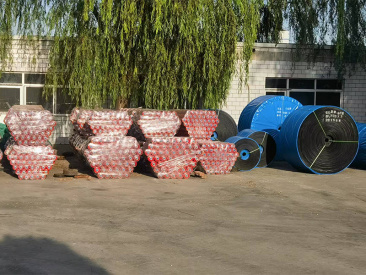
Eastrise's company brochure, including product scope and contact details, can be downloaded here: Eastrise company brochure (PDF). For a specific conveyor roller requirement, the drawing, the target duty and the required documentation set are enough to start.
Conclusion
A conveyor roller order is only as strong as the paper behind it. Price and lead time are outcomes of a supply relationship; the inputs that determine whether the rollers work are the confirmed drawing, the approved first article, the lot-level run-out and dimension records, and the traceability that lets a buyer settle a question months after delivery.
Read as a single sequence, the six gates answer the long-term question that a shortlisting exercise cannot: can this supplier still meet the same requirement on the third reorder, and can it show the evidence when asked? Trough idler angle and impact duty at the loading point are where selection decisions become physical, and they belong on the drawing rather than in a conversation. Batch material and inspection reports are where those decisions become verifiable. A supplier that treats all of it as routine documentation is easier to keep than to replace.
Have Questions or Need More Details?
Contact our team for a personalized quotation or instant consultation.
Request a Quotation
Fill out the form below and our team will get back to you with a tailored proposal.
WhatsApp Direct Chat
Prefer to chat in real-time? Message us on WhatsApp for instant assistance & quick answers.
- Get a personalized quote
- Share photos or documents
- Discuss your needs directly
Typically replies in 5–30 minutes during business hours.