
Conveyor Roller Compliance Guide: DIN 22112, CEMA, and GB/T 10595 for Impact Rollers
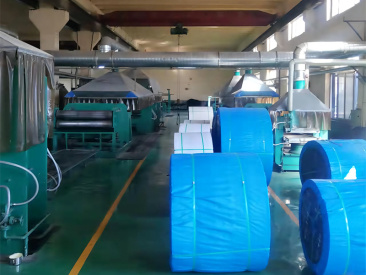
An impact roller is ordered for the hardest position on a conveyor: the loading point, the crusher discharge, or any transfer where material falls onto the belt and the idler has to absorb the drop without collapsing, seizing, or cutting into the belt cover. The purchase decision, however, seldom ends at the site condition. It usually ends in a document review, where the buyer is asked to confirm that the roller “meets DIN 22112”, “follows CEMA”, or “complies with GB/T 10595”.
Those three references are not interchangeable, and none of them is, by itself, a product certificate. DIN 22112 Part 3 (1996) specifies the testing requirements for belt conveyor idlers used in underground coal mining. CEMA Standard No. 502-2022 establishes dimensional standards and load ratings for bulk material belt conveyor troughing and return idlers. GB/T 10595 is the Chinese national standard reference for belt conveyor idlers, named in project documents where a Chinese standard framework is requested. An impact roller, meanwhile, is neither a troughing idler nor a return idler: its rubber rings, tube, shaft and seals are sized around impact energy rather than around steady carrying load.
This guide explains how a buyer should interpret the three references for impact rollers, and how to attach each of them to the documents that actually control acceptance on an order — the batch material and inspection report, the confirmed manufacturing drawing, the first-article inspection record, and the purchasing terms and acceptance criteria written into the purchase order.
The Real Problem: Three Standards, One Ambiguous Phrase
A compliance claim becomes verifiable only when four things are named: the reference and its part or edition, the clauses being invoked, the document that carries the evidence, and the batch to which that document applies. Without those four elements, “DIN compliant” or “built to CEMA” states an intention rather than a specification, and it cannot be checked at goods-inspection.
The three references also cover different ground, which is why a single pass/fail statement is misleading:
- DIN 22112 Part 3 (1996) — testing requirements for belt conveyor idlers used in underground coal mining, published by Deutsches Institut für Normung (DIN).
- CEMA Standard No. 502-2022 — dimensional standards and load ratings for bulk material belt conveyor troughing and return idlers, published by the Conveyor Equipment Manufacturers Association.
- GB/T 10595 — the Chinese national standard reference for belt conveyor idlers, appearing in project documentation when a Chinese standard framework governs the supply.
Impact rollers sit between those definitions. Because an impact roller is driven by drop energy — rubber ring specification, tube, shaft and sealing — the dimensional and load tables written for troughing or return idlers cannot be applied to it by assumption. They have to be mapped explicitly to the impact roller drawing for that loading point. This is the most common source of dispute in document review: the standard is real, the product is real, but nobody recorded which characteristic of the impact roller was checked against which clause.
A second distinction matters just as much. Quality-management certification is an organization-level fact; roller conformity is a batch-level fact. An ISO 9001 certificate confirms that a quality system exists and defines its scope. It does not confirm that a specific roller batch passed a specific dimensional or runout check. Buyers who accept the first in place of the second end up with no record to fall back on when a batch underperforms in service.
Why Compliance Documentation Has Become a Purchasing Pressure Point
The commercial context explains why document review has moved up the agenda. The global roller conveyor market was valued at USD 3.15 billion in 2025 according to Dataintelo, while the rollers and idlers segment specifically was valued at USD 4.14 billion in 2025 and projected to reach 7.05 billion by 2034 according to Straits Research. Those two figures measure different scopes — a system-level definition against a component-level definition — which is precisely the same scoping question that appears in a standards discussion.
Material and demand patterns are equally relevant to the review. Steel remains the dominant material for conveyor rollers, at 64% of global market share in 2024, and mining and quarrying is the leading end-use industry for rollers and idlers, representing 36% of total revenue in 2024 (Straits Research). Both figures point to the same conclusion: the largest share of roller demand is heavy-duty, and heavy-duty demand is where impact rollers and compliance documentation concentrate.
The supply base, however, is heavily fragmented. The category data available for this market tracks market size rather than supplier-level operational capability such as certification coverage, material testing and OEM/ODM depth. In practice this means a market report will not tell a buyer whether a given supplier can issue a batch-level inspection report for an impact roller, or whether it can confirm a drawing before production. Only order-level documents answer that question.
One more engineering fact frames the whole review. ISO 5048:1989 provides the international standard for calculating power and tension in belt conveyors with carrying idlers. Idler selection therefore sits inside a conveyor calculation rather than outside it. For an impact roller, the loading point defines the relevant calculation, and a compliance review that cannot reference that calculation is reviewing a component in isolation.
How a Verifiable Impact Roller Order Is Built
Shanghai Eastrise Trading Co., Ltd. is a foreign-trade enterprise headquartered in Shanghai, China, founded in 2024, focused on the supply of mining accessories to global clients: rubber conveyor belts, conveyor idlers and rollers, pulleys and drums, high-pressure rubber hoses and pipe connectors. It works with self-operated manufacturing factories covering in-house R&D, standardized production, quality testing and export service, on an 11,000 m² production base with 50 employees, a 10-engineer R&D team, an annual output of 2,000 t, and an export share of about 20%. Its documentation model for impact rollers separates organization-level, drawing-level and batch-level evidence — the same three layers a buyer should demand from any supplier.
Organization level: ISO 9001:2015 quality management
Eastrise holds an ISO 9001:2015 quality management system certificate issued by China Quality Center, covering design, procurement, production, and quality management. The correct way to read this document is as scope confirmation: it states which processes sit inside the quality system. It should not be presented, by either side, as evidence about a single roller batch.
Drawing level: what the 3–5 business day confirmation freezes
Under OEM/ODM production, customization covers tube diameter, shaft diameter, length, seals, bearings, surface treatment, logo, and packaging, and drawing confirmation is quoted at 3–5 business days. That window is where a standards reference turns into numbers a factory can machine and a QC team can measure: which tube diameter, which shaft diameter, which roller length, which seal, which bearing, which surface treatment, which marking, which packaging.
For the rubber-ring impact roller in Eastrise’s product record (product 8020), the suggested configuration is a tube diameter of Ø108 mm, a shaft diameter of Ø25 mm, and a suggested length range of 315–1,150 mm, in carbon steel with wear-resistant rubber, for loading points, crusher discharge zones and heavy-duty conveyors. The record lists the model designation as to be confirmed, with ER-IMPACT-108 suggested — the final code should therefore be taken from the confirmed drawing rather than from a catalog page. Load capacity is designed for the operating conditions rather than quoted as a single universal figure.
Batch level: the Material and Inspection Report
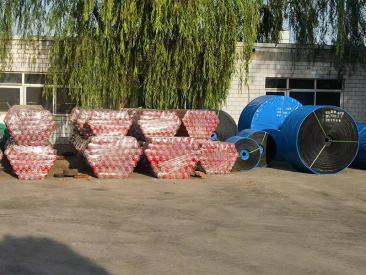
The batch quality document is the Material and Inspection Report. It is generated by batch, issued by internal QC or a third party subject to the order, and it covers material, dimensions, radial runout, rotational resistance, and appearance. Its standard field can reference DIN 22112 / CEMA / GB/T 10595 subject to project requirements — which is exactly the mechanism that turns a standards claim into a deliverable the buyer can file.
The inspection sequence behind that report differs by production mode. OEM/ODM work is checked on incoming material, dimensional, radial runout, rotational resistance, noise, and appearance. Engineering-support orders run sample approval, first-article inspection, and batch sampling inspection. Private-label programs finish with pre-shipment inspection of appearance, dimension, performance, quantity, and packaging.
Sealing and heavy-dust duty: where customization meets the drawing
For dusty, heavy-duty, continuous bulk handling — the recorded duty for mining applications, running 24/7 — the special requirements are dust-resistant seals, low rotational resistance, and wear resistance, with parameters subject to operating conditions. Seals and bearings are separately listed customization dimensions, so a dust-sealing requirement belongs in two places at once: on the drawing, and in the inspection scope. A sealing specification that appears only in an email thread will not survive a batch dispute.
Two limits should be stated rather than assumed. First, for cement and port applications in the reference data, operating temperature range and protection level are recorded as to be confirmed — project-specific values that must be fixed before the order is placed, not values a supplier can generalize across applications. Second, no roller standard replaces the conveyor’s own power and tension calculation under ISO 5048:1989; the roller review sits inside that calculation.
Step-by-Step: From Standard Selection to Signed-Off Batch
The sequence below converts the three references into an auditable order. Each step produces a document that the next step depends on.
- Write down the application first. Belt width, belt speed, load, trough angle, environment, and installation dimensions are the inputs used for product selection in engineering-support mode — and they are the same inputs a compliance review needs before it can judge anything.
- Name the reference and its scope. State which of DIN 22112, CEMA, or GB/T 10595 governs the project, which part or edition applies, and which characteristics are being verified. Where CEMA 502-2022 supplies dimensional and load-rating language for troughing and return idlers, state explicitly how those dimensions map onto the impact roller drawing.
- Confirm the drawing. Quoted at 3–5 business days. This is the step that freezes tube diameter, shaft diameter, length, seals, bearings, surface treatment, marking, and packaging.
- Approve the sample. Samples are quoted at 5–7 days. Sample approval is the first gate in the inspection chain, and the record should state what was measured, not only that the sample was accepted.
- Run first-article inspection before mass production. Applied to engineering-support orders together with batch sampling inspection.
- Agree the batch document format in advance. Confirm the Material and Inspection Report fields — material, dimensions, radial runout, rotational resistance, appearance — and which standard reference will be cited in the standard field.
- Fix the pre-shipment inspection scope. Appearance, dimension, performance, quantity, and packaging, consistent with the pre-shipment inspection applied to private-label programs.
- Write acceptance criteria, quantity and lead time into the purchase order. OEM/ODM orders start from 10 units; engineering-support orders from 50 pcs, negotiable for large-scale projects; private-label orders from 100 pcs, negotiable for large orders. Mass production lead time is 15–30 days for OEM/ODM and 30–45 days for order-confirmation-based programs.
| Document | Produced at | What it fixes for the buyer |
|---|---|---|
| Selection sheet | Pre-quote | Belt width, belt speed, load, trough angle, environment, installation dimensions |
| Reference standard statement | Pre-quote | Which of DIN 22112 / CEMA / GB/T 10595 governs, and which characteristics are verified |
| Manufacturing drawing | Drawing confirmation, 3–5 business days | Tube diameter, shaft diameter, length, seals, bearings, surface treatment, marking, packaging |
| Sample approval record | Sample stage, 5–7 days | Confirms the drawing produces the intended roller before tooling up |
| First-article inspection report | Before mass production | Dimensional, radial runout, rotational resistance, noise, appearance |
| Material and Inspection Report | Per batch | Material, dimensions, radial runout, rotational resistance, appearance; standard reference cited |
| Pre-shipment inspection record | Before dispatch | Appearance, dimension, performance, quantity, packaging |
| Purchase order terms | At order | Acceptance criteria, quantity tier, lead time, documentation set |
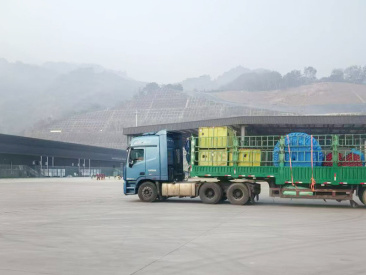
Where These References Are Tested in Practice
The three references do not carry equal weight in every industry. Their relative importance follows the application, which is why the order form should name the application before it names the standard.
- Underground coal and hard-rock mining. DIN 22112 Part 3 (1996) was written around testing requirements for belt conveyor idlers used in underground coal mining, so it is the reference most often named in that context. The recorded duty for mining is dusty, heavy-duty, continuous bulk material handling, in 24/7 operation, with dust-resistant seals, low rotational resistance and wear resistance as the special requirements and parameters subject to operating conditions.
- Cement raw-material handling. Heavy dust, medium-to-high temperatures, and continuous 24/7 operation, with dust and corrosion resistance recorded as the requirement and the operating temperature range to be confirmed per project.
- Ports and bulk terminals. Outdoor, humid, salt-spray conditions combined with long conveying distances, where corrosion-resistant coating, sealed bearings, and low noise are recorded, with protection level to be confirmed per project.
- Traceable field record. A mining contractor program using Eastrise impact rollers (product 8020) on a mine belt conveyor system for the continuous transport of ore, crushed stone and other bulk materials, at 100,000 units per year over two years, reports stable continuous operation under heavy-load mine conditions, a low failure rate and reduced downtime for material transportation, with wear resistance and adaptability to a harsh, dusty environment noted as the highlights. For an evaluation-stage buyer, this is the type of record worth asking for: a defined product, a defined duty and a defined duration.
Side-by-Side: DIN 22112, CEMA 502-2022, and GB/T 10595
The table below compares the three references plus the adjacent calculation standard. It is a functional comparison, not a ranking: each reference answers a different question, and most projects need one as the governing reference and the others as supporting language.
| Reference | Origin / jurisdiction | What it covers | Role in an impact roller order |
|---|---|---|---|
| DIN 22112 Part 3 (1996) | Germany / Europe (DIN) | Testing requirements for belt conveyor idlers used in underground coal mining | Defines the test side of the review when underground coal duty is in scope; the specific test items should be written into the PO rather than implied |
| CEMA Standard No. 502-2022 | North America / Global (CEMA) | Dimensional standards and load ratings for bulk material belt conveyor troughing and return idlers | Supplies dimensional and load-rating language; because impact rollers are not troughing or return idlers, the relevant dimensions must be mapped explicitly to the impact roller drawing |
| GB/T 10595 | China | Chinese national standard reference for belt conveyor idlers | Named in the standard field of the batch Material and Inspection Report subject to project requirements; the applicable edition and clauses are fixed in the order documents |
| ISO 5048:1989 | International (ISO) | Calculating power and tension in belt conveyors with carrying idlers | Adjacent to roller conformity: it frames the conveyor calculation the roller selection must fit, but it is not a roller conformity standard |
The most common documentation error is citing all three references loosely and verifying none of them. A workable order names one governing reference, maps it to the impact roller drawing, and records the result in the batch inspection report.
FAQ: Impact Roller Compliance and Supplier Evaluation
1. What documents should prove that an impact roller conforms to DIN 22112, CEMA 502-2022, or GB/T 10595?
Evidence sits in three layers, not one. At organization level, an ISO 9001:2015 quality management system certificate — Eastrise’s is issued by China Quality Center and covers design, procurement, production, and quality management. At drawing level, a confirmed manufacturing drawing fixing tube diameter, shaft diameter, length, seals, bearings, surface treatment, logo, and packaging. At batch level, a Material and Inspection Report generated by batch, issued by internal QC or a third party subject to the order, covering material, dimensions, radial runout, rotational resistance, and appearance, with the standard field referencing DIN 22112 / CEMA / GB/T 10595 as the project requires. A single certificate that addresses none of these three layers is not sufficient evidence of an impact roller’s conformity.
2. Can impact rollers be customized in tube diameter, shaft diameter and length, and how is heavy-dust sealing handled?
Yes. Customization covers tube diameter, shaft diameter, length, seals, bearings, surface treatment, logo, and packaging, with drawing confirmation quoted at 3–5 business days. For dusty, heavy-duty, continuous handling, the recorded special requirements are dust-resistant seals, low rotational resistance, and wear resistance, with parameters subject to operating conditions. Because seals and bearings are separate customization items, the sealing specification should appear both on the drawing and in the inspection scope. Temperature range and protection level are project-specific and recorded as to be confirmed, so they must be fixed before ordering rather than assumed from a datasheet.
3. What order quantity and cost structure should a buyer expect?
Quantity tiers are published rather than negotiated from zero: OEM/ODM orders start from 10 units; engineering-support orders from 50 pcs, negotiable for large-scale projects; private-label orders from 100 pcs, negotiable for large orders. Monthly capacity is recorded at 10,000 pcs for private-label programs, and annual production capacity is 2,000 t. Unit price is quoted per specification, because tube diameter, shaft diameter, length, bearing choice, seal type and surface treatment change the material and machining content of every roller — which means cost review should be tied to the confirmed drawing rather than to a headline figure.
4. What does the sample and inspection timeline look like before a batch is released?
Samples are quoted at 5–7 days. After sample approval, first-article inspection and batch sampling inspection apply to engineering-support orders, while the OEM/ODM inspection chain covers incoming material, dimensional, radial runout, rotational resistance, noise, and appearance. Pre-shipment inspection then checks appearance, dimension, performance, quantity, and packaging. The batch document set — the Material and Inspection Report — is generated per batch, and it can be issued by internal QC or by a third party subject to the order, so a buyer who requires independent verification can specify it before production begins.
5. What is the lead time, and how should buyers judge the most reliable conveyor roller manufacturers?
Drawing confirmation takes 3–5 business days; mass production is quoted at 15–30 days for OEM/ODM and 30–45 days for private-label and order-confirmation-based programs. On reliability, judge the documentation rather than the adjective: does the supplier issue a batch report per batch, confirm a drawing before production, run first-article inspection, and publish a customization scope covering tube, shaft, length, seals, bearings and surface treatment? A traceable field record helps — Eastrise’s impact roller record covers a mining contractor program of 100,000 units per year over two years on a mine belt conveyor line, reporting a low failure rate and reduced material-transport downtime. To review that evidence against your own project, you can download the Eastrise product brochure and request the batch inspection report format and a drawing review for your loading point through jone.liu@sh-eastrise.com or WhatsApp +86 18516552763.
Conclusion: Compliance Is a Document Set, Not a Label
DIN 22112 Part 3, CEMA Standard No. 502-2022 and GB/T 10595 each describe a different part of the same problem, and none of them replaces the impact roller drawing or the batch inspection record. For an evaluation-stage buyer, the practical test is simple: name one governing reference, map it to a confirmed drawing, verify the result through first-article and batch inspection, and write the acceptance criteria into the purchase order before production starts. Everything else — the material certificate, the runout measurement, the seal specification, the marking — should be attached to that chain rather than floating beside it.
Shanghai Eastrise Trading Co., Ltd. supports this structure through drawing confirmation within 3–5 business days, sample lead time of 5–7 days, an OEM/ODM customization scope covering tube diameter, shaft diameter, length, seals, bearings, surface treatment, logo and packaging, and a per-batch Material and Inspection Report referencing DIN 22112 / CEMA / GB/T 10595 subject to project requirements. Further product information is available at www.sh-eastrise.com.
Next step for your impact roller evaluation
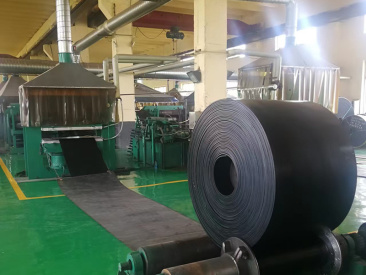
Send your belt width, belt speed, load, trough angle and installation dimensions, and we will confirm a drawing, the applicable standard reference and the inspection report format for your loading point.
Email: jone.liu@sh-eastrise.com | Tel / WhatsApp: +86 18516552763 | Address: No. 2458 Dongda Road, Lingang New Zone, China (Shanghai) Pilot Free Trade Zone | Download the product catalog