
What Is an Impact Roller and Why Your Loading Point Needs One
An impact roller is a conveyor roller that carries the belt and absorbs the energy of falling material at the same time. The rubber-ring impact roller referenced here as ER-IMPACT-108 fits a rubber ring over a carbon steel tube, and it is installed where bulk material first lands on the belt: loading points, crusher discharge stations and other heavy-duty transfer positions. A standard idler is designed for a steady, distributed load. An impact roller is designed for a repeated strike.
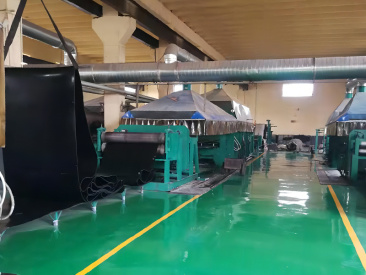
The difference matters most in continuous operation. On a 24/7 bulk handling line, the loading point receives the highest impact energy of any station and is usually the station where a failure costs the most production time. This article defines the impact roller, explains how a roller moves material in the first place, compares it with standard idlers on the same line, and shows how to specify one for a given loading point.
Impact roller at a glance
- Structure: a rubber ring over a carbon steel tube, rotating on bearings.
- Model reference in this article: ER-IMPACT-108, with a suggested tube diameter of Ø108 mm and shaft diameter of Ø25 mm.
- Installed at: loading points, crusher discharge and heavy-duty conveyors.
- Suggested length range: 315-1,150 mm, with load capacity designed for the operating condition.
- Core function: support the belt and absorb impact energy at the transfer point.
- Duty profile: continuous, dusty, heavy-load conveying in mining, quarrying, cement and bulk terminal operations.
Why a Loading Point Needs an Impact Roller
At a transfer point, material leaves a chute, a crusher or an upstream belt and lands on the receiving belt. That falling energy is concentrated on a short belt section, and on the rollers directly beneath it. The belt cover, the roller shell and the bearing arrangement all take the strike.
A standard troughing carrying idler is built for a different job: it forms the belt into a trough and carries a distributed load along the run. Under repeated impact, the same idler receives a concentrated shock it was not dimensioned for. The symptoms usually appear in sequence:
- localised damage to the belt cover where the material stream lands;
- deformation of the roller body or early bearing failure under the impact zone;
- spillage and increasing mistracking as the belt profile is disturbed at the transfer;
- unplanned stops that interrupt the whole conveying line, not just one station.
The loading point is also the hardest station to service. In mine, quarry and cement duty, dust is constant and the line runs continuously, so the window for inspection is narrow and a roller sitting under the chute is expensive to reach. Impact protection is therefore a station-specific requirement rather than a general upgrade: the roller under the material stream has to do more than rotate.
An impact roller answers the problem through its structure. The rubber ring sits over the steel tube, so falling material meets a resilient surface that absorbs energy instead of passing it straight into the belt cover and the roller body. The steel tube keeps the load-carrying strength, while the rubber absorbs the shock and recovers after each strike.
Industry Background: Why Bulk Handling Keeps Asking for Impact Rollers
Rollers and idlers are a measurable segment of global industrial equipment, and the duty profile that drives impact protection is the segment that keeps growing. Published market research from Straits Research values the global rollers and idlers segment at USD 4.14 billion in 2025, projected to reach USD 7.05 billion by 2034. Dataintelo values the broader global roller conveyor market at USD 3.15 billion in 2025. The two figures describe different scopes, component level versus system level, so they should not be read as one comparable number.
Two structural facts explain where impact duty concentrates. Straits Research reports that steel remained the dominant material for conveyor rollers, accounting for 64% of global market share in 2024, and that mining and quarrying was the leading end-use industry for rollers and idlers with 36% of total revenue in 2024. Heavy mineral and quarry conveying is therefore both the largest application and the application with the most aggressive loading conditions.
Standards point in the same direction. ISO 5048:1989 provides the international standard for calculating power and tension in belt conveyors with carrying idlers. CEMA Standard No. 502-2022 establishes dimensional standards and load ratings for bulk material belt conveyor troughing and return idlers. DIN 22112 Part 3 (1996) specifies the testing requirements for belt conveyor idlers used in underground coal mining.
How a Conveyor Roller Moves Material
Before comparing roller types, it helps to be precise about the basic mechanism. A conveyor roller supports the conveyor belt through bearing rotation and converts rotational power into linear motion of the belt, which is what moves the material. Inside the roller, bearings reduce rotation resistance. Friction occurs between the roller outer surface and the conveyor belt. Motor-driven roller rotation then pulls the belt, and the material on top of it, forward to generate continuous linear displacement for material conveying.
Three practical consequences follow. First, rotational resistance directly affects the energy the conveyor must spend, so bearing quality and seal protection matter over long runs. Second, the contact surface between roller and belt determines wear on both sides. Third, any roller that cannot rotate freely becomes a drag point. At a loading point, impact energy is added on top of all three, which is why the roller surface there is designed to deform and recover rather than simply resist.
What the Impact Roller Changes: Structure, Material and Documentation
Shanghai Eastrise Trading Co., Ltd. is a Shanghai-based foreign-trade enterprise that supplies mining accessories, including conveyor idler rollers, through self-operated manufacturing facilities with in-house R&D, standardized production, quality testing and worldwide export services. The company's impact roller is a rubber-ring design: a wear-resistant rubber ring over a carbon steel tube.
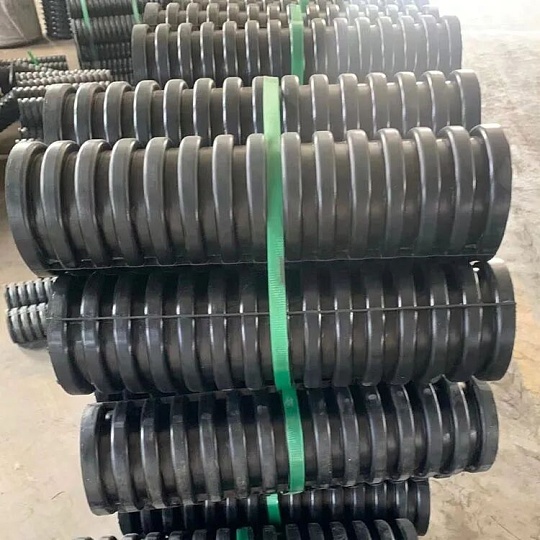
The table below records the parameters confirmed for the ER-IMPACT-108 reference configuration. Dimensions marked as suggested are fixed against the actual loading point during engineering review, and the rubber ring specification is confirmed per operating condition.
| Parameter | ER-IMPACT-108 reference |
|---|---|
| Product type | Rubber-ring impact roller |
| Material | Carbon steel tube with wear-resistant rubber ring |
| Tube diameter (suggested) | Ø108 mm |
| Shaft diameter (suggested) | Ø25 mm |
| Length range (suggested) | 315-1,150 mm |
| Rubber ring specification | Confirmed against the operating condition |
| Load capacity | Designed for the operating condition |
| Typical positions | Loading points, crusher discharge, heavy-duty conveyors |
Because impact rollers sit in the harshest position on the line, the supply chain around them matters as much as the roller itself. Eastrise produces to order and supports three production routes, OEM/ODM, engineering support and private label, with customization covering tube diameter, shaft diameter, length, seals, bearings, surface treatment, logo and packaging. Quality control runs from incoming material through dimensional, radial runout, rotational resistance, noise and appearance inspections, and pre-shipment inspection covers dimensions, appearance, radial runout, rotational resistance, quantity and packaging.
Documentation follows the same logic. Each batch is supported by a material and inspection report covering material, dimensions, radial runout, rotational resistance and appearance, with DIN 22112, CEMA or GB/T 10595 applied subject to project requirements. The company operates an ISO 9001:2015 quality management system certified by the China Quality Center, covering design, procurement, production and quality management. The manufacturing base behind these rollers covers 11,000 m2 with 50 employees, an annual output of 2,000 t and an R&D team of 10 engineers.
Step-by-Step: Specifying an Impact Roller for a Loading Point
- Collect the duty data. Impact roller selection is based on belt width, belt speed, load, trough angle, environment and installation dimensions. Without these six inputs, any dimension is a guess.
- Confirm the drawing. On the engineering support route, drawing confirmation takes 3-5 business days. This is where tube diameter, shaft diameter, length, seal and bearing arrangement are locked to the installation.
- Approve a sample or first article. Acceptance criteria are a customer-approved sample or drawing confirmation, and inspection records are available. Sample approval and first-article inspection come before batch production.
- Run mass production. In the OEM/ODM route, samples take 5-7 days and mass production takes 15-30 days. In the private label and engineering support routes, the quoted lead time is 30-45 days upon order confirmation.
- Inspect before shipment. Pre-shipment inspection covers dimensions, appearance, radial runout, rotational resistance, quantity and packaging, with optional third-party inspection and acceptance criteria stated in the contract.
- Install and support. After-sales support includes remote technical support, installation guidance, warranty coverage, drawings, inspection reports and spare parts recommendations.
Commercial parameters differ by production route, so they are quoted separately rather than as a single number:
| Production route | Customization scope | Minimum order quantity | Lead time |
|---|---|---|---|
| OEM / ODM | Tube diameter, shaft diameter, length, seals, bearings, surface treatment, logo, packaging | 10 units | Samples 5-7 days; mass production 15-30 days |
| Engineering support | Selection based on belt width, belt speed, load, trough angle, environment and installation dimensions | 50 pcs, negotiable for large-scale projects | Drawing confirmation 3-5 business days; mass production 30-45 days |
| Private label | Nameplates, colors, packaging, labels, manuals | 100 pcs, negotiable for large orders | 30-45 days upon order confirmation |
Where Impact Rollers Are Used
The application list for this roller is deliberately narrow: loading points, crusher discharge and heavy-duty conveyors. Four operating environments define the demand.
Mining and quarry conveying
Ore conveyor lines run 24/7 in dusty, heavy-duty conditions with continuous bulk material handling. At the loading station, the roller supports the belt and absorbs loading impact while resisting dust ingress and keeping rotational resistance low. Rollers for this duty are specified with dust-resistant seals and wear-resistant surfaces, with parameters set by the operating condition.
Crusher discharge and transfer points
The discharge side of a crusher is the highest-energy transfer on most plants: material is already broken, fast-moving and irregular in size. This is the position where a standard carrying roller is most likely to fail early, and where the rubber ring earns its place.
Cement and raw material handling lines
Cement lines combine heavy dust, medium-to-high temperatures and continuous operation. Rollers here are selected to provide stable support and to reduce belt mistracking and maintenance frequency, with dust and corrosion resistance specified and the operating temperature range confirmed per project.
Bulk terminals and port conveying
Outdoor, humid, salt-spray and long-distance conveying conditions shift the specification emphasis toward corrosion-resistant coating, sealed bearings and low noise, with the protection level confirmed per project.
Field evidence: continuous mine conveying
A mining contractor running a mine belt conveyor system for the continuous transport of ore, crushed stone and other bulk materials used 100,000 units per year of these conveyor rollers across a two-year period. The reported result was stable continuous operation under heavy-load mine conditions, with a low failure rate and reduced downtime for material transportation. The two characteristics highlighted in that application were wear resistance and adaptability to the harsh, dusty mine environment, which are the properties that decide whether a loading point stays in service.
Impact Roller vs Standard Idlers: A Comparison
Impact protection is a position-specific decision. The table below compares the roller types commonly found on the same conveyor line. Only the impact roller row reflects the ER-IMPACT-108 specification above; the other rows describe the general function of each position.
| Roller type | Position on the line | Core function | Where it fits best |
|---|---|---|---|
| Rubber-ring impact roller (ER-IMPACT-108) | Loading point, crusher discharge, heavy-duty transfer | Supports the belt and absorbs impact energy through a rubber ring over a carbon steel tube | Stations with falling bulk material, repeated shock and continuous heavy load |
| Standard troughing carrying idler | Along the loaded run | Forms the belt trough and carries the loaded belt | Steady, distributed load with no significant impact energy |
| Return roller | Return strand | Supports the empty belt on its return path | Belt support and smooth running on the return side |
| Self-aligning / guide roller | Sections prone to belt drift | Corrects belt alignment and tracks the belt | Alignment correction, used alongside impact protection rather than instead of it |
The practical rule is short: a self-aligning roller corrects tracking and a return roller supports the empty strand, but neither is built to absorb the strike energy at a transfer point. Where the material stream lands, the roller has to be specified for impact first.
Frequently Asked Questions
Which standards apply to impact rollers at a loading point?
Impact rollers sit inside the same conveyor idler standards framework as other roller positions. ISO 5048:1989 provides the international standard for calculating power and tension in belt conveyors with carrying idlers. CEMA Standard No. 502-2022 sets dimensional standards and load ratings for bulk material belt conveyor troughing and return idlers. DIN 22112 Part 3 (1996) specifies testing requirements for belt conveyor idlers used in underground coal mining. For supplied rollers, a material and inspection report covers material, dimensions, radial runout, rotational resistance and appearance, with DIN 22112, CEMA or GB/T 10595 applied subject to project requirements. Shanghai Eastrise Trading Co., Ltd. operates an ISO 9001:2015 quality management system certified by the China Quality Center, covering design, procurement, production and quality management.
Can Eastrise act as an OEM belt conveyor roller manufacturer for impact rollers?
Yes. Shanghai Eastrise Trading Co., Ltd. provides OEM and ODM production services for conveyor rollers and impact rollers, alongside engineering support and private label routes, and produces to order. OEM/ODM customization covers tube diameter, shaft diameter, length, seals, bearings, surface treatment, logo and packaging, with a minimum order quantity of 10 units. In the engineering support route, roller selection is based on belt width, belt speed, load, trough angle, environment and installation dimensions, with drawing confirmation in 3-5 business days before sampling.
What determines the cost and minimum order quantity of an impact roller?
An impact roller is a configured component rather than a catalogue stock item, so cost is driven by the build: tube diameter, shaft diameter, length, seal and bearing selection, surface treatment and packaging, plus order quantity and delivery terms. Minimum order quantity depends on the production route, with 10 units for OEM/ODM, 50 pcs for engineering support (negotiable for large-scale projects) and 100 pcs for private label (negotiable for large orders). Commercial terms include FOB, CIF and EXW delivery options and T/T payment, with a 30% deposit and 70% before shipment available on the OEM/ODM route.
How is a sample validated before mass production?
The sample stage is the acceptance stage. Acceptance criteria are a customer-approved sample or drawing confirmation, and inspection records are available. In the OEM/ODM route samples are produced in 5-7 days; in the engineering support route the drawing is confirmed within 3-5 business days first. Eastrise applies sample approval, first-article inspection and batch sampling inspection, with incoming material, dimensional, radial runout, rotational resistance, noise and appearance checks. Sample payment terms are subject to order confirmation.
What lead time should a buyer plan for on a bulk impact roller order?
Plan in two stages. For OEM/ODM orders, mass production takes 15-30 days after confirmation. For private label and engineering support orders, the quoted lead time is 30-45 days upon order confirmation, with monthly capacity stated at up to 10,000 pcs in the private label route. Delivery supports FOB, CIF and EXW terms, full container load and less-than-container load shipments, with export documents provided. The fastest way to fix a delivery date is to send the loading point data, belt width, belt speed, load, trough angle, environment and installation dimensions, and request a quotation and sample.
Conclusion: Impact Protection Is a Position Decision
An impact roller is not a heavier carrying roller; it is a different component. It places a wear-resistant rubber ring over a carbon steel tube so that strike energy at a loading point or crusher discharge is absorbed at the roller surface, and it is specified through the same duty data and standards framework as every other roller on the line. For operations running heavy-load conveying around the clock, that structure is what keeps the belt cover intact, rotation smooth and the loading station out of the maintenance backlog.
The evaluation sequence is short: confirm the duty data, confirm the drawing, approve a sample, inspect before shipment, and install with documented support. The checks worth insisting on are the material and inspection report, the quality management system behind it, and the supplier's ability to customize dimensions and seals to the actual loading point rather than to a stock size.
Request an Impact Roller Sample or Quotation
Send your loading point data, belt width, belt speed, load, trough angle, environment and installation dimensions, and Shanghai Eastrise Trading Co., Ltd. will confirm the roller configuration, drawing and lead time. Samples are produced in 5-7 days on the OEM/ODM route.
Email: jone.liu@sh-eastrise.com | WhatsApp / Tel: +86 18516552763 | Website: www.sh-eastrise.com
Full roller range, materials and specifications: download the Eastrise product brochure (PDF).
Have Questions or Need More Details?
Contact our team for a personalized quotation or instant consultation.
Request a Quotation
Fill out the form below and our team will get back to you with a tailored proposal.
WhatsApp Direct Chat
Prefer to chat in real-time? Message us on WhatsApp for instant assistance & quick answers.
- Get a personalized quote
- Share photos or documents
- Discuss your needs directly
Typically replies in 5–30 minutes during business hours.