Inlet Consistency and Throughput: The Design Inputs Behind Every Sludge Dewatering Machine Choice
Two process numbers define a sludge dewatering machine before any other consideration does: the solids concentration of the feed (inlet consistency) and the flow you must process (throughput). Inlet consistency decides which stage of the treatment chain is technically possible. Throughput decides the model size inside that stage, and whether one unit is enough or a two-stage system is required.
This is a technical guide for buyers, plant engineers and project teams who are still at the awareness and research stage — comparing technologies rather than negotiating a purchase. It walks through the published parameter bands of belt press, screw press, thickening, deep dewatering and drying lines, shows where a 0.6% feed and a 20% feed belong, and explains the unit conventions that cause most specification misunderstandings.
Why Inlet Consistency and Throughput Come First
Inlet consistency is the concentration of suspended solids in the sludge entering the machine, usually written as a percentage of solids (S.S.). Throughput is the volume or mass the machine processes per hour — expressed in m³/h on low-solids lines and in t/h or kg/h on high-solids lines.
A capacity figure without an inlet consistency band is not a specification; it is an incomplete statement. A machine rated at 90 m³/h is rated at that flow for a defined feed concentration and a defined output cake. Change the feed and the same machine produces a different result. Change the required output dryness and the usable capacity moves again. This is why two machines with similar-looking numbers can behave completely differently on the same site.
Most selection errors trace back to one of four situations:
- A high-solids machine is proposed for a low-solids feed, so the press cannot form a stable cake without an upstream thickening stage.
- A low-solids machine is proposed for a pre-dewatered feed in the 15–20% range, which is outside its design band.
- Throughput is read from the wrong unit line — cubic metres per hour taken as a solids load, or a solids load taken as a flow.
- Capacity quoted for a 75–85% water content cake is assumed to hold when the project target is 60–70%.
The practical rule is simple: establish the feed concentration band first, select the technology family second, and size the model by throughput third.
Industry Background: A Maturing Market With Tightening Specification Discipline
The commercial context supports the technical argument. The global sludge dewatering equipment market was valued at USD 5.19 billion in 2024 and is projected to reach USD 10.16 billion by 2032, according to Fortune Business Insights. Asia Pacific dominated that market in 2024 with a revenue share of 37.57% (Fortune Business Insights), and the belt filter press segment was estimated to grow at a CAGR of 8.8% from 2025 to 2033, widely used in municipal wastewater applications (Grand View Research). More capacity is being ordered, and more of it is being ordered against tighter output targets.
On the measurement side, ISO 11465:2025 provides the international standard for determination of dry residue and water content in sludge and solid environmental matrices. That matters operationally: inlet consistency and cake water content are the two numbers a project is judged on, and both are defined by a test method. When a supplier quotes a 75–85% water content result, the number is only comparable to another supplier's number if both are expressed on the same dry-residue basis.
Equipment supply has also broadened. Shanghai Fuchan Machinery Technology Co., Ltd. (SFC Machinery) is a Shanghai-based manufacturer of sludge treatment equipment, established in 2007, that builds thickening, dewatering, deep dewatering, drying and polymer preparation systems — so its published parameter bands cover both ends of the consistency spectrum and can be used to illustrate the selection logic below. The company operates a 25,000 m² manufacturing facility with an annual production capacity of 500 sets, employs about 36 people including a 5-engineer R&D team, and exports to Southeast Asia, Russia, South America and the Middle East, with export business accounting for 30% of total sales.
Reading the Parameter Bands Across Sludge Dewatering Equipment Lines
Published ranges cluster into four consistency bands. Each band answers a different question, and each uses its own capacity unit.
Band 1 — 0.6–1.5% solids: integrated belt thickening and dewatering
Typical municipal and many industrial sludges arrive in this range. The machines that accept this feed combine thickening and dewatering in one unit, because the feed is too dilute for a press section to handle directly.
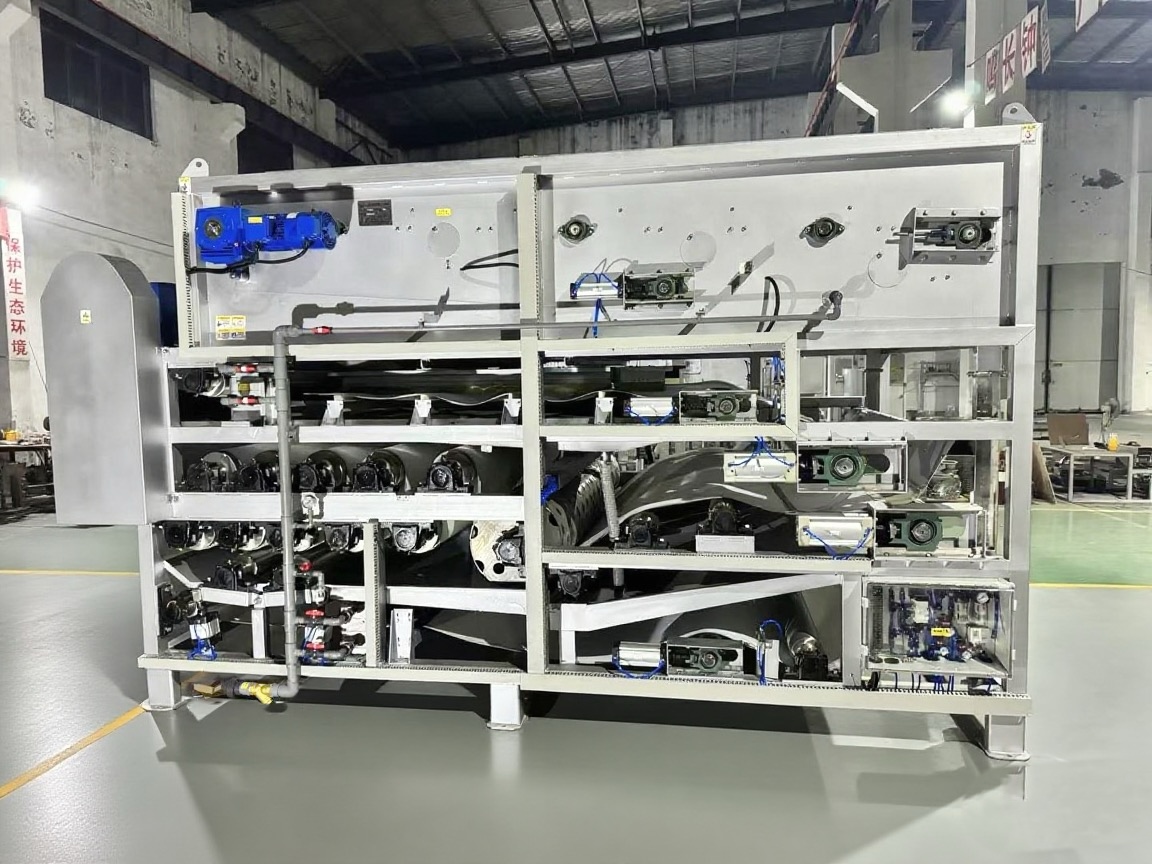
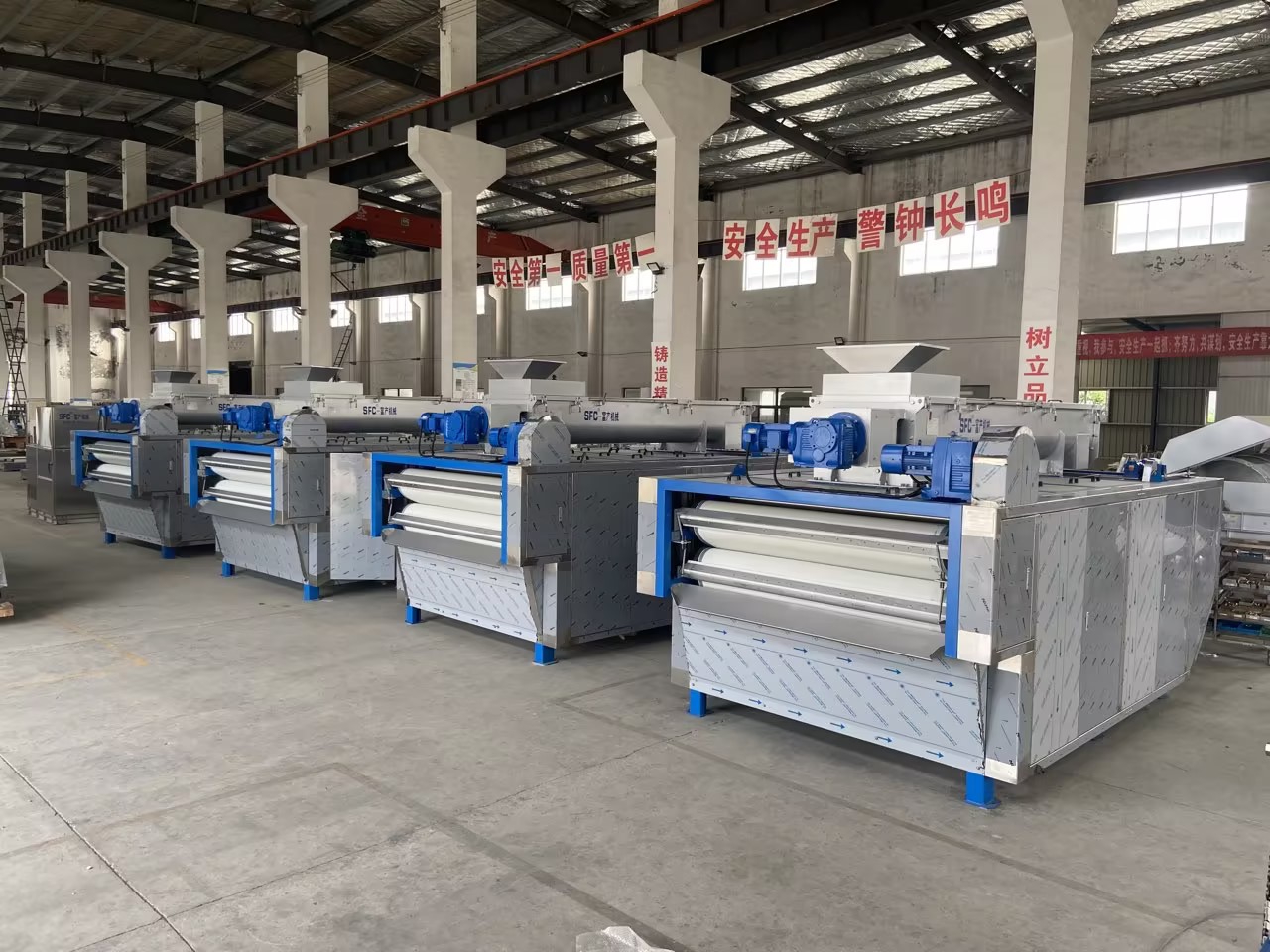
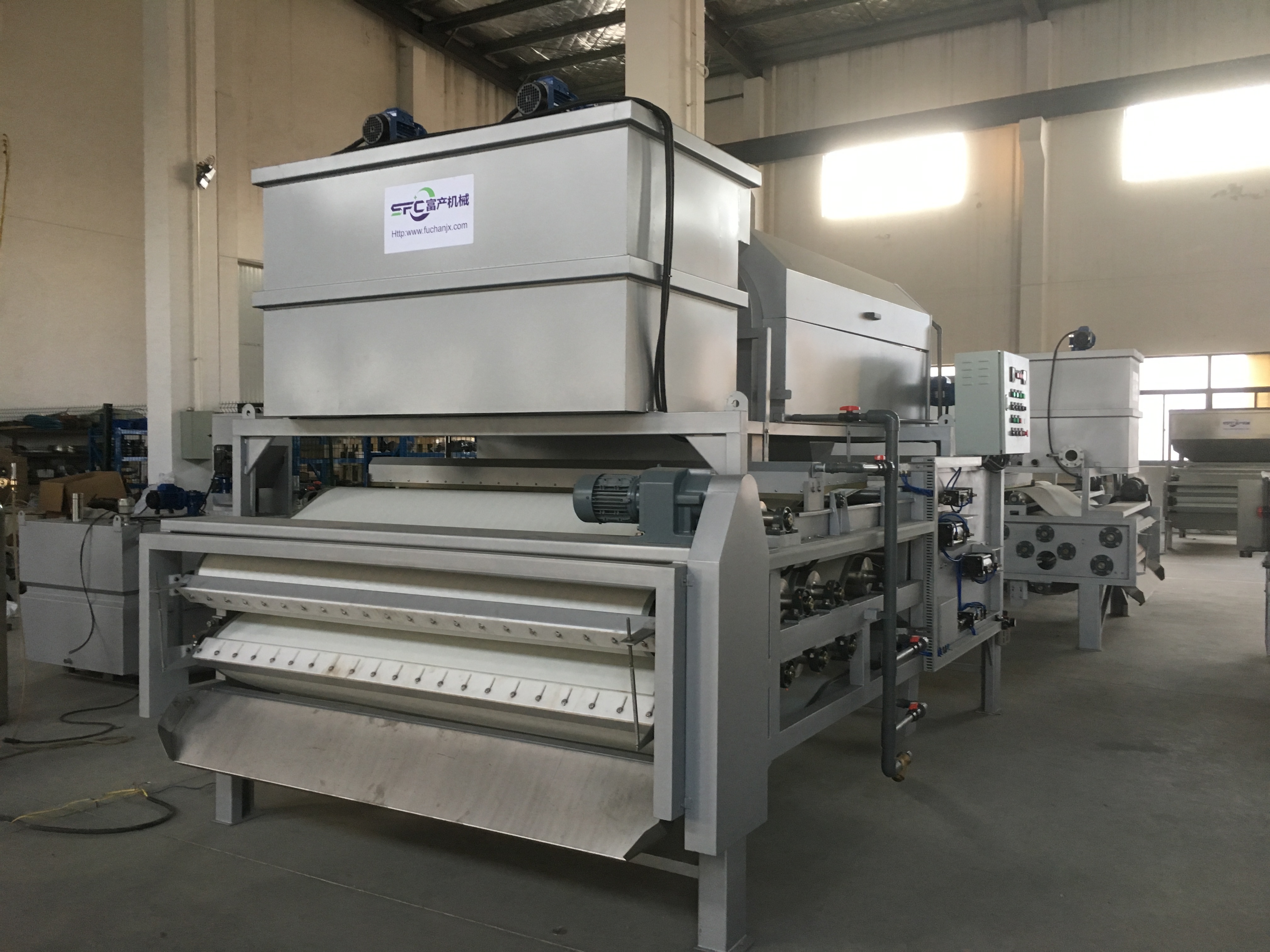
The GDY Series belt sludge thickening and dewatering machine is built for this band: inlet consistency S.S. 0.6–1.5%, treating capacity 15–90 m³/h, dried sludge output 90–1050 kg/h, water content rate 75–80%, belt width 1000–3000 mm and drive power 1.1–4.0 kW. It integrates gravity belt thickening and belt press dewatering into a single unit, which is why it is applied to high-flow continuous sludge dewatering projects in municipal and industrial wastewater treatment, paper mills and printing and dyeing.
The FTE Series rotary drum type sludge thickening and dewatering machine also operates at S.S. 0.6–1.5% but uses a rotary drum thickener ahead of the belt press section, with treating capacity 12–90 m³/h, dried sludge 90–975 kg/h, water content rate 75–85% and belt width 1000–3000 mm. It is positioned for medium and large continuous dewatering duty.
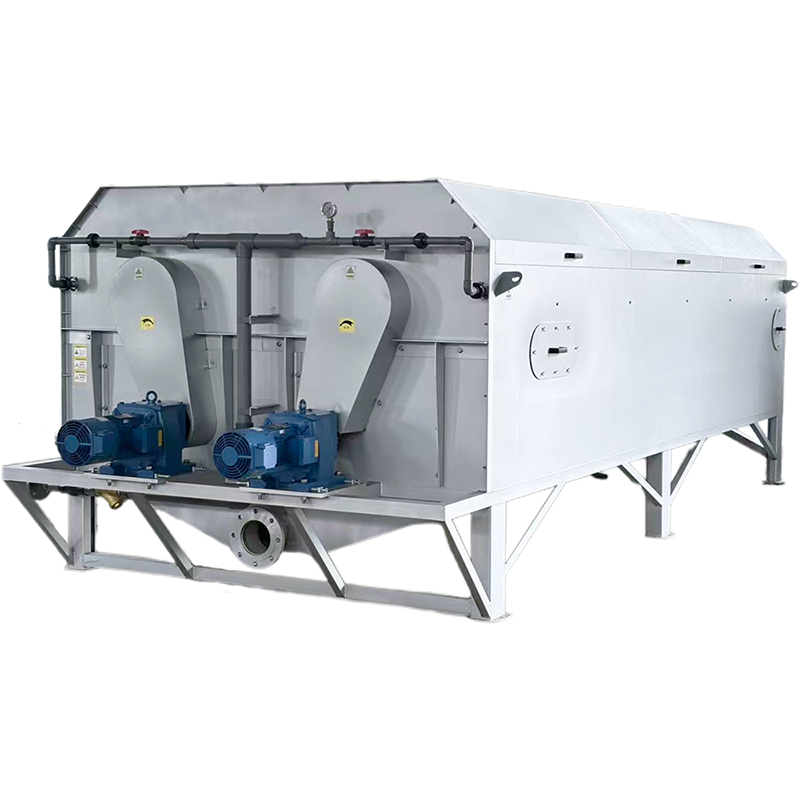
If the downstream process only needs a stabilised, higher-consistency feed rather than a cake, thickening alone is the correct stage. The FRDT Series rotary drum sludge thickener takes S.S. 0.6–1.5% and discharges at 2.5–8% consistency across 7.5–100 m³/h, with a 95% solid capture rate, a filter opening of 30–80 mesh and a drum speed of around 10 rpm. The FBT Series gravity belt sludge thickener covers the same inlet band at 12–95 m³/h with a 98% solid-capture rate, an outlet consistency of 2.5–8%, belt width 1000–3000 mm and a belt speed of 3–18 m/min.
Band 2 — 1.5–2.5% solids: medium-solids belt press duty
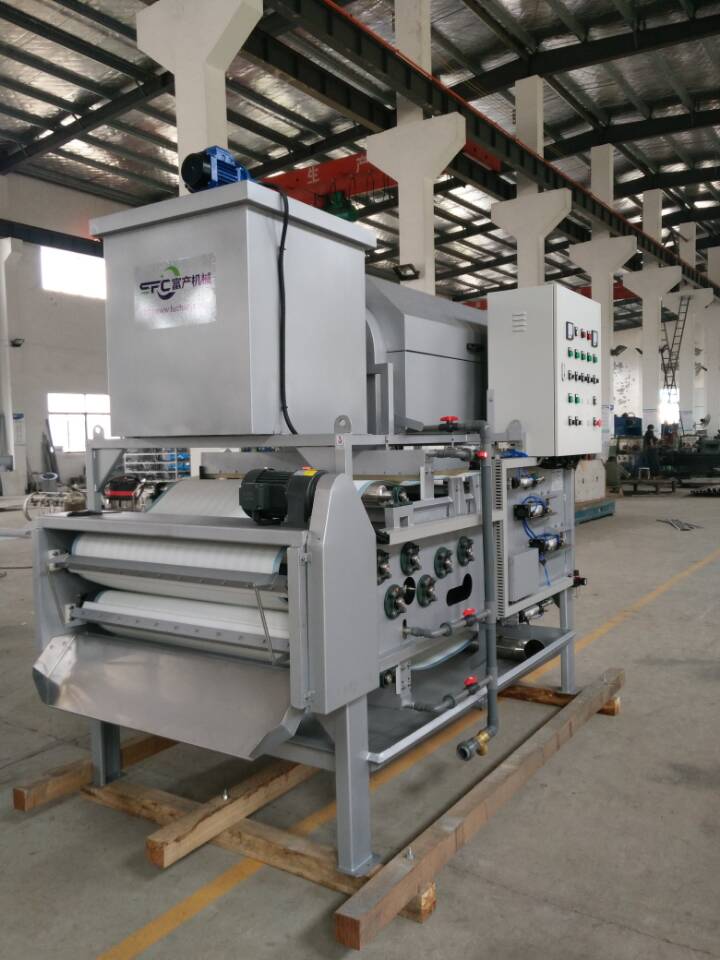
Once the feed reaches roughly 1.5% solids or more, pre-thickening requirements relax and a drum thickening plus belt press arrangement can be sized with a narrower belt. The FTB Series rotary drum sludge dewatering machine is specified for inlet consistency S.S. 1.5–2.5%, treating capacity 3.0–30 m³/h, dried sludge 45–450 kg/h, water content rate 75–85% and belt width 500–2000 mm. It is intended for small and medium sludge dewatering projects in municipal and industrial wastewater treatment, paper mills and printing and dyeing.
Note the trade-off: the FTB accepts a more concentrated feed and uses less drive power per unit (0.37–1.1 kW), but its throughput ceiling is 30 m³/h against 90 m³/h for the FTE. Feed concentration and throughput are not independent variables — raising one usually reduces the other inside a given frame size.
Band 3 — 0.6–5.0% solids: the wide band of screw press dewatering
Screw press dewatering is the only family whose published inlet band spans a full order of magnitude. The DL Series screw press sludge dewatering machine accepts S.S. 0.6–5.0%, produces 1.5–900 kg/h of dried sludge at 75–85% water content, and uses a screw specification from Ø85×1 to Ø400×4 with screw motor power of 0.18–1.5 kW. Its structure — fixed rings, moving rings, screw shaft and volute filter — is what allows it to work on both dilute and moderately concentrated feeds without a separate thickener.
The SRD Series wear-free multi-disc screw press covers the same 0.6–5.0% inlet band with 25–900 kg/h dried sludge output and 0.55–1.1 kW drive power, and is specified for low-concentration, sticky, oily and high-inorganic-content sludge. Where a plant's feed varies seasonally, this wide band is often the reason a screw press is chosen over a belt press: the machine tolerates variation instead of requiring a fixed feed window.
Band 4 — 15–35% solids: deep dewatering and drying
Above roughly 15% solids, the equipment is no longer primary dewatering equipment. It is a second stage that reduces moisture further on sludge that has already been dewatered.
The SD Series high-pressure belt deep sludge dewatering machine is specified for inlet consistency S.S. 15–20%. Treating capacity is 0.3–5.0 t/h with 60–760 kg/h dried sludge output for a 65–75% water content result, and 0.35–6.1 t/h with 70–920 kg/h output for 60–70% water content. Drive power is 0.55–3.0 kW, with a sludge mixer at 2.2–5.5 kW, a sludge distribution spiral at 0.25–1.5 kW and a sludge crushing screw at 0.37–0.75 kW. It is designed as a secondary deep dewatering machine for municipal wastewater treatment plants, chemical plants, sludge deep treatment, sludge drying pretreatment and sludge incineration pretreatment.
Drying continues the same logic. The SFC-BSD Series belt sludge dryer accepts S.S. 15–25% or S.S. 25–35%, with treating capacity of 0.8–57 t/h in the lower band and 1–90 t/h in the upper band, a final water content rate of 10–50% and system power consumption of 23–506 kW in a fully enclosed, modular belt configuration. The SFC-TR Series low-temperature sludge dryer works in batch mode with 1000–9000 L per batch of dried sludge, 21–360 kg/h water extraction capacity, 15–145 kW required power, 0.4–0.55 kWh/kg water unit consumption and up to 70% sludge reduction after drying.
The unit convention that causes the most errors
Low-solids lines are published in m³/h (GDY 15–90 m³/h, FTE 12–90 m³/h, FTB 3.0–30 m³/h, FBT 12–95 m³/h, FRDT 7.5–100 m³/h). High-solids lines are published in t/h or kg/h of material (SD 0.3–6.1 t/h, BSD 0.8–90 t/h). Screw presses are published as kg/h of dried sludge (DL 1.5–900 kg/h, SRD 25–900 kg/h).
Three unit families, three different things being counted. To compare a flow figure with a solids figure, you need the solids load: flow × consistency. As arithmetic, 90 m³/h at 1.5% solids corresponds to about 1.35 t/h of dry solids, while 15 m³/h at the same consistency corresponds to about 0.23 t/h. Run that conversion with your own numbers before comparing quotations.
Step-by-Step: Matching a Sludge Dewatering System to Your Numbers
Step 1 — Measure inlet consistency properly. Base the design value on the dry residue and water content determination defined by ISO 11465:2025, not on a single visual estimate. Record the range, not the average: seasonal and process variation is what breaks a marginal selection.
Step 2 — Fix the output target first. Primary belt press and screw press dewatering typically produces a cake in the 75–85% water content band (GDY reaches 75–80%). Deep dewatering moves to 60–75% (SD Series). Drying moves to a final water content of 10–50% (SFC-BSD). The output target determines how many stages the chain needs.
Step 3 — Convert flow into solids load. Multiply flow by consistency to obtain the dry solids load, then compare that figure across candidate machines using a single unit.
Step 4 — Select the technology family from the feed band. 0.6–1.5%: integrated belt thickening and dewatering (GDY, FTE), or thickening alone (FBT, FRDT) if no cake is required. 1.5–2.5%: drum thickening plus belt press (FTB). 0.6–5.0%: screw press dewatering (DL, SRD). 15–20%: high-pressure belt deep dewatering (SD). 15–35%: belt or low-temperature drying (SFC-BSD, SFC-TR).
Step 5 — Size the model, then re-check the band. Throughput selects the model inside the family — belt width from 500 mm to 3000 mm on belt machines, screw diameter from Ø85×1 to Ø400×4 on screw presses. Confirm the selected model's inlet band still contains your feed range after sizing, not before.
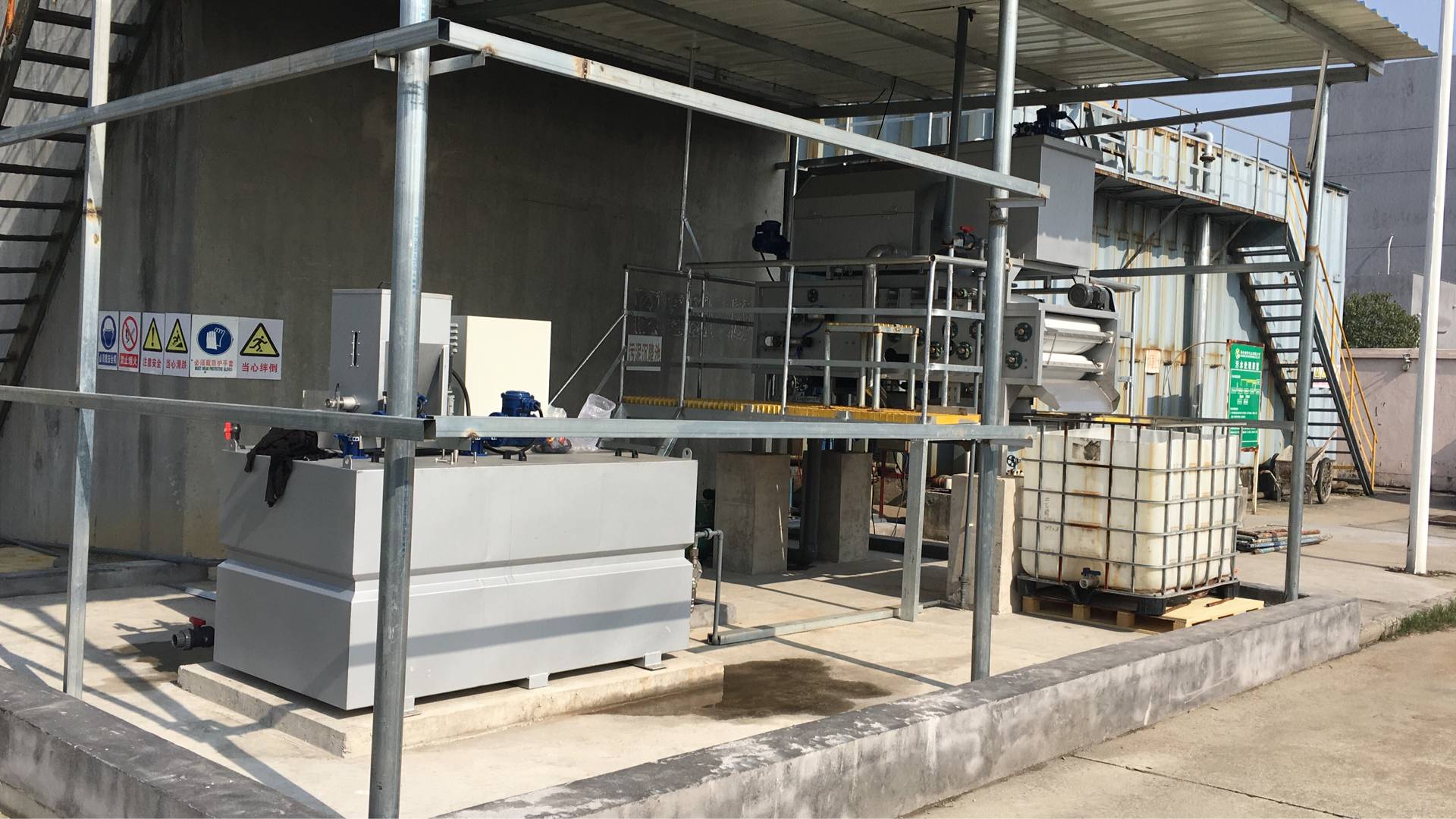
Step 6 — Plan the supporting equipment and conditioning. All dewatering lines in the ranges described here require a polymer preparation and dosing system, a sludge feed pump, a flocculation tank, a screw conveyor for dewatered sludge, a wash water system and a control cabinet. Condition requirements are not optional extras: stable feed concentration, correct polymer dosing, routine belt washing on belt machines, and regular filter cloth cleaning on drum thickening units are stated prerequisites for stable operation.
Use Cases: Where Feed Consistency Changes the Answer
Petrochemical coking wastewater. A sludge thickening, dewatering and thermal drying package handles refractory sludge from petrochemical coking wastewater, with explosion-proof design and corrosion-resistant materials for automatic continuous operation. The dewatering stage is based on belt sludge dewatering machines (FTE3-2000 units in this project) matched with a polymer make-up station, sludge pump, dosing pump, screw conveyor and PLC control system.
Distilleries and breweries. High-organic-load sludge with typical moisture content of 95–99.8% (roughly 0.2–5% solids) is prone to fermentation and odour, and requires enclosed, corrosion-resistant equipment. A thickening, screw press dewatering and thermal drying project using drum thickening belt filter presses converts this material into a dry, stable biomass suitable for co-incineration or land application.
Pharmaceutical wastewater. High-organic, chemically complex sludge is processed through dewatering, deep dewatering and thermal drying. Screw press units (DL-201 in this application) handle the dewatering stage, with the dried material stabilised for incineration or safe landfill.
Palm oil mills. Palm oil sludge, empty fruit bunch material and palm oil mill effluent are handled in an integrated reduction, dewatering and drying process built around DL-301 screw press units in unattended continuous operation.
Electroplating and surface finishing. Corrosive wastewater and heavy-metal sludge from automotive parts manufacturing are treated with drum thickening belt press units (FTB-500) in a dewatering and drying package that reduces volume and disposal cost.
Municipal plants with dilute feed. Where the feed sits at 0.6–1.5% and the requirement is a conveyed cake rather than a dried product, an integrated thickening and dewatering machine (GDY at 15–90 m³/h or FTE at 12–90 m³/h) removes a separate thickener from the layout.
Comparison Table: Inlet Consistency and Throughput by Series
| Series | Technology | Inlet consistency (S.S.) | Published capacity | Output |
|---|---|---|---|---|
| GDY Series (GDY-1000 – GDY-3000) | Gravity belt thickening + belt press dewatering, integrated | 0.6–1.5% | 15–90 m³/h | 90–1050 kg/h dried sludge; 75–80% water content |
| FTE Series (FTE-1000 – FTE-3000, incl. L models) | Rotary drum thickening + belt press dewatering | 0.6–1.5% | 12–90 m³/h | 90–975 kg/h dried sludge; 75–85% water content |
| FTB Series (FTB-500 – FTB-2000) | Rotary drum pre-thickening + belt press dewatering | 1.5–2.5% | 3.0–30 m³/h | 45–450 kg/h dried sludge; 75–85% water content |
| DL Series (DL-101 – DL-404) | Multi-disc screw press | 0.6–5.0% | 1.5–900 kg/h dried sludge | 75–85% water content |
| SRD Series (SRD-301 – SRD-404) | Wear-free multi-disc screw press | 0.6–5.0% | 25–900 kg/h dried sludge | 75–85% water content |
Upstream thickening stages and downstream high-solids stages use different bands and different units:
| Stage | Inlet consistency (S.S.) | Capacity | Output / result |
|---|---|---|---|
| FBT Series belt sludge thickener | 0.6–1.5% | 12–95 m³/h | 2.5–8% outlet consistency; 98% solid-capture rate |
| FRDT Series rotary drum thickener | 0.6–1.5% | 7.5–100 m³/h | 2.5–8% outlet consistency; 95% solid capture rate |
| SD Series high-pressure belt deep dewatering machine | 15–20% | 0.3–5.0 t/h (65–75% WC); 0.35–6.1 t/h (60–70% WC) | 60–760 kg/h or 70–920 kg/h dried sludge |
| SFC-BSD Series belt sludge dryer | 15–25% or 25–35% | 0.8–57 t/h (15–25%); 1–90 t/h (25–35%) | Final water content 10–50%; 23–506 kW |
| SFC-TR Series low-temperature sludge dryer | Batch drying of dewatered sludge | 1000–9000 L per batch; 21–360 kg/h water extraction | 0.4–0.55 kWh/kg water; up to 70% volume reduction |
Frequently Asked Questions
How is inlet consistency measured and expressed for sludge dewatering equipment?
Inlet consistency is expressed as suspended solids (S.S.) — the solids fraction of the feed. ISO 11465:2025 provides the international standard for determination of dry residue and water content in sludge and solid environmental matrices. Published equipment bands follow the same convention: 0.6–1.5% for GDY, FTE and the FBT/FRDT thickeners, 1.5–2.5% for the FTB Series, 0.6–5.0% for the DL and SRD screw presses, 15–20% for the SD Series, and 15–25% or 25–35% for the SFC-BSD dryer.
Can one sludge dewatering machine cover both 0.6% and 15% inlet solids?
No single unit in these ranges spans that gap. Low-solids machines are designed for 0.6–2.5% feed (GDY, FTE, FTB), the widest screw press band reaches 0.6–5.0% (DL, SRD), and 15% and above belongs to second-stage equipment — the SD Series deep dewatering machine at 15–20% and the SFC-BSD dryer at 15–35%. Where the feed is dilute and the target is below the 75–85% water content band of primary dewatering, the process chain requires two stages rather than one machine.
Which parameters drive energy and chemical consumption as throughput rises?
Drive power rises with model size: GDY 1.1–4.0 kW, FTE 0.55–4.0 kW, FTB 0.37–1.1 kW, DL screw motor 0.18–1.5 kW, SRD 0.55–1.1 kW, and the SD Series 0.55–3.0 kW for the drive plus 2.2–5.5 kW for the sludge mixer. Drying adds 23–506 kW for the SFC-BSD system, or 0.4–0.55 kWh per kg of water removed for the SFC-TR Series. On the chemical side, correct polymer dosing is a stated operating prerequisite across these lines, which is why a polymer jar test and feed-concentration control matter more to running cost than the headline capacity figure.
Is a sludge sample test required before final model selection?
For several lines it is a documented precondition. The FBT Series requires a sludge sample test and polymer selection before final sizing. The DL Series requires a polymer jar test, correct feed concentration and anti-clogging checks. The SRD Series requires sludge type confirmation and suitability testing for difficult sludge. The SD Series requires conditioning chemicals and project-specific sludge testing, and the SFC-BSD dryer requires the final moisture target and the sludge feeding condition to be confirmed before model selection.
What must be confirmed before a sludge dewatering system model can be finalized?
Four inputs are normally enough to move from band selection to a specific model: the measured inlet consistency range, the required outlet (75–85% water content for primary dewatering, 60–75% for deep dewatering, 10–50% for drying), the throughput in the correct unit, and the sludge characteristics that affect conditioning — viscosity, oil content, inorganic content and any corrosive or explosive risk. The supporting scope should also be listed at this point: polymer preparation and dosing system, feed pump, flocculation tank, wash water system, screw conveyor and control cabinet. SFC Machinery reviews sludge data and confirms a model against these inputs; the 2026 product catalogue is available as a PDF download, and sample or quotation requests can be sent to sales@fuchanjx.com or +86 138-1673-2007.
Conclusion: Start With the Feed, Not the Frame
Inlet consistency tells you which stage of the sludge dewatering system your project needs — integrated belt thickening and dewatering at 0.6–1.5%, medium-solids belt press duty at 1.5–2.5%, screw press dewatering across 0.6–5.0%, deep dewatering at 15–20% and drying at 15–35%. Throughput then tells you which model inside that stage applies, expressed in m³/h for dilute lines and in t/h or kg/h once the feed is concentrated. Any specification comparison that ignores the feed band behind a capacity number is not yet a comparison.
Shanghai Fuchan Machinery Technology Co., Ltd. (SFC Machinery) builds thickening, dewatering, deep dewatering, drying and polymer preparation equipment covering these bands, with support available from the sizing stage through to the supporting equipment list. To move from this guide to a specific model, request a selection review or a sample assessment through www.sfceco.com, download the SFC 2026 product catalogue (PDF), or contact the sales team at sales@fuchanjx.com / +86 138-1673-2007.