Sludge Dewatering Equipment Partnership: Acceptance & After-Sales FAQ
Sludge Dewatering Equipment Partnership: Acceptance & After-Sales FAQ
A sludge dewatering equipment partnership is a supply arrangement in which the manufacturer stays accountable for installation guidance, commissioning, acceptance testing and technical support after delivery, measured against criteria both sides can verify. In smart agriculture and ecology projects, where sludge volume shifts with season, feedstock and plant loading, the terms that decide long-term value are usually the acceptance protocol and the service scope — not the model number alone.
The questions below are the ones buyers raise most often once general product comparison is finished: how the machine will be accepted, who remains responsible after handover, what the support cycle looks like in year three, and how a sludge sample shortens the path from enquiry to a signed protocol. Examples reference the series supplied by Shanghai Fuchan Machinery Technology Co., Ltd. (SFC Machinery), a Shanghai-based environmental equipment manufacturer founded in 2007 that produces sludge thickening, dewatering, deep dewatering, drying and polymer preparation systems.
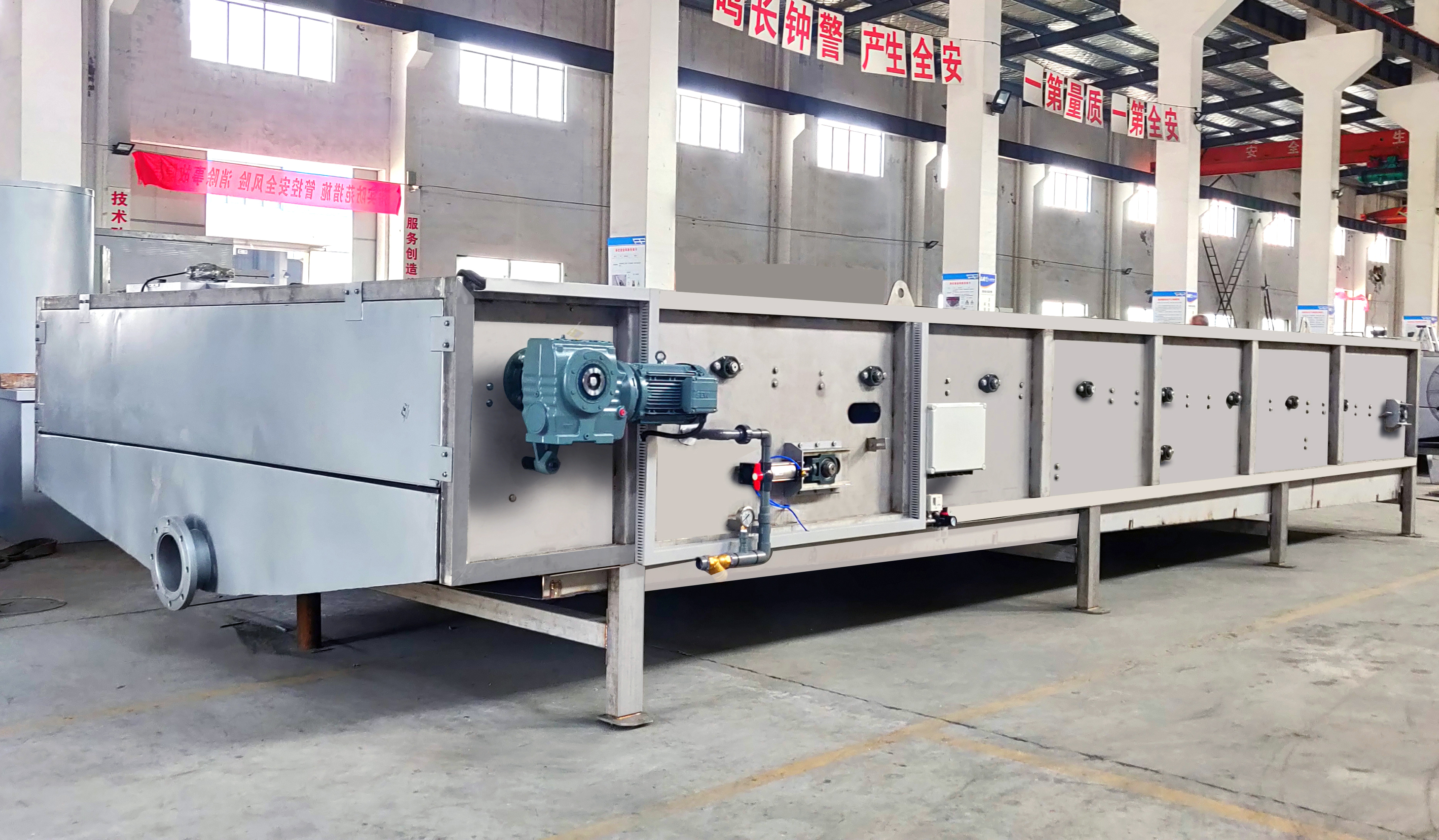
FBT series belt sludge thickener — the stage where outlet consistency and solids capture are first measured.
The problem: a moisture target means nothing without a feed basis
Two suppliers can quote the same cake moisture figure and still deliver different results on the same site, because most of the variation sits in the feed rather than the machine. Sludge dewatering is defined as removing most of the water from biosolids to produce a cake in the 15–45% dry solids range, while a peer-reviewed inventory review reports approximately 25–30% total solids for mechanical dewatering and 35–40% total solids for deep dewatering. Those are aggregated literature ranges, not equipment guarantees.
Equipment specifications follow the same logic. SFC Machinery states each series against a defined inlet consistency: 0.6–5.0% for the DL and SRD screw press families, 0.6–1.5% for the FBT, FRDT, GDY and FTE machines, 1.5–2.5% for the FTB series, and 15–20% suspended solids for the SD high-pressure deep dewatering unit. A contract that names a cake moisture target but omits feed consistency, polymer dose and test duration leaves the acceptance test undefined.
A second gap opens between process stages. A thickener is expected to lift sludge to 2.5–8% outlet consistency, a dewatering press then discharges cake at a stated water content, and the SD deep dewatering stage receives 15–20% feed before drying begins. Unless responsibility is assigned at each boundary and each boundary is measured, a shortfall at the thickener is later recorded as a dewatering failure.
The third gap is time. Installed units in SFC case records have operated for five, six, eight and ten years on municipal, food processing, chemical, pharmaceutical and vegetable oil sludges. A partnership that stops at delivery pushes spare parts, retraining and process adjustments into informal arrangements — precisely the costs that were hardest to forecast during evaluation.
Industry background: continuous systems create continuous obligations
Global Market Insights estimated the global sludge dewatering equipment market at USD 6.4 billion in 2026, with a forecast of USD 14 billion by 2035, and Fortune Business Insights reported Asia Pacific holding a 37.57% market share in 2024. Growth of that kind rewards suppliers who can support equipment after commissioning, because distributed agriculture, ecology and industrial projects rarely keep a sludge specialist on staff.
Three technical shifts reinforce the pattern. Continuous automatic operation is now written into most application requirements, including unattended operation on palm oil mill effluent. Enclosed designs are requested where odor and hygiene matter, as in distilleries, breweries and municipal plants. And SS304 construction is used across the FBT, FRDT, GDY, FTB, FTE, DL, SRD, SD, SFC-BSD and SFC-TR ranges, which simplifies long-term corrosion planning but also means the service conversation should cover welds, filter cloths, rings and screws rather than only motors.
Operating benchmarks now sit inside that conversation too. The same inventory review reports chemical-agent consumption of 5–15 g per kg total solids for mechanical dewatering, average energy use of about 0.12 kWh/kg TS for raw sludge and 0.26 kWh/kg TS for digested sludge, and roughly 3.8 kWh/kg TS for thermal drying. These figures explain a practical shift in procurement: buyers ask suppliers to accept normalized values — kWh per kg of total solids, grams of polymer per kg of total solids — instead of rated motor power, because normalized figures survive a change of feed.
How a long-term partnership is structured across four process stages
A workable partnership assigns a series to each stage, defines the measurement at each boundary, and states what continues after handover. SFC Machinery builds that arrangement around thickening, dewatering, deep dewatering and drying, with sludge pumps, dosing pumps, screw conveyors, PAM preparation and a PLC control system supplied as part of the package.
Stage 1 — Thickening: where the acceptance basis is set
Thickening raises solids concentration before mechanical dewatering and reduces the hydraulic load on every stage behind it. Two series cover the duty:
- FBT series belt sludge thickener — belt width 1000–3000 mm, inlet consistency 0.6–1.5%, treating capacity 12–95 m³/h, dried sludge 72–900 kg/h, sludge outlet consistency 2.5–8%, belt speed 3–18 m/min, solid-capture rate 98%, power consumption 0.55–1.5 kW, SS304.
- FRDT series rotary drum thickener — filter opening 30–80 mesh, inlet consistency 0.6–1.5%, treating capacity 7.5–100 m³/h, dried sludge 45–1140 kg/h, sludge outlet consistency 2.5–8%, drum speed around 10 rpm, solid capture rate 95%, driving motor 0.75–1.5 kW, SS304.
Acceptance for this stage should be written on outlet consistency and solids capture, not on appearance of the thickened sludge. Both figures are stated per series, so a test result can be compared with the contract without interpretation.
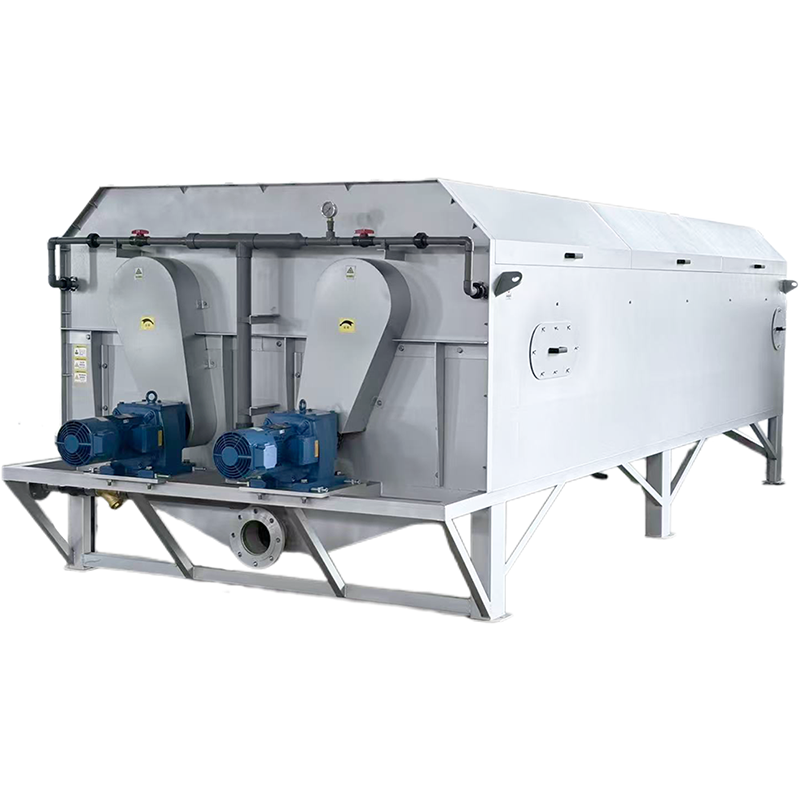
FRDT series rotary drum sludge thickener — enclosed low-speed drum, 30–80 mesh, solid capture rate 95%.
Stage 2 — Dewatering: where the moisture guarantee is carried
This is the stage buyers scrutinize most, and the one where feed characteristics change the answer most. Five families are available:
- DL series screw press — screw specification Ø85×1 to Ø400×4, inlet consistency 0.6–5.0%, dried sludge 1.5–900 kg/h, water content rate 75–85%, screw motor 0.18–1.5 kW with multi-motor configurations by model, SS304.
- SRD series wear-free screw press — inlet consistency 0.6–5.0%, dried sludge 25–900 kg/h, water content rate 75–85%, screw specification Ø270×1 to Ø370×4, driving motor 0.55–1.1 kW, specified for low-concentration, sticky, oily and high-inorganic-content sludge.
- GDY series integrated belt thickening and dewatering machine — belt width 1000–3000 mm, inlet consistency 0.6–1.5%, treating capacity 15–90 m³/h, dried sludge 90–1050 kg/h, water content rate 75–80%, SS304.
- FTB series rotary drum thickening and dewatering machine — belt width 500–2000 mm, inlet consistency 1.5–2.5%, treating capacity 3.0–30 m³/h, dried sludge 45–450 kg/h, water content rate 75–85%, SS304.
- FTE series rotary drum thickening and dewatering machine — belt width 1000–3000 mm, inlet consistency 0.6–1.5%, treating capacity 12–90 m³/h, dried sludge 90–975 kg/h, water content rate 75–85%, SS304.
The SRD family deserves separate attention during acceptance planning. Because it is specified for sticky, oily and high-inorganic sludges, the test usually needs a longer stabilization window and a confirmed polymer recipe before a moisture figure can be judged fairly.
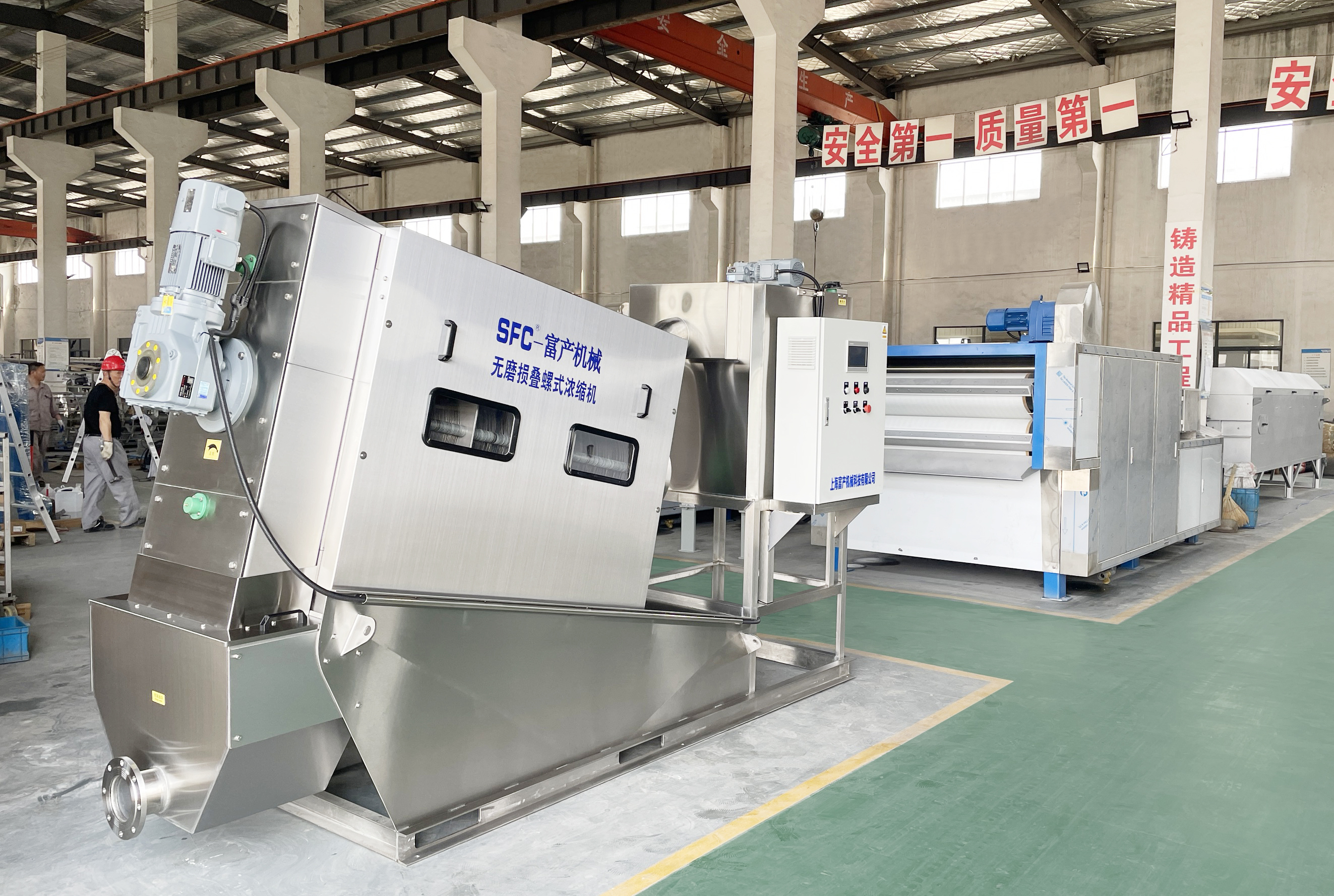
SRD series wear-free multi-disc screw press — specified for sticky, oily and high-inorganic-content sludge at 0.6–5.0% inlet consistency.
Stage 3 — Deep dewatering: the bridge between pressing and drying
The SD series high-pressure belt deep dewatering machine is a secondary stage, not a replacement for primary dewatering. It receives sludge at 15–20% suspended solids and produces 0.3–5.0 t/h at 65–75% water content, equivalent to 60–760 kg/h dried sludge, or 0.35–6.1 t/h at 60–70% water content, equivalent to 70–920 kg/h. Drive motor is 0.55–3.0 kW, with a 2.2–5.5 kW sludge mixer, 0.25–1.5 kW sludge distribution spiral and 0.37–0.75 kW sludge crushing screw. The unit requires conditioning chemicals and project-specific sludge testing, so it should appear in the acceptance protocol as a separately measured stage rather than folded into the dewatering guarantee.
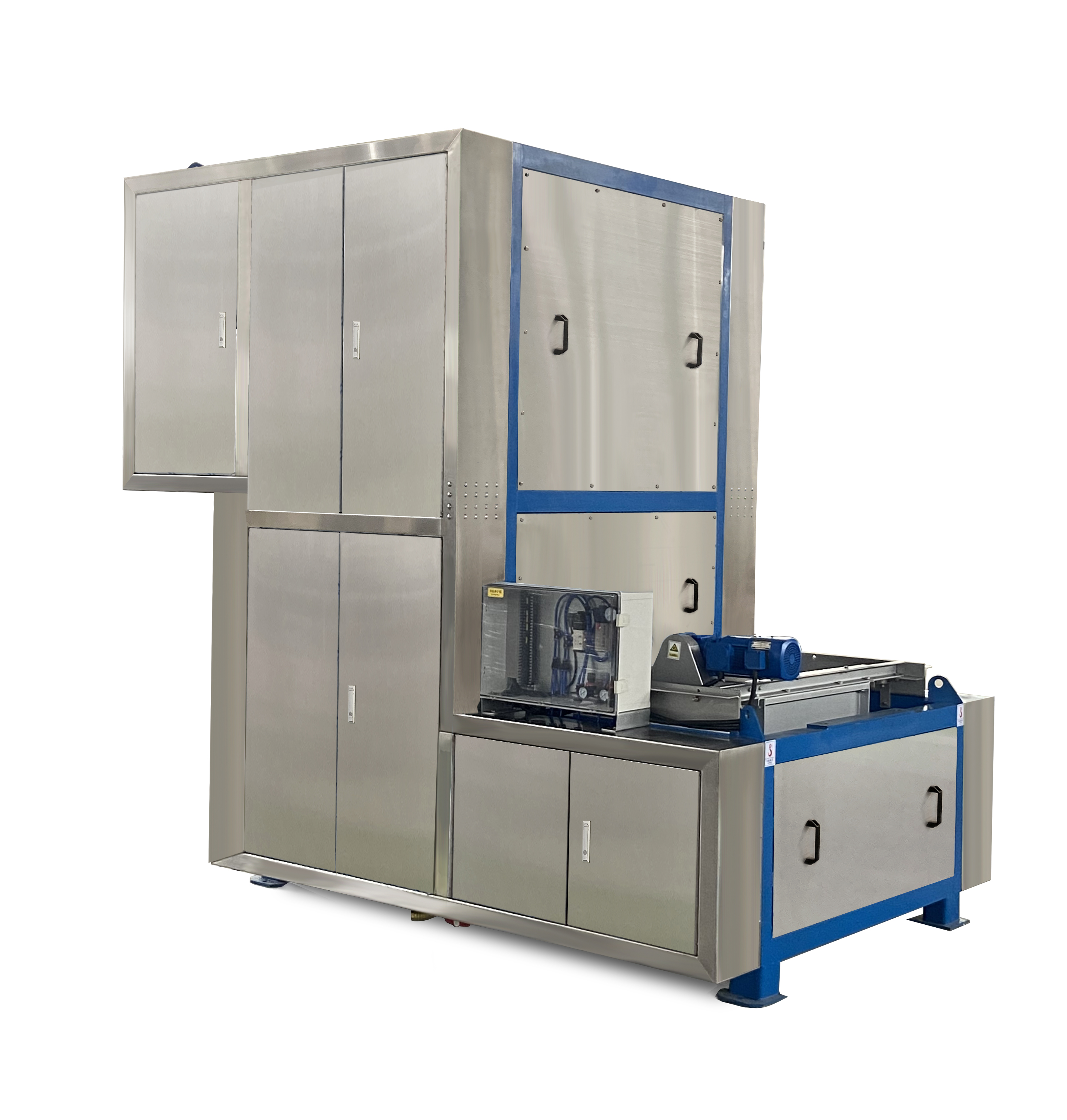
SD series high-pressure belt deep dewatering system — secondary stage at 15–20% inlet consistency, SS304 construction.
Stage 4 — Drying: turning a moisture target into a disposal number
Drying is where the economics of the whole line are settled, and where the acceptance test must state the target moisture explicitly. Two families are offered:
- SFC-BSD series belt sludge dryer — inlet consistency 15–25% or 25–35%, treating capacity 0.8–57 t/h at 15–25% and 1–90 t/h at 25–35%, final water content 10–50%, system power consumption 23–506 kW, fully enclosed modular design, SS304.
- SFC-TR series reciprocating circulation sludge dryer — batch size 1000–9000 L, water extraction capacity 21–360 kg/h, required power 15–145 kW, unit power consumption 0.4–0.55 kWh/kg water, sludge reduction after drying up to 70%, SS304.
SFC's low-temperature drying systems are designed for integration with waste heat recovery, and the company profile states that sludge volume can be reduced by more than 70% through the drying stage. For contract purposes, the useful commitment is final water content at a stated inlet consistency — not a percentage reduction, which changes with every feed.
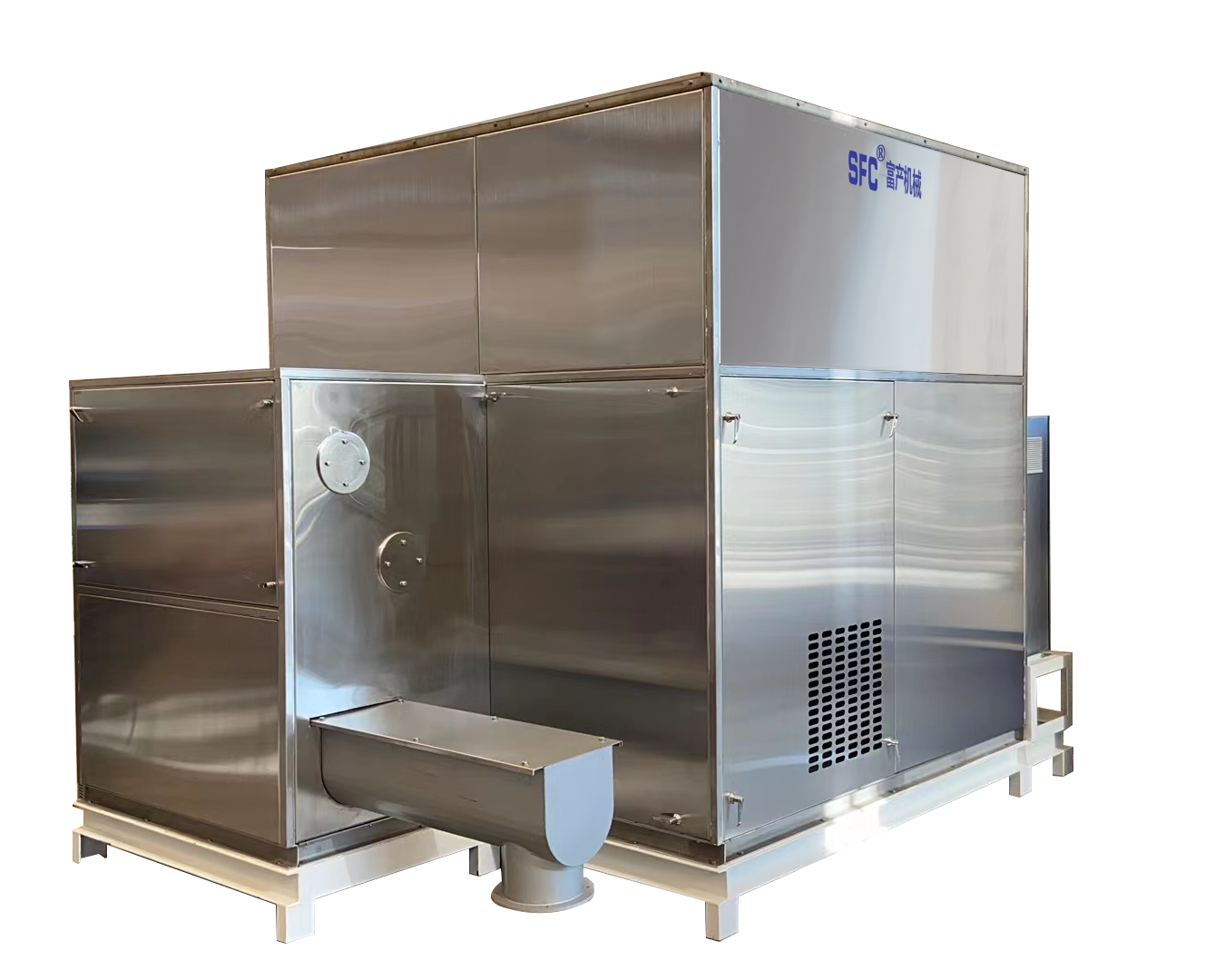
SFC-BSD series belt sludge dryer — fully enclosed modular design, final water content 10–50%, SS304.
What continues after handover
The service scope that turns a purchase into a partnership is defined by six elements, all of which can be written into the contract:
- Remote technical support by phone, email or video conferencing.
- On-site commissioning and installation guidance, available upon request.
- Spare parts supply with rapid response.
- Warranty service, with specific terms provided per equipment type.
- Operation and maintenance training for client personnel.
- Long-term technical consultation and troubleshooting support.
Step by step: from sludge sample to signed acceptance
- Characterize the sludge and confirm the duty. A sludge sample test and polymer selection are recommended before final sizing, and sludge type confirmation is required for difficult streams. For the SD deep dewatering stage, conditioning chemicals and project-specific sludge testing are prerequisites rather than options.
- Fix the acceptance basis in writing. Record inlet consistency, treating capacity, outlet moisture, solids capture, polymer dose and test duration. Each of these maps to a published value per series, which removes interpretation from the test.
- Select the series and confirm the configuration. Customization covers equipment type and model selection based on sludge characteristics and treatment capacity, processing capacity, equipment dimensions and footprint for site constraints, PLC automation level, power configuration including voltage and frequency, modular design for later capacity expansion, and integration of conveying, dosing and storage equipment.
- Agree commercial and delivery terms. SFC Machinery operates on OEM/ODM terms with a minimum order quantity of one unit and a typical lead time of 30–60 days, with monthly capacity of 40 sets.
- Verify at the factory before shipment. Production follows 100% test before dispatch, and the company holds ISO9001:2015, ISO14001, ISO45001:2018 and CE certification.
- Commission on site. Installation guidance and commissioning support are available upon request, together with operation and maintenance training for client personnel — the point at which operators learn how polymer dose and belt washing affect the numbers they will later be measured on.
- Run the acceptance test and hand over documentation. Test at the agreed feed, log hourly readings, and compare the result with the contract. Where a result misses target, the feed log shows whether the deviation came from sludge, dosing, or the machine.
- Enter the long-term support cycle. Remote support, spare parts response, warranty per equipment type and periodic technical consultation continue after acceptance, which is what keeps a five- or ten-year asset inside its original performance envelope.
Use cases: how acceptance and support play out in practice
Municipal wastewater, eight FRDT thickeners, one year of operation. The plant needed to raise feed solids before an existing plate-and-frame filter press. The FRDT units concentrate sludge from 99.4% down to 97% moisture, lifting solids content to 3% and improving downstream dewatering. The fully enclosed drum design supports hygiene requirements in a municipal setting.
Food processing, Malaysia, FTB-1000, eight years of operation. Sludge at 98.5% moisture is reduced to below 80% by the rotary drum thickening and belt press combination, with stable results and straightforward upkeep reported by the operator.
Specialty chemicals, FTB-1500L, five years of operation. Chemical wastewater sludge is pressed from about 99% moisture to well below 80%, producing a discharge-ready cake with minimal downtime reported on site.
Vegetable oil processing, DL screw press, eight years of operation. Sludge from soybean, palm and canola oil wastewater is dewatered from 97% to 77% moisture, with the operator highlighting low maintenance and stable pressing performance over the service life.
Automotive parts and advanced manufacturing, drying stage. A plate-and-frame press discharges cake at 75% moisture, which an SFC-TR dryer reduces to below 25% — more than 700 kg of water removed per tonne of sludge and volume reduction above 70%. A separate BSD-2000 installation reduced 85% moisture cake to below 30%; the extruder required optimization during commissioning before stable drying was achieved, which is exactly the kind of adjustment an acceptance protocol should anticipate.
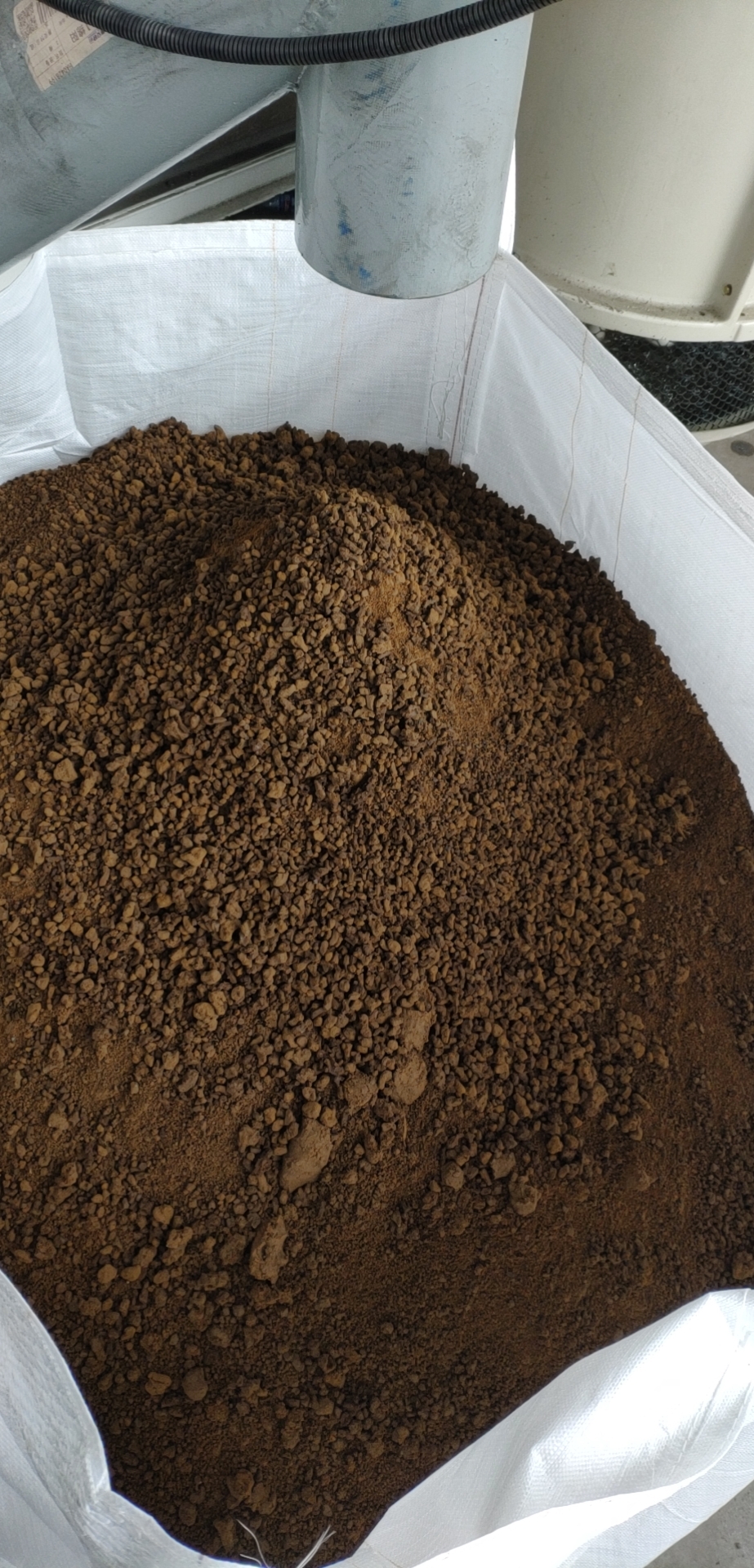
Dried cake from a BSD-2000 belt dryer installation — final moisture content below 30% from 85% feed.
Model series comparison for acceptance planning
The table below lists published series data only. Values are stated ranges at the defined inlet consistency, and they are the figures an acceptance test should be written against.
| Series | Process stage | Inlet consistency | Capacity | Output basis | Material |
|---|---|---|---|---|---|
| FBT | Belt thickening | S.S. 0.6–1.5% | 12–95 m³/h; 72–900 kg/h dried sludge | Outlet 2.5–8%; capture 98% | SS304 |
| FRDT | Rotary drum thickening | S.S. 0.6–1.5% | 7.5–100 m³/h; 45–1140 kg/h dried sludge | Outlet 2.5–8%; capture 95% | SS304 |
| GDY | Integrated belt thickening + dewatering | S.S. 0.6–1.5% | 15–90 m³/h; 90–1050 kg/h dried sludge | Water content 75–80% | SS304 |
| FTB | Rotary drum thickening + belt press | S.S. 1.5–2.5% | 3.0–30 m³/h; 45–450 kg/h dried sludge | Water content 75–85% | SS304 |
| FTE | Rotary drum thickening + belt press | S.S. 0.6–1.5% | 12–90 m³/h; 90–975 kg/h dried sludge | Water content 75–85% | SS304 |
| DL | Multi-disc screw press | S.S. 0.6–5.0% | 1.5–900 kg/h dried sludge | Water content 75–85% | SS304 |
| SRD | Wear-free multi-disc screw press | S.S. 0.6–5.0% | 25–900 kg/h dried sludge | Water content 75–85% | SS304 |
| SD | High-pressure belt deep dewatering | S.S. 15–20% | 0.3–5.0 t/h; 60–760 kg/h dried sludge | Water content 65–75% | SS304 |
| SFC-BSD | Belt sludge drying | S.S. 15–25% or 25–35% | 0.8–57 t/h (15–25%); 1–90 t/h (25–35%) | Final water content 10–50% | SS304 |
| SFC-TR | Reciprocating circulation drying | Batch 1000–9000 L | Water extraction 21–360 kg/h | Up to 70% reduction; 0.4–0.55 kWh/kg water | SS304 |
Acceptance checklist: what to record on the test sheet
| Acceptance item | What to record | Reference value |
|---|---|---|
| Feed condition | Inlet suspended solids at start and at hourly intervals | Series inlet range, e.g. 0.6–5.0% for DL and SRD, 1.5–2.5% for FTB, 15–20% for SD |
| Throughput | m³/h or t/h at the recorded feed | Published treating capacity per model |
| Cake moisture | Sampled water content of discharged cake | 75–85% screw presses; 75–80% GDY; 65–75% SD; 10–50% final water for SFC-BSD |
| Solids capture | Filtrate solids against feed solids | 98% FBT; 95% FRDT |
| Polymer dose | Grams of conditioning agent per kg total solids | 5–15 g/kg TS literature benchmark for mechanical dewatering |
| Energy | kWh per kg total solids across the test window | About 0.12 kWh/kg TS raw sludge and 0.26 kWh/kg TS digested sludge for mechanical dewatering; about 3.8 kWh/kg TS for thermal drying |
| Handover pack | Operator training completed, spare parts list, warranty terms per equipment type | SFC after-sales scope |
FAQ
1. What acceptance criteria should a sludge dewatering contract specify?
A sludge dewatering acceptance test should state the feed consistency, the treating capacity at that feed, the outlet moisture or water content, the solids capture rate, the polymer dose and the test duration. Each criterion needs a baseline, and SFC series data supplies one: FBT thickeners are rated at 2.5–8% outlet consistency with 98% solids capture, FRDT units at 2.5–8% with 95% capture, GDY machines at 75–80% cake water content, DL and SRD screw presses at 75–85%, and SFC-BSD dryers at 10–50% final water content. Without the feed condition in the same sentence, none of these figures can be verified after installation.
2. What long-term after-sales support should be expected after commissioning?
Long-term after-sales support for sludge dewatering equipment should include remote technical support by phone, email or video conferencing; on-site commissioning and installation guidance when requested; spare parts supply with rapid response; warranty service with terms defined per equipment type; operation and maintenance training for client personnel; and continuing technical consultation and troubleshooting. Spare-parts planning depends on the design: the FRDT rotary drum thickener is built with minimal wearing parts, the SRD screw press uses a wear-free multi-disc design, and the SFC-TR dryer is described in SFC case records as having no wearing parts, which changes the service profile compared with belt presses that rely on filter cloths and wash water systems.
3. Which cost drivers belong in a long-term budget?
Long-term sludge dewatering budgets are driven by polymer consumption, energy use, spare parts and disposal volume rather than by the purchase price alone. Published benchmarks put conditioning-agent use at 5–15 g per kg total solids for mechanical dewatering, energy at roughly 0.12 kWh/kg TS for raw sludge and 0.26 kWh/kg TS for digested sludge, and thermal drying at about 3.8 kWh/kg TS — a difference that explains why a drying stage should be justified by disposal savings, not by moisture alone. SFC-TR dryers are rated at 0.4–0.55 kWh per kg of water removed, which allows a project-specific calculation once the inlet moisture is known.
4. Can we test our own sludge before the model is fixed?
Yes. A sludge sample test and polymer selection are recommended before final sizing for thickening and dewatering duties, and sludge type confirmation is required where sticky, oily or high-inorganic sludge is expected, since the SRD wear-free screw press is specified for those conditions only after testing. The SD high-pressure deep dewatering stage goes further and requires conditioning chemicals plus project-specific sludge testing before a performance figure is offered. Testing early also shortens acceptance later, because the polymer recipe and feed range are already documented.
5. What is the typical lead time, and how does a project start?
Typical lead time for SFC sludge dewatering equipment is 30–60 days, with a minimum order quantity of one unit and monthly production capacity of 40 sets; OEM and ODM configurations are supported, and equipment has been exported to Southeast Asia, Russia, South America and the Middle East. A project usually starts with a sludge sample, duty description and site constraints, followed by a proposed series, a quotation and an acceptance outline. The 2026 product catalog can be downloaded here: SFC Product Catalog 2026 (PDF). For a sample test, a quotation or an acceptance protocol discussion, contact the sales team at sales@fuchanjx.com or WhatsApp +86 138-1673-2007.
Conclusion
A sludge dewatering partnership holds together on three documents: a feed basis that matches the published series range, an acceptance protocol that measures each process boundary, and a service scope that names what happens in year three. SFC Machinery covers those boundaries with FBT and FRDT thickening, DL, SRD, GDY, FTB and FTE dewatering, SD deep dewatering and SFC-BSD or SFC-TR drying, all in SS304 and all rated against defined inlet conditions.
The practical test for any buyer in the research or evaluation stage is simple. Ask the supplier to state the inlet consistency, throughput, outlet moisture and solids capture of the proposed model, then ask which of those figures the acceptance test will measure and who responds if one is missed. A supplier that answers both questions in writing is offering a partnership; one that answers only the first is offering a machine.
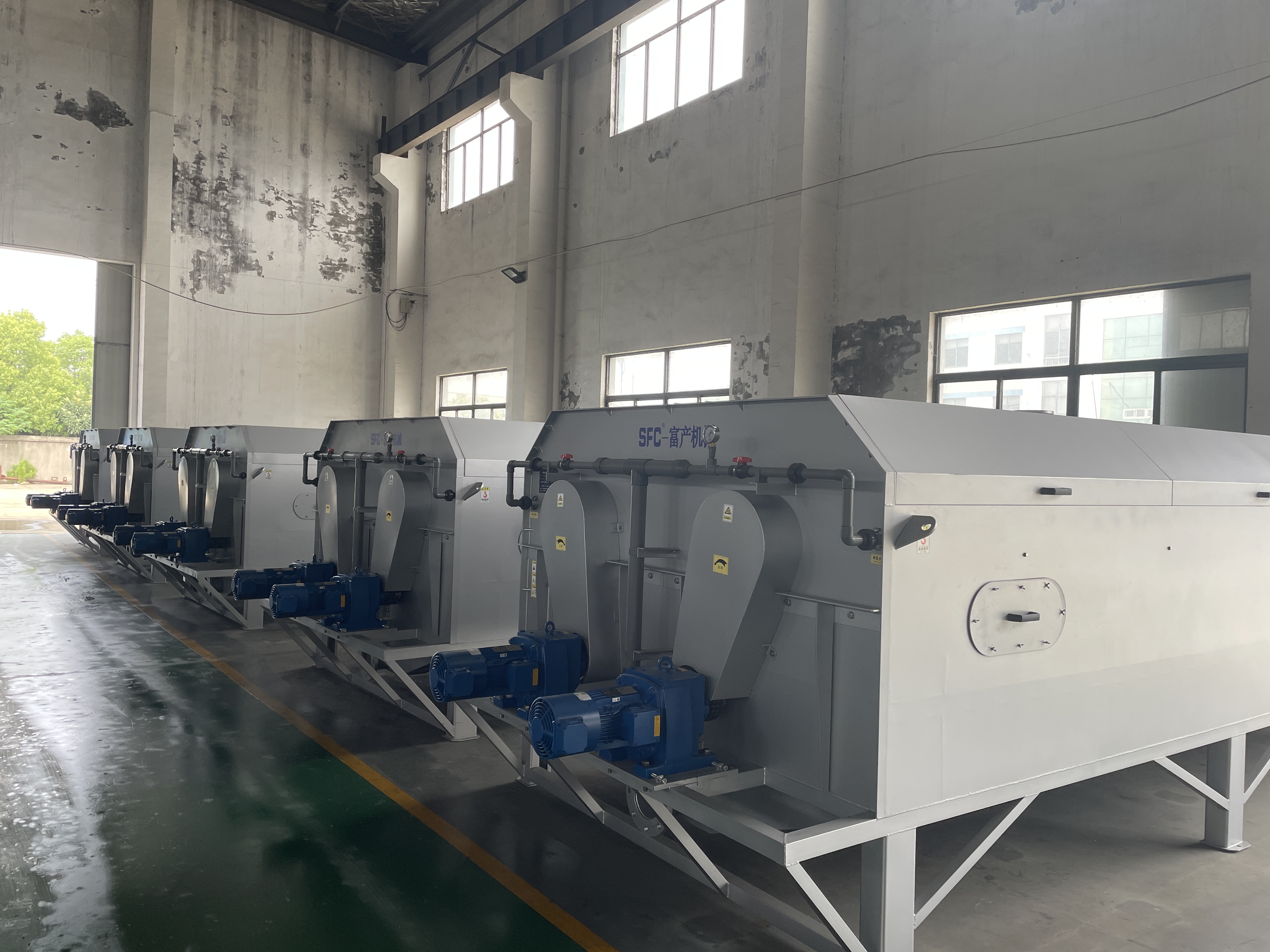
Installed FRDT rotary drum thickeners on site at a municipal wastewater treatment plant.
Next step: send a sludge sample and duty description to SFC Machinery for a series recommendation, or request the 2026 product catalog. Website: www.sfceco.com · Email: sales@fuchanjx.com · Tel/WhatsApp: +86 138-1673-2007 · Address: Room 1201, 1122 Xinjinqiao Rd, Pudong New District, Shanghai, PRC China.
Have Questions or Need More Details?
Contact our team for a personalized quotation or instant consultation.
Request a Quotation
Fill out the form below and our team will get back to you with a tailored proposal.
WhatsApp Direct Chat
Prefer to chat in real-time? Message us on WhatsApp for instant assistance & quick answers.
- Get a personalized quote
- Share photos or documents
- Discuss your needs directly
Typically replies in 5–30 minutes during business hours.