Sludge Dewatering Equipment: Thickening vs Dewatering vs Drying
Thickening, dewatering, deep dewatering and drying are four different duties carried out by four different machine families. The most expensive selection error in sludge treatment is not choosing the wrong brand; it is buying the wrong stage. Thickening raises the solids concentration of dilute sludge so downstream equipment is not oversized. Dewatering converts that concentrate into a cake that can be handled, stored and transported. Deep dewatering pushes the same material to a higher solids level before disposal. Drying removes additional water only when the disposal route, storage constraint or reuse target actually requires it.
Shanghai Fuchan Machinery Technology Co., Ltd. (SFC Machinery) is a sludge treatment equipment manufacturer established in 2007 and located in Pudong New Area, Shanghai. Its product scope covers all four stages — thickening, dewatering, deep dewatering and drying — plus polymer preparation and dosing systems, which makes it possible to compare stage boundaries against a single, consistent equipment map rather than three unrelated catalogues.
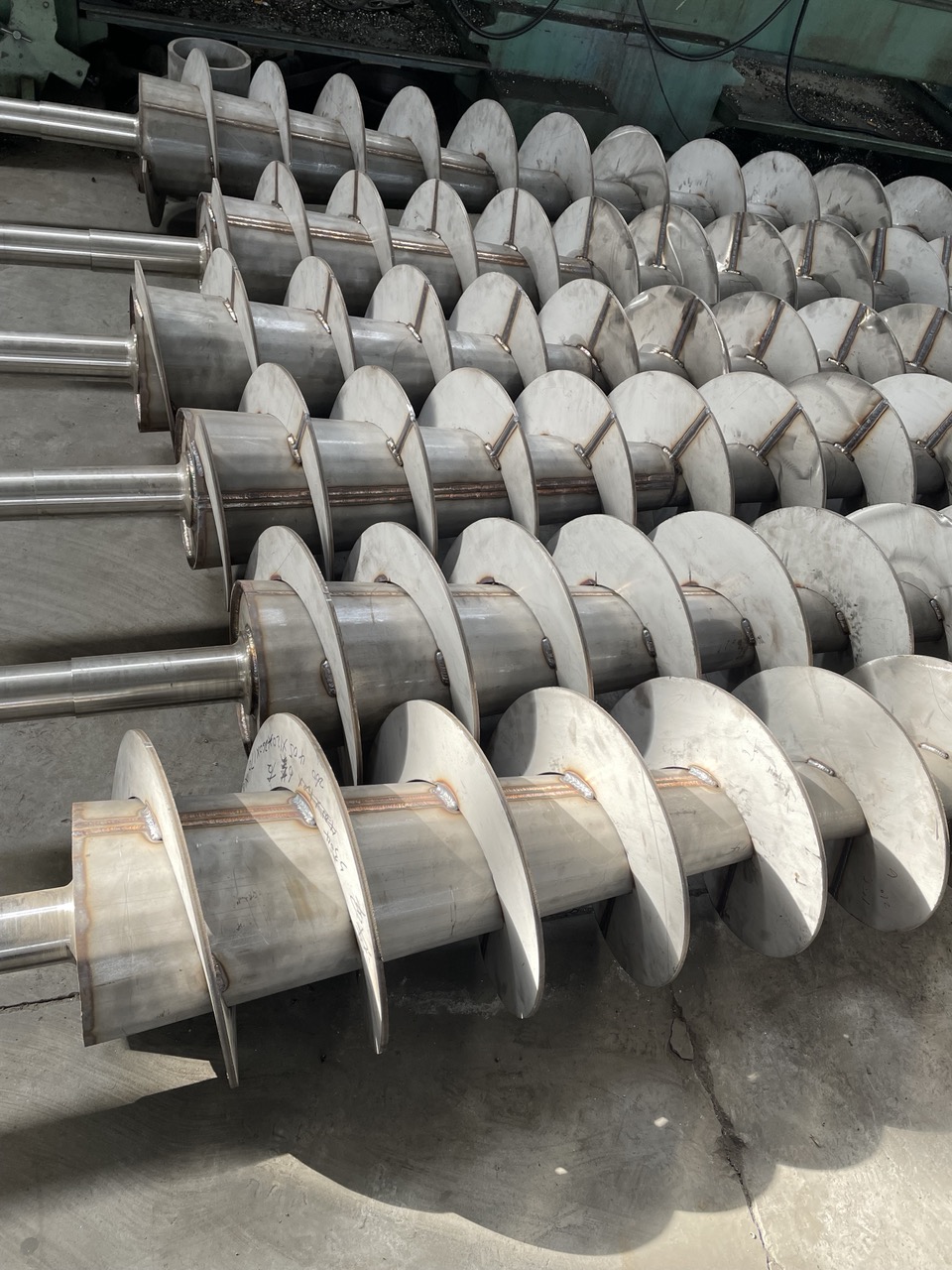
Figure 1 — Screw shaft condition after long-term operation. Mechanical dewatering equipment is judged on shaft and ring wear as much as on cake dryness.
Problem Definition: Why “sludge dewatering equipment” is an incomplete buying brief
A buyer who searches for sludge dewatering equipment receives screw presses, belt presses, filter presses, thickeners and dryers in the same result set. They are not substitutes. A rotary drum thickener cannot produce a transportable cake, and a low-temperature dryer cannot repair an unstable dewatering stage upstream of it. When the brief says only “we need a dewatering machine”, the specification usually collapses into one number — outlet moisture — which is the weakest possible basis for a purchase decision.
Three failure patterns account for most misapplications in this category:
- Stage confusion. Selection has to start from sludge source, daily sludge volume, operating hours, solids content and target moisture. Skipping those inputs is the direct cause of incorrect model selection, and it is easier to make when thickening, dewatering and drying are treated as one product category.
- Capacity without peak data. A machine sized on average daily volume can be over-loaded by peak sludge flow or peak solids loading. Peak flow and solids loading should be checked before the final model is fixed, not after commissioning.
- Moisture targets without a conditioning programme. High final cake moisture is rarely a machine fault alone. It responds to polymer dosing, feed concentration, throughput, belt pressure or drying time — and to whether a jar test was run before the equipment was sized.
The decision rule: choose the stage first, the equipment family second, and the model last. Stage selection is driven by the disposal route and the moisture target; equipment selection is driven by sludge character, footprint, duty cycle and automation level.
Industry Background: a large market with thin public benchmarking
The global sludge dewatering equipment market was estimated at USD 6.4 billion in 2026 and is projected to reach USD 14 billion by 2035, according to Global Market Insights. Regional structure matters for equipment sourcing: Fortune Business Insights reports that Asia Pacific held a 37.57% share of the sludge dewatering equipment market in 2024.
Demand is not only municipal. A SIWI water-governance mapping report on the textile industry in China notes that large discharge volumes also generate challenging issues in sludge treatment — a reminder that industrial sludge, not just municipal biosolids, drives equipment demand in manufacturing regions.
Public performance data, however, is thinner than the market size suggests. A peer-reviewed review of sludge dewatering and drying inventory data identified 55 datasets on sewage sludge dewatering but only 21 on drying. The practical implication for buyers is straightforward: literature benchmarks exist for total solids and energy ranges, but they aggregate heterogeneous feed sludges and process configurations. They support procurement questions and acceptance targets; they do not replace plant-level test data for a specific model.
Detailed Solution: which equipment family performs which duty
Stage 1 — Thickening: reduce the load before anything else is sized
Thickening increases the solids concentration of dilute sludge and reduces its volume, which lowers the hydraulic and solids load on dewatering and drying equipment downstream. In the SFC range, this duty is handled by the FBT belt thickener and the FRDT rotary drum thickener. Neither is a dewatering machine: they prepare feed, they do not produce a stackable cake.
Thickening is the lowest-cost stage per unit of water removed, and it is also the stage most often skipped in retrofits. When it is skipped, every downstream unit is sized for a larger flow than necessary. Where odor control is a constraint, an enclosed rotary drum configuration is the appropriate choice rather than an open unit, and the thickener should be connected properly to the sludge conveying system to avoid leakage and odor escape.
Stage 2 — Combined thickening and dewatering: one skid, one footprint
When space is limited or the plant prefers a single integrated unit, the thickening and dewatering functions are combined. SFC supplies this duty through the GDY, FTB and FTE families, and through the integrated configurations listed as Product 5174, Product 5175 and Product 5176. These are continuous mechanical systems: flocculated sludge is thickened in the first section and pressed in the second.
Mechanical dewatering typically produces a cake in the range reported by a 2023 peer-reviewed review — around 25–30% total solids — while trade definitions place dewatered cake more broadly at roughly 15–45% dry solids depending on sludge type and process. Those ranges should be read as benchmarks, not guarantees. What matters commercially is that the guarantee is written against a defined feed sludge, a defined polymer programme and a defined test protocol.
Stage 2b — Difficult sludge: sticky, oily or low-concentration feed
Sticky, oily and low-concentration sludges are where standard multi-disc screw presses lose performance, because the screw shaft and the moving rings wear against each other under continuous load. Two configurations are designed for this condition: the DL/SRD wear-free multi-disc screw press and Product 5166.
In the wear-free design there is no direct friction between the screw shaft and the rings. SFC reports that conventional multi-disc screw presses typically show severe shaft wear after about 10,000 operating hours, while the wear-free design is specified for zero wear even after 50,000 hours. The associated claims are approximately 30% lower post-operation maintenance expense related to shaft wear, ring wear and spare parts, and roughly a 300% longer maintenance cycle. These are manufacturer-reported figures; they should be verified against the operating reference list for the specific sludge in question.
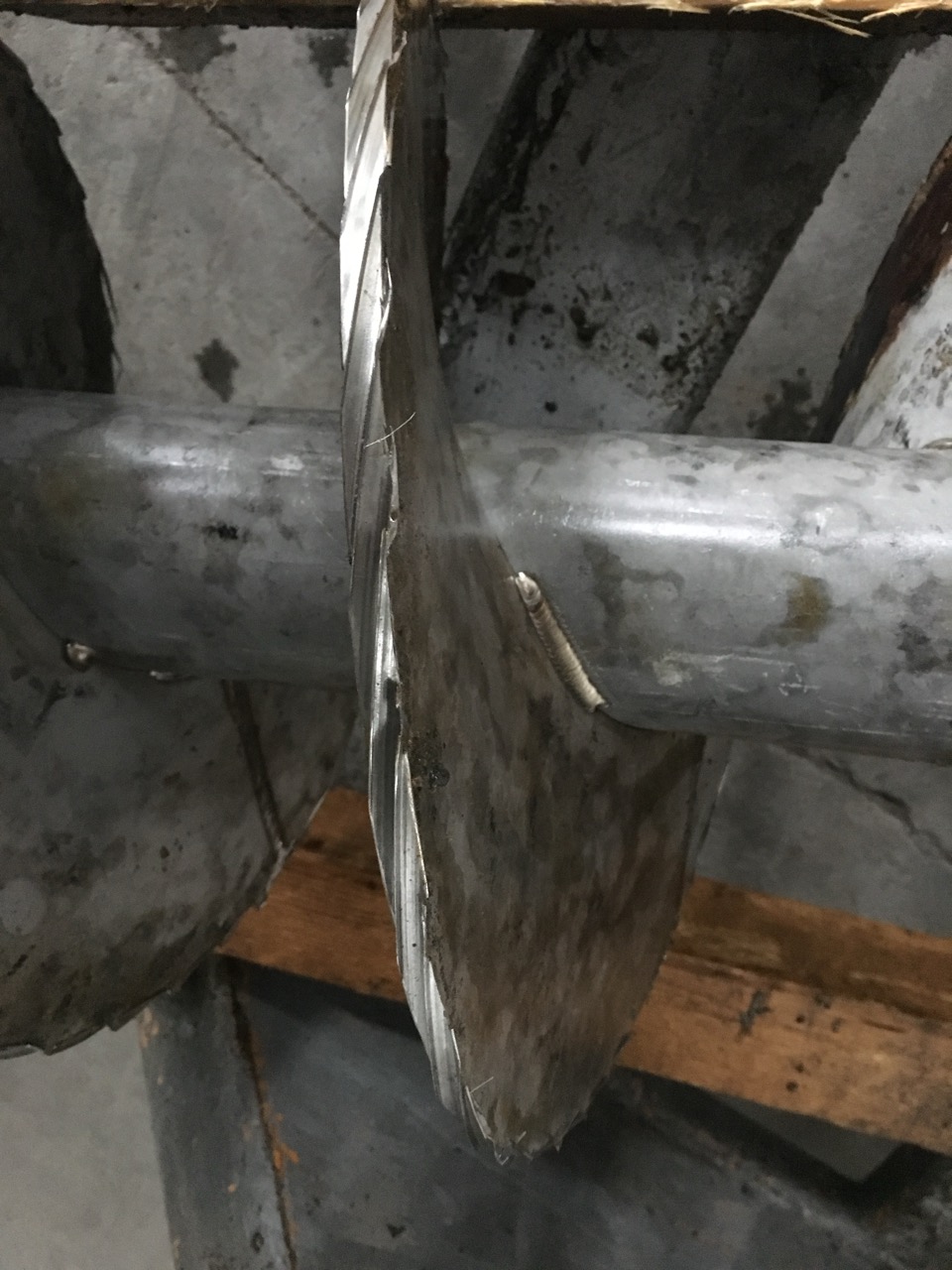
Figure 2 — Severe screw shaft wear on a conventional multi-disc screw press. Wear, not cake dryness, is often the dominant maintenance cost in continuous dewatering duty.
Stage 3 — Deep dewatering: the secondary stage after dewatering
Deep dewatering is a second mechanical stage applied to already-dewatered sludge. In the SFC range this is the SD high-pressure belt press, which further reduces moisture content after conventional dewatering and therefore reduces transport and disposal volume. The peer-reviewed inventory review reports approximately 35–40% total solids for deep dewatering, against 25–30% for mechanical dewatering — a difference that changes haulage economics rather than merely improving a number.
Belt-based equipment introduces its own control requirements: filter belt deviation is limited by pneumatic correction valve control and limit switches, and the correction valve must be checked for flexibility and lubricated as part of routine maintenance. Filter belt clogging is managed with a wash water system, controlled feed concentration and belt speed adjustment. Belt tension and roller alignment should be verified at installation and commissioning.
Stage 4 — Drying: volume reduction with a different cost structure
Drying is not a better dewatering machine; it is a separate thermal process. SFC supplies low-temperature sludge dryers in two forms: the container-type SFC-TR and the belt-type SFC-BSD. Both are designed for low-temperature operation and can be integrated with waste heat recovery, and the system can reduce sludge volume by more than 70%.
The cost structure is the deciding factor. The same peer-reviewed review reports average energy use of approximately 0.12 kWh per kg TS for raw sludge and 0.26 kWh per kg TS for digested sludge in mechanical dewatering, against an average of about 3.8 kWh per kg TS for thermal drying. Drying is justified by downstream savings — haulage, disposal fees, storage — or by a reuse requirement, not by energy efficiency.
Dryer reliability in polluted service is largely a heat-exchanger question. Conventional finned-tube evaporators foul quickly and lose heat-transfer efficiency in dirty gas streams. SFC's condenser design uses multiple rows of smooth 316L stainless steel tubes without fins; a continuous water film forms on the polished surface, captures dust particles and allows deposits to detach, with an automated spray-flushing system discharging contaminants with the condensate. SFC reports a 5–8 year service life against critical corrosion within roughly three years for conventional finned-tube units, about 50% lower post-operation maintenance expense related to evaporator cleaning and replacement, a maintenance cycle extended by roughly 200%, and an efficiency factor of 1.3–1.5 compared with finned-tube systems.
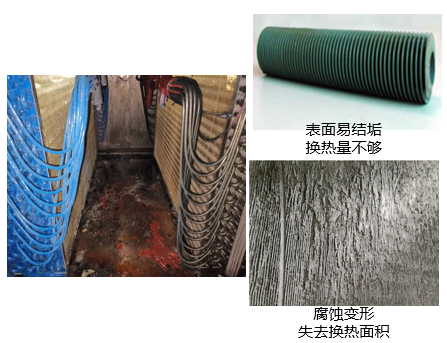
Figure 3 — Fouled and corroded fin coils in a conventional dryer. Finned-tube evaporators lose heat-transfer efficiency quickly in polluted gas streams.
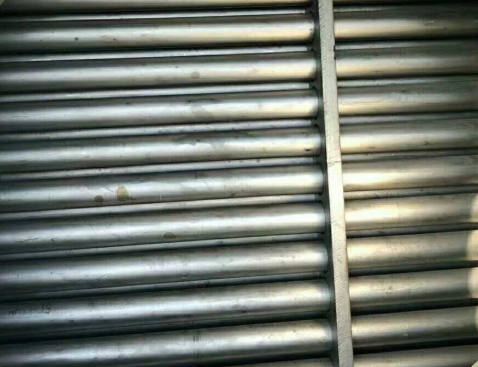
Figure 4 — In the smooth-tube design, the polished 316L surface prevents scale adhesion, so deposits detach and are flushed out with the condensate.
Step-by-Step Breakdown: how to run the stage decision
- Fix the sludge data before the equipment list. Confirm sludge source, daily sludge volume, operating hours, solids content and target moisture. These five inputs decide whether thickening, dewatering, deep dewatering or drying equipment is the correct answer.
- Set the stage boundary from the disposal route. If the cake goes to landfill or incineration with a moisture limit that conventional dewatering cannot reach, the boundary moves to deep dewatering. If the constraint is mass and haulage distance, evaluate drying with a heat balance, not on dryer catalogue alone.
- Match the equipment family to the sludge character. FBT/FRDT for thickening duty; GDY/FTB/FTE or the integrated Product 5174/5175/5176 for combined duty; DL/SRD or Product 5166 for sticky, oily or low-concentration feed; SD for secondary deep dewatering; SFC-TR/SFC-BSD for the drying stage.
- Check continuous operation, automation and footprint. All four stages are continuous in normal municipal and industrial duty, so automation scope and control-system configuration should be specified together with capacity and dimensions. Integrated skids reduce footprint; separate stages give more flexibility in staged upgrades.
- Plan conditioning and controls together with the machine. Polymer jar tests and a conditioning review should precede final sizing, because flocculation quality determines dewatering performance more than any single mechanical parameter. On screw presses, a five-minute delayed sludge discharge after shutdown plus nozzle flushing of the screw shaft and rings is the standard anti-clogging measure; motor overcurrent protection is the corresponding control.
- Close the commercial terms and acceptance route. Agree delivery terms, inspection method and payment schedule early so that commissioning is not delayed by documentation. SFC's standard terms are a minimum order quantity of 1 unit, FOB or CIF delivery, factory inspection or pre-shipment inspection as acceptance criteria, and 30% deposit in advance with 70% balance before shipment.
Use Cases: where each configuration fits
- Municipal wastewater plants with dilute feed. Thickening first (FBT or FRDT), then combined thickening and dewatering. Separating the duties protects the dewatering unit from hydraulic overload and stabilizes cake quality across seasonal sludge changes.
- Printing, dyeing, chemical and food processing plants. Continuous duty with oily, sticky or high-inorganic sludge is the case for the DL/SRD wear-free screw press or Product 5166, where shaft and ring wear dominate maintenance cost.
- Retrofit projects with no free floor space. The integrated Product 5174/5175/5176 configurations combine thickening and dewatering in a single skid, which is usually the only practical route when an existing building cannot be extended.
- Landfill, incineration or long-haul disposal. Deep dewatering with the SD high-pressure belt press after conventional dewatering reduces transport volume, and drying becomes viable if waste heat is available on site.
- Volume-driven disposal contracts. Where the constraint is total tonnes rather than cake quality, a low-temperature drying stage after dewatering or deep dewatering can reduce sludge volume by more than 70%.
Comparison Table: stage duties and verified benchmarks
| Stage | Duty | Equipment families (SFC) | Output benchmark | Energy / chemical context |
|---|---|---|---|---|
| Thickening | Increase solids concentration, reduce downstream load and volume | FBT belt thickener; FRDT rotary drum thickener | Definitional duty: raises solids concentration; the reviewed inventory data does not assign a single output range | Not separated in the reviewed inventory data |
| Mechanical dewatering | Produce a handleable, transportable cake | GDY / FTB / FTE; integrated Product 5174, 5175, 5176; DL/SRD; Product 5166 | About 25–30% TS in a 2023 peer-reviewed review; trade definitions cite roughly 15–45% dry solids | About 0.12 kWh/kg TS (raw sludge) and 0.26 kWh/kg TS (digested sludge); chemical agents typically 5–15 g/kg TS |
| Deep dewatering | Secondary stage to lower moisture below conventional dewatering | SD high-pressure belt press | About 35–40% TS reported for deep dewatering in the same review | The review reports mechanical-dewatering energy without separating this stage |
| Drying | Further volume and mass reduction; meet a defined final moisture target | SFC-TR container-type; SFC-BSD belt-type low-temperature dryer | More than 70% sludge volume reduction (SFC system data) | About 3.8 kWh/kg TS average for thermal drying in the same review |
Note: TS and dry-solids ranges originate from a literature review and trade definitions covering heterogeneous feed sludges and configurations. They are benchmarks for specification writing and acceptance testing, not guaranteed outputs for a specific model.
What long-term ownership adds to the stage decision
Stage choice is a capital decision; the equipment family choice determines the next decade of operating cost. SFC is a National High-Tech Enterprise with a 25,000 m² facility, a five-person R&D team and an annual output of 500 sets, and exports account for 30% of its business, with equipment operating in Southeast Asia, Russia, South America and the Middle East. Quality control includes 100% testing before delivery.
Technical services cover equipment type and model selection, processing capacity customization, equipment dimensions, control-system configuration, power configuration and modular design options, and OEM and ODM production services are available. After-sales technical support includes remote assistance, on-site commissioning, spare parts supply, warranty service, operation training and long-term consultation. For a plant that intends to extend a line from dewatering to deep dewatering or drying two or three years later, that continuity — same control philosophy, same spares route, same service contact — is usually worth more than a marginal price difference at the initial order.
Supply continuity is quantifiable: monthly production capacity is 40 units, with a typical production lead time of 30–60 days and a minimum order quantity of 1 unit.
FAQ
Which certifications and compliance points should be verified before ordering sludge dewatering equipment?
SFC Machinery holds ISO 9001:2015, ISO 14001, ISO 45001:2018 and CE certification. Beyond the manufacturer's certificates, buyers should confirm two things: the disposal regulation that governs the destination market for the treated sludge, and the inspection method written into the contract. SFC's standard acceptance criteria are factory inspection or pre-shipment inspection, which gives the buyer a documented verification step before shipment rather than after installation.
Can one supplier cover thickening, dewatering, deep dewatering and drying?
Yes. SFC's product scope covers sludge thickening equipment (FBT belt thickener, FRDT rotary drum thickener), dewatering equipment (GDY/FTB/FTE, integrated Product 5174/5175/5176, DL/SRD wear-free screw press, Product 5166), deep dewatering (SD high-pressure belt press) and low-temperature drying (SFC-TR container type, SFC-BSD belt type), together with polymer preparation and dosing systems. Technical services include type and model selection, processing capacity customization, equipment dimensions, control-system configuration, power configuration and modular design, and OEM and ODM production is available. Quality control includes 100% testing.
What drives operating budget across the three stages?
Three variables dominate. Energy: a 2023 peer-reviewed review reports around 0.12 kWh/kg TS for raw sludge and 0.26 kWh/kg TS for digested sludge in mechanical dewatering, against about 3.8 kWh/kg TS for thermal drying. Chemicals: the same review reports typical chemical-agent consumption of 5–15 g per kg TS for mechanical dewatering. Maintenance: SFC reports roughly 30% lower post-operation maintenance expense for its wear-free screw shaft design compared with conventional multi-disc screw presses, and about 50% lower evaporator-related maintenance for its smooth-tube dryer condenser. Equipment prices are quoted per project because the stage boundary, capacity, control scope and materials change the configuration; a quotation request should therefore carry the sludge data, target moisture and available footprint.
How can we validate our own sludge before committing to a configuration?
Validation starts with data, not equipment: sludge source, daily sludge volume, operating hours, solids content and target moisture are confirmed first, because these inputs determine whether thickening, dewatering, deep dewatering or drying is the right stage. A polymer jar test and conditioning review then follow before final equipment sizing, since flocculation quality is a primary driver of cake dryness. After installation, operating parameters — polymer dosing, feed concentration, throughput, belt pressure or drying time — are adjusted during commissioning based on actual sludge performance, and the final moisture target is confirmed before the dryer is put into operation.
What are the lead time and purchasing terms?
The minimum order quantity is 1 unit, typical production lead time is 30–60 days, and monthly production capacity is 40 units. Delivery terms are FOB or CIF, acceptance criteria are factory inspection or pre-shipment inspection, and payment terms are 30% deposit in advance with 70% balance before shipment. To move from comparison to a configured offer, send your sludge data and target moisture to sales@fuchanjx.com or call +86 138-1673-2007, and request the current product catalogue as a starting reference.
Conclusion: choose the stage, then the equipment
Thickening, dewatering, deep dewatering and drying are sequential duties with different equipment, different cost structures and different acceptance tests. Thickening protects downstream capacity. Dewatering produces the cake. Deep dewatering lowers the moisture that haulage and disposal are billed on. Drying reduces mass further, at an energy cost roughly an order of magnitude above mechanical dewatering in the reviewed literature — which is why it belongs at the end of the chain and only when the disposal route justifies it.
No single configuration is universally best. The defensible sequence is: define the sludge data, set the stage boundary from the disposal route, match the equipment family to sludge character and footprint, plan conditioning and controls, then close the commercial terms and acceptance route. Shanghai Fuchan Machinery Technology Co., Ltd. covers all four stages, which means the comparison can be made inside one product map — and the boundary can later be extended without changing service, spares or control philosophy.
Next step
Download the full SFC product catalogue for model families, dimensions and configuration options: Product Catalog-SFC-2026 (PDF).
For a stage-level recommendation, send sludge source, daily volume, operating hours, solids content and target moisture to sales@fuchanjx.com | Tel / WhatsApp: +86 138-1673-2007 | Website: www.sfceco.com | Address: Room 1201, 1122 Xinjinqiao Rd, Pudong New District, Shanghai, PRC China.
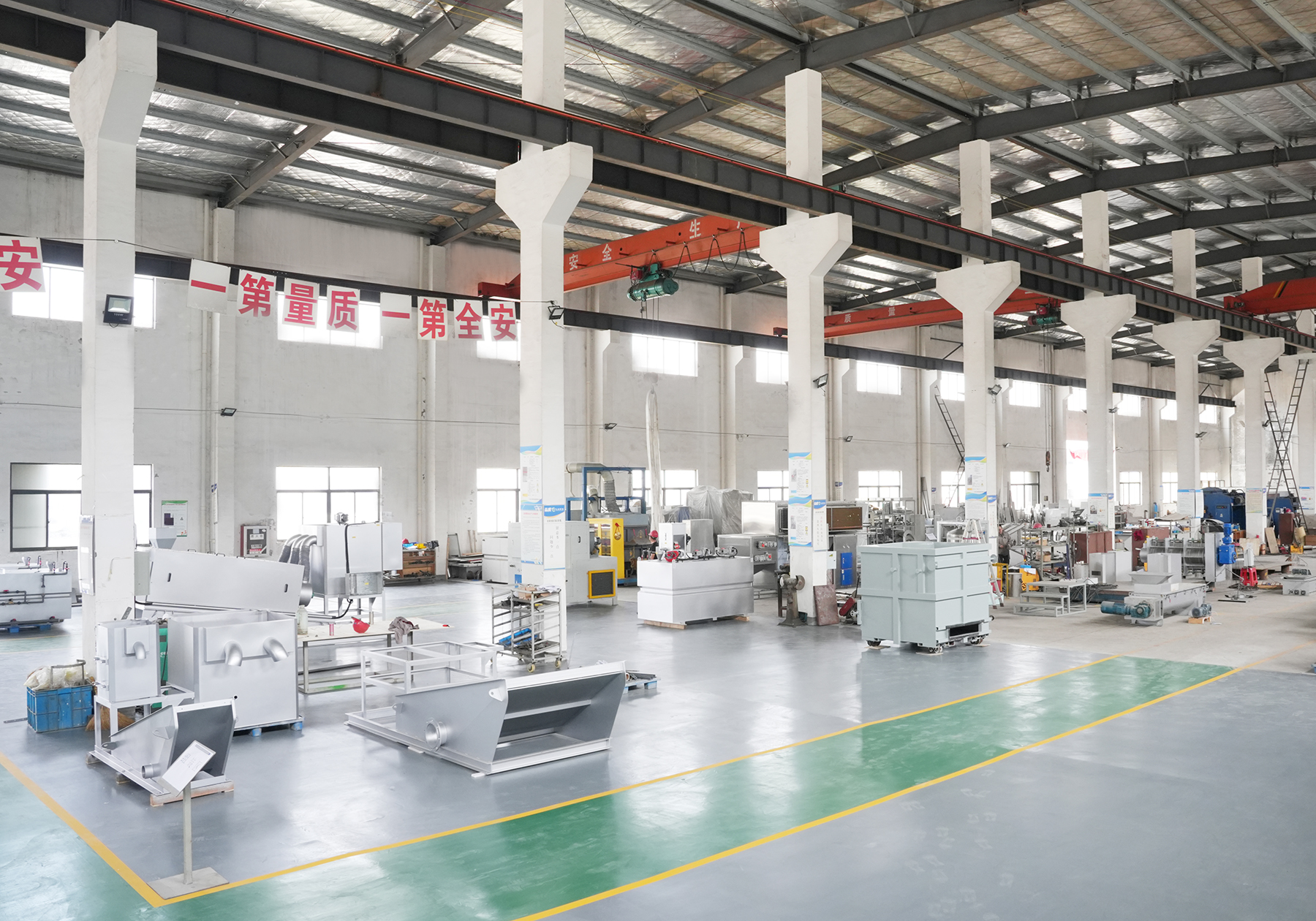
Figure 5 — Sludge thickening, dewatering, deep dewatering and drying equipment in production at SFC Machinery, Shanghai.
Have Questions or Need More Details?
Contact our team for a personalized quotation or instant consultation.
Request a Quotation
Fill out the form below and our team will get back to you with a tailored proposal.
WhatsApp Direct Chat
Prefer to chat in real-time? Message us on WhatsApp for instant assistance & quick answers.
- Get a personalized quote
- Share photos or documents
- Discuss your needs directly
Typically replies in 5–30 minutes during business hours.