The Complete Guide to Sludge Dewatering Equipment
Sludge dewatering is a critical step in wastewater treatment, reducing sludge volume and moisture content to lower disposal costs and enable resource recovery. Selecting the right sludge dewatering equipment depends on sludge characteristics, flow rate, space constraints, and final moisture targets. This guide covers the main technologies, system configurations, and key selection criteria based on real-world project experience.
What Is Sludge Dewatering Equipment?
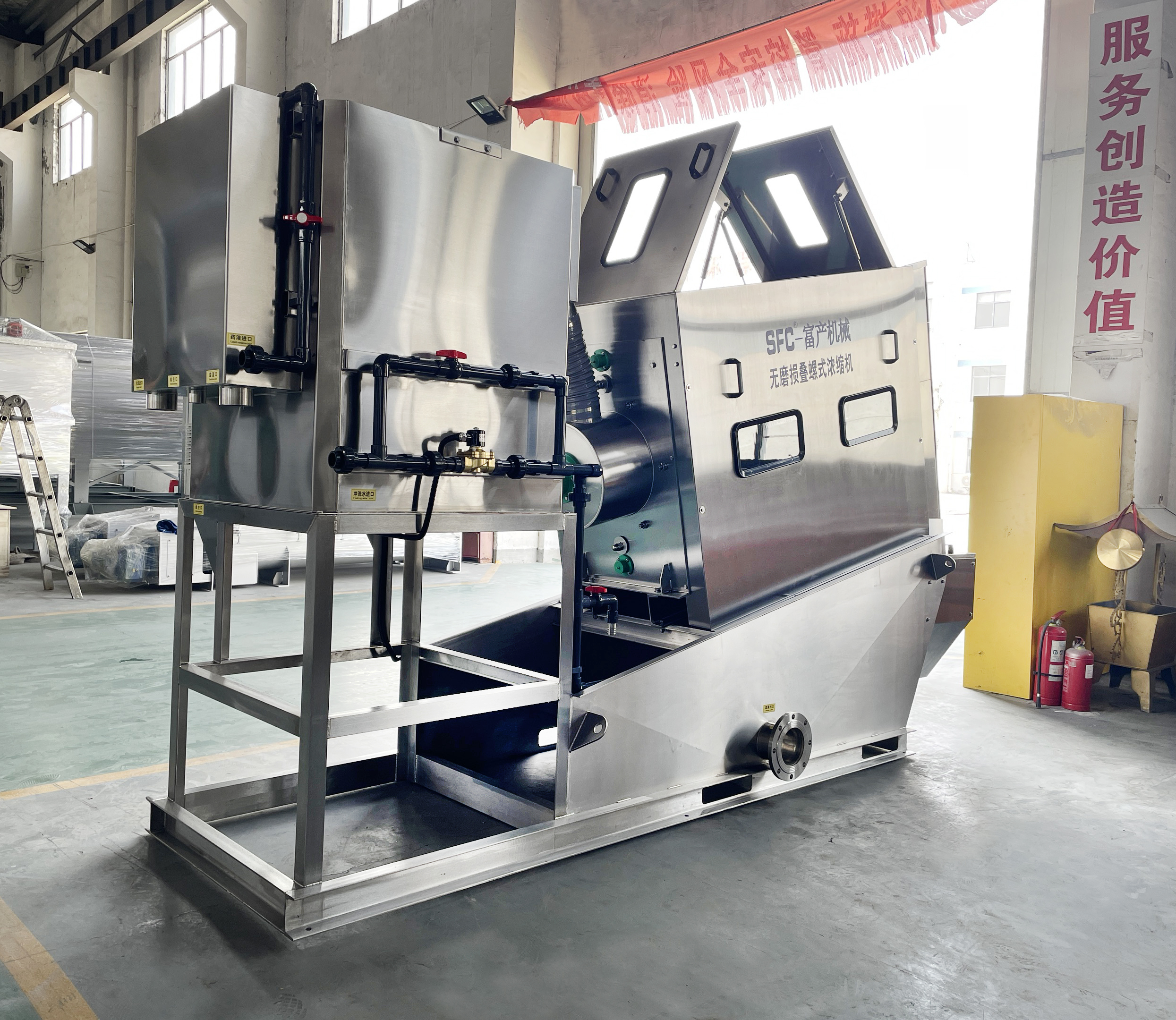
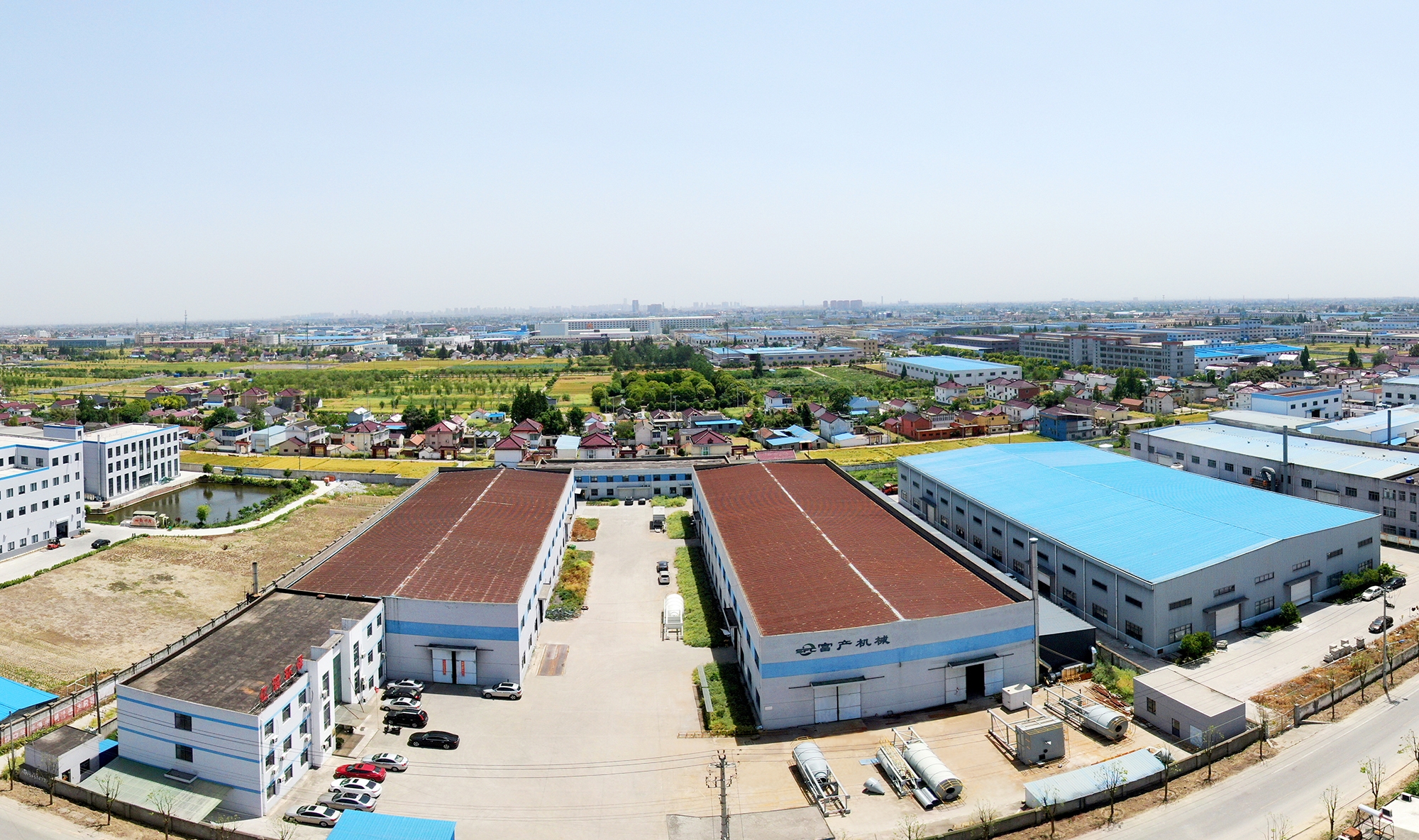
Sludge dewatering equipment mechanically removes water from liquid sludge, producing a dewatered cake with reduced volume. Common technologies include belt filter presses, screw presses, rotary drum thickeners, and sludge dryers. Shanghai Fuchan Machinery Technology Co., Ltd. (SFC Machinery), established in 2007 and based in Pudong, Shanghai, is a National High-Tech Enterprise that integrates R&D, manufacturing, and engineering services for sludge treatment. The company offers a comprehensive line of sludge dewatering equipment, thickening equipment, deep dewatering equipment, drying equipment, and polymer preparation systems.
Industry Background
The global sludge dewatering equipment market was valued at USD 5.19 billion in 2024 and is projected to reach USD 10.16 billion by 2032, according to Fortune Business Insights. Asia Pacific led with a 37.57% revenue share in 2024, and China's market alone is expected to reach USD 0.87 billion by 2025. The belt filter press segment is estimated to grow at a CAGR of 8.8% from 2025 to 2033, widely used in municipal applications. The top five global players – Andritz, Xylem, Alfa Laval, Suez, and Veolia – collectively held 35% of the market in 2025, indicating a fragmented landscape where specialized manufacturers like SFC Machinery can offer tailored solutions.
Problem Definition: Reducing Sludge Volume and Moisture
Untreated sludge has very high water content (often above 95%), making transportation and disposal expensive. Environmental regulations require stable, low-moisture cake for landfill or incineration. Without efficient dewatering, disposal costs skyrocket, and odor, leachate, and handling issues increase. A well-designed sludge dewatering system addresses these challenges by maximizing solid capture and achieving cake dryness that meets compliance targets.
Detailed Solution: SFC Sludge Dewatering Equipment Portfolio
SFC Machinery provides end-to-end sludge treatment solutions covering thickening, dewatering, deep dewatering, drying, and chemical dosing. Below are the key product series and their typical applications.
1. Sludge Thickening Equipment
Belt Sludge Thickener (FBT Series): Gravity belt thickener with belt width 1000–3000 mm, treating 12–95 m³/h of 0.6–1.5% solids sludge. Outlet consistency 2.5–8%, solid-capture rate 98%. Used for municipal and industrial sludge thickening.
Rotary Drum Sludge Thickener (FRDT Series): Enclosed drum thickener, model FRDT-20 to FRDT-100, treating 7.5–100 m³/h, solid-capture rate 95%. Ideal for limited-space installations.
2. Mechanical Dewatering Equipment
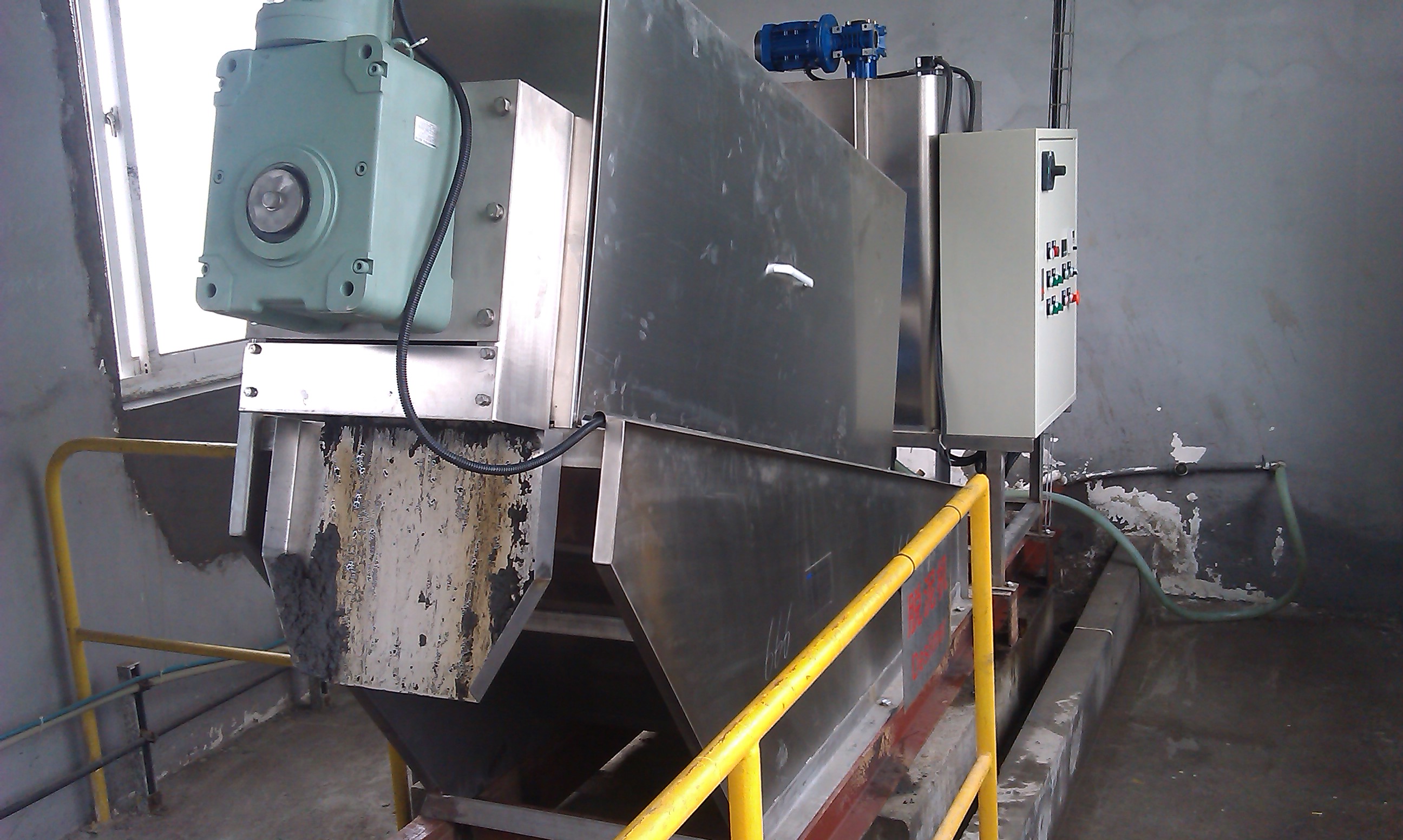
Screw Press Sludge Dewatering Machine (DL Series): Multi-disc screw press with fixed and moving rings. 16 models from DL-101 to DL-404, handling inlet consistency 0.6–5.0%, producing cake at 75–85% water content. Dried sludge output 1.5–900 kg/h. Suitable for municipal, industrial, oily, and decentralized sludge.
Wear-free Screw Press (SRD Series): Designed for sticky, oily, high-inorganic sludge. Reduces screw-to-ring wear. Models SRD-301 to SRD-404, output 25–900 kg/h, water content 75–85%.
Belt Sludge Thickening and Dewatering Machine (GDY Series): Integrated gravity belt thickening + belt press in one unit. Belt width 1000–3000 mm, treating 15–90 m³/h (0.6–1.5% solids), cake water content 75–80%. Used in high-flow continuous dewatering projects.
Rotary Drum Sludge Dewatering Machine (FTB Series): Rotary drum pre-thickening + belt press. Belt width 500–2000 mm, treating 3–30 m³/h (1.5–2.5% solids). For small and medium dewatering projects.
Rotary Drum Type Sludge Thickening and Dewatering Machine (FTE Series): Combines rotary drum thickening with belt press. Belt width 1000–3000 mm, treating 12–90 m³/h (0.6–1.5% solids), cake 75–85% water content. Ideal for medium to large continuous plants.
3. Deep Sludge Dewatering
High-Pressure Belt Deep Sludge Dewatering Machine (SD Series): Secondary deep dewatering after primary dewatering. Inlet consistency 15–20% solids. For 65–75% water content output, capacity 0.3–5.0 t/h; for 60–70% water content, capacity 0.35–6.1 t/h. Used in municipal, chemical, and incineration pretreatment.
4. Sludge Drying
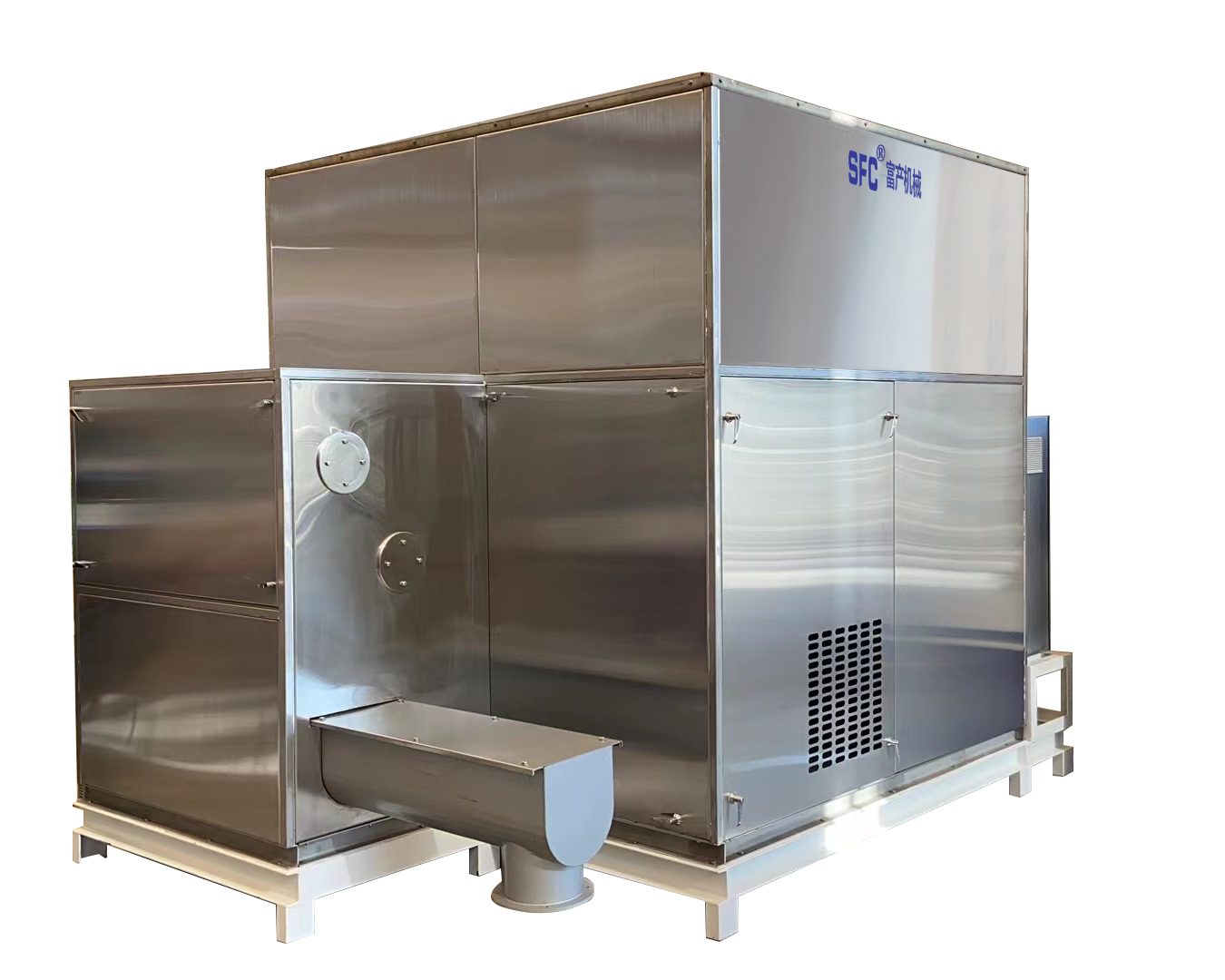
Low-Temperature Sludge Dryer (SFC-TR Series): Batch operation with enclosed circulating air. Water extraction 21–360 kg/h, power 15–145 kW, unit power consumption 0.4–0.55 kWh/kg water. Volume reduction up to 70%.
Belt Sludge Dryer (SFC-BSD Series): Continuous belt drying with low-temperature heat pump. Fully enclosed modular design. Input 15–35% solids, final moisture 10–50%, capacity 0.8–90 t/h. Suitable for large-scale reduction and resource recovery.
Step-by-Step: Building a Sludge Dewatering System
- Characterize sludge: Measure solids concentration, organic content, viscosity, and particle size.
- Select thickening method: Use belt thickener or rotary drum thickener to increase solids from 0.6–1.5% to 2.5–8%.
- Choose primary dewatering technology: Based on sludge type, choose screw press (DL or SRD) or belt press (GDY/FTB/FTE) to achieve 75–85% water content cake.
- Evaluate deep dewatering or drying: If lower moisture needed, add SD series for 60–70% water content, or BSD/TR dryer for final moisture as low as 10%.
- Integrate auxiliary equipment: Polymer preparation system (PAM/PAC), sludge pumps, screw conveyors, PLC control.
Use Cases Across Industries
Municipal Wastewater Treatment
Large volumes of low-concentration sludge typical in cities. Belt thickening + belt press or rotary drum + screw press systems handle high flow with continuous automatic operation. SFC equipment has been deployed globally.
Palm Oil Industry
POME and empty fruit bunch sludge require corrosion-resistant, explosion-proof design. SFC's integrated thickening-dewatering-drying process (using DL series screw press and SD series deep dewatering) reduces volume and supports zero-discharge goals.
Pharmaceutical & Chemical
High-organic, chemically complex sludge benefits from enclosed drying to stabilize residues. Low-temperature dryers (TR series) minimize biological activity and odors.
Automotive Parts Manufacturing (Electroplating)
Heavy metal sludge requires corrosion-resistant construction. Rotary drum thickening + belt press (FTB series) provides reliable dewatering with SS304 materials.
Comparison of Dewatering Technologies
| Technology | Inlet Solids | Output Moisture | Capacity (TS/h) | Best For | Key Advantage |
|---|---|---|---|---|---|
| Screw Press (DL) | 0.6–5% | 75–85% | 1.5–900 kg/h | Municipal, oily, decentralized | Self-cleaning, low wash water |
| Wear-free Screw Press (SRD) | 0.6–5% | 75–85% | 25–900 kg/h | Sticky, high-inorganic sludge | Reduced wear |
| Belt Thickening + Press (GDY) | 0.6–1.5% | 75–80% | 90–1050 kg/h | High-flow municipal | One-step integrated |
| Rotary Drum + Belt (FTB) | 1.5–2.5% | 75–85% | 45–450 kg/h | Small-medium plants | Compact footprint |
| Rotary Drum + Belt (FTE) | 0.6–1.5% | 75–85% | 90–975 kg/h | Medium-large plants | High throughput |
| High-Pressure Belt (SD) | 15–20% | 60–75% | 60–920 kg/h | Deep dewatering, drying pre-treat | Ultra-low moisture |
| Low-Temp Dryer (TR/BSD) | 15–35% | 10–50% | 0.8–90 t/h | Advanced reduction | >70% volume reduction |
All SFC equipment is manufactured in SS304 stainless steel. Data from product specification sheets (SFC Machinery 2025).
Frequently Asked Questions
What standards apply to sludge dewatering equipment?
ISO 11465:2025 provides the international standard for determination of dry residue and water content in sludge. SFC Machinery equipment is designed to meet relevant national and international standards. For specific compliance requirements, contact the sales team.
What is the typical treating capacity of a screw press dewatering machine?
The SFC DL series screw press handles inlet consistency of 0.6–5.0% solids and produces 1.5 to 900 kg/h of dewatered sludge (dry solids basis). The SRD wear-free series offers 25–900 kg/h. Capacity depends on model and inlet conditions.
How much does a sludge dewatering system cost?
Cost varies widely based on capacity, technology, and customization. Budget typically includes thickening, dewatering, polymer dosing, and controls. Contact SFC Machinery at sales@fuchanjx.com for a project-specific quotation. A rough estimate for a small screw press system starts from tens of thousands USD.
Can I get a sample or conduct a trial before purchasing?
Yes, SFC Machinery can arrange on-site testing with mobile units or provide lab-scale trials. Sludge samples can be sent to the factory for process simulation. Contact sales@fuchanjx.com to schedule a trial.
What is the typical lead time for sludge dewatering equipment?
Lead time depends on model and quantity. Standard machines typically ship within 30–60 days after order confirmation. Custom integrated systems may require 60–90 days. Contact SFC Machinery at +86 138-1673-2007 or WhatsApp for current lead times and a free project consultation.
For a complete overview of SFC's sludge dewatering equipment series, specifications, and case studies, download the product catalog (PDF).