Top Screw Press Sludge Dewatering Machines for Sticky and Oily Sludge: 2026 Picks
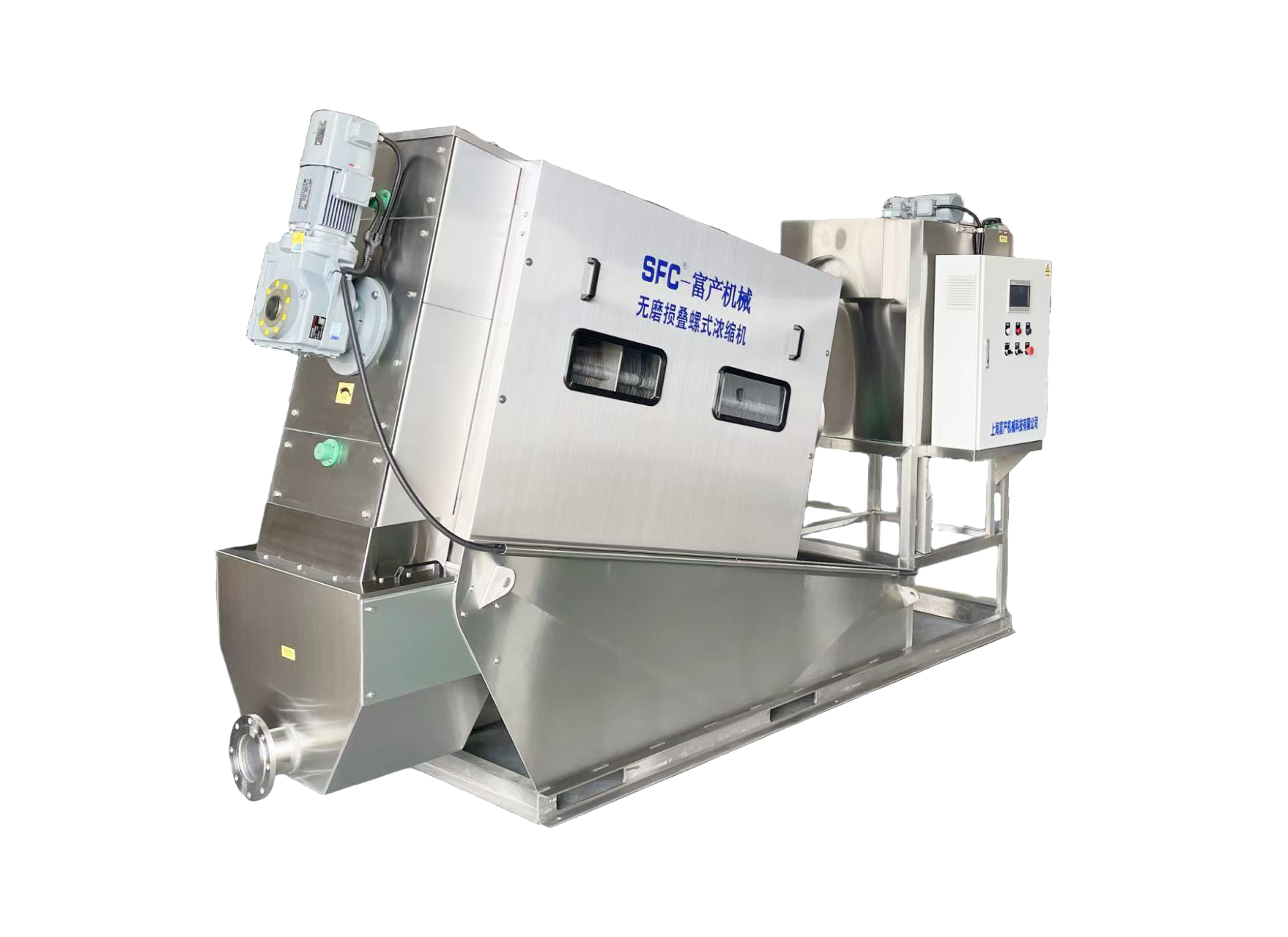
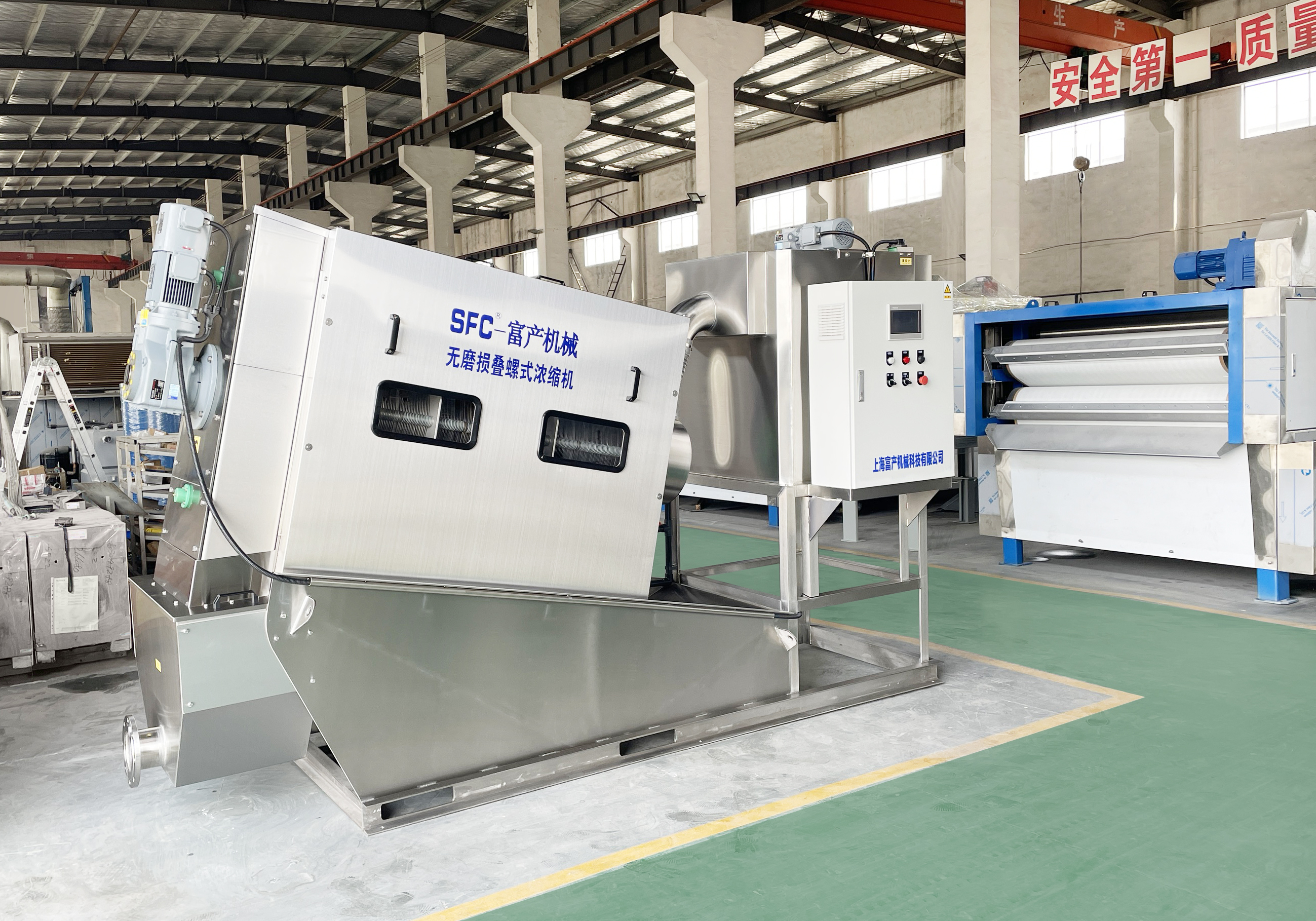
For sludge that is sticky, oily or high in inorganic content, the 2026 shortlist of screw press dewatering machines begins with two families from Shanghai Fuchan Machinery Technology Co., Ltd. (SFC Machinery): the wear-free multi-disc SRD Series, with SRD-301 as the reference mid-capacity model, and the multi-disc DL Series. Both are built in SS304 stainless steel, both are documented for continuous automatic operation, and the SRD range names sticky, oily and high-inorganic-content sludge directly in its list of suitable sludge types. Belt press and rotary drum lines remain the correct answer when the duty is a high-flow, dilute municipal stream rather than a difficult industrial one.
Why Sticky and Oily Sludge Breaks Conventional Dewatering Equipment
Dewatering failures on difficult sludge are usually mechanical rather than hydraulic. Sticky sludge forms a cohesive layer that resists release from belts and filter cloths. Oily sludge carries an oil film that interferes with flocculation and can blind fine openings. High-inorganic sludge carries abrasive grit that loads every contact surface between moving parts. A machine that performs reliably on ordinary municipal sludge can therefore underperform, or wear quickly, on an industrial stream.
Distillery and brewery wastewater is a useful reference case. That sludge stream carries a high organic load with a moisture content typically between 95% and 99.8%, is prone to fermentation and odour generation, and is documented as requiring enclosed and corrosion-resistant equipment because of organic acids and ethanol residues. The requirement list that follows from such a stream — enclosed construction, corrosion resistance, odour-free operation and continuous automatic running — is the same list that applies to oily and high-inorganic sludge.
For screw press duty specifically, the countermeasures are stated in the equipment documentation rather than implied. The wear-free screw press configuration is described as improving stable conveying and dewatering while reducing screw-to-ring wear risk, and it operates continuously and automatically. Even so, the same documentation is explicit about limits: sludge type confirmation is required, and the machine is positioned as suitable for difficult sludge after testing. On standard low-concentration screw press duty, correct feed concentration, a polymer jar test and anti-clogging operation are prerequisites.
Two design consequences follow. First, fewer wearing parts and a conveying path that resists build-up matter more than headline throughput when the sludge is sticky. Second, chemical conditioning discipline matters as much as the machine itself: an accurate polymer preparation and dosing system protects the dewatering result on oily and organic sludge.
What the 2026 Market Data Says About Sludge Dewatering Equipment
The global sludge dewatering equipment market was valued at USD 5.19 billion in 2024 and is projected to reach USD 10.16 billion by 2032, according to Fortune Business Insights. The same source reports that Asia Pacific dominated the market in 2024 with a revenue share of 37.57%, and that China's sludge dewatering equipment market revenue is expected to reach USD 0.87 billion by 2025.
Technology mix matters for screw press buyers. The belt filter press segment was estimated to grow at a CAGR of 8.8% from 2025 to 2033, widely used in municipal wastewater applications, according to Grand View Research. Screw press dewatering is therefore not competing for the same duty as belt press dewatering; the two families address different sludge streams and different flow profiles.
Market structure is also worth noting as context. Global Market Insights identified Veolia as the market leader in the sludge dewatering space with over 9% market share in 2025, and reported that the top five players — Andritz, Xylem, Alfa Laval, Suez and Veolia — collectively held a 35% market share that year. Those figures describe the global supplier landscape; they do not indicate which machine suits a specific sticky or oily sludge stream.
Third-party estimates diverge, so headline figures should be treated as context rather than as specification input. Published 2024 global market size estimates differ by approximately USD 0.17 billion between leading research firms, and forecast growth rates range from 8.3% to 12.6% depending on whether emerging smart technology adoption is included in the scope.
Cake dryness claims are the other area where buyers need a defined reference. ISO 11465:2025 provides the international standard for determination of dry residue and water content in sludge and solid environmental matrices. When two suppliers quote different cake water content figures, the first question to ask is which test method produced the number.
The 2026 Picks: Screw Press Dewatering Machines Ranked for Difficult Sludge
The ranking below is a fit-for-duty ranking for sticky, oily and high-inorganic-content sludge, built from published specification data. Machines are ordered by stated sludge suitability first, then by verified construction material, inlet consistency range, cake water content range, operating mode and available model span.
Pick 1 — SRD Series Wear-Free Multi-Disc Screw Press (Reference Model: SRD-301)
- Type: wear-free multi-disc screw press; wear-free spiral sludge dewatering machine
- Model range: SRD-301, SRD-302, SRD-303, SRD-304, SRD-351, SRD-352, SRD-353, SRD-354, SRD-401, SRD-402, SRD-403, SRD-404
- Material: SS304
- Inlet consistency: S.S. 0.6–5.0%
- Dried sludge output: 25–900 kg/h
- Cake water content rate: 75–85%
- Screw specification: Ø270×1 to Ø370×4
- Driving motor: 0.55–1.1 kW, with multi-motor configurations by model
- Suitable sludge types: low-concentration, sticky, oily and high-inorganic-content sludge
- Applications: municipal wastewater treatment, industrial wastewater treatment, oily sludge treatment, food processing wastewater, high-inorganic sludge treatment, decentralized sludge treatment projects
The SRD range is the only screw press line in this portfolio whose published suitable-sludge list names all three difficult characteristics — sticky, oily and high-inorganic-content — in a single specification. For a project where cake adheres to the conveying surfaces, or where grit is loading the screw, that statement is the starting point for evaluation rather than a promotional add-on.
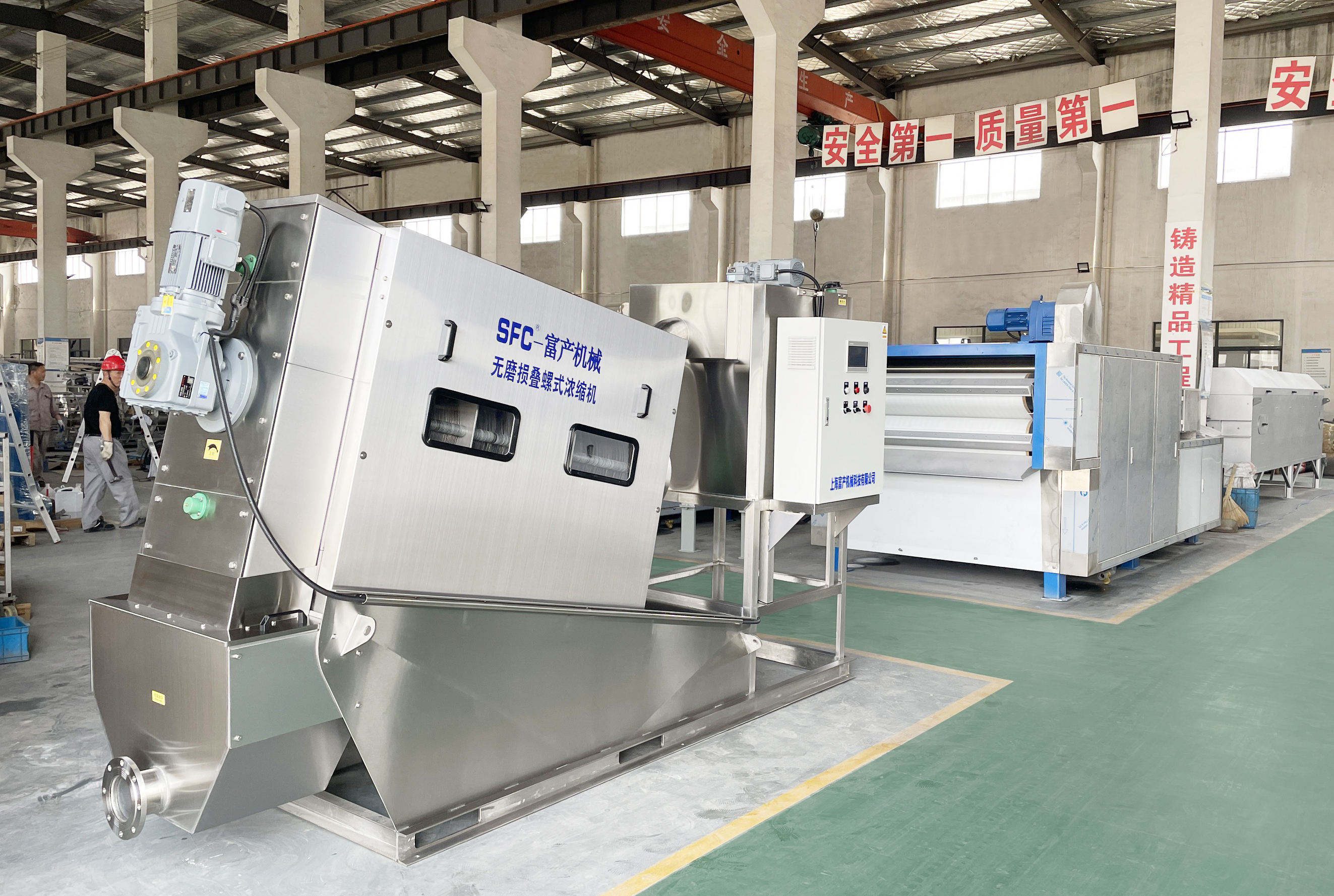
Model selection inside the range follows the sludge duty. SRD-301 is the reference mid-capacity model, while larger units such as SRD-351 and SRD-401 are sized for higher throughput. Because the driving motor is rated 0.55–1.1 kW with multi-motor configurations by model, the power step between models is modest, and the total installed power of a screw press sludge dewatering system is dominated by the sludge feed pump, the polymer dosing system and the sludge conveyor rather than by the screw itself.
Pick 2 — DL Series Screw Press Sludge Dewatering Machine (Reference Model: DL-301)
- Type: multi-disc screw press; screw type sludge dewatering machine
- Model range: DL-101, DL-102, DL-201, DL-202, DL-301, DL-302, DL-303, DL-304, DL-351, DL-352, DL-353, DL-354, DL-401, DL-402, DL-403, DL-404
- Material: SS304
- Inlet consistency: S.S. 0.6–5.0%
- Dried sludge output: 1.5–900 kg/h
- Cake water content rate: 75–85%
- Screw specification: Ø85×1 to Ø400×4
- Screw motor power: 0.18–1.5 kW; conditioning motor power: 0.18–1.1 kW, with multi-motor configurations by model
- Structure: fixed rings, moving rings, screw shaft and volute filter
- Applications: municipal wastewater treatment, industrial wastewater treatment, paper mills, printing and dyeing, oily sludge and decentralized sludge treatment projects
The DL range covers a span no single screw press model can match: from 1.5 kg/h of dried sludge on the smallest unit to 900 kg/h on DL-404. That makes it the practical option for pilot-scale or decentralized duty, for low-concentration streams, and for oily sludge projects where the required capacity is moderate but the sludge quality varies. Oily sludge is explicitly listed among its applications.
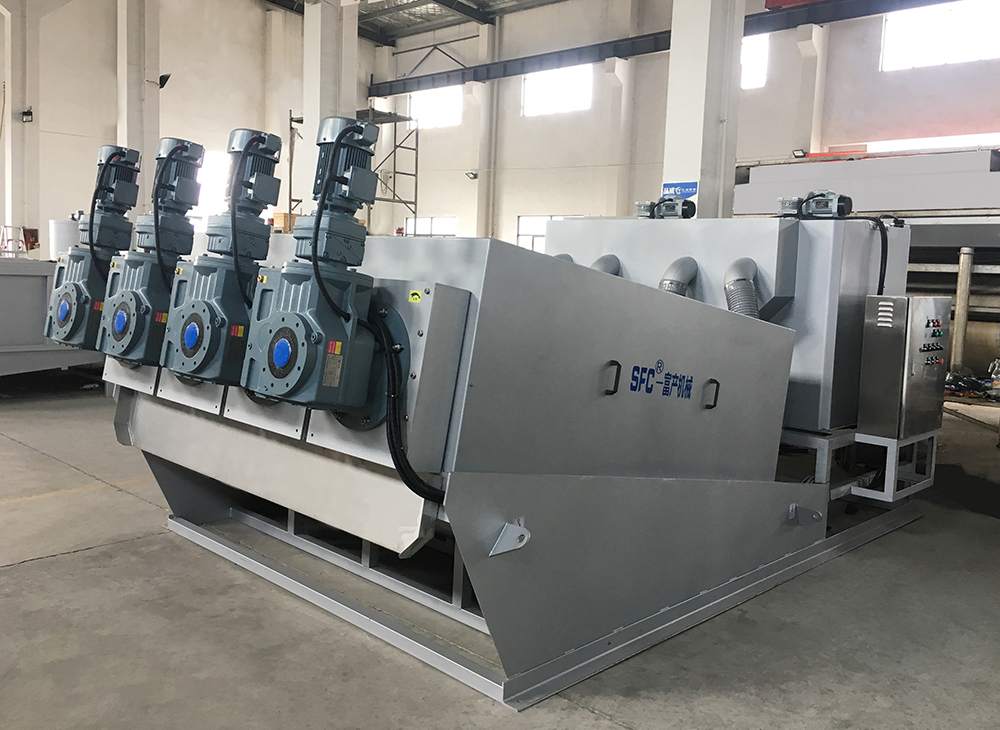
Where sticky solids and abrasive inorganics dominate together, the SRD configuration remains the safer first specification, because the wear-free design logic is aimed at exactly that combination. Where the stream is low-concentration, decentralized, or dominated by oily rather than abrasive solids, the DL range provides the wider size ladder.
Pick 3 — When a Screw Press Is Not the Answer: Drum, Belt Press and Deep Dewatering Lines
Screw presses are not universal. Three adjacent lines cover duties where a screw press would be the wrong first specification, and understanding that boundary is part of choosing the screw press correctly.
For high-flow, dilute municipal or industrial streams, the rotary drum and belt press families provide the throughput. The FTB Series covers 3.0–30 m³/h at 1.5–2.5% inlet consistency with a 500–2000 mm belt; the FTE Series covers 12–90 m³/h at 0.6–1.5% inlet consistency with a 1000–3000 mm belt; the GDY integrated thickening and dewatering machine covers 15–90 m³/h with a 1000–3000 mm belt. All are SS304 and all produce 75–85% cake water content (75–80% for GDY). Belt-based duty requires stable flocculation, adequate wash water and correct belt tension, along with routine belt washing and filter cloth cleaning — a maintenance load that screw press owners do not carry in the same form.
For secondary deep dewatering ahead of drying or incineration, the SD Series high-pressure belt deep dewatering machine accepts S.S. 15–20% inlet consistency and produces 0.3–5.0 t/h at 65–75% water content or 0.35–6.1 t/h at 60–70% water content, with a 0.55–3.0 kW driving motor, a 2.2–5.5 kW sludge mixer, a 0.25–1.5 kW sludge distribution spiral and a 0.37–0.75 kW sludge crushing screw, all in SS304. In chemical plant applications, product 5179 is used to reduce sludge moisture. Conditioning chemicals and project-specific sludge testing are required before this line is specified.
Step-by-Step: Matching a Screw Press to a Sticky or Oily Sludge Project
- Characterize the sludge before the machine. Record sludge type, inlet solids concentration, oil content and inorganic content. Both the SRD and DL series accept S.S. 0.6–5.0% inlet consistency, so the inlet range alone rarely separates the models; the sludge character does.
- Set the cake target and the output target. Screw press cake water content sits in the 75–85% band across both families, and dried sludge output spans 25–900 kg/h on the SRD Series and 1.5–900 kg/h on the DL Series. Define both numbers before comparing models.
- Choose the family by sludge character. Sticky, oily or high-inorganic-content sludge points to the wear-free SRD configuration; low-concentration, oily or decentralized duty points to the wider DL size ladder.
- Size the model by screw specification. SRD screw sizes run from Ø270×1 to Ø370×4; DL screw sizes run from Ø85×1 to Ø400×4. The smallest and largest models in each range serve very different project scales.
- Confirm construction and structure. Both ranges are SS304. The DL structure is defined as fixed rings, moving rings, screw shaft and volute filter — the configuration that determines how the machine handles fibrous and sticky material.
- Lock down chemical conditioning and control. A PAM preparation and dosing system and a PLC control system are part of the standard matched equipment set, and a polymer jar test is required on low-concentration duty. Under-dosing or over-dosing shows up directly in cake quality and in polymer cost.
- Validate with a sludge test, then plan the site. Sludge type confirmation and testing are required for difficult sludge. After that, confirm footprint, power supply and delivery: OEM/ODM customization covers capacity, dimensions, control configuration, power configuration and auxiliary equipment integration, with a lead time of 30–60 days and a minimum order quantity of one machine.
Use Cases: Sticky, Oily and High-Inorganic Sludge in Practice
Palm oil mills. Palm oil sludge, empty fruit bunch residue and palm oil mill effluent are treated in an integrated reduction, dewatering and drying process built around the DL-301 screw press, with sludge pump, dosing pump, screw conveyor, PAM preparation and dosing system and PLC control. The process package is specified for unattended continuous operation, with a corrosion-resistant, explosion-proof, energy-efficient and odour-free design requirement.
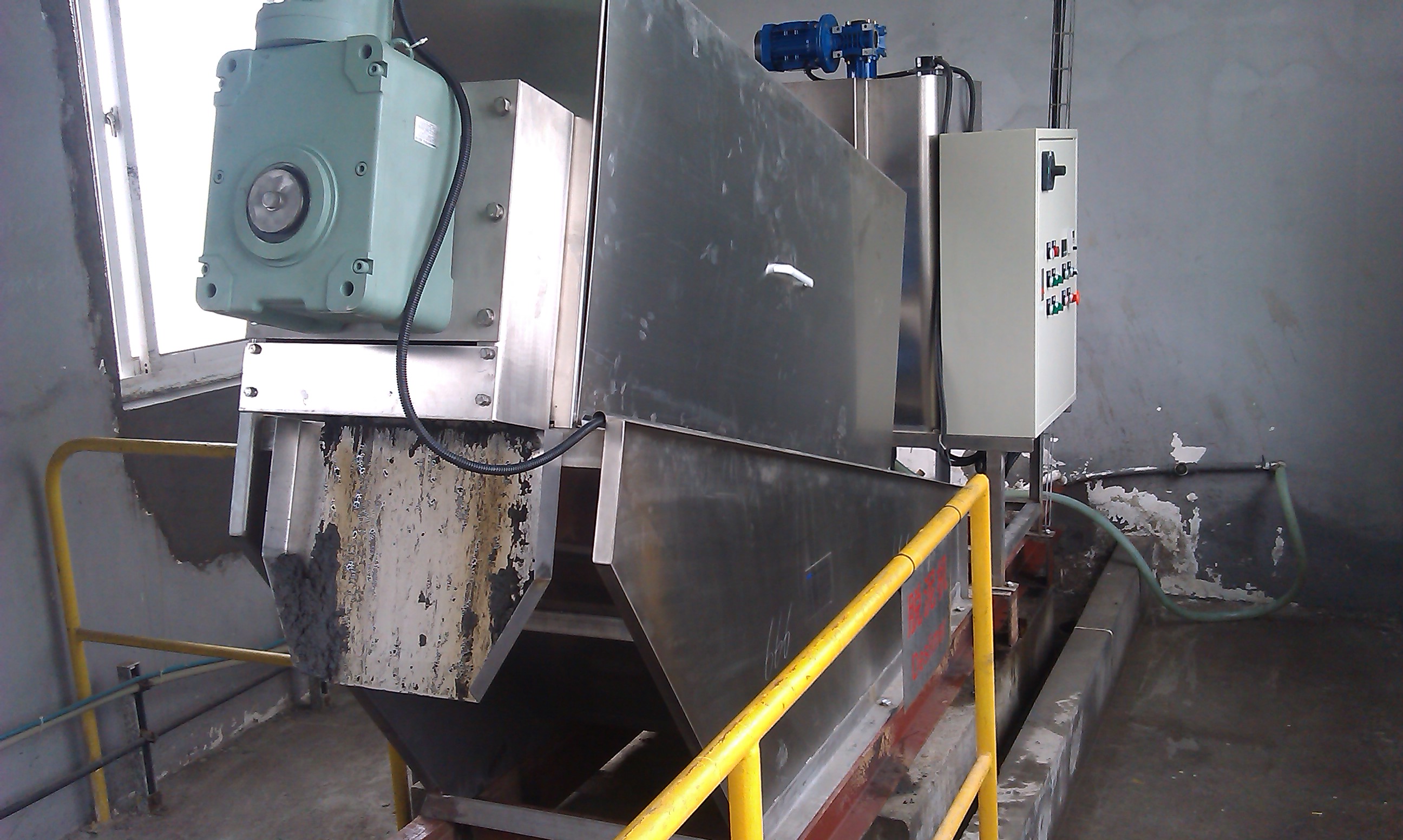
Vegetable oil processing. A DL Series screw press dewatering sludge from soybean, palm and canola oil processing has operated for eight years, reducing sludge moisture content from 97% to 77% and cutting sludge volume by up to 98%. The unit runs fully automatically and was selected on life-cycle cost, with low maintenance requirements and stable dewatering performance. This is the clearest documented example of screw press dewatering on an oily, high-organic stream.
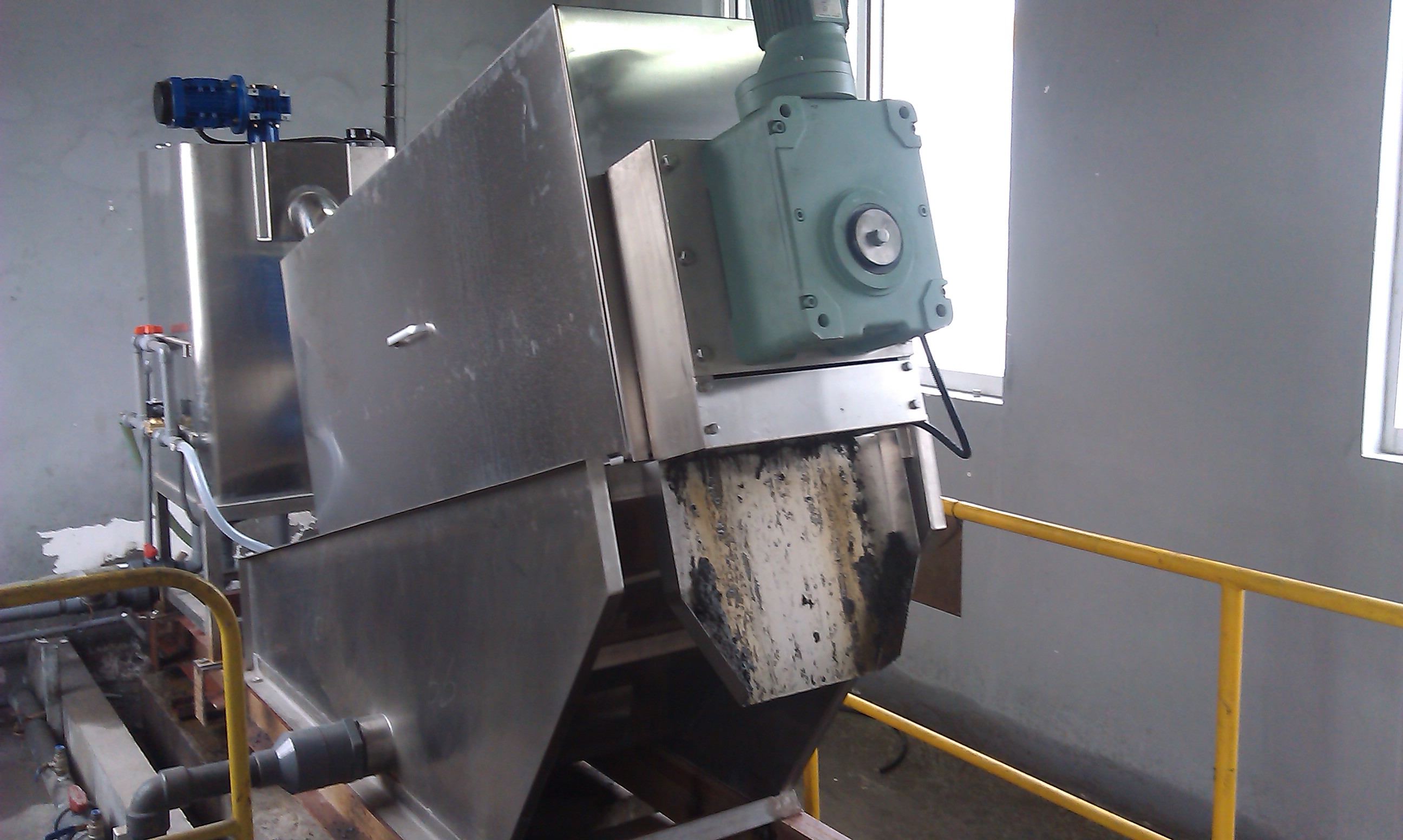
Pharmaceutical wastewater. At a pharmaceutical wastewater treatment station, a DL Series screw press dewatered biological aeration sludge from 99% moisture content to under 85%, cutting sludge volume by up to 93% over ten years of operation, with fully automated running, minimal maintenance and low repair cost. Pharmaceutical sludge is described as high-organic and chemically complex, with corrosion resistance, explosion-proof design, energy efficiency and odour-free operation as stated requirements.
Chemical and petrochemical plants. In chemical plant applications, the SD Series is used to reduce sludge moisture. In petrochemical coking wastewater, refractory sludge is handled by an integrated thickening, dewatering and thermal drying package with explosion-proof design and corrosion-resistant materials, matched with sludge pump, dosing pump, screw conveyor, PAM preparation and dosing system and PLC control for automatic continuous operation.
Municipal reference point. At a city sewage treatment plant, an integrated GDY thickening and dewatering machine processed excess sludge from 99.2% moisture content to a final cake below 80% across five years of operation with two machines. The unit runs continuously and unattended with only scheduled walk-throughs — the same operating model applied to the screw press lines.
Comparison Table: Screw Press vs. Other Sludge Dewatering Equipment
Table 1 compares the two screw press families recommended for difficult sludge. Table 2 places the adjacent technologies alongside them so the boundary conditions are visible.
| Series | Machine type | Material | Inlet consistency (S.S.) | Cake water content | Dried sludge output | Best-fit sludge duty |
|---|---|---|---|---|---|---|
| SRD Series | Wear-free multi-disc screw press | SS304 | 0.6–5.0% | 75–85% | 25–900 kg/h | Sticky, oily and high-inorganic-content sludge; oily sludge treatment and food processing wastewater |
| DL Series | Multi-disc screw press | SS304 | 0.6–5.0% | 75–85% | 1.5–900 kg/h | Low-concentration, oily and decentralized sludge; paper mills, printing and dyeing |
| Series | Machine type | Material | Inlet consistency (S.S.) | Cake water content | Capacity | Typical duty |
|---|---|---|---|---|---|---|
| FTB Series | Rotary drum thickening + belt press dewatering | SS304 | 1.5–2.5% | 75–85% | 3.0–30 m³/h | Small and medium sludge dewatering projects |
| FTE Series | Rotary drum thickening + belt press dewatering | SS304 | 0.6–1.5% | 75–85% | 12–90 m³/h | Medium and large continuous sludge dewatering projects |
| GDY Series | Gravity belt thickening + belt press dewatering | SS304 | 0.6–1.5% | 75–80% | 15–90 m³/h | High-flow continuous sludge dewatering projects |
| SD Series | High-pressure belt deep dewatering | SS304 | 15–20% | 60–75% | 0.3–6.1 t/h | Secondary deep dewatering before drying or incineration |
Frequently Asked Questions
1. Which standard should be used to verify the final cake water content?
ISO 11465:2025 provides the international standard for determination of dry residue and water content in sludge and solid environmental matrices, and it is the reference to cite when a cake dryness figure is agreed. SFC Machinery publishes a 75–85% cake water content rate for both the SRD wear-free multi-disc screw press and the DL multi-disc screw press. Because cake dryness is the figure most often compared between suppliers, the test method should be written into the specification before any performance figure is treated as binding.
2. Can a screw press handle sticky, oily or high-inorganic-content sludge?
Yes, with the right configuration and with confirmation testing. The SRD Series lists low-concentration, sticky, oily and high-inorganic-content sludge among its suitable sludge types, and its wear-free design is specified to reduce screw-to-ring wear risk while maintaining stable conveying and dewatering in continuous automatic operation. The limits are stated as well: sludge type confirmation is required, and the machine is positioned as suitable for difficult sludge after testing. Where oily sludge is dewatered on standard multi-disc screw press duty, correct feed concentration, a polymer jar test and anti-clogging operation are prerequisites.
3. What drives the operating cost of a screw press sludge dewatering system?
Three cost centres dominate. The first is electrical: the SRD driving motor is rated 0.55–1.1 kW with multi-motor configurations by model, and the DL screw motor is rated 0.18–1.5 kW with a 0.18–1.1 kW conditioning motor. The second is chemical: an automatic PAM and PAC preparation and dosing system is what keeps polymer consumption under control, and accurate dosing reduces both consumption and rework. The third is maintenance labour and wear parts: the wear-free design targets screw-to-ring wear, and both families run continuous automatic operation, which removes routine operator attendance from the cost base.
4. Can I test my own sludge before selecting a model?
Yes, and on difficult sludge it is a required step rather than an option. Sludge type confirmation must be completed before a screw press is specified, and the wear-free screw press is positioned as suitable for difficult sludge after testing. Low-concentration duty requires a polymer jar test, and final moisture target together with sludge feeding condition must be confirmed before model selection. The practical sequence is to submit a sludge sample, confirm the polymer and dose rate, then fix the machine model and the auxiliary equipment set.
5. What is the delivery lead time, and what support follows installation?
Standard lead time is 30–60 days, with a minimum order quantity of one machine and a monthly production capacity of 40 units. OEM/ODM customization covers equipment type and model selection, treating capacity, dimensions and footprint, PLC automation level, power configuration, modular expansion options and auxiliary equipment integration. After installation, support includes remote technical assistance by phone, email or video, on-site commissioning and installation guidance on request, spare parts supply, warranty service by equipment type, operation and maintenance training, and long-term technical consultation. To start an evaluation, send your sludge parameters to sales@fuchanjx.com or via WhatsApp at +86 138-1673-2007 and request a sample test and quotation.
Conclusion: How to Choose in 2026
For 2026, the shortlist for sticky and oily sludge is short by design. Where the sludge is sticky, oily or high in inorganic content, the SRD Series wear-free multi-disc screw press — from SRD-301 upward — is the first specification to evaluate, because its published suitable-sludge list matches those conditions and its wear-free design targets the wear mechanism that shortens screw press life on abrasive sludge. Where the duty is low-concentration, oily or decentralized, the DL Series provides the wider size ladder from DL-101 to DL-404.
Both families are SS304, both operate continuously and automatically, and both sit inside a complete process line covering sludge reduction, thickening, dewatering, deep dewatering, drying, chemical dosing and auxiliary equipment. Belt press and rotary drum lines remain the right choice for high-flow dilute municipal streams, and the SD Series covers secondary deep dewatering ahead of drying or incineration. The selection order should stay the same in every case: sludge character first, cake target second, model third, and a testing step before the order.
Shanghai Fuchan Machinery Technology Co., Ltd. (SFC Machinery) was established in 2007 and is located in Pudong New Area, Shanghai, adjacent to the China (Shanghai) Pilot Free Trade Zone. The company operates a 25,000 m² facility with 36 employees, a five-person R&D team and an annual output of 500 sets, and exports approximately 30% of production to Southeast Asia, Russia, South America and the Middle East. More information is available at www.sfceco.com.
Next Step: Test Your Sludge Before You Specify
Send your sludge type, inlet solids concentration and target cake moisture to the SFC Machinery sales team for a sample evaluation and quotation. Email sales@fuchanjx.com or message WhatsApp +86 138-1673-2007. The complete equipment range, specifications and process packages are available in the 2026 product catalogue: download the SFC Machinery product catalogue (PDF).