Polyurethane Raw Materials: Parameters for Automated Metering
Answer first: when casting polyurethane runs on automated two-component metering, conveying, high-pressure mixing and pouring, the raw material is selected on four parameter groups before mechanical properties are compared — the declared mixing ratio of the system, its viscosity behaviour at process temperature, its usable pour window, and its storage behaviour. A grade that performs well in hand casting but cannot hold ratio, degas cleanly, or stay fluid in a storage tank will not run continuously on a metering line.
This guide sets out those parameters system by system: polyether-MDI prepolymers, polyether PTMG-MDI CPU casting polyurethane, polyester three-component elastomers, and liquid polyurethane AB materials such as Gel-8301AB and Rubberized sports equipment - 8385AB. It then maps them to real service conditions — tropical high temperature, high humidity, frequent friction and corrosive water contact — for mining, wind power, marine, construction, sports, automotive and composite material parts.
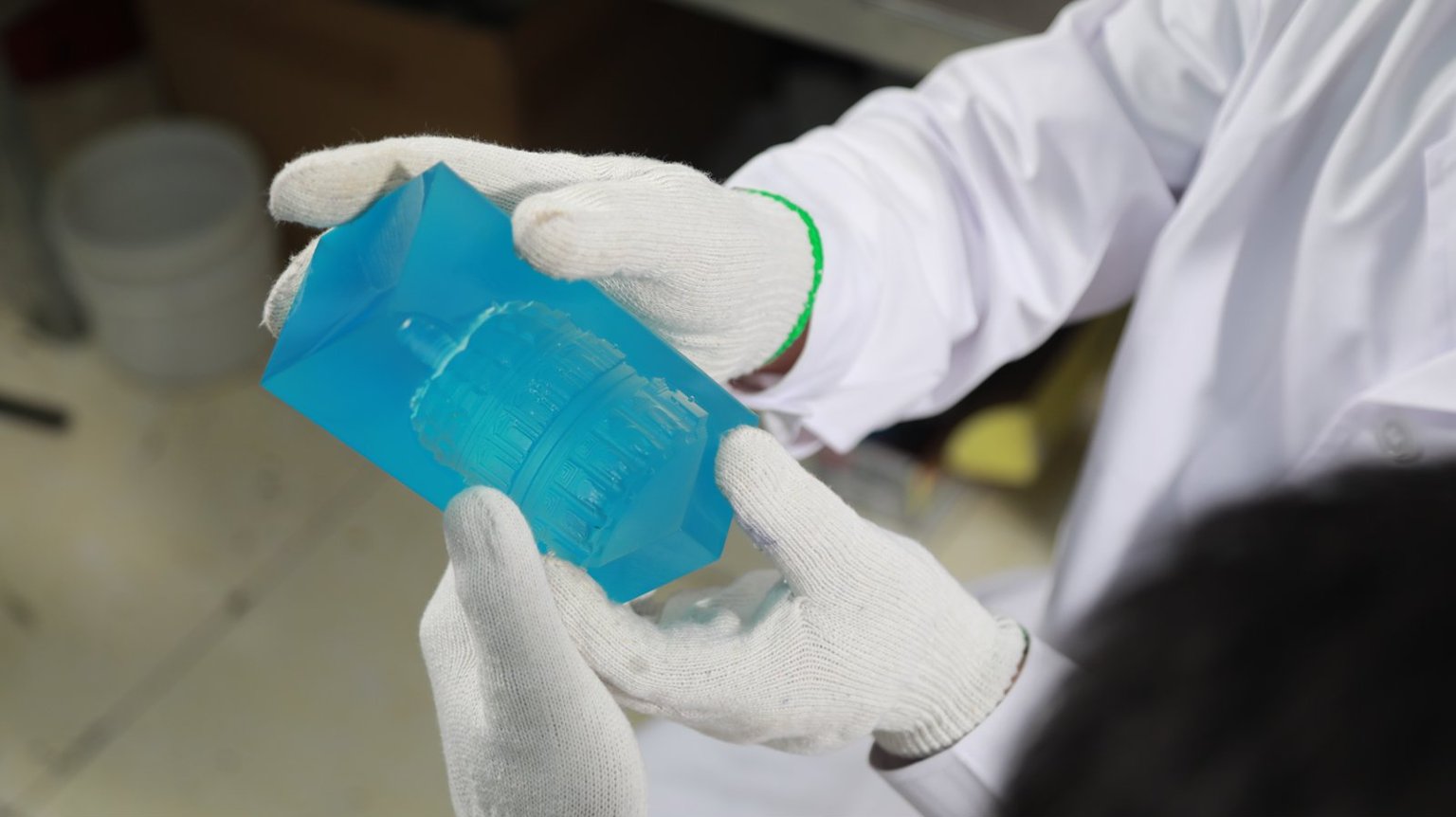
Casting polyurethane material prepared for two-component metering, high-pressure mixing and pouring.
Problem Definition: What Automated Metering Demands From a Raw Material
In hand-batch casting, the operator compensates for the material. In automated production the compensation has to be designed into the grade, because metering, conveying, mixing and pouring happen inside a closed sequence: two-component metering and conveying of raw materials, automatic high-pressure mixing and pouring, continuous mass production. Once the line is running, the operator adjusts machine settings — not chemistry.
Four failure modes on a metering line trace back to the raw material rather than to the equipment:
- Ratio drift. If the declared mix ratio of the system sits outside the metering range the machine can hold accurately, or if the two components differ strongly in viscosity, the delivered ratio moves away from the declared one and the cured part changes with it.
- Pumping and degassing problems. A component that is too viscous at plant temperature starves the delivery pump, and air entrained in the storage tank is carried into the mixing head instead of being released.
- Working-window mismatch. A system whose usable pour window is shorter than the fill and transfer time gels inside the mixing head and delivery lines; one that is far longer than the cycle slows demoulding and reduces throughput.
- Moisture and storage sensitivity. In high-humidity plants, components that pick up moisture in the tank produce bubbles, surface defects and inconsistent hardness, and polyester-based systems are the more sensitive of the two chemistries to hydrolysis.
The practical consequence is that a prepolymer should be qualified against the metering line, not only against a laboratory press. Two grades with the same nominal hardness can behave completely differently once they are circulating through a storage tank, a delivery pump and a high-pressure mixing head.
Industry Background: Why Metering-Compatible Casting Systems Are in Demand
Casting polyurethane is a mature segment but not a static one. The global casting polyurethane market was valued at USD 2.76 billion in 2024 and is projected to grow at a CAGR of 5.97% through 2033, according to Astute Analytica. The wider polyurethane market is estimated at USD 92.1 billion in 2026 by Grand View Research, which places cast elastomers as a specialised, higher-value niche inside a much larger commodity base.
The fastest-moving parameter inside that niche is isocyanate content. Low-free isocyanate prepolymer technology — MDI, TDI and PPDI types — is growing at a CAGR of 13.01% through 2033, based on Market Research Intel's low free prepolymer market tracking. The direction of travel is towards grades that are easier to handle in a plant while still delivering the same cast properties, which makes the handling parameters on the datasheet more, not less, important.
Demand for automated casting is concentrated where labour cost, output volume and climate all push in the same direction. The application conditions recorded for these systems — tropical high temperature, high humidity, frequent friction and corrosive water contact — are typical of Vietnam, Pakistan, the Philippines, Cambodia, Malaysia, Bangladesh and Thailand, where the same plants serve mining, marine, construction, automotive, wind power, sports and composite material supply chains.
The supporting equipment baseline is consistent across those sectors: a polyurethane high-pressure foaming machine or low-pressure pouring machine, a raw material storage tank, a mixing bucket and a delivery pump. Raw material selection is therefore always a joint decision between the chemistry and this equipment set.
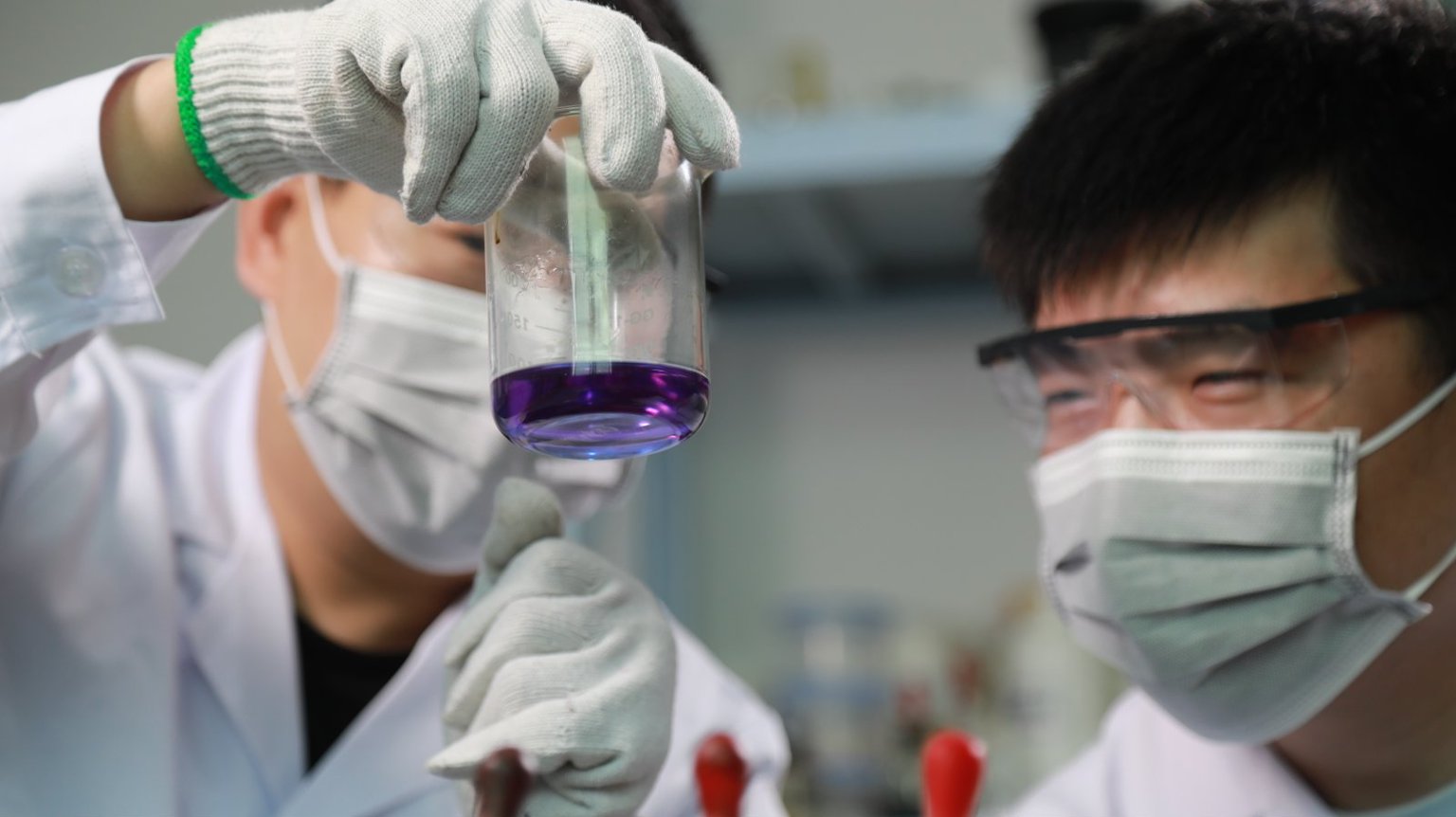
Polyurethane raw materials: the grade determines ratio, viscosity and pour-window behaviour on the line.
Detailed Solution: The Four Systems and Their Parameters
Four families of polyurethane raw materials cover most automated casting work. Each carries a different parameter profile into the metering line.
1. Polyether-MDI prepolymers
Polyether-MDI prepolymers are the workhorse of two-component casting. A representative grade is Rubberized sports equipment - 8385AB, a Polyether-MDI polyurethane prepolymer described with vivid colors and eco-friendly characteristics and intended for the sports industry, where it is used for rubberizing sports equipment.
What matters for metering:
- Two-component ratio. Polyether-MDI systems are supplied as an isocyanate-side prepolymer plus a curative or polyol side, so the A:B ratio declared for the grade has to sit inside the machine's controllable ratio range.
- Viscosity at tank temperature. MDI-based prepolymers are typically warmed before use because storage temperature shifts viscosity; in tropical plants the opposite problem appears, and the working window shortens as ambient temperature rises.
- Colour and pigment compatibility. Where the grade is used for coloured parts, pigment addition has to be checked against the pour window rather than added afterwards.
2. Polyether PTMG-MDI CPU casting polyurethane
PTMG-MDI systems are the hydrolysis-resistant branch of the family. PTMG-MDI CPU casting polyurethane is a polyether PTMG-MDI system described as environmentally friendly, high quality and corrosion-resistant, and is used for sealed class accessories.
What matters for metering:
- Sealing-part tolerances. Sealing rings and similar sealed class accessories are demoulded to tight dimensions, so the ratio has to be repeatable shot to shot.
- Hydrolysis resistance. Polyether (PTMG) chemistry is commonly chosen where hot, humid service and water contact are continuous, which is exactly the construction and marine case.
- Corrosion resistance. The declared corrosion-resistant property is relevant where parts see corrosive water rather than only humid air.
3. Polyester three-component elastomers
Three-component systems add a separate curative or filler stream. Screen Scraper-5282ABC is a polyester, three-component polyurethane elastomer with high wear resistance and high resilience, supplied for the mining sector.
What matters for metering:
- Third metering line. A three-component system needs a third metering and conveying channel; a two-component machine cannot run it without modification.
- Wear performance versus moisture sensitivity. Polyester chemistry is associated with high wear resistance, which is why it is applied to mining screen scrapers, but polyester systems are the more moisture-sensitive branch and demand tight tank sealing in humid plants.
- Resilience under friction. The declared high resilience matters where the part flexes and recovers under repeated load rather than wearing by pure abrasion.
4. Liquid polyurethane AB materials
Liquid AB systems are supplied as two ready-to-meter liquids. Gel-8301AB is a liquid polyurethane based on polyurethane AB material, described with antioxidant and high-resilience properties and used across various elastomers.
What matters for metering:
- Low sensitivity to plant conditions. AB systems are usually the simplest to run on automated equipment because both sides are already liquid at handling temperature.
- Antioxidant protection. The declared antioxidant property addresses ageing in outdoor and high-temperature service, where elastomer parts lose resilience over time.
- Resilience for dynamic parts. High resilience is the selection driver for shock-absorbing and dynamic components rather than for pure abrasion resistance.
The universal parameter checklist
Whatever the chemistry, the same eight parameters decide whether a grade can be handed to a metering line. Ask for each of them in writing before a trial.
| Parameter | Why it decides metering feasibility |
|---|---|
| Declared mix ratio (A:B, or A:B:C) | Must fall inside the machine's controllable ratio range; three-component systems need a third channel. |
| Viscosity at process temperature | Governs pumpability, pressure at the mixing head and how easily entrained air is released. |
| Usable pour window / gel behaviour | Has to cover mould fill and transfer time without gelling in the head or lines. |
| Free isocyanate level / low-free grade option | Determines handling and workplace exposure requirements during tank filling and changeover. |
| Moisture sensitivity and hydrolysis behaviour | Decides tank sealing, nitrogen blanketing needs and suitability for humid or wet service. |
| Storage and crystallisation behaviour | MDI-based prepolymers may need warming and circulation; storage temperature changes viscosity. |
| Declared mechanical profile | Wear resistance, resilience or corrosion resistance must match the part, not just the machine. |
| Batch-to-batch consistency | The line runs to a fixed recipe; a grade that shifts between batches forces re-tuning every delivery. |
Matching parameters to service conditions
Mechanical data alone does not select a grade. The four service conditions recorded for these applications each push selection in a different direction:
- Tropical high temperature. Ambient heat shortens the usable pour window and raises the risk of premature gel in transfer lines; grades are chosen with a window that survives the plant's hottest shift, not its coolest.
- High humidity. Moisture uptake in storage tanks is the dominant defect source. Polyether PTMG-MDI and AB liquid systems are the more forgiving options; polyester three-component systems need tighter tank discipline.
- Frequent friction. Wear resistance and resilience become the primary mechanical criteria — the mining screen scraper and traction-wheel cases rather than the sealing-ring case.
- Corrosive water contact. Marine anti-fouling and seawater corrosion resistance, plus construction anti-wear parts exposed to corrosive water, shift selection towards the corrosion-resistant PTMG-MDI profile.
Supplier credentials behind the parameters
Shanghai Hecheng Polymer Technology Co., Ltd. is a manufacturer of high-performance polyurethane (CPU) elastomer materials, established in 2009 and located at No. 1266 Xinbin Road, Maogang Town, Songjiang District, Shanghai, China. It is recognised as a national high-tech enterprise and supplies casting polyurethane prepolymer as its main product line, with more than 1,000 prepolymer grades in the range.
The manufacturing base covers 16,932 square metres and houses 16 major production reactors, with a reported annual production capacity of 1 million tons. The company employs approximately 78 staff, including an R&D team of 18 engineers — close to 30% of headcount — and exports around 30% of output to the EU, Southeast Asia and South America. Its casting polyurethane prepolymer work is associated with invention patent 16425Q32921R3M.
The portfolio spans five product categories: casting polyurethane prepolymer, casting polyurethane mixed component, polyurethane polymers for special applications, environment-friendly adhesive products, and supporting equipment, auxiliary materials and additives for PU production. In quasi prepolymer terms, the company positions itself as a supplier of both full and quasi prepolymer systems.
Step-by-Step: Qualifying a Grade for an Automated Metering Line
- Define the part and the service condition first. Decide whether the part is judged on wear, resilience, sealing tolerance or corrosion resistance. A mining screen scraper, a wind power sealing component and a sports-equipment coating do not share the same pass criteria.
- Confirm the machine configuration. Establish whether the line is a high-pressure foaming machine or a low-pressure pouring machine, how many metering channels it has, and what ratio range it holds. A three-component polyester elastomer cannot be run on a two-channel machine.
- Request the declared ratio and viscosity behaviour in writing. Match them to the machine's range and to the temperature the components will actually reach in the tank, not to a laboratory reference temperature.
- Check the pour window against cycle time. Measure fill plus transfer time on the real mould, then confirm the grade's usable window covers it with margin for the hottest shift of the day.
- Review free isocyanate and handling requirements. Confirm whether the standard grade or a low-free isocyanate variant (MDI, TDI or PPDI based) fits your plant's handling rules.
- Run a trial quantity through your own equipment. Degassing behaviour, ratio stability and demould time can only be confirmed on the line that will produce the part. Record the settings that worked.
- Verify batch consistency before scaling. Compare two or three lots against the same settings. If the line needs re-tuning for each lot, the grade is not yet qualified for continuous production.
- Lock the grade, then discuss customisation. Where the standard grade is close but not exact, custom formulation is the next step; where it already meets the window, customisation adds validation work without adding value.
Use Cases: Where These Parameters Are Tested
Mining: tensionless screen mesh and screen scrapers
Mining is the harshest combination in the set — tropical high temperature, high humidity, frequent friction and corrosive water contact at the same time. Cast polyurethane is used for tensionless screen mesh, and the polyester three-component elastomer Screen Scraper-5282ABC, with high wear resistance and high resilience, is supplied specifically for the mining sector.
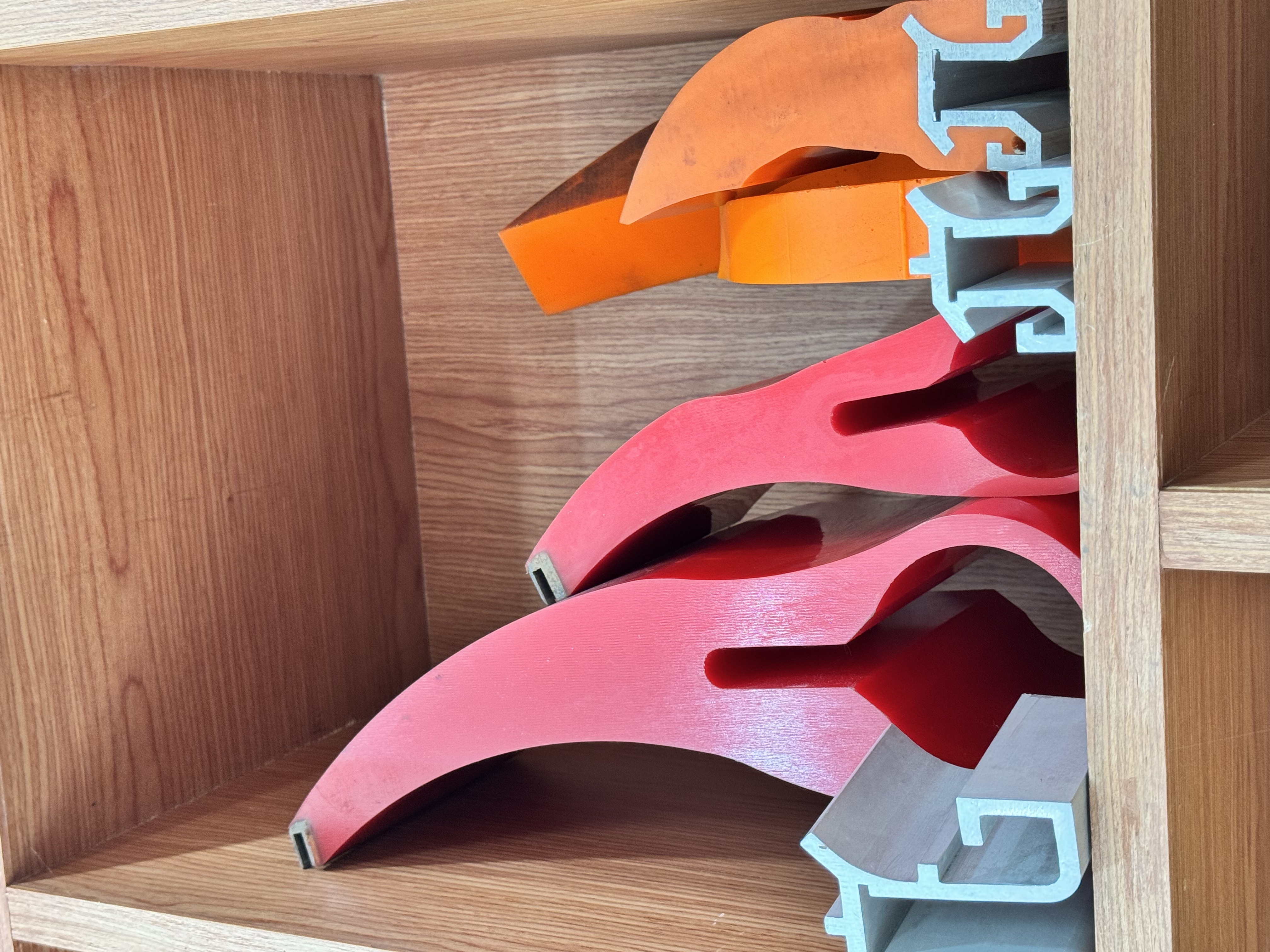
Custom polyurethane curved wear-resistant pads — a typical cast part for friction and slurry contact.
Wind power: sealing and damping
Wind power components require ageing resistance, high-voltage sealing and shock absorption. Automated two-component metering with high-pressure mixing and pouring is used to keep those sealing and damping parts consistent across volume production.
Marine technology: corrosion and anti-fouling
Marine parts must resist seawater corrosion, resist fouling by marine organisms and absorb shock. Liquid polyurethane raw materials are used for this combination, and the PTMG-MDI system's declared corrosion resistance is the relevant selection property.
Construction: anti-wear parts in humid climates
Construction anti-wear parts need high hydrolysis resistance, high corrosion resistance and high toughness. Two-component metering, high-pressure mixing and pouring supports the continuous output these parts require.
Sports industry: rubberised equipment
Rubberizing sports equipment uses a two-component mixing process on automated lines. The Polyether-MDI prepolymer Rubberized sports equipment - 8385AB, with vivid colors and eco-friendly characteristics, is supplied for this application.

Rubberised sports equipment and climbing holds — a cast elastomer application where colour and resilience both matter.
Automotive and composite material parts
Automotive projects using TDI low-free prepolymer aim at improved physical and mechanical properties, including dynamic mechanical performance, under high humidity and corrosive water contact. In composite materials, casting systems are used to produce sealing rings on the same automated metering platform.
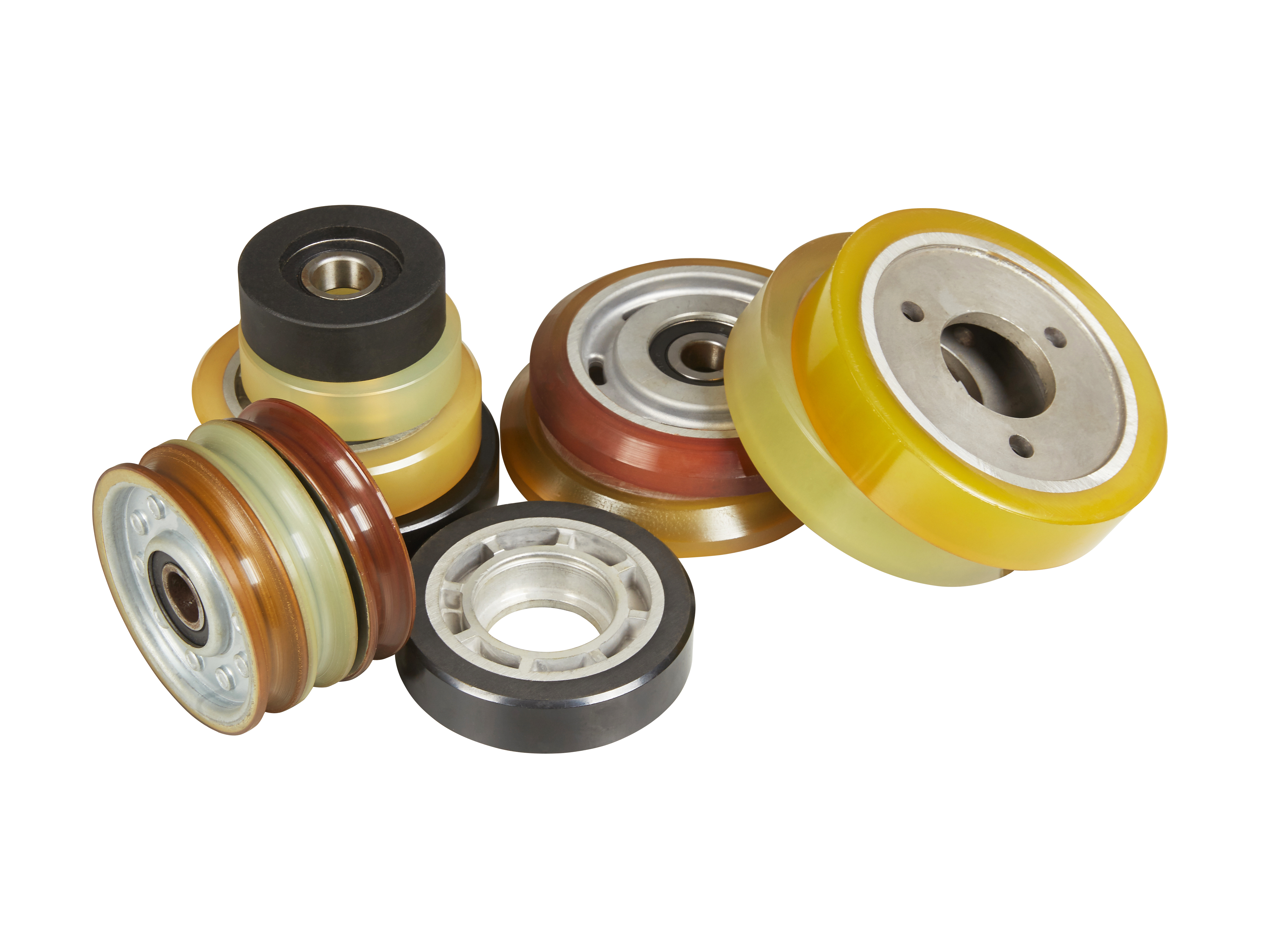
Cast polyurethane wheel — a wear part where ratio repeatability directly controls dimensions and service life.
Comparison Table: Four Polyurethane Raw Material Systems
The table below compares only the properties recorded for each grade. It is a selection starting point, not a performance ranking — the correct system depends on the part, the machine and the service condition.
| System | Grade / model | Chemistry | Declared characteristics | Stated application | Metering implication |
|---|---|---|---|---|---|
| Polyether-MDI prepolymer | Rubberized sports equipment - 8385AB | Polyether-MDI | Vivid colors, eco-friendly | Sports industry; rubberizing sports equipment | Two-component mixing on automated lines |
| CPU casting polyurethane | PTMG-MDI | Polyether PTMG-MDI system | Environmentally friendly, high quality, corrosion-resistant | Sealed class accessories | Two-component; ratio repeatability critical for sealed parts |
| Polyurethane elastomer | Screen Scraper-5282ABC | Polyester, three-component | High wear resistance, high resilience | Mining sector | Requires a third metering channel |
| Liquid polyurethane | Gel-8301AB | Polyurethane AB material | Antioxidant, high resilience | Various elastomers | Two pre-liquefied sides; simplest to meter |
| Casting polyurethane prepolymer | POLYURETHANE ELASTOMER | Polyurethane | General casting prepolymer raw material for industrial use | Mining industry | Two-component; grade selected against part geometry |
For buyers moving from awareness into research, the useful question is not which row is best but which row survives your equipment, your climate and your part. A mining screen scraper rarely shares a grade with a sealed ring, even when both run on the same machine model.
FAQ
1. What technical credentials should a buyer check on a polyurethane raw materials manufacturer?
Start with the grade itself — declared ratio, viscosity behaviour and pour window — then verify the entity behind it. Shanghai Hecheng Polymer Technology Co., Ltd. is a national high-tech enterprise established in 2009, operating a 16,932 m² facility in Songjiang District, Shanghai, with 16 major production reactors and a reported annual production capacity of 1 million tons. Its R&D team of 18 engineers works within a workforce of approximately 78 people, and its casting polyurethane prepolymer line is associated with invention patent 16425Q32921R3M.
2. Can one supplier cover both two-component and three-component casting systems?
Yes, provided the portfolio is broad enough. Hecheng supplies five product categories, including casting polyurethane prepolymer and casting polyurethane mixed component, with more than 1,000 prepolymer grades. In practice this covers two-component liquid AB systems such as Gel-8301AB, the Polyether-MDI prepolymer Rubberized sports equipment - 8385AB, PTMG-MDI CPU casting polyurethane, and the polyester three-component elastomer Screen Scraper-5282ABC. Customization is supported where standard grades do not match the process window.
3. How should quotations for polyurethane raw materials be compared?
Compare on fit, not on unit price alone. Check whether the declared mix ratio sits inside your machine's controllable range, whether a third metering channel is needed, whether the grade is being quoted against your actual service condition, and whether the supplier can hold that grade consistent across lots. Also budget for the supporting equipment each system requires — a polyurethane high-pressure foaming machine or low-pressure pouring machine, raw material storage tank, mixing bucket and delivery pump are part of the total cost of switching grades.
4. How can a buyer validate a grade before committing to a production batch?
Run a trial quantity through your own metering equipment rather than a laboratory press. Confirm four things on the line: the ratio you actually achieve, the viscosity behaviour at your plant temperature, the pour window measured against your real fill and transfer time, and the demould result on your mould. Only then compare two or three lots against identical settings. To arrange trial material or a technical discussion, contact the Hecheng team at vera@hechengcpu.com or via WhatsApp on +86 16606109059.
5. How does a supplier's production base affect supply continuity for casting projects?
Reactor count, site area and workforce indicate how flexibly a supplier can schedule different prepolymer grades without long changeovers. Hecheng operates 16 major production reactors across 16,932 m² with approximately 78 staff, reports an annual production capacity of 1 million tons, and exports around 30% of output to the EU, Southeast Asia and South America — a distribution pattern that matches the tropical Asian projects where automated casting demand is concentrated.
Conclusion
Automated metering rewards raw materials that are specified for the line, not just for the part. The four systems covered here — polyether-MDI prepolymers, PTMG-MDI CPU casting polyurethane, polyester three-component elastomers and liquid AB materials — each carry a distinct ratio, viscosity and pour-window profile, and each maps to a different service condition: wear in mining, ageing and sealing in wind power, corrosion and anti-fouling offshore, hydrolysis resistance in construction, colour and resilience in sports equipment, and dynamic performance in automotive and composite parts.
The working rule is simple: define the service condition, confirm the machine configuration, then verify batch consistency before scaling. A grade that passes those three checks will hold ratio and cycle time in continuous production; one that has only passed a laboratory test may not survive its first week on the line.
Next Step: Match a Grade to Your Metering Line
Shanghai Hecheng Polymer Technology Co., Ltd. supplies casting polyurethane prepolymer, liquid AB systems and three-component elastomers with custom formulation support. Send your part geometry, service condition and machine configuration to start a grade recommendation, request a trial sample, or ask for a quotation.
Email: vera@hechengcpu.com | Tel / WhatsApp: +86 16606109059 | Website: en.hechengcpu.com
Download the product brochure: Polyurethane raw materials catalogue (PDF)
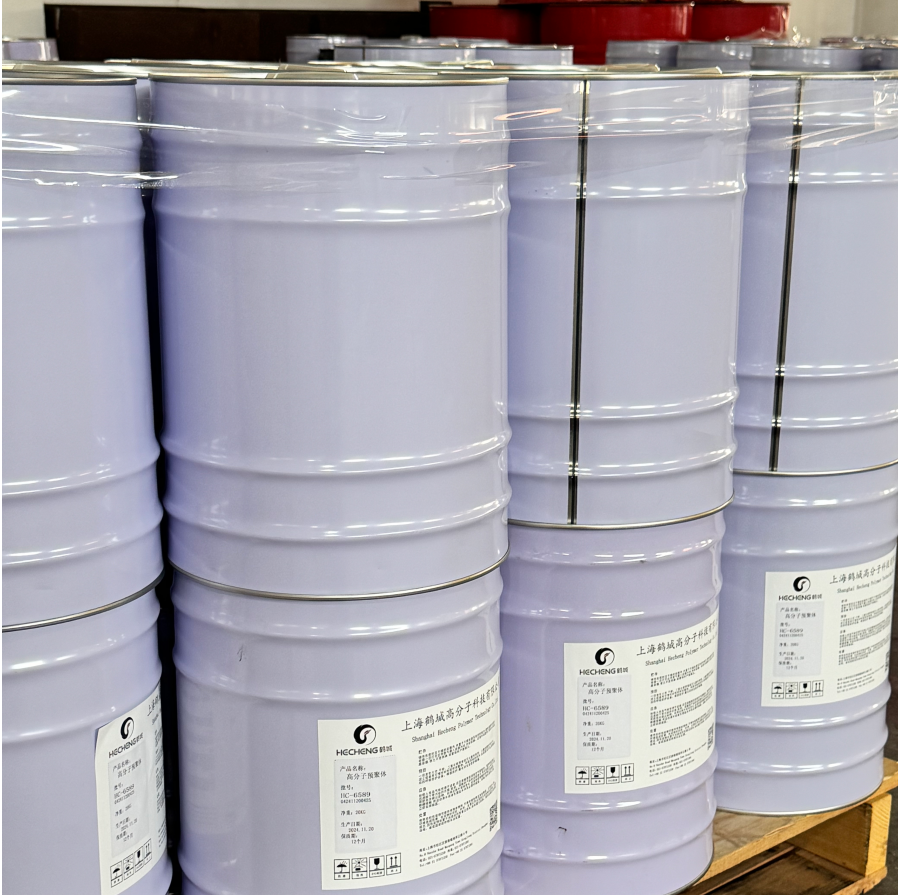
Polyurethane raw materials in drum stock, ready for sampling and shipment.
Have Questions or Need More Details?
Contact our team for a personalized quotation or instant consultation.
Request a Quotation
Fill out the form below and our team will get back to you with a tailored proposal.
WhatsApp Direct Chat
Prefer to chat in real-time? Message us on WhatsApp for instant assistance & quick answers.
- Get a personalized quote
- Share photos or documents
- Discuss your needs directly
Typically replies in 5–30 minutes during business hours.