Polyurethane Raw Materials: Reading Patent & Market Scope
Polyurethane Raw Materials: Reading Patent & Market Scope
A casting polyurethane prepolymer order should arrive with a document pack, not a single PDF. The page buyers most often misread is the patent certificate, because it looks like an approval and reads like a guarantee. It is neither.
Take Invention Patent 16425Q32921R3M, issued by HUAZHONG INTERNATIONAL CERTIFICATION AND INSPECTION GROUP and recorded in the supplier documentation as applicable to both domestic and international markets. The same number is attached to three product entries: casting polyurethane prepolymer (product 4643, POLYURETHANE ELASTOMER), CPU casting polyurethane (product 5644, PTMG-MDI) and polyurethane elastomer (product 5645, polyester three-component). Those links, plus the market-scope line and the record dates, are exactly what a buyer should read before filing the certificate.
This guide stays on the documents. It explains what to request, what to cross-check and what to ask a supplier, particularly when the receiving project sits in Thailand, Vietnam, Pakistan, the Philippines, Cambodia, Malaysia or Bangladesh, where the phrase domestic and international carries practical weight but does not replace local obligations. Shanghai Hecheng Polymer Technology Co., Ltd, established in 2009 and manufacturing in Shanghai's Songjiang District, publishes its polyurethane raw materials portfolio and company profile at hechengcpu.com; this article uses its documentation as the worked example.
What an invention patent certificate actually establishes
A patent certificate records an exclusive right over a described invention. It is issued by a certification or inspection body acting on a patent record, and it tells a reader that a numbered right exists, who issued the document, which product or technology the record is linked to, and what market scope is stated. It does not certify that a chemical substance may be imported into a given country, that a product passes a product standard, or that a cast part made from the material will meet a performance target.
That distinction matters because purchasing teams file certificates in the same folder as test reports, and the folder then gets summarised as compliance. A patent certificate answers one question well: is there a registered right behind this material, and what does the record say about it. Every other question in a procurement file, such as import registration, labelling, transport classification, worker-safety documentation and batch conformity, is answered by different paperwork from different issuers.
For 16425Q32921R3M, the readable fields are narrow and checkable: certificate type (Certificate of Invention Patent, described in some records as Invention Patent), the number itself, the issuing body HUAZHONG INTERNATIONAL CERTIFICATION AND INSPECTION GROUP, the market scope stated as domestic and international, issue and expiry dates, and the product entries the record is attached to. A buyer who reads only those fields, and confirms each one against the copy actually supplied, has done more diligence than a buyer who reads the cover page and stops.
Why documentation checks now sit earlier in CPU casting orders
Casting polyurethane is a small, specialised slice of the polyurethane market, and small slices attract specialist buyers who read files closely. Third-party commercial research published by Astute Analytica, reported via Taiwan News on 28 October 2025, values the global casting polyurethane market at US$ 2.76 billion in 2024 with a 5.97% CAGR projected to 2033. Treat that as a market-sizing estimate from a commercial source, not as evidence about any single supplier, but it explains why procurement teams in this segment maintain formal supplier files rather than informal e-mail trails.
The document pack is read by at least four different people: purchasing checks commercial terms, quality assurance checks batch conformity, regulatory or the importer of record checks market access, and the customs broker checks classification and transport paperwork. A patent certificate gets pulled into the file by purchasing, then re-read by regulatory, and that second reading is where mismatched product names and vague scope wording cause delays.
The four layers of a casting prepolymer document pack
A complete pack for a casting polyurethane prepolymer order has four layers. Each answers a different question, and a strong pack is strong because the layers agree with each other, not because one layer is impressive.
Layer 1: identity and specification
This layer fixes what the material is: grade name and model code, chemistry family (for example a PTMG-MDI CPU casting polyurethane system, or a polyester three-component polyurethane elastomer), typical properties, processing notes and storage guidance. Its job is to prevent the most expensive error in raw material purchasing, which is ordering a correctly documented but incorrectly specified grade.
Layer 2: intellectual property and technical record
This is where an invention patent certificate belongs. Its job is to show that a numbered right exists and that the supplier links it to a named product entry. It is a technical and IP record, not a market-access record.
Layer 3: market access and handling
Import registration, labelling requirements, safety data sheets in the required language and format, transport classification and any substance-level statements demanded by the destination market. This layer is governed by the importing country and by the importer of record, not by the supplier's patent file.
Layer 4: commercial and traceability
Batch number, certificate of analysis for the delivered lot, packing list, quantity and packaging, lead time, shelf-life statement and the document index that tells you what you should have received. This layer is what lets you prove, eighteen months later, which batch went into which production run.
Worked example: reading Invention Patent 16425Q32921R3M
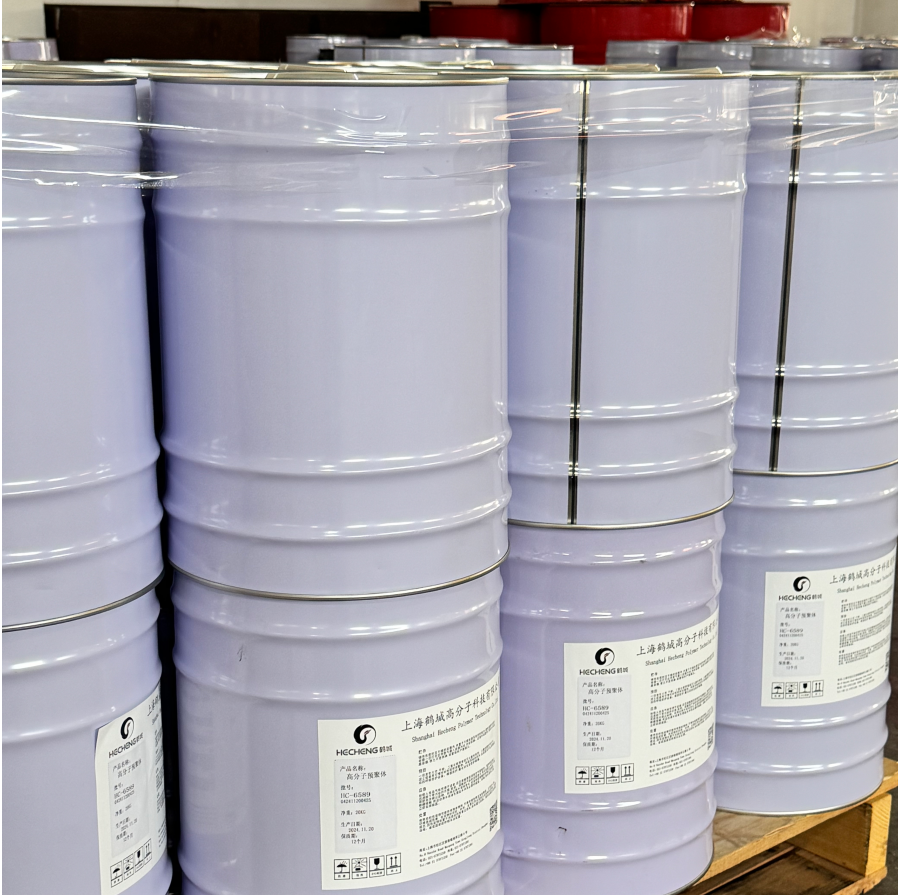
Read the certificate as six fields, then read the product linkage, then read the scope line. For this record the fields are: a Certificate of Invention Patent issued by HUAZHONG INTERNATIONAL CERTIFICATION AND INSPECTION GROUP; certificate number 16425Q32921R3M; a stated market of domestic and international; the linked product entries; and issue and expiry dates. The supplier's customer-facing documentation states the same position plainly: the casting polyurethane prepolymer, the CPU casting polyurethane and the polyurethane elastomer entries are each covered by an invention patent numbered 16425Q32921R3M, applicable to domestic and international markets.
The second reading is the one most buyers skip. Under this number, the supplied records return four entries, each with its own issue date and a matching twenty-year expiry.
| Record | Issue date | Expiry date | Product entry linked |
|---|---|---|---|
| A | 14 September 2016 | 14 September 2036 | Casting polyurethane prepolymer (4643); CPU casting polyurethane (5644) |
| B | 10 October 2017 | 10 October 2037 | Casting polyurethane prepolymer (4643) |
| C | 19 June 2018 | 19 June 2038 | Casting polyurethane prepolymer (4643) |
| D | 8 July 2021 | 8 July 2041 | Polyurethane elastomer (5645) |
None of this is a defect. It is normal for a patent family and for product-linked records to carry several dates. The practical consequence is simple: the certificate copy in your tender file must match one of these records, and the product entry on that record must match the grade you are buying. If you are qualifying product 4643 and the copy in front of you corresponds to the 2021 record linked to product 5645, you have a filing mismatch to resolve in writing before the purchase order is raised.
The third reading is the scope line, and it deserves its own section because it is the field most often paraphrased rather than quoted. It is also the field that quietly changes meaning between records: in the documentation supplied for this article, most entries state the scope as domestic and international markets, while one entry states the domestic market only. That is not a reason to distrust the file. It is a reason to read the scope line on the certificate you were actually given, quote it in your own evaluation note, and refuse to accept a summarised version of it.
Step-by-step: cross-checking before you accept the certificate
- Request the certificate copy, not a summary. Ask for the full page as issued, legible, with the issuing body's name complete. A cropped image pasted into an e-mail signature is not a document you can file.
- Match the number character by character. 16425Q32921R3M mixes digits and letters, which is exactly the format that gets mistyped in catalogues and tender annexes. Compare against the certificate, not against a website footer.
- Confirm the issuing body's exact name. The record should read HUAZHONG INTERNATIONAL CERTIFICATION AND INSPECTION GROUP. A shortened or reworded issuer name is a filing risk, even when the underlying document is genuine.
- Map the product entry to your grade. The record must point to the product you are ordering: casting polyurethane prepolymer (4643), CPU casting polyurethane (5644) or polyurethane elastomer (5645). A certificate covering a sister product does not automatically cover yours.
- Read the market scope as written. Note whether the copy states domestic and international markets or the domestic market only, and record that wording verbatim in your evaluation.
- Check the date logic. Issue date and expiry date must belong to the same record, and the copy must be from a record that is still within its term at the time of your purchase order.
- Cross-check against the technical and safety documents. The product name on the certificate, the grade on the data sheet and the grade on the batch certificate of analysis should describe the same material, spelled consistently.
- Close the loop in writing. Ask the supplier to confirm, in a dated written statement on company letterhead, which record and which product entry the supplied copy corresponds to.
Why the scope wording matters in Thailand, Vietnam, Pakistan, the Philippines, Cambodia, Malaysia and Bangladesh
A scope line that says domestic and international is broader than one that says domestic only, and for a project in any of these seven markets the broader wording is the one you want to see on the copy in your file. But breadth is where the misunderstanding starts. The scope line tells you the market range the record is stated against. It does not tell you that the destination country has accepted the material, and it does not replace the registration, labelling, transport and import duties that fall on the importer of record in Bangkok, Ho Chi Minh City, Karachi, Manila, Phnom Penh, Port Klang or Chattogram.
The supplier's own application documentation lists all seven markets by country code (TH, VN, PK, PH, KH, MY, BD) against named industries, and describes the working conditions in those entries as tropical high temperature, high humidity, frequent friction and corrosive water contact. Those entries are application records, not project references, but they do establish how the material is positioned for the region: an automotive entry specifies a TDI low-free prepolymer for improved physical and mechanical properties and dynamic mechanical performance, a composite entry covers sealing ring production, a marine entry covers seawater corrosion resistance and anti-fouling, and a construction entry describes a high hydrolysis and corrosion resistance elastomer for anti-wear parts.
That regional positioning is the second thing your document pack must agree with. If your project is a sealing ring or wear part for a tropical site, the chain to verify is: the certificate covers the product entry, the data sheet describes the hydrolysis-resistant or wear-resistant grade you need, the batch certificate of analysis confirms the delivered lot, and the importer of record holds whatever the destination country requires. Four links, four different documents, one consistent material.
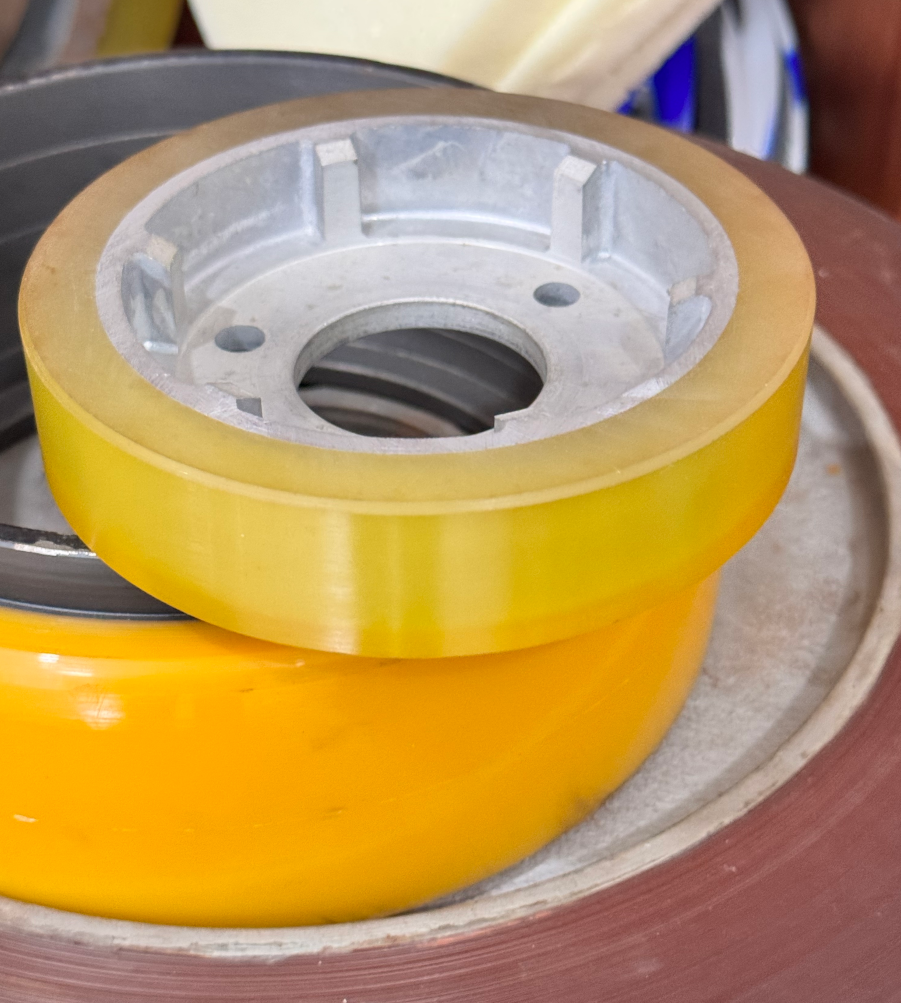
Document comparison: what each page establishes, and what it does not
Use the table below as a reading aid rather than a substitute for the documents themselves. The patent row reflects the records described in this article. The other rows are document categories a buyer should request; they are described generically because their content depends on the grade, the destination and the batch.
| Document | What it establishes | What it does not establish |
|---|---|---|
| Invention Patent certificate 16425Q32921R3M | A numbered right issued by HUAZHONG INTERNATIONAL CERTIFICATION AND INSPECTION GROUP, linked to a product entry, with a stated market scope of domestic and international | Import permission, product-standard conformity, test results or performance in service |
| Technical data sheet | Which grade is offered, its chemistry family, typical properties and processing guidance | That the delivered batch matches the typical values |
| Safety data sheet | Hazard classification, handling, storage and transport information for the material as supplied | Market authorisation, or that local labelling is already satisfied |
| Batch certificate of analysis | The measured result for the specific lot delivered | Long-term service performance under your process conditions |
| Market-access documents held by the importer | That the destination country's requirements for this import have been addressed by the responsible party | That the material suits your application, or that the patent scope covers your market |
Five document errors that survive to the purchase order
- Grade drift. The certificate is genuine and the product entry is real, but it points to a different grade from the one quoted.
- Version drift. An older copy sits in the tender file while a newer record exists, or the reverse, and nobody compares dates.
- Category confusion. A patent certificate is filed as if it were a market authorisation or a conformity mark.
- Paraphrased scope. The scope line reaches the evaluation report as a summary written by someone who read a summary.
- Orphan documents. A certificate with no batch certificate of analysis and no data sheet beside it, so the material in the drum cannot be tied to the paper in the folder.
Frequently asked questions
What should I look for in REACH-certified polyurethane raw materials manufacturers?
REACH operates through registration of substances and through supply-chain documentation rather than through a single manufacturer-level certificate, so a search for one REACH certificate usually ends in the wrong folder. Ask instead for the registration status of the substances in the material as supplied, a current safety data sheet in the required format and language, statements on substances of very high concern where your market requires them, and clarity on who holds the importer role if the material enters the EU. The documentation described in this article for Shanghai Hecheng Polymer Technology Co., Ltd contains an invention patent record, not a REACH registration dossier, so treat the two as separate requests. For a project in Thailand, Vietnam, Pakistan, the Philippines, Cambodia, Malaysia or Bangladesh, EU REACH is not the governing framework in any case; ask your importer of record which national requirements apply.
Does patent 16425Q32921R3M mean my prepolymer is cleared for sale in Thailand or Vietnam?
No. Invention Patent 16425Q32921R3M is an intellectual-property record issued by HUAZHONG INTERNATIONAL CERTIFICATION AND INSPECTION GROUP and stated as applicable to domestic and international markets. That scope wording describes where the right is represented as applicable; it does not constitute import approval, product registration or conformity assessment in Thailand, Vietnam or anywhere else. Clearance to place a material on a national market comes from the destination country's own requirements, handled by the importer of record. Keep the certificate in the IP layer of your file and keep market-access evidence in a separate layer, so the two are never conflated in an audit.
If the certificate says domestic and international, is that sufficient for my project file?
It is sufficient for one specific purpose: recording that the market scope of the certificate extends beyond the domestic market. It is not sufficient as market-access evidence. Note also that scope wording can differ between records under the same number; one of the supplied entries states domestic market only. Quote the line exactly as it appears on the copy you hold, date-stamp your note, and pair it with the destination-market documents your importer provides. A buyer who records the exact wording can defend the file later; a buyer who writes that the patent covers international markets without checking the copy cannot.
How do I verify the number and product linkage before accepting the document?
Request the issued copy, match the number 16425Q32921R3M character by character, confirm the issuing body name in full, and check which product entry the record is attached to: casting polyurethane prepolymer (4643), CPU casting polyurethane (5644) or polyurethane elastomer (5645). Then compare the issue and expiry dates on the copy with the record it claims to be, and ask the supplier to confirm in writing which record corresponds to your grade. If your supplier cannot state that link in one sentence, the document is not yet ready for your file.
What should accompany the first sample or trial order?
Ask for the document index first, then the contents: the certificate copy for the relevant product entry, the technical data sheet for the exact grade, the safety data sheet, and the batch certificate of analysis for the lot actually dispatched. On the commercial side, the listed capability data for Shanghai Hecheng Polymer Technology Co., Ltd includes a minimum order quantity from 1 ton and a 30-day lead time, with 100% testing stated as the quality-control approach; confirm all three in the quotation rather than assuming them. If you are assembling a pack for a trial in tropical Asia, send the destination market and the grade you are evaluating to the team at vera@hechengcpu.com and ask for the certificate copy, data sheet, safety data sheet and batch certificate to be issued together as one indexed set.
Conclusion: the certificate is one page in a four-layer file
Invention Patent 16425Q32921R3M is a useful worked example because it is specific enough to check. It carries a number, an issuing body, product links to casting polyurethane prepolymer, CPU casting polyurethane and polyurethane elastomer entries, dated records, and a market-scope statement of domestic and international. Read those fields, quote the scope line verbatim, confirm which record matches your grade, and place the page where it belongs in the intellectual-property layer of your file.
Then finish the rest of the file. For a project in Thailand, Vietnam, Pakistan, the Philippines, Cambodia, Malaysia or Bangladesh, the certificate supports the conversation but never replaces the destination market's own requirements, the grade-specific data sheet or the batch certificate of analysis for the drum in front of you. A supplier who can hand over an indexed, internally consistent pack is telling you something about how it will handle the second order as well.

For the full product and application overview behind these records, download the company brochure (PDF), or contact Vera Li at vera@hechengcpu.com, tel +86 16606109059, for the certificate copy and data sheet relevant to your grade.
Have Questions or Need More Details?
Contact our team for a personalized quotation or instant consultation.
Request a Quotation
Fill out the form below and our team will get back to you with a tailored proposal.
WhatsApp Direct Chat
Prefer to chat in real-time? Message us on WhatsApp for instant assistance & quick answers.
- Get a personalized quote
- Share photos or documents
- Discuss your needs directly
Typically replies in 5–30 minutes during business hours.