Tropical Polyurethane Raw Materials: Mining, Marine, Wind
Application Guide: Polyurethane Raw Materials for Tropical Mining, Marine and Wind Projects
Answer first: Tropical mining, marine and wind projects do not call for one generic polyurethane raw material. They call for a cast polyurethane system matched to the exposure envelope: tensionless screen mesh for mining, seawater corrosion, anti-fouling and vibration damping for marine technology, and aging resistance, high-voltage sealing and shock absorption for wind power generation. The production route is also part of the selection: automated two-component metering and conveying, automatic high-pressure mixing and pouring, and continuous mass production with the supporting equipment that keeps those steps stable.
Shanghai Hecheng Polymer Technology Co.,Ltd is a Shanghai-based national high-tech enterprise established in 2009, focused on R&D, manufacturing and global supply of high-performance cast polyurethane (CPU) elastomer materials. This guide uses the supplied application records, product facts and verified market context to show how a project team can move from a tropical site condition to a shortlist of polyurethane raw materials, then to a processing and verification plan without assuming performance that the available records do not establish.

What makes tropical projects a different material-selection problem?
Tropical conditions are usually described in the supplied records with four linked stresses: high temperature, high humidity, frequent friction and corrosive water contact. In a mining screen, those stresses appear as wear and impact loading; in marine equipment, as seawater exposure and vibration; in wind components, as aging, sealing duty and shock absorption. The same word, “tropical,” therefore hides different failure modes. A material that is suitable for a dry, moderate-temperature industrial part is not automatically suitable for a humid coastal site or a seawater-wetted assembly.
The practical issue is not only whether a polyurethane elastomer can be poured. It is whether the selected grade, the part design and the production method can be kept within a validated condition envelope. Heat and humidity can change handling and cure behavior; water contact can make hydrolysis resistance and corrosion resistance relevant; friction can make wear resistance and resilience relevant; and continuous production can make metering stability, mixing quality and pouring consistency relevant. These are evaluation criteria, not automatic claims about every grade.
For buyers in the research and evaluation stage, the most useful first step is to separate the project record from the product datasheet. An application record tells you the intended sector, working condition, function and production mode. A product datasheet should tell you the exact grade, mix ratio, viscosity, pot life, hardness, mechanical properties, test methods and storage requirements. The supplied application records establish the application logic; they do not replace grade-level technical data.
Industry background: cast polyurethane in a growing materials category
The broader market context supports why cast polyurethane raw materials remain an active procurement category. Grand View Research projects the global polyurethane market at USD 92.1 billion in 2026, up from USD 84.6 billion in 2025. Astute Analytica values the global casting polyurethane market at USD 2.76 billion in 2024 and projects a 5.97% CAGR to 2033. Market Research Intel cites a 13.01% CAGR for low-free isocyanate prepolymer technology through 2033. These figures describe category scale and direction; they do not prove that a particular grade suits a particular tropical mining, marine or wind part.
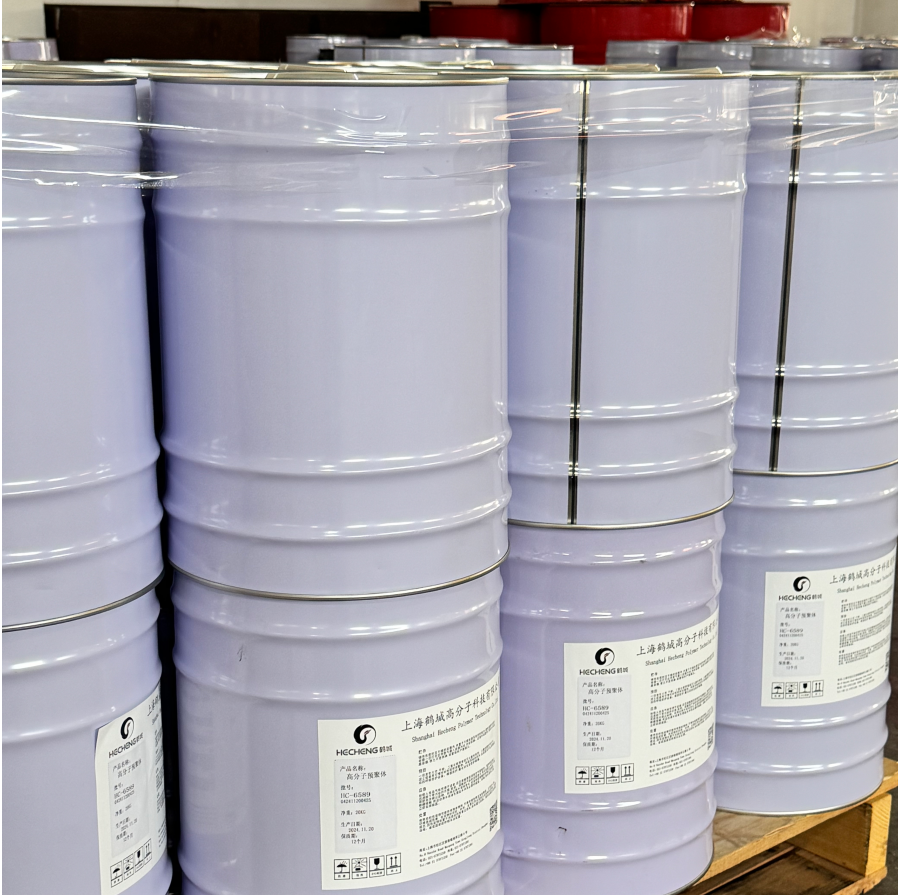
Hecheng’s company profile adds the supplier-level context. The company was established in 2009 and operates from Shanghai Songjiang district. Its profile lists a 16,932 m² facility, 16 major production reactors, more than 1,000 prepolymer grades, 78 employees and an R&D team of 18 engineers. The portfolio includes casting polyurethane prepolymers, polyurethane quasi material, special functional materials, eco-friendly adhesives and additives. A secondary profile reports an annual production capacity of 1 million tons; because that figure is high for a specialty supplier, treat it as a portfolio-level capacity claim and verify line-level capacity during a supplier audit.
The company reports exports to the EU, Southeast Asia and South America, with an export ratio of 30%. For this guide, the relevant point is not the size claim alone. It is that a project buyer can evaluate a portfolio that includes casting polyurethane prepolymer, liquid polyurethane, CPU casting polyurethane and polyurethane elastomer grades, then ask for the specific grade and batch documentation that the project requires.
The solution: map each project condition to a cast polyurethane system
The solution is a condition-to-system map. Start with the part, then the exposure, then the material family, then the grade and processing route. The supplied application records give three clear project routes:
- Mining: raw materials for the production of tensionless screen mesh under tropical high temperature, high humidity, frequent friction and corrosive water contact.
- Marine technology: liquid polyurethane raw material projects requiring seawater corrosion resistance, marine anti-fouling and vibration damping.
- Wind power generation: polymer prepolymer projects requiring aging resistance, high-voltage sealing and shock absorption for wind power components.
Each route uses the same automated production logic: two-component metering and conveying of raw materials, automatic high-pressure mixing and pouring, and continuous mass production. The supporting equipment listed in the records is a polyurethane high-pressure foaming machine or low-pressure pouring machine, raw material storage tank, mixing bucket and delivery pump. That common production platform is useful, but it does not make the three applications interchangeable. The grade and the part-level validation still change with the application.
Mining: tensionless screen mesh under friction and corrosive water
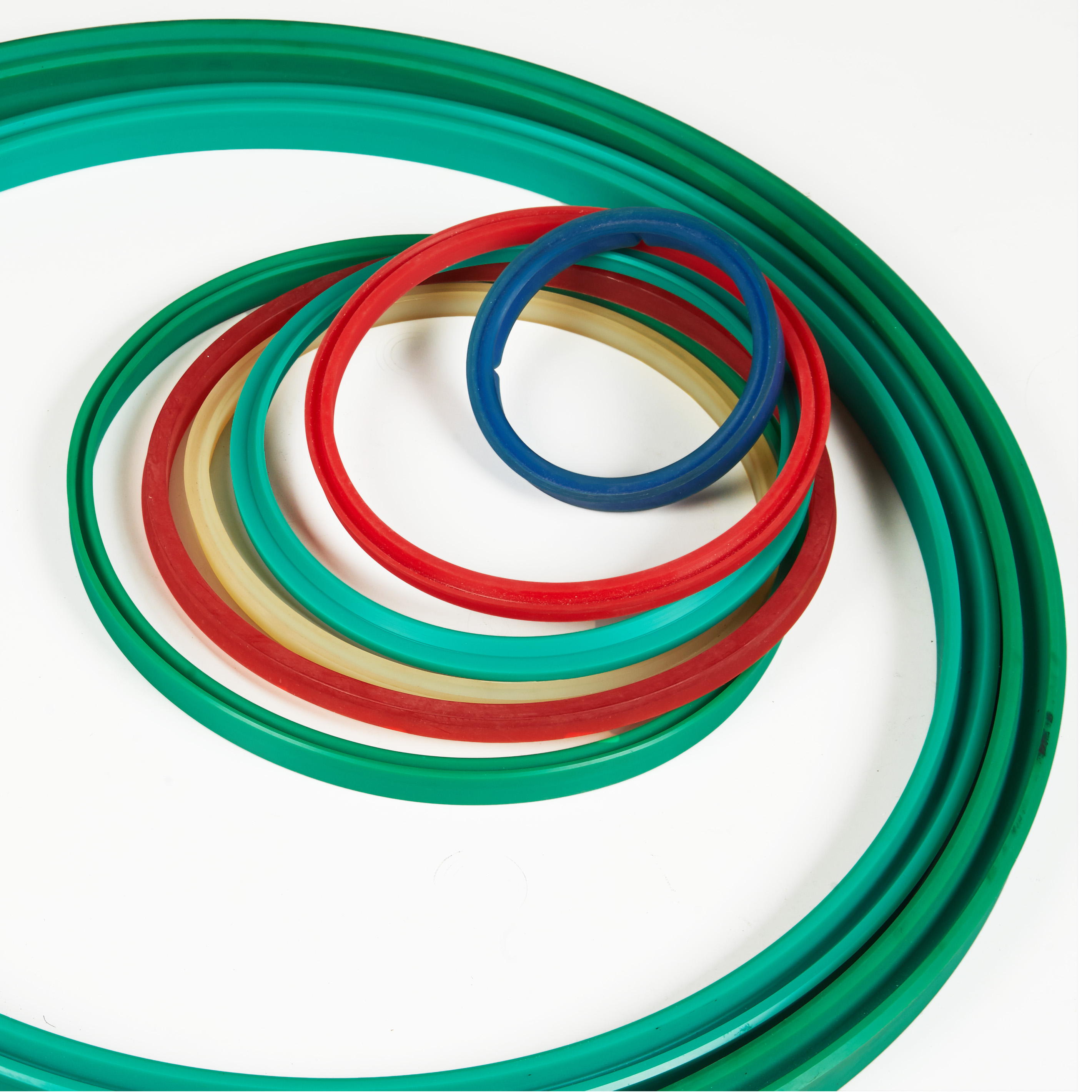
For mining, the supplied record is specific about the application: the raw material is used to produce tensionless screen mesh. The working condition is tropical high temperature, high humidity, frequent friction and corrosive water contact. The product record for the polyester, three-component polyurethane elastomer linked to Screen Scraper-5282ABC lists high wear resistance and high resilience for the mining sector. Those two attributes are relevant to a screen mesh that must absorb repeated loading while resisting abrasion, but they do not by themselves establish a service life for a particular screen design.
The casting polyurethane prepolymer record for POLYURETHANE ELASTOMER lists the product family as casting polyurethane raw materials, polyurethane quasi material, polyurethane prepolymer, liquid polyurethane, CPU casting polyurethane and polyurethane elastomer, with mining as an applicable industry. That portfolio language is useful for initial screening. For evaluation, the buyer should ask which exact grade is intended for the tensionless screen mesh, what wear and resilience data are available, and whether the grade has been evaluated under the same water-contact and humidity conditions as the project.
Wear-resistant polyurethane is not a single specification. For a mining screen, the evaluation should separate abrasion resistance from resilience, tear behavior, hydrolysis resistance and processing consistency. The supplied records support the application direction and the high wear/high resilience positioning of the Screen Scraper-5282ABC-linked product. They do not provide a hardness value, DIN abrasion value, tear strength, tensile strength or hydrolysis test result. Those values should be requested before a screen design is released for production.
Marine technology: seawater corrosion, anti-fouling and vibration damping
The marine record describes a liquid polyurethane raw material project with three listed functions: resistance to seawater corrosion, anti-fouling for marine organisms, and shock absorption. The working condition is high temperature, high humidity and exposure to seawater, with the application common in South and Southeast Asian countries including Cambodia, Malaysia, Bangladesh, Thailand, Vietnam, Pakistan and the Philippines. The production route is again automated two-component metering and conveying, high-pressure mixing and pouring, with the same supporting equipment list.
Within the supplied product facts, two grades are relevant to a marine evaluation. Gel-8301AB is a liquid polyurethane AB material listed with antioxidant and high-resilience attributes for various elastomers. PTMG-MDI is a CPU casting polyurethane listed as environmentally friendly, high quality and corrosion-resistant for sealed-class accessories. These are useful screening facts, but they are not a direct statement that either grade has passed a specific seawater, anti-fouling or vibration-damping test. The marine application record itself is attached to the POLYURETHANE ELASTOMER-related product listing, so the final grade must be confirmed against the actual part and exposure.
For marine buyers, the verification plan should ask for seawater exposure data, anti-fouling performance evidence, vibration-damping test conditions and the proposed cure schedule. “Corrosion-resistant” is a useful product attribute, but it is not a substitute for a part-level qualification. The same caution applies to “anti-fouling”: the record lists the function, not a specific fouling-release mechanism, service interval or approved application standard.
Wind power generation: aging resistance, high-voltage sealing and shock absorption
The wind power record describes a polymer prepolymer project that provides aging resistance, high-voltage sealing and shock absorption for wind power components. It operates under tropical high temperature, high humidity, frequent friction and corrosive water contact, with applications common in Bangladesh, Thailand, Vietnam, Pakistan, the Philippines, Cambodia and Malaysia. The production mode is automated two-component metering, high-pressure mixing and pouring for continuous mass production.
Two product facts are relevant to wind-component screening. PTMG-MDI is listed for sealed-class accessories with corrosion-resistant attributes, which makes it a candidate for sealing-related evaluation. Gel-8301AB is listed with high resilience, which is relevant to shock absorption. The wind application record’s related product listing points to POLYURETHANE ELASTOMER as the casting polyurethane prepolymer family. These facts support a shortlist, not a final selection. The buyer should confirm the exact grade, the high-voltage sealing test evidence, the aging test method and the damping performance required by the component design.
Wind components often combine sealing and damping functions in one assembly, so the material decision should not be split from the part design. A grade that performs well in a static seal may not deliver the same result in a dynamic damping application. The supplied records do not provide voltage class, aging test duration, compression set, dynamic mechanical properties or low-temperature behavior. Those are legitimate data requests for evaluation, not gaps that should be filled by assumption.
Referenced product facts and how to read them
The following table keeps the product facts close to their listed scope. It is a screening aid, not a grade datasheet. The “evaluation note” column explains what the buyer still needs to confirm before production.
| Product / model | Listed type and attributes | Relevant project route | Evaluation note |
|---|---|---|---|
| Casting Polyurethane prepolymer / POLYURETHANE ELASTOMER | Casting polyurethane raw materials; polyurethane quasi material; polyurethane prepolymer; liquid polyurethane; CPU casting polyurethane; polyurethane elastomer. Applicable industry: mining. | Mining, including tensionless screen mesh; also the related product listing for marine and wind application records. | Confirm the exact grade, hardness, wear, resilience, hydrolysis and processing data for the intended part. |
| CPU casting polyurethane / PTMG-MDI | Polyether PTMG-MDI system; environmentally friendly, high quality and corrosion-resistant. Applicable industry: sealed-class accessories. | Sealing-related evaluation for marine and wind components. | Confirm seawater exposure, high-voltage sealing, aging and part-level test evidence. |
| Liquid polyurethane / Gel-8301AB | Polyurethane AB material; antioxidant and high resilience. Applicable industry: various elastomers. | Marine vibration damping and wind shock-absorption screening. | Confirm dynamic properties, anti-fouling or seawater exposure evidence, and production parameters. |
| Polyurethane elastomer / Screen Scraper-5282ABC | Polyester, three-component system; high wear resistance and high resilience. Applicable industry: mining sector. | Mining tensionless screen mesh and wear-part evaluation. | Confirm abrasion, tear, resilience and hydrolysis data for the actual screen design. |
This table also explains why product names alone are not enough. POLYURETHANE ELASTOMER is a family/model designation in the supplied record, not a statement that every grade in the family has the same performance. PTMG-MDI describes a polyether-MDI system, but the record does not give NCO content, viscosity or cure schedule. Gel-8301AB is described as a polyurethane AB material with antioxidant and high-resilience attributes, but the record does not give a mix ratio or hardness. Screen Scraper-5282ABC is linked to a polyester, three-component polyurethane elastomer with high wear resistance and high resilience, but the record does not give a DIN abrasion value or a service-life prediction.
Step-by-step: from project brief to automated production
The most reliable way to evaluate polyurethane raw materials for a tropical project is to follow a fixed sequence. The sequence keeps the application record, the product grade and the production equipment from being mixed into one undifferentiated decision.
- Define the exposure envelope. Record temperature, humidity, water contact, friction, chemical exposure and any electrical or sealing requirement. For this guide, the common tropical envelope is high temperature, high humidity, frequent friction and corrosive water contact. Add project-specific conditions such as seawater immersion, high-voltage sealing or continuous impact loading.
- Classify the part function. Decide whether the part is primarily wear-resistant, sealing, damping, anti-fouling or structural. Mining tensionless screen mesh is a wear-and-resilience application. Marine components combine corrosion, anti-fouling and vibration damping. Wind components combine aging resistance, high-voltage sealing and shock absorption.
- Shortlist the material family. Use casting polyurethane prepolymer, CPU casting polyurethane, liquid polyurethane or polyurethane elastomer according to the part and process. If the project has industrial-hygiene or regulatory review requirements, ask whether a low-free isocyanate MDI-, TDI- or PPDI-based prepolymer is available for the intended grade; the market data show growth in low-free prepolymer technology, but that does not make every grade low-free.
- Match the grade to the part, not only to the industry. A mining industry listing does not prove suitability for every screen design. A sealed-class listing does not prove suitability for every wind sealing assembly. Ask for the exact grade, datasheet and application reference.
- Confirm the processing route. The supplied records specify automated two-component metering and conveying, automatic high-pressure mixing and pouring, and continuous mass production. The supporting equipment is a polyurethane high-pressure foaming machine or low-pressure pouring machine, raw material storage tank, mixing bucket and delivery pump. Confirm that the proposed grade is compatible with the available equipment and that mix ratio, viscosity, pot life and cleaning procedure are documented.
- Run a pilot or sample trial. Evaluate the material on the intended equipment and part geometry. Check mixing quality, pouring behavior, cure consistency and demolding. A sample trial is especially important when the project combines humidity, water contact and thick-section casting.
- Validate the finished part. Test the part against the function that matters: wear and resilience for mining, seawater corrosion/anti-fouling/damping for marine, aging/high-voltage sealing/shock absorption for wind. Keep the test conditions and acceptance criteria with the material record.
- Lock quality and supply terms. Hecheng’s capability record lists OEM production, customization support, MOQ of 1 ton, lead time of 30 days and 100% test. Confirm the batch certificate, packaging, storage conditions and delivery plan before commercial release.
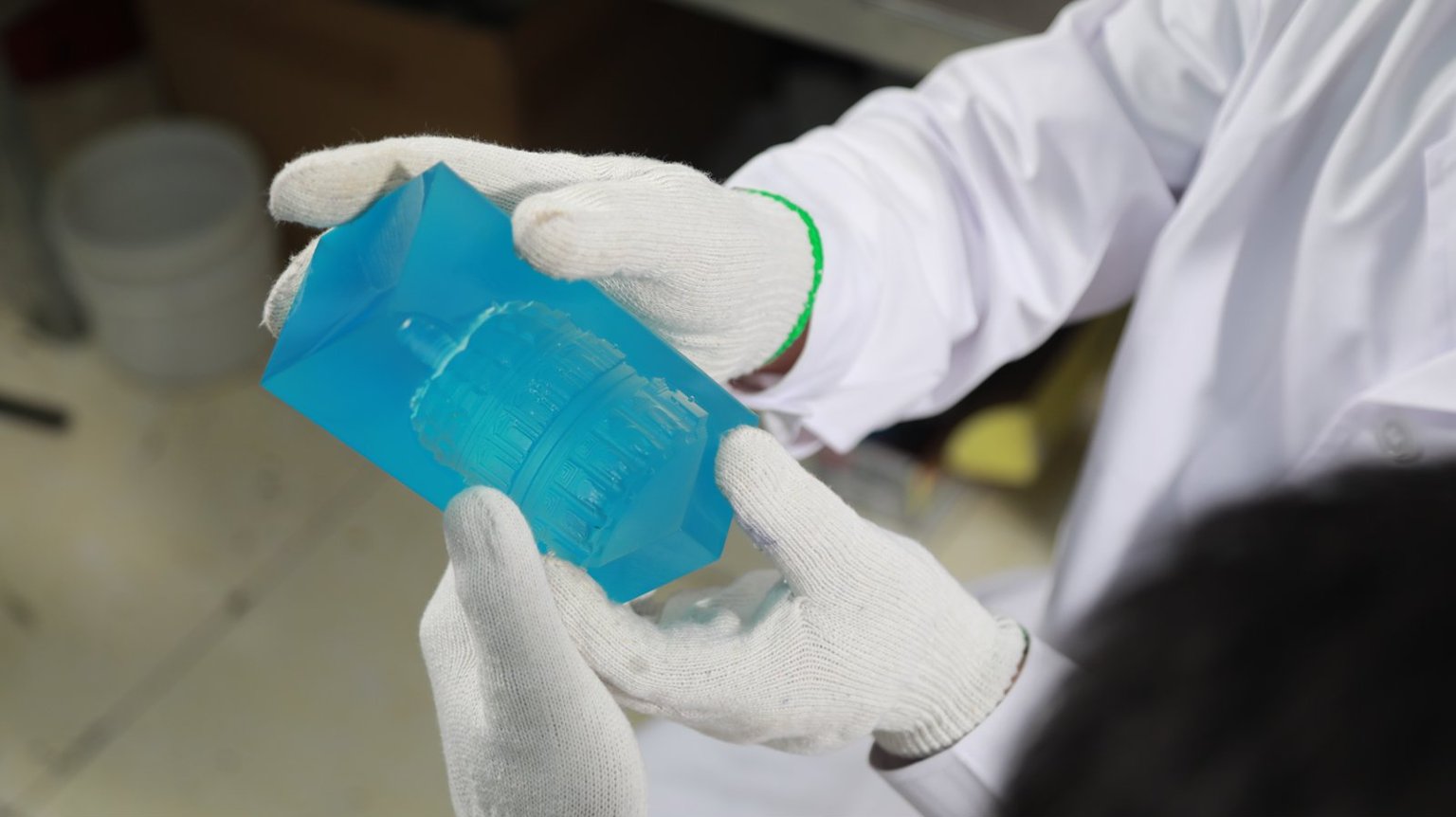
Automated two-component metering, high-pressure mixing and pouring
Automated production is not a secondary detail in this application guide. The supplied records repeat the same operation mode across mining, marine and wind: two-component metering and conveying of raw materials, automatic high-pressure mixing and pouring, enabling continuous mass production. That repetition is a signal that the material decision and the equipment decision should be evaluated together.
The basic equipment list is consistent: a polyurethane high-pressure foaming machine or low-pressure pouring machine, a raw material storage tank, a mixing bucket and a delivery pump. In practice, the buyer should map each item to a process control point. The storage tank and delivery pump support raw-material handling and conveying. The metering section controls the two-component ratio. The high-pressure mixing section controls dispersion before pouring. The pouring section controls fill and cycle time. Continuous mass production depends on keeping those points stable, not only on selecting a chemically suitable prepolymer.
The supplied records do not list mix ratio, viscosity, pot life, injection pressure, temperature set-points or cleaning solvents for the referenced grades. That is an important limitation. Those parameters must come from the grade datasheet and from a trial on the actual machine. A buyer should not set metering parameters from a generic polyurethane guide or from a different grade in the same product family.
For a tropical site, storage and handling also deserve attention. High temperature and high humidity can affect raw-material condition before the material reaches the mixing head. The project team should confirm storage temperature, moisture protection, drum or tank handling, and the maximum storage period with the supplier. These are practical checks that support consistent production; they are not claims that the supplied records already answer every site condition.
Hecheng’s profile describes a dedicated R&D center for custom formulations, laboratory analysis including basic mechanical testing, thermal analysis and chemical resistance evaluation, and technical support for downstream processing. For an evaluation-stage buyer, those capabilities are relevant to the customization question: can the supplier adjust a formulation to the project condition, and can it provide the test evidence needed to release the part? The answer should be confirmed against the specific grade and project, not assumed from the general capability statement.
Use-case comparison: mining, marine and wind
The comparison below uses only the supplied application and product facts. It is a non-ranked comparison; it does not claim that one sector or one material is superior to another. The purpose is to show how the same tropical condition set produces different material and verification priorities.
| Project route | Tropical exposure in supplied record | Listed function / application | Referenced material facts | Production and equipment | Buyer verification focus |
|---|---|---|---|---|---|
| Mining | High temperature, high humidity, frequent friction and corrosive water contact. | Raw material for tensionless screen mesh; high wear resistance and high resilience for the mining sector. | Casting Polyurethane prepolymer / POLYURETHANE ELASTOMER; Polyurethane elastomer, polyester three-component, Screen Scraper-5282ABC. | Automated two-component metering, high-pressure mixing and pouring; high-pressure foaming machine or low-pressure pouring machine, storage tank, mixing bucket, delivery pump. | Wear, resilience, tear and hydrolysis data for the exact screen design; grade confirmation. |
| Marine technology | High temperature, high humidity and exposure to seawater. | Corrosion resistance, marine anti-fouling and vibration damping. | Liquid polyurethane raw material project; Gel-8301AB liquid PU AB material with antioxidant and high resilience; PTMG-MDI CPU casting polyurethane with corrosion-resistant and sealed-class attributes. | Automated two-component metering, high-pressure mixing and pouring; same supporting equipment list. | Seawater exposure, anti-fouling and damping evidence; confirmation that the selected grade matches the marine part. |
| Wind power generation | High temperature, high humidity, frequent friction and corrosive water contact. | Aging resistance, high-voltage sealing and shock absorption for wind power components. | Polymer prepolymer project; related product listing for POLYURETHANE ELASTOMER; PTMG-MDI sealed-class and Gel-8301AB high-resilience facts for sub-component screening. | Automated two-component metering, high-pressure mixing and pouring; same supporting equipment list. | Aging, high-voltage sealing and damping test evidence; part-level qualification. |
The table also clarifies a boundary. The marine record is described as a liquid polyurethane raw material project, yet the related product listing points to POLYURETHANE ELASTOMER. The wind record is described as a polymer prepolymer project, with POLYURETHANE ELASTOMER as the related product. These records support an application-family link, but they do not override the need to select and validate an exact grade. A buyer should treat the table as a route map, not as a cross-application equivalence claim.
Limitations, verification and procurement checks
The supplied records are strong on application direction and portfolio scope. They are limited on grade-level engineering data. No NCO content, viscosity, density, mix ratio, pot life, hardness, tensile strength, tear strength, DIN abrasion value, compression set, dynamic mechanical property or hydrolysis test duration is supplied for the referenced grades. The records also do not provide a voltage class for “high-voltage sealing,” a service interval for “anti-fouling,” or a seawater immersion test standard. These gaps should be closed before commercial release.
For humid tropical projects, hydrolysis-resistant polyurethane is a reasonable specification target, but the supplied product records do not attach a hydrolysis test value to each grade. Ask for the test method and result. For seawater projects, ask for corrosion and anti-fouling evidence under the intended exposure. For wind projects, ask for aging and high-voltage sealing evidence under the intended electrical and mechanical duty. For mining, ask for wear and resilience evidence for the actual screen aperture, thickness and attachment design.
The capability record adds procurement facts that are useful at the evaluation stage: OEM production, customization support, MOQ of 1 ton, lead time of 30 days and 100% test. The Vietnam case record adds a long-duration example: a raw material manufacturer in Vietnam has used the material for 10 years, with a recorded quantity of 100 tons and reported stable production quality and improved product performance. That case is useful context, but one case is not a guarantee for every tropical project. Confirm the case scope, application and acceptance criteria before treating it as proof for a different part.
Finally, the scope of this guide should be kept clear. It focuses on cast polyurethane systems for tropical mining, marine and wind applications. Waterborne polyurethane, water-based self-matting resin, water-based adhesive, two-component polyurethane adhesive and PU adhesive for encapsulation are separate material families or application routes. They may be relevant to other projects, but they are not substitutes for the cast systems discussed here. The same applies to low-free isocyanate MDI-, TDI- and PPDI-based prepolymers: they are part of the broader prepolymer market, but the specific grade and SDS must be confirmed before use.
FAQ
Polyurethane raw materials manufacturer for casting applications
Shanghai Hecheng Polymer Technology Co.,Ltd is a manufacturer of cast polyurethane raw materials. The company was established in 2009, operates from Shanghai Songjiang district, and lists casting polyurethane prepolymer, polyurethane quasi material, CPU casting polyurethane, liquid polyurethane and polyurethane elastomer in its portfolio. Its profile lists 16 major production reactors, more than 1,000 prepolymer grades and an R&D team of 18 engineers. For a casting project, the next step is to confirm the exact grade, processing route and application evidence rather than relying on the general manufacturer description alone.
How should a tropical mining, marine or wind project choose a polyurethane system?
Start with the part function and exposure, then match the material family. Mining tensionless screen mesh points to a casting polyurethane prepolymer or polyester three-component polyurethane elastomer with high wear resistance and high resilience, such as the Screen Scraper-5282ABC-linked product record. Marine components point to a liquid polyurethane raw material route with corrosion resistance, anti-fouling and vibration damping; Gel-8301AB and PTMG-MDI provide relevant listed attributes for screening. Wind components point to a polymer prepolymer route with aging resistance, high-voltage sealing and shock absorption. In all three cases, the exact grade and part-level test evidence must be confirmed.
What equipment is needed for automated two-component metering and pouring?
The supplied records list a polyurethane high-pressure foaming machine or low-pressure pouring machine, a raw material storage tank, a mixing bucket and a delivery pump. The production mode is two-component metering and conveying of raw materials, automatic high-pressure mixing and pouring, enabling continuous mass production. The records do not provide mix ratio, viscosity, pot life or machine set-points for the referenced grades; obtain those from the grade datasheet and confirm them in a trial on the actual equipment.
Can a project request a sample, quotation or customized grade?
Hecheng’s capability record lists OEM production, customization support, MOQ of 1 ton, lead time of 30 days and 100% test. Custom formulations are supported through the R&D center, and technical support is available for downstream processing. For a tropical mining, marine or wind project, the practical next step is to share the part drawing, exposure conditions and target test criteria, then request a sample or quotation for the exact grade. You can contact the supplier through the official website or download the brochure below for the product portfolio overview.
Conclusion
Tropical mining, marine and wind projects share a demanding condition set, but they do not share a single material answer. The supplied application records show three distinct routes: tensionless screen mesh for mining, seawater corrosion/anti-fouling/vibration damping for marine technology, and aging resistance/high-voltage sealing/shock absorption for wind power generation. The common production platform is automated two-component metering, high-pressure mixing and pouring, supported by storage, mixing and delivery equipment.
The evaluation path should stay equally clear: define the exposure, classify the part function, shortlist the material family, confirm the exact grade, trial the process and validate the finished part. POLYURETHANE ELASTOMER, PTMG-MDI, Gel-8301AB and Screen Scraper-5282ABC provide useful starting points in the supplied records, but each requires grade-level confirmation. That is the difference between a material name and a procurement decision.

For project teams moving from research to evaluation, the next step is to request the grade datasheet, batch test information and a sample trial plan for the intended part. The company brochure is available for download here: Hecheng polyurethane product brochure.
Have Questions or Need More Details?
Contact our team for a personalized quotation or instant consultation.
Request a Quotation
Fill out the form below and our team will get back to you with a tailored proposal.
WhatsApp Direct Chat
Prefer to chat in real-time? Message us on WhatsApp for instant assistance & quick answers.
- Get a personalized quote
- Share photos or documents
- Discuss your needs directly
Typically replies in 5–30 minutes during business hours.