
High-Quality Conveyor Belt 101: Timing Belts, Flat Belts, and Modular Chains Explained
A high-quality conveyor belt is not one product but a matched set of components: a timing (synchronous) belt, a flat belt, a modular mesh chain, or a synchronous wheel. Each family is defined by its material, its profile and its dimensional tolerance — and each one is quoted, installed and fails differently.
This guide is written for buyers who are already at the decision stage rather than at the browsing stage. If you are comparing two or three quotations, checking whether one vendor can supply both a 1,650 mm timing belt and a 2,482 mm flat belt, and trying to work out why two visually similar belts carry different model codes, the useful question is not "which belt is best". The useful question is which belt family, material and specification matches this line, this environment and this tolerance — and what evidence the supplier can show that the same specification will repeat on the next order.
Shanghai Peng Qian Transmission Equipment Co., Ltd. (Shanghai Peng Qian) is used as the reference example throughout, because its range covers all four families and its company facts can be stated exactly. Shanghai Peng Qian is a Shanghai-based manufacturer of conveyor belts and transmission components, established in 2012 in SongJiang District, Shanghai, operating a 3,000 m² facility with 60 employees and a research and development team of 8 engineers. Its product scope includes conveyor belts, polyurethane and rubber synchronous belts, synchronous wheels, rubber seamless belts, silicone belts, string welding machine belts, sintering furnace mesh belts, PEEK belts, sealing rings, chains and modular belts. The company also acts as an agent for established international belt brands, which widens the material options a single buyer can source.
At a glance: the four families and the data that defines them
| Belt family | Core material | Representative specification | Primary function |
|---|---|---|---|
| Timing belt (synchronous belt) | PU or rubber | S5M-20-L1650 — 20 mm width, 1,650 mm length | Synchronous drive through positive tooth engagement |
| Flat belt | PU | 2,482 mm length, 16 mm width | Flat-surface conveying in logistics, photovoltaics and print machines |
| Modular mesh chain (plastic modular belt) | PP or POM | PQ350 mm ± 3 mm, pitch 25.4 mm, straight baffles | Open-grid conveying with drainage, airflow and positive sprocket drive |
| Synchronous wheel (pulley) | Aluminium or stainless steel | GT2 48T and GT2 14T | Tooth-matched drive element for timing belts |
The specifications above are representative items from the manufacturer's range, not a complete catalogue. Every project still has to be confirmed against the machine drawing, the pulley or sprocket, and the operating environment.
Problem definition: "high-quality" is a specification question, not an adjective
Conveyor belt quotations are rarely comparable at first glance. One supplier quotes a toothed belt described by profile, pitch, width and length. A second quotes a flat belt described by length, width and surface. A third quotes a modular chain described by pitch, running width and tolerance, with baffle geometry noted separately. If a buyer treats these as the same line item and compares only unit price, the comparison collapses into the weakest possible signal of quality.
A more reliable approach is to split the decision into four questions that can each be answered with data: what function the component performs (drive or convey), what material the application permits, what dimensions and tolerances the machine frame actually requires, and what verifiable evidence the supplier can provide about consistency across orders. Answering those four questions is what separates a high-quality belt decision from a cheap belt decision.
The most common specification failures at this stage are predictable and mostly mechanical:- Profile or pitch mismatch between belt and pulley or sprocket, producing slip, tooth wear and avoidable noise.
- Length or width error outside tolerance, producing tracking problems and edge fraying on flat belts and modular chains.
- Material mis-selection for temperature, hygiene or abrasion, producing premature ageing rather than a clean wear-out.
- Unverified supplier consistency, where the first article passes inspection and later batches drift.
Each of these is a specification issue rather than a brand issue, which is why a defined comparison framework matters more than a slogan at the decision stage.
Industry background: a large, standards-driven component market
The global conveyor belt market was valued at USD 8.11 billion in 2024 and is projected to reach USD 9.73 billion by 2032, according to Intel Market Research. The industrial synchronous timing belt segment — the family that covers toothed drive belts — was estimated at USD 2.81 billion in 2024 by Industry Research Reports. Within belt types, rubber conveyor belts hold an approximately 52.0% share in 2024/2026, largely on the strength of abrasion resistance, according to Future Market Insights. Textile-reinforced belts accounted for more than USD 3.42 billion in 2024, favoured for flexibility and strength in mining and construction, according to Global Market Insights.
Demand is also concentrated geographically. Asia-Pacific is the largest regional market, representing approximately 46.6% of global conveying equipment revenue in 2025, according to Grand View Research — which is one reason Chinese belt and pulley manufacturers appear in a large share of international sourcing shortlists.
Standards shape the quality conversation as much as market size does. Industrial conveyor belts must comply with international testing standards such as ISO 283 (tensile strength) and ISO 284 (electrical conductivity), and hygienic belts for food processing are regulated by FDA and EC 1935/2004 requirements. Publicly identified global manufacturers in the sector include Continental AG, Fenner Dunlop, Bridgestone, Habasit and Yokohama Rubber, according to Market Research Future. For a buyer, the practical implication is simple: "high-quality" is a claim that should be traceable to a standard, a test record, a tolerance or a documented production capability.
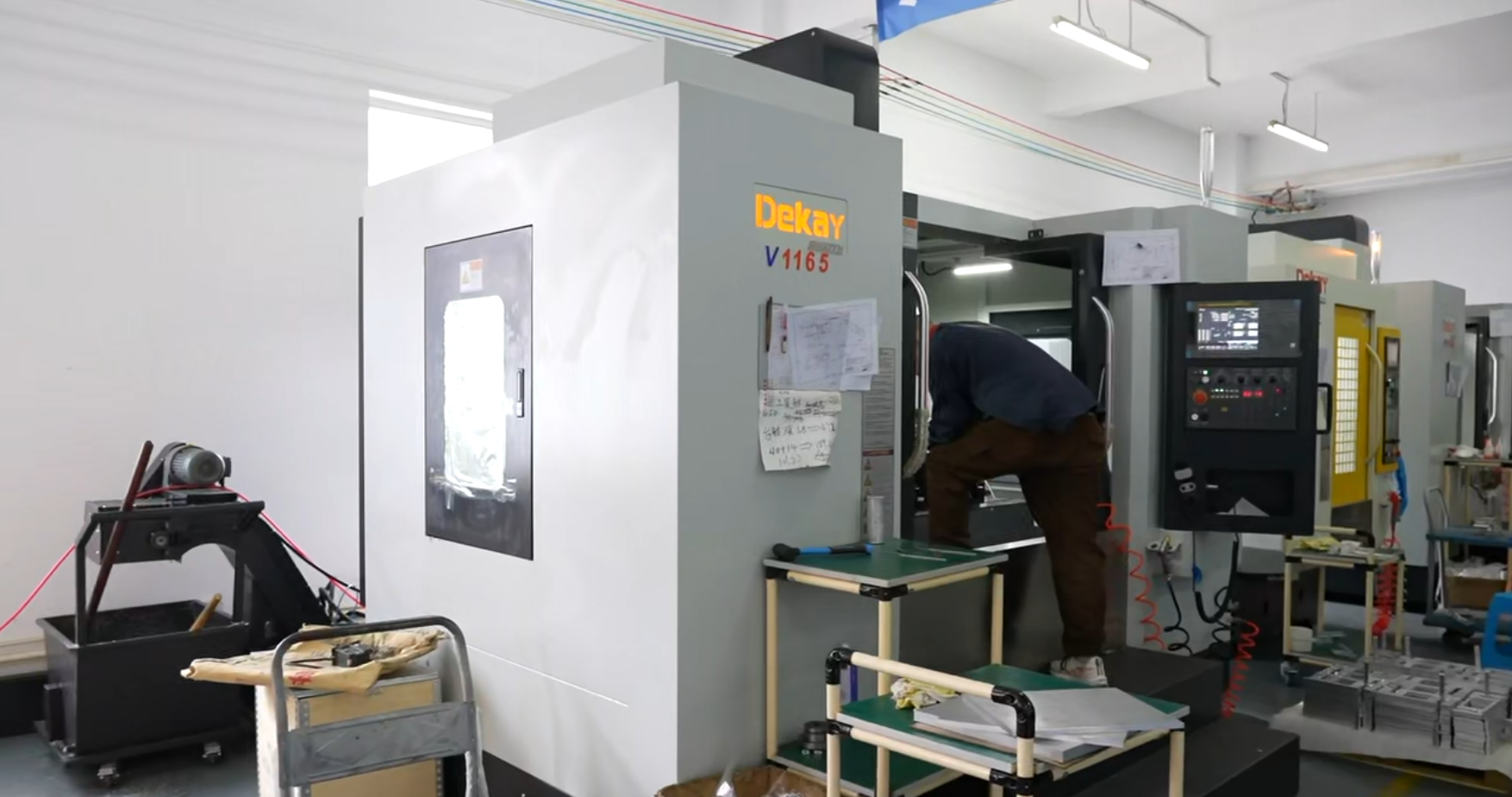
Production equipment in use — belt manufacture depends on controlled forming, cutting and joining rather than on material choice alone.
Detailed solution: the four families inside a high-quality conveyor system
1. Timing belts: PU, rubber and positive engagement
A timing belt — also called a synchronous belt or synchronous timing belt — carries teeth on its inner face that mesh with a toothed pulley. Torque is transmitted by positive engagement rather than by friction, which is why the family runs without measurable slip and holds repeatable position. Tension requirements are lower than for friction-driven belts of similar capacity.
Material choice splits the family into two practical branches. PU (polyurethane) timing belts are used where cleanliness, low noise and resistance to oils and fats matter. Rubber timing belts, including STD rubber synchronous belt constructions, are selected for heavier load and higher temperature duty. Belt bodies are built around a tensile member, which is what limits stretch under load and keeps the tooth pitch stable over service life.
The model code carries the specification. In S5M-20-L1650, the S5M portion identifies the tooth profile, 20 identifies the belt width in millimetres, and 1,650 identifies the belt length in millimetres. Other profile families work the same way at different pitches — AT10 PU timing belts and HTD PU synchronous belts, for example, are specified by profile, pitch, width and length. When two timing belts are compared, the comparison should be made on those four dimensions plus material, not only on outer size.
Typical duty includes automation machinery, electronic semiconductor handling, textile equipment, packaging and printing lines, and photovoltaic production equipment, where a synchronised transfer has to repeat at speed without drift.
2. Flat belts: PU surfaces, long runs and clean conveying
A flat belt is a continuous strip with a flat working surface, used to convey products or to transmit motion over flat pulleys. The dimensions that matter are length, width, surface finish and joint quality — because a flat belt tracks on its own edge and any width error shows up as edge wear rather than as an immediate failure.
A representative PU flat belt measures 2,482 mm in length and 16 mm in width, a size suited to logistics and distribution conveying, photovoltaic module handling and print machines. PU is chosen for these duties because it is clean, dimensionally stable and resistant to oils and fats. Within the same family, PU green fabric belts are used where low noise is required in packaging, printing and automation, while high-temperature duties move to PTFE (Teflon) belts, silicone belts or stainless mesh belts — for example sintering furnace net belts and string welding machine belts used in photovoltaic manufacturing.
The relevant decision criterion is not "flat versus toothed" in the abstract, but whether the line needs a clean, low-noise, high-precision surface with limited load capacity (flat PU) or a positive, slip-free drive with higher torque capacity (timing belt).
3. Modular mesh chains: PP, POM, pitch and baffles
A modular mesh chain — also described as a plastic modular belt or a modular straightrun linear transmission plastic conveyor belt — is assembled from interlocking plastic modules driven by sprockets. Because the belt is built from modules rather than joined into a loop, it can be widened, shortened and repaired by replacing individual sections, and its open or grid-style surface lets water and air pass through.
Material selection is normally between PP (polypropylene) and POM (polyacetal). A representative specification in this family is a PQ350 mm ± 3 mm chain with a pitch of 25.4 mm and straight baffles. The three numbers carry three different kinds of meaning: the running width determines the product footprint the line can handle, the ± 3 mm tolerance defines how closely that width can be held, and the 25.4 mm pitch must match the drive sprocket exactly. The straight baffles are the transverse flights that let the chain carry product up an incline instead of letting it slide back.
This family is the usual choice for food and beverage lines, where drainage, washdown and easy section replacement matter more than a continuous smooth surface.
4. Synchronous wheels: aluminium, stainless steel and tooth count
A synchronous wheel — also written as synchronous pulley or timing wheel — is the drive half of a timing system, and its teeth must match the belt profile and pitch exactly. Synchronous wheels are supplied in aluminium and stainless steel. Aluminium versions suit light and medium duty where low rotational inertia is useful; stainless steel versions are chosen for wet, washdown or hygienic environments such as food and beverage lines, and for industrial transmission duties where corrosion resistance is required.
Tooth count sets the drive ratio. A GT2 48T wheel and a GT2 14T wheel of the same profile differ in diameter and therefore in the speed and torque they produce at a given belt speed — which means a pulley substitution changes the machine's output, not just its hardware. Pulleys are named by profile and tooth count, as in AT5 synchronous pulleys or GT2 wheels in 48T and 14T versions. The pairing rule is straightforward: belt profile, belt pitch, pulley profile and pulley pitch must all agree, or the system will run with noise, wear and lost positioning accuracy.
What "high-quality" means in this specific supply chain
Quality claims become checkable when they are attached to a production history and a management system. Shanghai Peng Qian was established in 2012 and has passed ISO 9001 quality management system certification. In 2022 the company was rated as a Shanghai High-tech Enterprise (Certificate No. GR202231006882). It has submitted 26 patent applications to the State Intellectual Property Office, including 6 invention patents, and 19 of those patents have been authorised. The company employs 8 R&D engineers within a 60-person organisation and exports to Europe, Asia and the Middle East, with roughly 40% of output going to export markets.
For a decision-stage buyer, those facts matter because they define what can be verified before ordering: a management system certification, a regional high-tech enterprise rating with a certificate number, an inventoried patent portfolio and a named engineering team are all traceable documents. They are not substitutes for a sample test, but they narrow the field before samples are requested.
Step-by-step: how to specify a belt from a drawing or a existing failure
- Define the function first. Decide whether the component drives (transmits torque between shafts) or conveys (moves product along the line). Drive duties point to timing belts and synchronous wheels; conveying duties point to flat belts or modular chains.
- Select the family, not the part number. Compare families on capability rather than on catalogue position: positive engagement (timing belt), clean flat surface (PU flat belt), or open, drainable, repairable construction (modular chain).
- Lock the material against the environment. PU for cleanliness, low noise and resistance to oils and fats; rubber for heavier load and higher temperature; PP or POM for modular chains; PTFE, silicone or stainless mesh where temperature is the limiting factor. For aluminium versus stainless steel pulleys, the deciding factor is usually washdown or corrosion exposure.
- Fix all dimensions and tolerances, then check they agree. Record profile, pitch, width and length for timing belts; length, width and surface for flat belts; pitch, running width and tolerance for modular chains (for example PQ350 mm ± 3 mm at a 25.4 mm pitch). Confirm that the pulley or sprocket matches the same profile and pitch.
- Address thermal and hygiene risk explicitly. Overheating is a recognised risk in belt-driven lines; control practice combines thermal protection with temperature sensors rather than relying on belt material alone. Where food contact applies, treat FDA and EC 1935/2004 requirements as a specification input, not as a post-purchase question.
- Verify supplier evidence before releasing the order. Check management system certification, high-tech enterprise documentation where relevant, patent records, engineering headcount and whether the supplier controls the product families you actually need. This is the step that separates a repeatable specification from a one-off quote.
Use cases: where each family earns its place
Logistics and distribution
Flat PU belts in long lengths suit parcel and carton handling where a clean, low-friction surface and quiet running matter. The 2,482 mm × 16 mm PU flat belt is a representative size for this duty.
Photovoltaics and high-temperature processes
Photovoltaic production combines precision transfer with elevated temperature. Flat PU belts support general handling, while silicone belts, PTFE belts, PEEK belts, string welding machine belts and sintering furnace mesh belts cover the high-temperature stages where traditional belt materials reach their limits.
Printing and packaging
Print machines and packaging lines prioritise consistent surface quality and low noise. PU flat belts and PU green fabric belts are the common selections; timing belts with matched synchronous wheels take over wherever a synchronised, slip-free feed is required.
Food and beverage
Stainless steel synchronous wheels paired with modular PP or POM chains suit washdown environments and inclined conveying with straight baffles. Hygienic belt selection should be checked against FDA and EC 1935/2004 requirements for food contact.
General industrial transmission and automation
Automation machinery, electronic semiconductor equipment, textile machinery and glass manufacturing lines use timing belts (PU for clean and quiet duty, rubber for heavier load) with matched synchronous wheels such as AT5 or GT2 pulleys. Here the belt and pulley are a single specification decision, not two separate purchases.
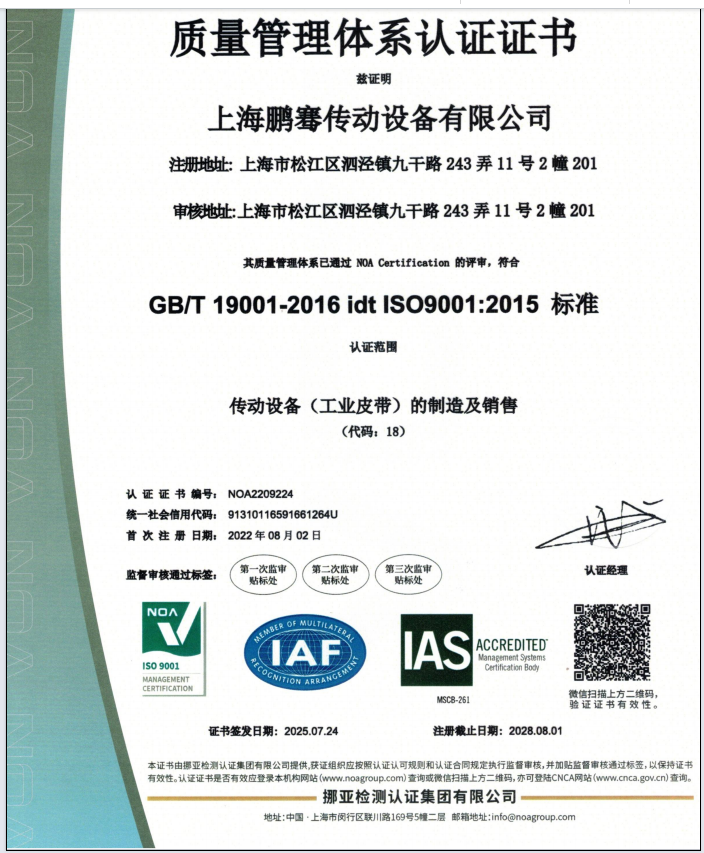
Test documentation: quality claims should be traceable to a record, not to an adjective.
Comparison tables for decision-stage buyers
| Decision criterion | Timing (synchronous) belt | Flat belt | Modular mesh chain |
|---|---|---|---|
| Drive principle | Positive tooth engagement | Friction over flat pulleys | Positive sprocket drive |
| Core material | PU or rubber | PU (also PTFE, silicone, stainless mesh variants) | PP or POM |
| Key specification | Profile, pitch, width, length (e.g. S5M-20-L1650) | Length and width (e.g. 2,482 mm × 16 mm) | Pitch, running width, tolerance (e.g. PQ350 mm ± 3 mm, pitch 25.4 mm) |
| Standout capability | No measurable slip, repeatable positioning | Clean, low-noise surface for precision handling | Drainage, airflow, section-level repair, inclined conveying with straight baffles |
| Typical applications | Automation, semiconductor, textile, packaging and printing, photovoltaic | Logistics, photovoltaics, print machines | Food and beverage, washdown and inclined lines |
The second comparison most buyers actually need is between high-quality belt systems and traditional conveyor and transmission belts. Shanghai Peng Qian's own comparison data records a performance gap of 15 dB, a transmission time cost 5% lower and a labour cost 8% lower, together with less maintenance and higher efficiency. Its stated positioning is that the product has distinct advantages compared to traditional conveyor and transmission belts.
| Attribute | Traditional conveyor and transmission belts | High-quality belt systems (supplier comparison data) |
|---|---|---|
| Running behaviour | Higher noise and vibration | Performance gap of 15 dB recorded |
| Transmission time cost | Baseline | 5% lower |
| Labour cost | Baseline | 8% lower |
| Maintenance | More frequent intervention | Less maintenance |
| Efficiency | Baseline | Higher efficiency |
| Scope | Single-material general purpose | PU smooth belts for clean precision (food, electronics, pharma); PU green fabric belts for low noise (packaging, printing, automation); high-performance rubber belts for heavy load (textile, woodworking, heavy industry) |
The figures in the second table are the supplier's own comparison values against traditional belts. They are useful as a stated performance claim to be validated against your own line data, not as an independent benchmark.
FAQ
What standards and certifications should I be able to verify before ordering?
Two levels matter. For the component, industrial conveyor belts are governed by international testing standards such as ISO 283 (tensile strength) and ISO 284 (electrical conductivity), and hygienic belts for food processing are regulated by FDA and EC 1935/2004 requirements. For the supplier, Shanghai Peng Qian has passed ISO 9001 quality management system certification and was rated as a Shanghai High-tech Enterprise in 2022 under Certificate No. GR202231006882. Ask for the certificate behind each claim rather than accepting the claim itself.
Does Shanghai Peng Qian have the engineering capability to support a non-standard specification?
The company was established in 2012 in SongJiang District, Shanghai, operates a 3,000 m² facility with 60 employees, and maintains a research and development team of 8 engineers. It has submitted 26 patent applications to the State Intellectual Property Office, including 6 invention patents, of which 19 have been authorised. Its range covers conveyor belts, PU and rubber synchronous belts, synchronous wheels, seamless rubber belts, silicone belts, string welding machine belts, sintering furnace mesh belts, PEEK belts, sealing rings, chains and modular belts — so a specification spanning a belt and its matching pulley can be handled by one supplier.
How do high-quality belts compare with traditional belts on cost and performance?
Based on the supplier's own comparison data against traditional conveyor and transmission belts, high-quality systems record a performance gap of 15 dB, transmission time cost 5% lower and labour cost 8% lower, with less maintenance and higher efficiency. The comparison also distinguishes scope: PU smooth belts for clean precision duties, PU green fabric belts for low-noise packaging, printing and automation, and high-performance rubber belts for heavy load in textile, woodworking and heavy industry. Buyers should validate these figures against their own downtime and labour records.
How do I decide between a timing belt, a flat belt and a modular chain for my line?
Decide on the function first. If the component transmits torque between shafts and position must repeat without slip, specify a timing belt with a matched synchronous wheel — for example an S5M-20-L1650 belt at 20 mm width and 1,650 mm length, in PU for clean quiet duty or rubber for heavier load. If the component conveys product on a clean, low-noise surface, specify a PU flat belt, such as a 2,482 mm × 16 mm belt for logistics, photovoltaics or print machines. If the line needs drainage, airflow, inclined conveying or section-level repair, specify a PP or POM modular chain — for example PQ350 mm ± 3 mm at a 25.4 mm pitch with straight baffles — and confirm the sprocket pitch matches.
How do I start a sample or quotation request?
Prepare the drawing or the original belt code, the pulley or sprocket specification, the operating temperature, the hygiene requirement and the required running width or length. Send those details through www.shanghai-pengqian.com or by email to abbypeng@pengqian.cn, and the team can confirm the corresponding family, material and dimensions before a sample is produced. The product catalogue can be downloaded directly for a first-pass check of the available range.
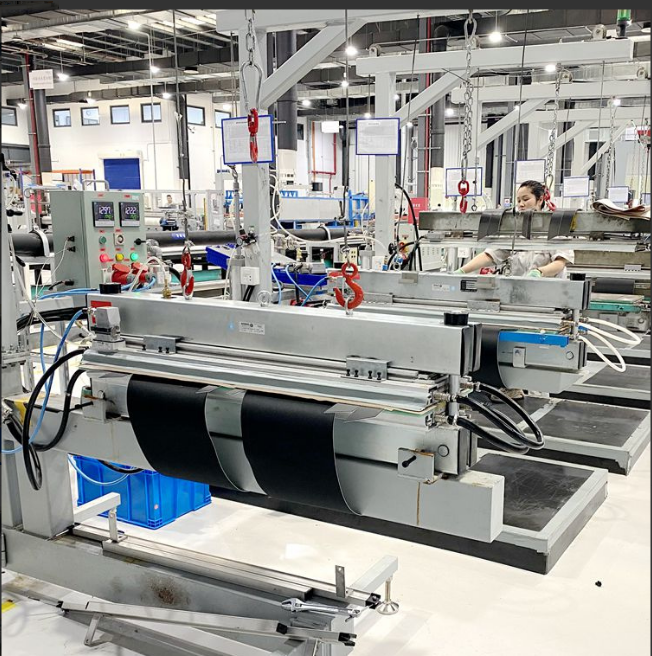
Smooth running is an outcome of matching profile, pitch and material — not of buying a heavier belt.
Conclusion
A high-quality conveyor belt decision rests on four things that can be checked: the family, the material, the dimensions and tolerance, and the supplier evidence. Timing belts in PU or rubber such as S5M-20-L1650 deliver positive, slip-free drive. PU flat belts such as a 2,482 mm × 16 mm belt deliver clean, low-noise conveying in logistics, photovoltaics and print machines. PP or POM modular chains such as PQ350 mm ± 3 mm at a 25.4 mm pitch with straight baffles deliver drainage, inclined conveying and repairability. Aluminium or stainless steel synchronous wheels in GT2 48T and GT2 14T versions complete the drive chain for food and beverage and industrial transmission duties.
Shanghai Peng Qian, established in 2012, ISO 9001 certified, rated as a Shanghai High-tech Enterprise in 2022, and holding 26 patent applications including 6 invention patents, supplies all four families from a single 3,000 m² operation with 8 R&D engineers. Compared to traditional conveyor and transmission belts, the company reports a performance gap of 15 dB, transmission time cost 5% lower and labour cost 8% lower — claims worth testing against your own line data.
Next step: review the full range before specifying. Download the Shanghai Peng Qian product catalogue at https://cdn.socialarks.com/sbsp/24667/0/2026/0416/69e07f7be86e3.pdf, or send your belt code, pulley specification and operating conditions for a sample or quotation.
Website: www.shanghai-pengqian.com | Email: abbypeng@pengqian.cn | Tel: +86 177-0218-9858 | WhatsApp: +86 13381618987
Address: No.11, Lane 243, Sijing Jiu Gan Road, Songjiang District, China
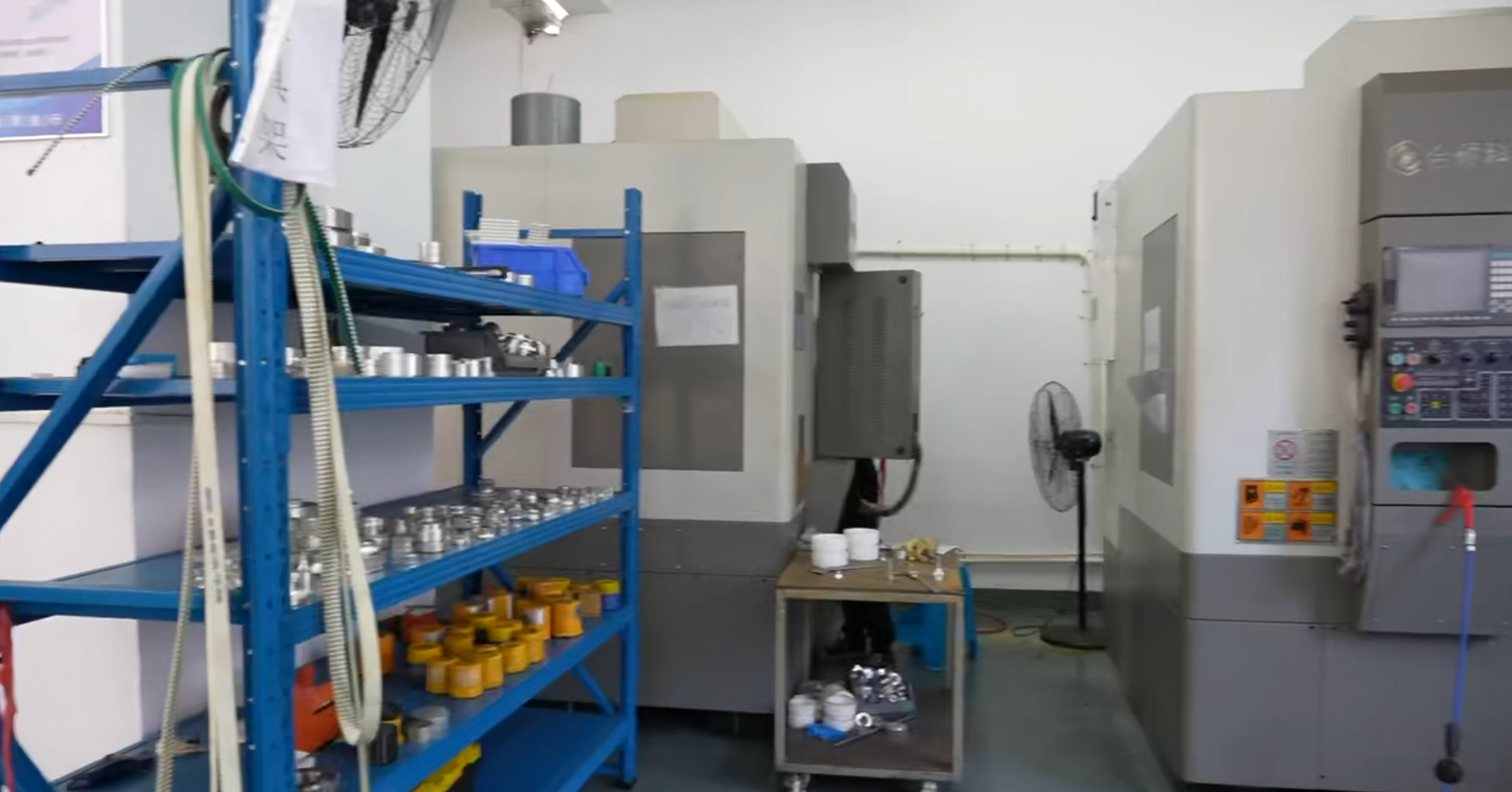
Stock preparation: confirming specification at the quotation stage is what makes repeat orders predictable.
Have Questions or Need More Details?
Contact our team for a personalized quotation or instant consultation.
Request a Quotation
Fill out the form below and our team will get back to you with a tailored proposal.
WhatsApp Direct Chat
Prefer to chat in real-time? Message us on WhatsApp for instant assistance & quick answers.
- Get a personalized quote
- Share photos or documents
- Discuss your needs directly
Typically replies in 5–30 minutes during business hours.