
High-Quality Conveyor Belt Comparison: PU vs. Rubber Timing Belts for PV, Food & Pharma
High-Quality Conveyor Belt Comparison: PU vs. Rubber Timing Belts for PV, Food & Pharma
For buyers in the evaluation stage, the PU-versus-rubber timing belt question is rarely answered by a material datasheet alone. It is answered by matching a confirmed tooth profile, width, and length to a specific line condition — photovoltaic positioning, food washdown, pharmaceutical cleanliness, or general industrial drive duty. This comparison maps two documented timing belt options from Shanghai Peng Qian Transmission Equipment Co., Ltd. — S5M-20-L1650 and 28HTD5M-765+NFT+NFB — to the industries and transmission scenarios each is specified for, and sets out the checkpoints a buyer should clear before releasing a purchase order.
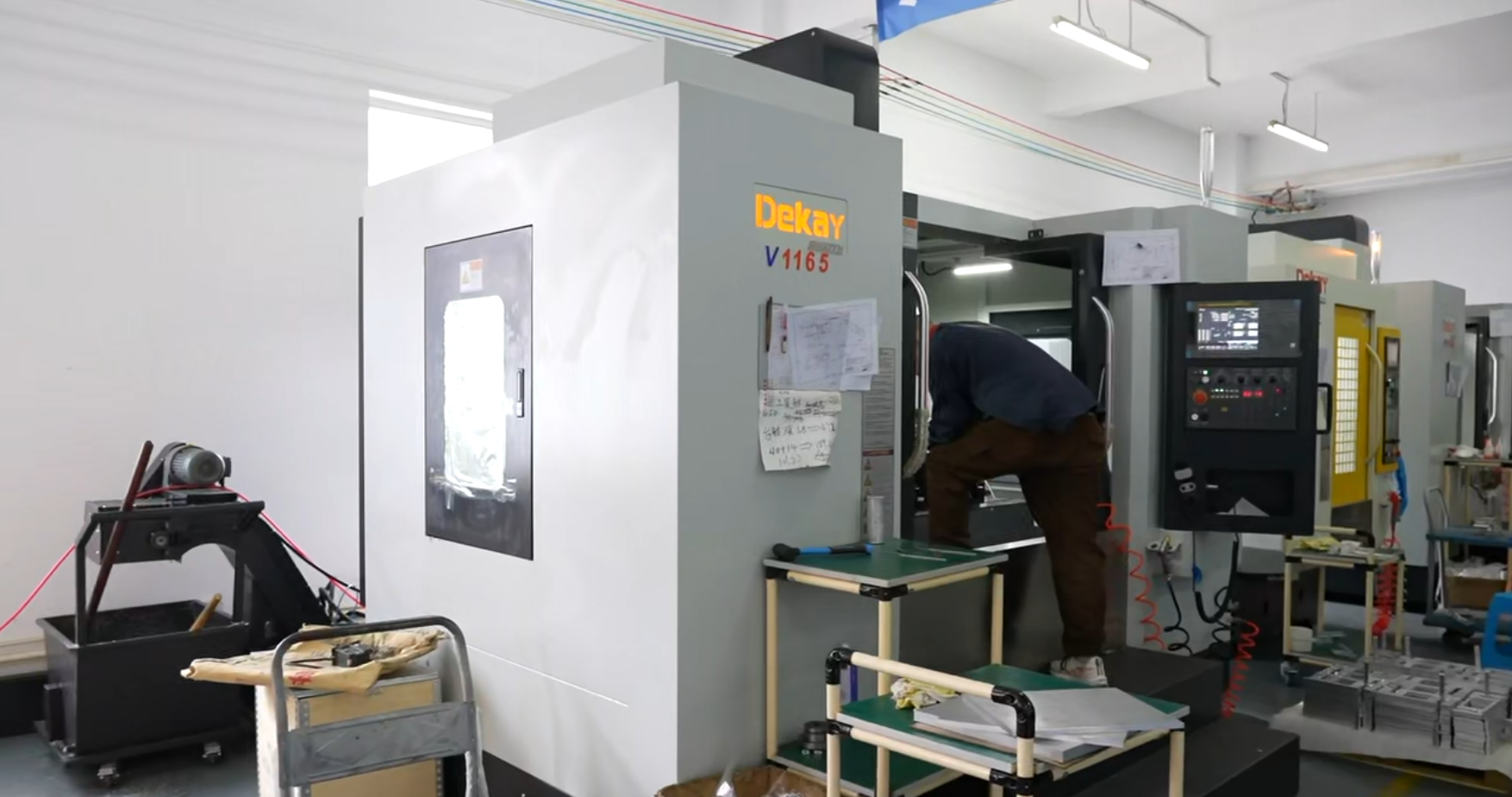
Transmission belt production equipment — the manufacturing base behind PU and rubber timing belt supply.
Problem Definition: Why "PU or Rubber" Is the Wrong First Question
Industrial buyers often open an RFQ with a material preference. In practice, the material is the output of four earlier decisions, not the input. When a timing belt underperforms on a photovoltaic stringer, a filling line, or a blister packaging machine, the root cause is more often a mismatched tooth profile, an unverified width, or an unsuitable surface construction than the base polymer itself.
A more reliable sequence is: define the transmission task, fix the geometry, define the environment, then select the material. Buyers who reverse this order tend to spend evaluation cycles comparing options that were never interchangeable in the first place.
Four constraints drive the decision:
- Geometry: tooth profile, width, and length must match the pulley set and center distance. A profile mismatch cannot be corrected by material choice.
- Environment: temperature exposure, cleaning chemicals, lubricants, and particulate load determine whether a polyurethane or rubber construction is the better starting point.
- Product contact: in food, beverage, and pharmaceutical applications, the belt is part of a hygiene chain, not just a drive element.
- Duty and positioning: high-speed synchronous positioning places different demands on a belt than a low-speed conveying drive.
Industry Background: What the Sourcing Landscape Tells a Buyer
The conveyor belt category remains a large and actively traded industrial segment. IMARC Group values the global conveyor belt market at USD 7.30 billion in 2026. On the trade side, UN Comtrade data records China as the largest exporter of vulcanized rubber conveyor belts under HS 401011, with an export value of USD 248.13 million in 2024. For buyers evaluating Chinese supply, both figures describe scale — not supplier-level quality, which still has to be verified company by company.
Two structural facts matter for the timing belt decision specifically:
- Classification is broad. HS heading 4010 covers rubber vulcanized conveyor and transmission belts, including belts reinforced with metal, textile materials, or plastics, as well as synchronous belts and V-belts. A supplier's trade classification therefore says little about which construction you will actually receive.
- Standards are scoped, not universal. ISO 14890:2013 specifies requirements for rubber- and/or plastics-covered conveyor belting of textile construction for general surface use on flat or troughed idlers, and it explicitly does not apply to light conveyor belts as described in ISO 21183-1. A supplier holding an ISO 14890 reference is not automatically qualified for a light-duty synchronous positioning application.
Detailed Solution: The Two Documented Timing Belt Options
Shanghai Peng Qian Transmission Equipment Co., Ltd. is a Shanghai-based manufacturer and supplier of conveyor belts and transmission components, established in 2012 in Songjiang District. The company produces and sells conveyor belts, polyurethane and rubber synchronous belts, synchronous wheels, rubber seamless belts, silicone belts, sintering furnace mesh belts, PEEK belts, sealing rings, chains, and modular belts, and also acts as an agent for several European and Japanese belt brands. Its stated product portfolio lists two timing belt models relevant to this comparison.
Option 1: S5M-20-L1650
This is an S5M-profile synchronous belt with a 20 mm width and a 1650 mm length. The supplier lists the model's material as PU and rubber, and its applicable industries as photovoltaic, food and beverage, pharmaceutical, and industrial manufacturing. The combination of a fine-pitch profile with a defined 20 mm width and a long 1650 mm length points to applications where a single belt spans a relatively wide center distance while maintaining synchronous positioning.
Because the model is documented as available in both PU and rubber constructions, the S5M-20-L1650 is best treated as a geometry-led selection: the dimensional envelope is fixed, and the material is the variable you confirm against the line environment.
Option 2: 28HTD5M-765+NFT+NFB
This is an HTD 5M synchronous belt model carrying additional construction suffixes in its designation. The supplier lists the material as PU and rubber and the applicable industries as machines and the food industry. As with the S5M model, the material is not locked to a single polymer.
The suffix string in the model code is part of the specification, not decoration. Buyers should ask the supplier to confirm, in writing, what each suffix denotes for the delivered belt — surface construction, backing, or a related build option — before treating the quoted part as equivalent to a plain HTD 5M belt from another source.
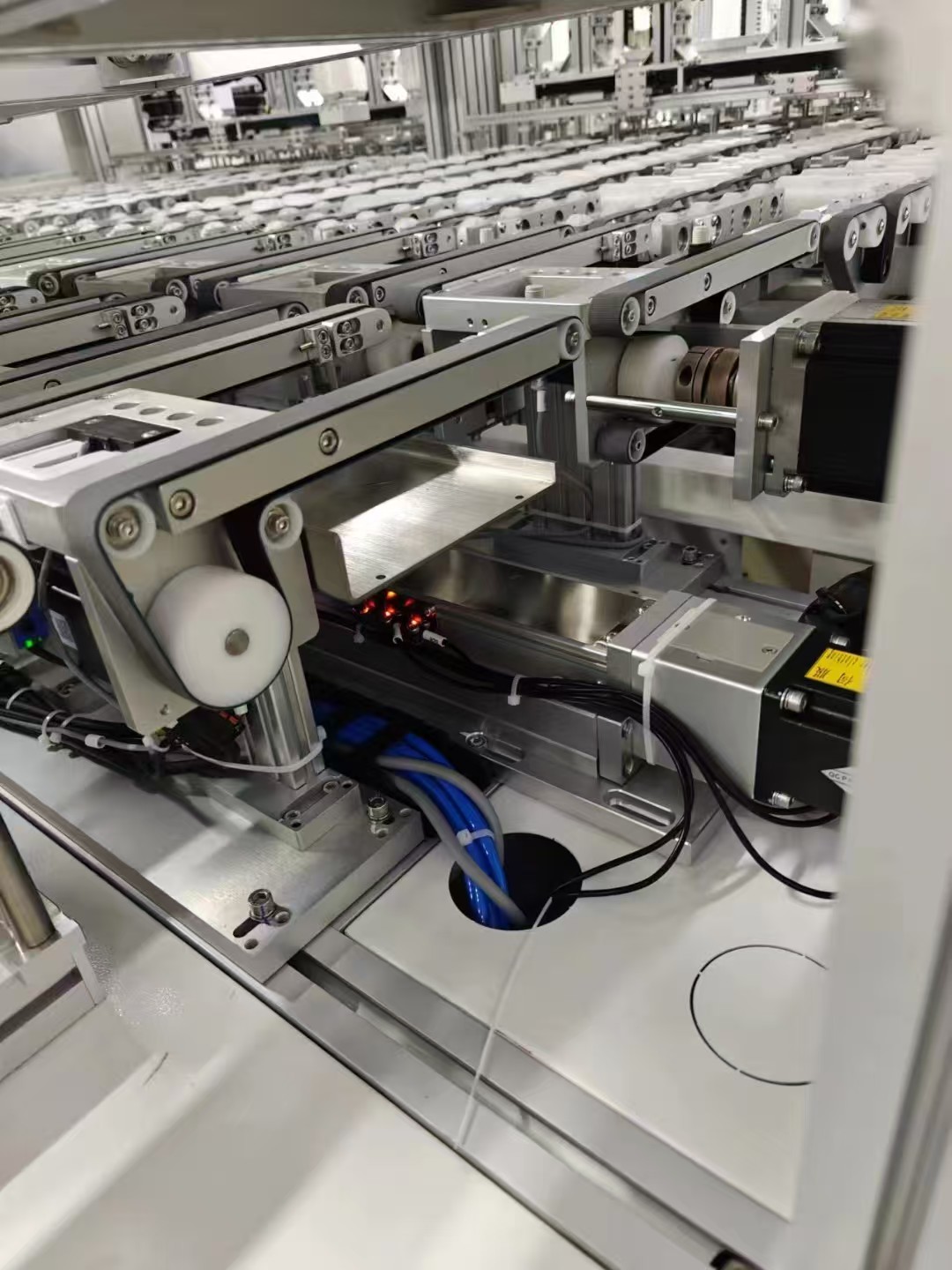
Photovoltaic manufacturing environment — one of the documented application areas for the S5M-20-L1650 timing belt.
Step-by-Step Breakdown: How to Evaluate the Two Options
- Fix the geometry from the pulley set, not from the catalogue. Confirm the pulley tooth profile, the number of teeth, and the center distance first. The S5M-20-L1650 fixes a 20 mm width and 1650 mm length; if your line needs a different width or center distance, you are in customization territory rather than catalogue selection.
- Decide whether the application is positioning or transport. Synchronous belts used for positioning must hold registration under acceleration. Belts used for transport can tolerate different tension behaviour. The two models here sit in different profile families, so confirm which family your drive design assumes.
- Confirm the material for the actual environment. Both models are listed as PU and rubber. Ask for the material to be stated on the quotation line, not inferred from the family name. PU and rubber behave differently under oils, cleaning agents, and continuous flexing, and the correct choice depends on the specific line.
- Check hygiene and product-contact requirements. For food and beverage and pharmaceutical applications, belt selection is part of a hygiene chain. Confirm the belt's suitability for your cleaning regime and product-contact exposure with the supplier, and record the answer in the technical file.
- Verify the supplier's quality system against the scope you are buying. Shanghai Peng Qian holds ISO 9001 certification, certificate number NOA2209224, issued by NOA Group on 2022-08-02 and valid to 2028-08-01, with the certified scope covering manufacture and sales of transmission equipment (industrial belt) to the GB/T 19001-2016 idt ISO9001:2015 standard. The scope is the relevant part — a certificate covering a different product family would not support your qualification decision.
- Validate with a sample before committing volume. The supplier's stated production mode is OEM, with customization available for logo, size, material, and hole placement according to customer requirements, backed by 100% testing and a stated capability of 100,000 units per month. Sample validation is the step that converts those statements into evidence for your own file.
Comparing the Two Options Side by Side
| Attribute | S5M-20-L1650 | 28HTD5M-765+NFT+NFB |
|---|---|---|
| Product category | Timing belt (synchronous belt) | Timing belt (synchronous belt) |
| Tooth profile | S5M | HTD 5M |
| Width | 20 mm | Not stated in the supplied specification |
| Length | 1650 mm | Not stated in the supplied specification |
| Material listing | PU & rubber | PU & rubber |
| Documented application industries | Photovoltaic; food and beverage; pharmaceutical; industrial manufacturing | Machines; food industry |
| Model designation notes | Profile, width, and length encoded in the model number | Profile plus construction suffixes (+NFT+NFB) encoded in the model number |
| What to confirm in the RFQ | Material per order; pulley match; stock versus made-to-order | Meaning of each suffix; full dimensional data; material per order |
Use Cases: Mapping Each Option to a Real Line Condition
Photovoltaic Manufacturing
Photovoltaic lines combine fine positioning tasks with high-temperature process steps. The S5M-20-L1650 is documented for photovoltaic applications, and its 20 mm width and 1650 mm length suit a synchronous drive spanning a longer center distance. Where the process involves welding or sintering heat, the belt specification has to be checked separately: stainless steel mesh belts are used in photovoltaic stringer machines for welding heat resistance up to 390°C (734°F). A polymer timing belt and a metal mesh belt solve different problems on the same line and should not be treated as substitutes.
Food and Beverage
Both timing belt models carry the food industry in their documented application lists. In practice, food and beverage lines frequently combine several belt families: a synchronous belt for the drive and positioning function, a modular mesh chain for product transport, and flat belts for specific transfer points. Shanghai Peng Qian's modular mesh chain model PQ350mm±3mm — a flat belt with straight baffles, 350 mm ± 3 mm width, 25.4 mm pitch, PP blue body with PP pins, 50 mm baffle height — is documented for food, beverage, and pharmaceutical use, and illustrates why the timing belt decision should be made as part of a full line review rather than in isolation.
Pharmaceutical
Pharmaceutical applications place the belt inside a controlled environment where changeover discipline and documentation matter as much as the belt itself. The S5M-20-L1650 is documented for pharmaceutical use. Buyers in this segment should pair the model selection with a written confirmation of material and construction, and retain the certificate scope and testing statement in the supplier qualification file.
General Industrial Manufacturing
For general machine building and industrial manufacturing, the 28HTD5M-765+NFT+NFB is documented for machines and the food industry, while the S5M-20-L1650 is listed for industrial manufacturing. In this segment the belt is frequently a made-to-order item, which is where the supplier's customization capability becomes part of the evaluation rather than an afterthought.
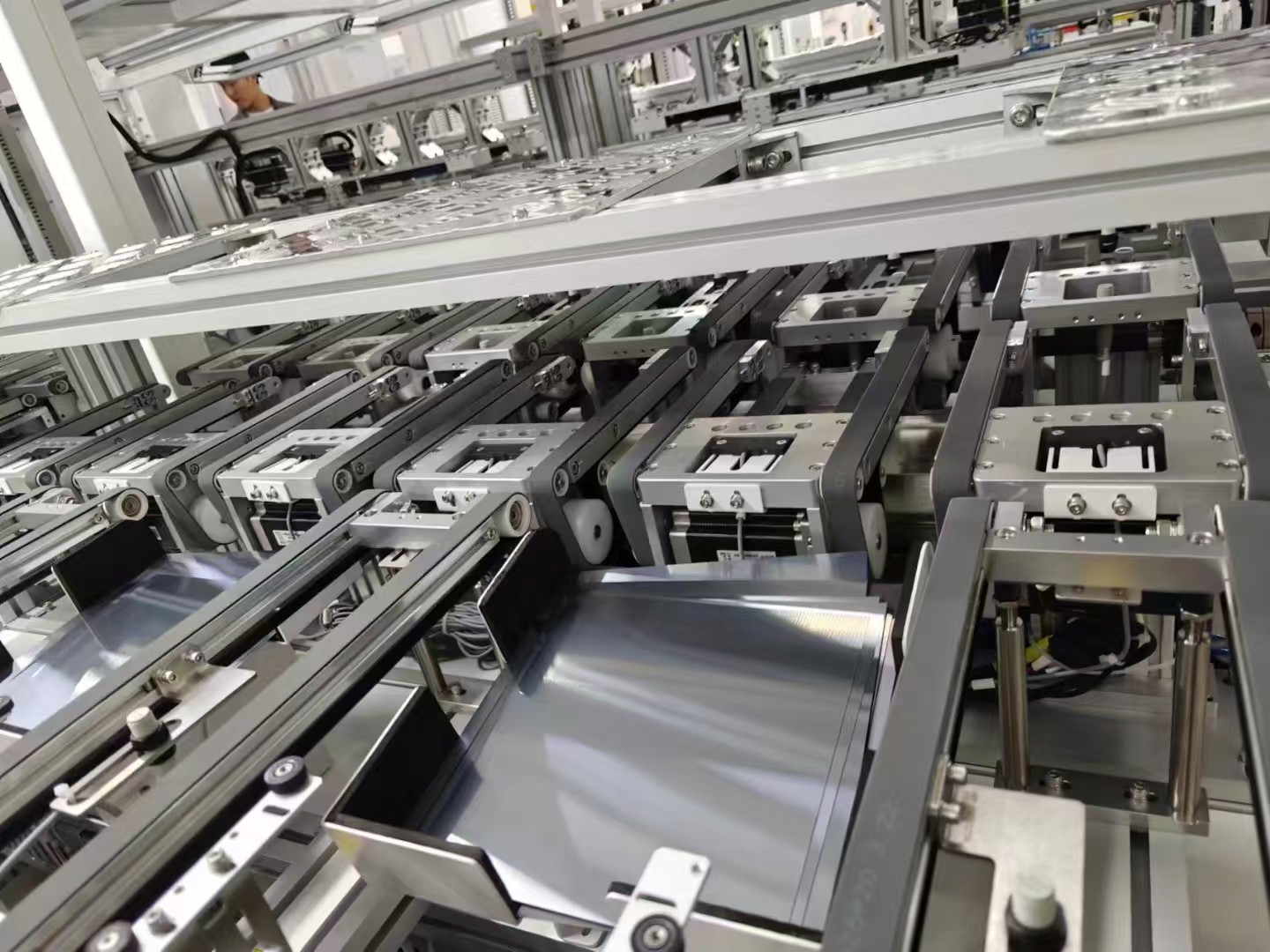
Industrial manufacturing and packaging operations — a segment where both timing belt models may be evaluated.
Where the Supplier Behind the Models Fits In
Model data answers the geometry question. It does not answer the supply question. On that side, the relevant documented facts are:
- Founded in 2012, with a 3,000 m² facility, 60 employees, and an 8-engineer R&D team.
- ISO 9001 certified under certificate NOA2209224, scope covering manufacture and sales of transmission equipment (industrial belt).
- Rated as a Shanghai High-Tech Enterprise in 2022, certificate number GR202231006882.
- 26 patent applications filed with the State Intellectual Property Office, including 6 invention patents, with 19 authorized.
- More than 10 years focused on transmission product innovation and custom services.
- Stated production mode of OEM, with customization of logo, size, material, and hole placement; monthly capacity of 100,000 units; 100% testing; MOQ of 20 units; lead time of 10–15 days.
- Export business accounting for approximately 40% of total sales, with products sold across more than 20 provinces, cities, and autonomous regions in China and exported to Southeast Asia, the Middle East, Northern Europe, Russia, and other regions.
The company also states that its high-temperature resistant silicone belt development addressed limitations of conventional belts for special operating environments — a relevant capability signal for buyers whose line includes a heat-exposed zone alongside the synchronous drive.
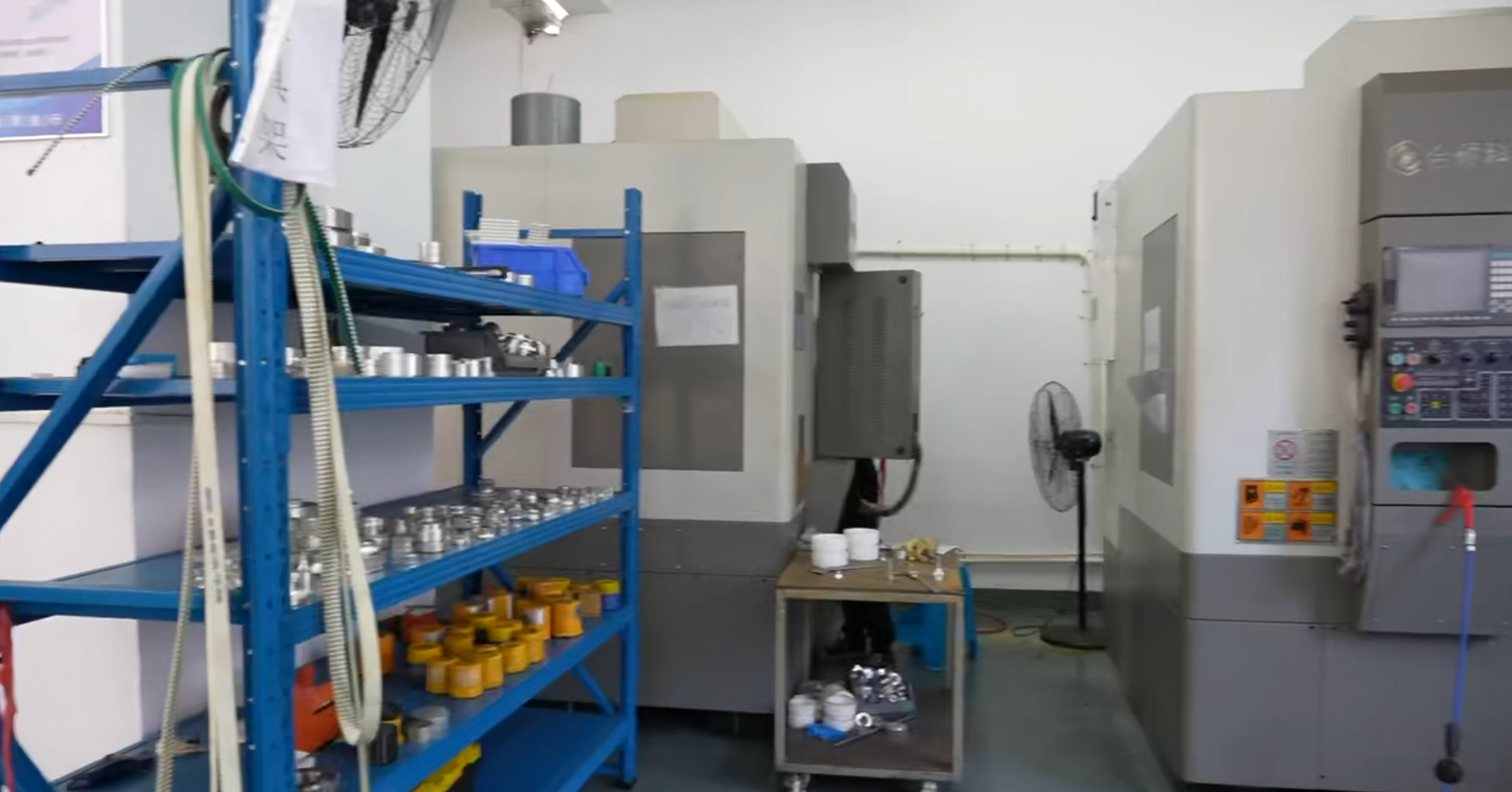
Warehouse and dispatch operations supporting export supply across Southeast Asia, the Middle East, Northern Europe, and Russia.
Evidence From an Installed Project
A recorded project in Argentina covering 200 units was completed within one year and reached stable operation, with low noise and high-speed running noted as the highlights. For an evaluation-stage buyer, the useful reading is not the headline number but the combination: a defined unit quantity, a defined completion window, and a defined operating outcome. That is the type of reference worth asking a supplier to expand on during your own qualification — which line, which belt family, and which operating conditions.
| Buyer scenario | Primary constraint to verify | Option to evaluate first |
|---|---|---|
| Photovoltaic positioning drive with long center distance | Geometry match to pulley; separate check for heat-exposed zones | S5M-20-L1650 |
| Food and beverage drive on a machine build | Hygiene and cleaning regime; material confirmation | 28HTD5M-765+NFT+NFB |
| Pharmaceutical line with documented qualification file | Material stated per order; certificate scope on file | S5M-20-L1650 |
| General industrial machine building | Customization scope, MOQ, and lead time | Either, per drive design |
| Multi-family line requiring timing, modular, and flat belts | Single-supplier coordination across belt families | Portfolio review, not a single model |
Have Questions or Need More Details?
Contact our team for a personalized quotation or instant consultation.
Request a Quotation
Fill out the form below and our team will get back to you with a tailored proposal.
WhatsApp Direct Chat
Prefer to chat in real-time? Message us on WhatsApp for instant assistance & quick answers.
- Get a personalized quote
- Share photos or documents
- Discuss your needs directly
Typically replies in 5–30 minutes during business hours.