
High-Quality Conveyor Belt Partnership FAQ: Long-Term Support, Custom Orders, and Supply Continuity
Direct answer: A long-term conveyor belt partnership is judged on five verifiable items — a certification a buyer can actually check, a defined customisation workflow, a documented test discipline, a stated lead time and capacity, and evidence from an account that has already run for a full year. This FAQ answers the questions procurement and engineering teams ask most often when they move from single-order buying to a multi-year supply relationship with a high-quality conveyor belt supplier such as Shanghai Pengqian Transmission Equipment Co., Ltd.
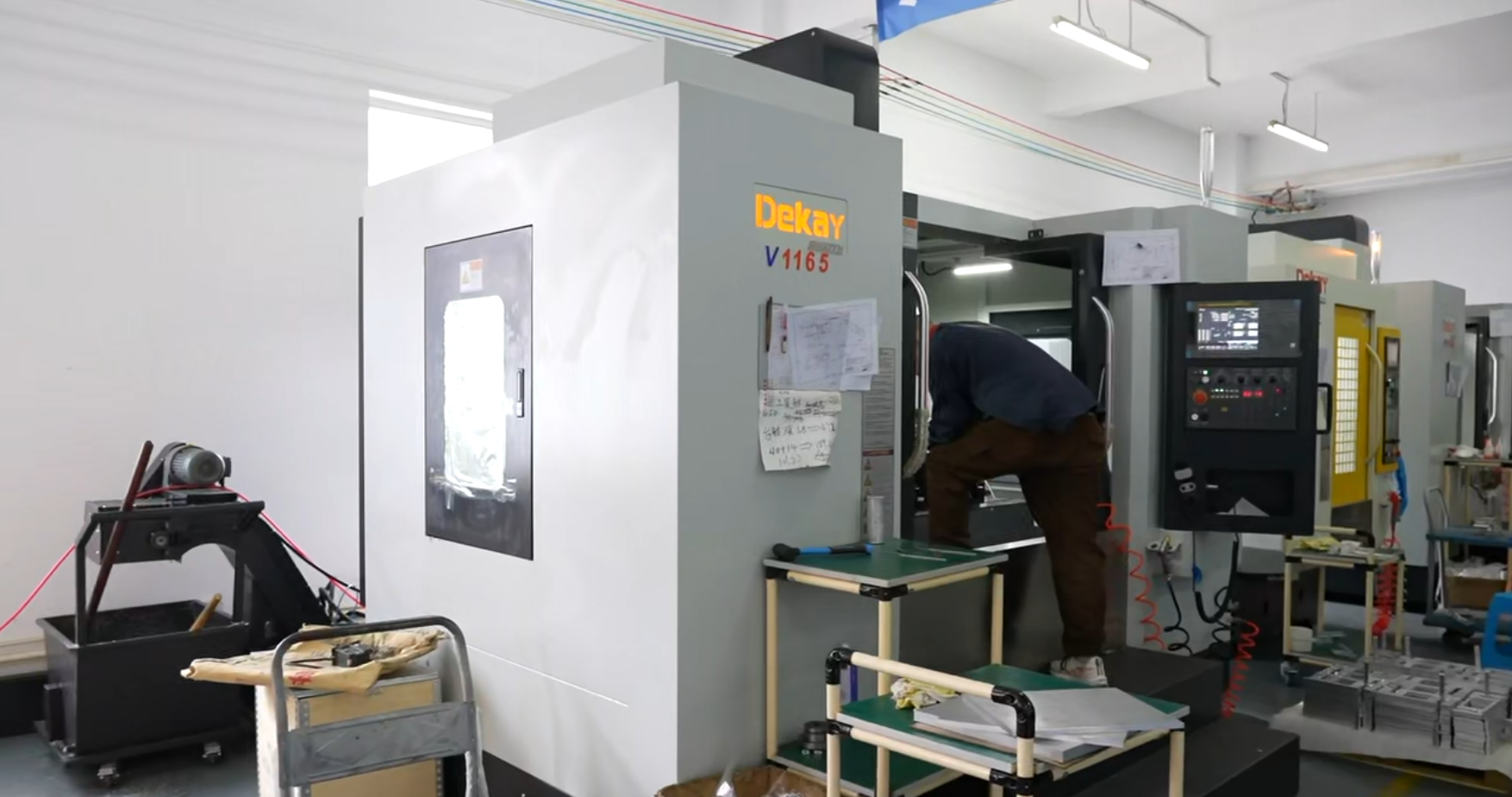
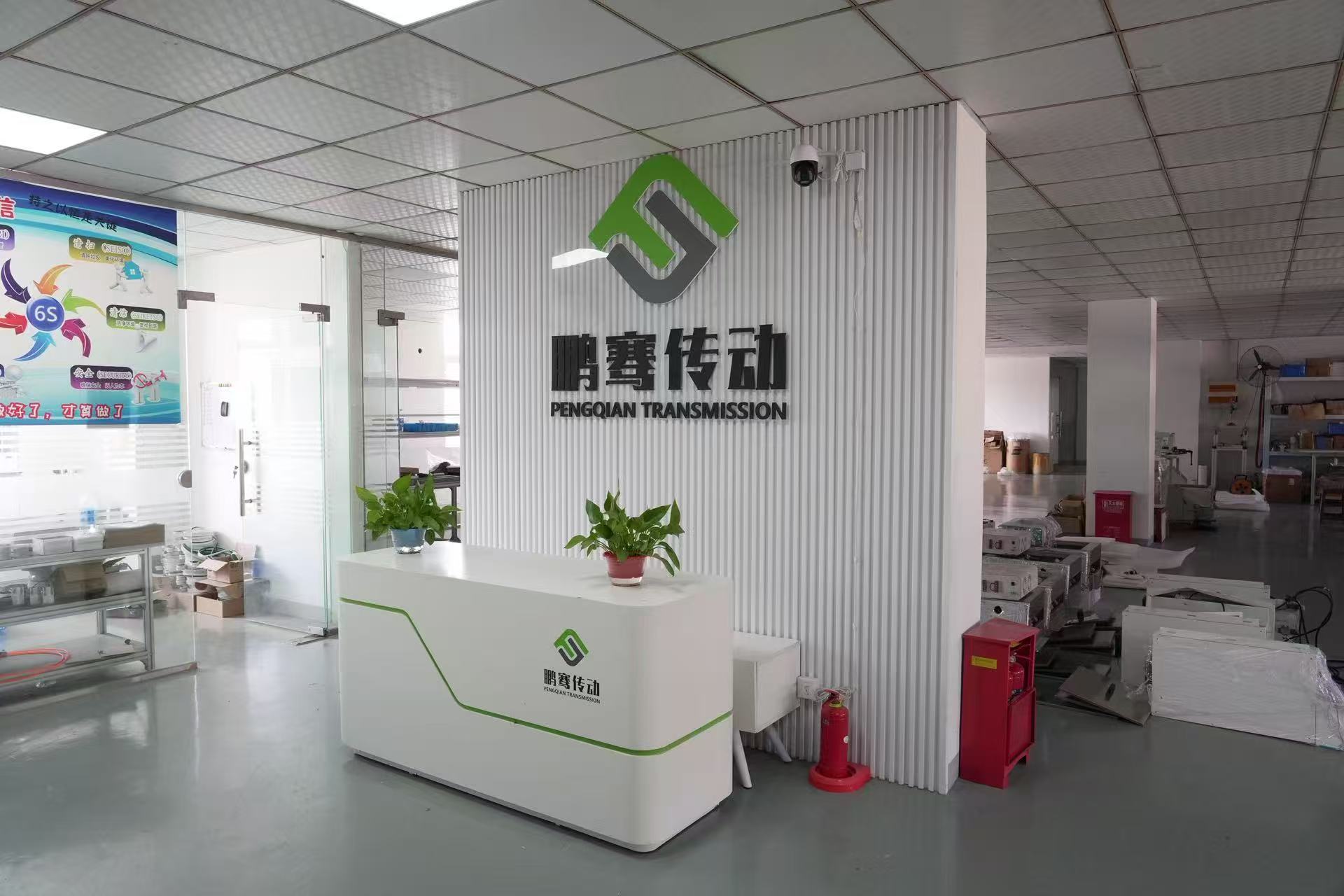
Shanghai Pengqian Transmission Equipment Co., Ltd. is a conveyor belt and transmission component manufacturer established in 2012 and located in Songjiang District, Shanghai. The company develops, produces and sells conveyor belts, polyurethane and rubber synchronous belts, synchronous wheels, rubber seamless belts, silicone belts, string welding machine belts, sintering furnace net belts, PEEK belts, sealing rings, chains and modular belts, and also acts as an agent for well-known foreign belt brands.
Problem Definition: Why One-Off Belt Purchasing Stops Working
A single belt order is a price decision. A belt programme is a risk decision.
Once a conveyor line runs continuously, the dominant cost stops being the belt itself. It becomes re-qualification of a new supplier, specification drift between batches, and the spare that is not on the shelf when a line goes down. Buyers who price every order separately usually discover the same four problems:
- Specification drift. A belt re-ordered from a different source rarely matches the original width, pitch, baffle geometry or material grade, so tracking and tension behaviour change.
- Fragmented spares. Flat belts, timing belts, modular chain and pulleys end up with four different vendors, each with its own lead time.
- Unverifiable paperwork. Certificates are claimed in a quotation PDF but cannot be traced to a certificate number, issuing body, scope or expiry date.
- No continuity evidence. There is no account history showing that the same product has actually run for an extended period under real conditions.
This article is structured around the questions that appear at exactly this point — when a buyer has finished research and is evaluating whether a specific supplier can be trusted for the next three to five years.
Industry Background: What the Market Context Means for Partnership Decisions
The commercial case for treating conveyor belts as a programme rather than a purchase is visible in the market data. The global conveyor belt market was valued at USD 8.11 billion in 2024 and is projected to reach USD 9.73 billion by 2032, according to Intel Market Research. Rubber conveyor belts lead the market with an approximately 52.0% share in 2024/2026, favoured for high abrasion resistance, per Future Market Insights. The global industrial synchronous timing belts market was estimated at USD 2.81 billion in 2024 (Industry Research Reports), while textile reinforced conveyor belts accounted for over USD 3.42 billion in 2024, favoured for flexibility and strength in mining and construction (Global Market Insights). Asia-Pacific is the largest regional market, accounting for approximately 46.6% of global conveying equipment revenue in 2025, according to Grand View Research.
Published market size figures differ between research houses — for example, Mordor Intelligence estimates USD 5.84 billion for 2025 while Intel Market Research reports USD 8.11 billion for 2024 — largely because some studies count complete conveying systems while others count belts only. Buyers should therefore treat market size as directional context, not as a procurement input.
What is a procurement input is the standards layer. Industrial conveyor belts are commonly referenced against testing standards such as ISO 283 (tensile strength) and ISO 284 (electrical conductivity), and hygienic belts for food processing are regulated through FDA and EC 1935/2004 requirements. A supplier that cannot describe which regime applies to a given belt family is a supplier with an incomplete compliance answer.
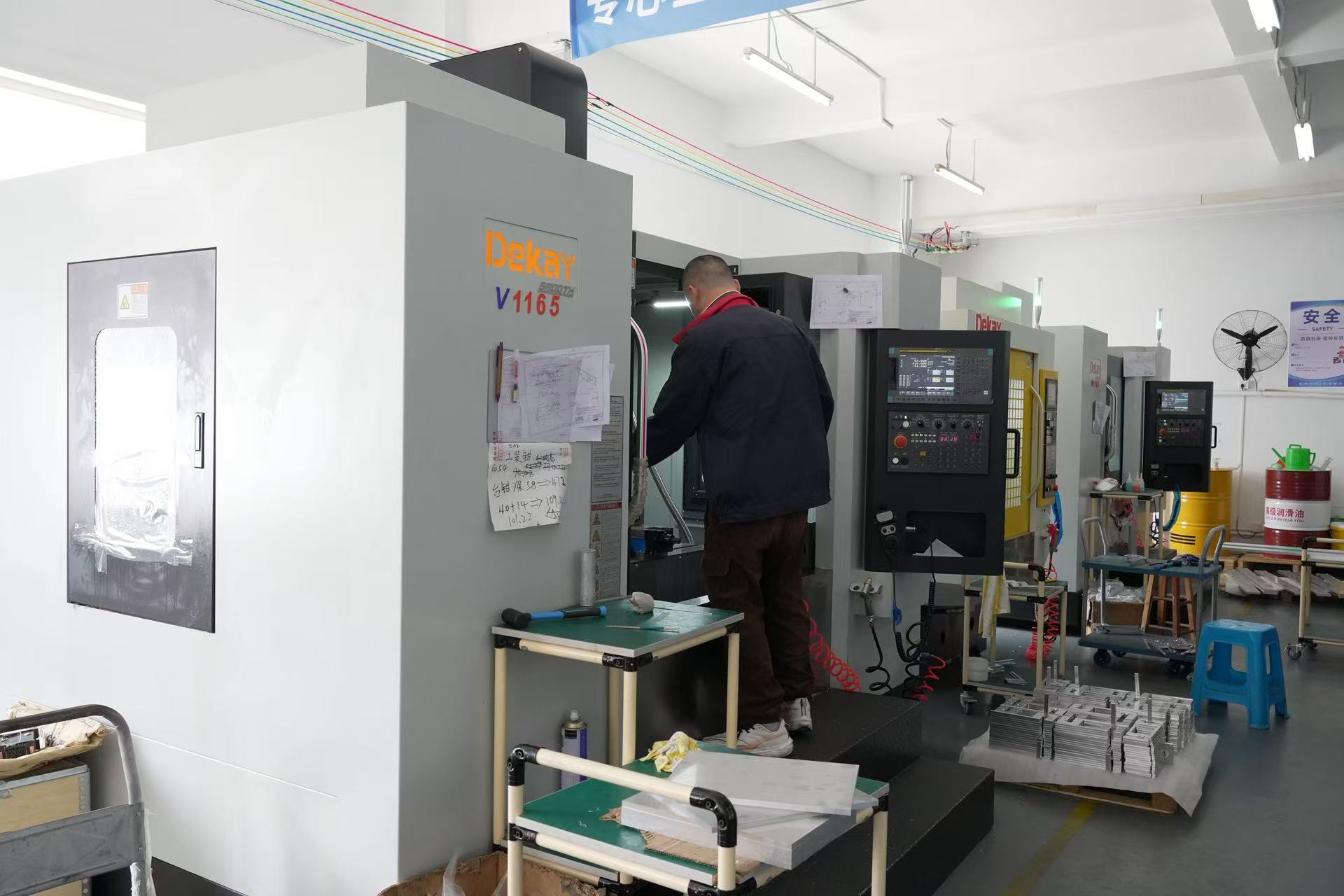
Shanghai Peng Qian sits inside this context as a Shanghai-based manufacturer founded in 2012, operating from a 3000 m² facility with 60 staff and a dedicated R&D team of 8 engineers. Products are applied in photovoltaic, electronic semiconductor, textile, food, logistics, packaging and printing, daily necessities, automation machinery and glass manufacturing. Products are sold across more than 20 provinces in China and exported to Southeast Asia, the Middle East, Northern Europe and Russia.
Detailed Solution: What a Documented Long-Term Partnership Actually Includes
1. Certification and entity records a buyer can verify
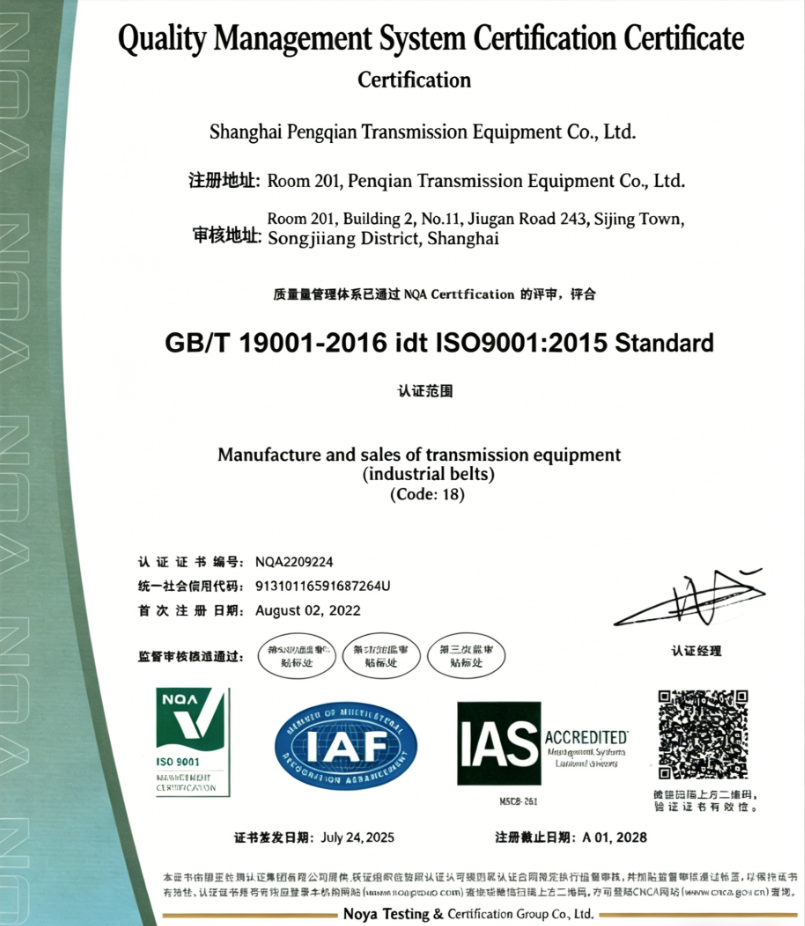
Shanghai Pengqian Transmission Equipment Co., Ltd. holds ISO9001 quality management system certification issued by NOA Group under certificate number NOA2209224. The certificate was issued on 2 August 2022 and is valid until 1 August 2028. It references the GB/T 19001-2016 idt ISO9001:2015 standard, covers the manufacture and sales of transmission equipment (industrial belt), and applies to the global market. In 2022 the company was also rated a Shanghai High-tech Enterprise under certificate number GR202231006882, and it has submitted 26 patent applications to the State Intellectual Property Office, including 6 invention patents.
For an evaluation file, these are the details worth recording verbatim, because they can be cross-checked against the issuing body rather than accepted as a claim on a catalogue page.
2. Four belt families under one supply channel
A partnership becomes commercially useful when it removes vendor fragmentation. The product range that can be held under a single agreement covers:
- Modular mesh chain — model PQ350mm±3mm, a modular chain belt for the food industry, produced in PP blue with PP pins (PP/POM material family) and used in food, beverage and pharmaceutical lines.
- Timing belt (synchronous belt) — models including 28HTD5M-765+NFT+NFB and S5M-20-L1650, the latter with an S5M tooth shape, 20 mm width and 1650 mm length, supplied in PU and rubber for photovoltaic, food and beverage, pharmaceutical and industrial manufacturing applications.
- Synchronous wheel (timing pulley) — models GT2 48T and GT2 14T, with specifications including HDB.34-14M.115F and Taper Bush BC6545F60, supplied in aluminium or stainless steel.
- Flat belt — examples 2482*16, SMT-UGU-09B-J-L2210-W15 and FLAT BELT HY-18-568*14 NFT-NFB, in PU with 16 mm width and 2482 mm length, used in logistics, photovoltaic and other industries.
3. Customisation scope stated in writing
Production is OEM-based. The documented customisation scope covers logo, size, material, and hole-making according to the customer's requirement. Eight R&D engineers support this work, and the company has developed a high temperature resistant silicone belt that breaks through the limitations of traditional belt constructions — relevant where a line requires high temperature resistance combined with high friction under continuous operation.
4. Quality control, capacity and delivery commitments
Quality control is 100% testing rather than batch sampling. Monthly capacity is 100,000 units, standard lead time is 10–15 days, and minimum order quantity is 20 units. Those four figures are the numbers a buyer should hold a supplier to in a long-term agreement, because they define whether a re-order is a routine event or a production risk.
5. After-sales support and imported-brand continuity
After-sales service is handled through remote support, which covers commissioning questions, specification confirmation on re-orders and troubleshooting without requiring an on-site visit for routine issues. In addition, the company acts as an agent for well-known foreign brands including Germany's Forbo-Siegling and Optibelt, Italy's CHIORINO, America's Gates, and Switzerland's Habasit. For a buyer whose drawings specify an imported belt on one line and a custom belt on another, this means both can be sourced through one commercial channel instead of two.
Step-by-Step Breakdown: The Custom Order Workflow
A custom order should be traceable from requirement to delivery. The workflow below reflects how the process is structured when a buyer moves from a first enquiry into repeat ordering.
- Requirement definition. The buyer states the application, the industry and the working conditions. Typical inputs for the photovoltaic, food and pharmaceutical segments include high temperature operation, 24/7 running patterns, high friction requirements and the matched transmission equipment on the line.
- Model and specification selection. A belt family is matched to the duty: modular mesh chain where an open, hygienic conveying surface is needed; timing belt and synchronous wheel where synchronous drive is required; flat belt where a continuous flat conveying surface suits the product. Candidate models are then narrowed, for example S5M-20-L1650 for an S5M profile at 20 mm width and 1650 mm length, or GT2 48T and GT2 14T for pulley meshing.
- Customisation scope confirmation. Logo, size, material and hole-making requirements are confirmed against the customer's drawing, together with any profile or baffle geometry — for example the straight baffle arrangement on the PQ350mm±3mm modular chain, with 50 mm baffle height, 153.6 mm baffle spacing, 283.4 mm ± 3 mm baffle width and 33.3 mm clearance from baffle to both sides.
- Sample or pilot validation. Because the minimum order quantity is 20 units, a pilot order can be run to confirm fit, tracking, noise level and speed behaviour on the real line before larger volumes are committed.
- Production and testing. Manufacture is carried out under the ISO9001 quality management system, with 100% testing before shipment against a monthly capacity of 100,000 units.
- Delivery. Standard lead time is 10–15 days. Export handling covers the EU, Middle East and South American markets, with the company exporting approximately 40% of output and maintaining Europe, Asia and the Middle East as its main markets.
- After-sales and re-order continuity. Remote support covers the installation and running-in period, and the confirmed specification is retained so that the next order reproduces the same dimensions, material and profile rather than re-engineering them.
Use Cases: Where These Belts Run
Photovoltaic manufacturing
Photovoltaic lines commonly run 24/7 with high temperature exposure and a demand for high friction transfer. Flat belts such as 2482*16 (PU, 16 mm width, 2482 mm length) are specified for photovoltaic applications, and the timing belt range is also used in this segment where synchronous positioning is required.
Food, beverage and pharmaceutical production
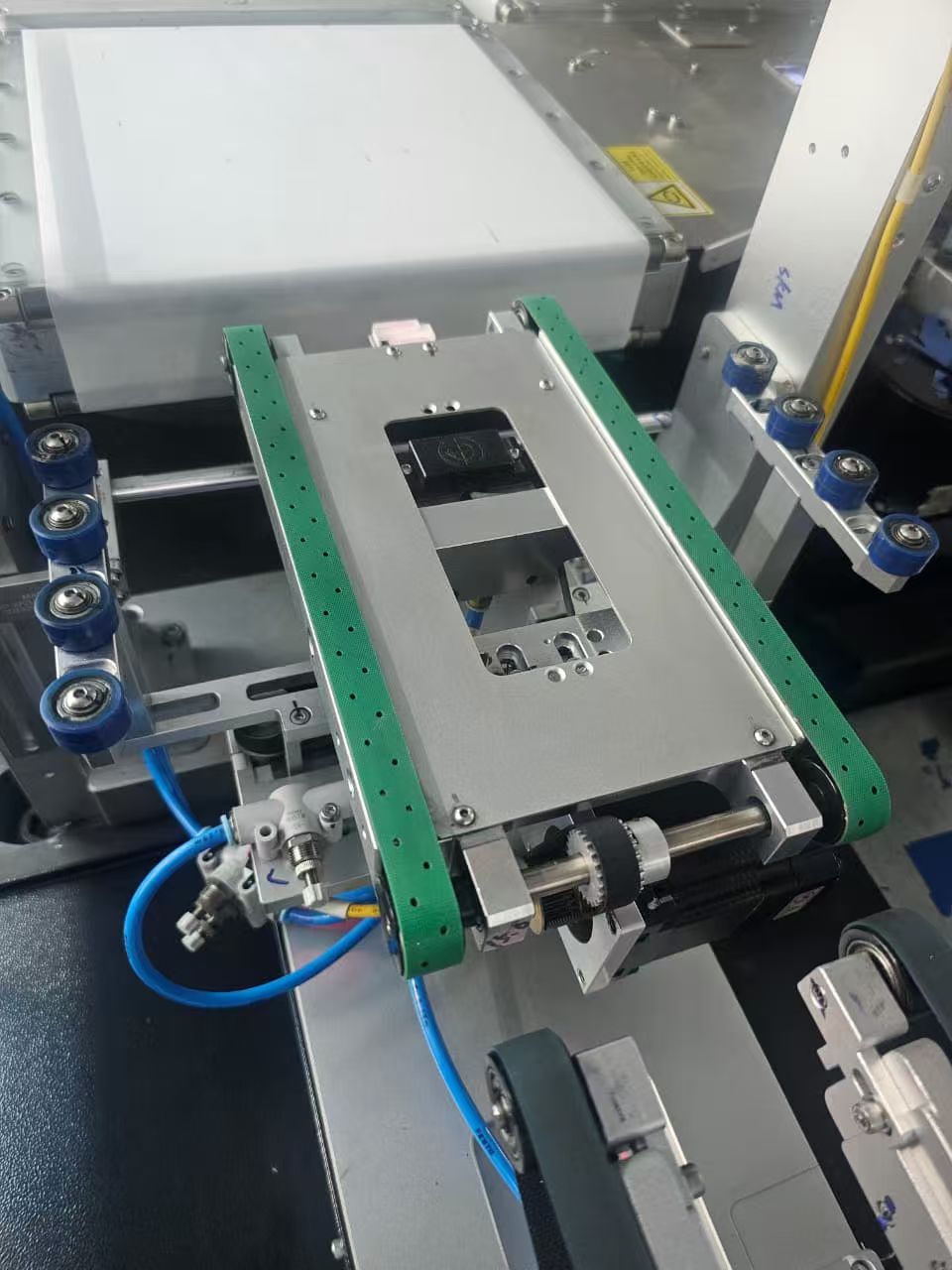
In food, beverage and pharmaceutical lines the belt is both a transmission component and a hygiene-relevant surface. The modular mesh chain PQ350mm±3mm, built from PP blue material with PP pins, is intended for these industries, and hygienic belt requirements in food processing are regulated through FDA and EC 1935/2004 provisions. The timing belt range is also listed for food and beverage, pharmaceutical and industrial manufacturing use.
Logistics, packaging and industrial manufacturing
Flat belts with PU construction are used in logistics and related handling equipment, while timing belts and synchronous wheels serve packaging, printing, automation machinery and general industrial manufacturing. Because the same supplier covers both belt and pulley, the drive side of a line can be specified as a matched set rather than assembled from separate vendors.
Documented account example
One reference points to an automotive OEM client in Argentina that implemented 200 units in a food industry application. The installation has run for one year with stable operation, and the recorded performance highlights are low noise and high speed. For an evaluation file, this matters less as a sales statement than as a data point: it shows a full year of continuous use on a real line, at a defined quantity, in a defined application.
Comparison Table: Product Families Under One Long-Term Agreement
| Product family | Model reference | Key specifications | Material | Typical industries |
|---|---|---|---|---|
| Modular Mesh Chain | PQ350mm±3mm | Width 350 mm ± 3 mm; pitch 25.4 mm; baffle width 283.4 mm ± 3 mm; baffle height 50 mm; baffle spacing 153.6 mm; baffle-to-edge 33.3 mm; straight baffles | PP blue + PP pins (PP/POM) | Food, beverage, pharmaceutical |
| Timing Belt (Synchronous Belt) | S5M-20-L1650; 28HTD5M-765+NFT+NFB | S5M tooth shape; width 20 mm; length 1650 mm | PU & rubber | Photovoltaic, food & beverage, pharmaceutical, industrial manufacturing |
| Synchronous Wheel (Timing Pulley) | GT2 48T; GT2 14T | HDB.34-14M.115F; Taper Bush BC6545F60 | Aluminium, stainless steel | Food, beverage and other industries |
| Flat Belt | 2482*16; SMT-UGU-09B-J-L2210-W15; FLAT BELT HY-18-568*14 NFT-NFB | Width 16 mm; length 2482 mm | PU | Logistics, photovoltaic and other industries |
Specifications listed above are the documented product parameters for each family; custom sizes, materials and hole-making are produced to customer requirement.
Partnership FAQ
Is Shanghai Peng Qian's quality certification current and valid for international procurement?
Shanghai Pengqian Transmission Equipment Co., Ltd. holds ISO9001 quality management system certification issued by NOA Group under certificate number NOA2209224. The certificate was issued on 2 August 2022 and is valid until 1 August 2028. It references the GB/T 19001-2016 idt ISO9001:2015 standard, covers the manufacture and sales of transmission equipment (industrial belt), and applies to the global market. The company was also rated a Shanghai High-tech Enterprise in 2022 under certificate number GR202231006882 and has submitted 26 patent applications to the State Intellectual Property Office, including 6 invention patents. Where an application requires additional test or hygiene references — for example ISO 283 for tensile strength, ISO 284 for electrical conductivity, or FDA and EC 1935/2004 for food contact — these should be confirmed against the specific belt family and application at quotation stage.
Can belt dimensions, materials and pulley specifications be customised for our line?
Production is OEM-based, and the documented customisation scope covers logo, size, material, and hole-making according to the customer's requirement. Published examples include the modular mesh chain PQ350mm±3mm, built at 350 mm ± 3 mm width with a 25.4 mm pitch, straight baffles at 50 mm height and 153.6 mm spacing, in PP blue with PP pins; timing belts such as S5M-20-L1650 with an S5M tooth shape, 20 mm width and 1650 mm length, and 28HTD5M-765+NFT+NFB, available in PU and rubber; synchronous wheels GT2 48T and GT2 14T, supplied in aluminium or stainless steel; and flat belts such as 2482*16 in PU at 16 mm width and 2482 mm length. Eight R&D engineers support custom development, and the company has developed a high temperature resistant silicone belt that breaks through the limitations of traditional belt constructions.
What are the minimum order quantity, capacity and main cost drivers?
The minimum order quantity is 20 units, monthly capacity is 100,000 units, and standard lead time is 10–15 days. Because the company manufactures as well as trades, commercial terms are quoted against the confirmed specification and annual volume rather than against a published list price. The main cost drivers in a quotation are material selection (PP/POM, PU, rubber, aluminium or stainless steel), dimensional customisation, baffle and profile geometry, and hole-making. Consolidating modular mesh chain, timing belt, synchronous wheel and flat belt re-orders with a single supplier also reduces the re-qualification effort that a multi-vendor structure creates.
Can we validate a belt or pulley before committing to a multi-year contract?
Yes. With a minimum order quantity of 20 units and a standard lead time of 10–15 days, a pilot order can be used to confirm fit, tracking, noise and speed behaviour on the actual line before larger volumes are committed. A documented LATAM case illustrates the pattern: an automotive OEM client ran 200 units in a food industry application for one year with stable operation, low noise and high speed. Buyers who want physical confirmation before signing a long-term agreement can request a sample or pilot batch through the contact channel at the end of this article.
How is supply continuity maintained across a multi-year programme?
Continuity rests on four published commitments: a monthly capacity of 100,000 units, a standard lead time of 10–15 days, 100% testing before shipment, and remote after-sales support after delivery. The company exports approximately 40% of its output, with Europe, Asia and the Middle East as its main markets and additional sales into Southeast Asia, Northern Europe and Russia, so re-orders move through an established export process rather than a new one. Because the same supplier covers modular mesh chain, timing belts, synchronous wheels and flat belts — and also acts as an agent for Germany's Forbo-Siegling and Optibelt, Italy's CHIORINO, America's Gates, and Switzerland's Habasit — a buyer can keep custom production and imported-brand belts inside one supply channel instead of fragmenting spares across vendors. To start a continuity review, send your current belt list and annual volumes to abbypeng@pengqian.cn and request a specification-matched quotation.
Conclusion: What to Put in Your Supplier Evaluation File
A high-quality conveyor belt partnership is built from records, not reassurance. Before a multi-year agreement is signed, the following items should be in the file:
- ISO9001 certificate details — issuing body NOA Group, certificate number NOA2209224, scope covering manufacture and sales of industrial belt transmission equipment, issued 2 August 2022 and valid to 1 August 2028.
- Enterprise record — Shanghai High-tech Enterprise status granted in 2022 under certificate number GR202231006882, and 26 patent applications including 6 invention patents.
- Full product list with models — modular mesh chain PQ350mm±3mm, timing belts including S5M-20-L1650, synchronous wheels GT2 48T and GT2 14T, and flat belts including 2482*16.
- Written commercial parameters — MOQ 20 units, monthly capacity 100,000 units, lead time 10–15 days, 100% testing.
- Customisation scope in writing — logo, size, material and hole-making to customer requirement, supported by 8 R&D engineers.
- Continuity evidence — at least one account that has run for an extended period, such as the 200-unit food industry installation in Argentina with one year of stable, low-noise, high-speed operation.
Next Step: Sample, Quotation or Full Catalogue
If your evaluation is moving into a decision, the fastest route is a specification-matched response rather than a general price list. Shanghai Peng Qian can quote against your belt list, review custom dimensions, and arrange a sample or pilot batch where physical confirmation is required.
Contact: Abby · Email: abbypeng@pengqian.cn · Tel: +86 177-0218-9858 · WhatsApp: +86 13381618987
Address: No.11, Lane 243, Sijing Jiu Gan Road, Songjiang District, China
Website: www.shanghai-pengqian.com
Product catalogue (PDF): Download the Shanghai Peng Qian catalogue
Have Questions or Need More Details?
Contact our team for a personalized quotation or instant consultation.
Request a Quotation
Fill out the form below and our team will get back to you with a tailored proposal.
WhatsApp Direct Chat
Prefer to chat in real-time? Message us on WhatsApp for instant assistance & quick answers.
- Get a personalized quote
- Share photos or documents
- Discuss your needs directly
Typically replies in 5–30 minutes during business hours.