
High-Quality Conveyor Belts: Types, Materials & Selection
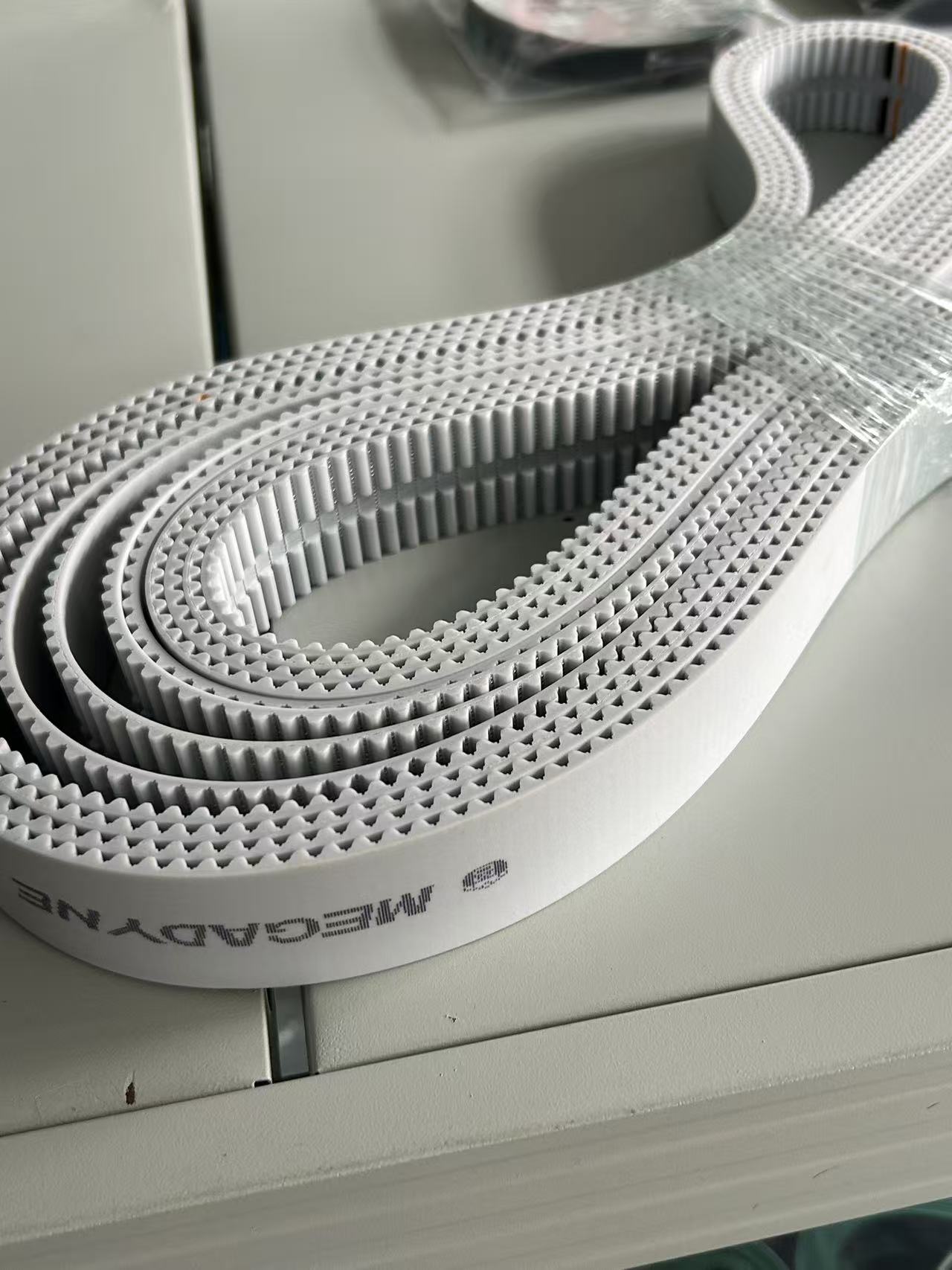
A high-quality conveyor belt is an engineered transmission and material-handling component that delivers precise motion, consistent tension, and dependable service life under its specific operating conditions. For industrial buyers moving from awareness to research, the practical question is not only which belt is “high quality,” but which belt type, material, and specification profile fits the application.
Shanghai Peng Qian (Shanghai Pengqian Transmission Equipment Co., Ltd.) is a Shanghai-based manufacturer of conveyor belts and transmission equipment, established in 2012, with a product range covering flat belts, timing belts, synchronous belts, modular belts, chains, and synchronous pulleys. This guide explains the main conveyor belt categories, the material and specification facts that define quality, and a step-by-step framework for evaluating a supplier.
The Problem: Conveyor Belt Quality Is Application-Specific
“High quality” is not a fixed property in conveyor belts; it is the result of matching the belt to the operating environment. The same belt that performs well in a dry logistics line may fail in a food washing line or in a photovoltaic furnace section. Buyers face three specific difficulties in the discovery phase:
1. Overlapping terminology. Timing belt, synchronous belt, and toothed belt are often used interchangeably. In Shanghai Peng Qian’s range, the TIMING BELT is also classified as a synchronous belt, while the Synchronous Wheel is also classified as a timing pulley. Understanding which term maps to which component is the first step to a correct specification.
2. Material trade-offs. PU (polyurethane), rubber, PP/POM, aluminium, and stainless steel each answer different requirements. No single material covers all working conditions, which is why suppliers build a portfolio rather than a single belt.
3. Specification codes that do not self-explain. Model designations such as 28HTD5M-765+NFT+NFB or SMT-UGU-09B-J-L2210-W15 encode tooth profile, dimensions, and finish options, but they must be verified against physical parameters, not interpreted by guesswork.
Industry Background: The Conveyor Belt Market in 2026
Conveyor belts are a large, global product category, and the numbers help buyers contextualize supplier choices. According to Intel Market Research, the global conveyor belt market was valued at USD 8.11 billion in 2024 and is projected to reach USD 9.73 billion by 2032. Rubber conveyor belts lead the category with an approximately 52.0% share, driven by high abrasion resistance, according to Future Market Insights. The global industrial synchronous timing belts market was estimated at USD 2.81 billion in 2024, per Industry Research Reports.
Regionally, Asia-Pacific accounts for approximately 46.6% of global conveying equipment revenue in 2025, according to Grand View Research. This matters for procurement: a large share of production capacity and component specialization sits in the region, and buyers evaluating suppliers should assess both the manufacturer’s own output and its access to international brand products.
On the compliance side, industrial conveyor belts are evaluated against international testing standards such as ISO 283 (tensile strength) and ISO 284 (electrical conductivity), while hygienic conveyor belts for food processing are regulated by FDA and EC (European Community) certifications. These standards form the baseline for any quality conversation.
The Solution: A Full-Range Conveyor Belt Portfolio
Shanghai Peng Qian’s core business is the research and development, production, and sales of transmission equipment and conveyor belts. Its product portfolio includes conveyor belts, tooth polyurethane rubber synchronous belts, synchronous wheels, rubber seamless belts, silicone belts, string welding machine belts, sintering furnace net belts, PEEK belts, sealing rings, various models of chains, and modular belts. The company also serves as an agent for internationally recognized transmission brands including Forbo-Siegling, Optibelt, CHIORINO, Gates, and Habasit.
PU Flat Belts: Logistics and Photovoltaic Lines
The FLAT BELT is a PU (polyurethane) belt designed for the photovoltaic industry and various industrial applications. Model designations include 2482*16, SMT-UGU-09B-J-L2210-W15, and FLAT BELT HY-18-568*14 NFT-NFB. The reference specification is 2482 mm in length and 16 mm in width. PU flat belts are used in logistics, photovoltaic manufacturing, and print machine scenarios — applications where dimensional stability and clean running matter.
Timing Belts and Synchronous Belts: Precision Transmission
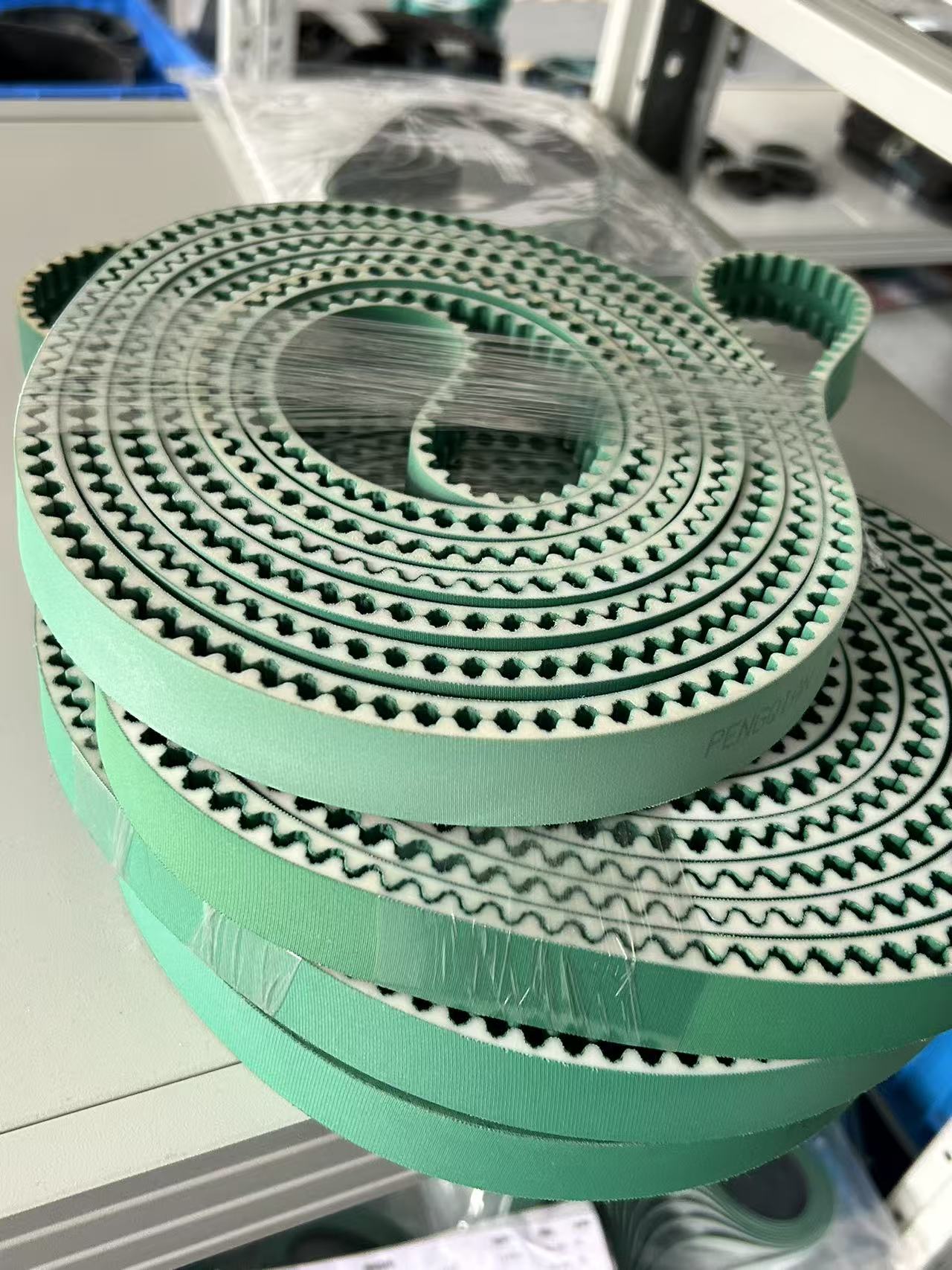
The TIMING BELT, also classified as a synchronous belt, is manufactured in PU and rubber constructions. Model designations include 28HTD5M-765+NFT+NFB and S5M-20-L1650. For the S5M-20-L1650 model, the tooth shape is S5M, the width is 20 mm, and the length is 1650 mm. These belts are intended for the photovoltaic industry, food and beverage, pharmaceutical, and industrial manufacturing applications — segments in which the belt must maintain tooth engagement under continuous operation.
Modular Mesh Chains: Food and Beverage Handling
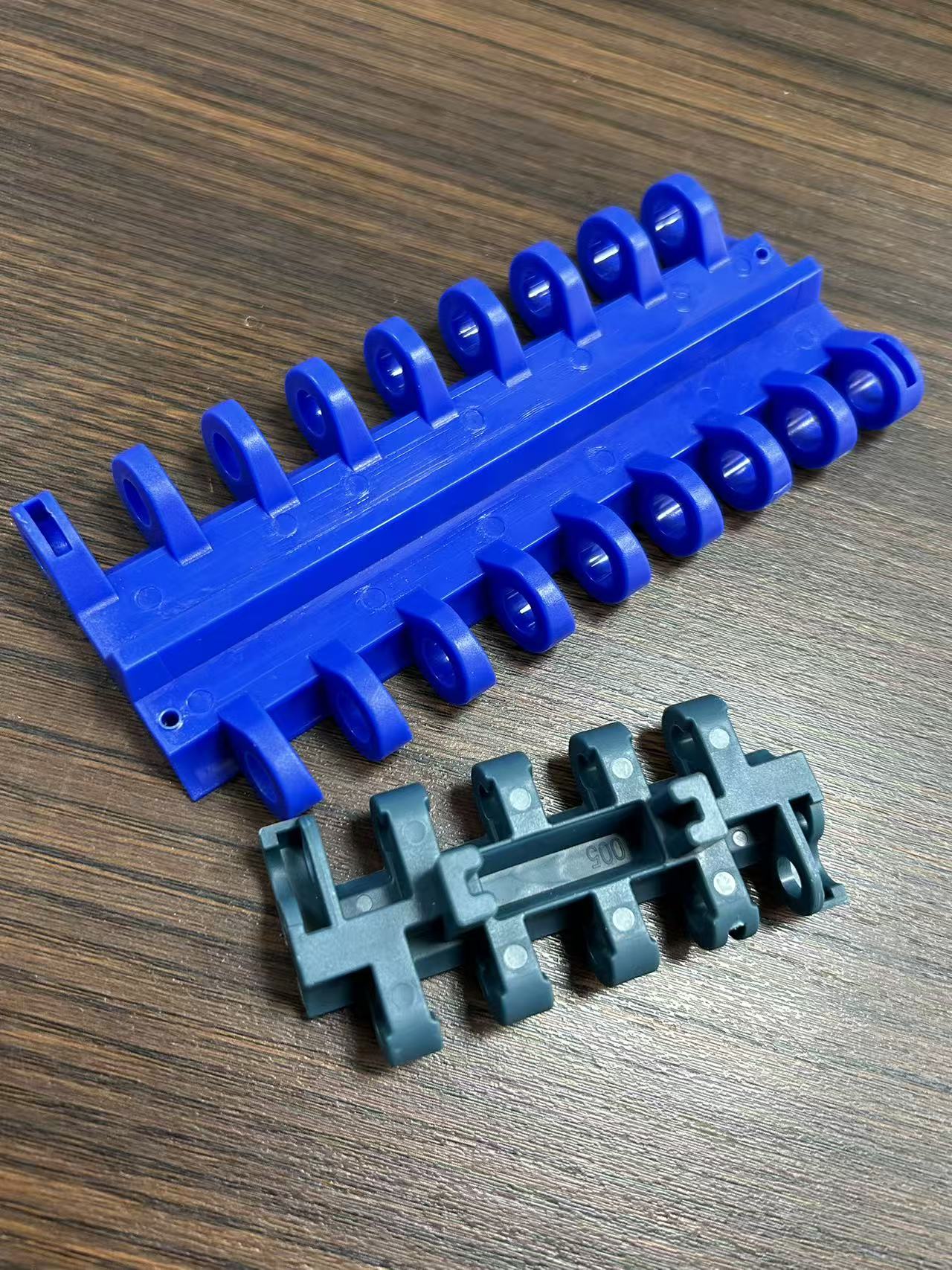
The Modular Mesh Chain (model PQ350mm±3mm) is a modular chain belt for the food industry, configured as a flat belt with straight baffles. Its structural parameters are a belt width of 350 mm ± 3 mm, a pitch of 25.4 mm, a baffle width of 283.4 mm ± 3 mm, a baffle height of 50 mm, a baffle spacing of 153.6 mm, and a distance from baffle to both sides of 33.3 mm. The construction material is PP blue with PP pins, and the belt family is classified as PP/POM. It is intended for the food, beverage, and pharmaceutical industries — environments where modular construction allows for easier cleaning and maintenance.
Synchronous Wheels and Timing Pulleys
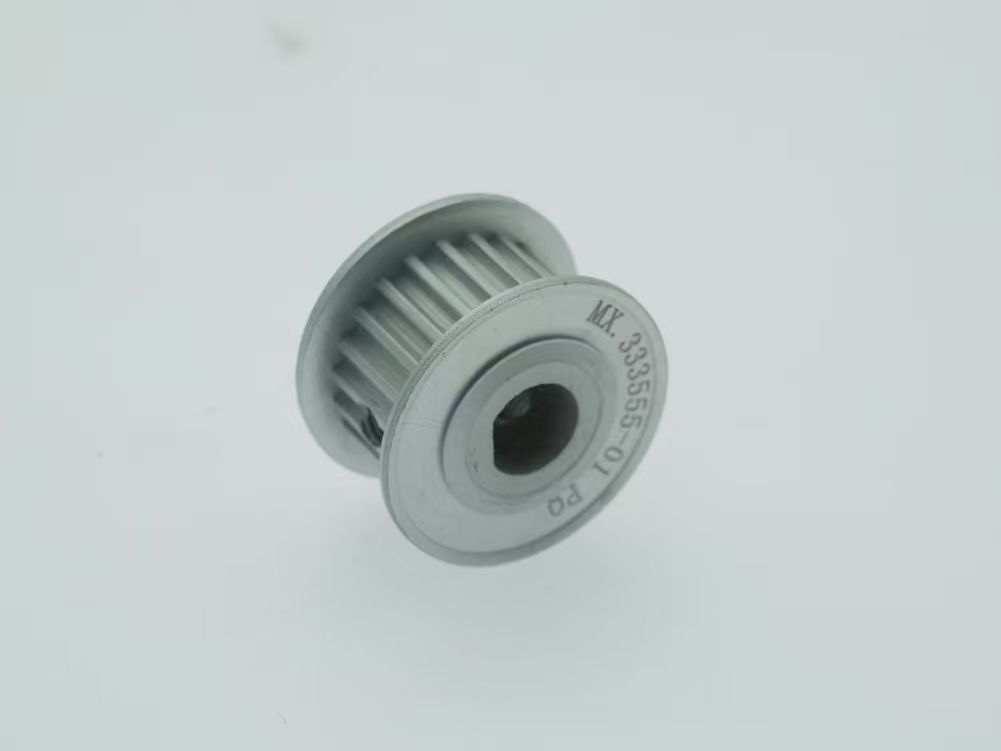
The Synchronous Wheel, also classified as a Timing Pulley, is designed for various industrial transmission scenarios. Available models are GT2 48T and GT2 14T. It is manufactured in aluminium and stainless steel, and structural configurations include HDB.34-14M.115F with Taper Bush BC6545F60. The intended applications include the food industry, the beverage industry, and industrial machinery requiring synchronous transmission. A pulley is the matching component of a timing belt system, so belt and wheel should be specified together.
Special-Environment Belts
Beyond the standard four categories, Shanghai Peng Qian produces rubber seamless belts, silicone belts, string welding machine belts, sintering furnace net belts, and PEEK belts. The company-developed high-temperature-resistant silicone belt was designed to overcome the limitations of traditional belts and meet the needs of special environments. For buyers running high-temperature processes, this is the product line to examine alongside standard rubber and PU options.
Manufacturing and Quality Capabilities
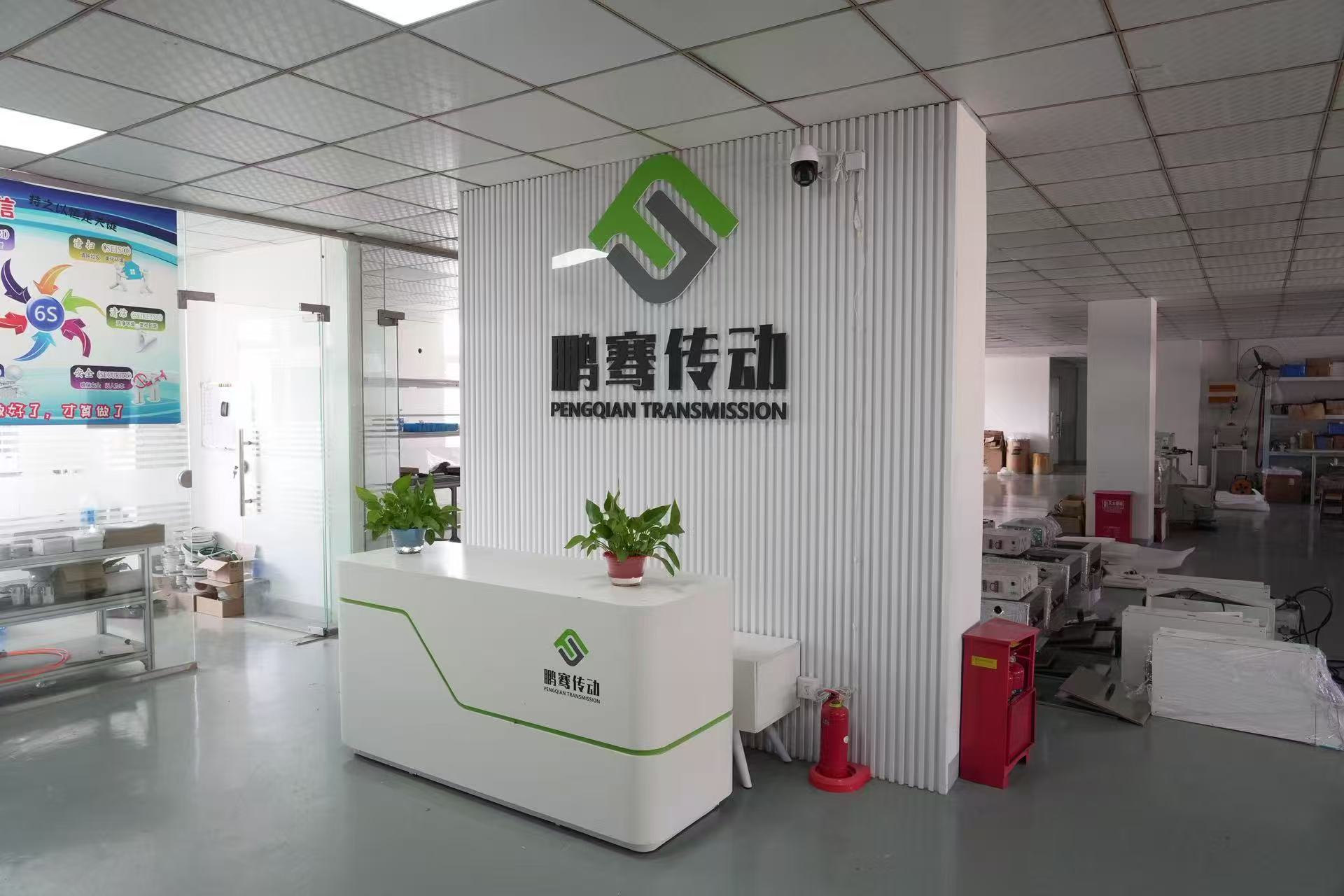
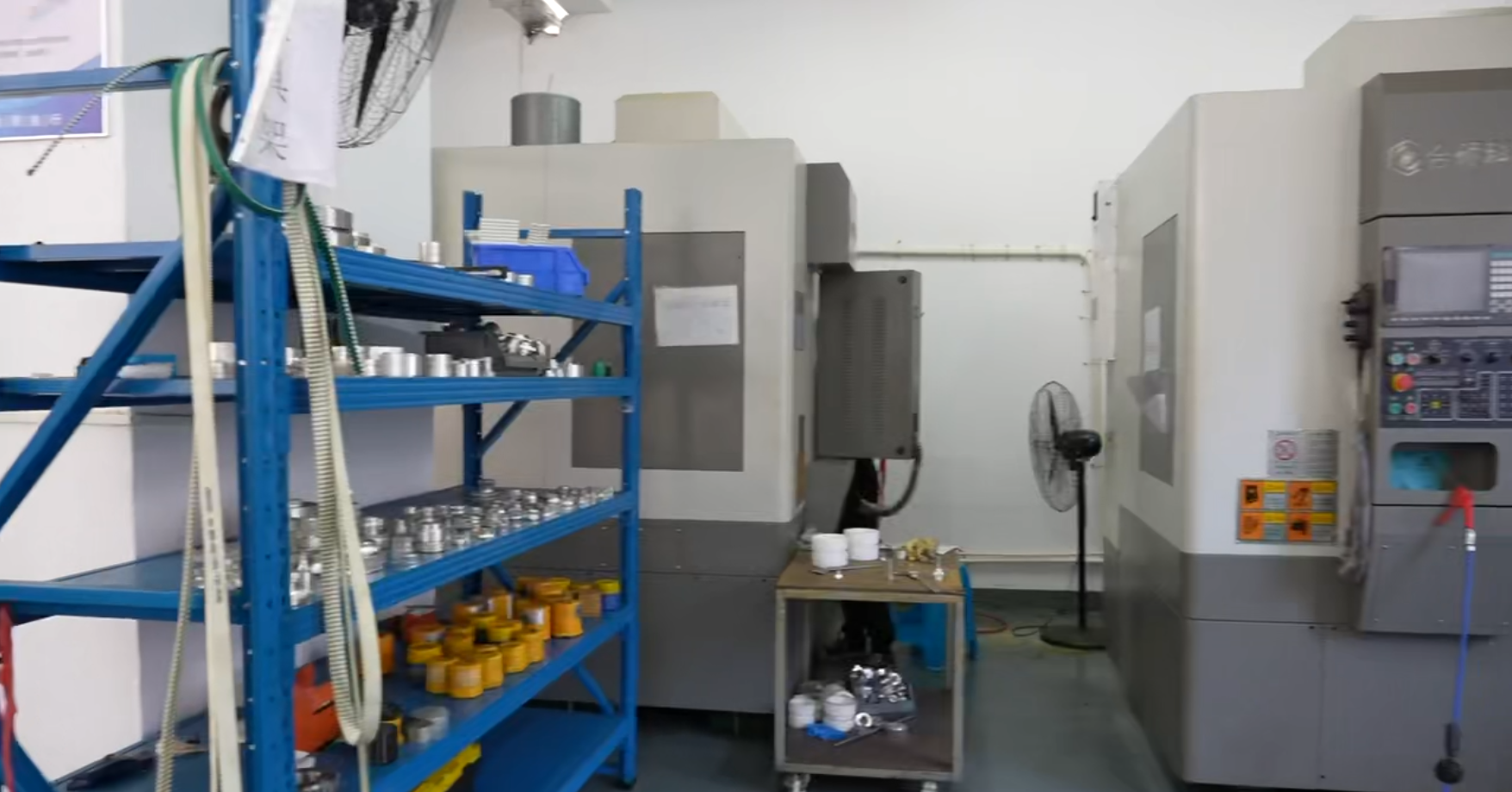
Shanghai Peng Qian operates from a 3000 m² manufacturing facility in Songjiang District, Shanghai, with an annual production capacity of 10,000,000 units and a workforce of approximately 60 employees, including an R&D team of 8 engineers. Export business accounts for 40% of total sales, with major markets in Europe, Asia, and the Middle East. The company has passed ISO 9001 quality management system certification, was rated as a Shanghai High-tech Enterprise in 2022 (Certificate No. GR202231006882), and has submitted 26 patent applications to the State Intellectual Property Office, including 6 invention patents; 19 patents have been authorized to date.
How to Evaluate a High-Quality Conveyor Belt: 5 Steps
- Define the function. Determine whether the belt transmits power (timing belts, synchronous belts, pulleys) or handles material (flat belts, modular chains). Power transmission requires tooth engagement and pulley matching; material handling requires dimensional stability, surface properties, and cleanability.
- Map the operating environment. Note the working temperature, whether the line runs 24/7, and whether the environment is humid, clean-room, or high-friction. Shanghai Peng Qian’s application data for photovoltaic manufacturing lists high temperature, high friction, and 24/7 operation as typical conditions, with common scenarios in India, Indonesia, and the United Arab Emirates.
- Select the material family. Choose PU for logistics and photovoltaic flat belts, PU or rubber for timing and synchronous belts, PP/POM for food-grade modular chains, and aluminium or stainless steel for pulleys. For high-temperature special environments, consider the company’s high-temperature-resistant silicone belt.
- Verify the physical specifications. Confirm length, width, pitch, tooth profile, and tolerances. Examples: the PU flat belt measures 2482 mm × 16 mm; the S5M-20-L1650 timing belt has an S5M tooth shape, 20 mm width, and 1650 mm length; the PQ350mm±3mm modular chain has a 25.4 mm pitch and 350 mm ± 3 mm width. Use model codes — 28HTD5M-765+NFT+NFB, SMT-UGU-09B-J-L2210-W15 — only as references to verify against drawings.
- Audit the supplier. Check the manufacturer’s facility scale, R&D capacity, certifications, export record, and custom capability. Shanghai Peng Qian’s profile includes a 3000 m² facility, an 8-engineer R&D team, ISO 9001 certification, Shanghai High-tech Enterprise status, and 26 patent applications — a structure that supports both standard products and customized conveyor solutions.
Use Cases: Where Each Belt Category Is Applied
Photovoltaic Manufacturing
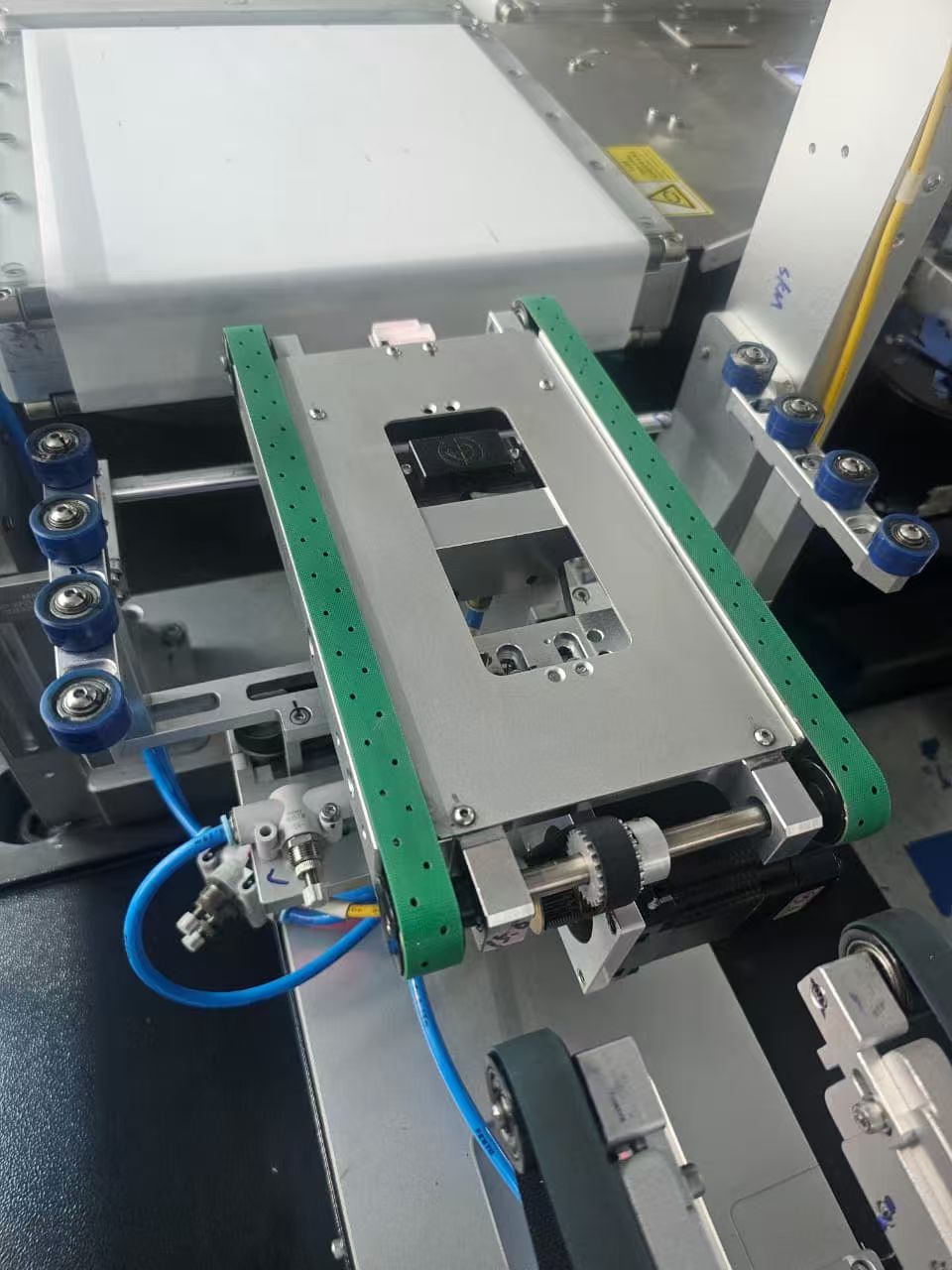
Shanghai Peng Qian’s belts are used in photovoltaic manufacturing projects, where production conditions include high temperature, high friction, and continuous operation. The PU flat belt (models 2482*16, SMT-UGU-09B-J-L2210-W15, and FLAT BELT HY-18-568*14 NFT-NFB) and timing belts (PU and rubber) support PV lines that run in countries including India, Indonesia, and the United Arab Emirates — the most common application scenarios for this product family.
Food and Beverage
For food, beverage, and pharmaceutical lines, the modular mesh chain (PQ350mm±3mm) provides a PP blue construction with PP pins, straight baffles, and a 25.4 mm pitch, which supports cleaning and product flow. Timing belts for the food and beverage sector are available in PU and rubber constructions. Food-grade applications should also satisfy hygienic certification requirements such as FDA and EC 1935/2004.
High-Temperature Environments
When the process conditions exceed the working range of standard belts, the company’s high-temperature-resistant silicone belt is the relevant product. This belt was developed specifically to break through the limitations of traditional belts in special environments — a factor to weigh when selecting belts for string welding, sintering, and other hot-process machinery. Related products in this area include string welding machine belts and sintering furnace net belts.
Comparison: Belt Types, Materials, and Applications
The table below summarizes the standard product categories, model designations, materials, key specifications, and intended industries based on Shanghai Peng Qian’s product data.
| Belt type | Models | Material | Key specifications | Intended applications |
|---|---|---|---|---|
| Flat belt | 2482*16; SMT-UGU-09B-J-L2210-W15; FLAT BELT HY-18-568*14 NFT-NFB | PU (polyurethane) | Length 2482 mm; width 16 mm | Logistics; photovoltaic; print machines |
| Timing belt / synchronous belt | 28HTD5M-765+NFT+NFB; S5M-20-L1650 | PU and rubber | S5M tooth shape; width 20 mm; length 1650 mm | Photovoltaic; food and beverage; pharmaceutical; industrial manufacturing |
| Modular mesh chain | PQ350mm±3mm | PP/POM (PP blue + PP pins) | Flat belt with straight baffles; width 350 mm ± 3 mm; pitch 25.4 mm; baffle height 50 mm | Food; beverage; pharmaceutical |
| Synchronous wheel / timing pulley | GT2 48T; GT2 14T | Aluminium; stainless steel | Configurations include HDB.34-14M.115F with Taper Bush BC6545F60 | Food; beverage; industrial machinery |
Practical limitation: model codes differ between manufacturers, so a code alone is not a specification. Physical dimensions, tooth profile, and material must be confirmed against the product drawing before ordering.
Frequently Asked Questions
What standards define a high-quality conveyor belt?
Quality in conveyor belts is defined by a combination of international testing standards and the manufacturer’s own quality system. Industrial conveyor belts are commonly evaluated against ISO 283, which covers tensile strength, and ISO 284, which covers electrical conductivity, according to the International Organization for Standardization. For food processing, hygienic conveyor belts are regulated by FDA and EC (European Community) certifications such as EC 1935/2004. On the manufacturer side, quality management certification indicates a disciplined production process: Shanghai Peng Qian has passed ISO 9001 quality management system certification and is rated as a Shanghai High-tech Enterprise (Certificate No. GR202231006882). When evaluating any supplier, request the relevant test certificates and compare them with the requirements of your application.
What types of conveyor belts does Shanghai Peng Qian manufacture?
Shanghai Peng Qian manufactures and sells a broad range of transmission and conveying products, including conveyor belts, tooth polyurethane rubber synchronous belts, synchronous wheels, rubber seamless belts, silicone belts, string welding machine belts, sintering furnace net belts, PEEK belts, sealing rings, various models of chains, and modular belts. Within this range, four categories are most commonly specified for industrial applications: PU flat belts (models 2482*16, SMT-UGU-09B-J-L2210-W15, and FLAT BELT HY-18-568*14 NFT-NFB); timing belts or synchronous belts (models 28HTD5M-765+NFT+NFB and S5M-20-L1650) in PU and rubber; modular mesh chains (model PQ350mm±3mm) in PP/POM; and synchronous wheels or timing pulleys (models GT2 48T and GT2 14T) in aluminium and stainless steel.
Which conveyor belt material suits high-temperature and food applications?
Material selection is driven by the operating environment. For high-temperature conditions, Shanghai Peng Qian developed a high-temperature-resistant silicone belt specifically to overcome the limitations of traditional belts in special environments. For food, beverage, and pharmaceutical lines, the modular mesh chain is built from PP blue with PP pins (classified as PP/POM), and hygienic belts for food processing should meet certification requirements such as FDA and EC 1935/2004. PU flat belts suit logistics and photovoltaic applications, while PU and rubber timing belts serve photovoltaic, food and beverage, pharmaceutical, and industrial manufacturing lines. Because each material family has different temperature, friction, and hygiene behavior, the belt should be matched to the working condition — including high temperature and 24/7 operation — rather than chosen by generic preference.
What specifications should I prepare when requesting a conveyor belt quote?
To receive an accurate quotation, prepare the application industry, operating conditions, and physical specifications. For flat belts, reference model codes such as 2482*16, SMT-UGU-09B-J-L2210-W15, and FLAT BELT HY-18-568*14 NFT-NFB, and confirm dimensions — the PU flat belt measures 2482 mm in length and 16 mm in width. For timing belts, use model codes such as 28HTD5M-765+NFT+NFB and S5M-20-L1650, and confirm tooth profile, width, and length — the S5M-20-L1650 has an S5M tooth shape, 20 mm width, and 1650 mm length. For modular chains, specify pitch and tolerances — the PQ350mm±3mm chain has a 25.4 mm pitch and a belt width of 350 mm ± 3 mm. Also state the material (PU, rubber, PP/POM, aluminium, stainless steel) and the industry (photovoltaic, food and beverage, pharmaceutical, logistics), since these determine the right construction.
How can I request samples, a catalog, or a quote from Shanghai Peng Qian?
Shanghai Peng Qian accepts direct inquiries for samples, quotations, and catalogs. Contact Abby by email at abbypeng@pengqian.cn, by telephone at +86 177-0218-9858, or via WhatsApp. The company is located at No.11, Lane 243, Sijing Jiu Gan Road, Songjiang District, Shanghai, China, and the website is www.shanghai-pengqian.com. The fastest next step is to send your application details and target specifications — belt type, dimensions, material, and operating conditions — so the team can confirm the matching model and provide a quotation.
Conclusion: Quality Is the Result of Matching Belt to Application
A high-quality conveyor belt is not defined by a single material or model; it is defined by how well the belt matches its application. Buyers who start from the operating environment — function, temperature, hygiene, friction, and duty cycle — can shortlist the correct belt category, verify specifications against drawings, and then evaluate the supplier’s manufacturing and quality structure. Shanghai Peng Qian, with its range of PU flat belts, PU and rubber timing belts, PP/POM modular mesh chains, aluminium and stainless steel synchronous wheels, and special-environment silicone belts, offers a single-source portfolio for industrial buyers researching conveyor belt options. For a detailed product overview, download the Shanghai Peng Qian brochure (PDF).
Shanghai Peng Qian (Shanghai Pengqian Transmission Equipment Co., Ltd.)
Website: www.shanghai-pengqian.com
Email: abbypeng@pengqian.cn
Tel: +86 177-0218-9858
WhatsApp: +86 13381618987
Address: No.11, Lane 243, Sijing Jiu Gan Road, Songjiang District, Shanghai, China
To get a sample or quotation, send your application details and target specifications — belt type, dimensions, material, and operating conditions — and the sales team will confirm the matching model.
Have Questions or Need More Details?
Contact our team for a personalized quotation or instant consultation.
Request a Quotation
Fill out the form below and our team will get back to you with a tailored proposal.
WhatsApp Direct Chat
Prefer to chat in real-time? Message us on WhatsApp for instant assistance & quick answers.
- Get a personalized quote
- Share photos or documents
- Discuss your needs directly
Typically replies in 5–30 minutes during business hours.