
How to Decode Conveyor Belt Model Codes and Tolerances
A conveyor belt order rarely fails because the buyer picked the wrong belt family. It fails because one field inside a model code was read in the wrong position, or because a dimensional tolerance was never written down and never checked. This tutorial shows engineers and procurement teams how to read conveyor belt model codes field by field, how to convert tolerances such as 350 mm ± 3 mm into measurable acceptance criteria, and how to match the resulting specification to materials and industries.
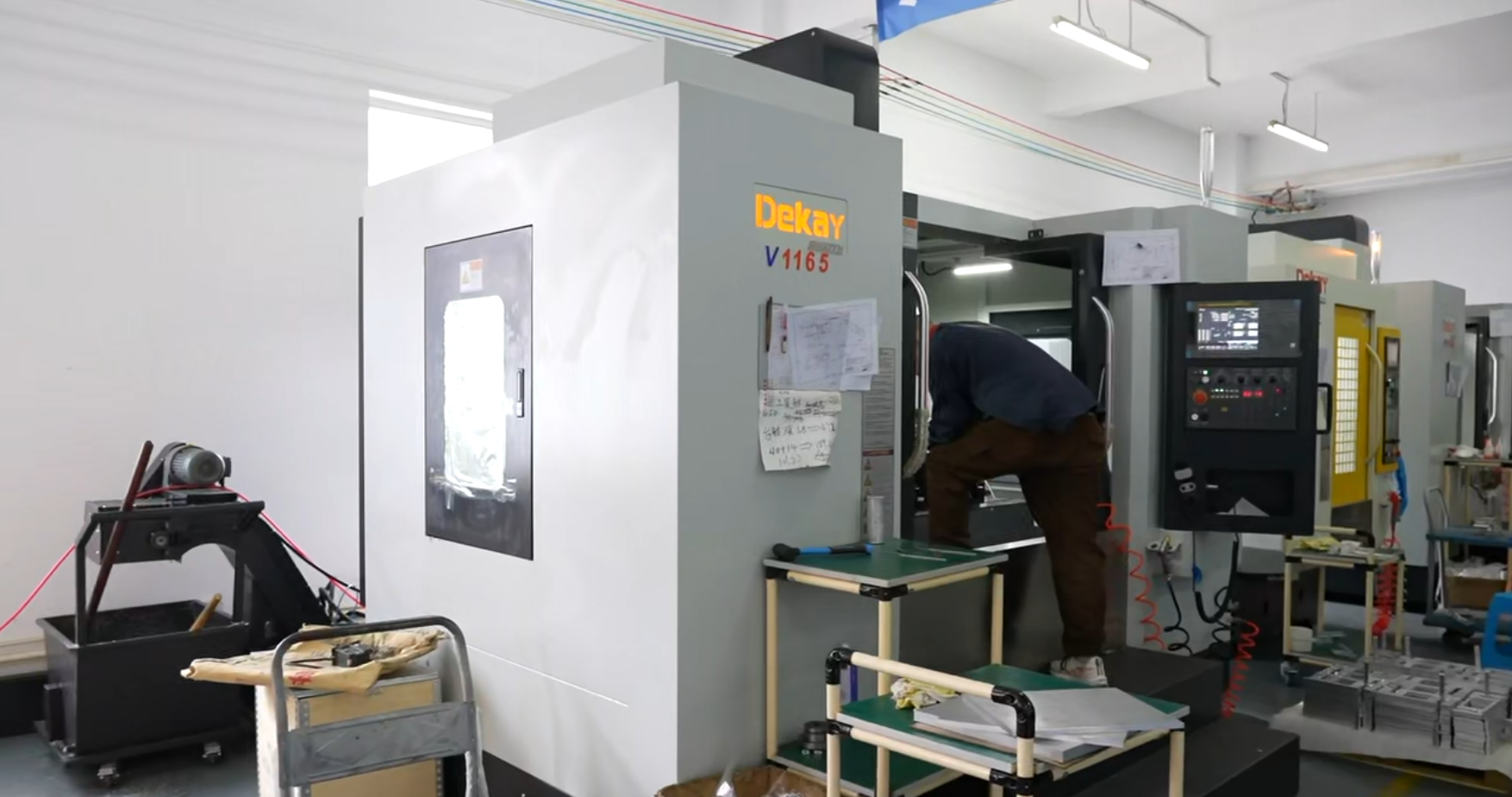
Machine Picture — belt manufacturing equipment where profile, width and length are set before coding.
The five decisions a model code must settle before you order
- Which profile or series the belt belongs to
- Which pitch or tooth geometry drives the drive calculation
- Which dimension is width, which is length, and which is thickness
- Which surface, construction or joint suffix applies
- Which tolerance applies to each dimension, and who measures it
Problem Definition: Model Codes Are Manufacturer Language, Not Universal Standards
A conveyor belt model code is a compact internal language. It carries series, pitch, width, length, thickness, surface treatment, joint style and sometimes a tolerance band, but it is not governed by a single global naming standard. Two suppliers can describe the same physical belt with two different strings, and the same string can mean different things if field order changes.
That ambiguity creates three predictable failure modes in production environments:
- Misread width and length. A code that lists width before length is often read as length before width when buyers compare quotations from different suppliers.
- Assumed suffix meaning. Suffixes attached to a base code — surface, construction or joint identifiers — are frequently copied into a purchase order without written confirmation of what they change.
- Missing tolerance. A nominal dimension such as 350 mm is not a specification until the acceptable range is stated. Without a tolerance, a belt that is technically "350 mm" can still fail to track, sit unevenly in a guide, or clash with a frame.
For decision-stage and execution-stage buyers, the practical risk is not a slightly different belt. It is a belt that cannot be installed on the line it was bought for, discovered only after the machine has been stopped.
Industry Background: What Standards Cover, and What They Leave to the Drawing
Standards are useful screening tools, but their scope is narrower than most buyers assume. ISO 14890:2013 specifies requirements for rubber and/or plastics covered conveyor belting of textile construction for general surface use on flat or troughed idlers. The same standard states that it is not suitable or valid for light conveyor belts as described in ISO 21183-1.
That scope note matters in practice. Timing belts, flat belts used in light conveying, modular chain belts and stainless mesh belts fall largely outside the framework that governs heavy textile-construction belting. For those products, the operative specification is the supplier data sheet plus the drawing and purchase-order agreement, not a single published standard number.
This is also why trading documentation separates product categories. UN Comtrade classifies rubber vulcanised conveyor and transmission belts under HS heading 4010, with separate descriptions for belts reinforced with metal, textile materials, plastics or other materials, and separate entries for synchronous belts and V-belts. Classification helps sourcing analysis; it does not tell you whether a belt will fit.
The decoding discipline below is designed for that gap — the zone where the standard stops and the model code begins.
Detailed Solution: A Four-Layer Decoding Model
Read every code in four layers, in this order. Do not skip a layer, and do not let a later layer reinterpret an earlier one.
Layer 1 — Series and Pitch
The leading characters identify the belt family and, for synchronous belts, the tooth geometry and pitch. In practice:
- S5M — S profile, 5 mm pitch
- HTD5M — HTD (curved-tooth) profile, 5 mm pitch
- AT5 — AT profile, 5 mm pitch
- AT10 — AT profile, 10 mm pitch
Pitch is the single most consequential field for a synchronous belt or pulley pair because it defines whether the belt and the timing wheel can engage at all. A 5 mm-pitch belt does not run on a 10 mm-pitch pulley, regardless of width or length.
Layer 2 — Dimensional Fields
After series and pitch, the remaining numbers describe physical size: width, length, thickness, or a combination of them. Some coding systems use prefix letters (L for length, W for width) which remove most ambiguity. Others place bare numbers in sequence, and the meaning depends on field position.
The working rule is: if the code uses L and W prefixes, trust the prefixes and verify the units. If it uses bare numbers, treat the interpretation as a hypothesis until the data sheet confirms position order.
Layer 3 — Suffixes and Construction Identifiers
Suffixes appended after a plus sign or a space describe a change to the base belt: surface structure, fabric or cover configuration, or joint type. These are the fields most often copied without verification. A suffix that is not confirmed in writing is not a specification — it is an assumption carried into the purchase order.
Layer 4 — Tolerance and Units
Tolerance is a separate field from nominal size, even when it appears inside the same string. A width written as 350 mm ± 3 mm is a complete instruction: nominal 350 mm, acceptable range 347–353 mm. A width written only as 350 mm is an incomplete instruction.
Decoding Worked Examples
Example 1: S5M-20-L1650
Read from left to right: S5M sets the profile and the 5 mm pitch; 20 occupies the width field and is read as 20 mm belt width; L1650 uses an explicit length prefix and is read as 1,650 mm length.
What this tells a buyer: the belt belongs to the 5 mm-pitch S-profile family and must be paired with an S5M timing wheel, not with an AT or HTD pulley of a different pitch class. What it does not tell the buyer: material, surface, joint, and the tolerance on width and length. Those four items must come from the data sheet and the drawing.
Example 2: 28HTD5M-765+NFT+NFB
This code reverses the field order used in Example 1. The dimensional number 28 leads the string, followed by the profile HTD5M, then 765, then two suffixes separated by plus signs.
Practical reading: HTD5M confirms HTD curved-tooth geometry at 5 mm pitch; 28 and 765 occupy the width and length fields respectively; NFT and NFB are surface or construction suffixes applied to the top and bottom of the belt.
Because leading-dimensional codes invert the reading order, this format is the highest-risk type in a multi-supplier comparison. Before ordering, confirm in writing whether 28 is millimetres of width or another attribute, and confirm exactly what NFT and NFB change on the running and pulley faces.
Example 3: SMT-UGU-09B-J-L2210-W15
This is a flat-belt style code with a fully prefixed dimensional block, which makes it the easiest of the family to read:
- SMT — belt series identifier
- UGU — material or surface structure identifier
- 09B — product/structure field covering thickness or construction type
- J — joint identifier; confirm whether the joint is open-ended, stepped or finger-type, because joint style changes installation method and minimum pulley diameter
- L2210 — length 2,210 mm
- W15 — width 15 mm
The useful lesson here is structural: when a manufacturer prefixes L and W, the dimensional risk drops to units and tolerance. The remaining risk concentrates in the material and joint blocks.
Example 4: FLAT BELT HY-18-568*14 NFT-NFB
Read as: product type (FLAT BELT), family or grade (HY-18), then a dimension block in the form 568*14, then surface suffixes NFT-NFB.
The dimension block uses the common length × width convention, giving 568 mm length and 14 mm width. This convention is not universal across all manufacturers, so the order must be confirmed against the supplier drawing — a 568 mm width with a 14 mm length would describe a physically impossible belt for most conveying layouts, which is a useful sanity check in itself.
Example 5: Modular Chain Belt PQ350mm±3mm
Modular chain belt codes behave differently from endless belt codes because the belt is assembled from linked modules. This example carries three specification elements that must all be read together:
- PQ — modular belt series
- 350 mm ± 3 mm — belt width, nominal 350 mm with an acceptable range of 347 mm to 353 mm
- 25.4 mm pitch — the module pitch, equal to one inch, which governs sprocket selection
- Straight baffle — the cleat or baffle type; its height, thickness and position along the belt are separate dimensions that must be specified on the drawing
The ± 3 mm band is the part most often lost in quotation exchange. It allows for assembly and moulding variation within a defined window. It does not permit a 340 mm belt, and it does not excuse the supplier from declaring how the width was measured — across the outer edges of the assembled belt, not across a single module.
Turning Tolerances into Acceptance Criteria
A tolerance only has value if it is measurable at goods-in. Convert every stated band into a check before the order is placed.
| Field | Stated value | Acceptance check at goods-in |
|---|---|---|
| Belt width | 350 mm ± 3 mm | Measure assembled width at three points; accept 347–353 mm; record the measurement method |
| Module pitch | 25.4 mm | Confirm sprocket tooth count and pitch match before installation |
| Baffle | Straight baffle | Verify height, thickness and spacing against the drawing |
| Length | As stated in the code (e.g. L1650, L2210, 765) | Measure under the tension condition agreed with the supplier |
| Surface / joint suffix | NFT / NFB / J and similar | Require a written description of what the suffix changes |
Two rules keep tolerance data usable over a long supply relationship. First, put the tolerance on the drawing, not only in the email thread. Second, state the measurement method and the instrument, because a width measured with a tape and a width measured with a calliper on a tensioned belt can differ by more than the tolerance band itself.
Material Selection: Matching the Code to the Environment
Material choice is a separate decision from code decoding, but it is written into the same specification. The five material families below cover most industrial conveying requirements.
| Material | Typical role | Industries where it is commonly specified |
|---|---|---|
| PU | Clean running, precision drive, low noise; available as smooth PU and PU green fabric constructions | Food, electronics, pharmaceutical, packaging, printing, automation |
| Rubber | Heavy load carrying and grip; high-performance rubber grades for demanding drive duty | Textile, woodworking, heavy industry, general manufacturing |
| PP / POM | Modular chain belt modules and straight-run linear transmission belts | Food and beverage, logistics, packaging, daily necessities |
| Aluminium | Structural and chain-plate components in conveyor assemblies | Automation machinery, electronics, general conveying frames |
| Stainless steel | High-temperature and hygienic conveying; stainless mesh belts are specified for photovoltaic stringer machines where welding heat reaches 390 °C | Photovoltaic, glass manufacturing, sintering furnaces, food and pharmaceutical where washdown is required |
Heat exposure deserves its own line in the specification, not a footnote. Where a line runs hot, the belt is a thermal risk point as well as a drive component. Shanghai Pengqian Transmission Equipment Co., Ltd. addresses this with temperature sensors and thermal protection measures, treating overheating as a controlled risk rather than an operating surprise.

High Quality Products — belt families that share a coding logic but differ in material, profile and tolerance needs.
Step-by-Step Breakdown: From Machine Interface to Purchase Order
The sequence below converts a machine requirement into a code that a supplier can quote against without interpretation.
- Collect the interface data first. Record pulley or sprocket diameter and tooth count, centre distance, available width envelope, guide or rail geometry, operating temperature, cleaning method and load. Codes are downstream of these numbers.
- Select the belt family. Synchronous belt for positive drive and zero-slip timing; flat belt for smooth, low-noise transport; modular chain belt for open, hygienic or heavy-duty conveying; stainless mesh for high-temperature furnaces.
- Decode or construct the code using the four layers. Series and pitch, dimensional fields, suffixes, tolerance and units. Write the result in a single line with the field meaning annotated beside it.
- State tolerances on the drawing. Width, length, thickness, straightness and baffle position each get their own band. Where a width is critical, use the explicit form (for example 350 mm ± 3 mm) instead of a bare nominal.
- Fix the material and surface. PU, rubber, PP/POM, aluminium or stainless steel, plus the surface structure required by the product being conveyed — this is where food, pharmaceutical and photovoltaic requirements enter the specification.
- Write the purchase order in unambiguous terms. Restate the decoded code, the drawing revision, the dimensional tolerances, the joint style, the acceptance test and the packing method. Attach the data sheet that confirms every suffix.
- Verify at goods-in. Measure the dimensions inside the stated band, check the baffle against the drawing, and confirm that the delivered suffix matches the confirmed description rather than the assumed one.
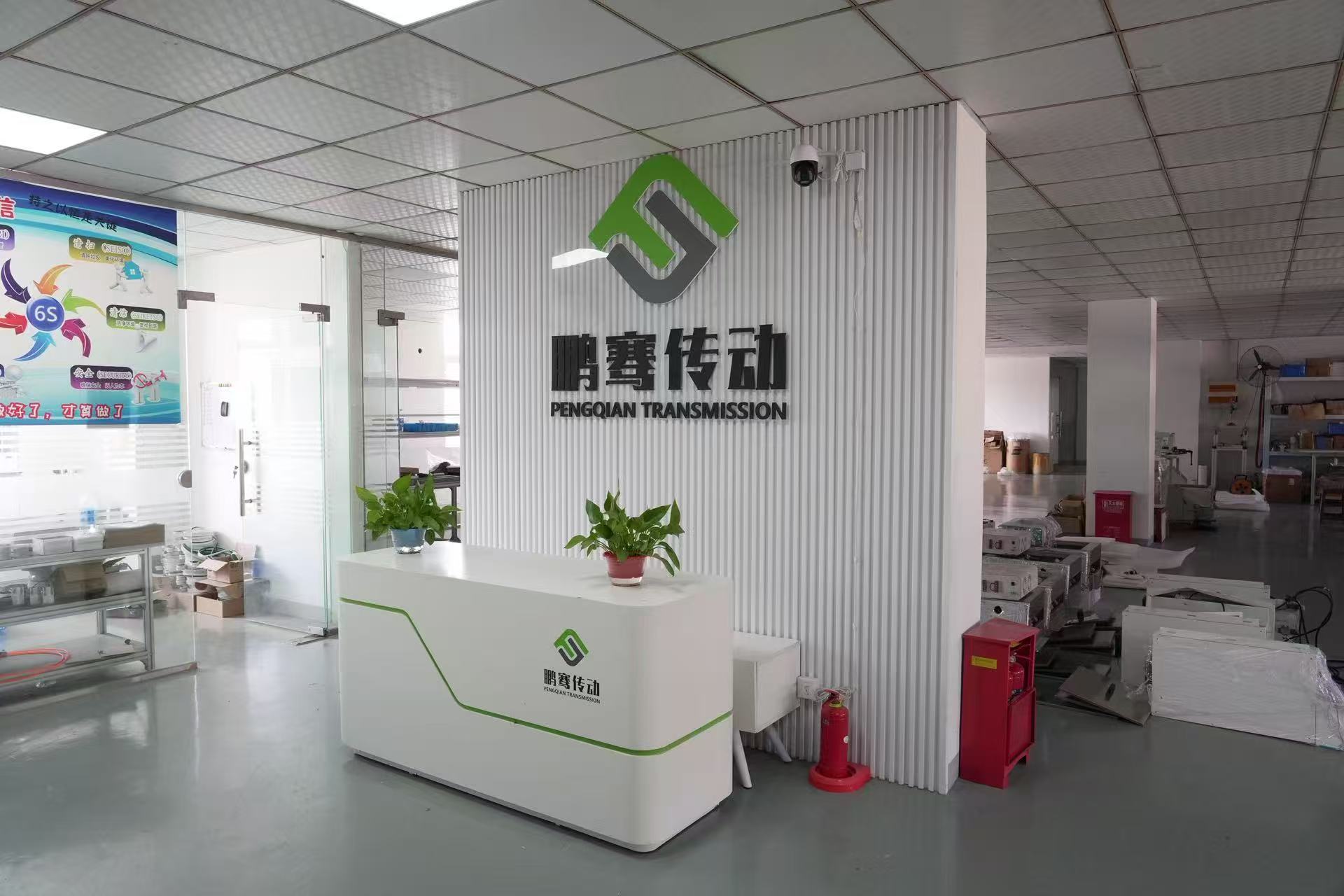
Factory Picture — the point where a decoded code becomes a production instruction.
Use Cases: Where the Same Decoding Logic Applies
Photovoltaic. Stringer and sintering equipment runs at high temperature. Stainless mesh belts are specified where welding heat reaches 390 °C, and the dimensional tolerance band determines how evenly the mesh sits across the furnace width.
Food and beverage. Washdown, hygiene and product contact dominate. Modular chain belts in PP/POM and PU flat belts are the common pairing, and the width tolerance affects how the belt tracks inside guides that are washed and re-aligned repeatedly.
Pharmaceutical. Clean running, low particle generation and repeatable positioning. PU constructions support precision conveying, and the joint suffix becomes a critical field because it changes the belt surface at the splice point.
Logistics and warehousing. Modular chain belts and straight-run linear transmission plastic conveyor belts carry high volumes with repeated starts and stops; pitch accuracy and sprocket matching matter more than cosmetic surface finish.
Packaging and printing. PU green fabric belts are used for low-noise running, and short centre distances make length tolerance more visible than on long conveyors.
Industrial manufacturing and glass. Rubber belts for heavy load, stainless and high-temperature constructions for hot processes, and aluminium structural components where chain plate assemblies are used.
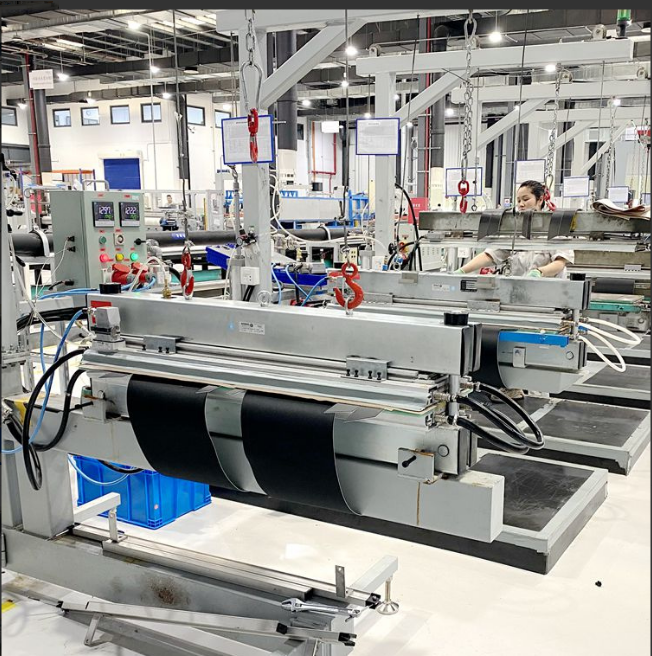
Operate Smoothly — the outcome of matching decoded dimensions to the machine interface.
Comparison Table: What a Correctly Specified Belt Changes
The table below compares high-performance conveyor and transmission belts against traditional belts on the operating variables that a decoded specification directly influences.
| Comparison point | Traditional conveyor and transmission belts | High-performance belts |
|---|---|---|
| Materials | Standard constructions | High-performance materials selected by application |
| Drive behaviour | Slip-prone under demanding timing duty | High precision with zero slip |
| Operating noise | Reference level | 15 dB lower noise and smoother running |
| Service life and maintenance | Frequent intervention | Longer service life with less maintenance |
| Cost effect | Baseline | Transmission time cost 5% lower; labour cost lower by 8% |
| Efficiency | Baseline | Higher efficiency |
| Best-fit scenarios | General conveying with tolerant process windows | PU smooth belts for clean precision duty; PU green fabric belts for low-noise packaging, printing and automation; high-performance rubber belts for heavy load in textile, woodworking and heavy industry |
Read this table as a decision aid, not a promise. The gains above depend on the belt being correctly specified in the first place — a high-performance belt delivered at the wrong width produces neither lower noise nor lower labour cost.
FAQ
1. Does ISO 14890:2013 certify the belt I am buying?
No. ISO 14890:2013 specifies requirements for rubber and/or plastics covered conveyor belting of textile construction for general surface use on flat or troughed idlers, and it states that it is not suitable or valid for light conveyor belts as described in ISO 21183-1. Timing belts, flat light conveyor belts and modular chain belts therefore need product-specific declarations, data sheets and drawing agreements rather than reliance on that single standard number.
2. Can a supplier build a belt to a decoded code that is not in the standard catalogue?
Custom construction is a normal requirement when a machine interface does not match a catalogue size. Shanghai Pengqian Transmission Equipment Co., Ltd., established in 2012 in Songjiang District, Shanghai, operates a 3,000 m² factory with 60 employees and an engineering team of 8, and produces conveyor belts, polyurethane and rubber synchronous belts, synchronous wheels, rubber seamless belts, silicone belts, string welding machine belts, sintering furnace mesh belts, PEEK belts, sealing rings, chains and modular belts. The company was rated Shanghai High-Tech Enterprise in 2022 (Certificate No. GR202231006882) and has submitted 26 patent applications, including 6 invention patents, with 19 authorised.
3. What are the purchasing terms and acceptance criteria?
Published purchasing terms are MOQ 10 units, delivery terms FOB or CIF, acceptance criteria based on pre-shipment test, and payment terms 60/40. For coded belts, the pre-shipment test is the right point to confirm the decoded dimensions, the tolerance band and the suffix description, because correcting a misread field after shipment is far more expensive than correcting it before dispatch.
4. Should a sample be validated before a full order?
Yes, particularly where a code contains an unfamiliar suffix or a tight width band. Validate the sample against the same measurements that will be used at goods-in: width inside the stated range, length under the agreed tension condition, pitch matched to the pulley or sprocket, and the joint or surface confirmed as described. A sample that is checked only visually does not test the tolerance at all.
5. Can supply be sustained over a multi-year programme?
Capacity is a legitimate question when a decoded code becomes a recurring line item. Monthly production capacity is 100,000 units, and the company exports approximately 40% of output to Europe, Asia and the Middle East, alongside domestic distribution across more than 20 provinces, cities and autonomous regions. For long-term programmes, the practical next step is to send the decoded code, drawing revision and tolerance requirements for a quotation, or to request a sample built to that specification. The product catalogue is available for download here: Shanghai Pengqian product brochure (PDF).
Conclusion
Decoding a conveyor belt model code is not a memory exercise. It is a repeatable reading discipline: identify series and pitch, assign the dimensional fields, confirm every suffix in writing, and convert each tolerance into a measurement that can be checked on arrival. Applied to codes such as S5M-20-L1650, 28HTD5M-765+NFT+NFB, SMT-UGU-09B-J-L2210-W15, FLAT BELT HY-18-568*14 NFT-NFB and PQ350mm±3mm with its 25.4 mm pitch and straight baffle, that discipline removes the guesswork that causes most installation failures.
The same logic scales into long-term supply. Once a code, a drawing and a tolerance set are agreed, reorders become a document check rather than a re-negotiation, and a distributor or OEM buyer can hold a multi-year programme on a stable specification. Shanghai Pengqian Transmission Equipment Co., Ltd. works with buyers on that basis — decoding the requirement, confirming the fields, and building to the agreed tolerance. To start, share your code, drawing or machine interface data through www.shanghai-pengqian.com, or contact the team directly at abbypeng@pengqian.cn.
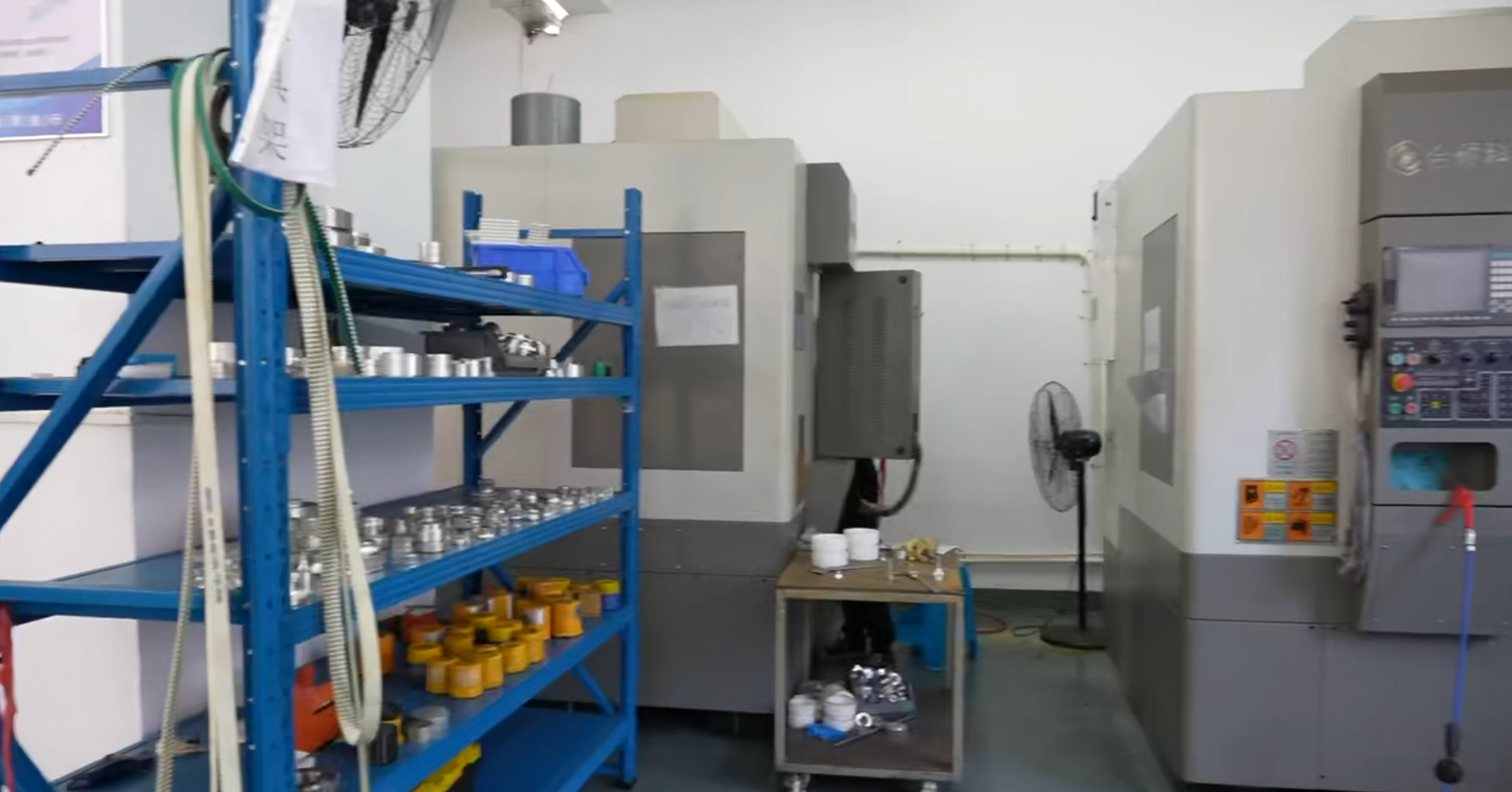
Warehouse — repeat orders depend on a code and tolerance set that does not change between shipments.
Send us your code and tolerance requirement
Quote the model code, the drawing revision and the tolerance band for each critical dimension. The team will confirm each field in writing before production, or supply a sample built to the decoded specification.
Email: abbypeng@pengqian.cn | Tel: +86 177-0218-9858 | WhatsApp: +86 13381618987
Address: No.11, Lane 243, Sijing Jiu Gan Road, Songjiang District, China
Have Questions or Need More Details?
Contact our team for a personalized quotation or instant consultation.
Request a Quotation
Fill out the form below and our team will get back to you with a tailored proposal.
WhatsApp Direct Chat
Prefer to chat in real-time? Message us on WhatsApp for instant assistance & quick answers.
- Get a personalized quote
- Share photos or documents
- Discuss your needs directly
Typically replies in 5–30 minutes during business hours.