
Scenario-Based Conveyor Belt Selection: Matching High-Quality Conveyor Belts to Project Demands
Selecting a high-quality conveyor belt is not only about breaking strength or price. In many production lines, the belt is one of the first components affected by heat, friction, washdown chemicals, product residue, and continuous operation. The most reliable way to avoid misapplication is to start from the project scenario, define the operating profile, and then choose the belt family that fits.
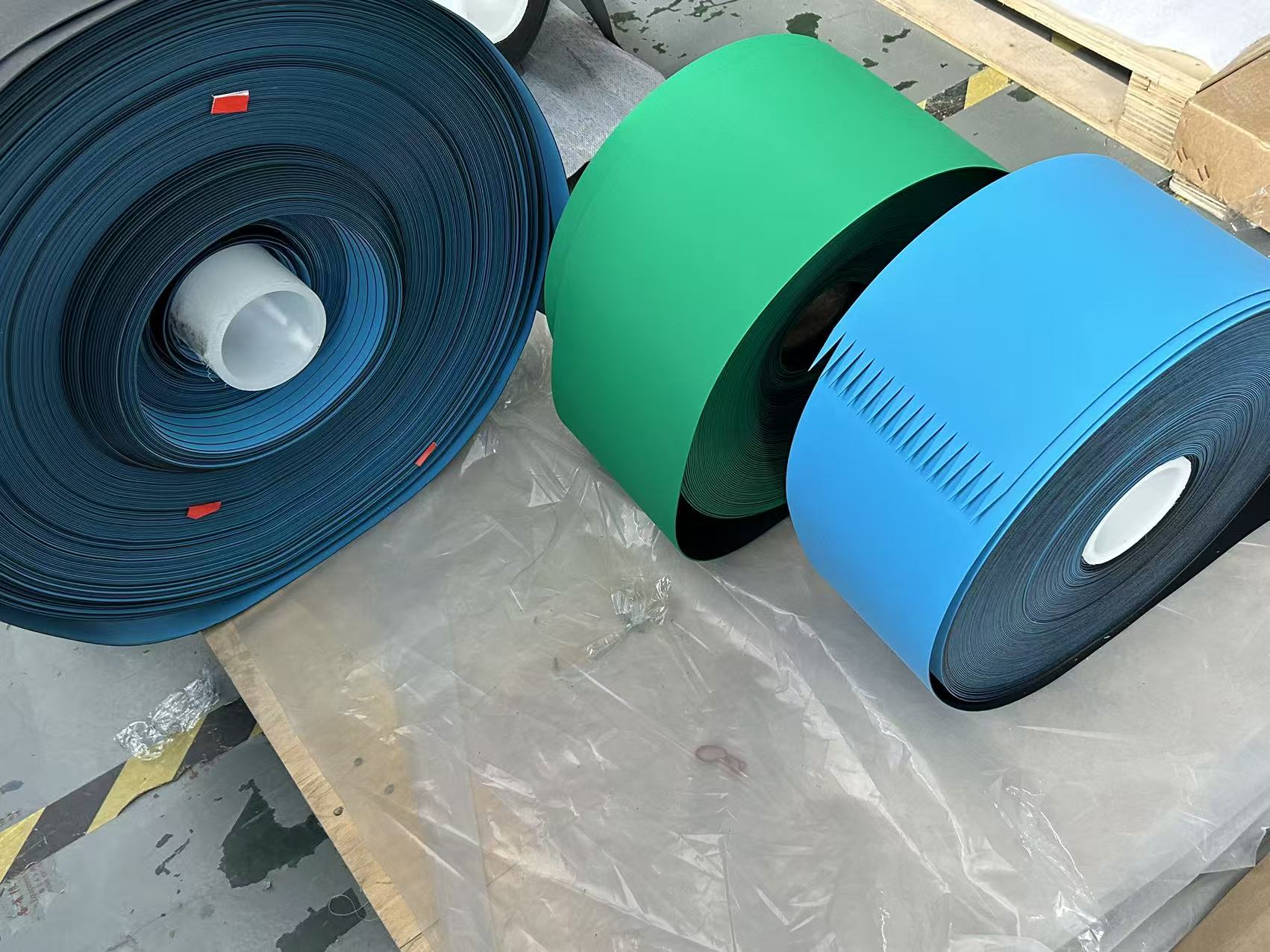
A flat belt in a printing machine scenario: one example of matching conveyor belt construction to the actual project environment.
Why Projects Fail When Belt Selection Ignores the Operating Scenario
A conveyor belt that works well in a dry, low-load packaging line may fail early in a high-temperature photovoltaic process or a food line that is washed down frequently. Many failures are not caused by poor material quality but by a mismatch between the belt family and the project's operating envelope.
Buyers should define the following before comparing quotes: working temperature; exposure to oil, food, chemicals, or abrasive product; need for low noise; accuracy of synchronization; load and speed; sanitation requirements; and whether the belt must support electrical transfer or static control. In some automation lines, the product's role is to enable electrical transfer, so this requirement should be confirmed with the belt supplier rather than assumed.
For industrial conveyor belts, basic material verification can be linked to ISO 283 for tensile strength and ISO 284 for electrical conductivity. For food-contact lines, FDA and EC 1935/2004 are often referenced in hygienic belt specifications. These standards are part of the project specification, not optional marketing claims.
Industry Background: From Generic Belts to Scenario-Specific Selection
The global conveyor belt market was valued at USD 8.11 billion in 2024 and is projected to reach USD 9.73 billion by 2032, according to Intel Market Research. Rubber conveyor belts remain the largest product type with approximately 52.0% market share in 2024/2026, partly because of abrasion resistance in heavy industries. Asia-Pacific is the largest regional market, accounting for about 46.6% of global conveying equipment revenue in 2025.
The same trend is visible in more specialized segments: the global industrial synchronous timing belts market was estimated at USD 2.81 billion in 2024, and textile-reinforced conveyor belts accounted for over USD 3.42 billion in 2024. As applications become more specific, industrial buyers are shifting from a generic conveyor belt to the right conveyor belt for a specific process.
Scenario-First Selection: A Detailed Solution for High-Quality Conveyor Belt Projects
The selection logic can be summarized in one sentence: define the task, define the environment, then choose the belt family. This article applies that logic to the product range manufactured by Shanghai Peng Qian, a Shanghai-based conveyor belt manufacturer established in 2012. The company produces flat belts, timing belts, synchronous pulleys, modular belts, rubber seamless belts, silicone belts, and related transmission parts, and serves fields such as photovoltaic, electronic semiconductor, textile, food, logistics, packaging and printing, daily necessities, automation machinery, and glass manufacturing.
Shanghai Peng Qian's product portfolio is designed to cover a wide range of scenarios. This includes PU smooth belts for clean, precision applications in food, electronics, and pharmaceutical industries; PU green fabric belts for low-noise operations in packaging, printing, and automation; and high-performance rubber belts for heavy-load conditions in textile, woodworking, and heavy industry. The company also developed a high-temperature-resistant silicone belt that breaks through the limitations of traditional belts for special environments.
For synchronized drive requirements, matching timing belts and synchronous pulleys are essential. The representative product data below can be used as a starting point for RFQ preparation.
| Product | Representative model / parameters | Material | Typical applications |
|---|---|---|---|
| Flat belt | 2482*16; SMT-UGU-09B-J-L2210-W15; FLAT BELT HY-18-568*14 NFT-NFB (width 16mm, length 2482mm) | PU | Logistics, photovoltaic industry, printing machines |
| Timing belt | 28HTD5M-765+NFT+NFB; S5M-20-L1650 (teeth shape S5M, width 20mm, length 1650mm) | PU and rubber | Photovoltaic, food and beverage, pharmaceutical, industrial manufacturing |
| Synchronous wheel | GT2 48T; GT2 14T; HDB.34-14M.115F / Taper Bush BC6545F60 | Aluminium, stainless steel | Food industry, beverage industry, and general timing drive applications |
| Modular mesh chain | PQ350mm±3mm; width 350mm ± 3mm; pitch 25.4mm; baffle width 283.4mm ± 3mm; baffle height 50mm; baffle spacing 153.6mm; distance from baffle to both sides 33.3mm | PP blue + PP pins; PP/POM | Food industry, beverage industry, pharmaceutical industry |
Step-by-Step Selection Process for Industrial Buyers
- Document the operating profile. Write down the maximum and normal operating temperature, product contact conditions, washdown frequency, load weight, line speed, required precision, noise limit, and expected life. This converts a vague request into a measurable specification.
- Select the belt family. For clean and precision applications, consider PU smooth belts. For low-noise packaging, printing, and automation, consider PU green fabric belts. For heavy loads in textile, woodworking, or heavy industry, consider high-performance rubber belts. For synchronized motion, select a timing belt with a matching synchronous pulley. For food or beverage lines with washdown and product retention needs, consider a modular mesh chain with baffles.
- Check compliance and standards. Verify whether the application requires ISO 283, ISO 284, FDA, or EC 1935/2004 documentation. Ask the supplier to state which standard applies to the specific belt construction, not just to the factory.
- Define dimensions and special features. Specify width, length, pitch, tooth profile, baffle dimensions, hole patterns, and material. In OEM production, logo, size, material, and holes can be adjusted according to customer requirements. For high-temperature environments, confirm whether a standard belt or a special high-temperature-resistant material is needed.
- Review the manufacturer's capability. Check MOQ, lead time, monthly capacity, quality testing, export experience, and after-sales support. For example, Shanghai Peng Qian's OEM production has a MOQ of 20 units, lead time of 10-15 days, monthly capacity of 100,000 units, and 100% test before delivery, with remote support available after shipment.
Project Use Cases
Photovoltaic manufacturing: high temperature and high friction
In photovoltaic manufacturing, lines often run 24/7 under high-temperature conditions with high-friction requirements. Shanghai Peng Qian's flat belts are used in photovoltaic industry applications; representative models include 2482*16 and SMT-UGU-09B-J-L2210-W15. In this scenario, the product's role is to enable electrical transfer, so material consistency and static-related behavior should be verified with the manufacturer.
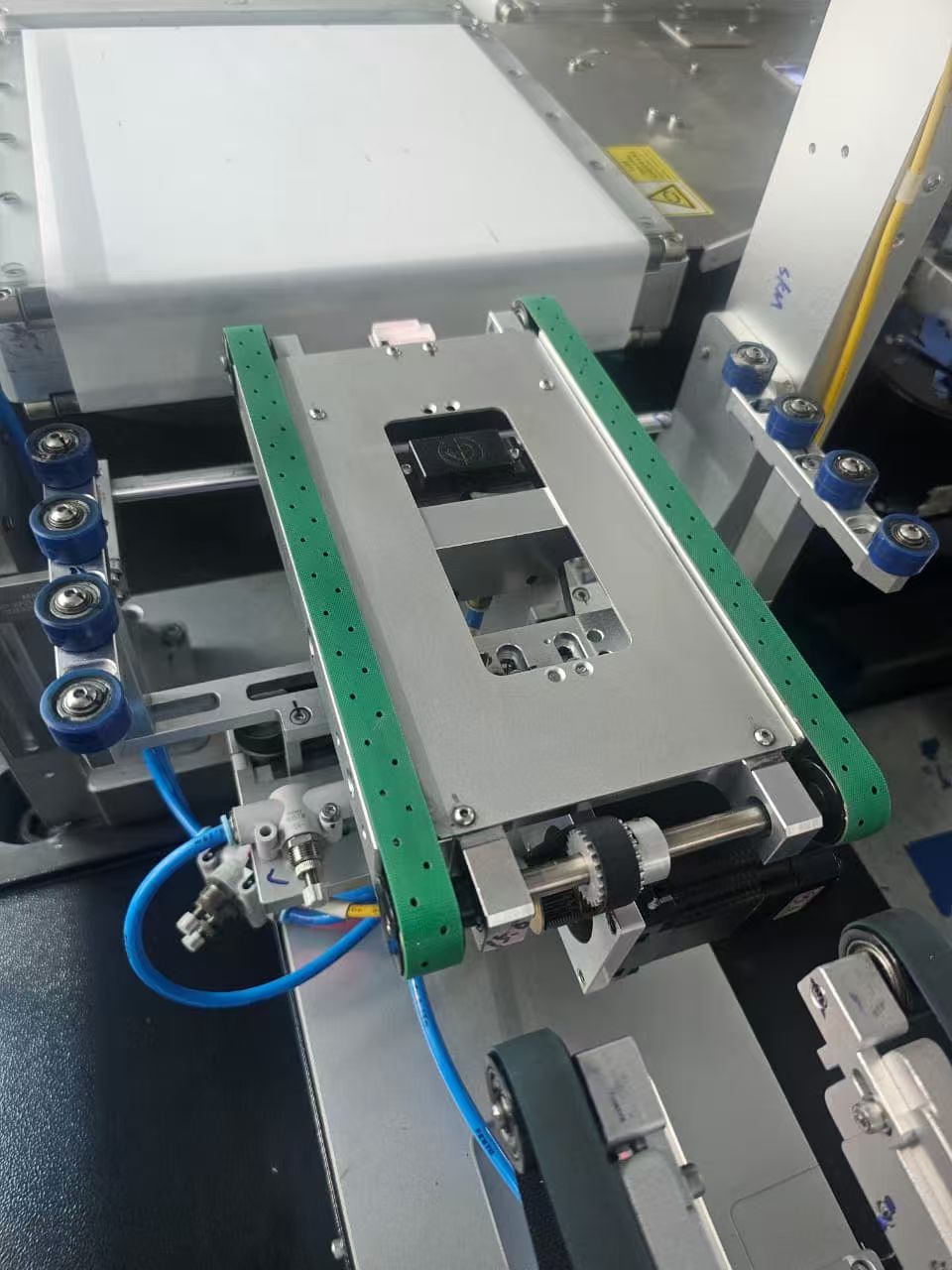
Photovoltaic application image used to illustrate a high-temperature, high-friction operating scenario.
Food and beverage processing: modular conveying with baffles
For food industry conveying, the modular mesh chain model PQ350mm±3mm is a relevant option. It is a flat belt with straight baffles, 350mm±3mm width, 25.4mm pitch, PP blue material with PP pins, baffle width 283.4mm±3mm, baffle height 50mm, and baffle spacing 153.6mm. This type is suitable for food, beverage, and pharmaceutical applications where open or baffled conveying is needed.
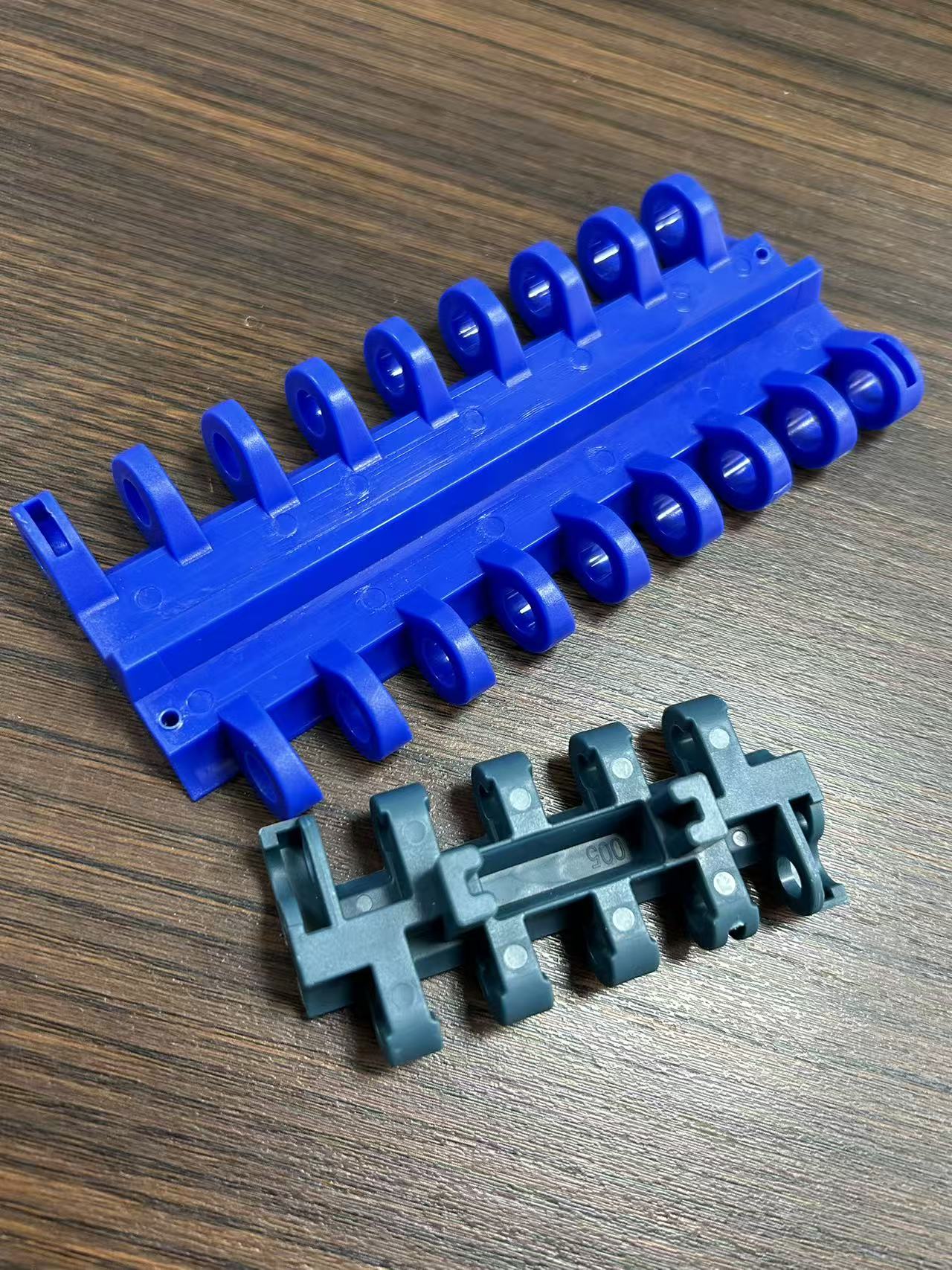
Modular straightrun plastic conveyor belt with raised rib: a common choice for food and beverage lines.
Packaging, printing, and automation: low noise
For packaging and printing automation, PU green fabric belts are designed to provide low noise. The portfolio also includes PU flat belts for printing machines, such as the unit used in the cover image. This is a practical example of selecting the belt based on the machine environment rather than on a generic catalog description.
Heavy-load handling with synchronized motion
For heavy-load conditions in textile, woodworking, and heavy industry, high-performance rubber belts are the appropriate family. Timing belts made from PU and rubber can be used when synchronized motion is required; for example, the S5M-20-L1650 timing belt uses teeth shape S5M, with 20mm width and 1650mm length.
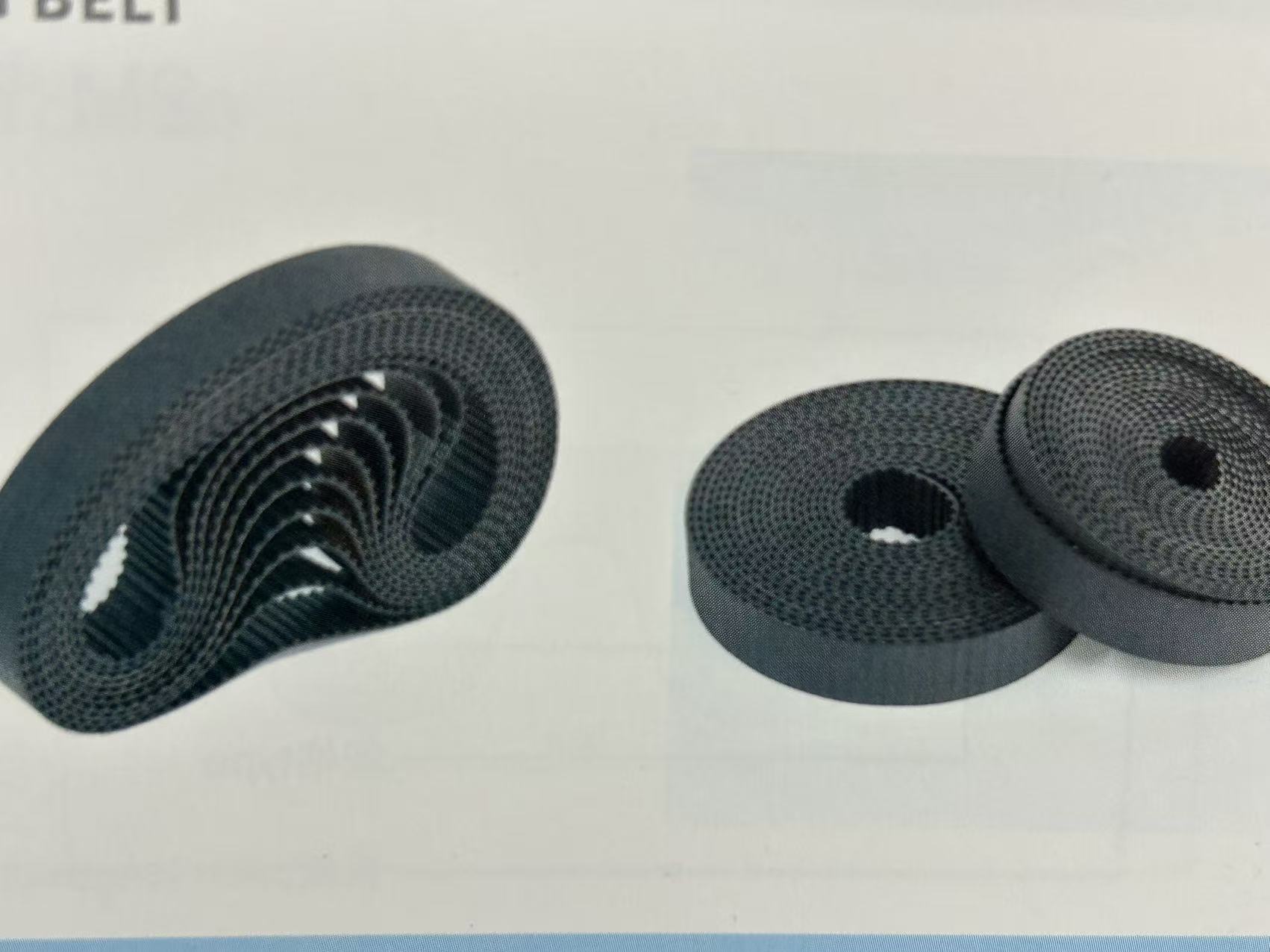
Rubber timing belt for heavy-load or synchronous drive applications.
Evidence from a production setting
An automotive OEM customer used 200 units of Shanghai Peng Qian products in a food industry application. After one year of operation, the result was stable operation, with low noise and high-speed performance as the highlighted benefits. This case shows how scenario-based matching can support both operation and longevity.
Comparison: Which High-Quality Conveyor Belt Family Fits Your Project?
The table below is a first-pass filter, not a ranking. Use it to remove unsuitable families before requesting quotations.
| Selection factor | PU flat belt | PU/rubber timing belt | PP/POM modular mesh chain |
|---|---|---|---|
| Typical project need | Clean, precise conveying in food, electronics, pharmaceutical, logistics, and photovoltaic scenarios | Synchronized drive and positioning in photovoltaic, food and beverage, pharmaceutical, and industrial manufacturing | Open or baffled conveying in food, beverage, and pharmaceutical industries |
| Material examples | PU | PU and rubber | PP/POM |
| Representative model | 2482*16; SMT-UGU-09B-J-L2210-W15 | 28HTD5M-765+NFT+NFB; S5M-20-L1650 | PQ350mm±3mm with straight baffles |
| Design feature | PU smooth belt for clean handling | Teeth profile for synchronization; matching synchronous pulley required | Baffle height 50mm; pitch 25.4mm; PP blue with PP pins |
| Standards to check | ISO 283 / ISO 284; food-grade requirements where applicable | ISO 283 / ISO 284; application-specific standards | FDA / EC food-contact requirements where applicable |
Frequently Asked Questions
Which belt standards should a project specification reference before procurement?
Industrial conveyor belts are often checked against ISO 283 for tensile strength and ISO 284 for electrical conductivity. For food-contact belts, FDA and EC 1935/2004 are commonly referenced. A buyer should ask the manufacturer to document compliance related to the actual application. Shanghai Peng Qian has passed a quality management system certification and was rated as a Shanghai High-tech Enterprise in 2022, but the correct standard still depends on the project's end use.
How do I select a belt family for a new project?
Start with the operating profile. For clean and precision applications in food, electronics, and pharmaceutical industries, PU smooth belts are commonly used. For low noise in packaging, printing, and automation, PU green fabric belts are a better match. For heavy loads in textile, woodworking, and heavy industry, high-performance rubber belts are suitable. If the line requires synchronized motion, a timing belt with a matching synchronous pulley is needed.
Can belts be customized for special project dimensions or materials?
Yes. OEM production can adjust logo, size, material, and holes according to customer requirements. In scenario-based procurement, the RFQ should include operating temperature, hygiene class, load, speed, and dimension. This is especially important for high-temperature environments where a standard belt may not work; Shanghai Peng Qian developed a high-temperature-resistant silicone belt for such special conditions.
Are there minimum order quantities or lead times that affect project budgeting?
For Shanghai Peng Qian's OEM belt production, the MOQ is 20 units, lead time is 10-15 days, and monthly capacity is 100,000 units. All products are subjected to 100% testing. These numbers help buyers plan initial samples, pilot runs, and serial supply.
How can I request a sample or quotation for a project-specific high-quality conveyor belt?
Prepare a short specification with belt type, dimensions, line speed, load, temperature, hygiene or compliance requirements, and quantity. Send it to Shanghai Peng Qian's sales team to confirm feasibility and receive sample or quotation support. This is the fastest way to turn a project scenario into a verified part number.
Conclusion: Use Project Scenarios as Your Selection Standard
High-quality conveyor belt selection becomes more predictable when the buyer separates the product from the scenario. Start with temperature, cleanliness, load, speed, synchronization, and compliance. Then choose a belt family that supports those conditions. Shanghai Peng Qian provides a broad portfolio, OEM customization, and after-sales remote support for buyers who need more than a catalog item.
Next step: Download the company brochure for product and capability details, or contact Shanghai Peng Qian to review your project specification.
Abby · abbypeng@pengqian.cn · +86 177-0218-9858 · WhatsApp +86 13381618987
Have Questions or Need More Details?
Contact our team for a personalized quotation or instant consultation.
Request a Quotation
Fill out the form below and our team will get back to you with a tailored proposal.
WhatsApp Direct Chat
Prefer to chat in real-time? Message us on WhatsApp for instant assistance & quick answers.
- Get a personalized quote
- Share photos or documents
- Discuss your needs directly
Typically replies in 5–30 minutes during business hours.