Single-Outlet vs Double-Outlet vs Three-Outlet Rotary Tablet Press: A Buyer's Comparison Guide
Three outlet architectures are available across the Shanghai Tablet Press Mechanical Components Co., Ltd. (TPCF) rotary tablet press range: single-outlet, double-outlet and three-outlet. Each architecture changes how many tablets leave the turret per revolution, how large a tablet you can compress, whether multi-layer tablets are possible, and how much floor space and machine weight the installation will consume. None of the three is automatically correct for a given plant.
Quick answer: choose a single-outlet machine (GZPK370i, GZPX370i, GZPK280) for mid-volume, multi-product or scale-up production; choose a double-outlet machine (GZPK620, GZPK620i, GZPK720, GZPK720i) for high-volume single-layer output and, in the GZPK620i, optional bilayer capability; choose a three-outlet machine (GZPK1060) when you need the highest station counts available or triple-layer tablets. One fact is worth stating plainly, because it contradicts the usual assumption: the 99-station double-outlet GZPK720 reaches a maximum single-layer output of 712,800 tablets/hour, which is higher than the 122-station three-outlet GZPK1060 at 658,800 tablets/hour. Station count alone does not determine throughput.
Problem Definition: Why Station Count Misleads Buyers
Buyers comparing rotary tablet presses usually open with a single number — stations — and assume that more stations means more output. In practice, output is the product of three variables: the number of outlets, the number of stations, and the turret speed. Because turret speed is not fixed across models and because tablet diameter constrains how many stations a turret can physically carry, two machines with very different station counts can land in the opposite order to the one buyers expect.
The GZPK720-99 and the GZPK1060-122 illustrate the point. The GZPK720 is a double-outlet machine with up to 99 stations and a documented maximum output of 306,000–712,800 tablets/hour, while the GZPK1060 is a three-outlet machine with 76/95/113/122 stations and a documented maximum single-layer output of 342,000–658,800 tablets/hour. A buyer who ordered on station count alone would have paid for a larger machine and received a lower single-layer ceiling.
The second common error is treating outlet architecture as a throughput decision only. It is also a product decision: layer capability, maximum tablet diameter, footprint and machine mass all move together with the architecture.
Industry Background: What an "Outlet" Actually Changes
In rotary tablet press terminology, an outlet is a compression and discharge section within a single turret revolution. A single-outlet machine compresses and ejects one tablet per turret revolution per station set. A double-outlet machine performs the cycle twice per revolution, and a three-outlet machine three times. That is why the GZPK1060 three-outlet machine can be described as supporting the highest station counts — the turret carries more tooling because each station set is worked more than once per revolution.
The trade-off is mechanical: three-outlet machines are the heaviest and largest in the range, and the tableting output is shared across the outlets when multi-layer work is specified. The GZPK1060, for example, is rated for 342,000–658,800 tablets/hour in single-layer operation but 114,000–219,600 tablets/hour when producing triple-layer tablets.
Compliance context matters here too. Tablet presses serving regulated markets are placed under the EU machinery legal framework, and Regulation (EU) 2023/1230 replaces Directive 2006/42/EC with effect from 20 January 2027. Buyers specifying equipment now are therefore specifying against a framework that changes within the working life of the machine. In the United States, 21 CFR Part 11 sets the criteria under which electronic records and electronic signatures are treated as equivalent to paper records, and EU GMP Annex 11 applies a risk-based approach to computerised systems used in GMP-regulated manufacture. These requirements sit at the controller and documentation level rather than the outlet level, but they are part of the same purchase decision.
Detailed Solution: The Three Outlet Architectures Compared
Single-outlet: GZPK370i, GZPX370i and GZPK280
Single-outlet machines cover the middle of the range. The GZPK370i high-speed single-outlet press is offered with 26, 32, 40 or 50 stations, a maximum main compression of 100 kN, pre-compression of 30 kN and maximum tablet diameters of 25/16/13/10 mm for the four station counts respectively. Documented maximum output is 124,800 / 211,200 / 264,000 / 330,000 tablets/hour. The GZPX370i medium-speed variant uses the same station counts and the same footprint of 820 × 1100 × 1750 mm, with 16 kN pre-compression and output of 62,400 / 96,000 / 144,000 / 180,000 tablets/hour — a useful reminder that the same turret and enclosure can be supplied at two speed levels. The GZPK280 single-outlet press uses 20/24/30 stations with 100/100 kN main and pre-compression and 96,000 / 158,400 / 198,000 tablets/hour.
What it means for a buyer: single-outlet machines are the lowest-footprint and lowest-mass option in the range — 820 × 1100 mm and 1,800 kg for the GZPK370i family — and they are the natural fit for plants running several products on one line, for pilot-to-production scale-up, and for categories where output in the low hundreds of thousands of tablets per hour is already commercially sufficient.
Double-outlet: GZPK620, GZPK620i, GZPK720 and GZPK720i
Double-outlet machines are where the range divides most clearly, because two distinct families sit inside the same architecture. The GZPK620 uses 45/55/65 stations with 100 kN main compression, 30 kN pre-compression, maximum tablet diameters of 25/16/13 mm, filling depth of 20/20/16 mm and output of 378,000 / 528,000 / 624,000 tablets/hour. Its footprint is 1400 × 1500 mm and net weight 3,300 kg. The GZPK620i is the intelligent version with the same station counts and output figures, and it is the model in the family described as a standard single-layer configuration with optional bilayer capability.
The GZPK720 family moves to 51/65/83/99 stations. The GZPK720 is listed with 100/100 kN main and pre-compression, maximum tablet diameters of 25/16/13/10 mm, 20 mm maximum filling depth and 306,000–712,800 tablets/hour, at 1300 × 1300 × 2000 mm and 5,500 kg. The GZPK720i intelligent model lists 100 kN main compression, 30 kN pre-compression and 336,600–712,800 tablets/hour at the same dimensions and weight.
What it means for a buyer: the double-outlet architecture is the throughput workhorse. If your product is single-layer and your tablet diameter is 16 mm or smaller, the GZPK720-99 gives you the highest single-layer ceiling in the range. If your product mix includes bilayer tablets, the GZPK620i is the only double-outlet model in this comparison explicitly described as offering optional bilayer capability.
Three-outlet: GZPK1060
The GZPK1060 is the three-outlet high-speed press for single-layer or triple-layer tablets, offered with 76/95/113/122 stations, 100/100 kN maximum main and pre-compression force, maximum tablet diameters of 25/16/13/10 mm and 20 mm maximum filling depth. Maximum single-layer output is 342,000–658,800 tablets/hour; maximum triple-layer output is 114,000–219,600 tablets/hour. It runs an 11 kW motor on 380 V, three-phase, 50 Hz, and measures 1720 × 1720 × 2185 mm at 8,000 kg net.
What it means for a buyer: the three-outlet GZPK1060 is the correct choice when the requirement is triple-layer construction, or when the highest available station count is needed for small-diameter, high-cavitation work. It is not the correct choice if single-layer output alone is the deciding metric, and it is not the correct choice if the installation is floor-space constrained: at 1720 × 1720 mm it occupies roughly 2.96 m² of floor area against about 0.90 m² for the GZPK370i.
Step-by-Step Breakdown: How to Choose the Right Architecture
- Fix the tablet diameter first. Maximum tablet diameter and station count are linked, not independent. On the GZPK370i, the 26-station configuration supports a 25 mm tablet while the 50-station configuration supports 10 mm. The same pattern holds on the GZPK620 (25/16/13 mm across 45/55/65 stations) and the GZPK1060 (25/16/13/10 mm across 76/95/113/122 stations). A 25 mm tablet removes the high-station options from your shortlist before output is even discussed.
- Convert your demand into tablets per hour, then compare ceilings — not station counts. The relevant comparison is against maximum output figures: 124,800–330,000 tablets/hour for the GZPK370i, 62,400–180,000 for the GZPX370i, 378,000–624,000 for the GZPK620, 306,000–712,800 for the GZPK720 and 342,000–658,800 for the GZPK1060 in single-layer mode.
- Decide the layer architecture. Single-layer is available across all three architectures. Bilayer capability is associated with the GZPK620i in this comparison. Triple-layer capability is specific to the GZPK1060. Where large special-shaped tablets are involved, TPCF also builds the ZPTX420-17G for single- and bilayer large-format tablets and the ZPT680C triple-layer composite press — these are separate models rather than outlet variants, and they should be evaluated on their own specifications.
- Check the floor and the floor loading. Footprint and net weight rise sharply with outlet count: about 0.90 m² and 1,800 kg for a GZPK370i; about 2.10 m² and 3,300 kg for a GZPK620; about 1.69 m² and 5,500 kg for a GZPK720; about 2.96 m² and 8,000 kg for a GZPK1060. The GZPK720 is the useful reminder that double-outlet architecture does not automatically mean a larger footprint than a higher-station single-outlet alternative.
- Confirm utility and drive requirements. Single-outlet models in this comparison use a 7.5 kW motor (the compact GZPK280 also 7.5 kW); the GZPK620, GZPK720 and GZPK1060 use 11 kW. The GZPK370i, GZPK620 and GZPK720/720i are specified for 380 V, three-phase, 50 Hz.
- Confirm tooling and turret support before signing. Station count is only usable if the corresponding punch and die sets are available, correctly toleranced and repeatable across production runs.
- Validate on your own formulation. Factory acceptance testing is performed according to customer requirements, and TPCF supports site acceptance testing at the customer's site.
Comparison Table: Outlet Architecture Across the TPCF Range
| Model family | Outlet architecture | Stations | Max tablet diameter (mm) | Max main / pre-compression | Max output (tablets/hour) | Layer capability | Motor | Footprint (W × D) | Net weight |
|---|---|---|---|---|---|---|---|---|---|
| GZPK370i | Single-outlet, high speed | 26 / 32 / 40 / 50 | 25 / 16 / 13 / 10 | 100 / 30 kN | 124,800–330,000 | Single-layer | 7.5 kW | 820 × 1100 mm | 1,800 kg |
| GZPX370i | Single-outlet, medium speed | 26 / 32 / 40 / 50 | 25 / 16 / 13 / 10 | 100 / 16 kN | 62,400–180,000 | Single-layer | 7.5 kW | 820 × 1100 mm | 1,800 kg |
| GZPK280 | Single-outlet, high speed | 20 / 24 / 30 | 25 / 16 / 13 | 100 / 100 kN | 96,000–198,000 | Single-layer | 7.5 kW | 900 × 1160 mm | 1,500 kg |
| GZPK620 | Double-outlet, high speed | 45 / 55 / 65 | 25 / 16 / 13 | 100 / 30 kN | 378,000–624,000 | Single-layer | 11 kW | 1400 × 1500 mm | 3,300 kg |
| GZPK620i | Double-outlet, intelligent | 45 / 55 / 65 | 25 / 16 / 13 | 100 / 30 kN | 378,000–624,000 | Single-layer standard, optional bilayer | 11 kW | 1400 × 1500 mm | 3,300 kg |
| GZPK720 | Double-outlet, high speed | 51 / 65 / 83 / 99 | 25 / 16 / 13 / 10 | 100 / 100 kN | 306,000–712,800 | Single-layer | 11 kW | 1300 × 1300 mm | 5,500 kg |
| GZPK720i | Double-outlet, intelligent | 51 / 65 / 83 / 99 | 25 / 16 / 13 / 10 | 100 / 30 kN | 336,600–712,800 | Single-layer | 11 kW | 1300 × 1300 mm | 5,500 kg |
| GZPK1060 | Three-outlet, high speed | 76 / 95 / 113 / 122 | 25 / 16 / 13 / 10 | 100 / 100 kN | 342,000–658,800 single-layer; 114,000–219,600 triple-layer | Single- or triple-layer | 11 kW | 1720 × 1720 mm | 8,000 kg |
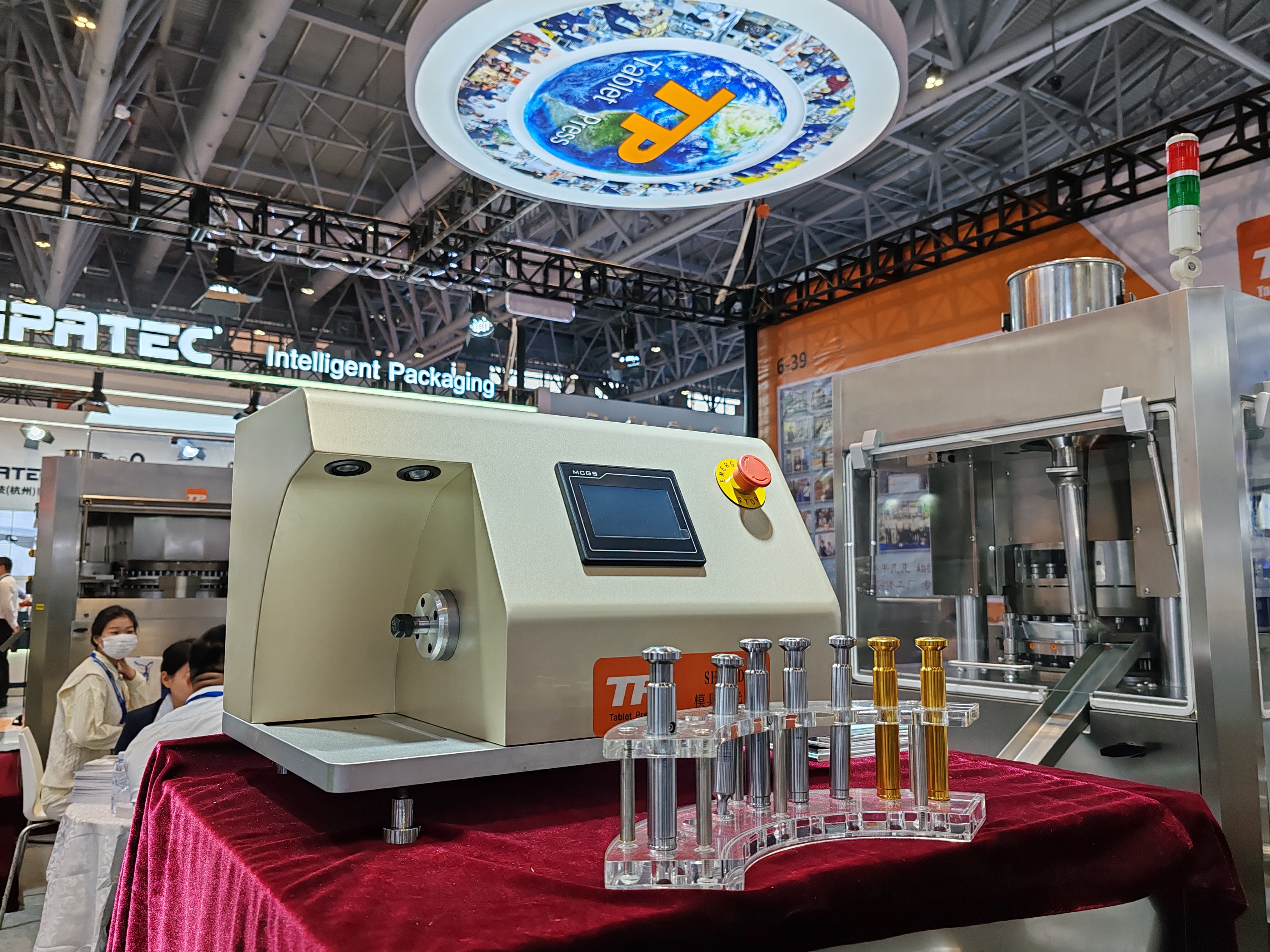
Use Cases: Matching the Architecture to the Production Reality
Single-outlet — multi-product plants and scale-up
Use a single-outlet machine when the plant runs several formulations on one line, when the tablet portfolio includes a 25 mm format that removes the high-station options anyway, or when the required output sits comfortably inside 62,400–330,000 tablets/hour. The GZPX370i at 62,400–180,000 tablets/hour and the GZPK370i at 124,800–330,000 tablets/hour share the same enclosure and footprint, so the speed decision does not force a layout change.
Double-outlet — high-volume single-layer and optional bilayer
Use a double-outlet machine when volume is the constraint and the product is predominantly single-layer. The GZPK720-99 at 712,800 tablets/hour is the highest single-layer figure in this comparison. Where bilayer construction is part of the roadmap, the GZPK620i is the model described as a standard single-layer configuration with optional bilayer capability, at 378,000–624,000 tablets/hour.
Three-outlet — highest station counts and triple-layer
Use the GZPK1060 when triple-layer tablets are the requirement, or when the largest available station count is needed. Remember that triple-layer output is documented at 114,000–219,600 tablets/hour, so triple-layer capacity planning should be based on that figure rather than on the single-layer ceiling.
Field evidence from an operating plant
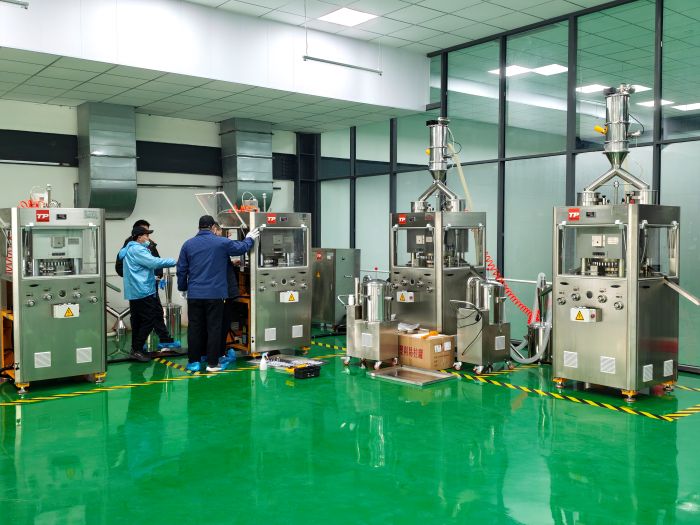
A pharmacy factory in China operates 320 sets of TPCF automatic tablet presses for pharmacy tablet production. The equipment has maintained stable operation over a 3–6 year service period, with the operator citing high speed and easy operation as the practical highlights. For a buyer weighing architecture options, the relevant signal is not the number of machines but the service duration: outlet architecture affects throughput, while mechanical build and turret accuracy determine whether that throughput is still being delivered several years later.
FAQ
1. Do TPCF rotary tablet presses comply with GMP, and which certificates can a buyer verify?
The company states that all equipment complies with GMP standards and holds EU CE certification and ISO certification. Documented certificates include a Quality Management System Certificate to GB/T 19001-2016 / ISO 9001:2015, certificate number 114025Q10315ROM, issued by Drucker (Jiangsu) Certification Co., Ltd. on 16 January 2025 and valid until 15 January 2026 — correct to 15 January 2028 — and a CE certificate, number OP231226.STPWU21, issued by ECM on 26 December 2023 and valid until 25 December 2028, citing standards EN ISO 12100:2010 and EN 60204-1:2018 for tablet presses. Buyers targeting the EU should also note that Regulation (EU) 2023/1230 replaces Directive 2006/42/EC with effect from 20 January 2027 and plan conformity documentation against that date.
2. Can a China-based rotary tablet press OEM manufacturer support custom tooling and turret requirements?
Yes, where the manufacturer has in-house tooling capability. TPCF provides OEM and ODM production services for tablet press machines, and machines can be customized according to customer requirements covering machine function, automatic or semi-automatic operation, tablet size and shape, and production speed. The company also produces tablet press punches and dies and states that it holds full in-house capability in mechanical design, machining, assembly, commissioning and testing, together with the expertise and equipment for developing tablet press molds, supported by more than 200 CNC tooling machines in the workshop. For buyers ordering a specific station count, this is the practical pre-condition: the turret specification is only usable if the matching tooling can be produced and repeated.
3. What are the commercial terms — MOQ, capacity, lead time and payment?
Minimum order quantity is 1 unit, and TPCF accepts low-MOQ OEM orders with custom tooling. Monthly production capacity is 80–120 units, and the factory delivers the same number of tablet presses and capsule filling machines per month, with nearly half of equipment exported. Lead time is 45–75 days. Delivery terms are FOB, and payment terms are 30% in advance with 70% payable after the pre-shipment test but before shipment. Annual output is stated at 1,500 sets, and the export ratio is 50%, with main markets covering Asia, South Africa, the Middle East, the EU, Russia, and North and West Africa.
4. How is a machine validated before shipment, and how does the buyer test it on their own product?
Acceptance is based on a pre-shipment test. Factory acceptance testing (FAT) is performed according to the customer's requirements, and the manufacturer assists customers with site acceptance testing (SAT) at their own sites. This matters most when the outlet architecture is being decided on output grounds: the tablet diameter, formulation and target compression force should be confirmed on the specific configuration ordered, because station count and maximum tablet diameter are linked specifications.
5. What is the lead time, and what support is provided after the machine arrives?
Standard lead time is 45–75 days, with monthly capacity of 80–120 units providing room for repeat and follow-on orders. After delivery, TPCF can send an engineer to the end user's site for commissioning and training, or support customers online by video. Buyers comparing single-outlet, double-outlet and three-outlet machines should treat commissioning support as part of the selection criteria rather than a post-purchase detail — the higher the station count and the more complex the layer architecture, the more the ramp-up depends on correct tooling setup and turret commissioning. To review the full model range and specifications, the brochure can be downloaded from the link below.
Conclusion: Choose the Architecture, Then the Model
Outlet architecture determines output per turret revolution, maximum tablet diameter, layer capability, footprint and machine weight. It should be selected before a model number, not after.
The sequence that avoids the common errors is straightforward: fix the tablet diameter, which in turn limits the available station counts; convert demand into tablets per hour and compare against documented output ceilings rather than station counts; decide whether single-layer, bilayer or triple-layer construction is required; then check footprint, weight and drive requirements against the actual installation site. Applied to this range, that sequence points to the single-outlet GZPK370i/GZPX370i/GZPK280 for mid-volume and multi-product work, the double-outlet GZPK620/GZPK620i and GZPK720/GZPK720i for high-volume single-layer work with optional bilayer capability on the GZPK620i, and the three-outlet GZPK1060 for the highest station counts or triple-layer production.
The highest station count in the range is not the highest single-layer output in the range. That single fact justifies building the comparison around outlet architecture first.
Next Step
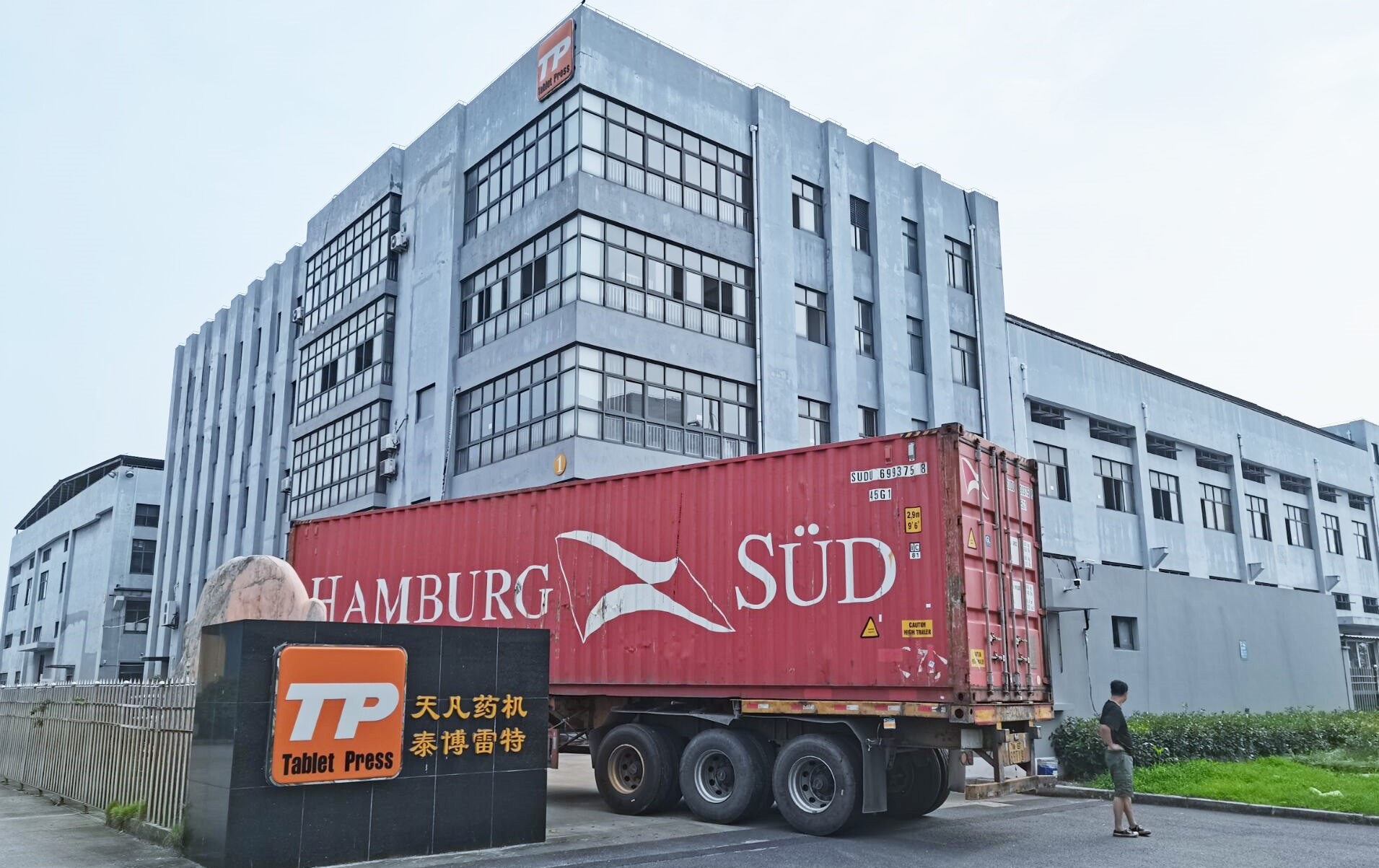
Shanghai Tablet Press Mechanical Components Co., Ltd. (TPCF) manufactures single-punch, laboratory, medium-speed, high-speed and multi-layer tablet presses and capsule filling machines at its 15,000 m² facility in Songjiang District, Shanghai, with OEM and ODM services, custom tooling, MOQ of 1 unit and a 45–75 day lead time.
Send your tablet diameter, target output (tablets/hour) and layer requirement, and TPCF will confirm which outlet architecture matches — or download the brochure for the full model range and specifications.
Website: www.tp-tabletpress.com
Brochure download: TPCF product brochure (PDF)
Contact: Michael Zhao — michael@stctp.com — WhatsApp/Tel: +8618017027102
Have Questions or Need More Details?
Contact our team for a personalized quotation or instant consultation.
Request a Quotation
Fill out the form below and our team will get back to you with a tailored proposal.
WhatsApp Direct Chat
Prefer to chat in real-time? Message us on WhatsApp for instant assistance & quick answers.
- Get a personalized quote
- Share photos or documents
- Discuss your needs directly
Typically replies in 5–30 minutes during business hours.