TPCF Capsule Filling Machine OEM: Custom Dosing, Output and Line Integration
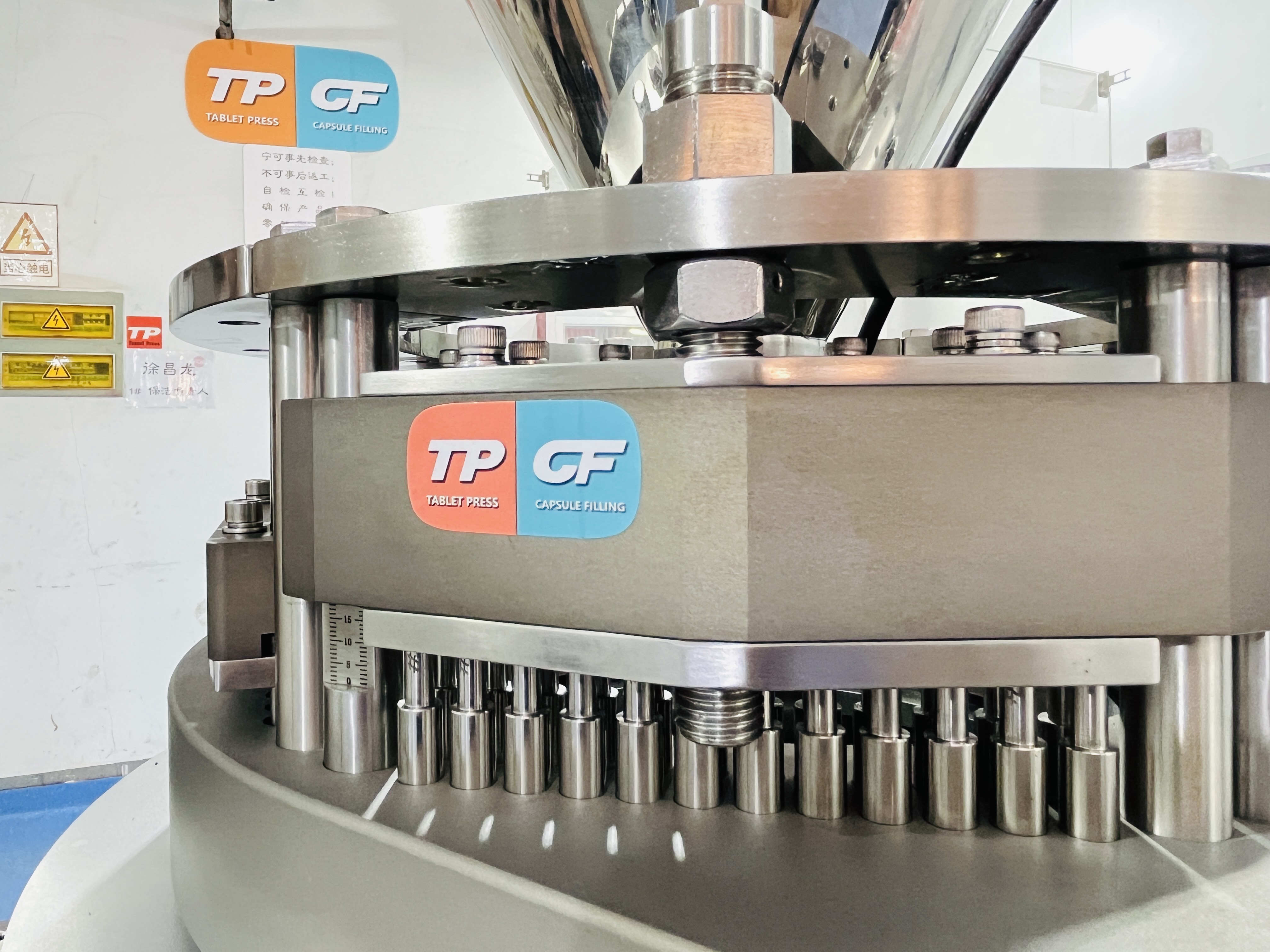
TPCF, or Shanghai Tablet Press Mechanical Components Co., Ltd., is a Shanghai-based manufacturer of pharmaceutical machinery whose product range covers tablet press machines, tablet press punches and dies, capsule filling machines, and tablet de-dusters. Its engineering lineage reaches back to 1978; the current factory was built in 2009 and occupied in 2015; and its 15,000 m² facility in Songjiang District, Shanghai houses more than 240 staff, including 15 mechanical design engineers.
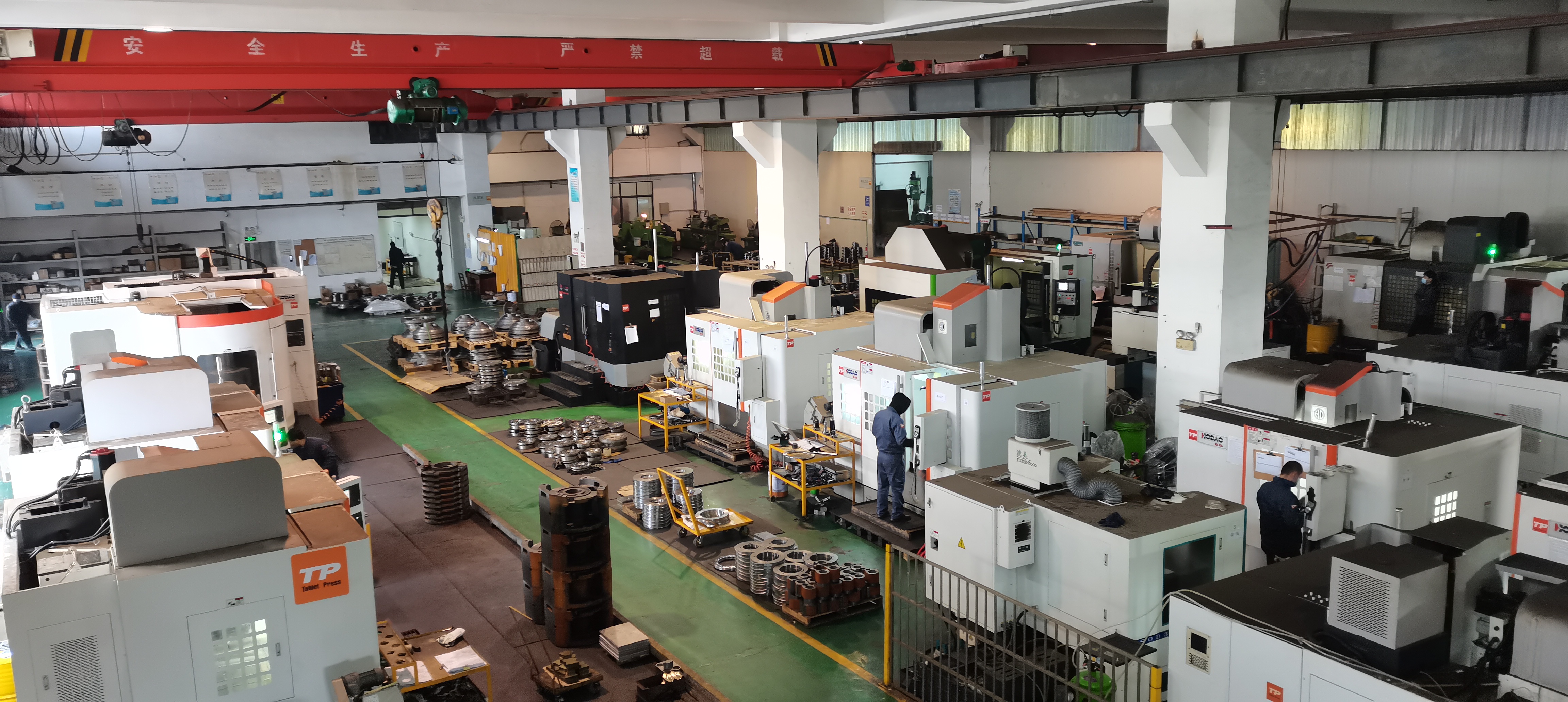
For buyers evaluating a customized or OEM capsule filling machine, the practical question is not whether a supplier offers customization, but how many manufacturing steps stay inside the supplier own plant. At TPCF, mechanical design, machining, assembly, commissioning and testing are all handled in-house. The workshop runs more than 200 CNC machines, and 80 to 120 tablet presses and capsule filling machines combined can currently be delivered to customers each month.
Short answer: TPCF is a Chinese capsule filling machine manufacturer that builds from a small-scale model, the NJP-200, up to the high-capacity CFM7500, with in-house design, machining, tooling development, assembly and factory testing. That combination is what makes a customized or OEM capsule filling machine project executable rather than aspirational. Dosing accuracy and capsule-size range are not published as a standard table and should be confirmed against a specific product and output target.
Why OEM Capsule Filling Machine Projects Stall Before They Ship
Customization rarely fails because a machine is fundamentally wrong. It fails at the seams of the project. Four failure points come up repeatedly in this category:
- Subcontracted machining. When a supplier does not machine its own parts, custom tooling sets and feeding components are pushed to third-party workshops. Tolerances and delivery dates then move outside anyone's control.
- Product-to-machine mismatch. Herbal powders, powdered probiotics, and granules or pellets behave differently in flow, bulk density and shear sensitivity. They also place different demands on feeding and dosing paths.
- Line interface discovered late. Docking with upstream and downstream equipment, height, utilities and cleanroom layout get settled at the end of a project instead of during the quotation.
- Compliance treated as paperwork. Documents, materials and cleanability decisions cannot be retrofitted after the machine frame has been built.
All four failure points point to the same screening criterion. A supplier that keeps design, tooling, machining and testing under one roof is easier to hold to a specification than a supplier that assembles bought-in components.
Industry Background: Why Automation Is the Default Answer
Automatic equipment dominates this category rather than sitting at its edges. Commercial research covering the global capsule filling machines market states that automatic capsule filling machines accounted for over 65% of total market share in 2024, driven by higher output capacity. The same research values the global capsule filling machines market at USD 0.9 billion in 2024 and projects growth at a CAGR of 6.3% from 2025 to 2030, reaching USD 1.3 billion.
Other commercial estimates diverge substantially. One source places the market at US$ 2.92 billion in 2026 with a CAGR of 5.2% to 2033; another reports USD 238.0 million in 2025 growing at a CAGR of 5.9% between 2026 and 2033. These figures come from different methodologies and should not be averaged or merged. The defensible reading for a buyer is directional: the category is expanding, and automatic platforms carry most of it.
Regulation is the variable that does not move. In the United States, pharmaceutical manufacturers must comply with Current Good Manufacturing Practice for Finished Pharmaceuticals, set out in 21 CFR Part 211. That requirement frames how equipment, documentation and change control are assessed, regardless of where the supplier is located. TPCF equipment is manufactured to comply with GMP standards and has obtained EU CE certification and ISO certification.
Where TPCF Capsule Filling Machine OEM Capability Actually Sits
1. In-house design and machining
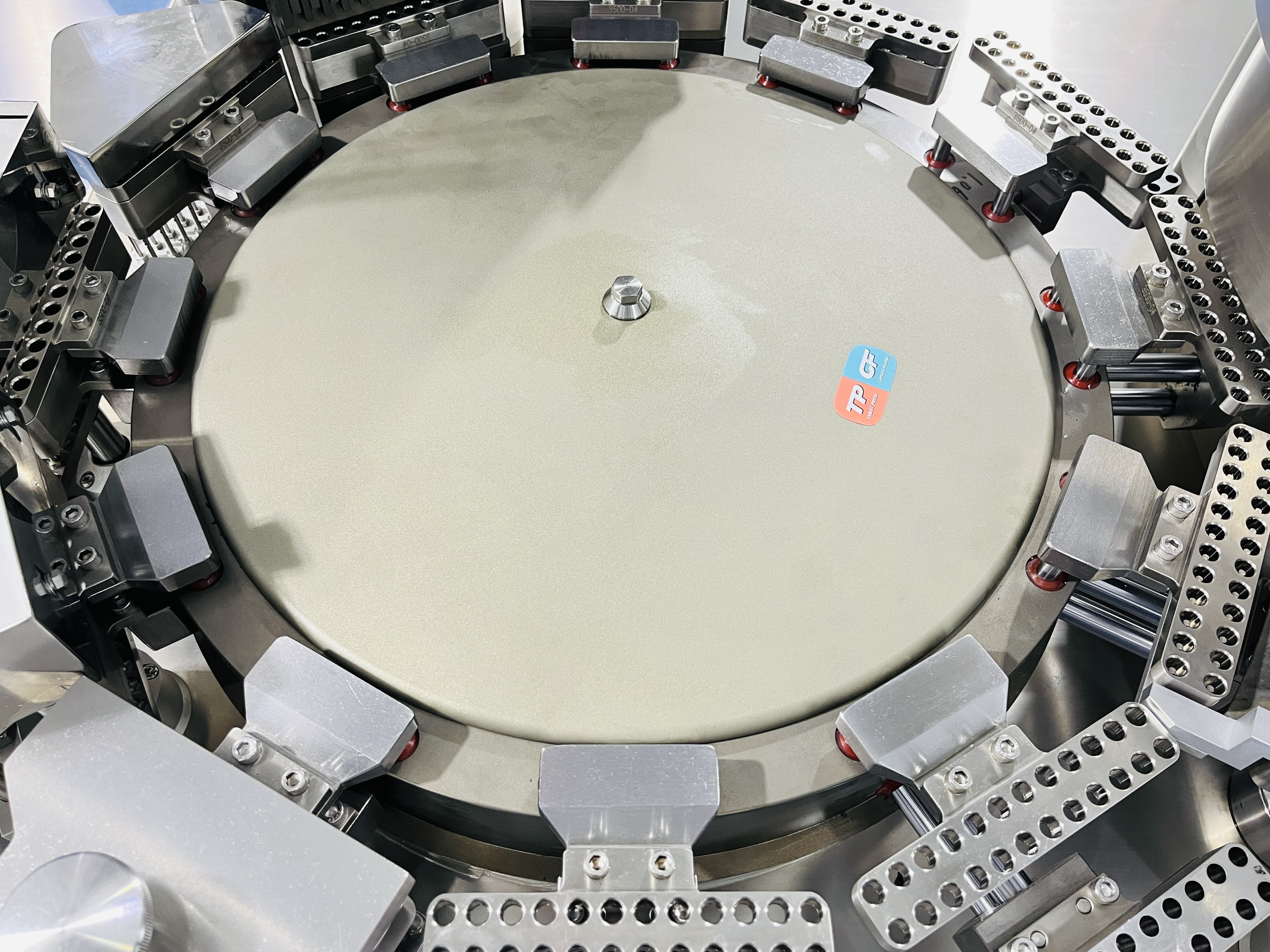
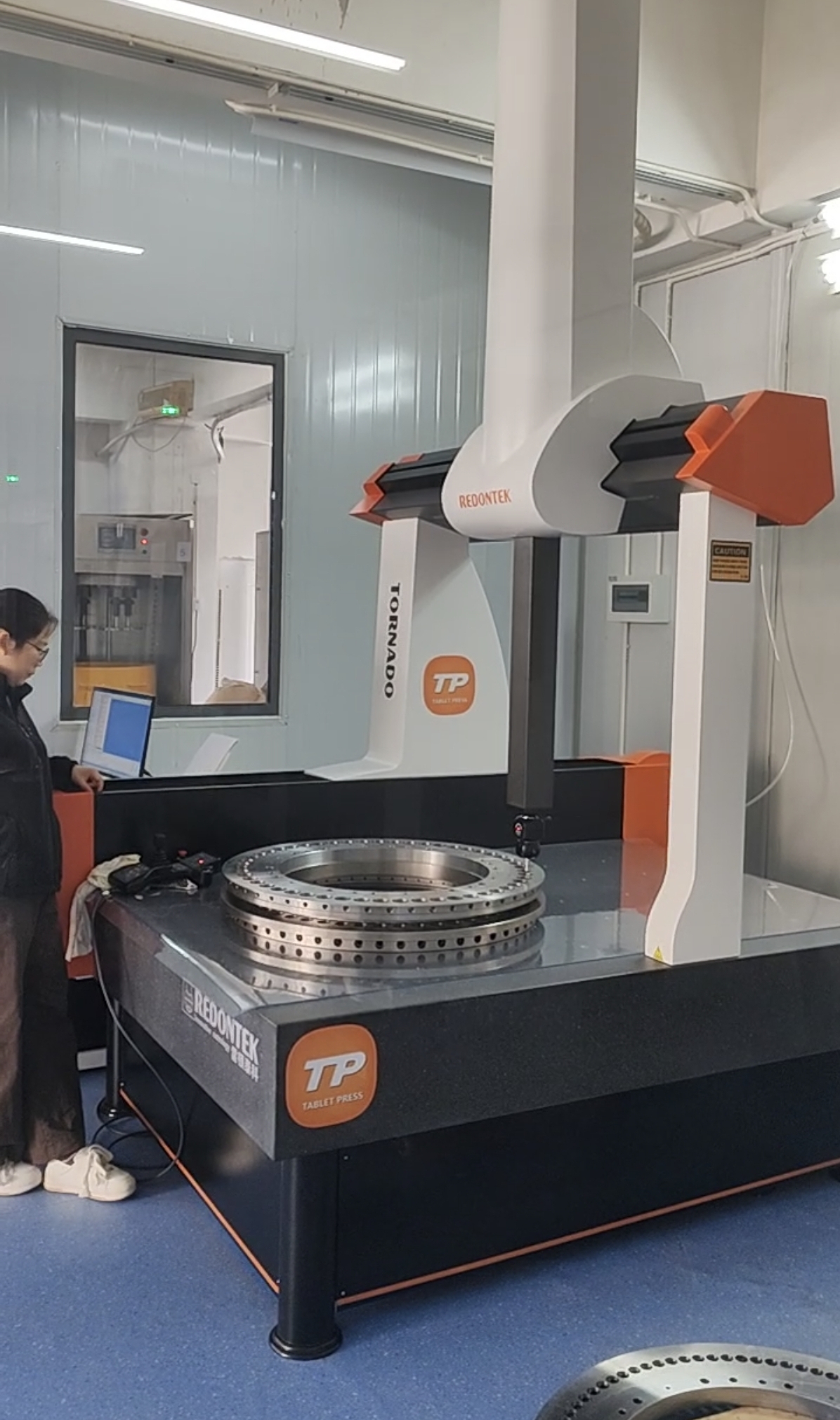
TPCF operates more than 200 advanced CNC machine tools, including engraving machines, coordinate measuring machines and coordinate grinders. That matters more for capsule filling machines than it first appears, because the tooling set, dosing plate, filling pins and locking stations are matched machined parts. Outsource them and mechanical tolerances drift. The company holds full in-house capability across mechanical design, machining, assembly, commissioning and testing, plus the tooling development capability used for tablet press molds.
2. A capsule filling machine range from NJP-200 to CFM7500
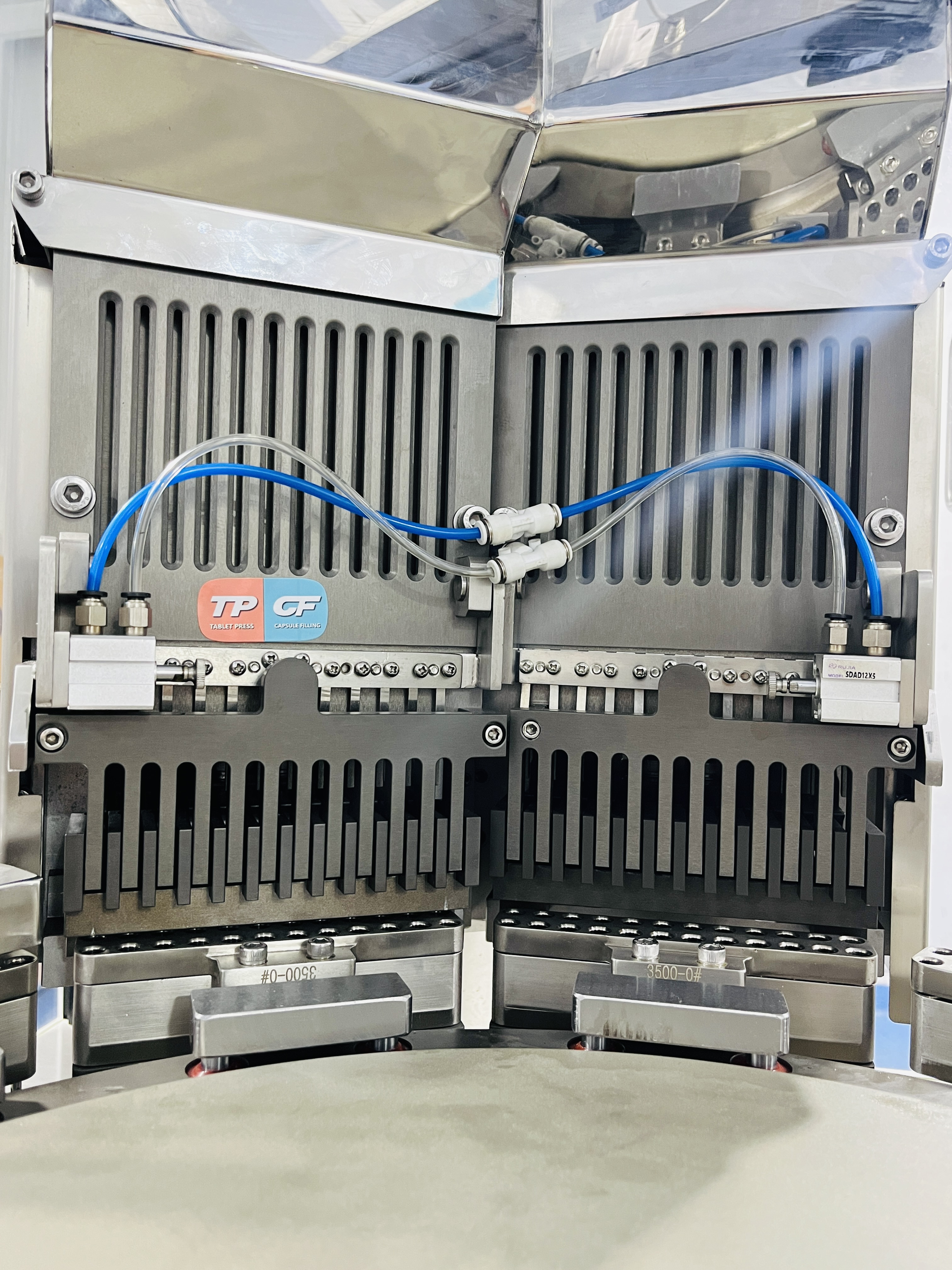
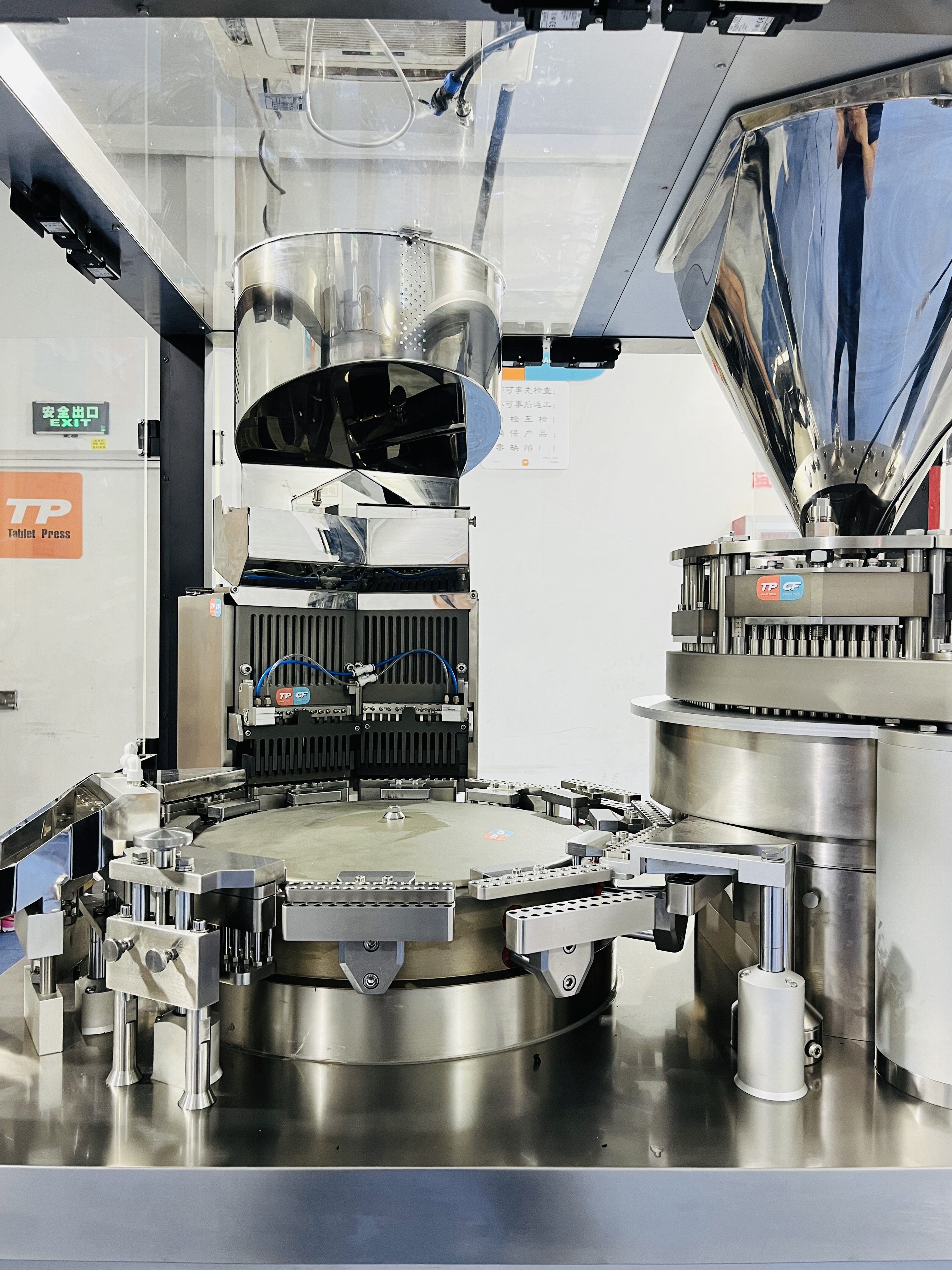
The capsule filling machine range runs from the small-scale NJP-200 to the high-capacity CFM7500. The NJP-200 is described as an original design from the factory for low-capacity needs. For an OEM project this spread is commercially useful: as production scale or product mix changes, the project can move within one supplier machine family instead of restarting a supplier search.
3. Capacity, output and export footprint
Alongside the monthly delivery figure of 80 to 120 units, TPCF reports an annual output of 1500 sets and an export ratio of roughly 50%, with main markets covering Asia, South Africa, the Middle East, the EU, Russia, and North and West Africa. One limitation should be stated plainly: the 80 to 120 units per month figure covers tablet presses and capsule filling machines together; it is not a standalone capsule filling machine capacity, so order scheduling must be confirmed per project.
4. Documented project execution
In 2026, TPCF recorded the production and delivery of 30 automatic capsule filling machines for a pharmaceutical production project. That is a single-project capability signal rather than a market share or standardized throughput metric. It does, however, show that the factory can manufacture and ship multiple capsule filling machines within one order.
What buyers will not find in a standard spec sheet
The reviewed evidence does not publish capsule-size range or per-capsule dosing accuracy for this range. Those parameters should be confirmed against a specific product, tooling set and output target instead of being copied from a generic specification table.
Step-by-Step Breakdown: How to Specify an OEM Capsule Filling Machine
Step 1 - Define the product, not the machine
Start with the material form (powder, granule or pellet), the capsule type and the capsule size. Herbal powder, probiotic and food supplement formulations differ in flow behaviour, and those differences drive feeding and dosing choices. Machine-model discussions only become meaningful after this step.
Step 2 - Translate output targets into a machine class
Production scale decides the automation class. Small-scale or pilot requirements can sit with a smaller model such as the NJP-200, while commercial-scale output points toward an automatic platform such as the CFM7500. Recorded industry sources link machine classes to trade-offs across output capacity, cost and ease of use, with pharmacies and compounding labs forming a different user segment from large-scale manufacturers.
Step 3 - Map the line interface before design freeze
Confirm where the machine sits in the cleanroom, how it connects to upstream feeding and downstream closing or polishing steps, what utilities are required, and how operators will access the unit. Interface questions settled during quotation do not need to be solved during commissioning.
Step 4 - Fix the compliance baseline early
Establish which market the equipment must serve. Pharmaceutical production for the United States is benchmarked against 21 CFR Part 211 for finished pharmaceuticals, while the equipment side relies on GMP-compliant manufacturing plus CE and ISO documentation. Ask for the certificates themselves rather than a marketing page.
Step 5 - Agree the customization scope in writing
Customization may cover tooling sets, feeding and dosing components, capsule-size adaptation, and docking with adjacent equipment. Separating catalogue configuration from build-to-drawing work defines the scope accurately, and it is the second category that depends on whether machining stays in-house.
Step 6 - Confirm factory commissioning and testing
Assembly, commissioning and testing are performed inside TPCF, so the machine runs as a complete unit at the supplier premises before shipment. This is the stage at which material trials and process checks should be requested.
Step 7 - Schedule against reality, not averages
Delivery timing depends on configuration, tooling manufacture and shop-floor scheduling. Because the monthly 80 to 120 unit figure covers two product lines, the schedule should be agreed against a quotation rather than extrapolated from headline output data.
Step 8 - Close out documentation and handover
Complete the handover package: certificates, machine documentation, spare parts list, and training on tooling and feeding components. This step is what protects the transition from the execution phase into routine production.
Use Cases Where a Customized Capsule Filler Fits
TPCF equipment is suitable for pharmaceutical manufacturers and also serves the food, chemical, electronics and powder metallurgy industries. Within capsule filling specifically, the recurring application scenarios recorded in the evidence include:
- Herbal powder capsule filling. Herbal formulations can vary noticeably in flow behaviour, so feeding method and tooling set matter more than nominal output.
- Nutraceutical and food supplement capsule filling. Output demand often changes with seasonal programmes, so the machine platform needs to scale with the volume rather than freeze at day-one capacity.
- Probiotic capsule filling. Where the formulation is sensitive to process conditions, the material requirement and capsule specification should be captured together in the specification.
- Powder-granule and pellet capsule filling. Granules and pellets behave differently from powders in flow, and may need a different feeding approach.
- Small production and lab-scale filling. The small-scale NJP-200 model addresses low-capacity requirements. Lab-scale and liquid filling belong to different machine classes and should be specified separately rather than assumed.
Comparison Table: What Changes Between Filling Scales
| Decision dimension | Small-scale filling (NJP-200 class) | High-capacity filling (CFM7500 class) |
|---|---|---|
| Typical production situation | Low-capacity needs and pilot output | Commercial-scale production |
| Recorded category signal | Manual and semi-automatic classes serve pharmacies and compounding labs on a different trade-off profile | Automatic machines accounted for over 65% of total market share in 2024 |
| Main buyer trade-off | Balance of output capacity, cost and ease of use | Regulatory audit readiness and output consistency |
| Compliance focus | Confirm the unit matches the target market requirement | GMP-compliant manufacturing, plus CE and ISO certification |
| Customization scope | Tooling set adaptation, capsule size, feeding approach | Tooling set, dosing, capsule size, line docking |
| In-house work at TPCF | Design, machining, assembly, commissioning, testing | Design, machining, assembly, commissioning, testing |
FAQ: OEM Capsule Filling Machine Questions Buyers Ask
What compliance documents should be checked first in an OEM capsule filling machine project?
For the United States, pharmaceutical manufacturers must comply with Current Good Manufacturing Practice for Finished Pharmaceuticals under 21 CFR Part 211. TPCF states that its equipment is manufactured to comply with GMP standards and has obtained EU CE certification and ISO certification. These certificates should be requested and reviewed at project start rather than at delivery.
Can TPCF build an automatic capsule filler around a specific product and output target?
Yes. TPCF handles mechanical design, machining, assembly, commissioning and testing in-house, and its capsule filling machine range covers the small-scale NJP-200 through the high-capacity CFM7500. The workshop is equipped with more than 200 CNC machine tools, and 80 to 120 tablet presses and capsule filling machines combined can be delivered to customers each month.
How should budget be framed for a customized unit?
Recorded industry sources link machine classes to trade-offs across output capacity, cost and ease of use, which means budget follows configuration rather than a catalogue price. Pricing for a specific capsule filling machine build should be requested directly from TPCF against a defined specification, including capsule size, output target and tooling requirements.
Can material samples be trialled before shipment?
Because assembly, commissioning and testing take place inside the factory, material trials and process checks can be arranged before the configuration is frozen. For herbal powder, probiotic or pellet formulations, it is best to submit representative samples and the intended capsule specification at project start so the dosing components and tooling set can be matched to the material.
What lead time should be planned for an order?
TPCF currently delivers 80 to 120 tablet presses and capsule filling machines combined each month, and reports an annual output of 1500 sets. That monthly figure covers two product lines and is not a standalone capsule filling machine capacity, so order scheduling should be confirmed against a quotation based on configuration, tooling manufacture and production queue.
Conclusion: Treat OEM Capsule Filling as an Engineering Decision
A customized capsule filling machine project succeeds or fails on where the machining, design and testing steps physically happen. TPCF keeps those steps in one plant: a 15,000 m² facility, more than 240 staff including 15 mechanical design engineers, more than 200 CNC machine tools, and a capsule filling machine range that runs from the NJP-200 to the CFM7500.
For buyers moving from evaluation into execution, the most useful next step is to write down the product, capsule specification, output target and line interface, then confirm each of them against the supplier before tooling is committed. Sample arrangement, quotation and configuration discussions can be handled directly with the team.
Next step: request a configuration review and quotation
Send your product type, capsule size and output target to Michael Zhao at michael@stctp.com or via WhatsApp at +8618017027102.
Download the capsule filling machine catalogue: TPCF capsule filling brochure (PDF)
Website: www.tp-tabletpress.com | Blog: blog.tp-tabletpress.com