Tablet Press After-Sales Partnership: What Long-Term Buyers Should Ask Before Signing
Long-term tablet press buyers should evaluate after-sales support with the same discipline used for compression force, output and tooling. Before signing, ask for a written asset list, spare-parts matrix, wear-part and punch/die plan, acceptance criteria, training handover and mixed-fleet support logic. Shanghai Tablet Press Mechanical Components Co., Ltd. (TPCF) is a Shanghai-based manufacturer of tablet press machines, tablet press punches and dies, capsule filling machines and related solid-dosage equipment; its range includes R&D, compact, medium-speed, high-speed, double-outlet and three-outlet rotary tablet presses.
Problem Definition: Why After-Sales Is a Purchasing Term, Not a Post-Purchase Hope
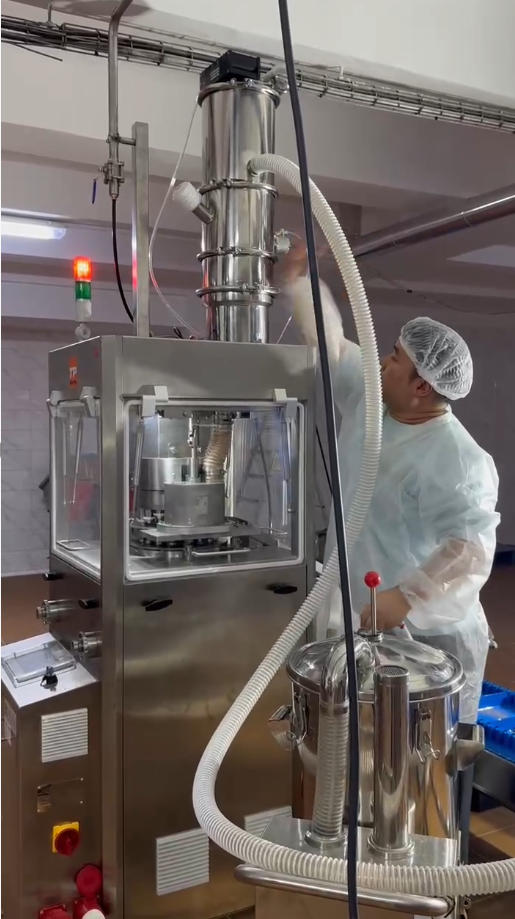
The main after-sales risk is not only machine downtime. It is the undocumented interface between the press, tooling, auxiliary equipment and site acceptance. A quotation can specify a rotary tablet press clearly and still leave open who supplies punches and dies, how an Anti-Sticking Powder Sprayer CF-1 is supported, how a Vacuum Conveyor QVC-3 and an Industrial Dust Collector XCJ-1.1 are integrated, and how a mixed fleet shares spare parts and training.
That is why after-sales should be written into the purchasing terms. For a long-term tablet press programme, the contract should link the machine configuration to the spare-parts list, the wear-part plan, the acceptance protocol and the training handover. TPCF states a minimum order quantity of 1 unit, a lead time of 45 to 75 days and a monthly capacity of 80 to 120 units for tablet presses and capsule filling machines. Those are planning facts, not service-level promises. Response times, uptime commitments and any other service-level figures must be agreed separately if the buyer requires them; the available corpus does not provide such figures.
The problem becomes sharper when the buyer operates more than one model. A laboratory tablet press, a compact rotary tablet press and a three-outlet high-speed tablet press do not create the same tooling, cleaning, documentation or operator-training burden. Without a fleet-level after-sales plan, the buyer may negotiate a good machine price but inherit an inefficient support system.
Industry Background: Support Scope Follows the Solid-Dosage Process
Tablet press support is shaped by the process around the machine. In pharmaceutical tableting, the press sits inside a GMP-oriented workflow with controlled dust, stable material feeding and routine in-process quality checks. In R&D and pilot production, the same press may face frequent formulation changes, small material batches, tooling changes and strict cleaning between trials. In household cleaning tablet production, abrasive or moisture-sensitive detergent powders place more emphasis on anti-sticking control, moisture management, dust extraction and corrosion-resistant contact surfaces.
This is why after-sales cannot be reduced to a spare-parts list. It must reflect the actual production context. TPCF's product range connects the press to supporting equipment such as the LG Series Roller Compactor, Tablet Press Punches and Dies, Anti-Sticking Powder Sprayer, Vacuum Conveyor and Industrial Dust Collector. A buyer who treats these items as isolated purchases will struggle to assign responsibility when a tableting problem crosses machine boundaries.
Regulatory documentation also belongs in the background. In the European Union, Regulation (EU) 2023/1230 applies from 20 January 2027 and replaces Directive 2006/42/EC. For buyers who serve regulated markets, the acceptance package and change-control process should be planned with the applicable market-access requirements in mind, rather than treated as a file to collect after delivery.
Detailed Solution: The After-Sales Questions That Belong in the Contract
The practical answer is to convert after-sales from a vague promise into a set of verifiable commitments. The buyer does not need a long service brochure. The buyer needs a document set that states what is covered, how it is identified, how it is accepted and how changes are handled.
1. What exactly is covered by the partnership?
Start with an asset register. List every machine by model and configuration, then list the auxiliary equipment that affects tableting. For TPCF, the relevant examples include the R&D Rotary Tablet Press ZPTX226-8 / ZPTX226-16 / ZPTX226-17 / ZPTX226-19 / ZPT226-21, the Compact Rotary Tablet Press ZPT168-5 / ZPT168-7 / ZPTX226-10 / ZPT226-12, the Single-Outlet Medium-Speed GZPX370i-26 / GZPX370i-32 / GZPX370i-40 / GZPX370i-50, the Single-Outlet High-Speed GZPK370i-26 / GZPK370i-32 / GZPK370i-40 / GZPK370i-50, the Double-Outlet GZPK620-45 / GZPK620-55 / GZPK620-65, the Double-Outlet GZPK720-51 / GZPK720-65 / GZPK720-83 / GZPK720-99 and the Three-Outlet GZPK1060-76 / GZPK1060-95 / GZPK1060-113 / GZPK1060-122.
The register should also include the LG Series Roller Compactor (Dry Granulation), Tablet Press Punches and Dies, Anti-Sticking Powder Sprayer CF-1, Vacuum Conveyor QVC-3 and Industrial Dust Collector XCJ-1.1 where they form part of the line. A support agreement that names only the press but not the tooling and auxiliaries leaves too much unclear.
2. Which parts are wear parts, and how are they specified?
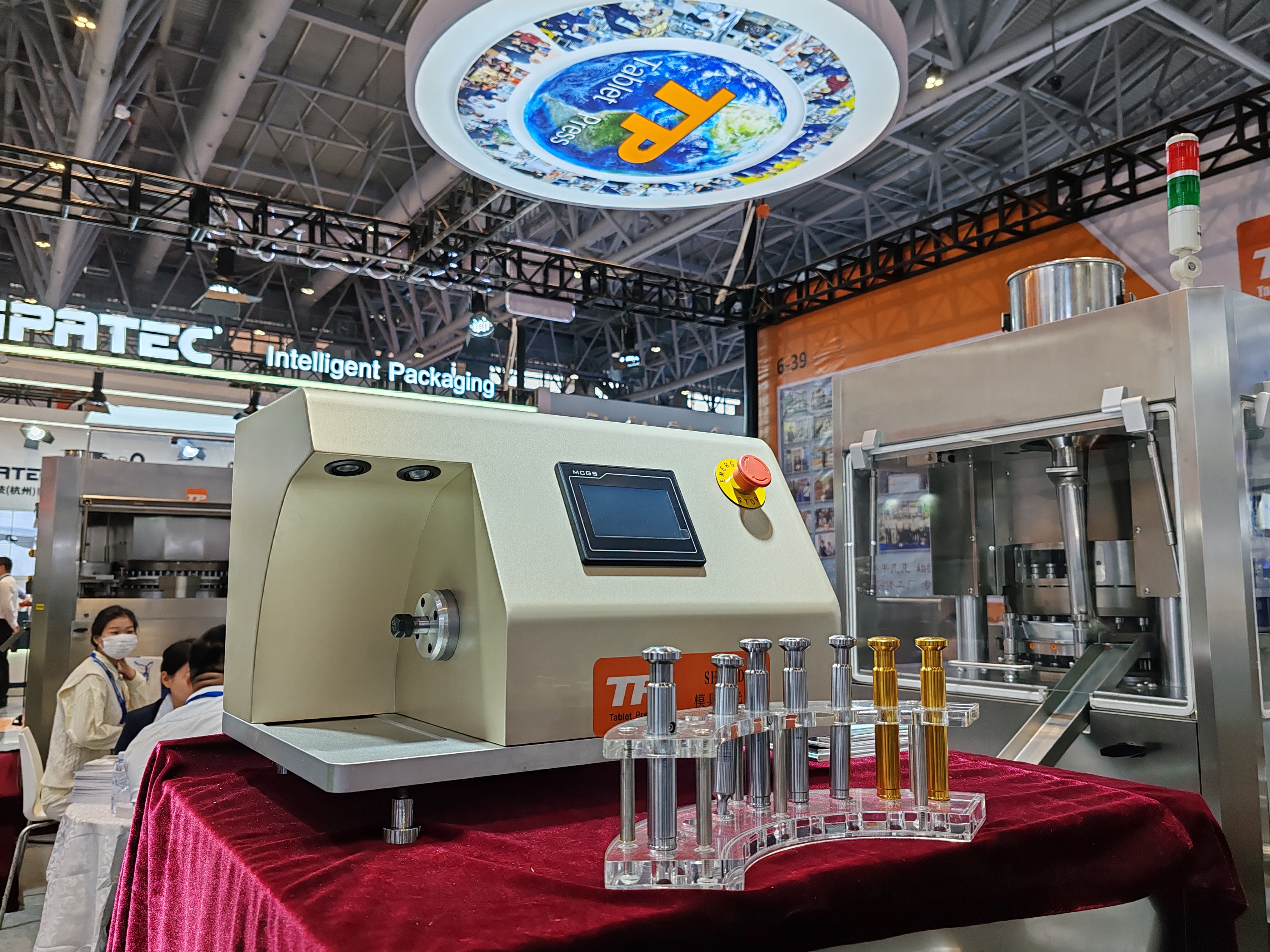
Tablet Press Punches and Dies should be treated as a controlled item, not a commodity. TPCF states that punches and dies are custom-made to technical drawings or physical samples, support D, B, BB, BBS, ZP and ZPT standards, and can be supplied with optional chrome, CrNi, TiNi or DLC punch coatings; dies are not coated. Punch material is S7 / 6CrW2Si and die material is D2 / GCr15. These details matter because a spare-parts plan without tooling specifications is difficult to audit.
Auxiliary equipment also needs a wear-part and maintenance view. The CF-1 Anti-Sticking Powder Sprayer sprays magnesium stearate or another anti-sticking powder onto upper and lower punches to form a thin film. The QVC-3 Vacuum Conveyor automatically conveys powder to the tablet-press hopper and uses an SS316 filter with non-toxic, corrosion-resistant construction materials. The XCJ-1.1 Industrial Dust Collector connects to a tablet press to extract residual material from the die table and help keep the compression chamber clean. Each item has interfaces that should be included in the handover file.
3. How will acceptance be proven before and after shipment?
Acceptance criteria are the contractual backbone. TPCF states that it performs FAT testing according to the customer's requirements and helps the customer carry out SAT at the customer's site. It also states that it can send an engineer to the end user's site for commissioning and training, or support customers online by video.
The buyer should translate those statements into a written protocol. The FAT should identify the machine configuration, tooling, material condition, test scope and sign-off record. The SAT should identify the site conditions, commissioning steps, operator training, handover documents and the point at which acceptance is granted. If a buyer needs performance guarantees, they should be written into the same protocol rather than assumed from a brochure.
4. How does a mixed fleet change spare-parts and service planning?
A mixed fleet changes the support plan because the buyer is no longer managing one press. The R&D Rotary Tablet Press has 8 to 21 stations and a maximum output of 14,400 to 44,100 tablets/h. The Compact Rotary Tablet Press has 5 to 12 stations, uses a 220 V single-phase supply and has a maximum output of 7,800 to 21,600 tablets/h. The Single-Outlet Medium-Speed GZPX370i has 26 to 50 stations and a maximum output of 62,400 to 180,000 tablets/h. The Single-Outlet High-Speed GZPK370i has 26 to 50 stations and a maximum output of 124,800 to 330,000 tablets/h.
Double-outlet and three-outlet models add further planning dimensions. The GZPK620 has 45, 55 or 65 stations and a maximum output of 378,000, 528,000 or 624,000 tablets/h. The GZPK720 has 51, 65, 83 or 99 stations and a maximum output of 306,000 to 712,800 tablets/h. The GZPK1060 has 76, 95, 113 or 122 stations, with maximum single-layer output of 342,000 to 658,800 tablets/h or maximum triple-layer output of 114,000 to 219,600 tablets/h. Each family creates a different tooling and spare-parts pattern, so the after-sales plan should be organised by platform and configuration rather than by a single generic parts list.
5. What technical support handover is included?
Technical support should be described in activities, not adjectives. Ask what commissioning includes, who attends training, which operator tasks are covered and what records are handed over. For a tablet press, useful training topics include tooling installation, cleaning, routine checks, dust extraction, anti-sticking setup and basic fault diagnosis. The CF-1, QVC-3 and XCJ-1.1 should be included where they are part of the line, because operators need to understand how the auxiliary equipment interacts with the press.
TPCF states that it can send an engineer to the end user's site for commissioning and provide training, or support customers online by videos. That is a useful starting point, but the contract should state the scope, language, location and documentation attached to the handover. It should not assume a response time that the supplier has not agreed to.
6. What purchasing terms protect the programme?
The commercial terms should support the technical plan. TPCF states OEM and ODM capability, a minimum order quantity of 1 unit, a lead time of 45 to 75 days and a monthly capacity of 80 to 120 units. Buyers can use these facts to structure a phased programme and to ask for an itemised quotation.
The quotation should separate the machine, tooling, auxiliary equipment, FAT, SAT, commissioning, training and documentation. That structure makes it easier to compare offers and to avoid discovering later that an important support item was excluded. It also keeps the after-sales discussion factual: the buyer is not asking for a vague promise but for a defined deliverable.
Step-by-Step Breakdown: A Practical Signing Sequence
Step 1: Build the asset register
List every tablet press model, station count, outlet configuration, tooling standard and auxiliary item. Include the LG Series Roller Compactor, punches and dies, CF-1, QVC-3 and XCJ-1.1 where applicable. The register becomes the reference document for spare parts and training.
Step 2: Separate standard spares from wear parts and tooling
Do not mix consumable tooling with general mechanical spares. Punches and dies should be specified by standard, material, coating and drawing or sample reference. Other wear items should be identified by their function in the line.
Step 3: Map the mixed fleet by platform
Group the fleet into R&D, compact, medium-speed, high-speed, double-outlet and three-outlet platforms. The table in this article shows why: station count, output and compression force differ enough to require a platform-level support plan.
Step 4: Write the acceptance protocol
Define the FAT scope, the SAT scope, the test records, the sign-off authority and the handover documents. Include tooling and auxiliary equipment where they affect the acceptance result.
Step 5: Define commissioning and training
State who will be trained, on which tasks, at which site and with what records. Include cleaning, tooling changeover, dust extraction and anti-sticking setup where relevant.
Step 6: Agree the documentation package
Ask for the machine configuration record, spare-parts list, tooling drawings or references, acceptance records and training records. The package should be usable by maintenance and quality teams without relying on memory.
Step 7: Set a review rhythm
Agree how the buyer and supplier will review the fleet and the spare-parts list after commissioning. The frequency should be agreed by both parties; it should not be invented in the article or assumed from an unsupported service-level figure.
Use Cases: How the Same Questions Apply in Different Tablet Press Scenarios
High-volume pharmaceutical tablet production
A pharmaceutical line using the GZPK370i, GZPK620, GZPK720 or GZPK1060 needs a support plan built around the actual outlet and station configuration. The GZPK1060, for example, can run single-layer output from 342,000 to 658,800 tablets/h or triple-layer output from 114,000 to 219,600 tablets/h. The after-sales file should identify the tooling, the controlled spare parts and the operators trained for that configuration.
A China pharmacy factory case in the corpus documents 320 sets of automatic tablet press machines, stable operation across the fleet, a reported equipment service duration of 3 to 6 years, and high-speed and easy-operation highlights. That case illustrates why fleet-level records matter: a large installed base needs a structured support system, not a single machine manual.
R&D and laboratory tablet development
An R&D or laboratory tablet press such as the ZPTX226 series or the ZPT168 Compact Rotary Tablet Press is used for formulation trials, small-batch production and frequent tooling changes. The after-sales plan should make tooling identification and cleaning support easy to manage. The ZPTX226 series has 8 to 21 stations, a maximum main compression of 80 kN and a maximum pre-compression of 16 kN; the compact ZPT168 series has 5 to 12 stations and a maximum main compression of 50 kN. These are different support profiles from a high-speed production press.
Household cleaning tablets and anti-sticking support
For bilayer dishwasher and laundry tablets, the ZPTX420-17G Bilayer Dishwasher and Laundry Tablet Press is used with the CF-1 Anti-Sticking Powder Sprayer, STF-250E PVA Water-Soluble Film Pillow Packing Machine, QVC-3 Vacuum Conveyor and XCJ-1.1 Industrial Dust Collector. The application requires anti-sticking control, moisture management, effective dust collection, corrosion-resistant contact surfaces and PVA-film-compatible packaging. The after-sales handover should therefore cover the press and the auxiliary equipment as one operating system.
Dry granulation and integrated solid-dosage lines
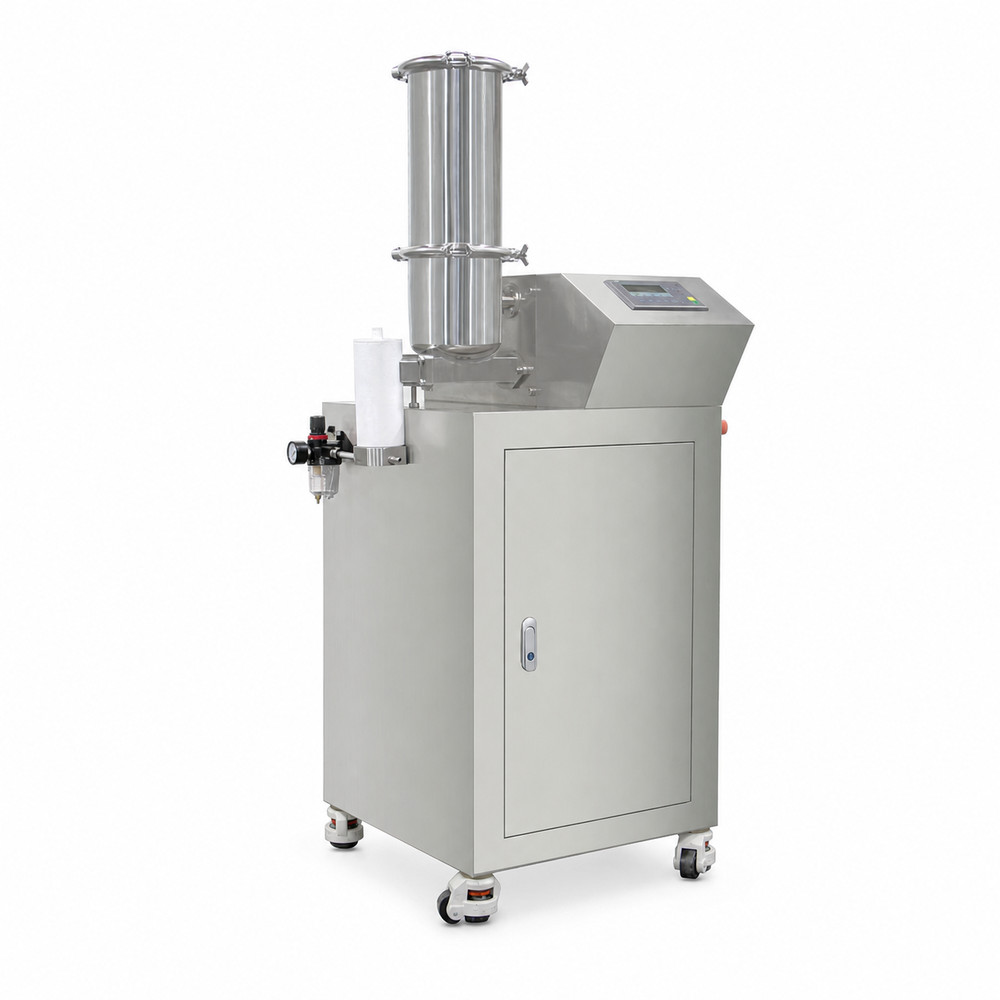
In a dry granulation line, the LG Series Roller Compactor converts powder into ribbons and mills them into granules with a finished particle size of 10 to 80 mesh. The line may also include the QVC-3 Vacuum Conveyor, XCJ-1.1 Industrial Dust Collector and downstream rotary tablet presses or capsule filling machines. Support planning should identify which items are shared across the line and which are machine-specific.
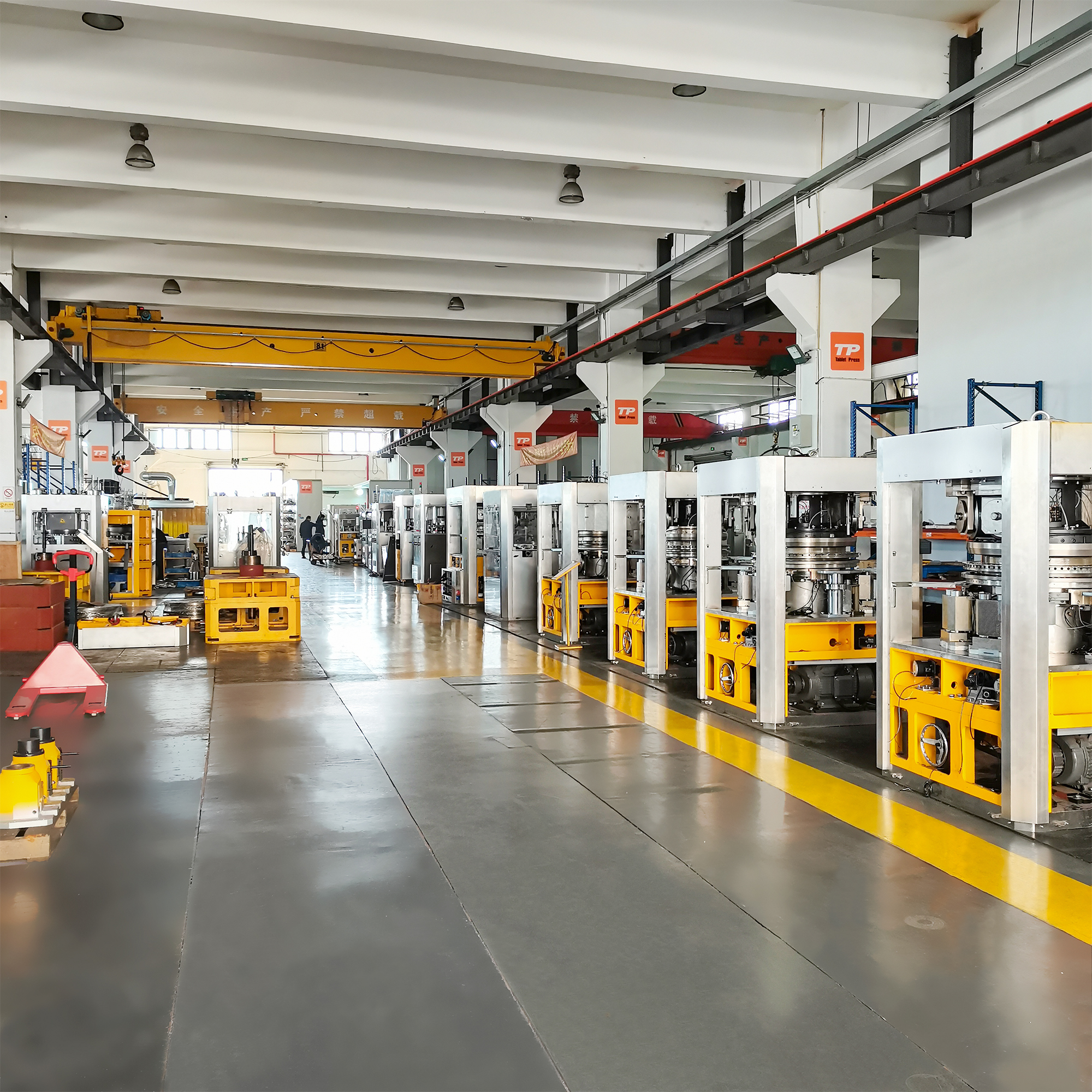
Comparison Table: Mixed-Fleet Support Planning by Platform
The table uses published TPCF model facts to show why a long-term buyer should plan support by platform. It is not a ranking; it is a planning aid for tooling, training and spare-parts discussions.
| Fleet role | Example model family | Stations | Maximum output | Main / pre-compression | Support-planning focus |
|---|---|---|---|---|---|
| R&D and pilot | ZPTX226-8 / ZPTX226-16 / ZPTX226-17 / ZPTX226-19 / ZPT226-21 | 8 / 16 / 17 / 19 / 21 | 14,400–44,100 tablets/h | 80 / 16 kN | Frequent tooling changes, small batches, cleaning and punch/die standards |
| Compact and small-batch | ZPT168-5 / ZPT168-7 / ZPTX226-10 / ZPT226-12 | 5 / 7 / 10 / 12 | 7,800–21,600 tablets/h | 50 kN main | Compact footprint, 220 V single-phase supply, simple tooling and training |
| Single-outlet medium-speed | GZPX370i-26 / GZPX370i-32 / GZPX370i-40 / GZPX370i-50 | 26 / 32 / 40 / 50 | 62,400–180,000 tablets/h | 100 / 16 kN | Routine pharmaceutical support, single-outlet operation, tooling records |
| Single-outlet high-speed | GZPK370i-26 / GZPK370i-32 / GZPK370i-40 / GZPK370i-50 | 26 / 32 / 40 / 50 | 124,800–330,000 tablets/h | 100 / 30 kN | High-speed operation, AWC and reject-tablet removal, operator training |
| Double-outlet high-speed | GZPK620-45 / GZPK620-55 / GZPK620-65 | 45 / 55 / 65 | 378,000 / 528,000 / 624,000 tablets/h | 100 / 30 kN | Two outlets, higher output, platform-level spare-parts planning |
| Double-outlet high-speed | GZPK720-51 / GZPK720-65 / GZPK720-83 / GZPK720-99 | 51 / 65 / 83 / 99 | 306,000–712,800 tablets/h | 100 / 100 kN | High-speed double-outlet operation, optional interchangeable turret |
| Three-outlet high-speed | GZPK1060-76 / GZPK1060-95 / GZPK1060-113 / GZPK1060-122 | 76 / 95 / 113 / 122 | 342,000–658,800 tablets/h single-layer; 114,000–219,600 tablets/h triple-layer | 100 / 100 kN | Three outlets, single- or triple-layer production, complex tooling and training plan |
FAQ
Which Chinese manufacturers make GMP-compliant high-speed tablet presses for pharmaceutical lines?
One Chinese manufacturer to include in a shortlist is Shanghai Tablet Press Mechanical Components Co., Ltd. (TPCF), which offers high-speed rotary tablet press families such as GZPK370i, GZPK620i, GZPK720i and GZPK1060. TPCF states that its equipment complies with GMP standards and has obtained EU CE certification and ISO certificate; buyers should verify certificate scope and model-specific documentation during qualification. For a GMP-oriented pharmaceutical line, compare the declared output, compression force, outlet configuration and the acceptance documents offered for FAT and SAT.
What should a tablet press after-sales agreement cover for spares, wear parts and technical support?
It should cover the machine asset register, Tablet Press Punches and Dies, the Anti-Sticking Powder Sprayer CF-1, the Vacuum Conveyor QVC-3, the Industrial Dust Collector XCJ-1.1 and the LG Series Roller Compactor where these form part of the line. For punches and dies, record the standard, material, coating and drawing or sample reference. TPCF states that punches and dies are custom-made to drawings or samples, support D, B, BB, BBS, ZP and ZPT standards, use S7 / 6CrW2Si punch material and D2 / GCr15 die material, and can be supplied with chrome, CrNi, TiNi or DLC punch coatings; dies are not coated. Technical support should define commissioning, training and online or on-site support activities without assuming an unstated response time.
How should buyers budget for tablet press after-sales without relying on unverified service-level prices?
The corpus does not provide price, uptime or response-time figures, so buyers should not treat such numbers as a benchmark. Build the budget from itemised quotation lines: machine configuration, punches and dies, CF-1 anti-sticking sprayer, QVC-3 vacuum conveyor, XCJ-1.1 dust collector, LG Series Roller Compactor options, FAT, SAT, commissioning and training. TPCF states a minimum order quantity of 1 unit, a lead time of 45 to 75 days and a monthly capacity of 80 to 120 units; those terms can be used to plan a programme, but commercial values must come from a written quotation.
Can buyers validate a tablet press before shipment and again at site?
Yes, if the acceptance protocol is written into the contract. TPCF states that it performs FAT testing according to the customer's requirements and helps the customer carry out SAT at the customer's site. It also states that it can send an engineer to the end user's site for commissioning and training, or support customers online by video. The buyer should define the FAT and SAT scope, the records to be signed and the handover documents for the machine, tooling and auxiliary equipment.
What lead time and purchasing terms should long-term buyers confirm before signing?
Confirm the machine configuration, tooling, auxiliary equipment, FAT, SAT, commissioning, training and documentation as separate quotation lines. TPCF states a minimum order quantity of 1 unit, a lead time of 45 to 75 days, a monthly capacity of 80 to 120 units and OEM or ODM capability. Buyers should also confirm how the spare-parts list and training records will be updated after commissioning, and should not assume service-level figures that are not written into the agreement. To request a configuration review, sample discussion or brochure, contact Michael Zhao at michael@stctp.com or +8618017027102, or download the TPCF brochure at TPCF brochure.
Conclusion: Sign the Support System, Not Only the Machine
A tablet press after-sales partnership should be judged by the quality of the handover file, the clarity of the spare-parts and tooling plan, the acceptance protocol and the mixed-fleet logic. The machine matters, but the long-term cost of ownership is shaped by how well the buyer and supplier have defined the support boundary.
For buyers evaluating TPCF, the practical next step is to request a written configuration review that covers the press, punches and dies, CF-1 sprayer, QVC-3 conveyor, XCJ-1.1 dust collector and any LG Series Roller Compactor in the line. Ask for the FAT and SAT scope, the training handover and the spare-parts matrix for each model family. That approach keeps the discussion grounded in the verified product facts and avoids inventing service-level commitments that are not part of the contract.
Next step for long-term tablet press buyers
Review your mixed fleet with TPCF and request an itemised configuration, tooling and acceptance proposal. Visit www.tp-tabletpress.com or download the brochure to start the discussion.
Contact: Michael Zhao | Email: michael@stctp.com | Tel / WhatsApp: +8618017027102
Have Questions or Need More Details?
Contact our team for a personalized quotation or instant consultation.
Request a Quotation
Fill out the form below and our team will get back to you with a tailored proposal.
WhatsApp Direct Chat
Prefer to chat in real-time? Message us on WhatsApp for instant assistance & quick answers.
- Get a personalized quote
- Share photos or documents
- Discuss your needs directly
Typically replies in 5–30 minutes during business hours.