
Application Guide: Accelerating New Market Entry with AI-Powered Trade Data for Exporters
Answer first: An exporter can compress new-market research into a repeatable application workflow by running four tasks on one trade intelligence platform — shortlist high-growth markets, generate market analysis reports, compare candidate markets against the same criteria, and build a buyer list from companies with actual import activity. Tendata (Shanghai Tendata Tech Co.,ltd) supplies both the underlying import export data and the AI layer: 228+ countries and regions, more than 10 billion trade transaction records, and 500+ million import and export company records.

Problem Definition: Where New-Market Research Breaks Down
Market entry fails more often at the evidence stage than at the execution stage. Exporters typically choose a country using one of two weak inputs: general macro reports that describe an industry but never name a buyer, or a pile of inbound inquiries from B2B platforms that nobody has verified. Both produce activity. Neither produces proof of demand.
Tendata's documented customer case with Foshan-based sanitary ware manufacturer Yuehua shows how sharply that gap can appear. Yuehua generated unusually strong exposure through social media — a top-performing video with more than 3 million views and monthly organic traffic exceeding 20 million views — yet overall conversion was only around 0.2%. The diagnosis was not a visibility problem. It was a qualification problem: high traffic without a method for identifying which companies actually buy.
Three specific failure points repeat across exporters entering a new region:
- Market selection by opinion. Shortlists are built from trade press and hearsay rather than from shipment activity.
- Unverified companies. A directory entry, a website, or an inbound email does not prove that a company imports a given product, at what volume, or from which suppliers.
- Contacts without context. Even when contacts are found, outreach cannot be tailored because the buyer's purchase pattern is unknown.
Each of those points maps to a specific data task, which is why an application workflow — rather than a one-off research report — is the practical answer.
Industry Background: Why Import Export Data Now Sits at the Center of Market Entry
Trade data has moved from a back-office compliance tool to a front-office commercial tool. Market sizing reflects that shift: the global Trade Management market is projected to reach USD 2.84 billion in 2026 (Mordor Intelligence, 2026). The narrower trade compliance software segment grew from USD 1.73 billion in 2024 to USD 1.95 billion in 2025 (The Business Research Company).
Regulatory pressure reinforces the same direction. US Customs and Border Protection collected more than USD 88 billion in duties in 2024 (IMARC Group), which pushes importers and exporters toward documented, auditable records of who shipped what, where, and when.
What makes this usable for market entry is granularity. Customs declarations and bill of lading data describe real transactions — buyer, supplier, product, quantity, origin, destination — rather than estimates. Platforms differ in how much of that universe they resolve into named entities; Panjiva (S&P Global) is reported to provide entity resolution across more than 2 billion shipment records (Suppliers with an AI, 2026).
Tendata was founded in Shanghai in 2005 and describes itself as the first company to combine large language models with an import and export database. It reports 20+ years of experience in global trade data and intelligence services and 100,000+ importers, exporters, and international trading companies served worldwide. For an exporter in the Evaluation stage, that combination matters for one reason: the same dataset that supports market analysis also supports buyer verification and outreach, so the research does not have to be rebuilt in a different tool.
The Solution in Detail: Tendata's AI Global Market Intelligence Stack
A data foundation built for verification
Tendata's trade data is sourced from customs authorities, commercial databases, and internet databases. Data updates can be as frequent as every three days. Company names, quantity units, and other data fields are standardized regularly to reduce duplicate or inconsistent records — a detail that directly affects whether a buyer list is usable or noise.
| Coverage dimension | Reported scale | Market entry application |
|---|---|---|
| Countries and regions | 228+ | Compare candidate markets on the same basis |
| Trade transaction records | 10+ billion | Read demand trends over time, not snapshots |
| Industry segments | 230+ | Map a product to the right HS Code and peer set |
| Import and export company records | 500+ million | Build a buyer/supplier universe before filtering |
| Verified business contacts | 850+ million | Reach decision-makers behind verified companies |
| Intellectual property records | 200+ million | Screen partners and competitors |
| News and public sentiment records | 120+ million | Read market and counterparty risk signals |
| Trade show records | 500,000+ | Time outreach around real industry activity |

T-Info: buyer and supplier lists, generated rather than assembled
T-Info offers 17 report models and supports intelligent searches by HS Code, product name, company name, and other criteria. Users can generate buyer lists, supplier lists, country-of-origin lists, and destination-country lists with a single click. For market entry, that converts the most labor-intensive research step — assembling a defensible list of who buys in a target country — into an on-demand task.
T-Insight: one-click market analysis reports
T-Insight generates market analysis reports from a product name or HS Code. It provides multidimensional analysis from four perspectives — customers, competitors, markets, and products — with more than 100 interactive visualizations. This is the layer that answers "which market first?" using the same evidence for every candidate country, instead of a different narrative for each.
Tendata AI: the agent layer that joins data to action
Tendata AI combines Tendata's features, trade databases, and large language models, working from real, valid, and verifiable trade data. Applied to a market entry scenario, it can identify relevant potential customers, generate global market analysis reports, create personalized outreach emails based on target customer information, and develop customized social media outreach strategies based on prospects' actual needs. Tendata also provides a Tendata AI Import & Export Business Agent, one-click customized outreach emails, and automatic company activity monitoring.
Monitoring: keeping the market picture current
Market entry is not a one-time decision. Automatic company activity monitoring with Tendata AI keeps tracked companies on the exporter's radar, and Tendata's technology stack includes the Tendata Real-Time Trade Data Dashboard Software. Combined with data updates as frequent as every three days, the picture a team builds in month one remains usable in month six.
Step-by-Step Breakdown: A Six-Step Market Entry Application Workflow
The sequence below is the practical application of the stack above. Each step produces an artifact — a definition, a shortlist, a report, a verified list, a contact set — so the decision stays reviewable.
Step 1 — Fix the product boundary
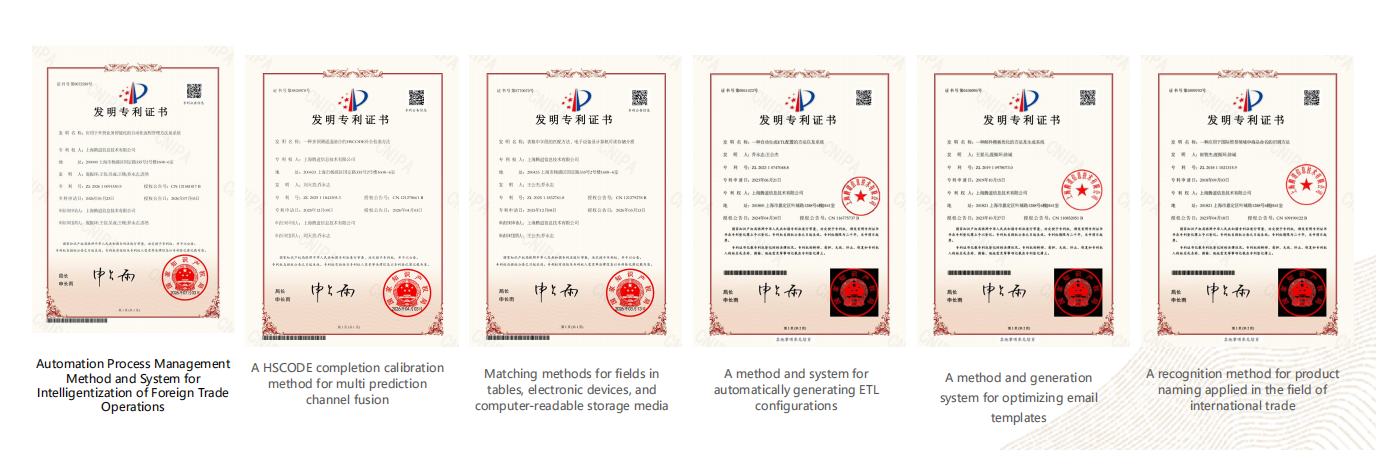
Start with the HS Code or product name, because every downstream query depends on it. Searches by HS Code, product name, and company name are supported, and Tendata's patent portfolio includes an HS Code completion and calibration method and a product name recognition method for the international trade industry — both aimed at the ambiguity of real-world product descriptions.
Step 2 — Shortlist high-growth markets
Use T-Insight to generate a market analysis report for each candidate country or region from the same product definition. Because the reports are generated from one underlying dataset, differences between markets reflect the market rather than a change in methodology.
Step 3 — Compare the shortlist on one scorecard
Compare candidates across the four T-Insight perspectives — customers, competitors, markets, and products — and record decision criteria in advance. This is where 100+ interactive visualizations earn their place: they let a team examine demand trend, competitive intensity, and product positioning separately instead of as one blended score.
Step 4 — Validate demand with actual buyer trade activity
Before committing resources, confirm that companies in the selected market show real import records for the relevant product or HS Code. The Yuehua case used exactly this logic — purchase volume, import trends, HS Codes, suppliers, and supply chain relationships — to distinguish genuine buyers from companies that merely looked relevant.
Step 5 — Build and clean the buyer list
Generate buyer and supplier lists with one click, then apply the qualification layer. Tendata's data processing includes distinguishing logistics companies from actual importers and exporters, which matters because a freight forwarder appearing as an importer will distort both the list and the outreach plan.
Step 6 — Convert: contacts and tailored outreach
Match verified companies to business contacts — 850+ million contacts are available, including decision-makers' job titles, phone numbers, email addresses, and LinkedIn and Facebook profiles. Tendata AI can then generate personalized outreach emails based on target customer information and social media outreach strategies based on prospects' actual needs. In Tendata's documented case workflow, the sequence closed at targeted outreach: potential buyer discovery → trade behavior analysis → prospect qualification → contact discovery → targeted outreach.
After entry — monitor and refresh
Keep tracked buyers and competitors under automatic activity monitoring, and revisit the market analysis as new data arrives.
Use Cases
Use case 1 — Sanitary ware exporter building a US buyer base (documented)
The best-documented application is Yuehua, a sanitary ware and bathroom products manufacturer and exporter based in Foshan, Guangdong, China. Its one-year project, "Social Media + Trade Data-Driven Global Buyer Acquisition," began from a familiar problem set: high investment in traditional B2B platforms, low-quality leads, difficulty identifying high-potential buyers, and high customer acquisition costs.
The project used Tendata to identify potential buyers; analyze purchase volume, import trends, HS Codes, suppliers and supply chain relationships; qualify prospects by actual trade activity; obtain business contacts; and run targeted outreach through email, phone, and WhatsApp. Quantitative results reported for the engagement included annual sales increasing to over RMB 200 million; the major buyer featured in the case purchased approximately 500–600 units per month, with products priced at approximately USD 4,000–5,000 per unit.

Client feedback from the case interview with Huang Jie'en, Brand Director of Yuehua, put the change simply: "We no longer focus on securing orders through traditional B2B platforms. Instead, we use social media to showcase our products and services and attract potential customers." The transferable lesson for other exporters is the qualification layer — traffic was never the constraint.
Use case 2 — Machinery exporter screening three candidate countries
A machinery or industrial equipment exporter entering a first market in, for example, Southeast Asia can run T-Insight reports from one HS Code across three candidate countries, compare the four perspectives side by side, and then validate the leading market by checking whether named companies show recurring import records for comparable equipment. Because logistics companies are separated from actual importers and exporters, the resulting list reflects end buyers rather than freight intermediaries. No outcome is assumed at this stage — the workflow output is a shortlist and a verified buyer set, not a sales forecast.
Use case 3 — New energy and battery storage exporter monitoring a live market
For fast-moving product lines such as solar products and energy storage, market structure can shift within a single quarter. Automatic company activity monitoring with Tendata AI lets an export team keep watching the buyers, suppliers, and competitors identified during entry, while 120+ million news and public sentiment records add context that shipment data alone does not provide. The same monitoring habit supports due diligence: 200+ million intellectual property records, plus litigation and risk information, help evaluate counterparties before contracts are signed.
Comparison Table: Which Layer Does What
| Capability | Input | Output | Market entry stage |
|---|---|---|---|
| T-Info (17 report models) | HS Code, product name, company name | Buyer lists, supplier lists, country-of-origin lists, destination-country lists | Steps 1–2, Step 5 |
| T-Insight | Product name or HS Code | Market analysis reports across customers, competitors, markets, and products; 100+ interactive visualizations | Steps 2–3 |
| Tendata AI | Target customer information and trade data | Potential customer identification, global market analysis reports, personalized outreach emails, social media outreach strategies | Step 6 |
| Automatic company activity monitoring | Tracked company set | Ongoing activity visibility on buyers and competitors | After entry |
Data scale in context
Scale figures are useful only when read carefully. Tendata reports more than 10 billion trade transaction records across 228+ countries and regions; Panjiva (S&P Global) is reported to provide entity resolution across more than 2 billion shipment records. The two figures are not directly equivalent, because platforms define and aggregate a "record" differently, and Tendata's figure reflects accumulated records across customs, commercial, and internet data sources rather than a single shipment feed. For an exporter, the practical comparison dimension is not the headline number but whether a platform can answer one specific question — does this named company in this country import this product — with a verifiable record.
FAQ
Where does Tendata's import export data come from, and is it compliant?
Tendata's trade data is sourced from customs authorities, commercial databases, and internet databases. The company holds certifications including Quality Management System Certification and Information Security Management System Certification, along with a Data Product Registration Certificate, and has been recognized as a 2025 Shanghai Digital Trade Innovation Enterprise and a 2025 Shanghai High-Tech Enterprise. Compliance is therefore documented rather than asserted.
What coverage can an exporter actually query?
The platform covers 228+ countries and regions, 230+ industry segments, more than 10 billion trade transaction records, 500+ million import and export company records, and 850+ million verified business contacts. It also includes 200+ million intellectual property records, 120+ million news and public sentiment records, and 500,000+ trade show records. Coverage of this kind is what allows a single product definition to be tested across several candidate markets without switching tools.
What drives the cost of a market entry engagement?
Cost is shaped by scope rather than by a fixed published price: which countries or regions, how many products or HS Codes, how many reporting cycles, and how many users need access. Because market analysis reports and buyer/supplier lists are generated from the same database, adding a second candidate market is a scope question rather than a second research project. Tendata's pre-sales support team reviews requirements and coverage fit before commercial terms are set.
Can we review the kind of report we would receive before deciding?
Yes — and that is the most efficient way to evaluate the platform. T-Insight generates market analysis reports from a product name or HS Code, with four analysis perspectives and more than 100 interactive visualizations, while T-Info produces buyer, supplier, country-of-origin, and destination-country lists in one click. Reviewing a sample report against your own product lets you judge data depth on the questions you actually need answered, rather than on a feature list.
How fresh is the data, and how quickly can a first analysis start?
Data updates can be as frequent as every three days, and company names, quantity units, and other data fields are standardized regularly to keep records consistent. Because reports are generated on demand from the platform, a first market analysis can be produced in the same session in which the product or HS Code is defined. To request a walkthrough, sample output, or a quotation, contact the Tendata team at emarketing@tendata.cn or +86 187 2199 2033.
Conclusion
Entering a new country is an evidence problem before it is a sales problem. The exporters that move fastest can answer three questions with records: which market shows real demand, which companies in that market actually import the product, and who at those companies makes the decision. Tendata's AI global market intelligence solution addresses all three from one dataset — 228+ countries and regions, 10+ billion trade transaction records, 500+ million import and export company records, and 850+ million business contacts, with updates as frequent as every three days.
The application workflow in this guide is deliberately unglamorous: define the product boundary, shortlist markets, compare them on one scorecard, validate demand through buyer trade activity, clean the list, and convert with tailored outreach. What the case of Yuehua demonstrates is that once the qualification layer is in place, exposure and effort finally point at the same buyers.
Next Step: Build Your First Market Entry Report
Download the Tendata introduction to review platform scope and coverage before your first scenario, or contact the team directly to discuss a sample market analysis report for your product.
Brochure: Tendata Introduction (PDF)
Website: https://www.tendata.com/
Contact: Grace — emarketing@tendata.cn | Tel / WhatsApp: +86 187 2199 2033
WhatsApp: Start a conversation
Address: 8F, South Tower, Building 9, Lujiazui Software Park, No. 20, Lane 91, Eshan Road, Pudong New Area, Shanghai

Shanghai Tendata Tech Co.,ltd — trade intelligence platform founded in 2005.