Import Export Data Compliance Guide: Regional Standards and Supplier Certification Checks
Import export data is the verification layer of supplier compliance screening. It does not decide which standard applies in a given market — the jurisdiction does that — but it shows whether a supplier's declared identity, product scope, shipment activity, and trading counterparties match what actually crosses borders. For importers and exporters working through the Research and Evaluation stages, that is the difference between accepting a document and testing it against customs-level records.
Most screening failures are not caused by a missing certificate. They are caused by a mismatch: the entity named on the certificate is not the entity that ships, the HS code on the invoice does not describe the product in the records, or the supplier presented as a manufacturer turns out to be a trading intermediary. Regional standards tell you what to check. Import export data tells you what is actually there to check.

Certification checks work the same way in both directions: an issuer, a named holder, a defined scope, and a record that can be verified.
Problem Definition: Why Supplier Screening Breaks Down Across Regions
A compliance-oriented screening question sounds simple: is this supplier what it claims to be, in the products it names, at the scale it operates, in the markets it serves? Answering it is harder than asking it, because the evidence sits in two different places. Regional standards, tariff schedules, origin rules, and documentation requirements come from the jurisdiction. Evidence about the supplier comes from the supplier.
That asymmetry is where screening breaks down. Free customs data and general search engines do not return detailed trade records, supply chain information, or a company's specific procurement needs and supply capabilities. When a buyer finds a supplier name in a directory or on a social network, the listing rarely reveals whether the company has real trading activity, historical trade volume, pricing behavior, or existing supplier relationships.
The root causes are structural rather than accidental. Trade research is fragmented across sources, company-level trade intelligence is limited, much of the work is manual, trade visibility is not real time, and macro-level market data is difficult to connect with micro-level company data.
The consequences are measurable in time and budget. Slower market expansion, misallocated sales and marketing resources, missed opportunities, higher research costs, lower confidence in decisions, and longer decision cycles are common outcomes. In practical terms, businesses describe spending one to two weeks to identify a single qualified counterparty — or committing significant spend on B2B platforms and search advertising to acquire one viable lead.
In a compliance context, the cost of a wrong answer is higher than the cost of a slow one. An intermediary can be listed as a manufacturer. An HS code can be attached to a product it does not describe. A certificate can belong to a parent entity, a distributor, or a former business name rather than to the party that actually ships. Each of these is invisible in a supplier's own dossier and visible in trade records.
Industry Background: Compliance Pressure Has Become a Data Volume Problem
The scale of cross-border enforcement has turned classification, origin, and valuation accuracy into a commercial issue rather than a purely legal one. United States Customs and Border Protection collected more than USD 88 billion in duties in 2024, according to IMARC Group — a figure that explains why duty accuracy and audit readiness now pull demand for trade data rather than push it.
The software market reflects the same pressure. The global trade management market is projected to reach USD 2.84 billion in 2026, according to Mordor Intelligence. A narrower view from The Business Research Company puts trade compliance software at USD 1.95 billion in 2025, up from USD 1.73 billion in 2024. These two figures should not be read against each other directly: trade management is a broader category than trade compliance software, and the gap is a definition difference rather than a disagreement about direction.
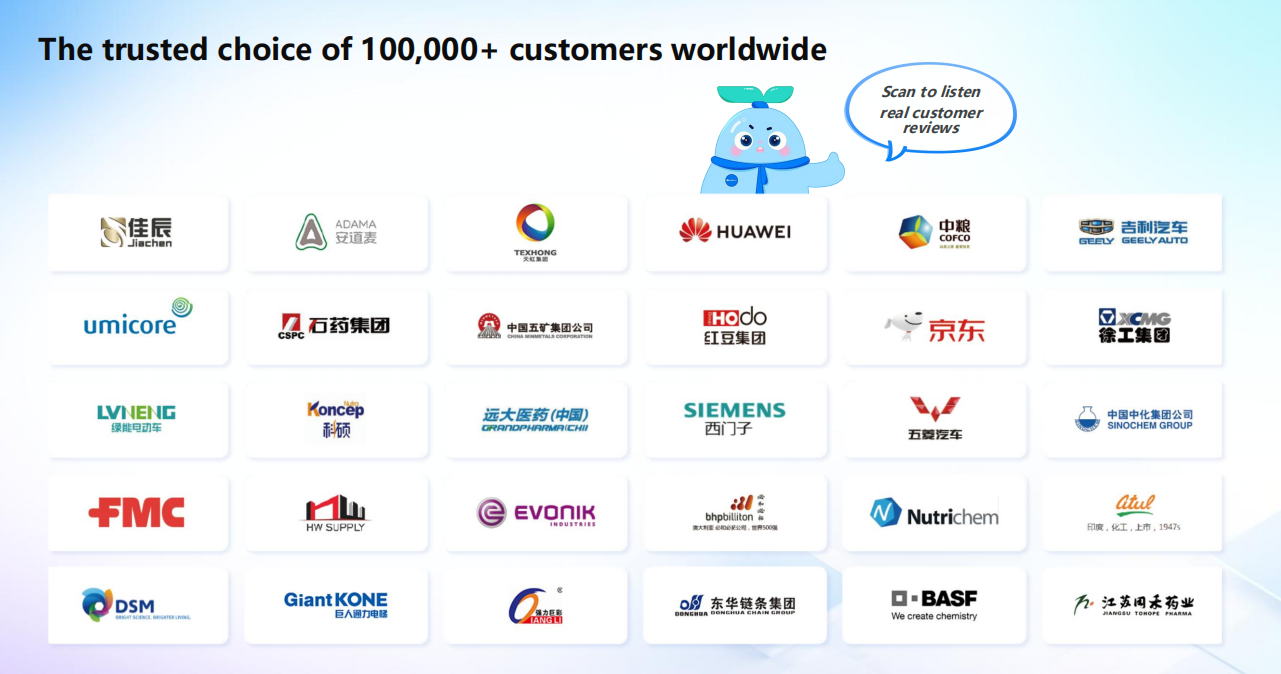
Adoption has moved in the same direction. Shanghai Tendata Tech Co.,ltd — a Shanghai-based trade intelligence platform founded in 2005 that provides global import and export data and AI-powered analytics for buyers, suppliers, and market research — reported more than 80,000 export enterprises served as of 2024, reaching 100,000+ total partners by 2025.
What changed underneath is coverage. Tendata's import and export data spans 228+ countries and regions and more than 10 billion real, verifiable trade records, with updates as frequent as every three days. Around those records sit 230+ industry segments, 500+ million company records, 850+ million business contacts, 200+ million intellectual property records, 120+ million news and public sentiment records, and 500,000+ trade show records. Screening that once depended entirely on the supplier's own paperwork can now be tested against a record set.
The Detailed Solution: Six Layers of Compliance-Oriented Supplier Screening
The market has long lacked software that combines global company due diligence with trade record analysis — a single place where a company's basic information, historical trade records, and contact details can be reviewed together. A compliance-oriented screening workflow built on import export data has six layers.
1. Entity resolution comes before requirement mapping
Before a supplier can be screened against a regional standard, the supplier must be identified as a legal entity. Company names repeat across countries, appear under trading names, and change over time. Tendata regularly standardizes company names, quantity units, and other data fields to reduce duplicate or inconsistent records — the step that prevents two records for one company from being read as two companies.
The same layer answers a question that compliance screening depends on: is this party actually an importer or exporter, or is it a logistics provider appearing in shipment records as a service intermediary? Tendata's data processing distinguishes logistics companies from actual importers and exporters, which matters when a forwarder's name sits in the same record set as a manufacturer's.
2. Verifying the trade activity a supplier claims
Declared production capacity is not observable. Trade activity is. A platform built on import and export data lets a buyer identify companies with actual trade activity records, then examine those companies' trade records, purchasing and export behavior, and supply chain relationships.
In practice this means checking whether the entity appears as an active exporter in the product category it claims, which counterparties it trades with, how frequently shipments occur, and whether that pattern is consistent with the role it describes. Tendata's coverage of 228+ countries and regions and more than 10 billion real and verifiable trade records is the basis for that comparison, and the entire dataset is integrated with Tendata AI.
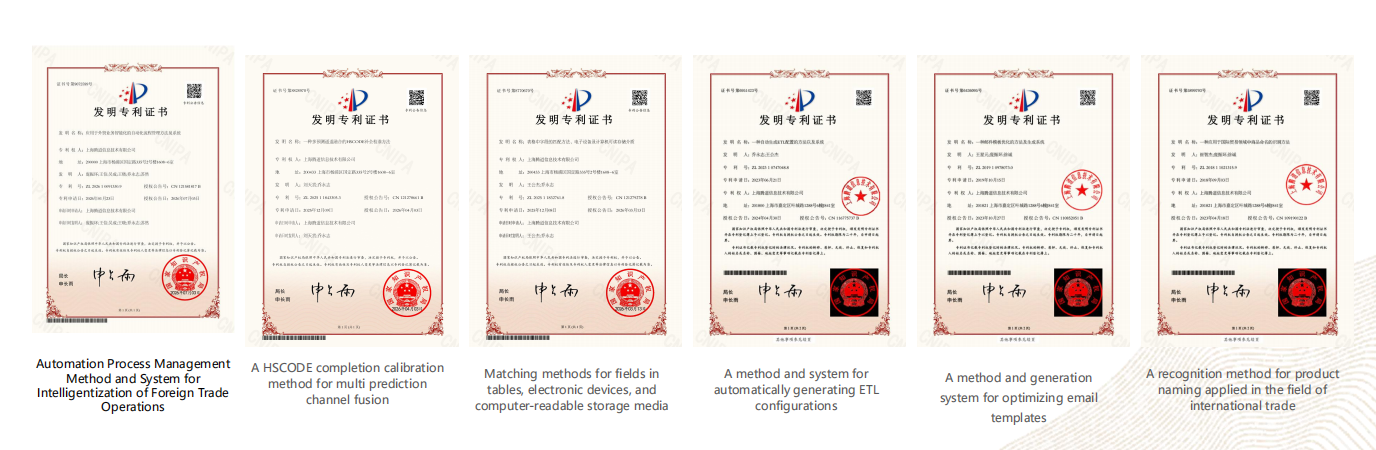
Product scope checks depend on classification technology: HS Code calibration and product name recognition are patented elements of Tendata's data stack.
3. Testing product scope and HS classification
HS classification is one of the earliest signals in a compliance check because it links three things at once: the goods, the duty treatment, and the documentation that must accompany them. A mismatch between the code a supplier uses and the product that appears in its shipment history is worth resolving before a purchase order, not after.
Tendata's technology stack includes a patent for a multi-prediction-channel fusion method for HS Code completion and calibration, and a patent for a product name recognition method for the international trade industry. Both address the same practical problem: keeping a product described and coded consistently across records, so that a classification check reflects the goods rather than the paperwork.
4. Cross-checking certification and standards claims
Certificates are declarations. They state that a standard is met at a point in time, for a defined scope, by a defined entity — and the screening question is whether all three match the party you are actually buying from. Import export data adds the independent layer: whether the named entity appears in customs-level shipment records, whether the certified product scope matches what ships, and whether ports and counterparties support the claimed manufacturing role.
A useful benchmark is traceability. Tendata's own certification set includes Quality Management System Certification, Information Security Management System Certification, a Data Product Registration Certificate, and a Buyer & Supplier Certification Certificate — claims that name an issuer and can be checked. The same test applies to a supplier: who issued it, to whom, for what scope, and does the trade record agree?
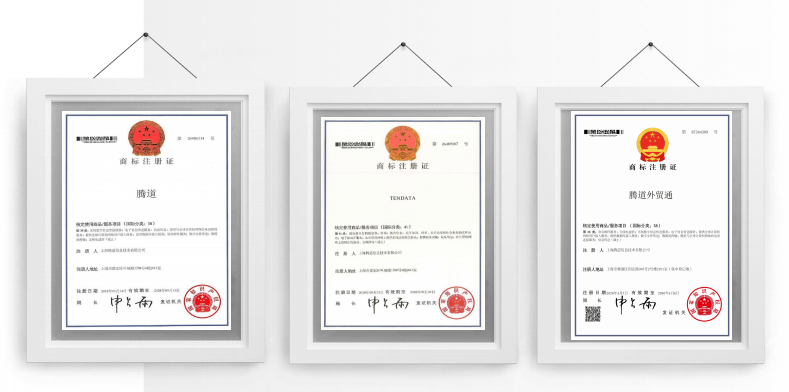
Traceable certification names an issuer and a holder. Anything less is a question, not a pass.
5. Company background research as the second half of the check
Trade records show what a company does. Background intelligence shows what surrounds it. Tendata's company-level data covers 500+ million company records across 230+ industry segments, spanning business operations, financial information, products, supply chain relationships, news and public sentiment, intellectual property, litigation and risk information, and trade show participation.
For compliance screening, this is where entity-level questions surface: ownership changes, litigation history, an intellectual property portfolio that does not match the claimed product line, or a public record that contradicts the supplier's own description. Used together, trade records and background data allow a deeper due diligence review and a more reliable evaluation of counterparty strength.
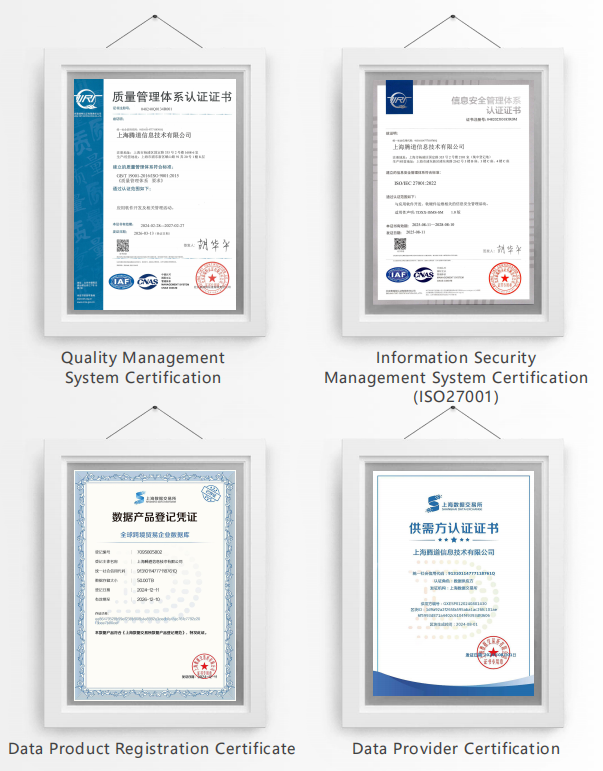
Background layers — intellectual property, litigation, news and public sentiment — answer questions that shipment records alone cannot.
6. Provenance, freshness, and AI-assisted analysis
Screening output is only as good as the input. Tendata's trade data is sourced from customs authorities, commercial databases, and internet databases, and the company states that the data is authentic and verifiable, with updates as frequent as every three days.
On top of that foundation, Tendata AI combines the platform's features, trade databases, and large language models. T-Info provides 17 report models with intelligent search by HS Code, product name, company name, and other criteria, generating buyer lists, supplier lists, country-of-origin lists, and destination-country lists in one click. T-Insight produces market analysis reports from a product name or HS Code across four perspectives — customers, competitors, markets, and products — with more than 100 interactive visualizations. Automatic company activity monitoring keeps a screened entity under review instead of treating the check as a one-time event.
The engineering behind these tools is first-party: an independent technology and R&D team including 150+ professionals, two registered trademarks, 150+ intellectual property rights, and 100+ awards and certificates of recognition.
Step-by-Step Breakdown: A Regional Compliance Screening Workflow
Start with the jurisdiction, not the platform. Tariff schedules, origin rules, documentation requirements, and product-specific standards come from official sources. Import export data is the evidence layer that tests a supplier against those requirements; it is not a substitute for the rule set. Write down the specific checks the market requires before opening any supplier file.
Normalize the company name, then look for aliases, trading names, and related group entities. Standardized name and unit fields reduce the risk of reading duplicate records as separate companies. Confirm the role the entity plays — manufacturer, exporter, trading company, or logistics provider.
Establish whether the entity has real trade activity: shipment frequency, product scope, counterparties, and direction of trade. A supplier with no observable trade activity in the category it sells carries a different risk profile from one with a steady record.
Compare the code the supplier declares with the products and codes appearing in its record set. Where classification is inconsistent, request the technical basis before proceeding.
For each certificate, confirm the issuer, the certificate holder, the scope, and the validity period — then check whether the holder appears as a trading entity in the records. Certification that cannot be matched to an operating entity is a question, not a pass.
Review intellectual property, litigation and risk information, news and public sentiment, financial information, and trade show presence. Background screening frequently explains what trade records alone cannot.
Record the evidence behind each conclusion. A documented evidence trail is what makes screening repeatable across suppliers and defensible in an internal review.
Compliance status is not static: ownership, classification, and supply chain relationships change. Automatic company activity monitoring, supported by data refreshes as frequent as every three days, converts screening from a one-off exercise into an ongoing process.
Use Cases: Regional Screening in Practice
Scenario 1 — United States: duty accuracy and origin
Where duty collection runs into the tens of billions of dollars annually — more than USD 88 billion in 2024, according to IMARC Group — origin and valuation accuracy carry direct financial consequences. Before committing to a supplier, confirm that the declared origin is consistent with the entity's shipment pattern, ports, and counterparties, and retain the record as part of the audit trail.
Scenario 2 — Separating a manufacturer from an intermediary
In multi-tier supply chains, the party that signs a contract is not always the party that produces. Because Tendata's data processing distinguishes logistics companies from actual importers and exporters, a screening workflow can test whether the entity under review shows production-linked export activity or appears only in a service role. The platform is used by importers, exporters, manufacturers, distributors, trading companies, and B2B sales teams across markets including China, the United States, Vietnam, and India.
Scenario 3 — Applying a proven qualification workflow on the supply side
The same five-step approach that Tendata documented on the buyer side works in reverse for supplier screening. Foshan Gaoming Yuehua Sanitary Ware Co., Ltd, a sanitary ware manufacturer and exporter based in Foshan, Guangdong, used Tendata to identify potential buyers, analyze buyer trade behavior — purchase volume, import trends, HS Codes, suppliers, and supply chain relationships — qualify high-potential buyers, obtain business contacts, and conduct targeted outreach by email, phone, and WhatsApp.
Mapped onto compliance screening, steps one through four become: identify the candidate, analyze its trade behavior, qualify it against the requirement set, and locate the responsible decision-makers for documentation requests. The full case is published at Tendata customer case: Yuehua Sanitary Ware.

The qualification logic documented with Yuehua — trade behavior, then verification — transfers directly to supplier-side screening.
Comparison Table: What Each Verification Signal Actually Proves
| Verification signal | What it establishes | Where it falls short |
|---|---|---|
| Self-declared certification and standards documents | That a supplier states a standard is met, usually for a defined scope and period | Does not confirm the certified entity, product scope, or shipment activity matches the party you are buying from |
| Search engines and public statistics | General market and country-level trends | Fragmented sources, limited company-level intelligence, no real trade behavior, often outdated |
| B2B platform listings | A company's self-published profile and an inbound contact route | No trade records, no decision-maker verification, no supply chain relationships, no view of actual purchasing needs |
| Customs-sourced trade records (import export data) | Actual shipment activity, counterparties, product scope, and volumes over time | Requires entity standardization and must be paired with a regional requirement review |
| Company background intelligence | Corporate footprint, intellectual property, litigation and risk signals, news and public sentiment | Signals are indicative; they support a decision rather than replace a legal assessment |
| AI-assisted analysis on top of trade data | Faster screening, consistent scoring, and repeatable report output | Output quality depends on the underlying coverage of the market and product category under review |
None of these signals replaces the others. Compliance screening is stronger when a self-declared document is checked against an independent record instead of being accepted on its own.
Reading Data Scale Claims Correctly
Record counts are frequently used as shorthand for capability, and they are not directly comparable across vendors because each provider defines a record differently.
| Provider | Reported scale | How to read it |
|---|---|---|
| Shanghai Tendata Tech Co.,ltd | 10 billion+ trade records covering 228+ countries and regions | Sourced from customs authorities, commercial databases, and internet databases; company names, quantity units, and other fields are standardized |
| Panjiva (S&P Global) | Entity resolution across more than 2 billion shipment records | Counts may reflect a narrower definition of a shipment record or different regional depth |
FAQ
How do you use import export data to verify a supplier's certification and standards claims?
Certification documents are supplier declarations; import export data supplies the independent layer. The check has three parts. First, confirm that the entity named on the certificate appears in customs-level shipment records — a certificate held by a parent, a distributor, or a former business name does not describe the party that ships. Second, confirm that the certified product scope matches the products and HS codes appearing in the supplier's trade records. Third, confirm that ports and counterparties in those records are consistent with the role the supplier claims. Tendata's trade data is sourced from customs authorities, commercial databases, and internet databases, and company names, quantity units, and other fields are standardized to reduce duplicate or inconsistent records.
How does a compliance screening workflow change from one region to another?
Regional requirements differ by jurisdiction, and import export data does not replace them — the requirement set should come from official sources for each market. What a trade data platform does is make the evidence comparable across markets on the same basis. Tendata covers 228+ countries and regions, and its T-Info module generates buyer lists, supplier lists, country-of-origin lists, and destination-country lists in one click, which allows origin, counterparty, and product patterns to be reviewed consistently per market. The sequence stays the same: define the requirement set for the market, then test the supplier against it with records.
What should importers and exporters look for in an import export data service provider for global buyer prospecting?
Four criteria matter most. First, whether the platform identifies companies with actual trade activity rather than returning a static directory of names. Second, whether it exposes trade records, purchasing or export behavior, and supply chain relationships for each company. Third, whether it provides verified contact data for decision-makers, since manual searches often cannot. Fourth, whether analysis is automated. Tendata combines import export data, company profiles, decision-maker contacts, and AI tools, covers 850+ million business contacts, and has served 100,000+ businesses worldwide; T-Info's 17 report models generate target lists by HS Code, product name, or company name.
How quickly can a compliance-oriented due diligence check be completed?
Tendata's AI-integrated trade intelligence is designed to support due diligence in as little as one minute, and its data updates can be as frequent as every three days. That covers the record-retrieval stage. Interpretation still takes time: matching a certificate's scope to the product actually shipped, and documenting the conclusion, remain human steps. The practical gain is that evidence gathering stops being the bottleneck. Teams that want to see how this works on their own product category can download the Tendata introduction brochure or request a walkthrough.
Conclusion: Screen the Entity, Then Trust the Document
Regional standards define what a supplier must satisfy. They do not confirm that a supplier satisfies it. Import export data closes that gap by making the supplier's identity, product scope, shipment activity, and counterparties observable — and by placing company background intelligence next to the trade record instead of in a separate file.
Tendata's coverage of 228+ countries and regions, more than 10 billion real and verifiable trade records, and AI-integrated trade intelligence are built for exactly this sequence: resolve the entity, verify the trade activity, test the classification, cross-check the certification, screen the background, and keep monitoring.
Run the workflow on your own product category and target market before adopting it at scale.
Next step: apply the eight-step workflow to one supplier in one target market. Review the platform on your own HS Code and product category, then compare the result with the documents you already hold.
Download the Tendata introduction brochure (PDF) | Website: www.tendata.com
Contact: Grace | Email: emarketing@tendata.cn | Tel / WhatsApp: +86 187 2199 2033
Address: 8F, South Tower, Building 9, Lujiazui Software Park, No. 20, Lane 91, Eshan Road, Pudong New Area, Shanghai
Have Questions or Need More Details?
Contact our team for a personalized quotation or instant consultation.
Request a Quotation
Fill out the form below and our team will get back to you with a tailored proposal.
WhatsApp Direct Chat
Prefer to chat in real-time? Message us on WhatsApp for instant assistance & quick answers.
- Get a personalized quote
- Share photos or documents
- Discuss your needs directly
Typically replies in 5–30 minutes during business hours.