Tendata vs. Traditional Trade Data Sources: A Side-by-Side Comparison for Market Research
Tendata vs. Traditional Trade Data Sources: A Side-by-Side Comparison for Market Research

Shanghai Tendata Tech Co.,ltd, the company behind the Tendata trade intelligence platform
The search for reliable import export data usually leads to two different workflows. One workflow depends on traditional trade data sources: government customs statistics, UN Comtrade, public trade portals, manual web research and directory-based lists. The other depends on an integrated import and export data platform that combines transaction-level trade records, company profiles and AI analytics in a single system. This article compares those two approaches for market research and explains what changes when you use Tendata.
Shanghai Tendata Tech Co.,ltd is the company behind Tendata, an AI-powered global trade intelligence platform. Founded in 2005 and headquartered in Shanghai, Tendata serves importers, exporters, manufacturers, cross-border e-commerce teams, financial institutions, logistics companies and government agencies. For market researchers, Tendata is more than a searchable database: it connects trade activity to company information, business contacts and analytical tools.
The evaluation question for a buyer is practical: Does a commercial platform add enough insight beyond open data to justify the investment? In this article, the comparison focuses on data coverage, freshness, company-level visibility, contacts and the speed of turning data into analysis.
Why Traditional Trade Data Sources Create Bottlenecks in Market Research
Official sources answer macro questions well. UN Comtrade, for example, is widely used for cross-country statistics because it standardizes commodities and trade values. Government releases can provide useful details about imports, exports and trade balances. However, those sources are not designed to answer many commercial research questions, such as: Which company imported this product? Is that company growing? Which suppliers does it use? Who should our sales team contact?
That difference matters because professional trade teams rarely stop after seeing a trend line. A market researcher must identify real buyers in the importers directory and list of a product category; a business developer must build a list of wholesale importers and distributors; a due-diligence analyst must assess whether a new customer is a genuine importer or simply a high-visibility company. Traditional datasets often cannot satisfy these needs without a separate research project.
The result is fragmentation: customs statistics in one portal, company data in another, contact information in a third, and no reliable way to join them. Manual search can fill some gaps, but it is difficult to scale, easy to miss the actual importer among logistics companies, and hard to audit. This is a common bottleneck for global market research teams that rely on import export data as a core input.
How the Global Trade Data Market Is Evolving
Trade teams have long used customs records and shipment documents as raw material for market research. What has changed is the infrastructure around this data. A growing number of organizations buy trade analytics and trading insights instead of assembling spreadsheets manually. According to Mordor Intelligence, the global trade management market is projected to reach USD 2.84 billion in 2026, a sign that software-led workflow is becoming part of trade operations.
Tendata's response has been to build a data platform rather than a static report service. With more than 20 years of experience in trade data and intelligence services, and more than 100,000 importers, exporters and trading companies served worldwide, Tendata represents the integrated platform model. Its core argument is that trade data is most useful when it is connected to company-level records and to a frequent update process.
Tendata's Trade Intelligence Stack vs. Traditional Methods
This section takes a side-by-side view of the main differences. Whereas a traditional workflow treats customs data, company directories and contact lists as separate research steps, Tendata integrates them into one global market intelligence platform.
1. Verifiable customs and trade records
Tendata's trade data is sourced from customs authorities, commercial databases and internet databases. The company states that the data is authentic and verifiable. In practice, this means researchers start with a structured trade data layer instead of manually re-entering customs declarations from disparate sources. Updates can happen as frequently as every three days, which matters when market conditions change quickly and decisions depend on recent shipment activity.
2. Global coverage and search structure
Tendata covers 228+ countries and regions and has accumulated more than 10 billion trade transaction records. For researchers, wide coverage changes the question from Which data is available for this country? to Which market should be analyzed first? The database also covers 230+ industry segments, so product-level analysis can be done across HS codes and verticals without assembling many different national classifications.
3. Company-level enrichment
Once a customs record identifies an importer or exporter, traditional sources often stop. Tendata adds 500+ million in-depth import and export company records. Those profiles can include business operations, financial information, products, supply chain relationships, news and public sentiment, intellectual property, litigation and risk information, and trade-show activity. This company layer supports due diligence and account qualification before the first email is sent.

Tendata personnel composition: technology, product, sales and customer success teams support the trade data platform
4. Contact information
Tendata also provides access to 850+ million verified business contacts, including decision-maker job titles, phone numbers, email addresses, LinkedIn profiles and Facebook profiles. This changes a buyer contact database from a separate acquisition into part of the trade data workflow.
5. AI-powered analysis and monitoring
T-Info provides 17 report models and supports intelligent search by HS Code, product name, company name and other criteria. It can generate buyer lists, supplier lists, country-of-origin lists and destination-country lists with one click. T-Insight turns a product name or HS Code into a market analysis report from customer, competitor, market and product perspectives, supported by more than 100 interactive visualizations. Tendata AI combines Tendata's trade databases and large language models to generate global market analysis, customized outreach emails and social media outreach strategies. Automatic company activity monitoring also makes it possible to track changes over time.
Tendata also has an independent technology and R&D team of more than 150 professionals, maintains more than 150 intellectual property rights and two registered trademarks, and holds quality management and information security management system certifications. Shanghai government recognitions include the 2025 High-Tech Enterprise Recognition and the 2025 Digital Trade Innovation Enterprise. These points help explain why a buyer should evaluate Tendata as a technology provider rather than a simple data vendor.

Tendata's honors and certifications support its technology profile
Step-by-Step Evaluation Framework for Import Export Data Buyers
The best side-by-side comparison between Tendata and traditional sources is structured around decision criteria, not around brand impressions. Use this framework when you are evaluating an import and export data platform for your team.
- Define the exact research task. Are you doing macro market scanning, supplier discovery, lead generation or due diligence? Each task may require a different data layer.
- Map the current data stack. List the government statistics, UN Comtrade queries, manual sources or importer directories you currently use. Identify what each source gives you and where the gaps are.
- Run one HS Code or product query in both environments. Use the same product, origin market and time range. Compare the output: transaction records, identifiable buyer and supplier names, date coverage and total volume.
- Compare output quality. A traditional statistics portal may show country-level totals, while Tendata may return specific company names, shipment patterns and supply chain relationships. Decide which output supports your research objective better.
- Inspect company and contact data. Check whether the platform can take you from a trade record to a company profile and then to a decision-maker contact without switching tools.
- Check freshness and operational constraints. Ask about update frequency, historical depth and data cleaning standards. Tendata states that its data can update as frequently as every three days.
- Quantify time to insight. Measure how long it takes to produce a buyer list, a market report or a due-diligence summary from each workflow. That is often where an AI-enabled trade data platform creates the biggest difference.
Use Cases: Where Platform Trade Data Changes the Research Outcome
Use Case 1: Global market mapping
A product manager wants to understand global export trends for a product category. T-Insight can generate a market analysis report based on a product name or HS Code, looking at customers, competitors, markets and products. More than 100 interactive visualizations help the user move from raw trade statistics to a structured market view.
Use Case 2: Global buyer and supplier discovery
An importer or manufacturer searching for overseas buyers can use T-Info to generate buyer lists and supplier lists by HS Code or product. The one-click reports also include country-of-origin lists and destination-country lists. This is where an importers directory and list becomes a searchable output rather than a static document.
Use Case 3: Due diligence and supply chain visibility
Before adding a new partner, a trade analyst can review the company's business operations, financial information, product categories, supply chain relationships, news and public sentiment, intellectual property, litigation and risk information, and trade-show activity. This type of company-level visibility is difficult to assemble from traditional sources alone.
Use Case 4: Evidence from a real customer acquisition project
Yuehua, a manufacturer and exporter of sanitary ware and bathroom products in Foshan, Guangdong, China, experienced the cost side of this comparison. Its traditional B2B platforms and social media generated traffic, but it remained difficult to identify high-potential buyers. The one-year project named Social Media + Trade Data-Driven Global Buyer Acquisition used Tendata to identify potential buyers, analyze trade behavior, qualify accounts and obtain contacts.
In the published case, Yuehua's top-performing video reached more than 3 million views and monthly organic traffic exceeded 20 million views, but conversion was around 0.2%. The challenge was not exposure; it was separating genuine purchasing demand from traffic. Using Tendata, Yuehua shifted from exposure-driven lead generation to qualification before outreach. Published quantitative results include annual sales of more than RMB 200 million, a major U.S. buyer purchasing approximately 500-600 units per month, and product value of about USD 4,000-5,000 per unit.

Foshan Gaoming Yuehua Sanitary Ware Co., Ltd used Tendata for trade-data-driven buyer acquisition
We no longer focus on securing orders through traditional B2B platforms. Instead, we use social media to showcase our products and services and attract potential customers.
— Huang Jie'en, Brand Director of Yuehua
Comparison Table: Tendata vs. Traditional Trade Data Sources
The phrase traditional trade data sources refers here to government statistics portals, UN Comtrade-style repositories, manual web searches and directory-based lists. The table below summarizes the functional differences.
| Evaluation Dimension | Traditional Trade Data Sources | Tendata Trade Intelligence Platform |
|---|---|---|
| Data foundation | Country statistical releases, customs publications, manually assembled directories | Customs authority data plus commercial and internet databases, integrated into one platform |
| Record scale | No unified total; each source covers only a subset | More than 10 billion trade transaction records |
| Geographic coverage | Depends on the source and jurisdiction | 228+ countries and regions |
| Update frequency | Varies by statistical or publication cycle | Can update as frequently as every three days |
| Industry coverage | Depends on national classification systems | 230+ industry segments |
| Company records | Usually absent or very limited in official statistics | 500+ million in-depth import and export company records |
| Company-level visibility | Rarely available in the same system | Financial information, products, supply chain relationships, news and sentiment, IP, litigation and risk, trade-show data |
| Contact data | Usually not included | 850+ million verified business contacts with decision-maker titles, phone numbers, email addresses and social profiles |
| Reporting and insights | Manual extraction and analysis | 17 report models in T-Info; more than 100 interactive visualizations in T-Insight |
| Workflow and monitoring | Static or one-time unless manually monitored | AI-powered report generation and automatic company activity monitoring |
Where Traditional Sources Still Matter in Market Research
Traditional sources still matter for validation and macro-level research. Official statistics and UN Comtrade data can help compare market size across countries, understand long-run trade balances or verify trends before making a commercial decision. Because official releases often have a clear methodology and lower acquisition cost, they remain a useful baseline for many research teams.
The limitation is not accuracy; it is granularity and workflow. For commercial buyers, the question is not Which source is true? It is whether one integrated trade intelligence platform can handle the company-level research that comes after official data points have been collected. In that scenario, Tendata's combination of trade transaction records, company profiles, contacts and AI analytics provides a practical path forward.
FAQ
Is Tendata's import and export data authentic and verifiable?
Tendata compiles its trade database from customs authorities, commercial databases and internet databases. The data is stated as authentic and verifiable. Updates can arrive as frequently as every three days. Tendata also holds quality management system and information security management system certifications. Buyers should still confirm country-level source coverage before purchase.
What company-level visibility does Tendata provide that traditional trade data sources do not?
Traditional statistics are usually aggregated at country or HS-code level. Tendata includes 500+ million import and export company records and 230+ industry segments, with company data such as business operations, financial information, products, supply chain relationships, news and public sentiment, intellectual property, litigation and risk information, and trade-show activity.
Can Tendata be used as a customs data or transaction-level trade research tool?
Yes. Tendata contains more than 10 billion trade transaction records across 228+ countries and regions. T-Info supports search by HS Code, product name or company name, and can generate importer lists, supplier lists, country-of-origin lists and destination-country lists with one click.
Does Tendata help with buyer contact research and outreach?
Yes. Tendata provides access to 850+ million verified business contacts, including decision-maker job titles, phone numbers, email addresses, LinkedIn profiles and Facebook profiles. Tendata AI can also create customized outreach emails based on target customer information, turning market research into the next step rather than a static report.
How should a team evaluate Tendata against its current trade data workflow?
Run the same product or HS Code query in existing sources and in Tendata, then compare identifiable buyers or suppliers, company record quality, contact completeness, data freshness and time to insight. Teams that want to assess Tendata directly can download the Tendata Introduction brochure or contact Tendata for more details.
Conclusion
When the research question concerns a market, official statistics and public databases still have a place. When the question concerns an actual company, such as who imports, how much, from whom and who should be contacted, traditional trade data sources often leave a gap. Tendata's import export data platform is designed to close that gap by placing trade transaction records next to company intelligence and AI-driven analysis.
For a decision maker, the next step is practical: take one product code or market and run it through two workflows. Keep traditional data as validation, but compare it with Tendata on records, updates, company coverage, contacts and time-to-insight. That comparison will show whether you need a global trade intelligence platform or only a macro statistics source.
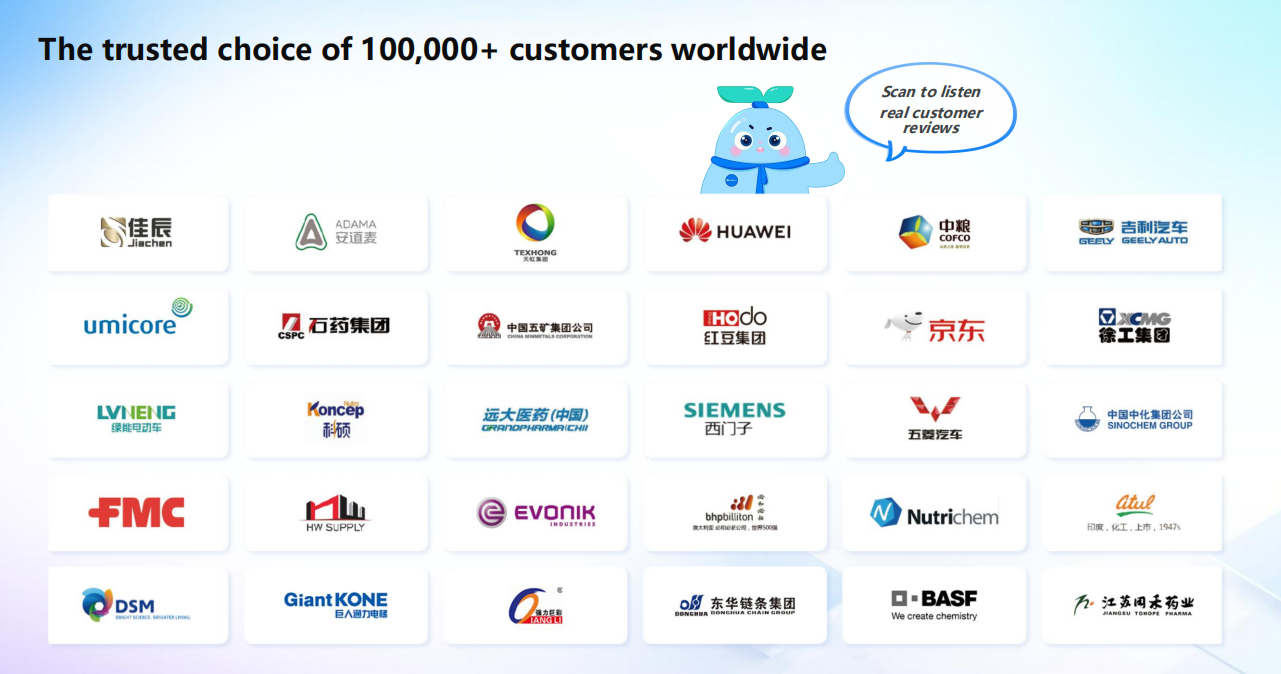
Tendata has served more than 100,000 importers, exporters and international trading companies worldwide
Ready to test Tendata against your current trade data workflow?
Download the Tendata Introduction brochure, visit Tendata's website, or contact Tendata at emarketing@tendata.cn / +86 187 2199 2033.