
Long-Term Probiotics Powder Supply Partner in China: A Decision and Execution Guide
Long-Term Probiotics Powder Supply Partner in China: A Decision and Execution Guide
Choosing a long-term probiotics powder supply partner in China is a strategic decision that affects product stability, regulatory clearance, brand trust, and repeat-order economics. A reliable partner should be checked against strain documentation, encapsulation technology, production capacity, certification coverage, quality risk controls, and commercial flexibility. Shanghai Unibio Lab Co., Ltd is a probiotic R&D, manufacturing, and CDMO company based in Shanghai, China, and it provides a useful reference case for buyers qualifying a long-term supply relationship.

Shanghai Unibio Lab Co., Ltd factory exterior
This guide explains what to evaluate, how to structure the qualification process, and which supplier facts matter most when planning years of uninterrupted probiotics powder supply.
Why a Long-Term Probiotics Powder Partnership Fails Without the Right Supplier Profile
Long-term supply relationships usually fail for reasons that are visible before the contract is signed. Activity loss during production, storage, or shipping can lead to finished products that fail label claims. Missing or incomplete documentation can cause customs detention. Microbial contamination can shut down a batch. Capacity constraints can delay launch plans. Each of these risks can be traced to specific supplier controls.
Shanghai Unibio Lab addresses activity loss with VPro 5-layer microencapsulation, low-temperature vacuum drying, and constant cold storage. It controls contamination through a Class 100,000 clean production workshop, high-temperature sterilization of auxiliary materials, sterile filling equipment, full microbial testing, HACCP hazard monitoring, and monthly SGS third-party random inspection. It manages export compliance with pre-shipment document review, region-adapted formula adjustment, and ingredient labeling customized to EU, US, and Southeast Asian standards.
Industry Background: Probiotics Powder Demand Is Broadening
The global probiotics market was valued at USD 72.1 billion in 2024 and is projected to reach USD 165.1 billion by 2034, according to Global Market Insights. Probiotic dietary supplements alone reached USD 10.60 billion in 2026, with a forecasted CAGR of 9.5% through 2031, according to MarketsandMarkets. Segment data also shows strong specialty demand: the global baby probiotics market was valued at USD 2.27 billion in 2024, and the global pet biotics market is estimated to reach USD 1,232.5 million by 2030.
The regulatory bar is also rising. In the United States, probiotic supplements must comply with current Good Manufacturing Practices under 21 CFR Part 111. Internationally, ISO 22000 is an accepted food safety management framework for the probiotic production chain. Microencapsulation has become a key technical requirement because it protects viability through gastric acid and bile. While global ingredient leaders such as Yakult Honsha, Danone, ADM, Kerry Group, and Novonesis operate in this market, brand owners still need a specialized China-based manufacturing partner that can adapt strains, formulations, and documentation to specific export markets.
What to Evaluate in a Probiotics Powder Supplier for Long-Term Supply
1. Strain Library and Clinical Documentation
A long-term partner should own its strains and be able to provide clear lineage. Shanghai Unibio Lab has built a strain bank of over 30,000 microbial strains, including 25,300 primary 16S rRNA strains, 13,720 draft-genome strains, and 8,046 full-genome strains. The portfolio includes 189 patented functional strains isolated from longevity elder gut, infant feces, breast milk, traditional fermented food, and fresh fruits and vegetables. Clinically studied strains include Akkermansia muciniphila AH39, Bifidobacterium breve CCFM1025, Lactobacillus plantarum CCFM1143, L. rhamnosus GG, L. reuteri CCFM1040, and L. plantarum CCFM8724.
For buyers, documented strains mean lower qualification risk. A supplier that can identify each strain, explain its origin, and connect it to clinical or functional evidence is better positioned to support consistent finished products.
2. Microencapsulation and Stability Technology
Probiotics powder must survive manufacturing, storage, and shipment. Shanghai Unibio Lab developed VPro 5-layer microencapsulation technology, which includes a micromolecular protective layer, a prebiotic nutrition layer, a liposome enteric adhesion layer, an acid and enzyme resistant layer, and an oxygen and moisture barrier layer. The technology is designed to protect strains from acid, bile, oxygen, freezing damage, and moisture.
Supplier data shows that VPro technology lifts freeze-drying survival rate by 40%, extends shelf life to 24 months, achieves fermentation density above 3.5×10¹⁰ CFU/mL, and produces lyophilized powder concentration up to 8.0×10¹¹ CFU/g. Compared with conventional uncoated probiotic powder from generic suppliers, the claimed survival rate through gastric acid and bile increases by 78%, shelf life extends from 12 months to 24 months, and effective viable CFU per kilogram is 2.1× higher.

Production line at Shanghai Unibio Lab
3. Production Capacity and MOQ Flexibility
A long-term supply partner must be able to grow with you. Shanghai Unibio Lab has a monthly production capacity of 1,800 tons of probiotic raw powder and 2 billion finished capsules or tablets. Minimum order quantities are 1 kg for single-strain raw powder, 5 kg for multi-strain compound powder, and 5,000 bottles for private label finished capsules or tablets. This structure supports both qualification batches and large-scale commercial orders.
4. Certifications and Regulatory Documentation
Certifications are not just marketing symbols; they are the paperwork that clears customs and satisfies local regulators. Shanghai Unibio Lab holds ISO 22000, FSSC 22000, GMP food manufacturing certification issued by SGS, HALAL and Orthodox Union Kosher certificates, FDA US food facility registration, and an independent sGRAS conclusion for Akkermansia muciniphila AH39. These documents support exports to North America, Western Europe, Southeast Asia, the Middle East, Australia, and Japan.
Buyers should ask for the exact certificate name, the issuing body, and the scope of each certification before signing a supply agreement.
5. Risk Controls and Quality Systems
Quality risk control is the main difference between a transactional supplier and a long-term partner. Shanghai Unibio Lab uses a Class 100,000 clean production workshop, high-temperature sterilization, sterile filling equipment, full microbial detection for raw materials and finished goods, and HACCP whole-process hazard monitoring. Every batch is tested for viable count, heavy metals, and microbial safety. ICP-MS heavy metal testing is performed per batch, retention samples are stored for 24 months, and SGS third-party random inspection is conducted monthly.
The company also monitors warehouse temperature and humidity in real time, runs stability accelerated testing for each batch, and uses cold chain logistics tracking. These controls reduce the likelihood of strain activity loss during storage and transportation.
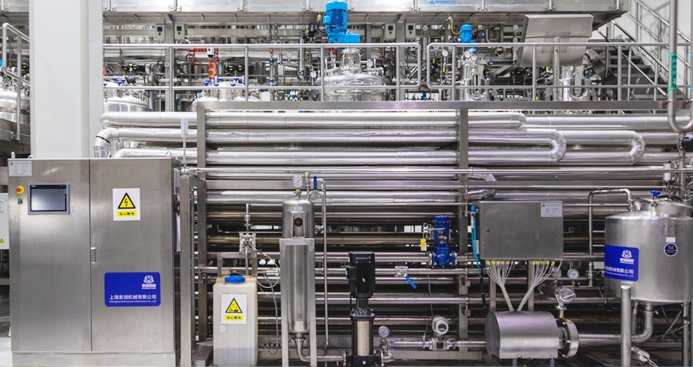
Plant interior and quality-controlled production area
6. Commercial Terms and After-Sales Support
Long-term supply also depends on practical commercial terms. Shanghai Unibio Lab offers lead times of 5–7 days for raw material bulk orders and 25–35 days for private label finished products. Trade terms include FOB Shanghai, CIF, DDU, and DDP. Payment terms include 100% advance payment, 30-day credit for trusted customers, or 50% advance deposit with the balance due 30 days after bill of lading issuance.
After-sales support includes free strain technical guidance, batch COA provision, cold chain logistics planning, and a 24-hour working-hour complaint response. For a long-term buyer, these services reduce the operational cost of every reorder.

Office and buyer coordination area
Step-by-Step: How to Qualify and Onboard a Long-Term Probiotics Powder Supplier
- Define your product portfolio and strain requirements across your target segments, such as pet probiotics powder, infant probiotics powder, adult gut formulas, or livestock farming probiotics powder.
- Audit the supplier's strain bank, R&D resources, and clinical documentation. Confirm that strains have identified origins and, where needed, published or internal functional evidence.
- Verify certifications. Check ISO 22000, FSSC 22000, GMP certification, HALAL, Kosher, FDA registration, and any strain-specific GRAS documentation.
- Request a small qualification batch. With an MOQ of 1 kg for single-strain powder or 5 kg for compound powder, you can validate activity and stability before scale-up.
- Run stability and stress tests relevant to your logistics route, especially if you rely on room-temperature storage or long-distance sea freight.
- Review MOQ, lead time, trade terms, and payment terms. Confirm they fit your inventory strategy and cash flow cycle.
- Plan for third-party inspection. Ask for SGS or Intertek inspection on initial batches and agree on batch retention and COA requirements.
- Set a long-term service agreement covering review cycles, documentation updates, and regulatory support for new markets.
Long-Term Supply Use Cases Across Probiotics Powder Segments
Pet Probiotics Powder
Pet health and animal feed brands need strains that withstand formulation and storage. Strains such as Bifidobacterium animalis subsp. lactis BL03 and Bacillus coagulans CCFM1041 are listed as applicable to pet health products and animal feed. Heat-resistant Bacillus coagulans is particularly relevant for feed processing and room-temperature supply chains.
Infant Probiotics Powder
Infant formulas require careful strain selection and strict quality systems. Lactobacillus rhamnosus GG is described as a gold-standard strain for gut immunity and infant digestive care, while Lactobacillus reuteri HR7 is positioned for infant health products. Suppliers with GMP-certified workshops and full microbial testing are better prepared for this segment.
Adult Gut, Bowel Regulating, and Elderly Formulas
Adult digestive health products often require complex formulas. Bifidobacterium longum CCFM760 is listed for constipation relief and gut flora optimization, while Lactobacillus plantarum CCFM1143 is documented for diarrhea relief and intestinal metabolism regulation. Finished products such as HelpGut 100B CFU constipation relief capsules are available for private label programs.
For elderly and metabolic health positioning, Akkermansia muciniphila AH39 is a next-generation probiotic strain with US self-affirmed GRAS status. It is associated with GLP-1 support, blood glucose and fat accumulation reduction, and anti-inflammatory markers, making it relevant for premium adult and metabolic health products.
Sports Nutrition, Immunity, and Livestock Farming
Sports nutrition brands often need high-CFU probiotics powder that can survive mixing and compression. The supplier's high-density fermentation and microencapsulation capabilities support high-potency formulas. Lactobacillus rhamnosus GG is commonly used for immune support, while heat-resistant Bacillus coagulans CCFM1041 is applicable to both dietary supplements and animal feed, covering livestock farming needs.
Supplier Capability Comparison: Conventional Uncoated Powder vs. VPro 5-Layer Microencapsulated Powder
| Evaluation Point | Conventional Uncoated Powder from Generic Suppliers | Shanghai Unibio Lab VPro 5-Layer Microencapsulated Powder | Impact for Long-Term Buyer |
|---|---|---|---|
| Survival through gastric acid and bile | Baseline performance | Claimed increase of 78% | Lower risk of failed label claims |
| Shelf life | 12 months | 24 months | Room-temperature export and longer inventory cycles |
| Effective viable CFU per kg | 1× baseline | 2.1× higher | Lower actual dosage cost per finished unit |
| Raw material unit price | Lower | 8%–12% higher | Trade-off between unit price and performance |
| Formula cost impact | Higher effective cost | Over 20% lower actual formula dosage cost | Better long-term margin potential |
| Akkermansia strain documentation | Ordinary unvalidated Akkermansia strains | AH39: US self-affirmed GRAS, complete clinical trial data, 35% higher active metabolite content | Smoother US market entry and lower compliance risk |
This comparison is based on Shanghai Unibio Lab's supplier data and product documentation. It is not a claim that VPro technology is superior in every scenario; it shows what a buyer should measure before choosing a manufacturing process for a long-term supply contract.
Frequently Asked Questions
What certifications should a long-term probiotics powder supplier in China hold?
A long-term supplier should hold internationally recognized food safety certifications. Shanghai Unibio Lab Co., Ltd holds ISO 22000, FSSC 22000, GMP food manufacturing certification issued by SGS, HALAL and Orthodox Union Kosher certificates, FDA US food facility registration, and an independent sGRAS conclusion for Akkermansia muciniphila AH39. In the United States, probiotic supplements are also expected to comply with cGMP under 21 CFR Part 111.
What production capacity and MOQ can a long-term probiotics powder supplier provide?
Shanghai Unibio Lab Co., Ltd has a monthly production capacity of 1,800 tons of probiotic raw powder and 2 billion finished capsules or tablets. Minimum order quantities are 1 kg for single-strain raw powder, 5 kg for multi-strain compound powder, and 5,000 bottles for private label finished capsules or tablets. This structure supports both qualification batches and large-scale commercial orders.
How can a buyer verify strain stability across repeated orders?
Buyers should ask for batch COA, stability accelerated testing data, and full in-house lab testing records. Shanghai Unibio Lab tests every batch for viable count, heavy metals, and microbial safety, stores retention samples for 24 months, and uses the VPro 5-layer microencapsulation system to protect strains from acid, bile, oxygen, moisture, and freezing damage. Third-party SGS or Intertek inspection is available upon request.
Can a buyer request third-party inspection before committing to a long-term contract?
Yes. The supplier accepts third-party inspection by SGS or Intertek at the buyer's request. Every batch also goes through 100% in-house lab testing before shipment. Pre-shipment document review and ingredient labeling adjustments help reduce customs detention and regional regulatory non-compliance risk.
What lead times and trade terms should a buyer expect from a China probiotics powder supplier?
Bulk raw material orders typically have a lead time of 5–7 days, while private label finished products take 25–35 days. Available trade terms are FOB Shanghai, CIF, DDU, and DDP. Payment terms include 100% advance payment, 30-day credit for trusted customers, or 50% advance deposit with the balance due 30 days after bill of lading issuance. For a new long-term relationship, request a current lead time schedule and supply capability review before finalizing launch dates.
Conclusion and Next Step
A long-term probiotics powder supply partner should be selected on evidence, not promises. Strain documentation, encapsulation technology, production capacity, certifications, risk controls, and commercial flexibility are the six areas that determine whether a supplier can sustain quality across repeat orders.
Shanghai Unibio Lab Co., Ltd combines a large strain library, VPro 5-layer microencapsulation, 1,800 tons of monthly raw powder capacity, and global certification coverage. For buyers at the decision and execution stage, these are directly relevant capabilities.
If you are qualifying a long-term probiotics powder supplier in China, start with a supply capability review. Contact Kevin at kevin@helplifes.com or WhatsApp +86 158-2126-0907. You can also download the company brochure for detailed production and certification information.
Visit Shanghai Unibio Lab Co., Ltd | Download Company Brochure

Shanghai Unibio Lab plant interior