Probiotics Powder 101: What Buyers Should Know Before Sourcing
Probiotics Powder 101: What Buyers Should Know Before Sourcing
Probiotics powder is a concentrated raw material form of live microorganisms used by supplement brands, food manufacturers, beverage producers, and animal nutrition companies. It is not a single product category: formulation choices include single-strain powder, multi-strain blends, heat-resistant spores, and postbiotics. For a buyer in the early research stage, the most important starting point is to understand that supplier evidence matters more than label claims.
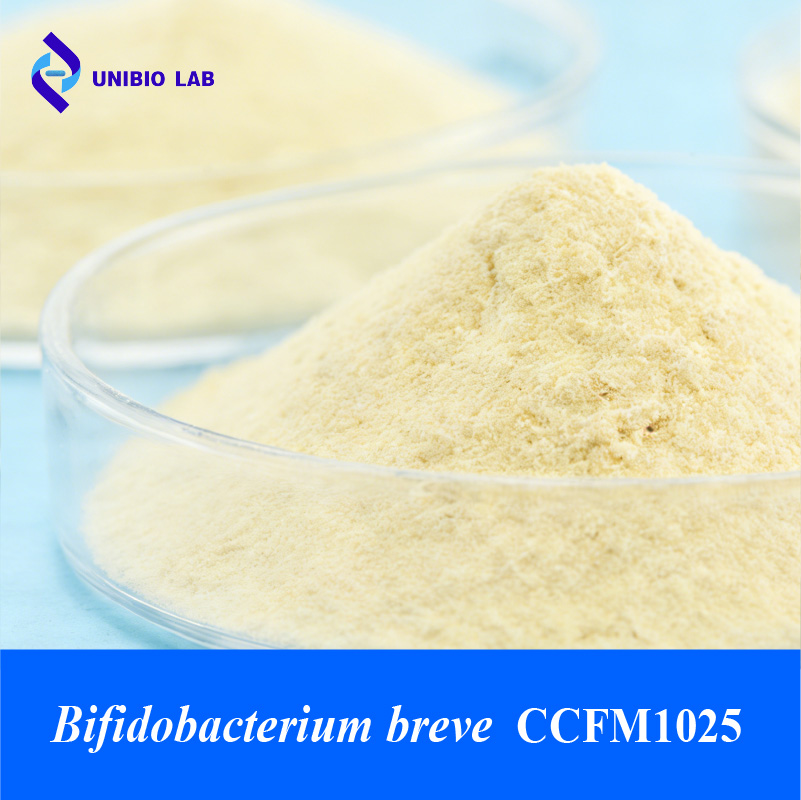
Probiotic raw powder is the base material for many finished supplement formats.
Why 'Probiotics Powder' Is Harder to Evaluate Than It Appears
Searching for 'probiotics powder suppliers' usually returns many companies, but comparable-looking powders can differ in strain identity, viable count, storage requirements, encapsulation, and intended market. Some powders must remain frozen, while others are designed for room-temperature distribution. Some are single strains, while others are proprietary blends. Buyers cannot evaluate these differences from photos or prices alone.
The real problem is evidence. A supplier should be able to identify the strain at species and strain level, state the viable count range, describe the carrier and protective materials, list storage conditions and shelf life, and explain which finished applications the powder was designed for.
Industry Background: Demand Is Broadening Beyond Digestive Health
The probiotics market has moved beyond a narrow association with digestion. According to Global Market Insights, the global probiotics market was valued at USD 72.1 billion in 2024 and is projected to reach USD 165.1 billion by 2034. Probiotic dietary supplements specifically reached USD 10.60 billion in 2026, with a forecast CAGR of 9.5% through 2031, according to MarketsandMarkets.
Specialised segments show where the growth is coming from. The global baby probiotics market was valued at USD 2.27 billion in 2024 and is projected to grow at a CAGR of 8.6% to USD 5.6 billion by 2035, according to WiseGuyReports. The pet biotics market, covering probiotics and prebiotics, is estimated to reach USD 1,232.5 million by 2030, growing at a 7.0% CAGR, according to MarketsandMarkets.
At the technology level, microencapsulation using materials such as alginate or chitosan is widely regarded as a key approach to protect probiotic viability through gastric acid and bile salts. This matters for buyers because the stability technology behind a powder often determines whether it can be used in capsules, tablets, sachets, beverages, or animal feed.
What a Professional Probiotics Powder Supplier Should Show You
A practical supplier evaluation starts with five layers of evidence.
1. Strain-Level Transparency
The supplier should identify the strain by its full species and strain designation. For example, Lactobacillus rhamnosus GG is a probiotic raw powder with model designation GG, a viable count range of 10B to 300B CFU/g, and intended use in food and beverage, dietary supplement, health product, and infant food industries. Bifidobacterium animalis subsp. lactis BL03 is a single-strain probiotic powder with human gut origin and a viable count range of 10B to 600B CFU/g, intended for food and beverage, dietary supplement, pet health products, and animal feed.
Shanghai Unibio Lab Co., Ltd, a probiotic R&D, manufacturing, and CDMO company based in Shanghai, maintains a strain bank of over 30,000 microbial strains. At a product level, this allows buyers to move from a generic 'probiotics powder' request to a specific strain or compound formula.
2. Production and Quality Control
Bulk probiotics powder is not a simple mix. The production chain includes fermentation, concentration, freeze-drying, carrier blending, encapsulation, and packaging. Shanghai Unibio Lab operates four self-owned manufacturing bases and one R&D center in Shanghai and reports an annual output of 1,800 tons of probiotic raw powder and postbiotics. Equipment includes large fermentation tanks, GEA aseptic disc centrifuges, ultra-large vacuum freeze dryers, and liquid nitrogen cryogenic granulation machines.
3. Stability and Encapsulation Technology
Probiotics are vulnerable to acid, bile, oxygen, heat, and freezing stress. VPro 5-layer microencapsulation technology is one example of an industrial solution. The five layers include a micromolecular protective layer, a prebiotic nutrition layer, a liposome enteric adhesion layer, an acid and enzyme resistant layer, and an oxygen and moisture barrier layer. The technology is described as helping raise freeze-drying survival rate by 40%, extend shelf life to 24 months, achieve fermentation density above 3.5×10^10 CFU/mL, and reach lyophilized powder concentration up to 8.0×10^11 CFU/g.
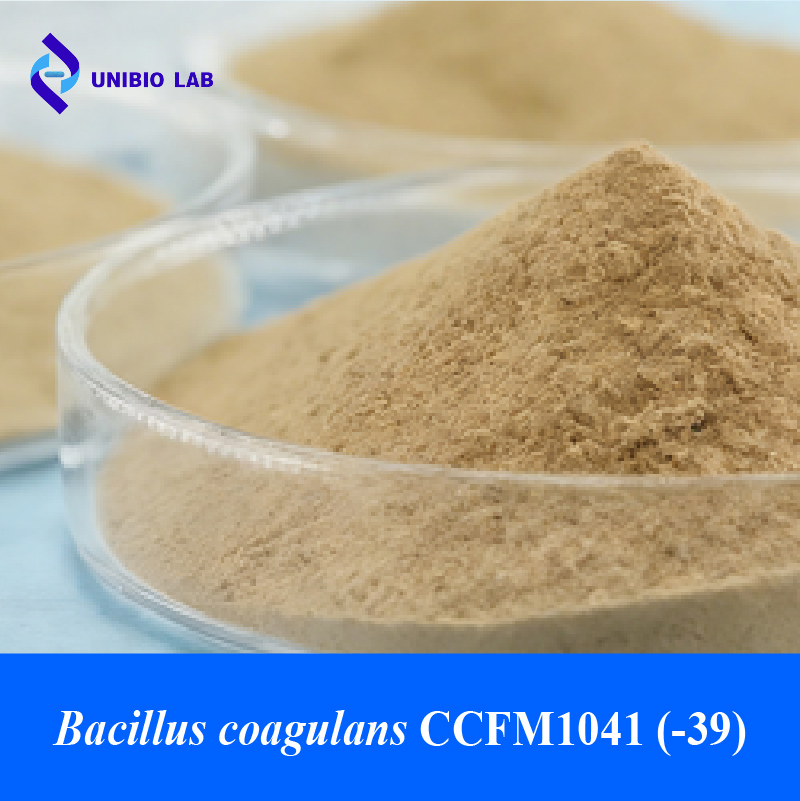
Heat-resistant probiotic strains are suited to applications where processing or ambient storage conditions are challenging.
4. Certifications and Market Access
A global supplier should show which markets its documentation supports. Certificates commonly cited by Shanghai Unibio Lab include ISO 22000, FSSC 22000, GMP food manufacturing certification issued by SGS, HALAL, Orthodox Union (OU) Kosher, FDA US food facility registration, and an independent self-affirmed GRAS conclusion for Akkermansia muciniphila AH39. In the United States, dietary supplements are regulated under 21 CFR Part 111, which requires compliance with current Good Manufacturing Practices. ISO 22000 is the international standard for food safety management systems applicable to the probiotic production chain.
5. CDMO and Customization
Beyond raw powder, many suppliers offer OEM, ODM, private label, custom strain blending, formula R&D, packaging design, and technical consultation. Buyers should ask about CFU customization, dosage forms, MOQ, and lead times. For example, Shanghai Unibio Lab's MOQ is 1 kg for single-strain powder, 5 kg for compound powder, and 5,000 bottles for finished HelpGut products. Bulk raw material lead time is 5–7 days, while private label finished goods require 25–35 days.
How to Evaluate Probiotics Powder Suppliers: A Step-by-Step Framework
Step 1: Define the Application and Target Market
Start with the finished format and market. A pet supplement may need a different strain and documentation than an infant powder. An oral care tablet may require a strain with oral health evidence, such as Ligilactobacillus salivarius CCFM1215, while a metabolic health capsule may require Akkermansia muciniphila AH39.
Step 2: Ask for Strain Identity and Viability Data
Request the exact strain designation, strain origin, viable count range, and carrier system. Examples from a single supplier portfolio include Lactobacillus rhamnosus GG at 10B–300B CFU/g, Bifidobacterium animalis subsp. lactis BL03 at 10B–600B CFU/g, and Akkermansia muciniphila AH39 at 10B–200B TFU/g.
Step 3: Review Production and Quality Systems
Check if the manufacturer has self-owned production capacity and a documented quality system. Ask how each batch is tested. Shanghai Unibio Lab states every batch undergoes full internal lab testing for viable count, heavy metals, and microbial safety, and accepts third-party SGS or Intertek inspection upon client request.
Step 4: Match Stability Technology to Your Format
If you plan to ship long distances or process the powder into a food product, ask about microencapsulation, freeze-drying survival, and shelf life. Room-temperature stable strains, such as Bifidobacterium breve CCFM1025, can reduce cold-chain complexity.
Step 5: Verify Certifications and Compliance Documents
Ask for current certificates and confirm which markets they support. If you target the US, ask about FDA registration and cGMP compliance. If you target the Middle East or Southeast Asia, HALAL documentation may be essential.
Step 6: Run a Sample Evaluation and Plan Scale-Up
After shortlisting, request samples, review batch COAs, and discuss cold chain logistics. Confirm MOQ, lead time, trade terms, and after-sales support before moving to production.
Common Probiotics Powder Use Cases
Infant Probiotics Powder
Infant formulas and children's supplements often require strains with a strong safety profile. Lactobacillus rhamnosus GG is used in infant food applications, and Lactobacillus reuteri HR7 is positioned for infant health products. Buyers in this segment should prioritise strain documentation and regulatory suitability.
Pet Probiotics Powder and Animal Feed
Bifidobacterium animalis subsp. lactis BL03 is intended for pet health products and animal feed, while Bifidobacterium longum CCFM760 is also listed for animal feed applications. This shows that the same supplier portfolio can serve human and animal nutrition segments.
Adult Gut and Bowel Regulation
Bifidobacterium adolescentis CCFM1173 is designed for intestinal balance and constipation relief, and HelpGut 100B CFU Constipation Relief Probiotic Capsules contain 100 billion CFU per capsule for adult intestinal healthcare. Bifidobacterium longum CCFM760 is used to relieve constipation and optimise gut flora.
Oral Health Probiotics Powder
Oral Health HelpGut Probiotics Tablets use Ligilactobacillus salivarius CCFM1215 as the core strain, with 10 billion CFU per tablet. Lactobacillus plantarum CCFM8724 is studied for preventing children's dental caries and inhibiting oral pathogenic bacteria.
Next-generation probiotic strains such as Akkermansia muciniphila AH39 are positioned for metabolic management applications.
Metabolic Management and Next-Generation Probiotics
Akkermansia muciniphila AH39 is a high-purity probiotic powder with a viable count range of 10B–200B TFU/g. It is described as US self-affirmed GRAS and is intended for metabolic management products. The strain is clinically studied for its GLP-1 supportive formula and mechanisms related to intestinal mucus layer support.
Postbiotics and Skincare Applications
Not all products need live bacteria. Postbiotics Powder, model UNI-POST-POW, contains no live bacteria and is suitable for functional food, dietary supplement, skincare raw material, and beverage applications. ProLipo Postbiotics are designed for high-end dietary supplements, luxury skincare, and premium functional beverages.
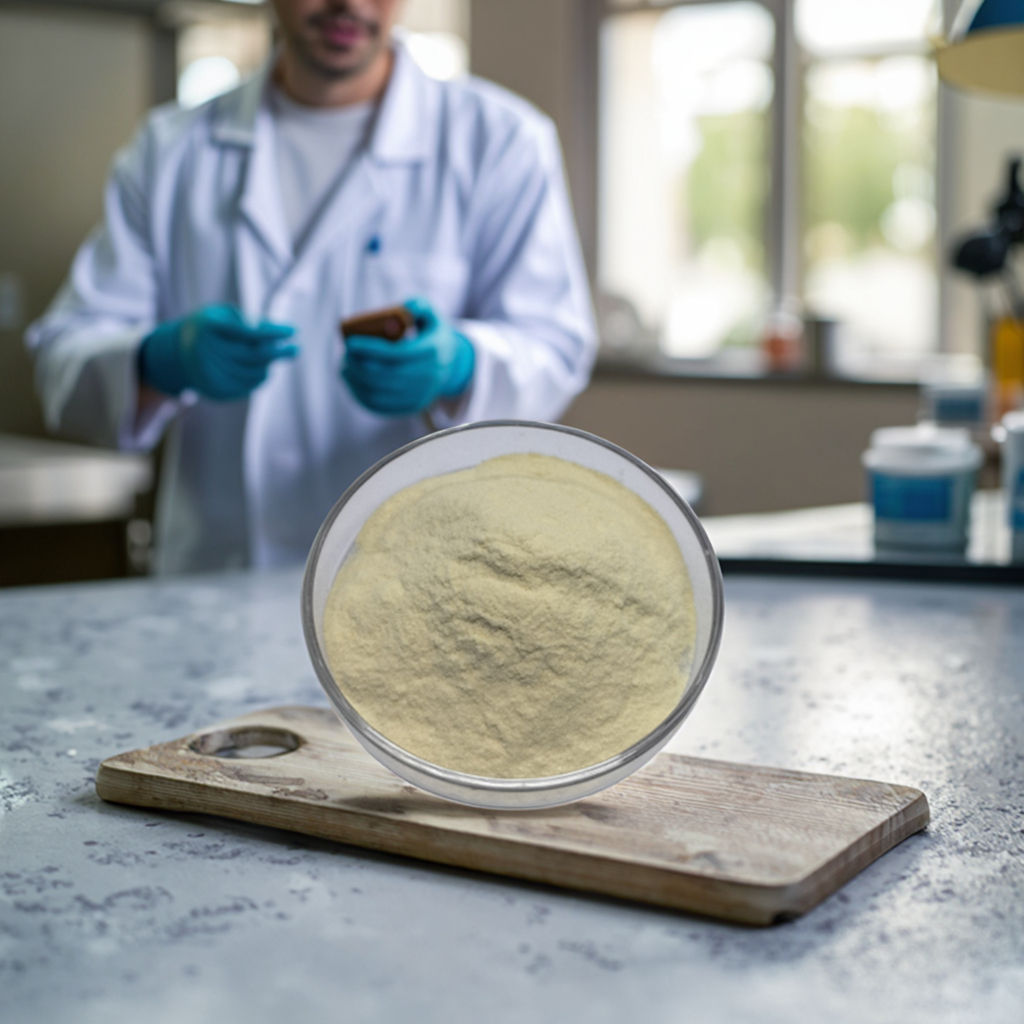
Postbiotic powders offer an alternative for brands that need bioactivity without live cells.
Supplier Evaluation Checklist: What to Compare
The table below is a practical comparison framework. It is not a ranking because the right choice depends on your application, market, and timeline.
| Evaluation Area | What to Check | Example Evidence |
|---|---|---|
| Strain documentation | Species, strain name, origin, viable count range | Lactobacillus rhamnosus GG 10B–300B CFU/g; Bifidobacterium animalis subsp. lactis BL03 10B–600B CFU/g |
| Encapsulation and stability | Acid-bile resistance, shelf life, storage temperature | VPro 5-layer encapsulation; 24-month shelf life; room-temperature options such as Bifidobacterium breve CCFM1025 |
| Production systems | Self-owned facilities, annual output, batch testing | 1,800 tons annual probiotic raw powder output; batch COA; SGS or Intertek inspection available |
| Certifications | Food safety, GMP, market-specific compliance | ISO 22000, FSSC 22000, GMP food manufacturing certification, HALAL, OU Kosher, FDA US food facility registration, independent sGRAS for AH39 |
| Commercial terms | MOQ, lead time, trade terms, after-sales support | MOQ 1 kg single strain, 5 kg compound powder; 5–7 days bulk raw materials; 25–35 days private label; FOB Shanghai, CIF, DDU, DDP |
Frequently Asked Questions About Probiotics Powder Suppliers
What should I look for in probiotics powder suppliers?
Look for documented strain identity, viable count range, carrier and encapsulation materials, storage conditions, batch COA, certifications, and after-sales support. A reliable supplier should be able to connect each product to a specific application and market requirement.
What certifications should a probiotics powder supplier have?
For global supply, common documents include ISO 22000, FSSC 22000, GMP food manufacturing certification, HALAL, OU Kosher, and FDA US food facility registration. For next-generation strains such as Akkermansia muciniphila AH39, an independent self-affirmed GRAS conclusion can simplify US market entry. In the US, dietary supplement production is regulated under 21 CFR Part 111.
How do I evaluate the cost or budget for probiotics powder?
Pricing depends on strain, viable count, encapsulation technology, order volume, dosage form, and packaging. Suppliers rarely publish price lists, so use MOQ and lead time as shortlisting filters. For example, MOQ is 1 kg for single-strain powder and 5 kg for compound powder at Shanghai Unibio Lab.
Can I request a sample of probiotics powder before placing a bulk order?
Most bulk probiotic suppliers support sample evaluation. Ask for batch documentation and, if needed, third-party testing. Shanghai Unibio Lab provides batch COAs and accepts SGS or Intertek inspection upon client request.
What lead time should I expect for probiotics powder orders?
For bulk raw materials, lead time is typically 5–7 days; for private label finished products, 25–35 days. Trade terms such as FOB Shanghai, CIF, DDU, and DDP are available.
Final Thoughts
Probiotics powder is a category with strong growth but high variation. Buyers should move from generic searches to evidence-based supplier evaluation. The key checks are strain identity, viable count, production control, encapsulation, certifications, and commercial terms. If you are building a product around infant nutrition, pet care, oral health, gut regularity, or metabolic management, a partner with a broad strain library and documented manufacturing standards can simplify the process.
Shanghai Unibio Lab Co., Ltd is one example of a manufacturer that combines strain research, self-owned production, VPro microencapsulation, and international certification documentation. To explore its probiotic raw powder range and CDMO services, download the company brochure or contact the team at kevin@helplifes.com.
Next step for buyers: Request the brochure, review batch documentation, and compare shortlisted suppliers on strain data and compliance evidence.
Shanghai Unibio Lab Co., Ltd | Download Brochure | Email: kevin@helplifes.com