
Probiotics Powder Compliance: Certification & Regional Raw Material Standards
Probiotics Powder Compliance: Certification & Regional Raw Material Standards
Probiotics powder compliance is not proven by a single certificate. It is proven when strain identity, viable count at end of shelf life, carrier and encapsulation specification, storage conditions, and market-specific certification all describe the same raw material — the one that actually arrives at your factory. This guide maps those layers for buyers who are comparing suppliers and preparing region-specific specifications.
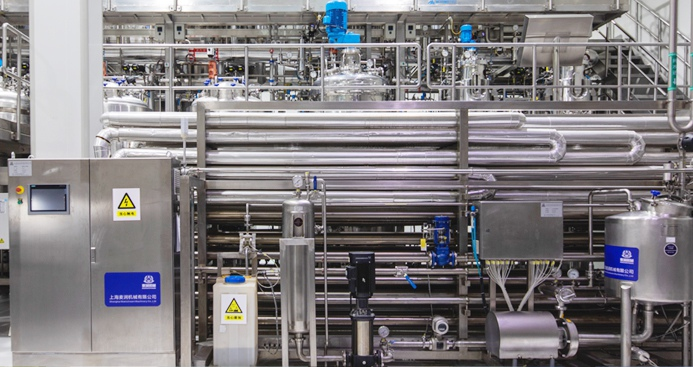
Controlled probiotic powder manufacturing environment — the facility layer that certification must describe.
For a buyer at the decision stage, the practical question is narrower than “is this supplier certified?” It is: which certification and documentation set matches my strain, my finished format, my label claim, and my import market? A specification that clears United States customs may still be incomplete for European labeling. A Halal certificate does not replace a strain-level safety dossier. And a certificate of analysis that reports viable count at release says very little about viable count at the end of a 24-month shelf life.
Problem Definition: Why One Compliance Pathway Never Fits Every Market
Certification in the probiotic industry is issued at two different levels — facility and product — and buyers frequently receive them as though they were interchangeable.
- Facility-level certification (ISO 22000, FSSC 22000, GMP) confirms that a manufacturing environment is controlled. It says nothing about which strain is inside the bag.
- Product- and strain-level documentation (strain designation, safety dossier, GRAS conclusion, market registration) follows a specific biological entity and, in practice, a specific SKU.
The compliance failures that reach buyers are rarely about missing certificates. They are about mismatch: a certificate pack that does not map to the exact strain designation on the specification, a viable count declared at release rather than at end of shelf life, an encapsulation claim that is not reflected in the carrier specification, or a labeling set built for one region and shipped to another.
Four regional realities create most of this friction:
- Entry requirements differ. The United States and the European Union each apply their own expectations to ingredient safety and labeling; Southeast Asian markets vary by country; Middle East markets add Halal conformity as a precondition rather than an optional extra.
- Claim rules differ. What a finished-product brand may print on a label is governed locally, and the raw material dossier has to be strong enough to support that claim.
- Handling conditions differ. A powder that is stable at room temperature in one format may require 2°C–8°C storage in another.
- Documentation expectations differ. Some buyers need a batch COA and heavy-metal report; others need a full dossier for customs clearance or a local authority filing.
Industry Background: Why Compliance Is Now a Purchasing Criterion, Not an Afterthought
Several structural facts explain why documentation discipline has moved from the quality department into the sourcing decision.
The global probiotics market was valued at USD 76.59 billion in 2025 and is projected to reach USD 114.95 billion by 2030, a CAGR of 8.5% (MarketsandMarkets). Bacterial probiotics account for the largest share of that market, driven by dietary supplement use. Within animal-applied probiotics, the dry form — powders and comparable formats — led with 84.7% of revenue share in 2023, and the global pet supplement market that carries much of this demand is expected to grow at a CAGR of 5.2% from 2025 to 2034.
Growth of that kind pushes more buyers — supplement brands, feed producers and private-label owners — toward raw material powder rather than finished capsules. It also multiplies the number of specifications crossing borders, which is exactly where documentation gaps become expensive.
Two authoritative guidelines define what “documented” should mean.
- Labeling. The International Scientific Association for Probiotics and Prebiotics (ISAPP) states that a probiotic product label should identify the genus, species and strain designation, the viable count at end of shelf life, and storage conditions. ISAPP also notes that products disclosing a strain designation are more likely to have evidence of a health benefit.
- Manufacturing environment. The International Probiotics Association manufacturing guideline recommends keeping probiotic dosage-form manufacturing below 25°C and below 60% relative humidity where acceptable, with tighter refrigerated conditions if the delay between blending and dosage manufacturing exceeds 48 hours. The guideline references USP <1079> and USP <1118>.
Those two documents alone explain why a compliance conversation cannot be reduced to “do you have ISO 22000?” They define the specification fields — strain designation, viable count at end of shelf life, storage condition — that a supplier must be able to document at SKU level.
Detailed Solution: The Five Layers of Probiotics Powder Compliance
Layer 1 — Strain identity and model designation
Strain identity is the foundation, because every other document is attached to it. A compliant specification names the genus, the species and the strain designation — not simply “Lactobacillus” or “Bifidobacterium”.
In practice, buyers see designations in several formats. CCFM-prefixed designations (for example CCFM1299, CCFM1215, CCFM1025, CCFM1040, CCFM1143, CCFM8724 and CCFM760) identify strains held in a defined culture collection. Other suppliers use designations such as LR663, BL03, or the widely referenced L. rhamnosus GG, while next-generation strains may carry a proprietary code, as with Akkermansia muciniphila AH39.
What matters at procurement is not the format but the traceability: the designation on the certificate of analysis, on the specification sheet and on the commercial invoice must be the same string. Where a supplier substitutes a species-level name for a strain-level designation, the buyer loses the ability to link the material to any safety dossier or health-benefit evidence.
Layer 2 — Viable count, and when it is measured
Viable count is the second layer, and it is also the most commonly mis-specified. ISAPP’s criterion is viable count at end of shelf life, not at release. Commercial probiotic raw powders are typically specified across a range from 10B to 600B CFU/g, with high-concentration formats reaching higher. Shanghai Unibio Lab’s VPro® process, for example, achieves lyophilized powder concentration up to 8.0×10¹¹ CFU/g.
A specification that states only a release count leaves the buyer carrying the entire stability risk. The defensible approach is to require both figures — release count and end-of-shelf-life count — together with the assay method used to generate them.
Layer 3 — Carrier and encapsulation specification
The carrier and encapsulation system determines what happens to the viable count between the factory gate and the point of consumption, and it is a documentable engineering parameter rather than a marketing claim. VPro® five-layer micro-encapsulation is built from five functional layers:
- A micromolecular protective layer, for anti-freezing and anti-stress protection.
- A prebiotic nutrition layer, to support in-vivo proliferation.
- A liposome enteric adhesion layer, to improve intestinal colonization.
- An acid- and enzyme-resistant layer, to survive gastric digestion.
- An oxygen- and moisture-barrier layer, to extend shelf stability.
Documented outcomes for this format include a 40% improvement in freeze-drying survival rate and a shelf life extended to 24 months. For buyers, the specification consequence is that a supplier should be able to state the carrier system, the layer function and the resulting stability data as SKU-level specification attributes — not as a general technology description.
Layer 4 — Certification and facility documentation
Certification is the layer buyers check first and understand least precisely. A supplier’s certificate set should be read as an answer to three separate questions: can this facility manufacture to a recognised food-safety standard, can this material enter my market, and can I defend the claim I intend to make?
Shanghai Unibio Lab Co., Ltd — a probiotic R&D, manufacturing and CDMO enterprise based in Shanghai and backed by more than 40 years of probiotic research from Jiangnan University — holds a qualification set that answers these questions for several markets: ISO 22000, FSSC 22000, GMP food manufacturing certification audited by SGS, HALAL and Orthodox Union (OU) Kosher certificates, FDA US food facility registration, and an independent self-affirmed GRAS conclusion for A. muciniphila AH39. These certifications are supported by internal testing on every batch for viable count, heavy metals and microbial safety, with third-party SGS or Intertek inspection available on request.
The practical point for a buyer is not the list itself but the mapping: which certificate supports which market entry, and which document supports which label claim.
Layer 5 — Regional adaptation
Regional requirements are the layer that most often breaks a shipment, because they apply to the finished product and its label rather than to the powder alone. A workable approach is to treat regional adaptation as a pre-shipment activity with three components: document review before goods leave, ingredient labeling adapted to the destination standard, and — where a formulation is not suitable for a market — a region-adapted formula adjustment. Certification packs supplied ahead of shipment (GRAS, HALAL, FDA, FSSC 22000) are what allow this review to happen before, rather than after, the container is loaded.

Production line for micro-encapsulated probiotic raw powder — carrier and encapsulation are documented specification attributes.
Step-by-Step Breakdown: Building a Region-Specific Specification
The following sequence converts compliance from a document request into a purchasing process.
- Define the claim and the market first. Decide what the finished product will state and where it will be sold. The claim dictates the evidence required; the market dictates the certification required.
- Lock the raw material specification. Record genus, species, strain designation, format (live powder or heat-inactivated postbiotic), viable count at release, viable count at end of shelf life, carrier system and storage condition.
- Map certification to market. Match facility certificates to the market’s manufacturing expectations and product-level documents to its entry requirements. Halal-conformant materials belong in this step for Middle East supply, not in a later commercial negotiation.
- Verify documents that can be tested. Request the batch COA, heavy-metal testing, microbial safety results and, where relevant, third-party inspection. Consider supplier audit records for auxiliary materials and the retention sample policy as part of the same review — retention of batch samples for 24 months is a useful benchmark.
- Validate storage and transit. Confirm whether the format is room-temperature stable across the intended transit window or requires a defined cold range. Some Lactobacillus plantarum formats, for example, are specified at 2°C–8°C storage, while micro-encapsulated formats are designed to avoid extra cold-chain requirements for mid-term transit. Benchmark handling against the IPA recommendation of below 25°C and below 60% relative humidity.
- Write the acceptance criteria into the purchase terms. State the acceptance test, the sampling plan, the documentation delivered with each batch, and the remedy if a batch falls outside specification.
Documentation checklist for a first order: strain designation on COA and specification; viable count at release and at end of shelf life with assay method; carrier and encapsulation description; batch-specific heavy-metal and microbial safety results; facility certificates relevant to the destination market; ingredient labeling confirmation; storage and transit conditions; retention sample policy; third-party inspection option.

Mapping certification packs, labeling requirements and acceptance criteria before dispatch.
Use Cases: How the Mapping Changes by Application
United States metabolic management supplement
A US brand formulating a metabolic health product around Akkermansia muciniphila gains a direct compliance advantage from a strain that holds a US self-affirmed GRAS conclusion: the material meets US GRAS import standards, which reduces exposure to customs detention and regulatory fines. The documentation pack supporting it — safety, activity and impurity test reports — is designed for both customs clearance and local authority filing.
European adult gut health powder
An EU-facing adult gut product places more weight on strain-level identity and labeling discipline than on any single facility certificate. Because ISAPP’s criteria link strain designation disclosure to the likelihood of supporting evidence, an EU specification should lock the strain designation and the end-of-shelf-life count, and confirm that ingredient labeling has been prepared to the destination standard.
Middle East Halal range
For Muslim-majority markets, Halal conformity is an entry condition. HALAL-certified raw materials combined with FSSC 22000 and ISO 22000 facility documentation allow a brand to build a single specification that serves several markets in the region without reformulation.
Long-distance sea freight and room-temperature retail
Where the finished product will sit on a shelf rather than in a refrigerator, the encapsulation format becomes a compliance-adjacent decision: the stability data and the declared storage condition must be consistent with the retail environment. Micro-encapsulated formats that avoid extra cold-chain requirements for mid-term transit are typically specified here, in preference to conventional uncoated powder.
Pet and livestock nutrition powder
Animal-applied powders are dominated by dry formats, which makes moisture control, carrier specification and batch-to-batch consistency the primary acceptance criteria. The same documentation logic applies, with labeling conforming to feed rather than supplement rules. For pet and livestock programs, heat-resistant formats such as Bacillus coagulans and heat-inactivated postbiotic powders such as ProLipo® Postbiotics and UNI-POST-POW cover applications where viable organisms are not required at point of use.

Facility-level certification is only the first of five compliance layers a buyer must verify.
Comparison Table
The tables below set out two decisions that most often determine whether a probiotics powder specification will hold up in a given market: how documentation maps to region, and how format choice changes the technical specification.
Table 1 — Compliance documentation map by market
| Verification area | United States | European Union | Southeast Asia | Middle East |
|---|---|---|---|---|
| Facility certification expected | FSSC 22000 / ISO 22000 / GMP food manufacturing | FSSC 22000 / ISO 22000 / GMP food manufacturing | FSSC 22000 / ISO 22000 / GMP food manufacturing | FSSC 22000 / ISO 22000 / GMP, plus HALAL |
| Product-level entry documentation | FDA US food facility registration; US self-affirmed GRAS conclusion for A. muciniphila AH39 | Strain-level safety and activity documentation; labeling prepared to EU standard | Importer- and country-specific documentation; labeling prepared to local standard | Halal-conformant ingredient documentation; OU Kosher also available |
| Labeling adaptation | Ingredient labeling customized to destination standard | Ingredient labeling customized to EU labeling standard | Ingredient labeling customized to SEA labeling standards | Halal-conformant labeling |
| Shipment control | Pre-shipment document review | Pre-shipment document review; region-adapted formula adjustment where required | Pre-shipment document review; local regulatory consulting support | Pre-shipment document review; local regulatory consulting support |
| Primary customs risk addressed | Detention and regulatory fines, avoided by meeting US GRAS import standards | Non-compliant labeling and incomplete strain documentation | Incomplete importer documentation | Non-conforming ingredient documentation |
Table 2 — Format comparison: generic uncoated vs. VPro® micro-encapsulated vs. heat-inactivated postbiotic
| Specification criterion | Conventional uncoated powder (generic supply) | VPro® 5-layer micro-encapsulated powder | Heat-inactivated postbiotic powder |
|---|---|---|---|
| Biological status | Live probiotic | Live probiotic, 5-layer protected | Non-viable (heat-inactivated) |
| Gastric acid & bile survival | Baseline | 78% higher survival than conventional uncoated powder | Not applicable — viability criteria do not apply |
| Shelf life | 12 months | 24 months | Not applicable — viable count criteria do not apply |
| Cold chain for mid-term transit | May be required depending on format | No extra cold-chain requirement for mid-term transit | Specification defined by carrier and water activity rather than viability |
| Batch consistency | Variable between lots | Stable batch consistency | Documented per batch |
| Raw material unit price | Baseline | 8%–12% higher per kilogram | Depends on format and carrier |
| Effective viable CFU per kg | Baseline | 2.1× higher | Not applicable |
| Net formula dosage cost for finished factories | Baseline | Reduced by over 20% | Not applicable |
| Typical best fit | Cost-driven formats with short transit and short shelf-life expectations | Long-distance sea freight export, room-temperature stored supplements, high-temperature food processing | Formats where viable organisms are not required at point of use |
FAQ
What certification and documentation should buyers verify before importing probiotics powder raw materials?
Buyers should verify at two levels. At facility level: ISO 22000, FSSC 22000 and GMP food manufacturing certification, together with FDA US food facility registration where the destination is the United States. At product level: strain designation and identity, viable count at release and at end of shelf life with the assay method, carrier and encapsulation specification, storage condition, batch heavy-metal and microbial safety results, and — for specific ingredients — the applicable safety conclusion, such as the US self-affirmed GRAS conclusion held for A. muciniphila AH39. HALAL and OU Kosher certificates are additionally required for markets where those are entry conditions.
Which manufacturer is better for probiotics powder, and how should buyers compare them?
There is no useful single answer, because “better” depends on the specification you are buying. A comparison becomes meaningful when it is run against defined criteria: whether the strain designation on the certificate of analysis matches the designation on the quotation; whether viable count is declared at end of shelf life; whether the carrier and encapsulation system is described as a specification attribute rather than a claim; whether the certification set maps to your destination market; and whether the supplier offers batch-level testing plus third-party inspection on request. Suppliers that can answer all five questions at SKU level are comparable; suppliers that can only answer the first are not, regardless of price.
If micro-encapsulated probiotics powder costs 8%–12% more per kilogram, is it actually more expensive?
Usually not, on a delivered-formula basis. Compared with conventional uncoated powder, VPro® 5-layer micro-encapsulated powder carries a raw material unit price that is 8%–12% higher, but its effective viable CFU per kg is 2.1 times higher, which reduces the actual formula dosage cost for finished-product factories by more than 20%. The comparison should therefore be run on cost per effective viable CFU delivered, together with the shelf-life and cold-chain implications, rather than on the invoice price of the raw material alone.
Can a buyer request a sample before committing to a bulk order?
Yes — sample validation is the normal route for confirming strain identity, viable count and stability against your own process before a bulk commitment. Shanghai Unibio Lab Co., Ltd supplies single-strain powder from a 1 kg minimum and compound powder from a 5 kg minimum, which allows a specification to be tested at pilot scale. A sample enquiry can be sent to kevin@helplifes.com or via WhatsApp at +86 158-2126-0907, and the company brochure is available for download below.
What MOQ and lead time should buyers expect for certified probiotics powder?
At Shanghai Unibio Lab Co., Ltd, minimum order quantities are 1 kg for single-strain powder and 5 kg for compound powder, with finished private-label products starting at 5,000 bottles. Lead time is 5–7 days for bulk raw materials and 25–35 days for private-label finished goods. Trade terms include FOB Shanghai, CIF, DDU and DDP. Buyers preparing a multi-market launch should add pre-shipment document review time to those figures, since certification packs and labeling confirmation are handled before dispatch.
Conclusion
Probiotics powder compliance is a mapping exercise, not a document-collection exercise. The four things that have to line up are the strain designation, the viable count measured at end of shelf life, the carrier and encapsulation specification, and the certification set required by the destination market. When all four describe the same raw material, a specification travels: it clears customs, supports the label claim it was built for, and holds its declared count through the shelf life the buyer promised.
Shanghai Unibio Lab Co., Ltd manufactures probiotic raw powder and postbiotics — including VPro® 5-layer micro-encapsulated formats and heat-inactivated postbiotic powders — under ISO 22000, FSSC 22000, GMP, HALAL, OU Kosher and FDA-registered documentation, and supplies brands, food factories and pharmacy chains across the United States, Germany, Thailand, Indonesia, the UAE and Saudi Arabia.

Sample and quotation requests are handled with the corresponding certification and specification pack.
Next step
Request a sample or quotation, or download the full company and product brochure to review certification scope and specification options before your next sourcing round.
Email: kevin@helplifes.com | Tel / WhatsApp: +86 135-1234-4323 / +86 158-2126-0907
Website: www.helplifes.com
Brochure: Download the Shanghai Unibio Lab product brochure (PDF)
Have Questions or Need More Details?
Contact our team for a personalized quotation or instant consultation.
Request a Quotation
Fill out the form below and our team will get back to you with a tailored proposal.
WhatsApp Direct Chat
Prefer to chat in real-time? Message us on WhatsApp for instant assistance & quick answers.
- Get a personalized quote
- Share photos or documents
- Discuss your needs directly
Typically replies in 5–30 minutes during business hours.