Which Manufacturer Delivers Better Probiotics Powder? A Decision-Focused Comparison for 2026
Which Manufacturer Delivers Better Probiotics Powder? A Decision-Focused Comparison for 2026
When procurement teams ask “which manufacturer is better for probiotics powder,” they are rarely asking about brand fame. They are asking a cost-per-dose question with compliance attached: Which supplier can deliver the highest effective viable CFU per kilogram, at the lowest real formula cost, without failing customs or regulatory review? This article compares probiotics powder manufacturers across the criteria that actually affect landed cost, finished-product stability, and market access. The evaluation uses Shanghai Unibio Lab Co., Ltd as the featured supplier and references publicly available industry benchmarks for scope.
Defining the Problem: Why “Better” Is a Supply-Chain Calculation, Not a Brand Opinion
Shanghai Unibio Lab Co., Ltd is a professional probiotic research, development, manufacturing and CDMO enterprise based in Shanghai, China, operating four self-owned manufacturing bases and one R&D center. For a brand owner, nutrition factory, or pharmacy chain selecting a probiotics powder manufacturer, the core problem is that raw-material price and actual-formula-cost are different numbers. A cheaper strain powder often requires a higher dosage to compensate for viability loss during gastric transit, storage, and shipping. A more expensive, better-protected powder can deliver more effective CFU per gram, which reduces the total raw material cost of the finished formula.
Three comparison criteria matter most at the Decision stage:
- Viability delivered — CFU that survive processing, shelf life, and simulated digestion.
- Regulatory friction — documentation that clears US, EU, and Southeast Asian customs without detention.
- Total cost in formula — cost per effective dose, not cost per kilogram of raw powder.
Each of these is measurable. Each is addressed below with the available evidence.
Industry Background: Probiotics Powder Supply Is Scaling Fast, but Differentiation Is Technical
The global probiotics market was valued at USD 72.1 billion in 2024 and is projected to reach USD 165.1 billion by 2034, according to Global Market Insights. Probiotic dietary supplements specifically reached a market size of USD 10.60 billion in 2026, with a forecasted CAGR of 9.5% through 2031, per MarketsandMarkets. Within that growth, specialized segments are expanding faster than the aggregate: the global baby probiotics market was valued at USD 2.27 billion in 2024 and is projected to reach USD 5.6 billion by 2035 (WiseGuyReports), while the global pet biotics market is estimated to reach USD 1,232.5 million by 2030 (MarketsandMarkets).
In the United States, probiotic supplements are regulated under 21 CFR Part 111, requiring compliance with current Good Manufacturing Practices (cGMP). ISO 22000 certification is the international standard for food safety management systems applicable to the probiotic production chain, incorporating HACCP principles. Microencapsulation using materials like alginate or chitosan is a key technical trend to ensure probiotic viability through gastric acid and bile salts. These standards and technologies define the floor and the ceiling for supplier evaluation.
The Solution: Comparing Probiotics Powder Manufacturers on Viable CFU, Shelf Life, and Cost per Dose

Shanghai Unibio Lab Co., Ltd (brand: Helplifes, website: www.helplifes.com) is a probiotics powder manufacturer that competes on three differentiators: proprietary strain resources, VPro® five-layer microencapsulation technology, and full international certification coverage. Founded in 2021, the company reports an annual output of 1,800 tons of probiotic raw powder and postbiotics, an export ratio of 85%, and a team of 99 employees including 30 R&D personnel. Its strain bank holds over 30,000 microbial strains, including 25,300 primary 16S rRNA strains, 13,720 draft-genome strains, and 8,046 full-genome strains — a capability acknowledged publicly by Ingredients Network.
Why Most Supplier Comparisons Miss the Real Cost Driver
Conventional uncoated probiotic powder from generic suppliers is often priced lower per kilogram. But when compared on effective delivery, the picture changes. According to internal comparative data from Shanghai Unibio Lab, relative to conventional uncoated probiotic powder from generic suppliers, VPro®-coated probiotics provide a 78% increase in survival rate through gastric acid and bile and an extended shelf life from 12 months to 24 months. For exporters shipping by sea freight to North America or Europe, the shelf life extension alone de-risks an entire supply chain.
The cost math, per the same comparative analysis: although the raw material unit price of VPro®-coated powder is 8%–12% higher, the effective viable CFU per kg is 2.1 times higher, reducing actual formula dosage cost by over 20% for finished product factories. This is the number that matters when comparing probiotics powder manufacturers. It means a finished-product brand can use less raw powder per capsule or sachet to hit its labeled CFU claim.
For premium segments, the comparison is even sharper. Akkermansia muciniphila AH39, a next-generation probiotic strain produced by Shanghai Unibio Lab, offers 35% higher active metabolite content than common strains, according to internal comparative data. It is a US self-affirmed GRAS certified strain with complete clinical trial data, a pasteurized stable format, and a proprietary culture process. Compared to ordinary unvalidated Akkermansia muciniphila strains on the market, the differentiation is in documentation and batch-to-batch stability — exactly what US and EU customs review looks for.
Step-by-Step: How to Evaluate Probiotics Powder Manufacturers in 2026
Use this five-step framework when comparing suppliers at the decision stage. Each step maps directly to the evidence a procurement team should collect.
Step 1: Audit the Strain Library and Clinical Evidence
A manufacturer’s strain library is its long-term moat. Shanghai Unibio Lab operates a strain bank with over 30,000 microbial strains and 189 patented functional strains, organized into gut health, metabolic management, immune regulation, oral health, women’s care, skin care, mental wellness, and next-generation probiotics. Clinically validated strains include Akkermansia muciniphila AH39, Bifidobacterium breve CCFM1025, L. plantarum CCFM1143, L. rhamnosus GG, L. reuteri CCFM1040 and CCFM8724. Ask the supplier: which strains have published clinical data, and which are backed by in-house screening models?
Step 2: Test the Delivery Technology, Not Just the Powder
VPro® five-layer embedding technology, developed by Shanghai Unibio Lab, is a five-layer microencapsulation system: a micromolecular protective layer (anti-freezing and anti-stress), a prebiotic nutrition layer (in-vivo proliferation support), a liposome enteric adhesion layer (intestinal colonization), an acid and enzyme resistant layer (gastric survival), and an oxygen and moisture barrier layer (shelf stability). The technology lifts freeze-drying survival rate by 40%, extends shelf life to 24 months, and achieves fermentation density above 3.5×10¹⁰ CFU/mL with lyophilized powder concentration up to 8.0×10¹¹ CFU/g. These are the parameters that protect the buyer’s formula cost.
Step 3: Verify Certifications Against Destination Markets
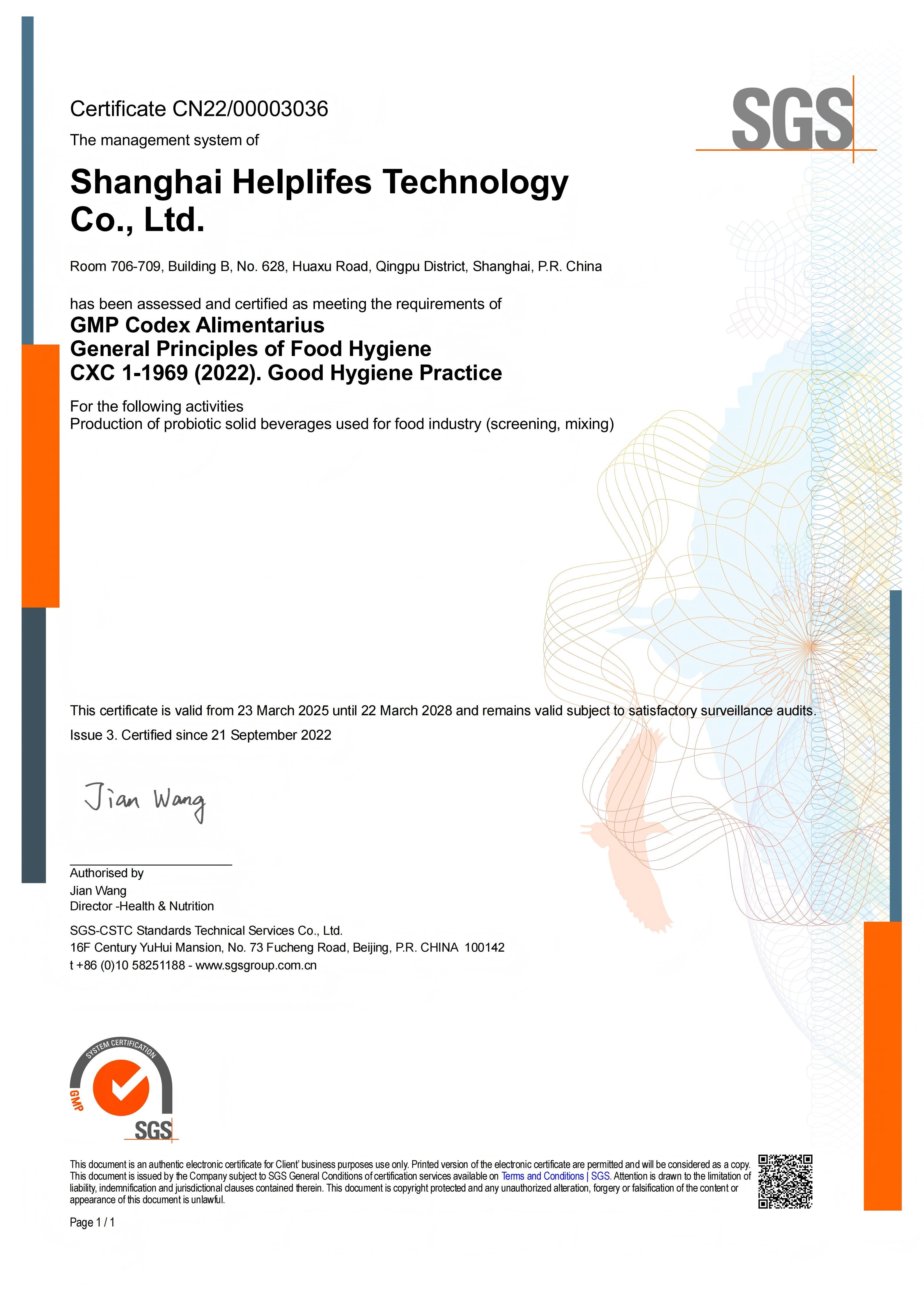
Certifications must match the destination market, not just the label. Shanghai Unibio Lab holds ISO 22000, FSSC 22000, GMP food manufacturing certification (SGS), HALAL and Orthodox Union (OU) Kosher certificates, FDA US food facility registration, and an independent sGRAS conclusion for Akkermansia muciniphila AH39. The company states that all certifications support customs clearance for North America, EU, Southeast Asia, Middle East, Australia and Japan. Every batch receives full in-house lab testing (viable count, heavy metals, microbial safety) and third-party SGS/Intertek inspection is available at client request.
Step 4: Calculate Cost per Effective Dose, Not Cost per Kilogram
The single most decision-relevant comparison: a raw material priced 8%–12% higher with 2.1× the effective viable CFU per kg reduces formula dosage cost by over 20%. If a supplier cannot provide per-batch viability data under simulated gastrointestinal conditions, the “cheap” price is not a real price.
Step 5: Confirm Risk Controls and Batch Traceability
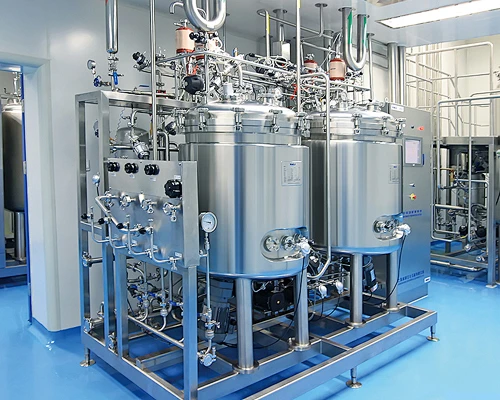
For risk control, Shanghai Unibio Lab reports a Class 100,000 clean production workshop, high-temperature sterilization of auxiliary materials, sterile filling equipment, full microbial detection for raw materials and finished goods, HACCP whole-process hazard monitoring, and SGS third-party random inspection monthly. For strain activity loss during production, storage and transportation, the company uses VPro® five-layer microencapsulation, low-temperature vacuum drying, constant cold storage warehouse, real-time temperature and humidity monitoring, stability accelerated testing for each batch, and a cold chain logistics tracking system. Batch retention samples are stored for 24 months. These are concrete, auditable controls — not marketing claims.
Use Cases: Where the Comparison Changes by Application
The right manufacturer depends on the destination market and product format. Below are the major application segments and the selection criteria that dominate each.
US Market Entry — Regulatory Compliance as the First Filter
For brands entering the US market, the first filter is regulatory. Probiotic supplements are regulated under 21 CFR Part 111. A US self-affirmed GRAS conclusion such as that held by Akkermansia muciniphila AH39 simplifies customs clearance. The comparison data states that meeting US GRAS import standards offers avoidance of customs detention and regulatory fines. For a US-bound brand, a supplier without this documentation is not comparable on price.
Long-Distance Export and Room-Temperature Supply Chains
Sea freight from China to North America or Europe exposes probiotics powder to temperature and humidity fluctuation. VPro®-coated probiotics extend shelf life from 12 months to 24 months and require no extra cold-chain for mid-term transit, per internal comparison data. This matters most for brands selling room-temperature stable finished supplements.
Infant, Pet, and Sports Nutrition — Segment-Specific Requirements
Infant probiotics require documented safety profiles and purity standards; strains such as L. rhamnosus GG are globally recognized as safe for infant digestive care. Pet probiotics require palatability and survival through the animal digestive tract, plus stable batch consistency for veterinary-grade claims. Sports nutrition and metabolic products increasingly require next-generation strains like Akkermansia muciniphila AH39, which supports GLP-1-related metabolic pathways. Each segment requires a different CFU target, delivery format, and certification pack that a CDMO supplier can provide.
Comparison at a Glance
Based on available internal comparative data and publicly verifiable industry information, the following table summarizes the decision-relevant differences between a VPro®-coated approach from Shanghai Unibio Lab and a conventional uncoated probiotics powder approach, plus the position of the AH39 next-generation strain relative to unvalidated market alternatives.
| Comparison Dimension | VPro®-Coated Probiotics Powder (Shanghai Unibio Lab) | Conventional Uncoated Powder (Generic Supplier) | Akkermansia muciniphila AH39 vs. Unvalidated Strains |
|---|---|---|---|
| Gastric acid & bile survival | 78% higher survival rate than uncoated | Baseline (uncoated) | Not the primary differentiator |
| Shelf life | 24 months | 12 months | Pasteurized stable format |
| Raw material unit price | 8%–12% higher | Baseline (lower per kg) | Moderately higher, per comparison data |
| Effective viable CFU per kg | 2.1× higher | Baseline | 35% higher active metabolite content |
| Actual formula dosage cost | Reduced by over 20% | Higher per effective dose | Premium positioning for metabolic health |
| Regulatory documentation | ISO 22000, FSSC 22000, GMP (SGS), HALAL, OU Kosher, FDA registration | Varies by supplier; often incomplete for US/EU | US self-affirmed GRAS, complete clinical trial data |
| Cold-chain requirement | No extra cold-chain required for mid-term transit | Often required | Stable format for export |
Strengths and Limitations: An Honest Assessment
Shanghai Unibio Lab Co., Ltd is a supplier built for the export-oriented, compliance-driven segment of the probiotics powder market. Its core strengths are: (1) a large proprietary strain bank (30,000+ strains) with 189 patented functional strains; (2) VPro® five-layer microencapsulation, which directly addresses the cost-per-dose problem; (3) complete international certification coverage including ISO 22000, FSSC 22000, GMP (SGS), HALAL, OU Kosher, and FDA registration; (4) US self-affirmed GRAS status for its next-generation strain Akkermansia muciniphila AH39; and (5) full CDMO services from strain development to finished private-label packaging.
The honest limitations: the raw material unit price is 8%–12% higher than uncoated alternatives, which can be a psychological barrier for buyers who do not calculate cost per effective dose. As a company founded in 2021, Shanghai Unibio Lab does not have the decades-long operating history of legacy global ingredient giants such as Yakult Honsha (which held a 6.7% share of the probiotic ingredients market in 2024 per Global Market Insights), Danone S.A., ADM, Kerry Group, or Novonesis. Buyers for whom brand heritage is a hard requirement may prefer those established names, though they should still compare per-kg effective CFU and documentation coverage. The 78% gastric survival improvement and 24-month shelf life figures come from Shanghai Unibio Lab’s internal comparative data; brands should request batch-level COA and third-party SGS/Intertek testing for their specific strain and dosage form before finalizing.
FAQ: Decision-Stage Questions for Probiotics Powder Manufacturer Comparison
Q1: Which manufacturer is better for probiotics powder — is there a definitive market leader?
In 2024, the largest share of the global probiotic ingredients market was held by Yakult Honsha at 6.7%, followed by other global players including Danone S.A., ADM, Kerry Group, and Novonesis, according to Global Market Insights. No single manufacturer dominates the full market, and “better” depends on the buyer’s market, application, and formula-cost structure. For manufacturers targeting US/EU export and demanding documented compliance, suppliers with FDA registration, ISO 22000/FSSC 22000 certification, and strain-specific GRAS documentation — such as Shanghai Unibio Lab Co., Ltd — provide a verifiable baseline.
Q2: How do I compare probiotics powder manufacturers on compliance and certification?
Request, in writing, the following: FDA US food facility registration (required for US market under 21 CFR Part 111 cGMP), ISO 22000 certification (international food safety management standard incorporating HACCP principles), FSSC 22000, HALAL or Kosher certificates if targeting Middle East or Jewish-market consumers, and a US self-affirmed GRAS conclusion for any next-generation strain such as Akkermansia muciniphila AH39. Shanghai Unibio Lab Co., Ltd reports holding all of these. Every batch should also come with a COA covering viable count, heavy metals, and microbial safety, with SGS or Intertek third-party inspection available upon request.
Q3: How do I evaluate the actual capability of a probiotics powder manufacturer beyond its website claims?
Evaluate through a five-point audit: (1) strain library depth — Shanghai Unibio Lab reports over 30,000 microbial strains and 189 patented functional strains; (2) production technology — for example, VPro® five-layer microencapsulation versus uncoated powder; (3) production capacity — Shanghai Unibio Lab reports an annual output of 1,800 tons of probiotic raw powder and postbiotics; (4) quality systems — Class 100,000 clean production workshop, HACCP, and batch retention samples stored for 24 months; (5) export experience — 85% export ratio across North America, Western Europe, and Southeast Asia. Each of these is verifiable through documents, factory audits, or third-party inspections such as monthly SGS random inspection.
Q4: Is a higher-cost probiotics powder manufacturer ever better for my budget?
Yes, if the higher unit price is offset by higher effective viable CFU per kg. According to comparative data from Shanghai Unibio Lab, although raw material unit price is 8%–12% higher than conventional uncoated powder, the effective viable CFU per kg is 2.1× higher, reducing actual formula dosage cost by over 20% for finished product factories. The decision rule: calculate cost per labeled CFU dose after simulated gastric transit, not cost per kilogram of raw powder. The effective-cost calculation should also factor in avoiding customs detention and regulatory fines for US-bound products.
Q5: Can I test the probiotics powder before committing to a large order?
Yes. For a single-strain powder, the minimum order quantity is 1 kg; for compound powder, it is 5 kg. This allows a finished-product brand to run stability tests, third-party verification, and pilot production before committing to bulk volume. Bulk raw materials lead time is 5–7 days, and private-label finished goods take 25–35 days, per Shanghai Unibio Lab. For a first evaluation, contact the Shanghai Unibio Lab team (Kevin, kevin@helplifes.com, +86 135-1234-4323) to request the company brochure, batch COA samples, and a tailored quote for your formulation.
Q6: How long does it take to get a probiotics powder sample and quote?
For bulk raw materials, Shanghai Unibio Lab reports a lead time of 5–7 days. For private-label finished products, the lead time is 25–35 days. The qualification documents, including ISO 22000, FSSC 22000, GMP (SGS), HALAL, OU Kosher, and FDA registration, are available for review during the inquiry stage. The downloadable company brochure provides a full capability overview: Download Shanghai Unibio Lab Company Brochure.
Conclusion
Which manufacturer is better for probiotics powder? The answer, based on the available evidence, is the manufacturer that delivers the most effective viable CFU per dollar of finished formula, backed by documentation that clears customs in the destination market. Shanghai Unibio Lab Co., Ltd addresses both criteria: VPro® five-layer microencapsulation provides 78% higher gastric survival, extends shelf life from 12 to 24 months, and reduces actual formula dosage cost by over 20% despite an 8%–12% higher raw material unit price. Its Akkermansia muciniphila AH39 strain carries US self-affirmed GRAS status, which addresses the regulatory risk that is often the most expensive hidden cost in probiotics sourcing. For brands comparing suppliers in 2026, the disciplined next step is not to compare brand names but to compare batch-level COA data, third-party test results, and cost per effective dose — and to run a pilot with a qualified CDMO before committing to scale.
Request a quote or sample: For procurement teams evaluating probiotics powder suppliers, Shanghai Unibio Lab Co., Ltd (Helplifes) accepts inquiries for samples, quotes, and factory audits. Contact Kevin at kevin@helplifes.com or +86 135-1234-4323. Address: B706-709, No.628 Huaxu Road, Xujing Town, Qingpu District, Shanghai, P.R.China.