ASRS Foldable Crates vs. Reusable Plastic Totes: A Head-to-Head Warehouse Decision
For large-scale e-commerce and 3PL fulfillment centers, the container decision is not a packaging purchase. It fixes the robot interface, the rack cell pitch, the storage cube and the labor model for years. ASRS foldable plastic crates such as TSS-IFD (600 × 400 × 300 mm, PP) are built for robot-facing, high-density storage where empty crates must collapse. Reusable plastic totes such as the TSS model (600–800 mm length × 400–600 mm width, PP) serve broader reusable logistics flows that are still declared for warehouse automation. Both are polypropylene platforms — the difference is where each one is designed to be handled.
Why This Decision Sits at the Evaluation-to-Execution Boundary
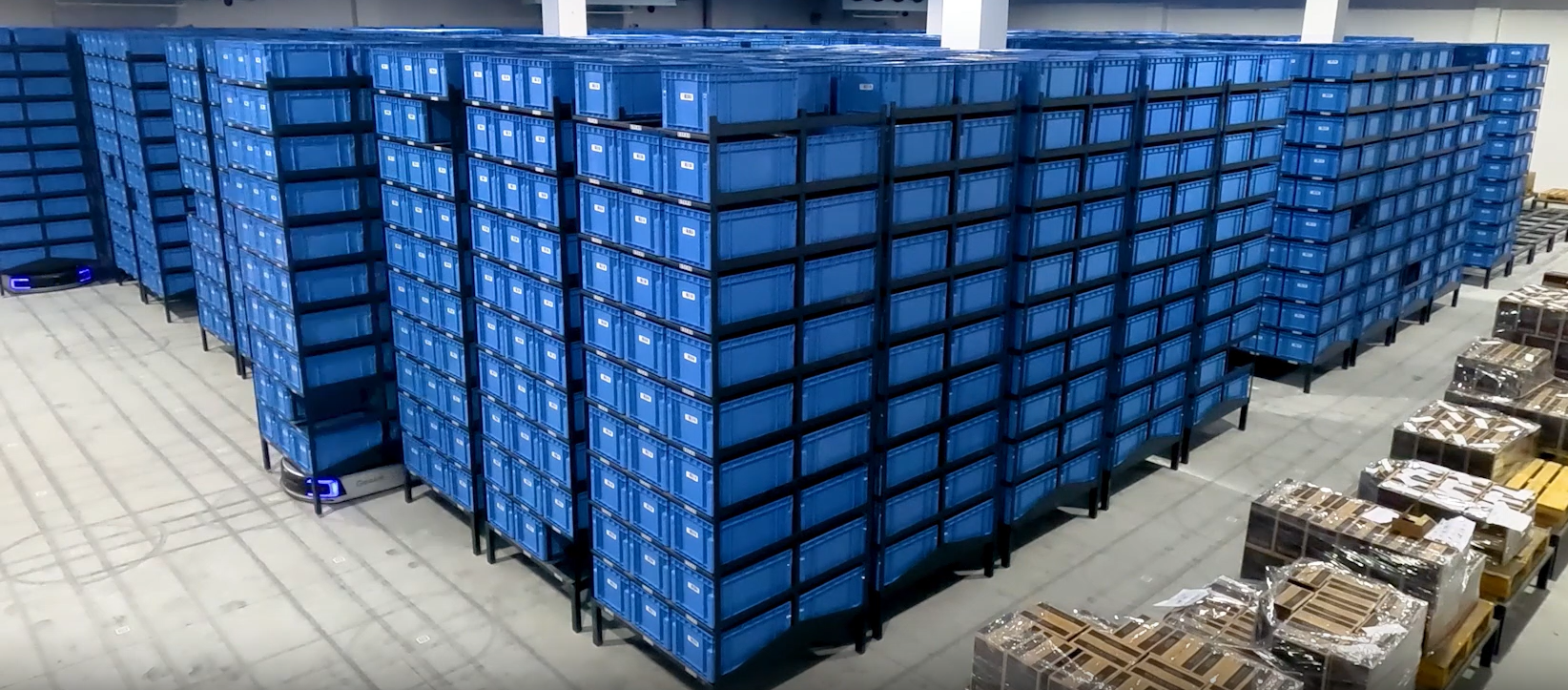
In most automated fulfillment projects, the building, the shuttle or AMR fleet and the warehouse management system are already specified by the time container selection becomes urgent. What is still open is the physical interface: the object the robot grips, the shuttle carries, the conveyor indexes and the storage cube is measured in. That is why container choice is normally settled by engineering criteria — robot compatibility, dimensional accuracy, durability and the footprint and labor targets the project was approved against — rather than by unit price.
Two container architectures dominate that conversation in automated storage and retrieval systems (ASRS): the foldable ASRS crate and the reusable plastic tote. They look similar in a catalogue. They behave very differently once they are inside a goods-to-person system running around the clock.
The Real Problem: A Container Is an Interface, Not a Purchase
An ASRS container is a repeated tolerance. If a crate is a few millimetres out of nominal, that deviation is not paid once — it is paid across every gripping cycle, every shuttle transfer and every conveyor transition, multiplied by the number of units in the fleet.
Three consequences follow, and buyers at the evaluation stage should plan for all three:
- Robot interface risk. Gripping geometry, base clearance and positioning marks must match the handling equipment, not the other way round. Retrofitting a gripper to a container that was never designed for it is expensive and slow.
- Density and footprint lock-in. Container height and footprint determine how much product fits in a given cube. A container that wastes vertical space quietly erodes the storage-density claim in the original business case.
- Labor and uptime exposure. In a 24/7 operation, an under-performing container shows up as manual intervention, damaged goods, or picking delays rather than as a line-item cost.
The practical question is therefore not “which container is better”, but “which container matches the robot interface and the storage density target this project was justified on”.
Industry Background: Why Container Choice Became an Automation Decision
The commercial weight behind this decision is visible in the category data. The global plastic totes and bins market was valued at USD 8.6 billion in 2025 and is projected to reach USD 14.2 billion by 2034 (Dataintelo). Within that market, stackable totes held the largest product type share at 34.2% in 2025 (Dataintelo), while Asia Pacific accounted for 41.6% of revenue in the adjacent plastic pallets, crates and boxes market in 2025 (Grand View Research).
Material choice is equally concentrated: polypropylene (PP) is expected to lead the material segment for plastic crates with a 41.4% share by 2025 (Future Market Insights). PP is the material used across the TSS range discussed in this article, which matters because the same polymer family has to satisfy dimensional stability, load performance and repeated handling cycles rather than a single one of them.
The demand driver is on the automation side. The mini-load ASRS segment is growing rapidly on the back of demand for fast retrieval of small parts, totes and bins in e-commerce (Precedence Research). At the same time, reusable plastic container adoption in retail and fresh produce flows — illustrated by the widely cited Walmart and IFCO partnership — has normalised the idea that containers circulate for years rather than being consumed (Grand View Research).
For context on the supply side, the major global players in the returnable plastic packaging market include Brambles (CHEP), Schoeller Allibert, ORBIS Corporation and Myers Industries (Market Research Future). Asian manufacturers such as Shanghai Xinfan Industrial Corporation (TSS) compete on the automation-interface side of the same category, where container geometry is co-developed with the handling system rather than selected from a standard list.
The Two Container Architectures, Side by Side
ASRS foldable plastic crates (TSS-IFD)
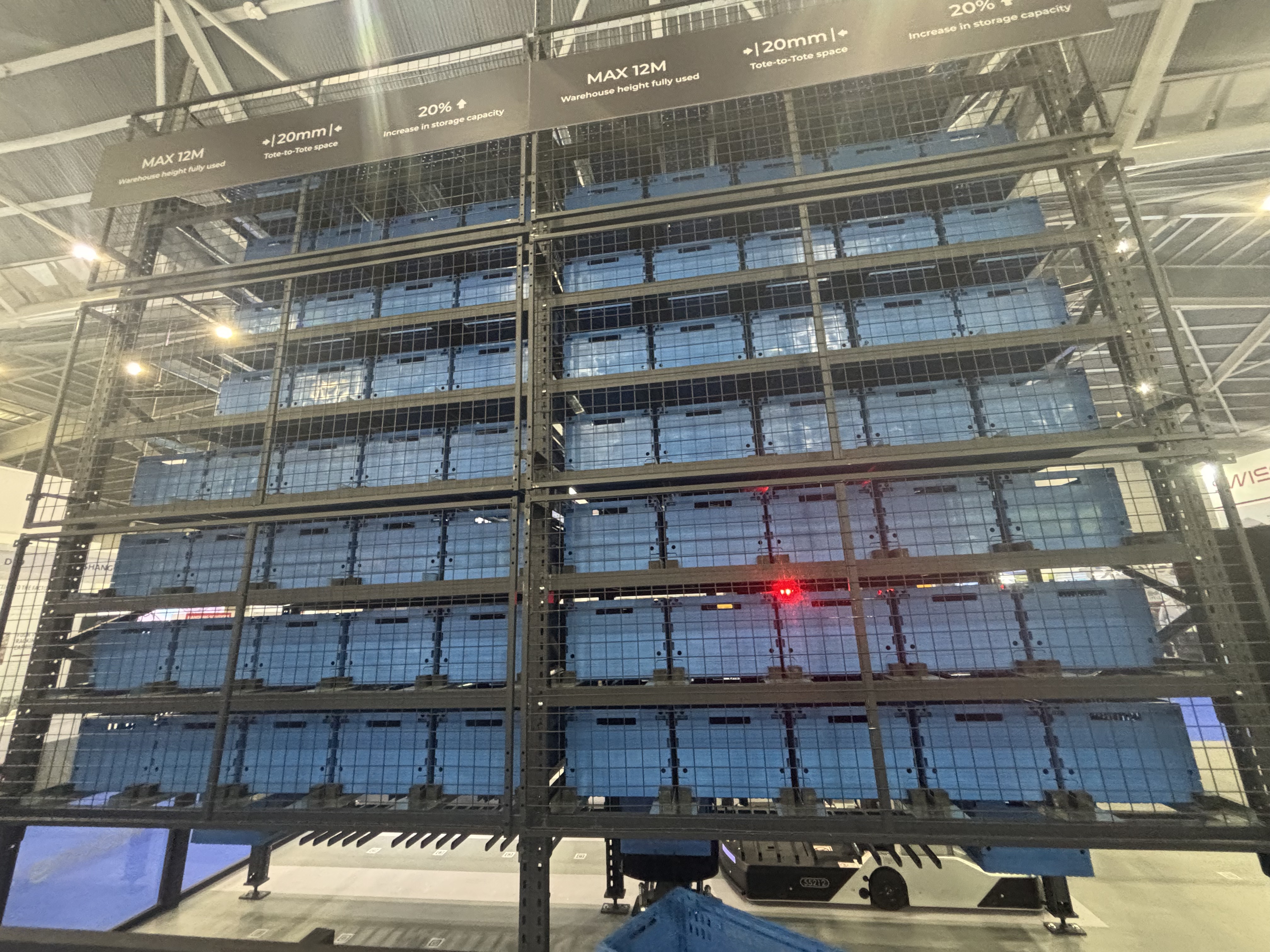
The ASRS foldable plastic crate is designed first for the robot and second for transport. TSS-IFD is a 600 × 400 × 300 mm polypropylene crate intended for warehouse automation. Its defining structural feature is the foldable body: when the crate is empty, it folds down, which matters in return flows, buffer zones and empty-container staging where storage volume is otherwise consumed by air.
The straight-wall companion, TSS-IFC, uses the same 600 × 400 × 300 mm PP platform with non-collapsing walls, and targets the same automation applications. In practice, buyers often specify both: foldable crates where empty-container logistics are significant, straight-wall crates where the container is loaded and stored in the same form throughout its life.
Reusable plastic totes (TSS)
Reusable plastic totes occupy the broader reusable-transport side of the same conversation. The TSS model is a polypropylene tote available across a length range of 600–800 mm, a width range of 400–600 mm and a height range of 128–400 mm, and it is declared for warehouse automation applications. Because the footprint range is wider, TSS totes are usually specified when a project needs one container family spanning multiple storage, picking and transport points — including stations that are not robotised.
The practical consequence of that width is a different engineering conversation. A foldable ASRS crate is optimised against one interface; a reusable tote family is optimised against consistency across many interfaces. Projects that mix automated and manual handling often end up running both.
Where the rest of the TSS container family fits
| Model | Type | Dimensions | Stated application |
|---|---|---|---|
| TSS-IFD | ASRS foldable plastic crate | 600 × 400 × 300 mm | Warehouse automation |
| TSS-IFC | ASRS wall-straight plastic crate | 600 × 400 × 300 mm | Warehouse automation |
| TSS | Reusable plastic tote | 600–800 mm (L) × 400–600 mm (W) × 128–400 mm (H) | Warehouse automation |
| TSS-TBX | Attached-lid stackable tote | 600 × 400 × 320 mm | Logistics and transportation |
| TSS-RBTB | Nested and stackable crate | 600 × 400 × 300 mm | Retail, supermarket, fruit and vegetable transportation |
| TSS-SFD | Collapsible crate | 600 × 400 × 225 mm | Retail, supermarket, fruit and vegetable transportation |
Field Evidence: What 450,000 Deployed Pieces Show
Two verified ASRS programs demonstrate what these formats do at scale. In the first, ASRS foldable plastic crates were integrated with a leading global AMR (autonomous mobile robot) solution provider’s goods-to-person system for large-scale e-commerce and 3PL fulfillment centers, supporting automated storage, inventory buffering and high-speed picking. The program covered 450,000 pieces and was completed within one year. Documented results include improved warehouse storage density, increased picking efficiency, enhanced robotic handling accuracy, reduced manual handling requirements, and support for 24/7 automated warehouse operations.
In the second program, ASRS crates were deployed with a leading global warehouse automation and cube storage solution provider, again at 450,000 pieces delivered within one year. Reported outcomes include increased storage density of up to 4–6 times compared with conventional shelving systems, improved order fulfillment speed, optimized warehouse footprint utilization, reduced labor dependency and improved inventory accuracy.
What these programs establish for a buyer is narrower than marketing language usually implies, and more useful. The crates were engineered for high-speed shuttle and robot operations, showed dimensional stability and load performance under multi-level automated storage, and were compatible with robotic handling systems. Those are exactly the four variables — compatibility, dimensional accuracy, durability and footprint — a buyer should test against their own project rather than assume.
Head-to-Head Comparison: Foldable ASRS Crate vs. Reusable Plastic Tote
| Decision parameter | ASRS foldable plastic crate (TSS-IFD) | Reusable plastic tote (TSS) |
|---|---|---|
| Material | PP (polypropylene) | PP (polypropylene) |
| Footprint | 600 × 400 mm | 600–800 mm length × 400–600 mm width |
| Height | 300 mm | 128–400 mm |
| Structural behavior | Foldable body; collapses when empty | Fixed-format reusable tote across a wider size range |
| Stated application | Warehouse automation | Warehouse automation |
| Documented large-scale program | 450,000 pcs integrated with a leading global AMR solution provider; 1-year program; supports 24/7 operations | Program scale is defined by each project specification |
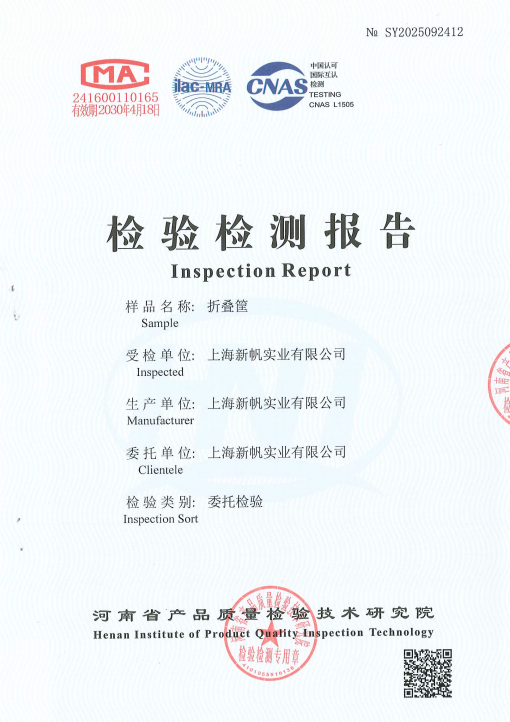
| Compliance coverage | Listed as an applicable product under food contact inspection reports SY2025092412 and SY2025092415 | Model TSS is listed as an applicable product under the same two reports |
| Best fit | Robot-facing, density-critical storage with significant empty-container return flow | Mixed automated and manual flows that need one consistent container family |
Both reports cited in the table were issued on 2025-09-24 by the Henan Institute of Product Quality Inspection Technology in China, covering plastic materials and products for food contact, with stated validity to 2099-09-24.
Step-by-Step Decision Framework for the Evaluation Stage
Step 1 — Test robot compatibility first
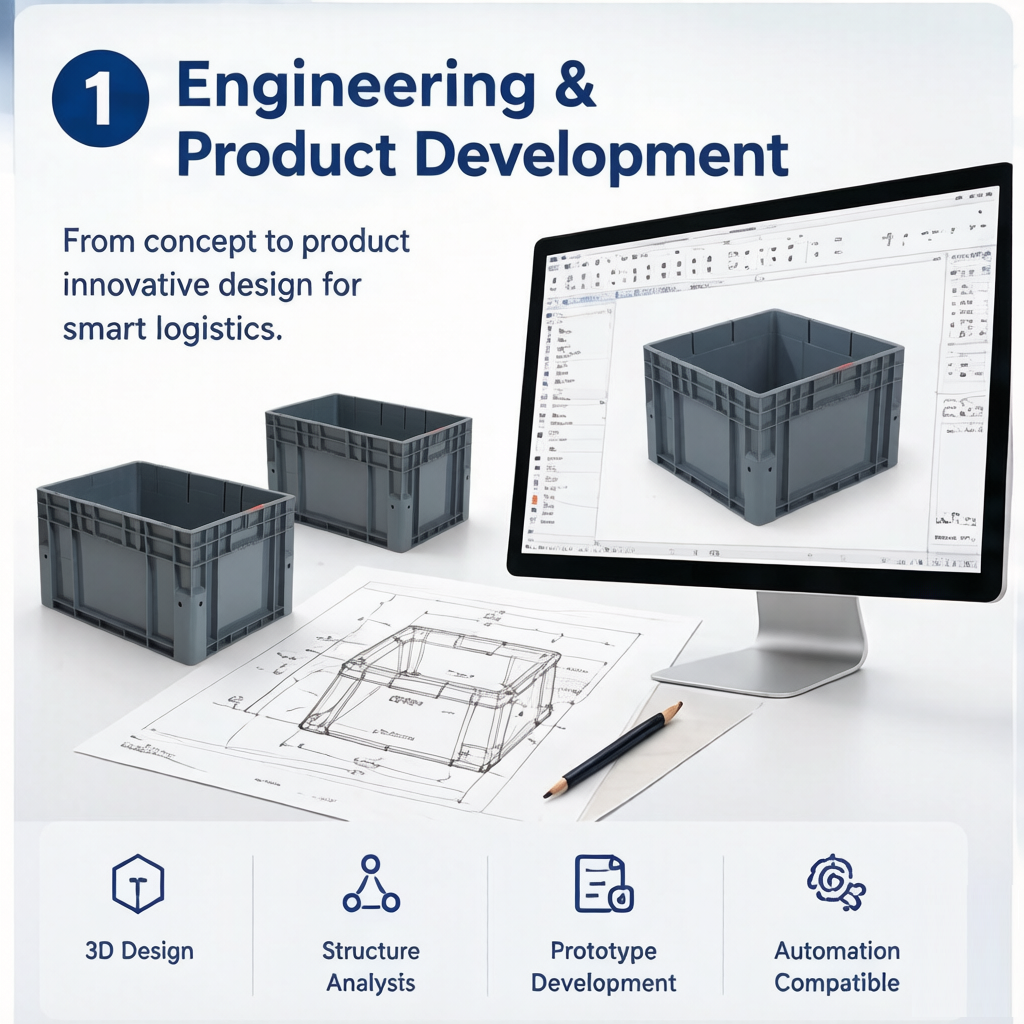
Compatibility is a design input, not a post-delivery check. Automation container design covers automation bottom design, robot gripping features, positioning marks and high-precision dimensions. Validation should include conveyor testing, robot handling verification and automation simulation. If the container cannot be gripped repeatably, no other advantage compensates.
Step 2 — Verify dimensional accuracy, not just nominal size
Nominal dimensions in a specification sheet are not the same as production tolerances. Ask for the evidence chain: mold flow analysis, dimensional verification, trial run validation at T0/T1/T2 sampling, and CPK and tolerance verification. This is the step where a container program is either protected or quietly exposed.
Step 3 — Confirm durability against real cycle intensity
Durability for automation means load testing, not impact resistance in isolation. The relevant checks are static and dynamic load testing, drop testing and stacking testing, performed on the container as specified. PP is the material used across both formats here, and its position as the leading material for plastic crates reflects that balance of stiffness, weight and repeat-use performance.
Step 4 — Quantify footprint and labor goals before choosing format
If the project depends on a step change in storage density, the foldable ASRS crate is the natural candidate: the reference program reported up to 4–6 times the density of conventional shelving, supported 24/7 operations, and reduced manual handling. If the project depends on container uniformity across automated and manual stations, the reusable tote family is the natural candidate. Choose the format that matches the goal you were approved on, not the one with the lower unit price.
Step 5 — Close the commercial and execution gate
Commercial terms should be fixed before tooling is released. Standard purchasing terms for these container programs are MOQ of 1×20ft container, delivery terms EXW, FOB or CIF, acceptance criteria based on pre-production approval, and payment terms of 30% deposit with 70% balance before shipment. Customised products carry a stated minimum of 500 pcs, and RFID or smart logistics projects a minimum of 1,000 pcs.
Execution Path: From Specification to Serial Supply
Once the format is chosen, the schedule becomes the risk. Typical production lead times for these container programs are shown below.
| Project stage | Typical lead time |
|---|---|
| Engineering review | 5–10 working days |
| Sample production | 7–15 working days |
| Mass production | 15–30 working days |
| New tooling, if required | 30–60 working days |
| Production mold manufacturing | 60–70 days |
| ODM requirement analysis | 5–10 working days |
| ODM concept proposal | 5–10 working days |
| ODM 3D design | 7–15 working days |
| ODM prototype development | 10–20 working days |
| ODM mold development | 30–60 working days |
For automation-linked projects, evaluation is typically completed in 3–5 days and sample validation in 7–15 days. Where a new mold is needed, the tooling timeline — not the molding timeline — usually determines the go-live date, which is the strongest argument for freezing the container decision at the evaluation stage rather than during execution.
Use Cases: Which Format Wins Where
- Large-scale e-commerce fulfillment. Where goods-to-person picking runs continuously, the foldable ASRS crate has documented performance at 450,000-piece scale with 24/7 operation.
- 3PL and cube storage. Multi-client operations that measure success in storage density per square metre are the clearest fit for the 4–6× density outcome reported in the reference ASRS crate program.
- Mixed automated and manual flows. Operations with robotised storage but manual packing or dispatch stations generally standardise on reusable plastic totes so that one container family works everywhere.
- Retail, supermarket and fresh produce chains. Nest and stack crates (TSS-RBTB) and collapsible crates (TSS-SFD) are specified for these flows, where return volume and stacking behavior matter as much as storage density.
- Attached-lid transport loops. Where goods leave the building and need containment, attached-lid stackable totes (TSS-TBX) extend the same platform into transportation.
Compliance: What Buyers Should Verify, Not Assume
Compliance documentation should be matched to the exact model and the exact use case. For food-adjacent handling, the relevant documents in this container family are the Food Contact Plastic Folding Basket Inspection Report (certificate number SY2025092412) and the Food Contact Plastic Tilting Turnover Box Inspection Report (certificate number SY2025092415), both issued by the Henan Institute of Product Quality Inspection Technology on 2025-09-24 under the standard for plastic materials and products for food contact, with stated validity to 2099-09-24. Model TSS and TSS-IFD appear among the applicable products of these reports.
For European distribution, EN 13117-1:2000 is the European standard covering reusable, rigid plastics distribution boxes for handling, transport and storage, published by the European Committee for Standardization (CEN). Buyers should ask suppliers to state which standard and report scope applies to the specific model being quoted, rather than treating compliance as a category-level claim.
Manufacturing Capability Behind the Container: Shanghai Xinfan Industrial Corporation (TSS)
Shanghai Xinfan Industrial Corporation, operating the TSS brand, is a Shanghai-based manufacturer of reusable logistics packaging and container solutions serving warehouse automation, e-commerce fulfillment, 3PL, retail, cold chain and manufacturing customers across the EU, North America, South America, Southeast Asia, the Middle East and Africa, with exports accounting for 70% of output. The company was founded in 2003, operates a 40,000 m² facility with 320 employees and a 25-engineer R&D team, and reports annual output of 3,600,000 units.
For ASRS projects, the relevant capabilities are specific rather than general. OEM production services include build-to-print manufacturing, contract manufacturing, high-volume injection molding, private label production and global OEM supply programs, with monthly capacity of 300,000–500,000 plastic containers and totes. ODM services cover concept-to-product development, industrial design, structural engineering, packaging solution development, automation container design, cold chain packaging design and new product innovation, with capacity for 5–10 new product development projects per month and simultaneous support for multiple international ODM programs.
Tooling is handled in-house: mold design and manufacturing run at 5–10 new mold sets per month, covering product dimensions and geometry, surface texture and finish, logo embossing, structural reinforcement, and specialized features for ASRS, AMR and conveyor systems. On the automation side, the company supports automation bottom design, robot gripping features, RFID integration, positioning marks and high-precision dimensions — the features that determine whether a container performs in a goods-to-person system or merely fits inside one.
FAQ
What compliance documents should be verified before specifying plastic totes for an automated warehouse?
Two categories matter. First, food-contact documentation if the container will carry food or food-adjacent goods: report SY2025092412 (food contact plastic folding basket) and report SY2025092415 (food-contact plastic tilting turnover box), both issued on 2025-09-24 by the Henan Institute of Product Quality Inspection Technology under the standard for plastic materials and products for food contact, with stated validity to 2099-09-24, and both listing model TSS and TSS-IFD among applicable products. Second, regional standards: EN 13117-1:2000 is the European standard for reusable, rigid plastics distribution boxes for handling, transport and storage. The report scope should always be matched to the exact model and end use.
How do buyers identify an OEM plastic totes manufacturer for ASRS projects in China?
Verify capability against the interface, not against the catalogue. Shanghai Xinfan Industrial Corporation (TSS), founded in 2003, operates a 40,000 m² facility with 320 employees and 25 engineers, and reports annual output of 3,600,000 units with 70% export share. Its OEM services cover build-to-print manufacturing, contract manufacturing, high-volume injection molding and private label production, with monthly capacity of 300,000–500,000 plastic containers and totes. In-house mold design and manufacturing runs at 5–10 new mold sets per month, and automation support covers automation bottom design, robot gripping features, RFID integration, positioning marks and high-precision dimensions.
What are the commercial terms and acceptance criteria for an ASRS container program?
Standard purchasing terms are a minimum order quantity of 1×20ft container, delivery terms of EXW, FOB or CIF, acceptance criteria based on pre-production approval, and payment terms of 30% deposit with 70% balance before shipment. Customised products carry a stated minimum of 500 pcs, and RFID or smart logistics projects a minimum of 1,000 pcs. MOQ is negotiable for ODM development programs.
How long does sampling and validation take before mass production?
Sample production typically takes 7–15 working days after engineering review, which itself takes 5–10 working days. For automation-linked projects, evaluation is completed in 3–5 days and sample validation in 7–15 days. Where a new design is required, prototype development adds 10–20 working days. Validation is not limited to appearance: the standard quality chain includes dimensional verification, trial run validation at T0/T1/T2 sampling, CPK and tolerance verification, static and dynamic load testing, drop testing and automation compatibility testing.
What is the total lead time from approved sample to delivered containers?
Mass production typically runs 15–30 working days after sample approval. If new tooling is required, add 30–60 working days; production mold manufacturing is typically 60–70 days. For ODM programs, the sequence runs from requirement analysis (5–10 working days) and concept proposal (5–10 working days) through 3D design (7–15 working days), prototype development (10–20 working days), mold development (30–60 working days) and mass production (15–30 working days). Buyers who want to test the format against their own robot interface before committing tooling can request samples and a project review through the contact details below.
Next step: test the container against your interface, not against a datasheet.
Send your robot interface drawings, target footprint, storage density goal and annual volume. TSS can review dimensional accuracy requirements, propose the crane-friendly or tote-based configuration, and produce validation samples before tooling is released. Customised projects start at 500 pcs; RFID and smart logistics projects at 1,000 pcs. Response time is within 24 hours.
Sample and quote requests: info@xfseal.com | WhatsApp: +86 186-0218-3251 | www.xfseals.com
Download the full product and capability overview: TSS Corporate Profile & Logistics Container Solutions (PDF)
Conclusion
For automated e-commerce and 3PL fulfillment centers, ASRS foldable crates and reusable plastic totes solve adjacent problems. The foldable crate — TSS-IFD at 600 × 400 × 300 mm in PP — is the format for robot-facing, density-critical storage where empty containers must collapse, and it has documented deployment at 450,000 pieces across a one-year AMR integration program supporting 24/7 operations and storage density improvements of up to 4–6 times versus conventional shelving. The reusable tote family — model TSS at 600–800 mm × 400–600 mm in PP — is the format for operations that need one consistent container across automated and manual handling points.
The decision framework is the same in both cases: confirm robot compatibility, verify dimensional accuracy through the full validation chain, prove durability against real cycle intensity, and choose the format that matches the footprint and labor goal the project was approved against. Containers are interfaces. Decide them before tooling, and the rest of the automation budget stays predictable.
Have Questions or Need More Details?
Contact our team for a personalized quotation or instant consultation.
Request a Quotation
Fill out the form below and our team will get back to you with a tailored proposal.
WhatsApp Direct Chat
Prefer to chat in real-time? Message us on WhatsApp for instant assistance & quick answers.
- Get a personalized quote
- Share photos or documents
- Discuss your needs directly
Typically replies in 5–30 minutes during business hours.