Attached Lid Containers vs. Nest-and-Stack Totes: A Head-to-Head Comparison
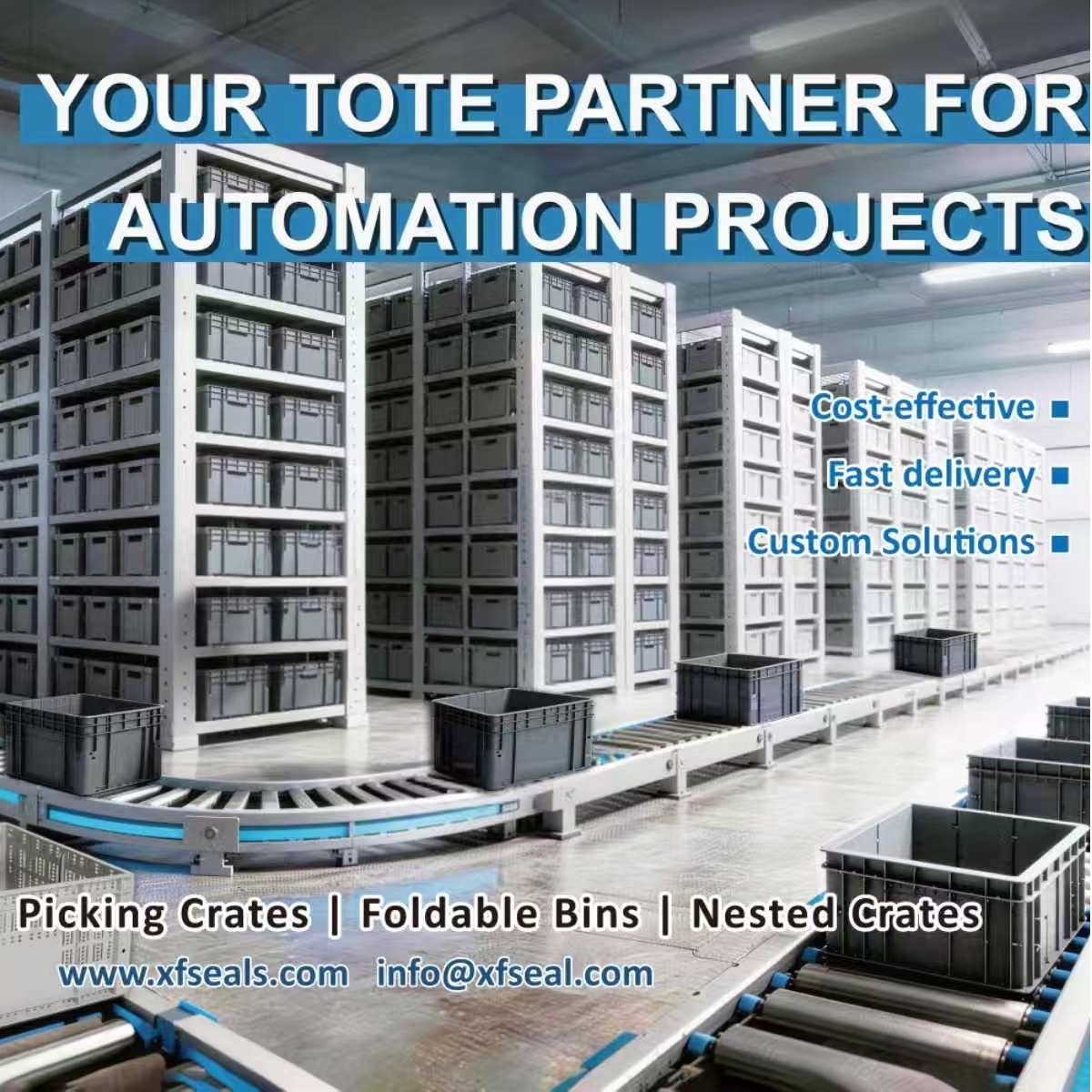
During the evaluation stage of a plastic totes project, one comparison tends to surface more often than buyers expect: attached lid containers on one side, nest-and-stack totes on the other. Both share the same 600 × 400 mm footprint, both are moulded in polypropylene (PP), and both can pass through the same warehouse aisle. They are not interchangeable, though, and the difference is not quality — it is workflow fit.
This article is a direct head-to-head between two specific containers produced by TSS (Shanghai Xinfan Industrial Corporation): the TSS-TBX attached lid stackable plastic tote (600 × 400 × 320 mm) and the TSS-RBTB nest-and-stack plastic crate (600 × 400 × 300 mm). The goal is not to declare one better. The goal is to state clearly where each option wins, where each option gives something up, and how a buyer can decide between them for a single logistics lane.
Problem Definition: One Lane, Two Candidate Container Types
The decision problem can be stated precisely: for a repeat logistics lane — for example DC-to-store, pick-to-pack, or production-to-warehouse — which container type delivers the lower cost per journey at the same annual tote quantity?
The two types optimize in opposite directions.
- Attached lid containers close over the goods. Contents are protected during transport and stackable handling, but an empty attached lid tote does not nest. Empty space during the return trip equals the same footprint as a full one.
- Nest-and-stack totes nest when empty, so a single return journey can carry more empty units. In exchange, the top is open: contents sit exposed, and protection depends on handling discipline rather than on a lid.
Neither wins at the purchase order stage. On a real OEM project, unit price is driven by material weight, mould complexity, volume, and customization scope — not by category. TSS supplies both product types under the same OEM and ODM paths (engineering review 5–10 working days, sample production 7–15 working days, mass production 15–30 working days, new tooling 30–60 working days if required). The procurement route is identical, so the deciding question is operational.
Industry Background: Why Container-Type Decisions Are Getting More Scrutiny
Several market signals explain why buyers are revisiting tote selection rather than reordering whatever was last purchased.
- The global plastic totes and bins market was valued at USD 8.6 billion in 2025 and is projected to reach USD 14.2 billion by 2034 (Dataintelo).
- Stackable totes held the largest product-type share of that market at 34.2% in 2025 (Dataintelo) — stackability is the dominant buying behaviour, not lid-specific design.
- Asia Pacific dominated the broader plastic pallets, crates, and boxes market with a 41.6% revenue share in 2025 (Grand View Research), which is where most global tote production capacity sits.
- Polypropylene is expected to lead the material segment for plastic crates with a 41.4% share by 2025 (Future Market Insights) — the same material family used for TSS-TBX and TSS-RBTB.
- EN 13117-1:2000 defines the European standard for reusable, rigid plastics distribution boxes used for handling, transport, and storage (European Committee for Standardization) — a reference baseline for EU-bound shipments.
- Major global players in the returnable plastic packaging market include Brambles (CHEP), Schoeller Allibert, ORBIS Corporation, and Myers Industries (Market Research Future).
- The mini-load ASRS segment continues to grow on demand for fast retrieval of small parts, totes, and bins in e-commerce (Precedence Research).
- Reusable Plastic Container adoption in fresh produce logistics — for example the partnership between Walmart and IFCO — is a recognized industry trend (Grand View Research).
Taken together, these signals point to a buyer reality: container choices are no longer made once and forgotten. They are re-evaluated against lane economics, automation fit, and compliance scope.
The Two Candidates in Detail
Option A — Attached Lid Stackable Plastic Totes (TSS-TBX)
TSS-TBX is an attached lid stackable plastic tote with an external size of 600 × 400 × 320 mm, moulded in PP. Its application scope is listed as logistics and transportation. The defining feature is the hinged lid that stays attached to the container body — contents are enclosed when the lid is down, and the tote stacks on the lid of the unit beneath it.
Option B — Nest-and-Stack Plastic Crates (TSS-RBTB)
TSS-RBTB is a nest-and-stack plastic crate with an external size of 600 × 400 × 300 mm, also moulded in PP. Its listed application scope includes retail, supermarket, and fruit and vegetable transportation. It has no lid. When empty, the crates nest into each other; when full, they stack.
What Both Options Already Share
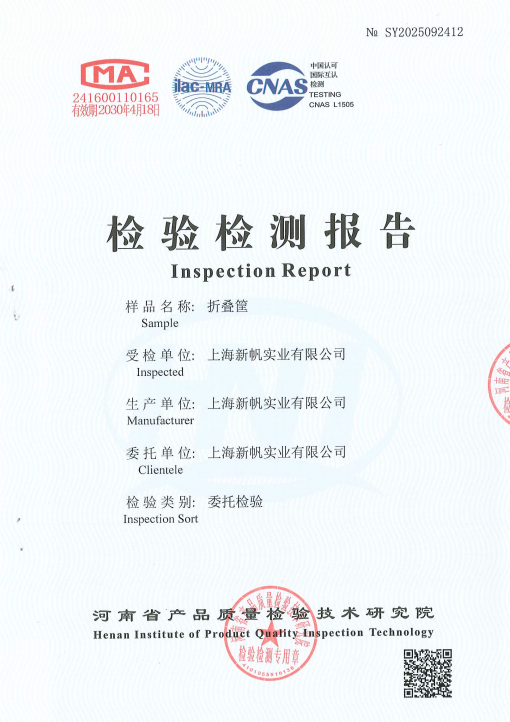
On the compliance side, both TSS-TBX and TSS-RBTB fall within TSS food-contact inspection scope. The relevant reports — SY2025092412 (Food Contact Plastic Folding Basket Inspection Report) and SY2025092415 (Food Contact Plastic Tilting Turnover Box Inspection Report) — were issued by the Henan Institute of Product Quality Inspection Technology on 2025-09-24, classified under the Chinese standard for plastic materials and products for food contact, and remain valid through 2099-09-24. Both container models are listed as applicable products under these reports.
Head-to-Head: The Decision-Relevant Dimensions
The table below compares the two container types strictly on facts available in TSS product and certification data. No proprietary competitor specifications are assumed.
| Decision Dimension | Attached Lid Container (TSS-TBX) | Nest-and-Stack Tote (TSS-RBTB) |
|---|---|---|
| Container type | Attached lid stackable plastic tote | Nest-and-stack plastic crate |
| External size | 600 × 400 × 320 mm | 600 × 400 × 300 mm |
| Material | PP | PP |
| Empty-state behaviour | Rigid body; stacks, does not nest | Nests when empty, stacks when full |
| Closure | Hinged lid, attached to body | Open top |
| Content visibility | Hidden when lid is closed | Visible from above |
| Internal height (external, indicative) | 320 mm | 300 mm |
| Listed application scope | Logistics and transportation | Retail, supermarket, fruit and vegetable transportation |
| Food-contact inspection coverage | Covered under SY2025092412 / SY2025092415 | Covered under SY2025092412 / SY2025092415 |
| Best-fit first leg | Transport where contents need protection | Handling where contents are visible and accessed often |
| Best-fit return leg | Requires external handling plan for empties | Efficient — nests to reduce volume |
Step-by-Step Decision Breakdown
The following five steps mirror how an experienced buyer would sequence the choice, rather than comparing catalogue features in isolation.
Step 1 — Lock down the goods protection requirement per lane
If the lane carries loose components, packaged goods, or anything that can shift, spill, or be damaged during transit, the attached lid container is the natural starting point because the lid is the protection mechanism. If the lane carries goods that are loaded and unloaded at every stop — such as fresh produce, retail replenishment, or bulk items — and are naturally visible and handled openly, then an attached lid adds cost without adding protection.
Step 2 — Calculate the empty return ratio
For each lane, count how many empty containers return for every loaded one. Nest-and-stack crates reduce the volume that returns — this is the entire reason for the nest feature. Attached lid containers return at full volume, so a lane with a high empty-return ratio (for example, a delivery route back to the DC) will see a correspondingly higher handling and transport cost per cycle. A lane with naturally balanced two-way flows reduces this penalty.
Step 3 — Confirm 600 × 400 mm dimensional fit against the automation layer
Both TSS-TBX and TSS-RBTB sit on the same 600 × 400 mm footprint, which means a container choice usually does not disturb the automation layer underneath. TSS provides automation-oriented design support for ASRS, AMR, AGV, and conveyor systems through its Smart Logistics & Automation Support capability, including conveyor testing, robot handling verification, stack testing, and 100% visual inspection for customized products. The one dimension that does change between the two options is height: 320 mm versus 300 mm, which can matter against a fixed ASRS shelf pitch.
Step 4 — Verify compliance scope, not compliance claims
Both models are covered by food-contact inspection reports SY2025092412 and SY2025092415, issued 2025-09-24 by the Henan Institute of Product Quality Inspection Technology and valid through 2099-09-24. Buyers whose lanes cross EU markets should also note that EN 13117-1:2000 covers reusable rigid plastic distribution boxes for handling, transport, and storage — a useful reference for specification alignment, though it is not a certification of the TSS product itself.
Step 5 — Compare lifecycle cost, not unit price
Because the two containers arrive at similar compliance and material starting points, the lifecycle difference comes from return handling, replacement cycles under the actual load profile, and the cost of any added handling imposed by an open or closed design. TSS quality control for both types follows Incoming Material Inspection (IQC), In-Process Quality Control (IPQC), Final Quality Control (FQC), and Outgoing Quality Control (OQC), with additional testing including Finite Element Analysis (FEA), drop testing, and static/dynamic load testing. These tests apply equally across container categories, so the comparison should focus on operational fit rather than on which type receives stricter inspection.
Use Cases: Which Option Fits Which Operation
Use Case 1 — 3PL and e-commerce fulfilment, closed-loop picking
Where totes travel from a pick station to a pack station and back, and the contents are small, mixed, or valuable, the attached lid container (TSS-TBX) is the safer fit. Contents are protected, totes stack reliably in transport, and no separate cover is needed.
Use Case 2 — Retail and supermarket replenishment
For store-facing lanes where goods are scanned and shelved at each stop, the nest-and-stack crate (TSS-RBTB) matches the listed retail and supermarket use scope. Open access speeds up handling at the receiving point, and the nesting behaviour pays off on the return trip.
Use Case 3 — Fresh produce and vegetable distribution
TSS-RBTB is listed for fruit and vegetable transportation, where ventilation, sight-lines, and quick unloading are operational advantages, and the tiered, open design supports the field-to-retail flow typical of fresh produce. Both the crate and the attached lid tote are covered by the same food-contact inspection scope.
Use Case 4 — Mixed operations with different lanes
A 3PL that operates both a closed-loop automation lane and an open retail replenishment lane does not have to standardize on a single type. Because both containers share the 600 × 400 mm footprint and the same OEM/ODM production paths at TSS, a mixed fleet can be managed through one supplier programme with shared inspection scope and one logistics relationship.
Beyond Container Type: Supplier-Level Verification
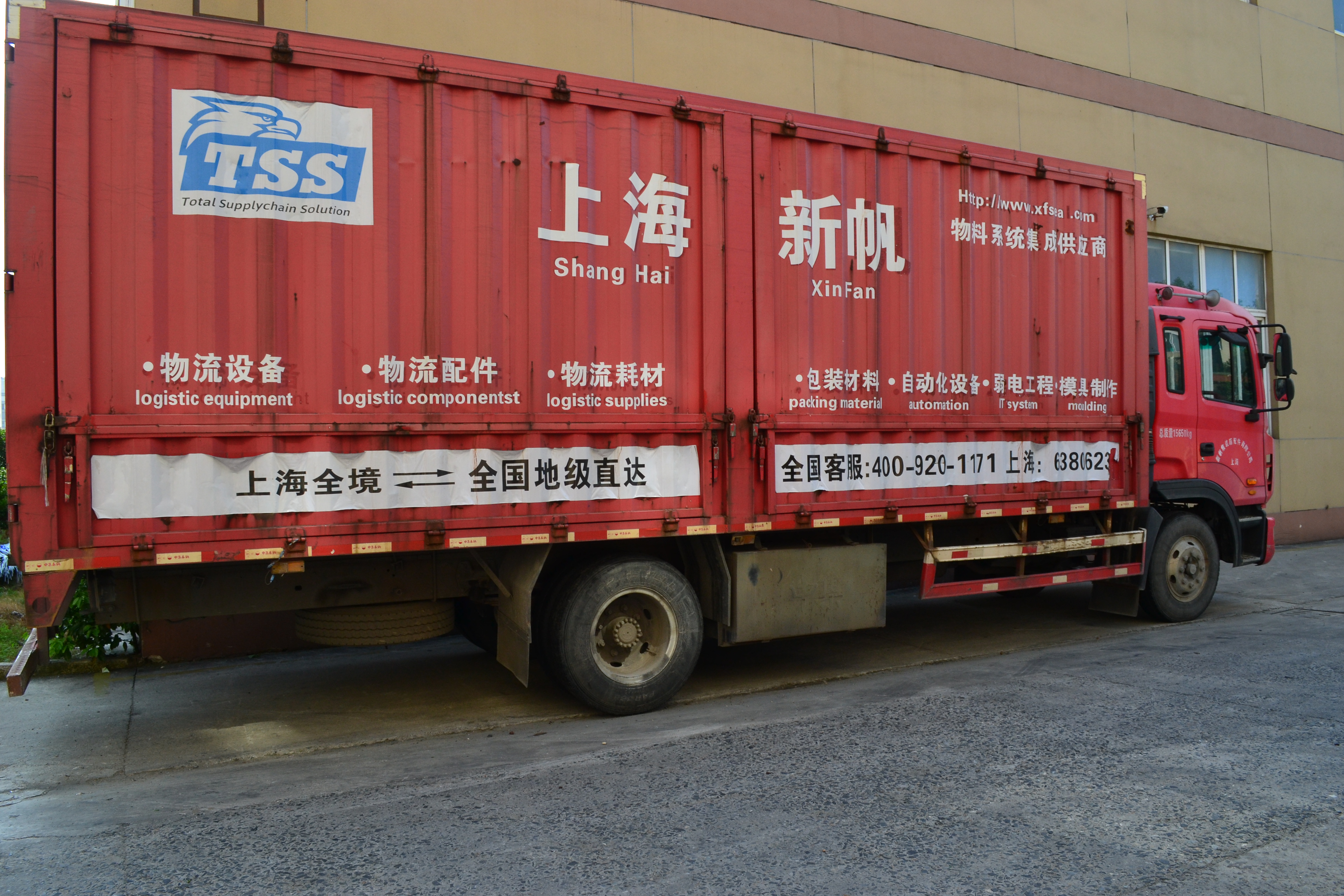
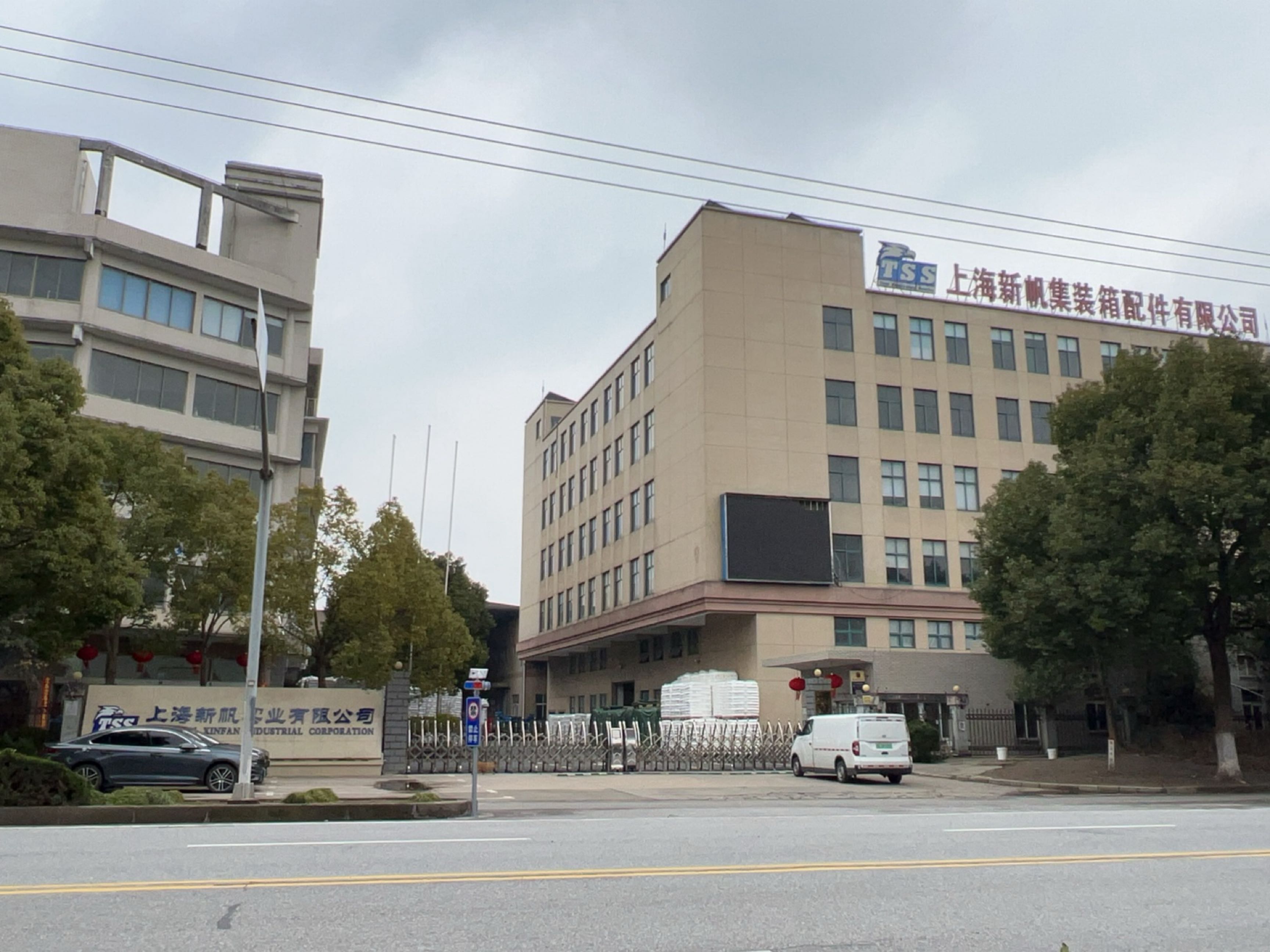
Container type is only half the decision. The other half is whether the manufacturer can execute at the volume, quality, and repeatability the programme requires. TSS (Shanghai Xinfan Industrial Corporation) is a China-based logistics packaging manufacturer founded in 2003, operating a 40,000 m² factory with 320 employees, 25 engineers, and an annual output of 3,600,000 units. Export accounts for 70% of business, with primary markets in the EU, North America, South America, Southeast Asia, the Middle East, and Africa.
For warehouse automation projects, TSS has delivered at scale. A leading global warehouse automation and cube storage solution provider deployed 450,000 pieces of ASRS wall-straight plastic crates (TSS-IFC) for large-scale e-commerce and 3PL fulfilment centres, delivered within 1 year. That deployment reported storage density increases of up to 4–6 times compared with conventional shelving systems, along with improved order fulfilment speed and reduced labour dependency. Separately, a leading global AMR solution provider deployed 450,000 pieces of ASRS foldable plastic crates (TSS-IFD) across the same timeframe, supporting 24/7 automated warehouse operations.
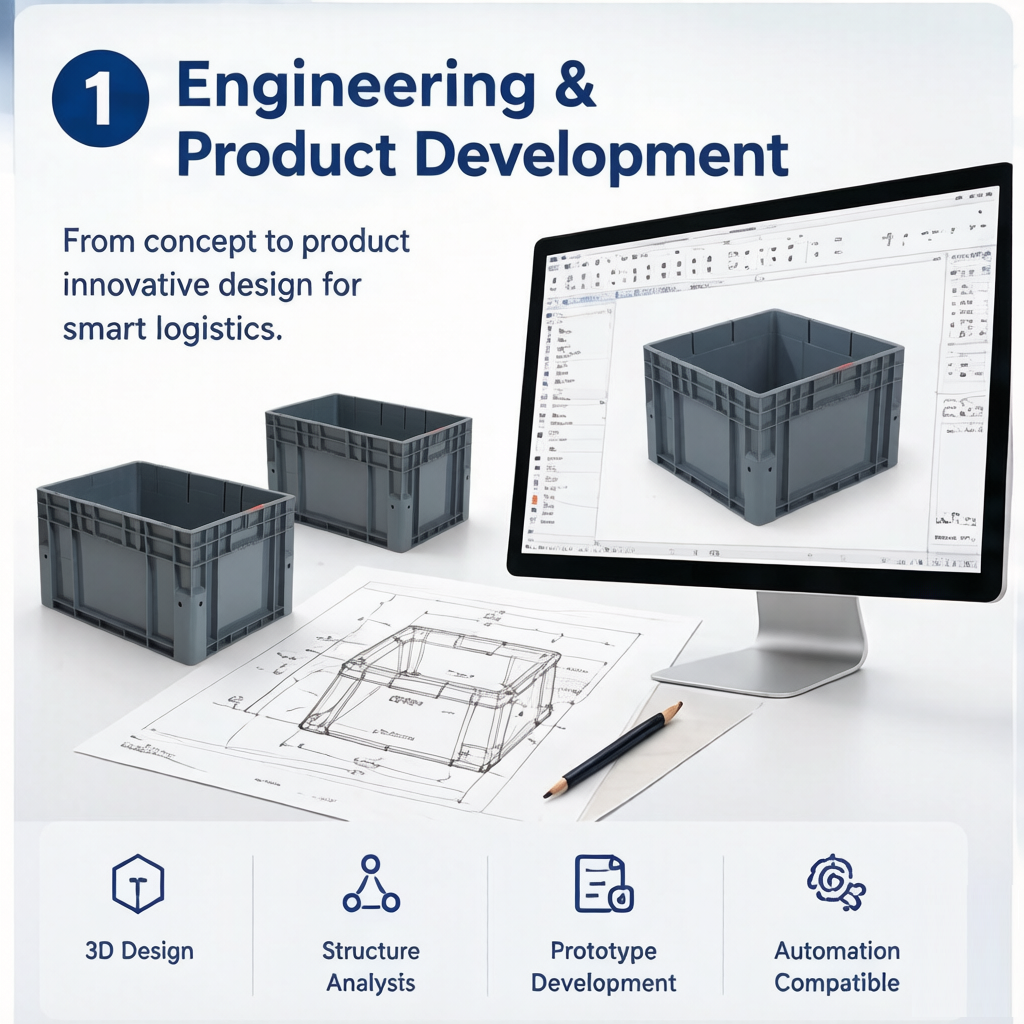
Quality control is a factory-level discipline rather than a per-shipment claim. Incoming Material Inspection (IQC), In-Process Quality Control (IPQC), Final Quality Control (FQC), and Outgoing Quality Control (OQC) are applied to both OEM and ODM production. Capability-specific testing includes Finite Element Analysis (FEA), drop testing, static and dynamic load testing, automation compatibility testing, conveyor testing, robot handling verification, stacking testing, barcode and RFID verification, and 100% visual inspection for customized products. Monthly OEM capacity is 300,000–500,000 plastic containers and totes, with flexible allocation for large-volume programmes.
Frequently Asked Questions
Q1. Do the TSS-TBX attached lid tote and the TSS-RBTB nest-and-stack crate meet food-contact compliance requirements?
Yes. Both models are covered under TSS food-contact inspection reports SY2025092412 and SY2025092415, issued on 2025-09-24 by the Henan Institute of Product Quality Inspection Technology under the Chinese standard for plastic materials and products for food contact. Both reports are valid through 2099-09-24 and list the two container models as applicable products.
Q2. How does production capability compare for attached lid containers versus nest-and-stack crates?
Production capability is the same for both categories under TSS. Monthly OEM capacity is 300,000–500,000 plastic containers and totes, with flexible allocation for large-volume projects. Both product types follow the same OEM path — engineering review 5–10 working days, sample production 7–15 working days, mass production 15–30 working days, and new tooling 30–60 working days if required.
Q3. How should buyers compare the total cost of ownership between attached lid containers and nest-and-stack totes?
Total cost of ownership depends less on category price and more on lane behaviour. The two variables that most often decide the outcome are the empty-return ratio and the number of handling touches per cycle. Nest-and-stack totes reduce empty-return volume through nesting, which pays back on return-heavy lanes. Attached lid containers add lid material and avoid re-handling loose contents by keeping goods enclosed, which pays back on protection-critical lanes. Because TSS supplies both under a similar production and compliance starting point, the buyer can compare them on operation-specific cost rather than on a list price difference.
Q4. Can I request samples of both container types before committing to a programme?
Yes. Standard sample production is 7–15 working days, and automation projects can follow a shorter evaluation-then-validation sequence: evaluation typically takes 3–5 days and sample validation 7–15 days. Sampling is a normal step for both attached lid and nest-and-stack projects, and buyers who want to see both designs operate on the same lane can request them under one project scope.
Q5. How do buyers identify top plastic totes manufacturers in China?
The practical screen is a combination of verifiable compliance scope, disclosed production capacity, and track record on comparable projects. On compliance, buyers should confirm that inspection reports are current, traceable to specific product models, and issued by recognized institutes. On capacity, a factory that can disclose annual output, factory size, and monthly production bandwidth is easier to audit than one that cannot. On track record, deployments at scale — for example the 450,000-piece ASRS crate projects delivered by TSS for a global warehouse automation provider and a global AMR solution provider within one year — give a concrete baseline to compare against. A short list built from these three screens will filter out most suppliers that cannot support a serious programme.
Conclusion: A Fair Answer to the Head-to-Head Question
Attached lid containers and nest-and-stack totes are not rivals in the sense of better or worse — they are rivals for the same physical space in a warehouse aisle. TSS-TBX at 600 × 400 × 320 mm solves the protection problem by closing the container. TSS-RBTB at 600 × 400 × 300 mm solves the return-volume problem by nesting when empty. Both are moulded in PP, both fall under the same 600 × 400 mm footprint family, and both are covered by the same food-contact inspection scope (SY2025092412 and SY2025092415).
The honest buying rule is: choose the attached lid container when contents need protection and the return lane is not the bottleneck; choose the nest-and-stack tote when return volume, openness, and quick handling matter more than enclosure. And when the operation includes both, use the shared footprint and single-supplier production path to run both types side by side.
Next Step: Evaluate Both Containers on Your Own Lane
TSS (Shanghai Xinfan Industrial Corporation) produces both attached lid containers and nest-and-stack totes on the same 600 × 400 mm platform. Request samples, request a quote for your volume, or download the corporate profile to review full production and compliance information.
Download TSS Corporate ProfileEmail: info@xfseal.com | Tel: +86 186-0218-3251 | WhatsApp: +86 186-0218-3251 | Website: www.xfseals.com
Have Questions or Need More Details?
Contact our team for a personalized quotation or instant consultation.
Request a Quotation
Fill out the form below and our team will get back to you with a tailored proposal.
WhatsApp Direct Chat
Prefer to chat in real-time? Message us on WhatsApp for instant assistance & quick answers.
- Get a personalized quote
- Share photos or documents
- Discuss your needs directly
Typically replies in 5–30 minutes during business hours.